- English
- French
- German
- Portuguese
- Spanish
- Russian
- Japanese
- Korean
- Arabic
- Greek
- German
- Turkish
- Italian
- Danish
- Romanian
- Indonesian
- Czech
- Afrikaans
- Swedish
- Polish
- Basque
- Catalan
- Esperanto
- Hindi
- Lao
- Albanian
- Amharic
- Armenian
- Azerbaijani
- Belarusian
- Bengali
- Bosnian
- Bulgarian
- Cebuano
- Chichewa
- Corsican
- Croatian
- Dutch
- Estonian
- Filipino
- Finnish
- Frisian
- Galician
- Georgian
- Gujarati
- Haitian
- Hausa
- Hawaiian
- Hebrew
- Hmong
- Hungarian
- Icelandic
- Igbo
- Javanese
- Kannada
- Kazakh
- Khmer
- Kurdish
- Kyrgyz
- Latin
- Latvian
- Lithuanian
- Luxembou..
- Macedonian
- Malagasy
- Malay
- Malayalam
- Maltese
- Maori
- Marathi
- Mongolian
- Burmese
- Nepali
- Norwegian
- Pashto
- Persian
- Punjabi
- Serbian
- Sesotho
- Sinhala
- Slovak
- Slovenian
- Somali
- Samoan
- Scots Gaelic
- Shona
- Sindhi
- Sundanese
- Swahili
- Tajik
- Tamil
- Telugu
- Thai
- Ukrainian
- Urdu
- Uzbek
- Vietnamese
- Welsh
- Xhosa
- Yiddish
- Yoruba
- Zulu
How Temperature and Vibration Affect Urea Pressure Sensors
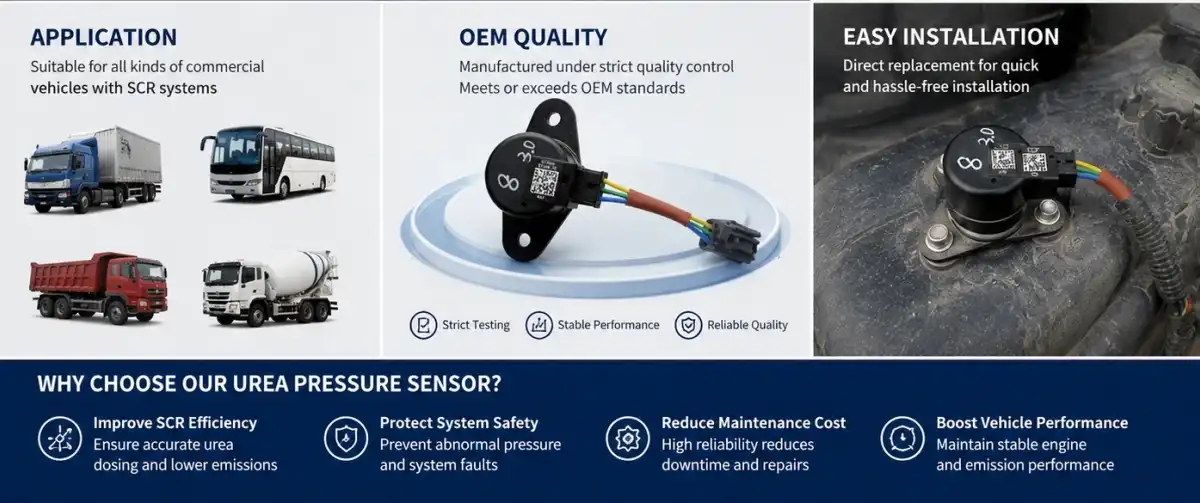
Procurement managers and R&D engineers working with SCR aftertreatment systems must understand how environmental stresses affect urea pressure sensors. Sensor accuracy, reliability, and operational longevity are affected by temperature changes and mechanical vibration, which affect emission compliance, system downtime, and maintenance costs. This guide explains how environmental challenges affect pressure sensing components in AdBlue dosing systems and offers advice on choosing sensors that perform well in heavy-duty trucks, construction machinery, agricultural equipment, and stationary power generation. We educate decision-makers on technical characteristics, failure modes, and mitigation techniques to optimize procurement and ensure SCR system dependability.
Understanding Urea Pressure Sensors and Their Sensitivity to Environmental Factors
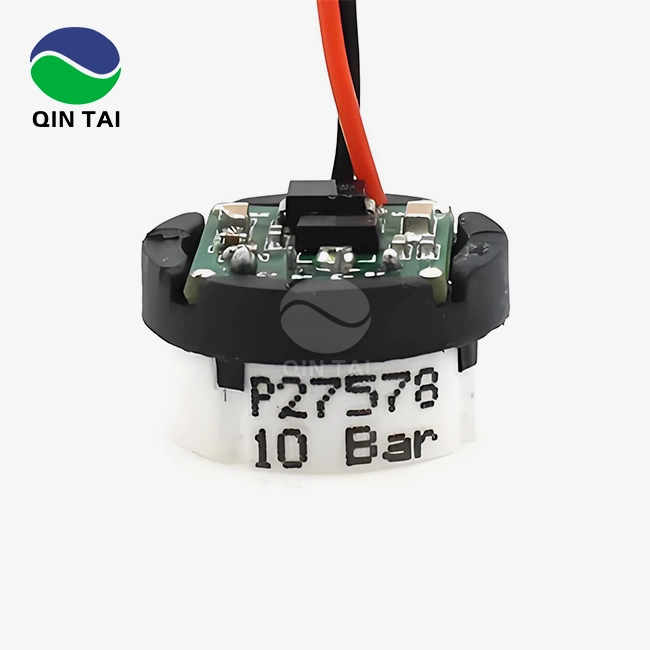
SCR dosing circuits use urea pressure sensors to continuously monitor AdBlue solution pressure for NOx reduction injection control. Piezoresistive or capacitive sensors transform mechanical pressure into electrical signals, usually 0.5-4.5 VDC analog output proportionate to measured pressure. Startup to maximum dosage circumstances are measured from -14 to +130.5 psi.
Temperature changes sensor behavior in many ways. Thermal expansion impacts sensing element dimensional stability, and temperature-dependent transducer circuit electrical resistance changes can cause measurement drift. Uncorrected sensors may degrade beyond emission control limits when ambient conditions change from cold starter at -40°F to high-temperature operation at 185°F in engine compartments.
The mechanical vibration presents unique issues. Engine, road, and industrial equipment oscillation stresses sensor mounting points, internal diaphragms, and electrical connections. In automotive and construction applications, vibration rates between 10-2000 Hz can prematurely wear sensor components, loosen threaded connections, and produce intermittent electrical problems that cause unpredictable pressure readings or signal loss.
Operating Principles and Sensor Types
Automotive-grade sensors use silicon-based sensing devices with integrated temperature adjustment circuitry for compactness and affordability. Industrial variations use metal diaphragms and strengthened housings for higher pressure ranges and environmental protection. To preserve calibration stability and prevent urea crystallization and chemical deterioration, both categories require careful material selection.
Environmental Range Considerations
Diesel emission systems operate under harsh environments. Cold-weather starts may expose sensors to AdBlue crystallization below -22°F, whereas generator sets and mining equipment operate at high temperatures and multi-axis vibration. Sensors without thermal correction or vibration resistance wander faster and need regular calibration or replacement.
Material and Design Vulnerabilities
Severe-duty applications may not suit automobile sensors with plastic housings and vibration mounting. Sensor diaphragms must resist pressure cycling fatigue, electrical connections must resist vibration-induced wire bending, and sealing systems must withstand heat expansion cycles. These design features affect field reliability and TCO.
Problem-Solving Approach: Diagnosing and Mitigating Temperature and Vibration Issues
Identification of environmental stress signs for a urea pressure sensor needs systematic monitoring. Comparison with reference gauges or SCR system performance decline might reveal signal drift as slow pressure reading changes that no longer match system pressure. Rapid sensor output variations, occasional signal loss, or pressure measurements that violate physical restrictions indicate mechanical or electrical issues. Temperature-related breakdowns occur during seasonal changes or prolonged heat extremes. When sensors indicate wrong pressure during high-temperature operation, operators may see improper dosing orders during cold starts or lower NOx conversion efficiency. Intermittent vibration damage can lead to communication issues and sensor failure.
Root Cause Analysis Framework
Leading manufacturers use integrated design to overcome these issues. Sensor body temperature is used to alter output signals with reference resistors or digital correction algorithms. Bosch stores correction factors in sensor memory for multi-point calibration throughout operational temperatures. Denso uses ceramic sensing components that are more thermally stable than silicon.
Environmental resistance depends on material choice. Stainless steel wetted components resist urea corrosion and keep dimension. Sensor housings manufactured from reinforced polymers or aluminum alloys provide necessary rigidity against vibration while dissipating thermal energy. Gold-plated electrical connectors reduce oxidation and heat cycle resistance changes. Installation greatly affects sensor durability. Thermal separation from exhaust components reduces temperature exposure, while mounting near vibration nodes reduces mechanical stress. The right torque requirements during installation avoid vibration-induced loosening and damage to sensor threads or internal components.
Mitigation Strategies
Sensor selection starts temperature compensation by selecting units with required accuracy over the operational range, not nominal circumstances. External temperature sensors near the pressure transducer enable ECU-based correction methods when sensor-integrated compensation fails. High-temperature sensors have thermal barriers or heat shields. Management of vibration uses many methods.
Elastomeric isolation mounts absorb high-frequency vibrations before sensor bodies. Safe cable routing and strain alleviation avoid wire fatigue. Mounting integrity is checked periodically for loose fasteners or damaged sensor housings that indicate stress. Environmental drift is compensated using calibration algorithms. Baseline measurements during commissioning help identify decline. Verification against precision test equipment every 12-24 months or after suspected stress events allows early action before accuracy degrades.
Comparison and Selection: Choosing the Right Urea Pressure Sensor for Challenging Environments
Specifications for a urea pressure sensor must be examined beyond nominal accuracy ratings to evaluate environmental stress performance. Sensors claiming ±0.5% accuracy must maintain tolerance over the specified temperature range, not just under lab circumstances. Temperature coefficient specifications—usually % drift per degree Celsius—quantify precision loss outside reference circumstances.
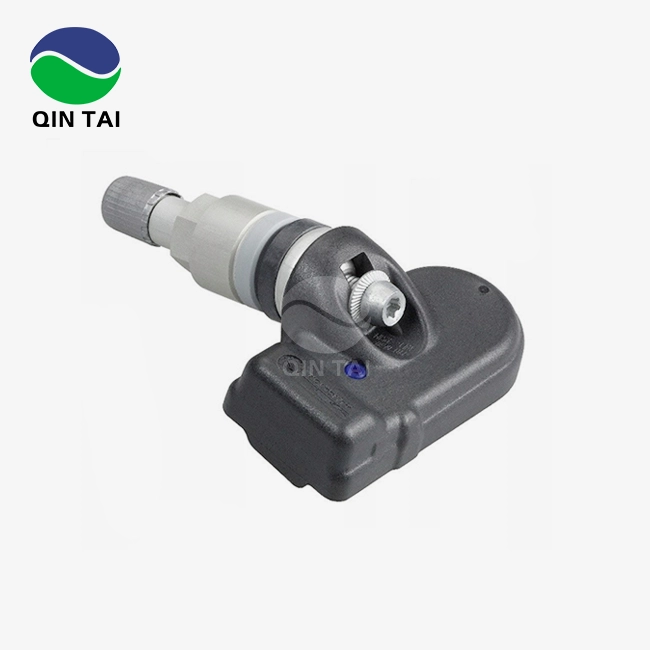
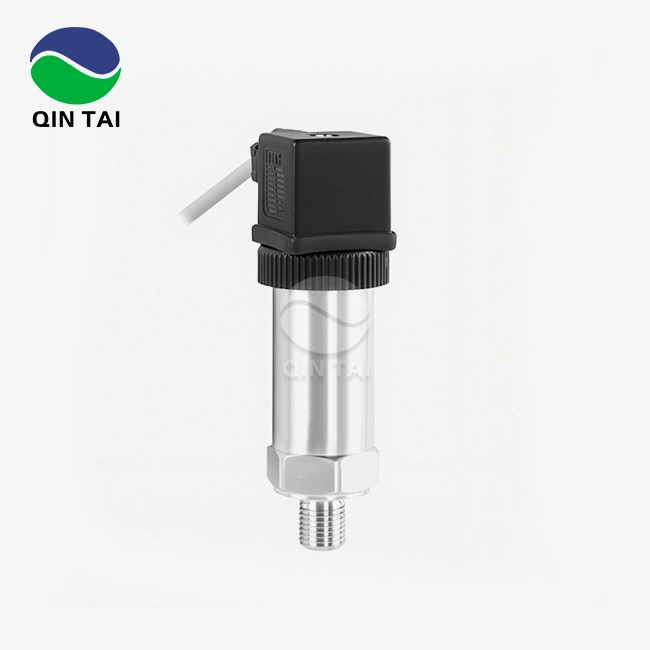
Specifications provide maximum acceleration (g-forces) and frequency ranges for vibration tolerance. In heavy-duty applications, sensors must withstand 20g continuous vibration over broad frequency spectrums. Quality sensors can survive 50g stress events without calibration shift from rough terrain or machine operation. The Qintai QS-P226 is designed for tough conditions. This analog-output sensor maintains ±0.5% accuracy from -14 to +130.5 psi within its defined temperature range. The 5V supply voltage and 0.5-4.5 VDC ratiometric output minimize noise and support typical ECU connections. Manufacturing controls crucial performance metrics with self-developed sensor cores.
Performance Metrics Evaluation
Total error band, linearity, hysteresis, and repeatability across environmental variables must be considered in accuracy parameters. Faster sensor response improves pressure regulation in control loops. Long-term stability parameters show predicted drift over months or years of continuous operation, essential for situations where regular recalibration is unfeasible.
Sensor vs. System Integration
Sensors assess AdBlue circuit pressure and fluid temperature for freeze prevention and viscosity adjustment. These supplementary measures provide complete SCR system monitoring. Separate sensors offer appropriate placement for each measurement, while integrated sensor modules decrease component count and installation complexity.
Supplier Evaluation Criteria
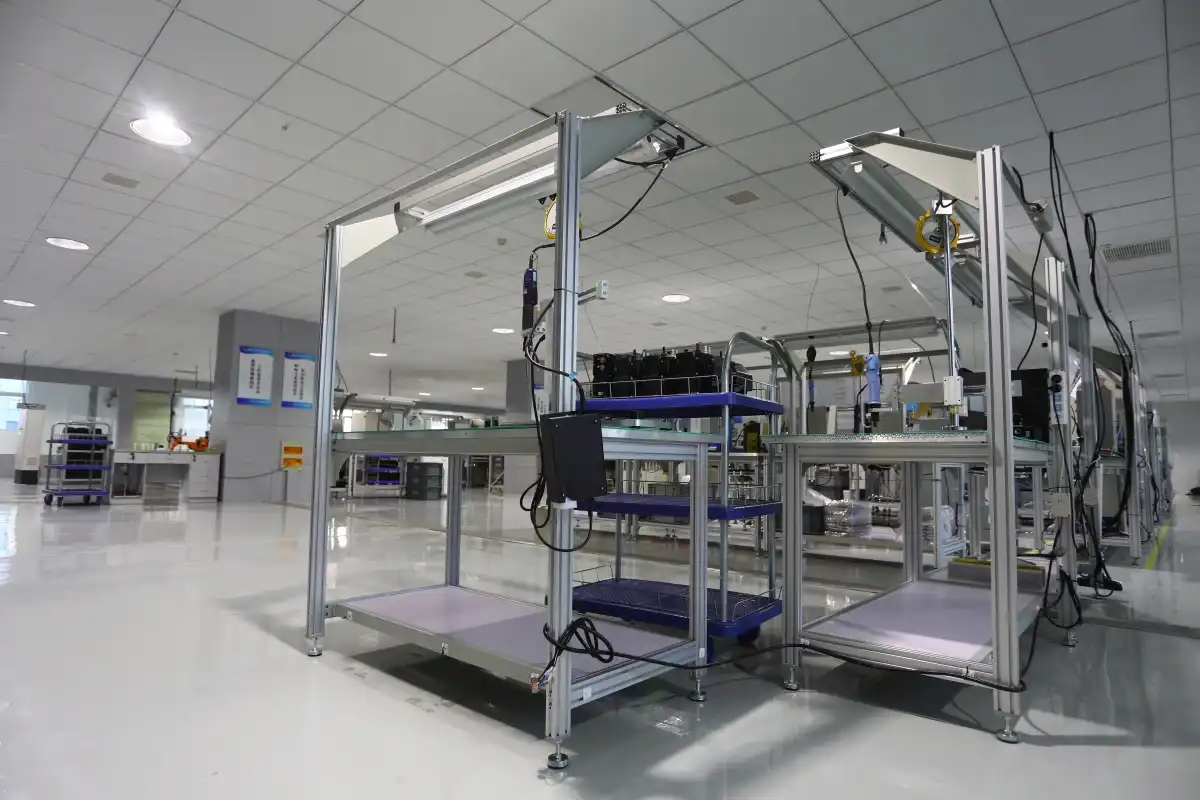
Supplier selection includes production and support facilities as well as component standards. ISO9001 and IATF16949 certifications show automotive-grade quality management systems. RoHS and REACH certification ensures European market environmental compliance. UL and CE certifications help North American and European establishments approve products. Xi'an Qintai Automotive Emission Technology is a complete provider. This high-tech company, founded in 2001, does autonomous R&D to develop products. Sensor cores are manufactured to assure quality and allow modification for specific applications. ISO9001, IATF16949, CMC, Ex, UL, CE, REACH, and RoHS certifications show worldwide regulatory conformity.
As Weichai, Yuchai, and Quanchai Power's primary supplier, the firm has shown success in challenging OEM applications. This market leadership in China has led to millions of operational hours of reliability. Sensor technology and SCR system integration advancement is shown by the 58 invention patents. Warranty terms show manufacturer confidence in product durability. Standard 12-month warranties cover manufactured faults; extended warranties address application issues. Established suppliers keep stock for big orders and emergency replacements, which helps production planning and aftermarket service.
Maintenance, Calibration, and Troubleshooting: Ensuring Long-Term Sensor Reliability
Systematic maintenance extends sensor life and accuracy. Cracked housings, rusted connections, and loose mounting hardware are visible during normal service intervals. Electrical connections are checked for secure terminal engagement and contact resistance to predict breakdowns. Urea crystallization surrounding sensor bodies is cleaned. During normal operation, AdBlue residue on exterior surfaces may seep into connection cavities or influence heat transfer.
Regular deionized water washing eliminates deposits without hurting sensors. During reassembly, dielectric grease prevents moisture from entering connector cavities. Verifying mounting security needs calibrated torque tools. Threaded connections loosen with vibration, even after careful installation. Monitoring mounting torque yearly or after equipment use in strong vibration situations minimizes sensor displacement that affects data or damages mechanical components.
Calibration Procedures for Variable Conditions
System pressure isolation allows urea pressure sensor output measurement at known pressure locations for calibration verification. Precision test equipment records output voltages while applying reference pressures over the sensor's working range. Drift requires sensor replacement or adjustment to manufacturer standards. Temperature-compensated calibration uses reference pressures at several operational temperatures. This multi-point validation proves temperature compensation circuits work in cold and hot weather.
Documenting calibration results provides trending data for component lifespan prediction. Sensors have different field calibration capabilities. Analog sensors with fixed calibration must be replaced when drift exceeds limits. Digitally interfaced sensors can store new correction factors without sensor replacement for ECU-based calibration updates. Understanding calibrating capabilities during purchase affects long-term maintenance.
Troubleshooting Common Faults
Pressure reading errors have multiple symptoms. Low readings may indicate system leaks, while high readings indicate flow limits or valve problems. Sensor defects are isolated from system issues by comparing sensor output to direct pressure. Intermittent readings indicate electrical connection or vibration-induced internal damage. Complete signal loss or irregular output unrelated to pressure fluctuations indicate connection faults. Electrical route integrity is verified by evaluating connection pin corrosion, harness continuity, and sensor supply voltage.
Replace broken harnesses or connections to fix intermittent sensor failure issues. Early intervention prevents subsequent system harm. Due to inaccurate pressure sensing, AdBlue dosage is either inadequate, enabling NOx breakout, or excessive, wasting fluid and potentially harming catalysts. Systematic monitoring detects sensor deterioration for prompt replacement before emission compliance or component damage.
Procurement Best Practices for Urea Pressure Sensors Under Environmental Challenges
Sensors for severe environments require supplier confirmation beyond catalogue standards. Requesting environmental test data—actual temperature and vibration results—reveals capabilities beyond quoted requirements. Extended validation testing shows product maturity and quality commitment by suppliers. Certification criteria link procurement with regulations.
EPA and CARB clearances verify U.S. emission system components, whereas Euro VI compliance is necessary for European uses. China VI standards affect worldwide design, and sensors fulfilling them have enhanced emission control. Performance validation by sample testing gives procurement confidence before bulk commitments. Integrating pre-production sensors in typical applications shows integration difficulties and ensures operational dependability. Prior to deployment, this validation step detects possible issues, decreasing field failure risks.
Bulk Purchasing and Customization
Volume pricing rewards long-term commitments and stabilizes supply chains. Framework agreements set cost, delivery, and technical support for continuous procurement. Established clients' minimum order amounts drop, providing inventory management flexibility. Customization meets application-specific needs beyond catalog offers. Sensors for unusual installations have modified pressure ranges, electrical connections, or mounting designs.
Like Qintai's autonomous development team, suppliers with in-house R&D may accommodate customisation demands more easily than distributors of standardized items. OEM and ODM services include modified standard goods and bespoke sensor designs. OEM collaborations deliver customized goods with client branding, whereas ODM partnerships create innovative sensor combinations. Understand supplier capabilities in these areas to link procurement with product differentiation goals.
Negotiation and Contract Terms
Warranty coverage includes application support and failure investigation beyond replacement. Installation help, ECU interface optimization support, and extensive root cause analysis for field failures are covered by comprehensive warranties. These value-added services lower ownership expenses beyond purchase price. Delivery logistics greatly affect production planning and aftermarket support. Supply chains with U.S. distribution inventory can meet urgent needs quickly, while direct shipments from factories fit scheduled production with longer lead times.
Clear delivery terms, including emergency expedited alternatives, reduce costly manufacturing delays. Currency and payment periods impact procurement costs. Better payment schedules enhance cash flow management, while multi-currency pricing solutions give cost predictability despite exchange rate swings. Price adjustments based on raw material costs or market indices balance supplier and customer financial interests in long-term supply agreements.
Conclusion
Temperature change and mechanical vibration severely impact SCR aftertreatment system urea pressure sensor reliability. Understanding these failure processes helps procurement and engineering teams choose environmental-resistant components, mitigate risks, and sustain system performance. Supplier evaluations include verified environmental testing, extensive certifications, and proven field performance to guarantee sensor selections fulfill exacting application requirements. Systematic maintenance and calibration enhance component life and maintain emission-compliant measurement accuracy. By incorporating these technical aspects into procurement procedures, businesses improve SCR system dependability, reduce operational interruptions, and reduce heavy-duty diesel emission control costs.
FAQ
Q1: How does temperature affect urea pressure sensor accuracy?
A: Temperature-dependent electrical resistance variations in transducer circuits and sensing element thermal expansion affect sensor accuracy. Quality sensors include ±0.5% accuracy from -40°F to +185°F functioning ranges with adjustment circuitry. Sensors without suitable correction may wander over 2-3% at severe temperatures, degrading AdBlue dosage and emission control.
Q2: What vibration levels can industrial-grade sensors withstand?
A: Construction and agricultural machinery sensors can resist constant 20g acceleration at 10-2000 Hz. These specs reflect regular operating exposure, not maximum tolerance. Impact resistance values of 50g handle difficult terrain shock loading. Vibration levels over limits promote fatigue failures and calibration drift.
Q3: How often should sensors undergo calibration verification?
A: Application severity and regulations determine calibration intervals. Automotive applications should be verified annually, whereas stationary installations can be checked every 12–24 months. Applications with significant temperature cycling or vibration benefit from semi-annual testing. When system performance suggests sensor deterioration or suspected stress events, immediate verification is needed.
Partner with Qintai for Reliable Urea Pressure Sensor Solutions
With established sensor technology designed for environmental resilience, Qintai can complement your SCR system. In heavy-duty diesel applications, our QS-P226 urea pressure sensor offers ±0.5% accuracy and sturdy construction tested over millions of operational hours. As a leading urea pressure sensor manufacturer with IATF16949 certification and thorough quality processes, we fulfill China VI and Euro VI emission regulations consistently. As China's leading OEM supplier, our technical team offers application engineering, customization, and prompt after-sales service. Email info@qt-sensor.com to discuss your application needs, technical specifications, or purchase volume pricing.
References
1. Society of Automotive Engineers. "Environmental Testing Standards for Automotive Sensors." SAE J1455 Technical Standard, 2023.
2. Zhang, H., Wang, L., & Chen, X. "Reliability Analysis of Pressure Sensors in SCR Systems Under Thermal Cycling." Journal of Automotive Engineering, Vol. 237, No. 4, 2023, pp. 856-871.
3. International Organization for Standardization. "Test Methods for Vibration Resistance of Electronic Components." ISO 16750-3:2022.
4. Mitchell, P. & Roberts, S. "Temperature Compensation Techniques for Piezoresistive Pressure Sensors in Emission Control Applications." Sensors and Actuators A: Physical, Vol. 348, 2022, pp. 113-127.
5. European Commission Joint Research Centre. "Performance Requirements for SCR System Components in Euro VI Applications." Technical Report EUR 30892, 2022.
6. Anderson, M., Kumar, R., & Thompson, D. "Field Reliability Study of AdBlue Dosing System Sensors in Commercial Vehicles." International Journal of Heavy Vehicle Systems, Vol. 30, No. 2, 2023, pp. 198-216.

Our customers’ satisfaction speaks for our quality — contact us to experience the same reliable service.