- English
- French
- German
- Portuguese
- Spanish
- Russian
- Japanese
- Korean
- Arabic
- Greek
- German
- Turkish
- Italian
- Danish
- Romanian
- Indonesian
- Czech
- Afrikaans
- Swedish
- Polish
- Basque
- Catalan
- Esperanto
- Hindi
- Lao
- Albanian
- Amharic
- Armenian
- Azerbaijani
- Belarusian
- Bengali
- Bosnian
- Bulgarian
- Cebuano
- Chichewa
- Corsican
- Croatian
- Dutch
- Estonian
- Filipino
- Finnish
- Frisian
- Galician
- Georgian
- Gujarati
- Haitian
- Hausa
- Hawaiian
- Hebrew
- Hmong
- Hungarian
- Icelandic
- Igbo
- Javanese
- Kannada
- Kazakh
- Khmer
- Kurdish
- Kyrgyz
- Latin
- Latvian
- Lithuanian
- Luxembou..
- Macedonian
- Malagasy
- Malay
- Malayalam
- Maltese
- Maori
- Marathi
- Mongolian
- Burmese
- Nepali
- Norwegian
- Pashto
- Persian
- Punjabi
- Serbian
- Sesotho
- Sinhala
- Slovak
- Slovenian
- Somali
- Samoan
- Scots Gaelic
- Shona
- Sindhi
- Sundanese
- Swahili
- Tajik
- Tamil
- Telugu
- Thai
- Ukrainian
- Urdu
- Uzbek
- Vietnamese
- Welsh
- Xhosa
- Yiddish
- Yoruba
- Zulu
How to Find Reliable SCR Dosing Pump Manufacturers
To make sure you follow the rules, run your business efficiently, and keep costs low in the long term, you need to find reliable SCR Dosing Pump makers. An SCR Dosing Pump moves AdBlue or urea solution from the holding tank to the catalytic converter. This lets diesel engine aftertreatment systems precisely lower NOx. Choosing manufacturers who know about emission standards like China VI and Euro VI and can provide strong production skills and technical support has a direct effect on the performance of your system and the image of your company in a competitive market.
Understanding SCR Dosing Pumps and Their Market Landscape
Selective catalytic reduction technology is a big part of modern diesel engines that need to meet stricter pollution rules in the US and around the world. The SCR Dosing Pump is the most important part of this technology. It makes sure that the diesel waste juice gets to the SCR catalyst correctly. This accuracy has a direct effect on how well NOx is converted and on meeting environmental requirements in general.
The Role of Urea Pumps in Emission Control Systems
In the aftertreatment design, the SCR Dosing Pump plays a number of important roles. It sends AdBlue from the tank to the dose module at the right pressure, keeping the flow at its best no matter how hot or cold it is outside. The pump is always talking to the Engine Control Unit, which changes the amount of dosing based on real-time exhaust flow, feedback from the NOx monitor, and the vehicle's working conditions. This smart control makes sure that the catalyst gets just the right amount of reducing agent, so neither ammonia slip nor incomplete NOx conversion happen.
Market Drivers and Technology Evolution
As emission rules get stricter around the world, makers are being pushed to develop more advanced SCR Dosing Pump systems that are more accurate and last longer. Heavy truck fleets, people who drive building equipment, and companies that make generator sets are under more and more pressure to leave less of an impact on the environment while keeping efficiency and keeping upkeep costs low. These market forces have sped up the development of new pump materials, control methods, and ways to integrate them. Manufacturers are now focusing on small designs that combine heaters, filters, and clear functions into a single unit. This makes placement easier and improves performance in cold weather.
Distinguishing Pump Technologies
Knowing the differences between the different kinds of pumps helps buying teams match the right technology to the job. Diaphragm pumps work great in situations where the pressure needs to change quickly and accurately. This makes them perfect for use in cars and other mobile equipment where engine loads change all the time. Although they usually work at lower pressures, peristaltic pumps are very good at moving fluids that are thicker and more resistant to chemicals. Gear pumps can handle high pressures and steady flow rates, making them good for stable industry uses. By recognising these differences, practical needs and equipment skills can be better aligned.

Core Criteria for Selecting Reliable SCR Dosing Pump Manufacturers
To pick the best production partner, you need to carefully look at a lot of different factors. You can tell right away if a provider can meet your short-term needs and help your business grow in the long term by looking at their technical specs, quality systems, production capacity, and service infrastructure. Choosing reliable SCR Dosing Pump manufacturers is the first step toward long-term operational success.
Technical Capability and Product Performance
One of the most important things to check is the flow rate ability. Dosing rates need to be different for each engine type and waste volume, but they are usually between 0.5 and 15 litres per hour. Pressure needs also change depending on how the system is designed, but most vehicle uses need between 5 and 9 bar. It is important that the materials used are compatible with the urea solution, because AdBlue's acidic qualities can quickly break down parts that aren't right. Manufacturers who use corrosion-resistant locks, stainless steel, and special plastics show that they know how the product will be used.
Emission compliance and running costs are directly affected by how accurate and repeatable something is. Even a 5% mistake in the dose can cause pollution to go over the legal limits or waste expensive diesel exhaust fluid. Manufacturers you can trust give you detailed testing data and say that their products are accurate to within ±2% of the full working range. They also make pumps with sensors built in that find performance drift before it leads to compliance problems.
Quality Certifications and Manufacturing Standards
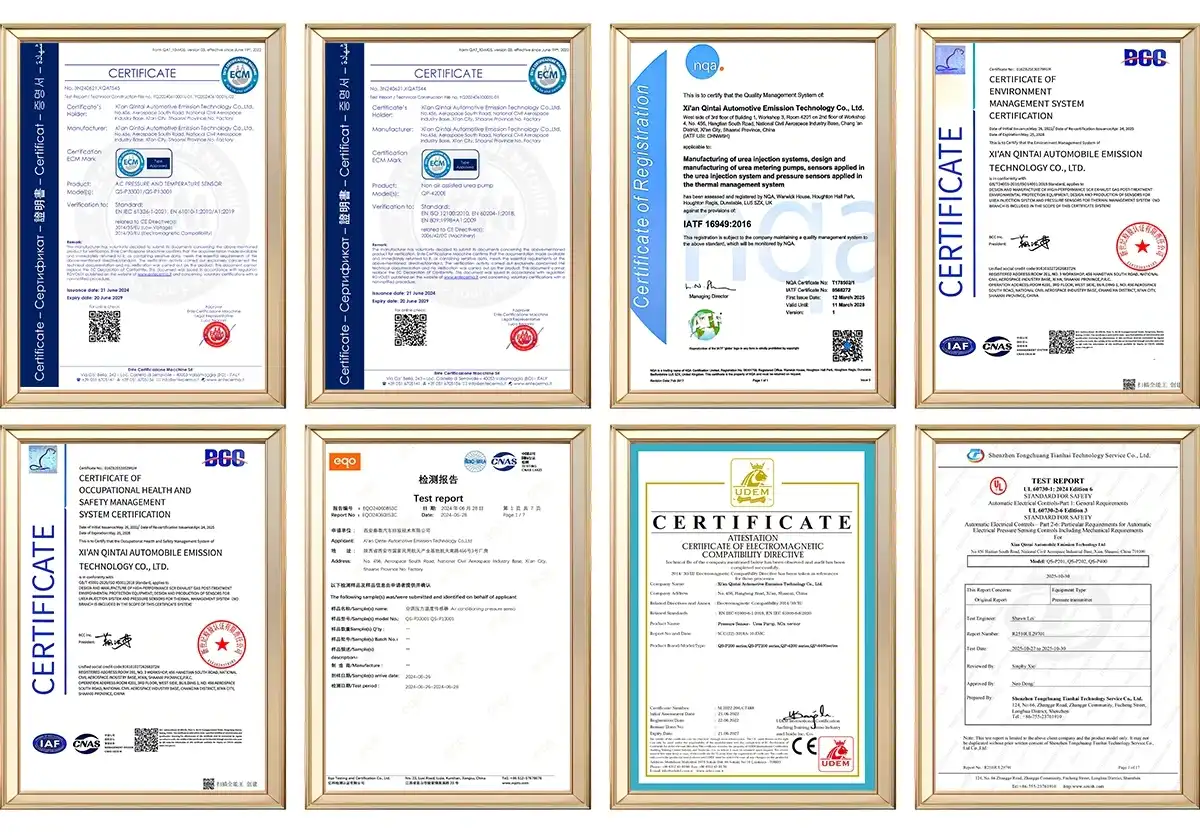
While ISO 9001 certification sets the standard for quality management, IATF 16949 certification, which is only for car production, is what really makes a company trusted. This standard goes over things that general ISO certification doesn't, like how to handle the supply chain, how to approve production parts, and how to make sure that things are always getting better. Extra certificates, such as UL for electrical safety, CE for entry to the European market, and REACH compliance for chemical substance rules, show that a company is dedicated to meeting the needs of the global market.
Looking at a company's testing procedures shows what their quality mindset is. Comprehensive validation includes testing the product's ability to withstand high temperatures (-40°C to +90°C), making sure it works for more than 10,000 hours, and making sure it doesn't interact with car electronics through electromagnetic compatibility. People are more likely to trust manufacturers who do these tests themselves and share thorough results than those who only use component-level testing.
Research and Development Strength
How well a maker can adapt to changing pollution standards and unique application needs is directly related to how much they spend on research and development. Companies with their own engineering teams can change the designs of pumps to fit different installation conditions, change the way specialised control systems talk to each other, and make sure that performance is at its best for certain job cycles. Looking at a supplier's product collection is a good way to see how innovative they are. Companies that have more than one idea patent in areas like freeze protection, pressure control, and dosing algorithms show that they are truly scientific leaders, not just good at making things.
Production Capacity and Supply Chain Reliability
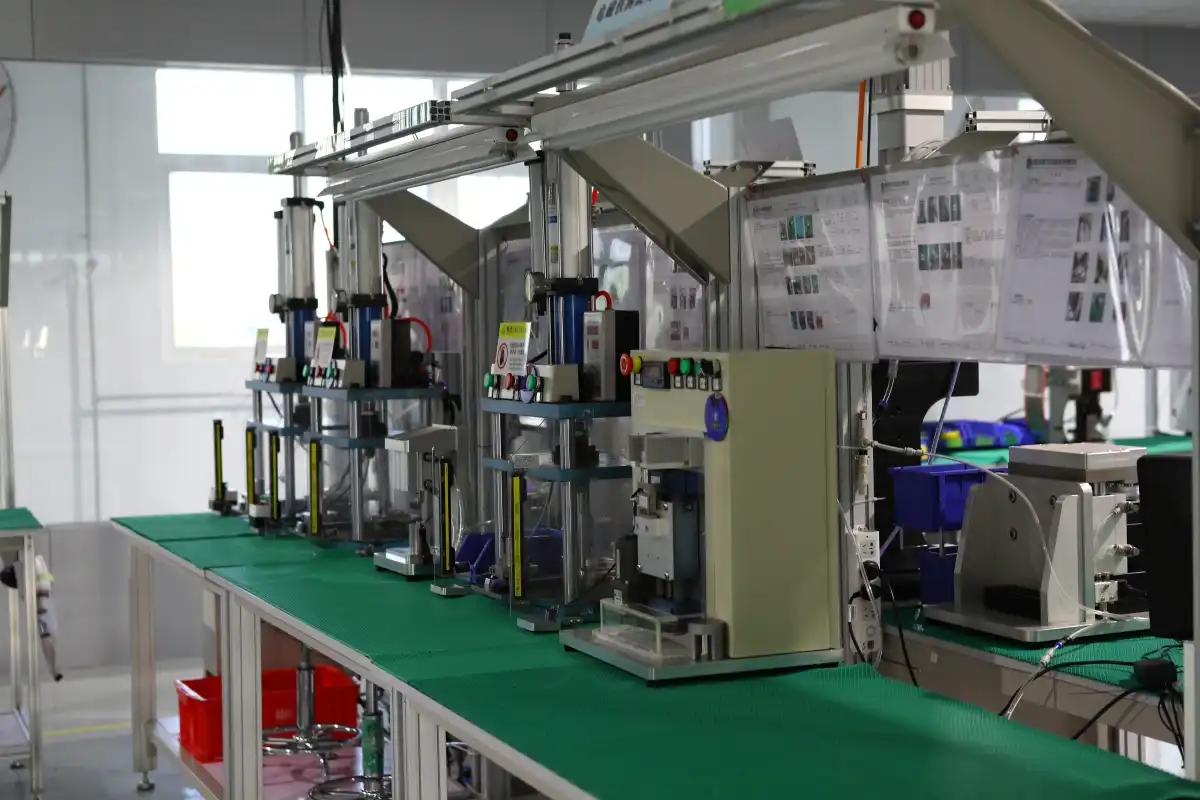
Being able to do mass production is very important for OEM relationships. A company that makes 50,000 units a year has very different skills than one that makes 500,000 units a year. Larger makers can usually get better prices on parts by buying more of them, keep process controls tighter by automating them, and handle changes in demand without affecting delivery times. When you visit production sites, you can see how full they really are. Automated manufacturing lines, statistical process control systems, and the amount of finished goods in stock can all tell you if a factory can safely meet your volume needs.
The geographical impact also affects how resilient the supply line is. When a manufacturer has more than one output place, they can keep delivering even when there are problems in other areas. People who keep an inventory of key components can protect against gaps in upstream supplies that could stop production otherwise.
Step-by-Step Guide to Verifying and Partnering with SCR Dosing Pump Manufacturers
For sourcing to work, you need to take a methodical approach that helps you understand each possible partner's skills better as you cut down your choices. Finding a reputable SCR Dosing Pump manufacturer requires due diligence and a multi-stage verification process.
Initial Research and Candidate Identification
Industry shows like CONEXPO, bauma, and specialised emission control conferences are great places to find makers and compare what they have to offer. At these events, you can talk to tech teams in person and look at product samples up close. You can find customer reviews, technical books, and business histories online, which are all useful additions to trade shows. When manufacturers put out specific application notes, installation guides, and troubleshooting tools, it shows that they care about their customers' success after the sale. Comparing yourself to well-known names can help you set realistic goals. By knowing what the top suppliers in your field give in terms of features, costs, and customer support, you can use that information to judge new suppliers who might be a better deal.
Technical Documentation Review
By asking for detailed technical paperwork early on in the evaluation process, you can weed out sellers who don't have a lot of engineering knowledge. Not only should detailed datasheets list the baseline performance, but they should also list the working ranges, environmental limits, and repair intervals that are expected. Dimensional drawings with limits show how precisely something is being made. Planning for integration is possible with the help of electrical drawings and communication protocol standards. Companies that offer this information freely usually have well-organised engineering processes. Companies that only offer marketing materials, on the other hand, may not have enough expert content.
Quality Audits and Factory Assessments
Remote checks through videoconferencing let you get a feel for production settings without having to spend money on travel. You can get a good idea of how mature an operation is by looking at the production areas, quality control stations, and test facilities. By asking workers about problems with the process and watching how they answer, you can tell if continuous improvement is really being done or just said to be done.
Even though they cost a lot, on-site checks before big agreements are still very helpful. Details that are missed by remote assessments can be found by walking production lines, looking through reject bins, and reading quality records. Checking the calibration stickers on test equipment, looking at how sensitive parts are stored, and talking to quality managers about recent changes are all good ways to feel confident in a supplier's skills.
Pilot Testing and Performance Validation
Trial orders let you check how well a product works and how quick a seller is before making a full commitment. By setting up realistic application conditions for pilot testing, you can be sure that the results will be accurate when used in the real world. Putting examples in typical machines and keeping an eye on important factors like dosing accuracy, pressure stability, and temperature response over a period of weeks or running cycles shows aspects of reliability that datasheets can't show. During pilot testing, looking at maker support gives you a taste of what the relationship will be like. Quick expert support, a desire to deal with problems that come up out of the blue, and the ability to adapt to changes in the design are all signs of how well the manufacturer will do when production problems do happen.
Contract Negotiation and Partnership Terms
Clear deals protect both sides and spell out what is expected of them. Setting clear quality standards, acceptance criteria, and testing procedures stops disagreements about whether something is conforming. Setting clear guarantee terms, such as length, types of failure covered, and repair methods, makes it clear who is responsible when problems happen. Setting up rules for communication, like regular business reviews, ways to call technical support, and ways to escalate problems, makes sure that problems are fixed quickly and don't get worse.
Pricing and volume promises need to be carefully balanced. When you sign a long-term deal with a volume guarantee, you usually get better price, but you lose some flexibility. Staged commitments that grow volumes as the relationship works out lower risk while still encouraging prices to be affordable.
Common Challenges in SCR Dosing Pump Procurement and How to Avoid Them
When trying to find these specialised parts, even buying teams with a lot of experience run into problems. Understanding common mistakes lets you avoid them before they happen, especially when evaluating an SCR Dosing Pump for specific applications.
Specification Mismatches and Compatibility Issues
Integration problems are often caused by not paying enough attention to interface requirements. The electrical connectors, mounting dimensions, and transmission methods must all work ideally with the way the system is already set up. A pump that delivers the right flow and pressure but uses CAN bus messages that don't work together can't work right. These expensive mistakes can be avoided by asking for interface control papers during the evaluation process and letting systems experts help choose the supplier.
It's not just the urea solution that is chemically compatible. In mobile uses, diesel fuel vapours, road salt spray, and cleaning chemicals can all come into touch with the outside of pumps. Companies that make things for the car industry make sure that the housings and seals they use can handle these conditions. Companies that make things for stationary industrial markets may not think about these needs.
Quality Variability and Counterfeit Components
The aftermarket is a great place for low-quality goods to get sold. If you buy replacement pumps from a source that isn't authorised, they might not be made with good materials, be calibrated correctly, or even have fake branding on them. Building relationships directly with makers or their authorised distributors is the best way to make sure you get real goods that come with warranties. Another layer of safety is added by asking for certificates of conformance and checking serial numbers against records of manufacturers.
By keeping an eye on field failure rates, you can spot problems with quality early on. Setting up methods for reporting failures that record failure types, working hours, and environmental conditions makes it possible to look for trends. Sudden rises in certain types of failures are a sign of manufacturing flaws that need to be fixed right away by the provider.
Balancing Cost Pressures with Long-Term Value
It makes sense for procurement teams to look for the cheapest way to buy something, but focused only on price can make the total cost of ownership higher. A pump that costs 15% less but needs to be replaced twice as often ends up costing more in the long run. In the same way, not having enough technical help that makes troubleshooting take longer raises the cost of engineering labour that is much higher than the savings from using parts. A more true way to compare suppliers is to do a total cost study that takes into account things like expected service life, maintenance needs, failure rates, and support costs. Even though they are positioned as expensive, manufacturers whose products last longer and come with more support usually offer better value.
Case Studies: Successful Partnerships with Leading SCR Dosing Pump Manufacturers
By looking at real-world examples, we can see how the right factory partnerships can lead to project success and operating excellence. Choosing a proven SCR Dosing Pump partner ensures reliability in the most demanding environments.
Heavy-Duty Truck Fleet Emission Compliance
A big truck company in North America had to meet strict emission standards by upgrading the aftertreatment systems on all of their products. Their engineering team looked at several urea dose pump providers and ranked them by flow rate, performance in cold weather, and ability to increase production. The chosen maker provided integrated pump kits with built-in heaters and logic to prevent freezes. This makes sure that AdBlue melts before it is delivered and only allows dosing when the solution temperature is above freezing. This design got rid of the emission jumps that happened at cold starts that were a problem with older models.
The company's ability to increase production from 50,000 to 200,000 units per year in just 18 months was very important because truck sales were higher than expected. Their quick engineering help fixed some minor interface problems during the first production run, and their predictive maintenance analytics cut down on warranty claims by finding pumps that were failing before they broke completely.
Construction Equipment Aftermarket Distribution
A parts wholesaler that works with shops that fix building equipment had a lot of problems with urea pumps that were not working right. This hurt their image and made warranty costs go up. A lot of aftermarket pumps broke within a few months because the seals broke down and the setting moved. The dealer teamed up with a company that makes industrial-grade parts that are made to work in tough conditions. The housings of these pumps were strengthened, the seals met military standards, and the adjustment times were lengthened.
Because the maker was ready to keep inventory in the United States, distributor wait times dropped from eight weeks to three days, which meant that most orders could be filled the same day. Their technical hotline helped shop workers figure out problems with installation, which cut down on failures caused by wrong application that were once thought to be caused by product flaws. Within two years, the number of warranty claims dropped by 60%, and sales jumped because of a better image.
Generator Set Environmental Compliance
A company that makes generators for hospitals and data centers needed urea dose options that could keep working even when the power went out for long periods of time. Standard car pumps that were made for intermittent job cycles wore out faster when they were used all the time. The maker worked with a pump source to make a heavy-duty version with industrial bearings, better cooling, and seals that last longer. The pump supplier's knowledge of how to integrate systems was also very useful. They gave us full dosing units that included storage tanks, level monitors, and control electronics that worked perfectly with the generator's current control system. This "turnkey" method cut the time it took to build a product by six months and got rid of any integration risks that might have caused the launch to be delayed.
Conclusion
To find dependable SCR Dosing Pump manufacturers, you need to weigh technical specs, quality systems, output ability, and a commitment to a partnership. Long-term success depends on manufacturers showing they have IATF 16949 approval, a lot of money spent on research and development, and a track record of being able to make a lot of things. Systematic evaluation, such as reviewing paperwork, doing workplace checks, and doing field tests, verifies promises and shows what really works. Common mistakes like mismatched specifications and focusing too much on purchase cost can cost a lot of money and cause delays in your project. The best partnerships combine great goods with quick technical help and open communication. This way, the partnerships can change with the needs and conditions of the market.
FAQ
Q1: What factors most significantly influence urea pump lifespan?
A: Extremes in operating temperature, task cycle strength, and fluid quality are the main factors that determine how long something lasts. Frequent freeze-thaw cycles speed up the wear and tear on seals in pumps compared to those that are kept at a constant temperature. When high pressure is applied continuously, parts wear out faster than when it is applied intermittently. Internal wear is sped up by contaminated AdBlue that has particles in it or that has been stored for a long time. Good makers make pumps with features that control temperature, use materials that are right for the job cycle, and filtering systems that make them last up to 10,000 hours of normal use.
Q2: How can I verify chemical compatibility between urea solutions and pump materials?
A: Asking makers for material compatibility charts can help, but getting them checked by a third party gives you more trust. Reputable makers use ASTM standards for immersion testing, which involves putting materials in a 32.5% urea solution at high temperatures for long periods of time and checking for changes in size, weight, and mechanical properties. Instead of believing what marketing says, reading these test results confirms match claims.
Q3: What delivery lead times should I expect for volume orders?
A: Lead times vary a lot depending on how customised the product needs to be and how much capacity is being used at the moment. Standard catalogue items from companies that keep finished goods in stock usually ship within one to two weeks. It usually takes four to eight weeks for custom setups that need special connectors, mounting brackets, or calibration settings. Orders that are very large and take longer than usual to fill may need three to six months to expand production capacity. Setting up blanket purchase orders with planned releases helps makers plan their capacity and cuts down on the time it takes to get new deliveries.
Partner with Qintai for Dependable Urea Dosing Pump Solutions
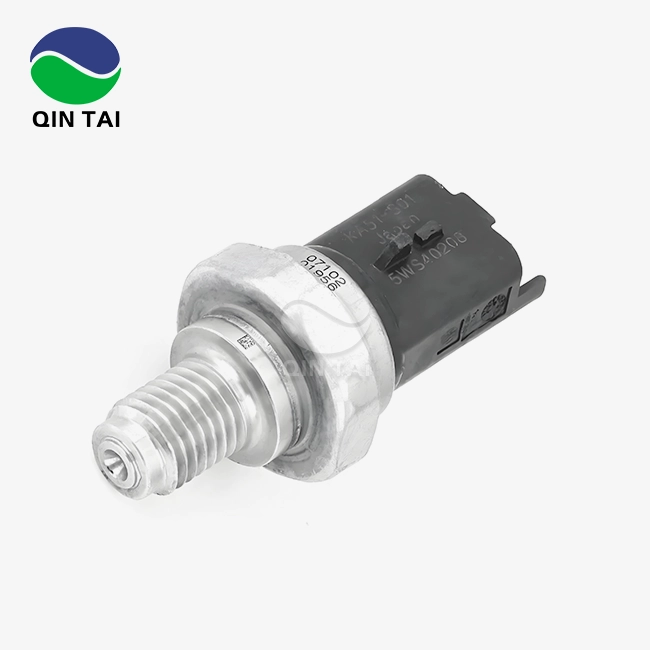
Because they are always focusing on quality and new ideas, Qintai is known as China's top OEM provider of SCR aftertreatment parts. Our SCR Dosing Pump units have small, integrated designs that put the pump, filter, and heater all in one unit. This makes placement easier and increases durability. The freeze protection and purge features that are built in make sure that the dose is accurate at all temperatures. The low energy use and quiet operation meet the needs of current equipment platforms.
Our factory in Xi'an is IATF 16949 approved and makes more than 300,000 SCR Dosing Pumps every year for Weichai Power, Yuchai Power, and other big Chinese engine makers. Our 58 idea patents cover dosing control methods, thermal management systems, and diagnostic features that make our products unique compared to other products on the market. Our independent research and development team works with customers to create custom solutions that meet the specific needs of each application. These can be anything from special mounting arrangements to custom communication methods.
Qintai has the technical know-how and production ability to help you succeed whether you need reliable SCR Dosing Pump diesel options for heavy trucks, building equipment, farm equipment, or generator sets. Our skilled engineers offer full technical help for the whole lifecycle of a product, from developing the original specifications to starting production and improving performance in the field. Get in touch with us at info@qt-sensor.com to talk about your needs with our technical experts and find out how working with a reputable SCR Dosing Pump maker can help you stand out from the competition.
References
1. Johnson, M. & Williams, R. (2022). Diesel Engine Emission Control Technologies: Design, Performance, and Regulatory Compliance. Society of Automotive Engineers International.
2. Chen, L. (2021). "Selective Catalytic Reduction System Optimization for Heavy-Duty Applications." Journal of Emission Control Science and Technology, 7(3), 245-267.
3. Environmental Protection Agency. (2023). Heavy-Duty Engine and Vehicle Standards and Highway Diesel Fuel Sulfur Control Requirements. EPA-420-F-23-008.
4. Anderson, K. & Schmidt, T. (2023). Urea Dosing System Design and Integration for Mobile Applications. International Council on Clean Transportation.
5. Liu, H., Zhang, Y., & Wang, D. (2022). "Reliability Analysis of SCR Dosing Pumps in Commercial Vehicle Applications." International Journal of Automotive Technology, 23(4), 891-903.
6. Miller, P. (2021). Procurement Best Practices for Automotive Emission Control Components. Automotive Industry Action Group.
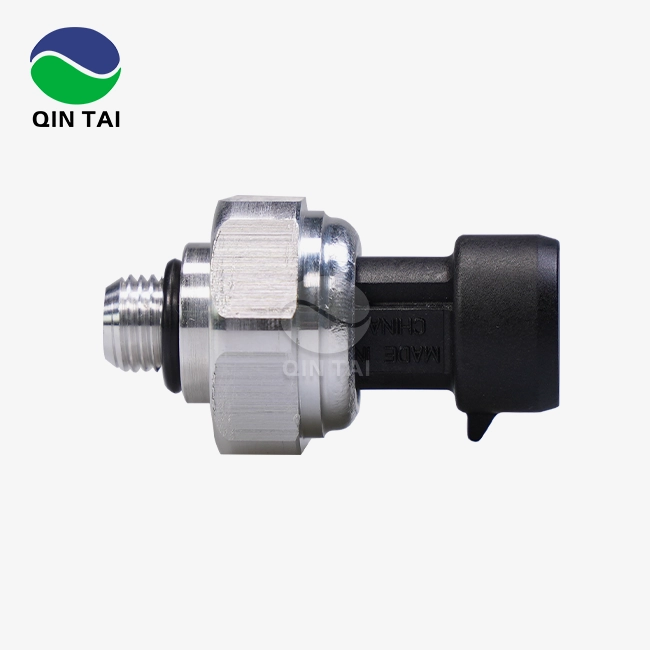
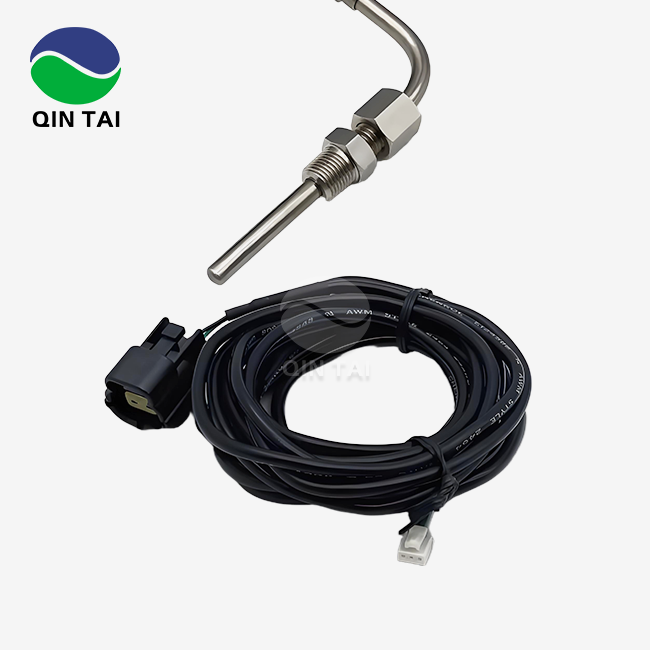
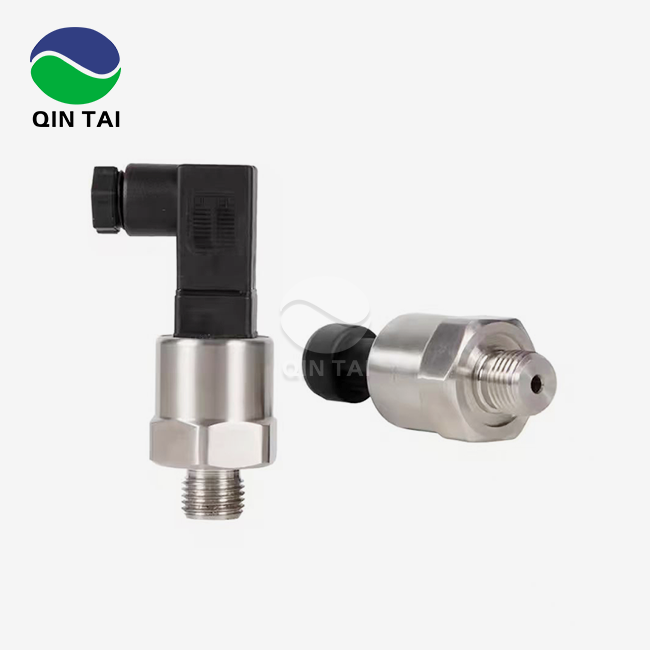

Our customers’ satisfaction speaks for our quality — contact us to experience the same reliable service.