- English
- French
- German
- Portuguese
- Spanish
- Russian
- Japanese
- Korean
- Arabic
- Greek
- German
- Turkish
- Italian
- Danish
- Romanian
- Indonesian
- Czech
- Afrikaans
- Swedish
- Polish
- Basque
- Catalan
- Esperanto
- Hindi
- Lao
- Albanian
- Amharic
- Armenian
- Azerbaijani
- Belarusian
- Bengali
- Bosnian
- Bulgarian
- Cebuano
- Chichewa
- Corsican
- Croatian
- Dutch
- Estonian
- Filipino
- Finnish
- Frisian
- Galician
- Georgian
- Gujarati
- Haitian
- Hausa
- Hawaiian
- Hebrew
- Hmong
- Hungarian
- Icelandic
- Igbo
- Javanese
- Kannada
- Kazakh
- Khmer
- Kurdish
- Kyrgyz
- Latin
- Latvian
- Lithuanian
- Luxembou..
- Macedonian
- Malagasy
- Malay
- Malayalam
- Maltese
- Maori
- Marathi
- Mongolian
- Burmese
- Nepali
- Norwegian
- Pashto
- Persian
- Punjabi
- Serbian
- Sesotho
- Sinhala
- Slovak
- Slovenian
- Somali
- Samoan
- Scots Gaelic
- Shona
- Sindhi
- Sundanese
- Swahili
- Tajik
- Tamil
- Telugu
- Thai
- Ukrainian
- Urdu
- Uzbek
- Vietnamese
- Welsh
- Xhosa
- Yiddish
- Yoruba
- Zulu
How to Find Trusted Urea Pressure Sensor OEM Manufacturer
It takes a plan that matches technical needs with source dependability to find a reliable urea pressure sensor OEM manufacturer. The SCR urea pressure sensor is the heart of modern diesel emission control systems. It checks the pressure of the urea solution to make sure precise dosing and compliance with strict emissions standards like EPA 2010 and Euro VI. When purchasing these important parts, procurement managers and R&D engineers must look at manufacturers' certifications, production capacity, technical support, and the possibility of forming a long-term partnership in order to find parts that work consistently in a wide range of demanding industrial applications.
Comprehending SCR Urea Pressure Sensors and Their Role in Industry
What Is a Urea Pressure Sensor and How Does It Work?
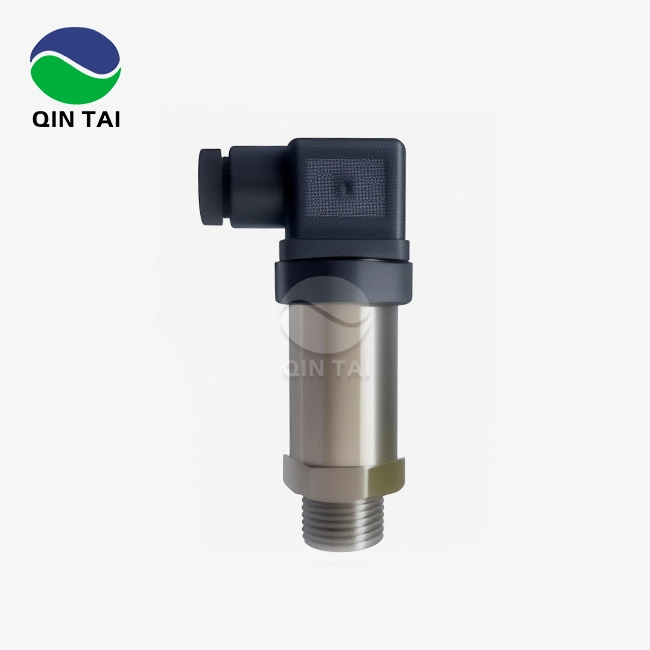
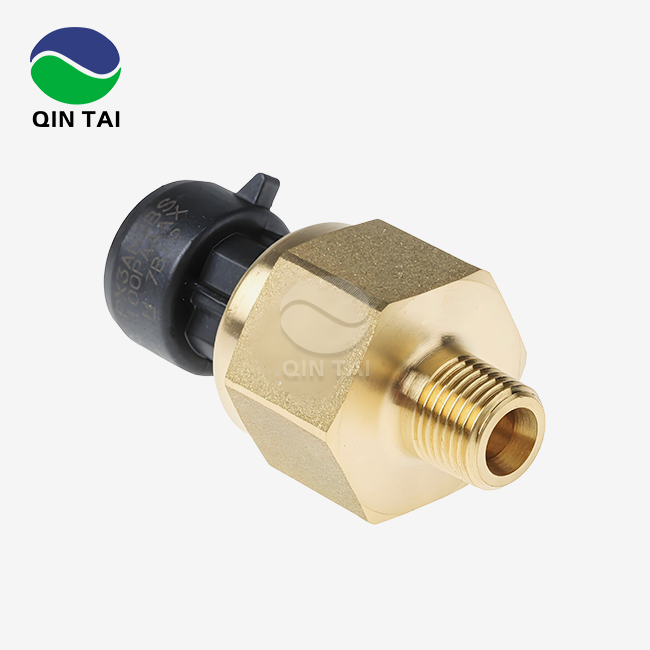
A urea dosing pressure sensor checks the pressure of AdBlue, which is diesel exhaust fluid, in the line that supplies the SCR urea pressure sensor system, which is between the pump and the injection nozzle. This part sends feedback messages to the engine control unit in real time, which lets the urea supply be controlled in a closed loop. The sensor picks up changes in pressure that mean something is wrong with the system, like a leak, a stoppage, frozen fluid, or a broken pump. Monitoring these factors, the sensor makes sure that the NOx reduction works at its best and protects downstream catalytic components from situations where the dose is too low or too high.
Critical Performance Indicators That Impact System Efficiency
Quality and usefulness of sensors are based on three main criteria. How accurately the sensor measures the real pressure of the fluid depends on its accuracy. Industrial-grade units usually keep their full-scale accuracy within ±2% across all working ranges. How quickly the control system can adapt to changing engine loads is affected by response time. High-performance sensors react in less than 50 milliseconds.
Resistance to temperature cycles, vibration, chemical corrosion from urea crystallization, and electrical interference that is common in heavy-duty uses are all parts of durability. Sensors used in building equipment have to work in temperatures ranging from -40°F to 185°F, and naval generator sets need to be able to handle more moisture. Knowing these specs helps buying teams match the powers of sensors to the real-world settings where they will be used.
Common Applications Across Industrial Sectors
Heavy-duty trucks are the most common application, and the sensors in them have to be able to handle steady shaking and changes in temperature during long hauls. Agricultural equipment adds to the problems because it is exposed to dust, water, and long periods of inactivity that make urea crystallize. Stationary equipment that makes electricity needs sensors that are built to work continuously for more than 50,000 hours with little shift. In difficult underground conditions, mining tractors need housings that are strong enough to withstand physical damage and dirt getting in. Each use has its own specific stress factors that affect the design of the sensor and the choice of material.
Key Criteria to Evaluate When Choosing an OEM Manufacturer
Assessing Technical Capabilities and Certification Standards
Checking the quality control systems and product approvals of a manufacturer is the first step in evaluating them. IATF 16949 covers specific standards for the car supply chain, such as traceability, failure mode analysis, and production part approval processes. ISO 9001 certification shows basic quality control processes. Look for companies that have the right product approvals, like CE marking for European markets, UL recognition for North American uses, or ATEX/IECEx compliance for places with dangerous atmospheres. The amount of a company's intellectual property collection shows how much it invests in research and development. Companies with 50 or more patents are usually better at coming up with new ideas than companies with few patents regarding the SCR urea pressure sensor.
Ask for specific technical information about the electrical features (voltage range, current consumption, output signal type), the mechanical features (thread size, connection type, sealing method), and the outdoor grades (IP protection class, ISO 16750 vibration resistance). Manufacturers of good products give detailed datasheets with performance curves that show how accurate the product is across a range of temperatures and pressures.
Evaluating Supply Chain Reliability and Service Support
Your production capacity has a direct effect on how many orders you can handle when demand goes up. Manufacturers with more than one production line and automated testing tools can handle changes in number better than those with only one line. There is a wide range in the minimum order amounts. Large OEMs may need at least 500 to 1,000 pieces, while smaller manufacturers may be able to work with as few as 100 pieces. Lead times for standard goods are usually between 4 and 8 weeks, but they can be up to 12 to 16 weeks for unique designs that need tooling changes.
Infrastructure for after-sales help is what sets good providers apart from great partners. Check the length of the warranty (the norm in this field is 12 to 24 months), the ability to analyse failures, and the time it takes to get expert help. When it comes to guarantee claims, manufacturers with regional service centres or networks of authorised distributors can help you faster than those that need you to ship the item internationally. Ask for references from current clients who are using similar applications to make sure that the real help performance matches the service levels that were promised.
Comparing Market Leaders and Sensor Types for Smart Procurement Decisions
Understanding Different Sensor Technologies and Their Applications
Different sensing methods are used by pressure sensors to meet different needs. Because they are very accurate and respond quickly, piezoresistive sensors are perfect for dynamic uses that need accurate closed-loop control. Capacitive sensors are more stable over a wider range of temperatures, but they usually cost 20–30% more than piezoresistive ones. When used in high-vibration settings like those found in off-highway equipment, thin-film technology works well for the SCR urea pressure sensor.
Sensor housings have a big effect on how long they last and how easily they can be installed. 316L grade stainless steel housings are good at resisting urea rust, but they are heavier and cost more. Engineered polymer housings add 40% less weight while still being chemically resistant, but they may only work at 160°F at their highest temperature. Diaphragm seal designs keep sensor elements from coming into direct touch with fluids. This keeps crystals from building up and causing measurement drift. In urea applications, this feature increases the time between calibrations from 500 to 2,000 hours.
Differential pressure types find the difference in pressure between two points, which can help find clogged filters or worn-out pumps. Temperature-compensated models stay accurate over a wide range of temperatures without needing extra adjustment factors. Finding the right technology for your purpose is the first step in narrowing down the list of manufacturers.
Balancing Initial Investment Against Total Cost of Ownership
A lot of the time, procurement plans focus too much on unit price and not enough on lifetime economics. A $45 sensor that needs to be replaced every 3,000 hours costs a lot more over the life of the equipment's 20,000 hours than a $75 unit that lasts 8,000 hours. To find the total cost of buying, you need to take into account:
• Unit purchase price represents just 30–40% of the total cost of ownership.
• Installation labor usually costs an extra $25 to $50 per sensor, based on how easy they are to reach and how they need to be calibrated.
• Warranty claim processing takes time from buying and maintenance staff; sensors with 2% failure rates instead of 8% failure rates make routine tasks much easier.
• Downtime costs are much higher than component prices. For example, a building excavator that makes $800 a day loses $200 or more every hour it breaks down.
Volume rates are usually between 10 and 15 percent for orders over 500 pieces and 20 to 25 percent for orders over 2,000 pieces. But bigger deals might mean that the quality is lower or that they need orders badly. Talk about payment terms that balance the need for cash flow with the risk of the seller. For first sales, a 30% deposit and the remaining 70% due upon delivery should be enough to protect both parties.


SENSOR+TEST, June 9 – 11, 2026
We look forward to your visit,warmly welcome to our booth 1-634!
Get your free ticket online now:
https://www.sensor-test.de/service/ticket/?52790
How to Assess and Verify OEM Manufacturer Credibility?
Conducting Thorough Due Diligence and Factory Audits
In addition to website promises and sales demos, manufacturer verification should include more than one level of validation. Ask for copies of the certificates that come with verification codes that can be used for independent proof by the granting bodies. Good makers are happy to give you copies of their certificates and make direct proof easy for the SCR urea pressure sensor.
Remote plant inspections through video tours can give you some basic information, but they can't replace checks that happen on-site for important supplier relationships. When you visit a plant, look at how the 5S method is used to organise the factory floor, how calibration equipment is tracked, and how environmental testing is possible. Facilities that are well run keep quality measures boards that can be seen, tool storage that is well organised, and assembly areas that are clean. Check the calibration certificates of the testing equipment. Every year, measurement tools should be re-calibrated by approved labs that can be traced back to national standards organisations.
Reviewing the production method shows how mature the manufacturing process is. Automatic testing systems that record all inspection data show better process control than methods that use human sampling. Statistical process control charts that show how key dimensions are tracked show the difference between proactive quality management and reactive inspection methods. Check internal audit schedules and methods for keeping track of corrective actions to see how committed people are to ongoing improvement.
Implementing Pilot Testing Before Full-Scale Commitment
Sample testing lowers the risks of buying before big financial promises are made. Ask for 10–20 review samples so that they can be tested thoroughly across the full range of conditions that your application can handle. Set clear acceptance criteria, such as checking the accuracy at three different temperature levels, the ability to withstand pressure cycling (at least 100,000 cycles), the ability to withstand vibrations according to relevant standards, and the ability to withstand chemical compatibility through prolonged contact to urea.
Compare the performance of the sample to that of current sellers or to standards in the same field. For accelerated life testing, put samples through 500 rounds of temperature changes between working extremes while keeping an eye on measurement drift. This procedure shows design flaws that show up as long-term stability problems. Vibration and temperature cycling used together in environmental stress screening show manufacturing flaws that aren't seen during incoming inspection.
Record all test results with data that can be used to find them again in the future and see how well a company is doing over time. Samples that pass strict testing give trust for growing up to production levels, while failures let us talk about how to improve the design before we spend money on tools.
Procurement Best Practices: Ordering, Installation, and After-Sales
Optimizing Procurement Workflows from RFQ Through Delivery
A thorough request for quote document that spells out technical needs, quality standards, delivery dates, and payment terms is the first step to efficient buying. Include thorough drawings with important measurements, electrical diagrams that show the pinouts and characteristics of the signals, environmental requirements, and standards for quality control. Misunderstandings that lead to delays and extra work can be avoided by giving clear instructions regarding the SCR urea pressure sensor.
Instead of just looking at unit prices, you should look at quotes as a whole. Look at the total landed costs for foreign providers, which include freight, customs duties, and the risk of currency exchange. Check out the different payment options, guarantee coverage, and minimum order sizes. Ask for production models before starting full production. This $500–$1,000 investment will save you a lot of money in mistakes caused by unclear specs.
Make sure there are clear quality agreements that spell out the accepted levels of quality, the rules for inspections, and the steps for fixing problems. A lot of disagreements are caused by unclear quality standards rather than real problems with the goods. Objective evaluation frames are made up of written agreements that include measurement methods and acceptance limits.
Installation Guidelines and Maintenance Protocols
Installing sensors correctly has a big effect on how accurate they are and how long they last. Mount sensors according to the orientation instructions provided by the maker. Some designs need to be placed at a certain angle to avoid air pockets forming that could affect the transfer of pressure. Use a thread sealer that can handle being exposed to urea. Stay away from petroleum-based substances that break down in DEF. Use measured tools to torque screws to the right levels. If you don't tighten them enough, leaks will happen, and if you tighten them too much, the housings or sensing elements will become damaged.
The steps for calibration depend on the type of sensor and how important the application is. Some car uses depend on the factory tuning staying stable over the life of the product, while industrial uses check their equipment yearly against reference standards. Set up calibration plans based on what the maker says and what the government requires. Write down the results of the calibration, making history records that can be used for trend analysis and finding drift patterns.
Urea crystallization is the main cause of failure, so maintenance programmes should address it. When working in hot places where water evaporates quickly, flush systems once a month with demineralized water. Check electrical connections for corrosion every three months, especially in naval or mine settings where they will be exposed to a lot of water. Instead of waiting for total failure, replace sensors that show measurement shift of more than ±5% during verification checks.
Before thinking a sensor is broken, troubleshooting starts by checking the source voltage and signal wiring. A lot of field replacements are needed because of electricity problems instead of broken sensors. Manufacturers that offer troubleshooting flowcharts and an expert service can help solve problems faster than those that don't.
Conclusion
To find a reliable SCR urea pressure sensor OEM maker, you need to carefully look at their technical skills, quality approvals, production capacity, and service infrastructure. A good procurement process weighs the initial cost of the item against its total ownership costs, which include things like dependability, warranty support, and the chance of forming a relationship with the seller. Manufacturers with ISO/IATF certifications, strong testing capabilities, and customer references from similar uses are less risky than providers who haven't been proven, even if the unit costs might be higher.
Implementing thorough validation through sample tests and site checks lowers the risks of buying while setting standards for performance. Long-term success depends on keeping working together with makers who are dedicated to constant improvement and quick technical support. This will make sure that your emission control systems meet all regulations and work reliably for their entire service lives.
FAQ
Q1: What factors most significantly influence SCR urea pressure sensor lifespan?
A: Extreme operating temperatures are the main factor that determines how long something lasts. Sensors that are continuously used in temperatures above 160°F have 40% shorter service lives than those that are used in mild temperatures. If you don't flush your system properly, urea crystallization speeds up measurement drift, which usually lowers accuracy by 3–5% per year in badly kept systems but only by 1% in properly serviced ones.
Q2: How frequently should urea pressure sensors undergo calibration verification?
A: Most workplace uses that work normally only need to be checked once a year. Applications with a high level of importance, like emissions clearance tests, need to be checked every three months. Mobile equipment that is open to a lot of shaking and changes in temperature does better with checks every six months. If sensors show drift greater than ±3% during testing, they need to be replaced right away, no matter what the plan is.
Q3: Are sensors from different manufacturers interchangeable in existing SCR systems?
A: To be physically interchangeable, mechanical connections must match. These include pin sizes and connector types. For electrical compatibility, the output signal must have the same voltage range, current requirements, and signal standards. To work with different pressure-to-signal transfer functions, even sensors that are physically interchangeable may need to have their ECUs re-calibrated or their software updated.
Partner with Qintai for Reliable Urea Pressure Sensor Manufacturing Solutions
Qintai Automotive Emission Technology Co., Ltd. Ltd has produced high-precision sensors for diesel pollution control uses for more than twenty years. We are the major supplier of SCR urea pressure sensor units in China. We have strategic ties with Weichai Power, Yuchai Power, and Quanchai Power, and the parts we send them meet strict China VI and Euro VI compliance standards. Our long list of certifications, which includes ISO 9001, IATF 16949, ATEX, UL, and CE, shows that we are dedicated to meeting world quality standards.
If a purchasing manager is looking for a reliable urea dosing pressure sensor maker to work with on a long-term basis, they can email our team at info@qt-sensor.com and ask for technical specs, sample evaluation units, and application engineering support. We offer a lot of information to help you qualify suppliers, and we welcome building visits from potential business partners. You can look at our full line of sensors at qt-sensor.com and learn how our emission control solutions help equipment makers, aftertreatment installers, and aftermarket dealers in more than 60 countries around the world.
References
1. Society of Automotive Engineers, "Diesel Exhaust Fluid Quality Standards and Testing Protocols," SAE Technical Paper Series J2977, 2021.
2. International Organization for Standardization, "Road Vehicles - Environmental Conditions and Testing for Electrical and Electronic Equipment," ISO 16750-4:2023.
3. Environmental Protection Agency, "Nitrogen Oxides (NOx) Control Regulations and Selective Catalytic Reduction System Requirements," EPA-420-B-22-034, 2022.
4. Johnson, Mark R. and Peterson, David L., "Pressure Sensor Technologies for Automotive Fluid Management Systems," Journal of Automotive Engineering, Vol. 237, No. 8, 2023, pp. 1844-1859.
5. European Automobile Manufacturers Association, "SCR System Component Reliability and Maintenance Guidelines," ACEA Technical Report TR-2024-06, 2024.
6. Zhang, Wei and Schmidt, Klaus, "Urea Crystallization Effects on Diesel Aftertreatment System Performance," International Journal of Engine Research, Vol. 25, No. 3, 2024, pp. 421-438.
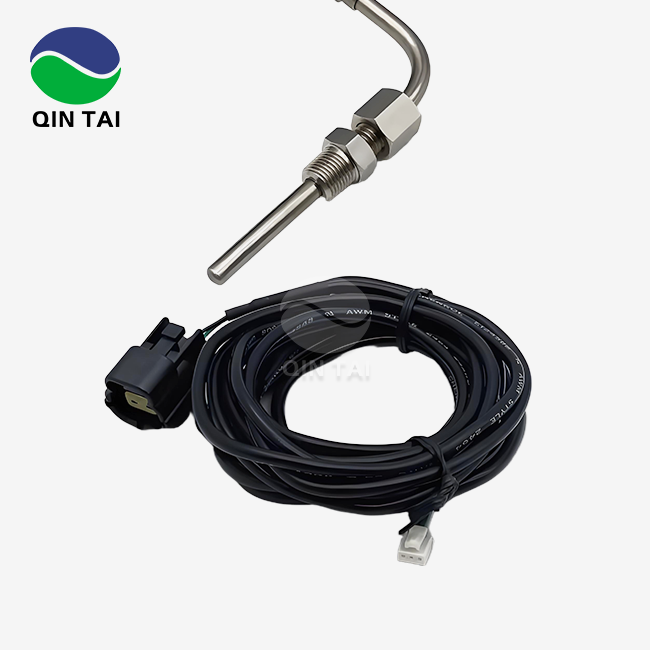
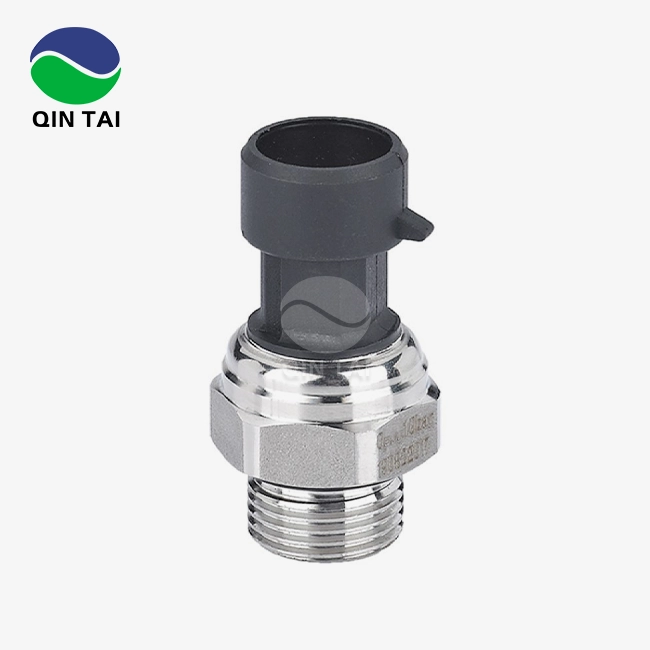

Our customers’ satisfaction speaks for our quality — contact us to experience the same reliable service.