- English
- French
- German
- Portuguese
- Spanish
- Russian
- Japanese
- Korean
- Arabic
- Greek
- German
- Turkish
- Italian
- Danish
- Romanian
- Indonesian
- Czech
- Afrikaans
- Swedish
- Polish
- Basque
- Catalan
- Esperanto
- Hindi
- Lao
- Albanian
- Amharic
- Armenian
- Azerbaijani
- Belarusian
- Bengali
- Bosnian
- Bulgarian
- Cebuano
- Chichewa
- Corsican
- Croatian
- Dutch
- Estonian
- Filipino
- Finnish
- Frisian
- Galician
- Georgian
- Gujarati
- Haitian
- Hausa
- Hawaiian
- Hebrew
- Hmong
- Hungarian
- Icelandic
- Igbo
- Javanese
- Kannada
- Kazakh
- Khmer
- Kurdish
- Kyrgyz
- Latin
- Latvian
- Lithuanian
- Luxembou..
- Macedonian
- Malagasy
- Malay
- Malayalam
- Maltese
- Maori
- Marathi
- Mongolian
- Burmese
- Nepali
- Norwegian
- Pashto
- Persian
- Punjabi
- Serbian
- Sesotho
- Sinhala
- Slovak
- Slovenian
- Somali
- Samoan
- Scots Gaelic
- Shona
- Sindhi
- Sundanese
- Swahili
- Tajik
- Tamil
- Telugu
- Thai
- Ukrainian
- Urdu
- Uzbek
- Vietnamese
- Welsh
- Xhosa
- Yiddish
- Yoruba
- Zulu
How to Maintain a Diesel urea SCR system Properly
Maintaining a diesel urea SCR system properly requires a proactive approach combining regular inspections, quality fluid management, sensor calibration, and timely component replacement. The Selective Catalytic Reduction technology converts harmful nitrogen oxide emissions into harmless nitrogen and water vapor using Diesel Exhaust Fluid (commonly known as AdBlue). Effective maintenance ensures regulatory compliance with EPA standards, extends equipment lifespan, and prevents costly breakdowns that interrupt operations. Understanding the system's critical components and maintenance protocols helps procurement managers and engineers optimize fleet performance while meeting environmental obligations.
Understanding the Diesel Urea SCR System and Its Maintenance Needs
Core Components of the SCR System
The diesel SCR aftertreatment system is made up of several parts that are all connected and work together to lower emissions. The diesel urea tank holds the AdBlue solution and is linked to the SCR dosing system by a pump and sensors. This tank has a level sensor that checks the amount of fluid, a temperature sensor that stops it from freezing below -11°C, and a quality sensor that makes sure the urea solution stays within the parameters.
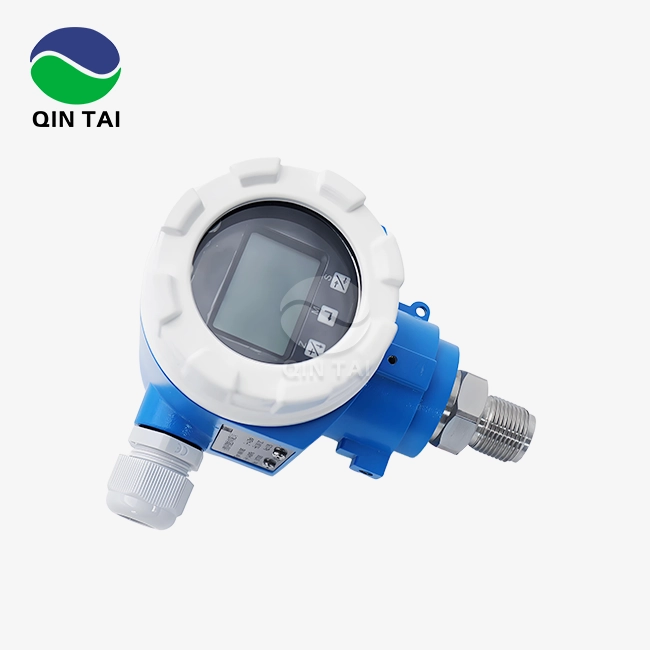
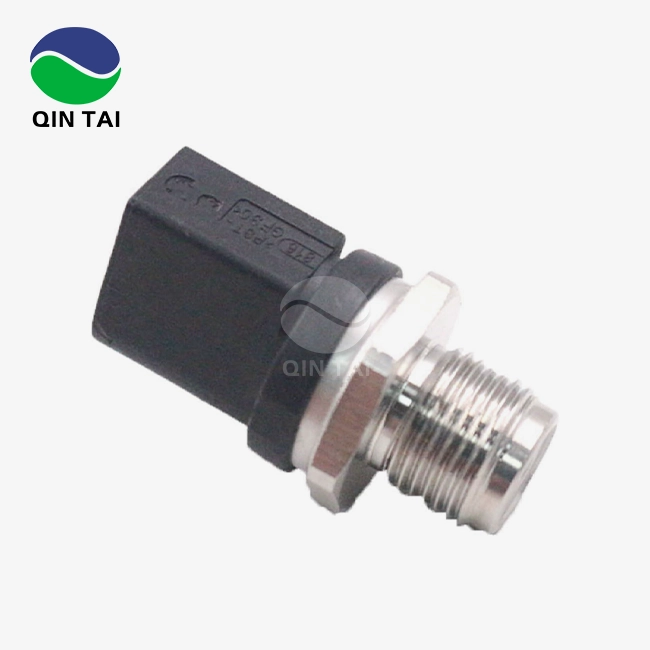
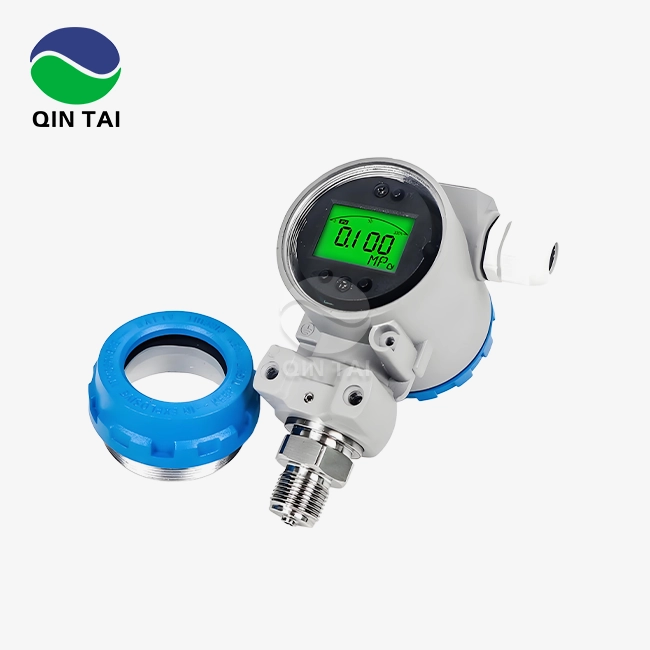
It is precisely injected by the dosing module into the exhaust stream, where it reacts with NOx gases across a catalyst substrate. The urea pressure sensor gives closed-loop input for correct dosing. It can find pressure drops that mean there are leaks, blockages, or air getting in, as well as overpressure that could be caused by frozen AdBlue or broken valves.
Why Maintenance Cannot Be Neglected
When urea SCR systems aren't taken care of, their performance goes down, which makes it harder to meet emission standards and threatens the stability of operations. Crystallization buildup blocks injector nozzles, which leads to incomplete NOx conversion and fault codes that send engines into limp mode. Sensor drift causes dosing estimates to be wrong, which wastes AdBlue and fails emission tests.
Fluid that is contaminated speeds up the wear and tear on parts, which leads to expensive replacements that could have been avoided. Not meeting EPA Tier 4 Final or Euro VI standards can lead to fines that are on top of the costs of repairs. Purchasing managers who are in charge of heavy truck teams, construction equipment, or generator sets know that regular maintenance protects capital investments and keeps customers' services running smoothly.
Common Issues in Diesel Urea SCR Systems and Their Causes
Crystallization and Injector Clogging
AdBlue crystallization is the most common problem that needs to be fixed in SCR systems. If the dosing valve doesn't completely purge after being turned off, the urea solution that is still there dries out and forms hard, crystallized deposits that block the injector nozzles. These blockages stop the fluid from atomizing properly, which lowers the efficiency of NOx conversion and sets off diagnostic trouble codes.
Extreme changes in temperature speed up crystallization, especially in outdoor equipment that doesn't have good thermal management. Particles are caught by the urea filter AdBlue part before they reach sensitive dosing parts. But if this filter gets broken or clogged, contaminants get through and speed up crystallization all over the urea SCR system.
Sensor Malfunctions and Calibration Drift
Sensor reliability has a direct effect on how well an SCR system works. The urea dosing pressure sensor checks the hydraulic pressure in the whole supply circuit to find problems with the pump or injectors. Sensor accuracy drifts over time when they are exposed to corrosive exhaust gases, changing temperatures, and shaking. If sensors give wrong numbers, the engine control unit decides how much AdBlue to use based on bad information. This can cause either too much AdBlue use or not enough NOx reduction. Temperature sensors in the urea tank system might not turn on the heating elements correctly, letting AdBlue freeze and expand, which could cause the tank walls or supply lines to crack.
Contamination and DEF Quality Issues
Diesel Exhaust Fluid that isn't up to par or is contaminated can cause a lot of problems in the system. For AdBlue to work right, the quantity of urea must stay exactly 32.5%. Chemical reactions are changed by concentrated or diluted solutions, which makes emission control less effective. Diesel fuel, oil, or particulates that get into the system speed up component corrosion and make deposits that block filters and injectors.
Using DEF that isn't authorized or that comes from a source you don't trust adds impurities that hurt the urea filter AdBlue and put the whole aftertreatment system at risk. The SCR system stops working right when the urea fuel tank is empty. This puts the engine into limp mode and shows signs on the panel. If you keep running the engine without AdBlue, you could face harsh fines from the government and damage to the catalyst from high exhaust temperatures.

Step-by-Step Guide to Maintaining Your Diesel Urea SCR System
Regular Inspection and Cleaning Procedures
Setting up regular inspection times keeps small problems from getting worse and leading to major failures. The diesel urea tank should be looked at visually for cracks, leaks, or other damage that could affect the integrity of the fluid. When you check the link points between the tank and the dosing system, you can find loose parts or worn-out seals before they cause fluid loss.
Crystalline buildup, which shows up as white crusty deposits around spray tips, needs to be checked on injector nozzles from time to time. To get rid of these deposits, you need special treatments that can break down urea crystals without hurting precision parts. The catalyst base should be checked for harm or too much soot buildup that makes less surface area available for chemical reactions.
DEF Quality Management and Handling
Getting approved AdBlue from reputable sellers keeps the system's structure safe and makes sure it always works well. DEF should meet the requirements set by ISO 22241 and be backed up by reports of analysis from the makers. AdBlue should be kept in sealed containers out of direct sunlight and extreme temperatures because the way it is stored has a big effect on its quality. To keep diesel fuel and other fluids from getting contaminated, you need special equipment that is only used for adding Diesel Exhaust Fluid.
When you refill the urea tank system, be careful not to overfill it, as this can cause spills and damage to the parts around it. It is important to keep an eye on DEF age because the solution breaks down over time, especially when it comes in contact with heat. Setting up inventory movement makes sure that new fluid is always available and that older stock is used up before it loses its quality.
Sensor Monitoring and Calibration
Data-driven diagnostics allow for proactive management of sensors before problems cause the system to fail. When you regularly download fault codes from the engine control unit, you can see that sensors are having problems that may not have set off any warning lights yet. By comparing real sensor results to known reference values, calibration drift that needs to be fixed can be found.
The urea pressure sensor should be tried across its entire working range to make sure it reports correct pressures in a range of flow situations. Temperature monitors inside the SCR tank need to be checked to make sure that the heating elements turn on at the right times to keep AdBlue from freezing. If you need to replace a sensor, making sure that the new parts are compatible with the old control algorithms and communication protocols is important.
Component Replacement Best Practices
Replacing worn-out parts on time keeps the system reliable and stops failures that start another one. The urea filter AdBlue should be replaced at times recommended by the maker or whenever measurements of the pressure differential show that flow is being limited. Not replacing a clogged or broken urea filter can contaminate parts further down the line, such as the dosing valve or injector nozzles. Incorrect AdBlue injection can affect NOx reduction, and system failure can lead to expensive fixes and possible fines from the government.
Based on the number of hours and job rounds they are used, injector nozzles have limited service lives. Continuous use wears down dosing pumps, which should be changed when flow rates drop or pressure can't be kept up. Buying original equipment manufacturer (OEM) parts from well-known companies guarantees accuracy in measurements, compatibility of materials, and reliable performance that aftermarket parts might not offer.
Advantages of Proper Maintenance for B2B Clients
Enhanced Emission Compliance and Regulatory Confidence
Regular repair plans make sure that urea SCR systems work within their designed limits, consistently meeting the NOx reduction goals required by environmental laws. Different states have different emission standards that make it hard for fleet operators to keep track of hundreds of cars. If you keep your SCR system in good shape, it will pass roadside inspections and regular emission tests without getting fined.
Keeping records of repair tasks creates audit trails that show regulatory agencies that proper care was taken. When operating construction tools on government contracts, workers often have to follow strict environmental rules. If they break these rules, projects can be shut down and contracts can be cancelled. These risks are eliminated by proactive maintenance, which also helps companies meet their sustainability goals, which is good for the brand's reputation.
Improved Fuel Efficiency and Operational Cost Reduction
When SCR systems work properly, they do more for engine economy than just control emissions. Correct AdBlue dosing optimizes combustion factors, which lets engines run at their best without recirculating too much exhaust gas, which lowers power output. Studies show that SCR systems that are well taken care of can save two to four percent on fuel compared to systems that aren't taken care of and run in derate modes.
When applied to large fleets, these efficiency gains add up to big cost saves that cover upkeep costs. Less downtime from failures that could have been avoided directly leads to better use of assets and more money coming in. Generator set operators who provide backup power for important systems can't afford for power to go out unexpectedly. Systematic maintenance makes sure that the equipment is ready to go when it's needed.
Extended Equipment Lifespan and Asset Value
How long a part lasts depends a lot on how it is used and how well it is maintained. Crystallization damage, sensor failures, and pollution all make SCR systems need to be replaced more often, which speeds up the system's general aging. The opposite is also true: equipment that gets regular maintenance keeps working at its best for longer. This keeps the value of the asset stable over time, which helps with calculations that show why buying capital equipment is a good idea.
When selling used equipment again, buyers who want reliable machinery will pay more for items with clear repair records. Farmers are especially concerned with how long their machines last because they have to use them a lot during short periods of time during the season, and if something breaks, it can directly affect the crops and their profits.
Choosing the Right Urea SCR System and Maintenance Partner
Evaluating Supplier Capabilities and Support Infrastructure
When choosing urea SCR system component providers, you need to carefully look at their skills beyond just the price of the product. Warranty coverage shows that the company that made the product trusts that it will work and protects buyers from problems that happen before they should. Aftermarket support infrastructure, such as technical hotlines, field service networks, and parts distribution routes, makes sure that operating sites get help quickly when problems happen.
Suppliers with a global reach offer consistent help for activities that span multiple countries, so there are no worries about service availability in faraway places. Logistics skills are very important. Suppliers with local stock can fill urgent parts orders within hours instead of days, which lowers the cost of downtime.
Partnership Value and Technical Collaboration
Long-term relationships with SCR system providers offer benefits that go beyond just buying parts. Collaborative relationships make it possible to change system parameters to fit the needs of a specific application. This improves performance for each set of operating conditions. Technical support teams that know how to fix problems faster and more accurately are better at diagnosing problems when they work with customer tools.
Some suppliers offer full service contracts that include preventative maintenance, emergency repairs, and supplies that are used up. These contracts have set prices that make budgeting easier. OEM-certified technicians have special training and diagnostic tools that general repair shops might not have. This makes sure that the maintenance is done well so that the warranty coverage and system integrity are kept.
Advanced Diagnostic Technologies and Predictive Maintenance
More and more, modern SCR systems have sensors and connections that can link to the Internet of Things (IoT). This makes servicing less reactive and more proactive. Streaming real-time data from urea pressure sensors, temperature monitors, and flow meters makes it possible to schedule repair based on how parts are wearing instead of just picking random times. Predictive analytics algorithms find patterns of failure before they happen.
This lets repairs be scheduled for planned downtime instead of having to be called out for emergencies. Fleet management tools collect data from many cars and show systemic problems that need to be fixed by changing the design or the way things are done. These technologies lower the costs over the span of an object while also making it more useful by making it more reliable.
Conclusion
Maintaining diesel urea SCR systems properly protects large investments in capital while also making sure they meet regulatory requirements and work reliably. Understanding parts of the system like the diesel urea tank, urea pressure sensor, and urea filter AdBlue helps engineers and procurement managers set up good repair plans. Taking care of common problems like crystallization, sensor drift, and DEF pollution keeps expensive breakdowns and downtime from happening.
Systematic inspection, good fluid management, sensor calibration, and replacing parts on time all lower the total cost of ownership and make equipment last longer. Partnering with capable suppliers that offer full support and cutting-edge diagnostic technologies improves the performance of SCR systems in a wide range of applications, from heavy trucks to generator sets. Maintenance programs pay for themselves by saving money on fuel, cutting down on pollution, and raising the value of assets.
FAQ
How Often Should SCR Systems Be Serviced?
Service intervals depend on how the urea SCR system is used and how often it is used. Heavy-duty machines that work in dirty places, like building equipment, need to be inspected more often than highway trucks that work in clean places. The urea filter AdBlue should usually be changed every 400 to 800 hours of use. It might be necessary to clean the injector every 1,000 hours or once a year, whichever comes first. Sensor calibration checks should be done every time the car is serviced or whenever diagnostic codes show that something is wrong with the performance. In their technical paperwork, equipment makers list specific repair schedules that should be used to plan service.
What Happens If AdBlue Freezes in the Urea Fuel Tank?
AdBlue freezes at -11°C, but the urea fuel tank usually has heated features that keep this from happening. If the solution freezes, it will thaw on its own when the engine starts and the SCR system heats the tank to the right temperature for use. These days, systems are built to handle freeze-thaw cycles. But continuous freezing without a heater element that works right can damage tank parts through the forces of expansion. Problems caused by freezing can be avoided by making sure heating systems work right before it gets cold.
Can Low-Quality DEF Damage the Entire SCR System?
Using Diesel Exhaust Fluid that isn't up to par causes many problems in the aftertreatment system. When DEF is contaminated, it blocks the urea filter, which lets particles get to precise dosing parts and speed up their wear. If the quantity of urea is off, chemical processes change, which makes NOx conversion less effective and could damage the catalyst. Crystallization is caused by impurities, which block injectors and supply lines. It can cost thousands of dollars to fix systems that have been damaged by pollution. You should only buy approved DEF that meets ISO 22241 standards from trustworthy sellers to keep your money safe.
Partner With Qintai for Reliable SCR System Solutions
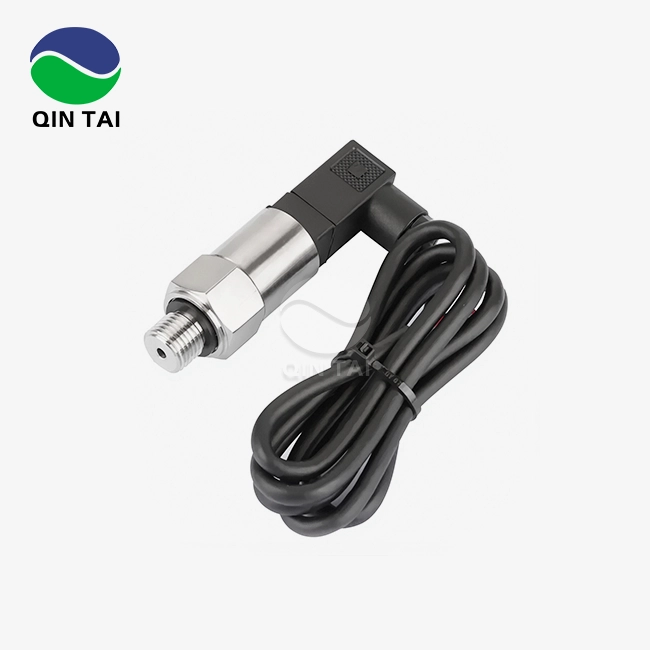
Xi'an Qintai Automotive Emission Technology Co. Ltd specializes in comprehensive diesel SCR aftertreatment systems and precision sensors supporting emission control applications worldwide. As a national high-tech enterprise established in 2001, we bring over two decades of experience developing urea pressure sensors, diesel urea tanks, and complete urea SCR system components. Our position as the number one OEM supplier in China, serving core customers like Weichai Power, Yuchai Power, and Quanchai Power, demonstrates the reliability and performance of our technology.
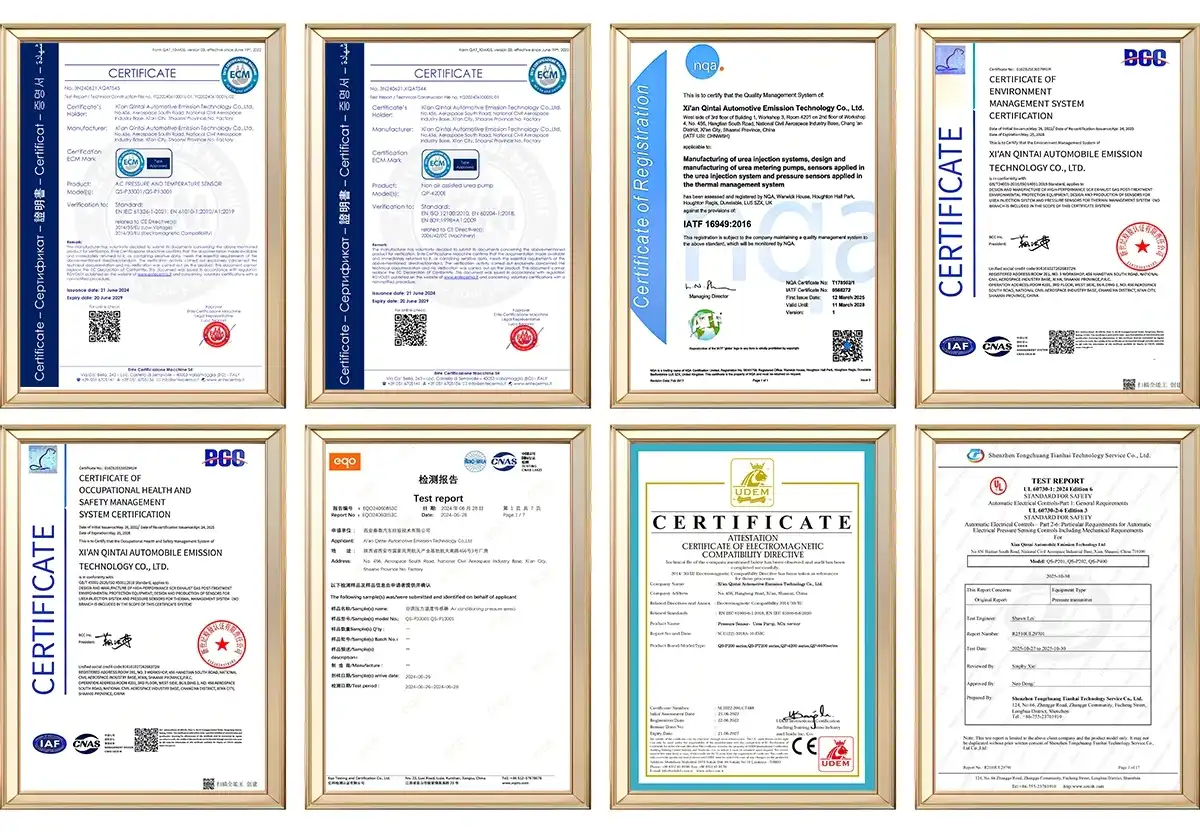
Qintai holds certifications including ISO9001, IATF16949, CMC, Ex, UL, CE, REACH, and RoHS, with 58 invention patents protecting our innovative designs. We offer flexible OEM and ODM services tailored to specific application requirements, supporting customization from initial product design through mass production. Our independent research and development team continuously advances product performance and reliability, ensuring our urea SCR system manufacturer capabilities meet evolving emission standards and customer needs.
Looking for a trusted urea SCR system supplier supporting your emission control objectives? Contact our technical team at info@qt-sensor.com to discuss customized solutions for your heavy-duty diesel applications. Discover how Qintai's proven technology and comprehensive support services can enhance your fleet compliance and operational efficiency.
References
1. Environmental Protection Agency. (2022). "Nitrogen Oxides Control Technologies for Heavy-Duty Diesel Engines." EPA Technical Report Series on Mobile Source Emissions.
2. Society of Automotive Engineers. (2021). "Selective Catalytic Reduction System Maintenance Best Practices for Commercial Vehicles." SAE International Journal of Engines, Volume 14, Issue 3.
3. International Organization for Standardization. (2020). "ISO 22241: Diesel Engines - NOx Reduction Agent AUS 32 - Quality Requirements." International Standard for DEF Specifications.
4. Heavy Duty Manufacturers Association. (2023). "SCR System Reliability and Maintenance Guidelines for Fleet Operators." HDMA Technical Bulletin 2023-07.
5. Johnson, M., & Williams, R. (2022). "Predictive Maintenance Strategies for Diesel Aftertreatment Systems." International Journal of Automotive Technology, 23(4), 891-908.
6. Transport Research Laboratory. (2021). "Economic Analysis of SCR System Lifecycle Costs in Commercial Vehicle Applications." TRL Published Project Report PPR 1024.

Our customers’ satisfaction speaks for our quality — contact us to experience the same reliable service.