- English
- French
- German
- Portuguese
- Spanish
- Russian
- Japanese
- Korean
- Arabic
- Greek
- German
- Turkish
- Italian
- Danish
- Romanian
- Indonesian
- Czech
- Afrikaans
- Swedish
- Polish
- Basque
- Catalan
- Esperanto
- Hindi
- Lao
- Albanian
- Amharic
- Armenian
- Azerbaijani
- Belarusian
- Bengali
- Bosnian
- Bulgarian
- Cebuano
- Chichewa
- Corsican
- Croatian
- Dutch
- Estonian
- Filipino
- Finnish
- Frisian
- Galician
- Georgian
- Gujarati
- Haitian
- Hausa
- Hawaiian
- Hebrew
- Hmong
- Hungarian
- Icelandic
- Igbo
- Javanese
- Kannada
- Kazakh
- Khmer
- Kurdish
- Kyrgyz
- Latin
- Latvian
- Lithuanian
- Luxembou..
- Macedonian
- Malagasy
- Malay
- Malayalam
- Maltese
- Maori
- Marathi
- Mongolian
- Burmese
- Nepali
- Norwegian
- Pashto
- Persian
- Punjabi
- Serbian
- Sesotho
- Sinhala
- Slovak
- Slovenian
- Somali
- Samoan
- Scots Gaelic
- Shona
- Sindhi
- Sundanese
- Swahili
- Tajik
- Tamil
- Telugu
- Thai
- Ukrainian
- Urdu
- Uzbek
- Vietnamese
- Welsh
- Xhosa
- Yiddish
- Yoruba
- Zulu
How to Test a Pressure Transmitter for Accurate Readings
Testing a pressure transmitter involves a systematic process of verification, calibration, and validation to ensure measurement reliability across industrial applications. The procedure begins by establishing a reference pressure source using precision calibrators or deadweight testers, followed by comparing the transmitter's output signal against known pressure values. Accurate testing requires appropriate tools such as digital multimeters, signal generators, and certified calibration equipment that meet traceable standards. Throughout the test, technicians verify zero and span settings, check linearity across the measurement range, and document deviations to maintain compliance with industry standards including ISO and IATF16949.

Understanding Pressure Transmitter Accuracy and Its Importance
In heavy-duty diesel engine systems and aftertreatment applications, Pressure Transmitter Accuracy has a direct impact on operational safety, regulatory compliance, and production efficiency. When buying managers and research and development experts look at these devices, they need to know how the accuracy specs translate to how well they work in the real world. When choosing equipment for emission control systems that meet China VI or Euro VI standards, it is important to know the difference between absolute accuracy and relative accuracy. Absolute accuracy measures total error, which includes linearity and hysteresis. Relative accuracy, on the other hand, focuses on repeatability.
Key Factors Affecting Measurement Accuracy
One of the biggest problems with measuring pressure consistently is that temperatures change all the time. This issue is addressed by thin-film Pressure Transmitters, which use vacuum-sputtering to put strain gauges right on to stainless steel diaphragms at the molecular level. In standard designs, organic adhesives are used. This atomic-level glue gets rid of those, getting rid of a frequent source of thermal drift and signal loss. The artificial structure makes it more stable over a wide range of temperatures that are common in diesel engine exhaust systems and SCR aftertreatment parts.
Pressure Transmitters versus Pressure Sensors
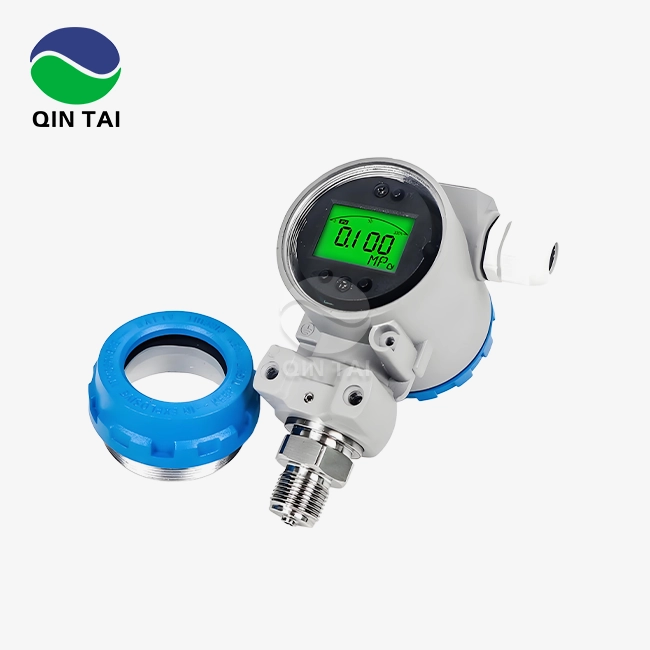
Knowing the technical difference between these devices helps procurement teams choose the right gear. Pressure Transmitters have signal processing hardware that changes mechanical pressure into standard electrical outputs like 0-5V or 4-20mA signals that can be used with industrial control systems. Compared to raw sensor elements that need external signal processing, this integrated approach makes installation easier, lowers the complexity of the system, and improves long-term reliability. Integrated transmitters have a reference unit, R/V conversion, and linearisation circuits that make up for nonlinear characteristics. This provides measurement consistency, which is very important in mass production settings where dimensional tolerances directly affect compliance certification.
Impact on Operational Costs and Quality Control
Measurement mistakes spread through production systems, affecting the testing of diesel engine performance, the confirmation of pollution compliance, and the dependability of replacement parts. When pressure readings are off by even small amounts, engineers might make the wrong changes to the time of fuel injection, the rate of SCR dosing, or the DPF renewal cycles. These changes hurt efficiency, lead to more warranty claims, and put the company at risk of fines from regulators. When buying something, choosing accuracy over initial cost savings can protect long-term profits by lowering the number of times it needs to be calibrated, lowering the number of times it breaks, and making the system more compatible with existing emission control platforms.
Common Challenges and Errors in Pressure Transmitter Readings
A lot of problems with measuring pressure in industrial settings are caused by mistakes during installation. Misaligned mounting, badly set up impulse lines, and bad electrical grounding all lead to systematic errors that don't go away no matter how good the Pressure Transmitter is. Interferences from the environment, such as electromagnetic radiation from high-current diesel engine starters, vibration from machinery that moves back and forth, and thermal cycling from systems that treat exhaust gas, make measurements less accurate over time.
Sensor Drift and Long-Term Stability Issues
When you use a traditional glued strain gauge, the zero-point will slowly move over the course of its useful life because of adhesive creep. This way of breaking down organic matter is especially troublesome in applications that use aftertreatment, where temperatures often go above 150°C during DPF regeneration cycles. This weakness is taken care of by the thin-film building method, which forms strong molecular links between sensing elements and diaphragm supports. Because of this basic difference in design, procurement specifications for generator set applications are putting more and more weight on long-term drift specifications along with initial accuracy ratings.
Mechanical Wear and Process Media Contamination
Diesel exhaust streams with particulate matter, corrosive condensates from combustion leftovers, and pressure pulses from engine starting events all work together to speed up the breakdown of transmitters. Wear and tear on the diaphragm, corrosion of the sensing element, and degradation of the fill fluid show up as irregular reaction patterns, more hysteresis, and finally catastrophic failure. Maintenance teams can plan replacements before system failures happen by spotting early warning signs like signal output that isn't stable, slow response to changes in pressure, and zero readings that don't stay the same.
Step-by-Step Pressure Transmitter Testing and Calibration Process
Full testing methods build trust in measurements and show where things came from for quality management systems that meet IATF16949 and ISO9001 standards. Gathering calibration tools like precise pressure sources, digital multimeters that can pick up 0.01mA current changes, and documentation templates that record ambient conditions, device identification, and test results is part of getting ready to test a Pressure Transmitter.
Preparation and Safety Requirements
Technicians make sure that pressure systems are completely empty and disconnected from process connections before they start the calibration process. Electrical sources are checked to make sure they are at the right voltage levels. For industrial 4-20mA Pressure Transmitter circuits, this is usually 24VDC. Reference tools need up-to-date calibration papers that can be traced back to national metrology institutes. This makes sure that the accuracy of the test is at least four times higher than what the device manufacturer says it should be. During testing processes, safety rules cover both high-pressure risks and electrical shock risks.
Static Pressure Testing Procedures
During static testing, known pressure values are applied across the measurement range of the Pressure Transmitter while output signals are recorded. During testing, the zero-pressure check, mid-range points at 25%, 50%, and 75% of the span, and full-scale pressure application are common. As you go up and down in the pressure steps, you can see hysteresis patterns that show mechanical binding, diaphragm wear, or not enough sensor preload. Deviations that are too far from the manufacturer's specs lead to either adjusting the device or replacing it, depending on how important the application is and how much it costs.
Zero and Span Calibration Adjustments
Modern digital transmitters have HART protocol communication features that let devices be calibrated from afar without taking them out of service. Zero adjustment fixes problems caused by changes in atmospheric pressure and mechanical stress from the hardware used for mounting, and span calibration fixes mistakes in the measurement bands' gain. Before making corrections through digital interfaces or mechanical potentiometer adjustments, technicians use exact reference pressures, measure the real output signals, and figure out what changes need to be made. Documentation keeps track of errors made before adjustments, values used to fix them, and data collected after calibration to support quality audit requirements.
Documenting Results and Scheduling Recalibration
Calibration records make it possible to track devices during emission compliance checks and give information about past performance that can help find problematic devices or installation conditions. There are serial numbers, dates of calibration, names of technicians, specs for reference equipment, information about the environment, and thorough test results that show errors at each calibration point in the records.
When you look at old calibration data, you can see how things are wearing down over time. This helps you plan replacements that will keep unexpected failures to a minimum. Recalibration intervals are a way to balance the need for accurate measurements with the cost of service. They are usually every three months for critical emission monitoring applications and once a year for less demanding ones.
Best Practices for Pressure Transmitter Installation and Maintenance to Ensure Accuracy
When you put something correctly, it sets the stage for long-term measurement accuracy in harsh diesel engine and aftertreatment settings. The placement of the sensor in relation to the process links affects the accuracy of the reading by affecting the fill fluids' gravitational pull, the exposure to temperature differences, and the linking of vibrations from mechanical systems. Process connections should have isolation valves that let repair be done without shutting down the system, mounting brackets that keep transmitters from shaking when pipes vibrate, and impulse line layouts that keep the amount of dead space where particles can build up to a minimum. Proper installation of a Pressure Transmitter is the foundation for reliability.
Wiring Techniques for Signal Integrity
In industrial settings with a lot of electromagnetic radiation, the quality of the electrical system has a direct effect on how accurate measurements are. Common-mode noise is blocked by shielded twisted-pair wires, which protect low-level signals from diesel engine starter currents, generator outputs, and SCR system switching transients. Shield grounding at single points stops ground loop currents and keeps the shielding effect of the electrostatic field. Keeping routing cables separate from power cables, making sure the cable glands are properly sealed to keep wetness out, and avoiding stress on the connectors through strain relief all help installations last longer and experience fewer intermittent faults.
Routine Inspection and Cleaning Protocols
Visual checks should be part of maintenance plans to make sure that fixing hardware is tight, electrical connections are solid, and process seals are in good shape. Impulse line inspection finds blockages caused by particles building up or freezing condensate that causes errors in measurements. Cleaning the diaphragm gets rid of deposits that change how pressure is transmitted. This is especially important in exhaust gas uses where soot and urea deposits build up on the surfaces that are visible. Setting up preventive maintenance procedures cuts down on unplanned downtime and increases the time between device service intervals in heavy-duty commercial vehicles and construction equipment.
Recommendations for Challenging Environmental Conditions
Different construction methods are needed for naval generators that work in corrosive environments, mining equipment that works in extreme temperatures, and farming machinery that works in high-vibration environments. Materials that don't rust, like 316L stainless steel housings, Hastelloy process connections, and fluoropolymer seal materials, make things last longer when they are exposed to harsh chemicals. Extreme temperatures are controlled by insulated enclosures, heat tracing systems that keep minimum operating temperatures, or cooling elements that keep electronics from getting too hot. Using flexible mounting systems and pulsation dampeners to block vibrations keeps the accuracy of measurements while preventing mechanical wear.

Choosing the Right Pressure Transmitter for Accurate and Reliable Measurements
To choose the right pressure measuring tools, you have to weigh the technical performance requirements against buying factors such as starting costs, total ownership costs, and the supplier's ability to provide support. Instead of defaulting to the highest level of accuracy, accuracy standards should be based on the needs of the application. This is because devices with higher accuracy cost more and don't provide the same level of value in less important installs. Choosing the right measurement range can affect both precision and service life. Normal working pressures should be between 25% and 75% of full-scale ranges for the best performance from a Pressure Transmitter.
Output Signal Types and Communication Protocols
Traditional analogue 4-20mA outputs let you send a simple, reliable signal over long distances without having to use complicated link electronics. The live-zero design makes it possible to find faults because when a transmitter fails or a wire breaks, it sends out-of-range signals that can be recognised and set off maintenance alerts. On top of analogue signals, digital communication protocols like HART, Foundation Fieldbus, and Profibus PA add diagnostic data, configuration parameters, and more measurement data. This feature helps planned maintenance by keeping an eye on temperatures inside, levels at the power source, and diagnostic counters that show when a failure is about to happen.
Evaluating Manufacturer Capabilities and Support
Leading Pressure Transmitter manufacturers have built their reputations over decades of use in a wide range of applications. Their product lines are tailored to certain types of businesses and have styles that are the best balance of cost, performance, and dependability. If procurement teams are looking at suppliers for large-scale diesel engine OEM projects or aftertreatment system integration projects, they should look at their manufacturing capabilities, such as quality certifications, production volumes that can meet mass delivery needs, and customisation services that can change standard designs to fit specific interface requirements.
In addition to choosing the right product at the start, partnerships with suppliers also include things like the availability of calibration services, professional training programs, guarantee terms, and quick support after the sale. When compared to factory service, manufacturers that offer local calibration facilities cut down on instrument downtime and transportation costs. Technical training makes sure that support staff know how to properly set up, fix problems with, and calibrate newly bought equipment. Warranty coverage details, such as duration, failure modes covered, and response time commitments, keep procurement budgets safe from devices breaking down before they're supposed to.
Conclusion
Testing and calibrating accurately Pressure Transmitters are important parts of quality control systems that help with emissions compliance, working efficiency, and product reliability in diesel engine and aftertreatment settings. The steps outlined here make it easy for procurement managers and technical experts to check how well a device works, keep records of where parts came from, and use preventative maintenance plans to cut down on unexpected breakdowns.
Understanding the main differences between old-fashioned bonded strain gauge designs and newer thin-film constructions helps choose the right tools by combining the costs of the purchase with the need for long-term dependability. Using best practices for installation, regular maintenance, and protecting the environment can make service times longer while keeping measurement accuracy high, which is important for following rules and making the process run more smoothly.
FAQ
How often should pressure transmitters be tested and calibrated?
How often you need to calibrate Pressure Transmitters depends on how important the application is, how bad the environment is, and what the rules say. Emission control systems that have to comply with China VI or Euro VI usually need to be checked every three to six months, but less important systems may be checked once a year. Devices that are in places with high vibrations, extreme temperatures, or media that eats away at metal should be inspected and tested more often. Historical calibration data that shows stable accuracy between service intervals can support longer plans, while patterns of rising drift may require more frequent visits.
Can pressure transmitter calibration be performed in-house or does it require professional services?
In-house calibration that meets quality system standards can be done by companies with traceable calibration tools, trained staff, and written processes. For high-volume installs, this method cuts down on service costs and instrument downtime. Professional calibration services have benefits like having the right tools, licenses, and knowledge to work with a variety of radio types. The decision weighs the costs of buying equipment against the costs of maintaining it, taking into account the number of instruments needed and how often they need to be calibrated.
What indicators suggest pressure transmitter accuracy degradation?
Unstable output signals, higher measurement noise, numbers that don't match up when the process is stable, and values that don't match up with expectations during regular checks are all warning signs. Leaking process media, rusted housings, or broken wires are all physical signs that there might be a problem with accuracy. By comparing suspect devices to extra measurement points or portable reference instruments, you can find ones that need more testing and maybe even replacement.
Partner with Qintai for Precision Pressure Transmitter Solutions
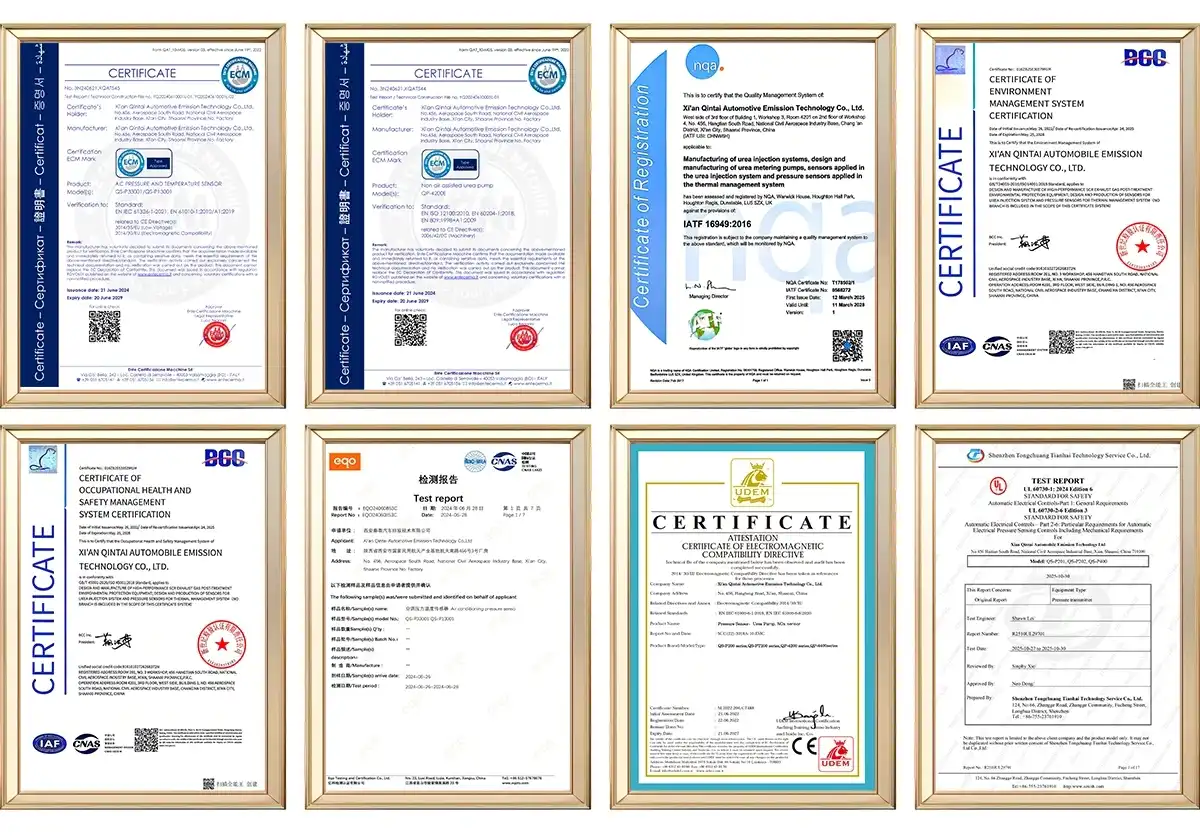
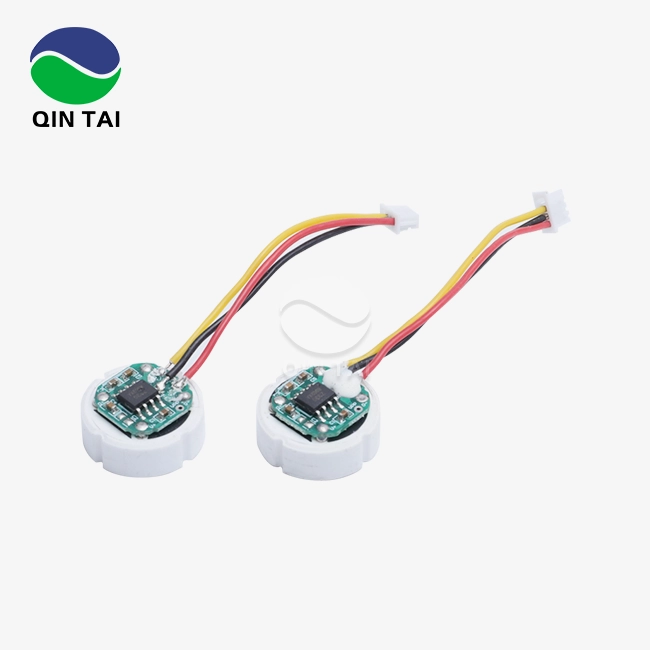
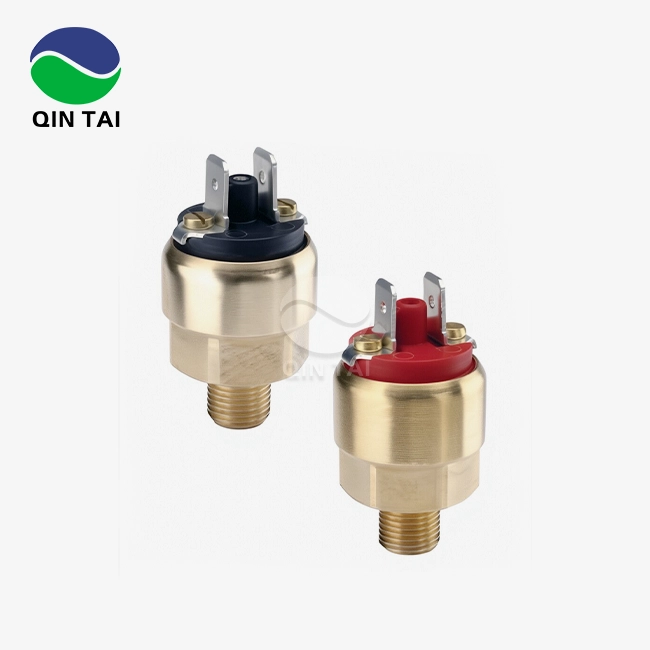
Xi'an Qintai Automotive pollution Technology has certified devices made just for diesel engines and pollution control uses that can help you with your Pressure Transmitter measuring needs. We are China's top OEM pressure sensor supplier and work with Weichai Power, Yuchai Power, and Quanchai Power. Our manufacturing is second to none, and we have IATF16949, ISO9001, and ATEX certifications to prove it. These ensure that our products meet international standards. Through advanced molecular bonding technology, our thin-film Pressure Transmitters get rid of long-term drift.
This gives you the measurement stability you need for Euro VI and China VI emission compliance. We offer full customisation services that let you change the output signals, pressure ranges, and sensor inputs to fit your exact integration needs. Contact our technical team at info@qt-sensor.com to talk about bulk pricing for OEM applications, look over our long list of certifications, and find out how Qintai Pressure Transmitter manufacturers can help your supply chain by providing you with reliable, cost-effective measurement solutions and quick engineering support.
References
1. Liptak, B.G. (2018). Instrument Engineers' Handbook: Process Measurement and Analysis. CRC Press, Volume 1, Fifth Edition.
2. International Organization for Standardization (2021). Industrial Process Control Valves – Part 7: Control Valve Data Sheet. ISO/IEC 17025:2017 Standard.
3. Morris, A.S. & Langari, R. (2020). Measurement and Instrumentation: Theory and Application. Academic Press, Third Edition.
4. Society of Automotive Engineers (2019). Pressure Transducer – Nomenclature and Terminology. SAE J1346 Standard.
5. Webster, J.G. & Eren, H. (2022). Measurement, Instrumentation, and Sensors Handbook: Electromagnetic, Optical, Radiation, Chemical, and Biomedical Measurement. CRC Press, Second Edition.
6. European Commission Directorate (2020). ATEX Guidelines – Equipment and Protective Systems for Use in Potentially Explosive Atmospheres. EU Directive 2014/34/EU Implementation Guide.

Our customers’ satisfaction speaks for our quality — contact us to experience the same reliable service.