- English
- French
- German
- Portuguese
- Spanish
- Russian
- Japanese
- Korean
- Arabic
- Greek
- German
- Turkish
- Italian
- Danish
- Romanian
- Indonesian
- Czech
- Afrikaans
- Swedish
- Polish
- Basque
- Catalan
- Esperanto
- Hindi
- Lao
- Albanian
- Amharic
- Armenian
- Azerbaijani
- Belarusian
- Bengali
- Bosnian
- Bulgarian
- Cebuano
- Chichewa
- Corsican
- Croatian
- Dutch
- Estonian
- Filipino
- Finnish
- Frisian
- Galician
- Georgian
- Gujarati
- Haitian
- Hausa
- Hawaiian
- Hebrew
- Hmong
- Hungarian
- Icelandic
- Igbo
- Javanese
- Kannada
- Kazakh
- Khmer
- Kurdish
- Kyrgyz
- Latin
- Latvian
- Lithuanian
- Luxembou..
- Macedonian
- Malagasy
- Malay
- Malayalam
- Maltese
- Maori
- Marathi
- Mongolian
- Burmese
- Nepali
- Norwegian
- Pashto
- Persian
- Punjabi
- Serbian
- Sesotho
- Sinhala
- Slovak
- Slovenian
- Somali
- Samoan
- Scots Gaelic
- Shona
- Sindhi
- Sundanese
- Swahili
- Tajik
- Tamil
- Telugu
- Thai
- Ukrainian
- Urdu
- Uzbek
- Vietnamese
- Welsh
- Xhosa
- Yiddish
- Yoruba
- Zulu
How to Test Urea Pressure Sensor Failure in Dosing Systems
Next, after the fault codes along with live pressure data, comes the test for a urea pressure sensor failure in a dosing system. Next, examine the sensor’s supply voltage, ground and output signal using a multimeter. Then compare the computer readout to actual DEF pressure using a calibrated gauge. If the signal does not correspond with the genuine pressure, the sensor is probably at fault. If they match, look at the pump, filter, the injector and lines. I follow this method since a pressure error code does not mean the sensor is defective. If you skip steps, you end up with parts that have to be scrapped and equipment that has to be run again.
Why Urea Pressure Sensor Testing Matters in SCR Dosing Systems
What the Sensor Does in the DEF Circuit
A urea pressure sensor typically detects pressure inside the diesel engine exhaust fluid (DEF, also known as AdBlue) dosing circuit. The ECU interprets the pressure signal. The pump pushes fluid from the tank through the filter, via the heated line to the dilution valve or SCR injector. DEF is a blend of 32.5% urea, a major component in the NOx reduction process, in accordance with ISO 22241-1. EPA’s 2001 heavy-duty rule phased in 0.20 g per cubic meter NOx standards until 2010 and SCR is a common approach to meet them. Without pressure feedback, a controller is unable to maintain the correct dose rate.
Symptoms That Point Toward Sensor Trouble
Most operators notice a warning light initially . Additional symptoms include: incorrect pressure readings on the scan tool, erratic indications, poor NOx control, excessive DEF use and engine derate. Lack of pressure feedback trust means ECU stops injection to protect components. This increases emissions. Code P204B means a urea pressure sensor in the circuit range or functionality problem on many systems, however definitions vary by manufacturer. The first thing I did, before touching any tool, was read the code description in the service manual. Most problems cause the same alarm therefore I rely on live data to notify me rather than the light.
Rule Out Other Causes Before Ordering Parts
A pressure failure does not mean a faulty sensor is a done deal. Pressure readings may alter because of blocked filters, an aged pump, frozen DEF, faulty wiring, leaks and crystallised urea. DEF freezes at approximately 12°F (−11°C) therefore a cold-weather issue may clear after system thaws. As the water evaporates it might leave behind urea deposits that block pipes and nozzles. Crystals can develop. I examine these things first, since a blocked filter won’t be fixed by a new sensor. This habit also protects purchase budgets, since a false diagnosis means return fees and more downtime for fleets, dealers and OEM service teams.
Common Causes of Urea Pressure Sensor Failure
Electrical Faults
Electrical problems may mimic failure of the urea pressure sensor. Open circuits, circuit shorts, corroded terminals, poor grounds, inappropriate supply voltage and damaged harnesses may generate erratic readings. The 5 V ratiometric sensor requires a clean baseline voltage, therefore a bad supply will ruin the result even if the detection element is healthy. Moisture in the connections caused by DEF spills or normal pressure cleaning creates occasional resistance. Before I replace anything I always examine the connection for any green or white muck, bent pins along with loose locks. Five minutes spent on a connection may prevent a repair order.
Fluid and Mechanical Causes
Fluid side difficulties change the sensor pressure . So the sensor may be correct , but the system might respond incorrectly . Crystallisation, blocked filters, restricted lines, pump damage, air in the circuit, leakage, contaminated fluid, frozen DEF are frequent reasons. ISO 22241-1 demands DEF purity since diluted or mixed fluid might damage components. Pump vibration, heat and pressure pulses may damage the mounting points, seals and connections. Deposits on sensor ports might harm the detecting device. I suppose that the sensor is neutral until pressure is sensed.
Calibration and Replacement-Part Mismatch
Sometimes a good urea pressure sensor looks terrible because the signal is being misunderstood by the ECU. All mimic physical breakdown, including faulty scaling, calibration, communication and scaling, as well as mismatched replacement parts. A sensor with the incorrect signal type or pressure range might output a voltage that looks right but corresponds to the wrong pressure. 12 V and 24 V systems weren't interchangeable by default. Analogue designs with 0.5-4.5 V ratiometric output are different from current-output as well as digital designs. I check the OE part number, pressure range, connection type, and output type before I install. One check may save a lot of failures.
Step-by-Step Procedure for Testing a Urea Pressure Sensor
Steps 1 and 2: Read the Data and Inspect the System
Use a scan tool to capture diagnostic problem codes, freeze-frame data and live pressure” What may seem like a bad reading at idle, might be alright when priming the pump, because of the surrounding temperature, DEF level and engine condition. Check for leaks, glass, damage and heat in sensor, connection, harness, filtering housing, lines and dosing valve. "Photo for the record. Wear gloves and goggles before opening any line. Follow the depressurisation method as per the manufacturer. DEF may irritate eyes and skin and corrode metals. Always clean up any spills promptly and keep the fluid away from any connections.
Steps 3 and 4: Check Voltage, Ground, and Signal
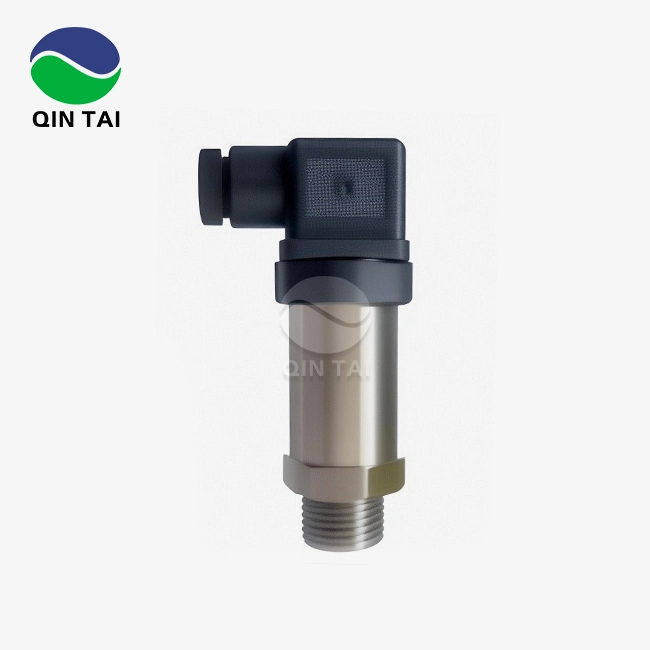
Use approved back-probing as well as breakout leads with digital multimeter to prevent terminal damage. Check supply voltage first. A key-on 5 V urea pressure sensor, such as the QS-P226, should have a 5 V reference on the connector. Check the ground by checking the voltage drop between the sensor ground and battery negative. Then read signal. 0.5–4.5 V sensor: output <0.5 V or >4.5 V means open circuit, short or out of range. Wiggle the harness and look at the display, fast jumps imply a connection problem. Refer to wiring diagram for pin identification by model year, not wire colour.
Steps 5 and 6: Compare with Real Pressure and Verify the Repair
Install an approved pressure gauge as well as test adapter and contrast DEF metric pressure to scan-tool. value over priming, steady operation and pressure release. If the gauge and the reading are the same the sensor is operating and the issue is the pump, sort, injector or lines. Then the sensor or the circuit would need to be checked if the deviations are more than the accuracy given for the sensor (±0.5% for QS-P226). Repair. Calibrate. Adapt. Clear codes. Run a controlled dose test. Ensure the defect is corrected before releasing the automobile or equipment.
How to Diagnose Specific Urea Pressure Sensor Failure Symptoms
Low or High Pressure Readings
For low readings, check DEF level and temperature, pump output, filters, restrictions, leaks, and air ingress before you blame sensor bias. For high readings, suspect a blocked injector, a crystallized line, a restricted return path, or a faulty pressure relief function. Measurement range matters here. The QS-P226 covers −14 psi to +130.5 psi, so negative pressure and peak dosing pressure both fall inside its range. Overpressure and underpressure each leave a pattern in live data, and the gauge test separates a real pressure problem from a signal error. I record the readings at each stage so the pattern is easy to compare later.
Missing or Unstable Signals
If a signal is absent, tests for power, ground, connection terminals, and interactions status are required. Verify the supply electricity at the connection. Then, check the signal line for an open or short to ground or power. If the results are unstable , you will need to do a harness circulation test , vibration check and use an oscilloscope to record the short dropouts that the multimeter averages out . If the harness is shielded, check the shield is intact and routed away from sources of noise. I also check the connection for fluid, since DEF residue may form a slow leak channel between pins and trigger a malfunction that only shows up on humid days.
Faults That Return After Replacement
And if the problem comes back after a part is replaced, stop and reassess. Compare the pressure range, message type, supply voltage and connection of the replacement. Check pump, filter, injector and lines after calibration and the ECU adaptation. Crystallisation or line leaks that usually cause recurring failures are reliably indicated by the urea pressure sensor. I take measurements and photographs on every trip. This data helps in discussions on warranties and assists supplier engineers in providing correct advice, especially in cases where pinouts are not clear or the application is harsh.
Choosing and Verifying a Replacement Urea Pressure Sensor
When to Repair, Replace, or Calibrate
First fix wiring, relationships, seals and crystalization. Replace the urea pressure detection device if output is out of specification, case is cracked, fluid intrusion or electrical fault, and pressure testing fails. Certain systems need electronic control unit initialisation, which includes offset correction or relearning. Depressurise system, keep pollutants out of open ports. Replace seals, torque appropriately and leak test before returning to operation. This avoids a second disassembling and protects the new part.
QS-P226 Specifications
Qintai develops and produces the sensor core for the QS-P226. It measures urea across −14 psi to +130.5 psi, runs on a 5 V supply, and delivers a 0.5–4.5 VDC ratiometric analog signal with ±0.5% accuracy. The pressure range follows the OE requirement, the listed operating temperature range is 60–80°F, and each unit is 100% tested and covered by a 12-month warranty. Because that temperature range is narrow, confirm your application's conditions with our engineers before ordering. Matching these values to your ECU is the main step in choosing a compatible urea pressure sensor.
Supplier Verification for OEM and Aftermarket Buyers
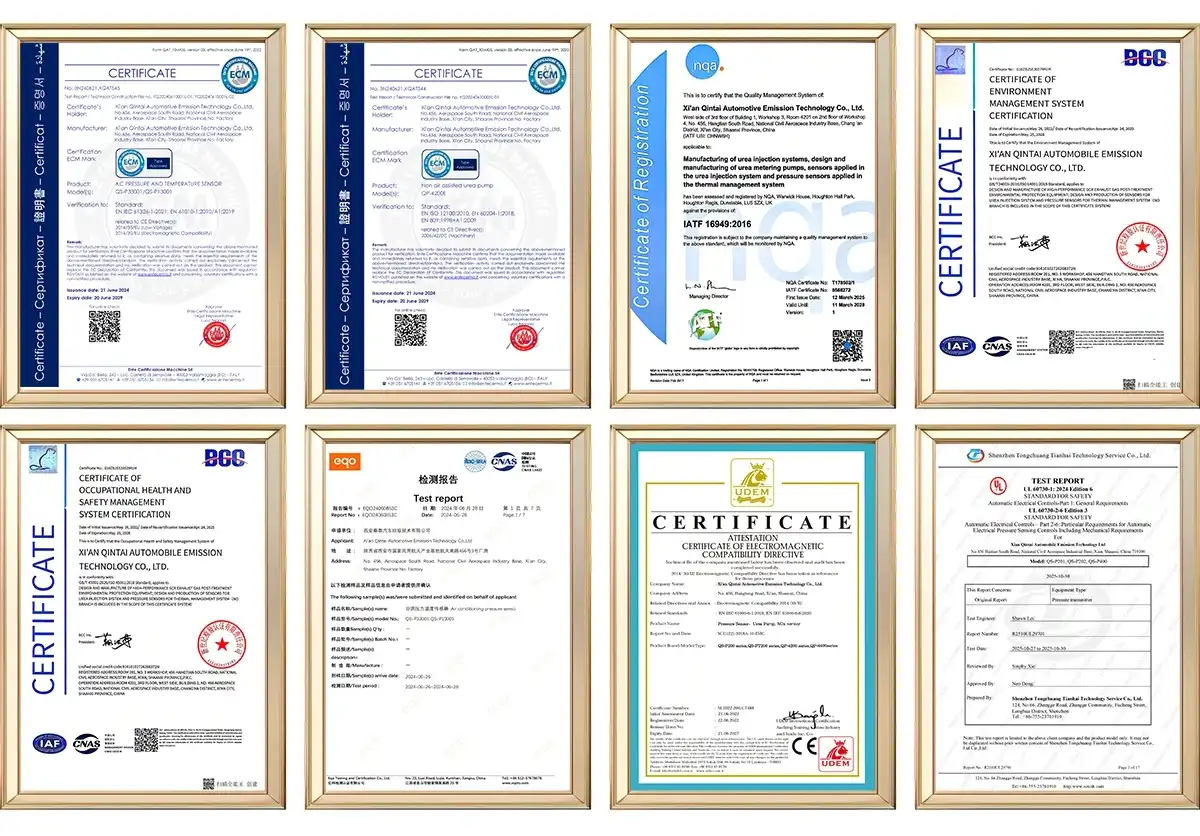
Before purchasing, check supplier's quality, traceability and test records. Since 2001, Xi'an Qintai The automobile industry Emission Technology Co. Ltd. has been certified with ISO 9001, IATF 16949, CMC Ex, UL, CE, REACH and RoHS, and has applied for 58 invention patents. Primary supplier for Weichai, Yuchai and Quanchai Power. Request a data sheet, pinout, specimen, a MOQ and lead time. Then use a pilot batch for fit, signal output and sealing. Compare total cost, including guarantee and downtime, not just unit price. OEM&ODM: Qintai may be customised.
Conclusion
Urea pressure sensor testing should be done in order to distinguish electrical or calibration issues from pressure issues. Failure is not proven by a fault code. Read codes and live data, inspect connection and lines, verify voltage, ground, and signal, and compare with a gauge to determine whether the sensor or dosing system requires repair. Mismatched replacement parts may mimic failures caused by crystallisation, clogged filters, pump wear, air, leaks, and freezing. Replaceable parts must meet pressure range, signal type, supply voltage, connection, and ECU calibration. Measurements and supplier test records aid repair and purchase choices.
FAQ
What are the signs of urea pressure sensor failure?
Common signs include warning lights, implausible pressure values, unstable signals, poor dosing, higher DEF use, and engine derating. Confirm the fault with a gauge before you replace the part.
How do I test the sensor with a multimeter?
Back-probe the connector, check the 5 V supply and the ground, then read the signal. On a 0.5–4.5 V urea pressure sensor, readings outside that band suggest a circuit fault.
Can I assume 12 V and 24 V sensors are interchangeable?
No. Verify supply voltage, signal type, pressure range, and connector for your SCR system. The QS-P226 uses a 5 V supply with analog output.
Does a new sensor need calibration?
Some ECUs require initialization, offset correction, or relearning after installation. Check the service documentation for your system.
What should I ask a supplier before ordering?
Request the datasheet, pinout, test records, samples, MOQ, lead time, and warranty terms.
Request a Urea Pressure Sensor Quote from Qintai
Looking for a urea pressure sensor manufacturer that supports OEM, ODM, and custom projects? Send Qintai your equipment model, original part number, pressure range, output signal, supply voltage, connector details, annual demand, and delivery region at info@qt-sensor.com. Our engineers will check QS-P226 compatibility and discuss samples, warranty, and long-term cooperation. Visit qt-sensor.com for product details.
References
1. ISO 22241-1: Diesel Engines—NOx Reduction Agent AUS 32—Part 1: Quality Requirements, 2019.
2. EPA, Control of Air Quality from New Automobile Vehicles: Heavy-Duty Engines and Vehicle Requirements and Highway Diesel Fuel Sulphur Control Requirements, 2001.
3. EPA, Control of Air Pollution from Non-Road Diesel Vehicles and Fuel, 2004.
4. Johnson, T. V. “Review of Diesel Exhaust and Control” World Journal of Engine Research, 2009.
5. Bosch Automotive Manual, 10th Edition, 2018.
6. 2016 IATF 16949: Automotive Production and Key Service Parts Organization Quality System Requirements


Our customers’ satisfaction speaks for our quality — contact us to experience the same reliable service.