- English
- French
- German
- Portuguese
- Spanish
- Russian
- Japanese
- Korean
- Arabic
- Greek
- German
- Turkish
- Italian
- Danish
- Romanian
- Indonesian
- Czech
- Afrikaans
- Swedish
- Polish
- Basque
- Catalan
- Esperanto
- Hindi
- Lao
- Albanian
- Amharic
- Armenian
- Azerbaijani
- Belarusian
- Bengali
- Bosnian
- Bulgarian
- Cebuano
- Chichewa
- Corsican
- Croatian
- Dutch
- Estonian
- Filipino
- Finnish
- Frisian
- Galician
- Georgian
- Gujarati
- Haitian
- Hausa
- Hawaiian
- Hebrew
- Hmong
- Hungarian
- Icelandic
- Igbo
- Javanese
- Kannada
- Kazakh
- Khmer
- Kurdish
- Kyrgyz
- Latin
- Latvian
- Lithuanian
- Luxembou..
- Macedonian
- Malagasy
- Malay
- Malayalam
- Maltese
- Maori
- Marathi
- Mongolian
- Burmese
- Nepali
- Norwegian
- Pashto
- Persian
- Punjabi
- Serbian
- Sesotho
- Sinhala
- Slovak
- Slovenian
- Somali
- Samoan
- Scots Gaelic
- Shona
- Sindhi
- Sundanese
- Swahili
- Tajik
- Tamil
- Telugu
- Thai
- Ukrainian
- Urdu
- Uzbek
- Vietnamese
- Welsh
- Xhosa
- Yiddish
- Yoruba
- Zulu
How to Troubleshoot a Urea Pressure Sensor
Finding signs of a problem with a urea pressure sensor, like pressure numbers that change all the time, dashboard warning lights, or engine power issues, is the first step in fixing it. Most of the time, these problems are caused by bad electrical connections, frozen urea getting into the sensor, mechanical wear, or calibration drift. First, use diagnostic scan tools to get fault codes from the engine control unit (ECU). Next, carefully check the integrity of the wire harness, clean the sensor surfaces, make sure there is a voltage source (usually 5V), and compare the signal output values to the manufacturer's specs. The right way to fix stops expensive downtime and keeps your SCR system's NOx reduction performance at its best.
Introduction
Selective Catalytic Reduction (SCR) technology is used in modern diesel engines to meet strict pollution standards like the EPA 2010 and Euro VI rules. This system's brain is the urea pressure sensor, which constantly checks the pressure of diesel exhaust fluid (DEF), also known as AdBlue, to make sure that the right amount of urea is injected into the exhaust stream. If this sensor stops working properly, it will not only cause danger lights to appear, but it may also cause your fleet's engines to lose power, use more fuel, and possibly not follow environmental rules.
We know how hard it is for procurement managers and research and development experts to choose trusted emission control parts. When sensors fail, they stop activities, cause warranty claims, and make it harder for OEMs and aftertreatment system integrators to work together. For long-term working stability, this complete guide walks you through structured ways to fix problems and gives you information on how to choose sensors. Learning how to do sensor diagnostics is important for anyone in charge of big truck fleets, building equipment, farm equipment, or generator sets. It saves your investment and keeps you in line with the rules.
Understanding the Basics of Urea Pressure Sensors
The Critical Role in SCR Systems
The feedback system that allows closed-loop control of DEF injection is made up of urea pressure sensors. The sensor sends real-time pressure information to the ECU, which then changes the speed of the pump and the width of the injection pulses to give just the right amount of urea for the best NOx conversion. If you don't measure pressure correctly, the system can't find leaks, blockages, or worn-out pumps, all of which affect emissions performance and cause diagnostic trouble codes (DTCs).
Analog vs. Digital Sensor Technologies
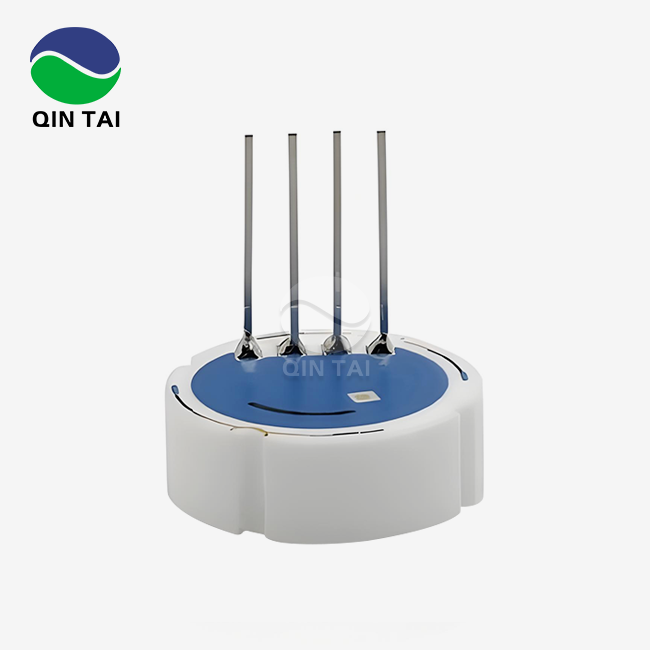
Our QS-P226 model is an analog sensor that sends out a constant voltage signal that is related to the pressure it measures. Most of the time, these devices send ratio-metric signals between 0.5 and 4.5 VDC, which the ECU understands across the whole pressure range. The technology has great clarity and is cost-effective for use in mass production. Digital sensors, on the other hand, use internal microprocessors to turn pressure readings into digital data. This makes them more resistant to noise and able to diagnose themselves. Because they are so reliable, piezoresistive sensor cores are still the standard. They measure changes in resistance caused by pressure in a silicon membrane very accurately.
Accuracy Standards and Performance Metrics
Professional sensors are accurate to within 0.5% of the reading across their whole measurement range. This means that changes in pressure as small as 0.2 psi can be reliably picked up. This level of accuracy is very important for finding small problems with a system before they become big problems. Operating temperature consistency between -40°F and 185°F guarantees steady performance during cold starts and long periods of high load use. Chemical resistance to urea corrosion and crystallization keeps the sensor's integrity even when it's exposed to polluted DEF that has soil or living things growing on it.
Step-by-Step Troubleshooting Approach for Urea Pressure Sensors
Identifying Common Symptoms and Root Causes
Dashboard warning lights are the most obvious sign of a problem, but skilled mechanics can also spot less obvious ones, such as more DEF being used, rough engine performance when it's under load, or power derating that happens from time to time. These signs point to three main types of failure: electrical problems like corroded connectors or broken wiring harnesses; mechanical problems like urea crystals blocking sensor ports or diaphragms breaking from overpressure; and calibration drift from thermal cycling or chemical exposure over long service intervals.
Diagnostic Tools and Ways to Measure Things
Start fixing the problem with an OBD-II scanner that can read codes specific to the maker and show real urea pressure sensor data streams. Take standard pressure readings at three important times: when the system is at rest (should show pressure close to atmospheric), when the pump is starting, and when the whole dose is being given. Compare these numbers to what the OEM says they should be. Our QS-P226 can handle pressures between -14 psi and +130.5 psi, so it can handle both vacuum conditions when the tank is emptying and the highest system pressure when the injector is running. Check the 5V reference voltage at the sensor connection with a digital voltmeter and measure the signal output voltage when nothing is moving.
By checking the electrical resistance, you can find wiring lead open or short circuits. Take the sensor off and check the resistance between the signal pins and ground. If the resistance is infinite, it means that the insulation is good, and if it's close to zero, it means that there is a short to chassis ground. Using a magnifying glass, check the connection points for rust. Green oxidation or white crystalline deposits can make it hard for electricity to flow. If you look closely at the sensor body, you might find DEF leaking around the fitting flange. This could mean that the O-ring failed or the installation force was not right.
Systematic Troubleshooting Checklist
To quickly find problems, your troubleshooting process should go in this tried-and-true order:
- Scan for DTCs and freeze frame data: Write down all saved and pending codes before you clear them, because occasional faults can give you information about what caused them, such as vibrations or changes in temperature.
- Verify power and ground circuits: Use voltage drop testing to make sure the 5V source voltage is stable and that the ground connections at the sensor and ECU contacts are clean.
- Inspect physical condition: Take off the sensor and look at the detecting diaphragm for cracks, urea crystallization, or damage from particles in the dose system.
- Test sensor output response: To test the output reaction of a sensor, use a hand pump or a pressure calibrator to apply a known pressure while keeping an eye on the output voltage. Good sensors change the voltage linearly as the pressure grows.
- Check system pressure integrity: Run the dosing pump without the sensor attached and look at the pressure numbers at the pump outlet to make sure the pump is working as it should.
This thorough approach cuts down on the time needed to diagnose the problem while also avoiding wrong conclusions that lead to replacing parts that aren't needed. Recording every test result helps with warranty claims and finds trends across fleets of vehicles that point to widespread problems that need engineering help.
Comparing Urea Pressure Sensors for Troubleshooting and Performance
Evaluating Key Performance Parameters
The pressure range covering of a urea pressure sensor tells you if it's right for a certain job. Agricultural equipment that works in very cold or very hot conditions needs a wider working range than standing generator sets. The -14 to +130.5 psi range of our QS-P226 can handle both vacuum conditions during system cleaning and high-flow uses with peak dosing pressures. Response time affects the system's ability to pick up on sudden changes in pressure. Sensors with response times of milliseconds or less allow for advanced fault detection systems that keep parts from breaking.
Sensor Selection for Maintenance-Friendly Designs
Automotive-grade sensors are different from industrial ones because they can withstand vibrations. Heavy trucks and building equipment constantly put stress on sensors, which breaks down solder joints and circuit boards. These conditions won't affect the tuning of sensors that are built with strong mechanical support and potted electronics. Media compatibility is more than just being able to handle urea. Sensors must also be able to work with DEF that is tainted with rust particles, biological slime, or glycol water from system leaks without losing their accuracy.
Sensors that make field service easier and cut down on mean time to fix (MTTR) are given top priority by procurement teams. With quick-disconnect fittings, techs can take off sensors without having to drain the whole DEF tank. This saves 40 minutes of work time per service event. Field-installed connectors that break down quickly and rust in hot settings are not needed with sensors that have wiring cables built in. Self-diagnostic features that send information about the health of sensors over the CAN bus network make it possible to set maintenance schedules based on the real state of parts instead of just picking random times.
The best OEM providers offer sensors with standard mounting measurements and electrical interfaces that let them work with different platforms. This interchangeability cuts down on inventory costs for fleets that use a mix of types of equipment and makes emergency fixes easier when original parts take a long time to arrive. A 12-month warranty with full technical support shows that the maker trusts the product's dependability and protects your purchase investment from failure before it's supposed to.
Procurement Insights: Buying and Maintaining Reliable Urea Pressure Sensors
Supplier Evaluation Criteria for B2B Buyers
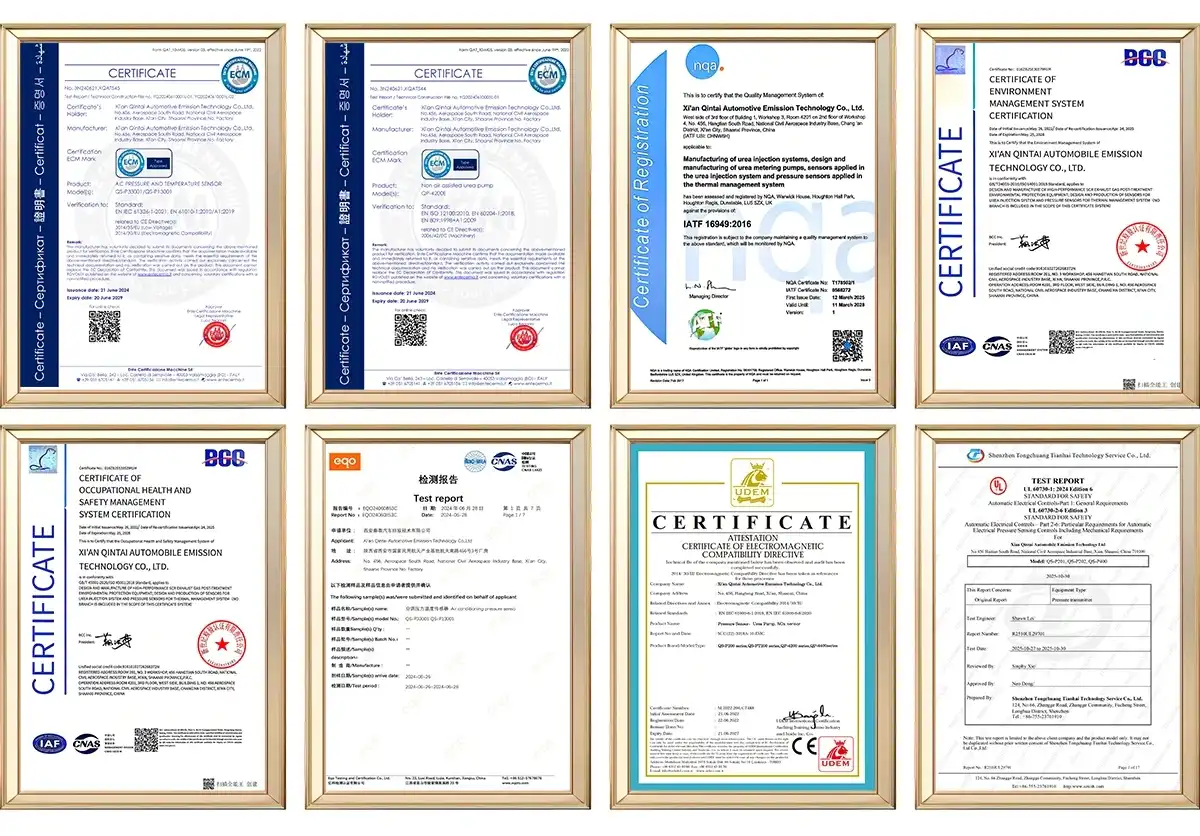
Choosing the right urea pressure sensor provider has an effect on the total cost of ownership that goes far beyond the price of the sensor itself. Manufacturers that have been around for a while and have ISO9001 and IATF16949 certifications can show that they can control the production process so that each batch is the same. This is very important when adding sensors to mass production lines. Intellectual property portfolios with a lot of idea patents show that the owner is a real engineer, not just someone who can put together parts. When selling equipment in foreign markets, regulatory risks are eliminated by compliance approvals like REACH, RoHS, UL, and CE.
Balancing Cost and Performance in Volume Orders
If providers can meet your volume needs, you can tell by looking at their production ability and how resilient their supply chains are. When a company makes its own sensor cores, it has full control over the whole production process and doesn't have to rely on outside sources whose delivery delays mess up your assembly plans. Spreading out production sites across different regions helps businesses keep running when natural disasters or trade restrictions affect the supply chain.
When negotiating prices for large orders, the total lifecycle costs should be taken into account, not just the unit price. Sensors that cost more up front but are more reliable cut down on insurance costs and field service calls, which eat away at profit margins. Ask for full technical details, such as accuracy across temperature ranges, long-term drift characteristics, and MTBF (mean time between failures) results from accelerated life tests. These metrics let you compare rival goods that look the same on basic datasheets in a way that is fair and accurate.
Technical Support and Documentation Standards
When starting new product platforms or increasing production numbers, managing lead times becomes very important. Suppliers that offer contract inventory programs or vendor-managed inventory (VMI) services can protect your production line from changes in supply while keeping your working capital as low as possible by keeping fewer parts on hand. Flexible minimum order amounts allow for prototypes and low-volume uses without having to buy too much safety stock, which could become obsolete.
Full technical paperwork speeds up the integration work of your engineering team and cuts down on the time it takes to get new equipment models on the market. Specifications should be very exact and include toleranced dimension sketches, electrical schematics with pin assignments and ESD protection, and performance curves that show how the output changes with temperature and pressure. Application notes that talk about common installation mistakes, suggested torque levels, and best practices for integrating systems keep expensive failures in the field that can be traced back to bad execution from happening.
Professional suppliers are different from commodity vendors because they offer quick expert help. Integration problems can be solved more easily during the creation phase if you have access to applications experts who know how SCR systems work. After-sales support, such as failure analysis services and root cause investigations, helps people work together to make products better all the time. Suppliers who actively ask customers for feedback and make design changes based on what they see in the field show that they want to build long-term relationships with customers instead of just making sales.
Preventive Maintenance and Long-Term Care for Urea Pressure Sensors
Routine Maintenance Procedures
Setting up preventive repair plans for urea pressure sensors stretches their life and keeps them from breaking down at odd times, leaving equipment stuck in the field. During regular service intervals, the mounting of sensors should be visually checked for looseness caused by shaking. Electrical links should also be checked for corrosion or broken seals, and DEF system parts should be checked for crystallization buildup that stops flow. Crystallized urea deposits can be removed by cleaning with pure water, which won't hurt the sensor diaphragms. Harsh agents or rough tools that scratch sealing surfaces should be avoided.
Once a year, calibration checks make sure that the sensor's accuracy stays within the limits. Portable pressure calibrators make reference pressures that are known, and data loggers keep track of sensor output so that it can be compared to the original performance charts. If sensors move more than ±1%, they should be changed right away to avoid failing to meet emissions standards. Manufacturers offer recalibration services that fix the accuracy of sensors for less money than replacing them, but recalibration in the field can make it harder to track, which some quality systems don't allow.
Early Warning Signs and Predictive Strategies
Advanced fleet management systems keep an eye on the health of sensors by constantly analyzing data to find signs of performance loss before they completely stop working. If you see high-frequency noise or quick spikes in your pressure reading, it means that there is electrical interference from broken shielding or bad grounding. Gradual changes in the pressure difference suggest that the diaphragm is getting dirty or that there is a partial blockage in the sensor port. Lengthening the response time shows mechanical damping caused by crystals building up inside the pressure hole.
Industry Best Practices from Leading Operators
Diagnostic trouble code patterns give maintenance planners useful information they can use. When intermittent sensor problems only happen in cold weather, it's likely that moisture is getting into the connector bodies and freezing there. This can be stopped by better sealing or installing connection boots. Faults that happen during certain task cycles, like long periods of idling or high-load operation, show problems with thermal stress that need higher-temperature sensor improvements. By keeping track of failure rates across equipment serial numbers, flaws in a single batch of production can be found. Suppliers should be notified, and recall efforts may be necessary.
Major fleet companies have improved their maintenance procedures over the years by taking care of thousands of SCR-equipped cars. Age-related problems can be avoided by replacing sensors every 5 years or 500,000 miles, even if the sensors seem to be in good health. This proactive method gets rid of the need for diagnostic work and cuts down on roadside breaks that make customers unhappy and cost a lot more in tow fees than the cost of replacing the sensors.
Some programs that try to stop pollution stress the importance of managing DEF quality by storing it correctly, checking it regularly for urea levels and metal contamination, and cleaning the tank before big service events. When you use high-quality DEF that meets ISO 22241 standards, you protect sensors from harmful chemicals and crystallization promoters as much as possible. In cold climates, heated DEF systems keep the fluid's density stable so that accurate pressure measurements can be made. This keeps sensor diaphragms from freezing over. These methodical methods turn emission control systems from things that need a lot of upkeep into assets that are reliable and help meet equipment performance goals.
Introducing Qintai's QS-P226: Engineered for Reliable Performance
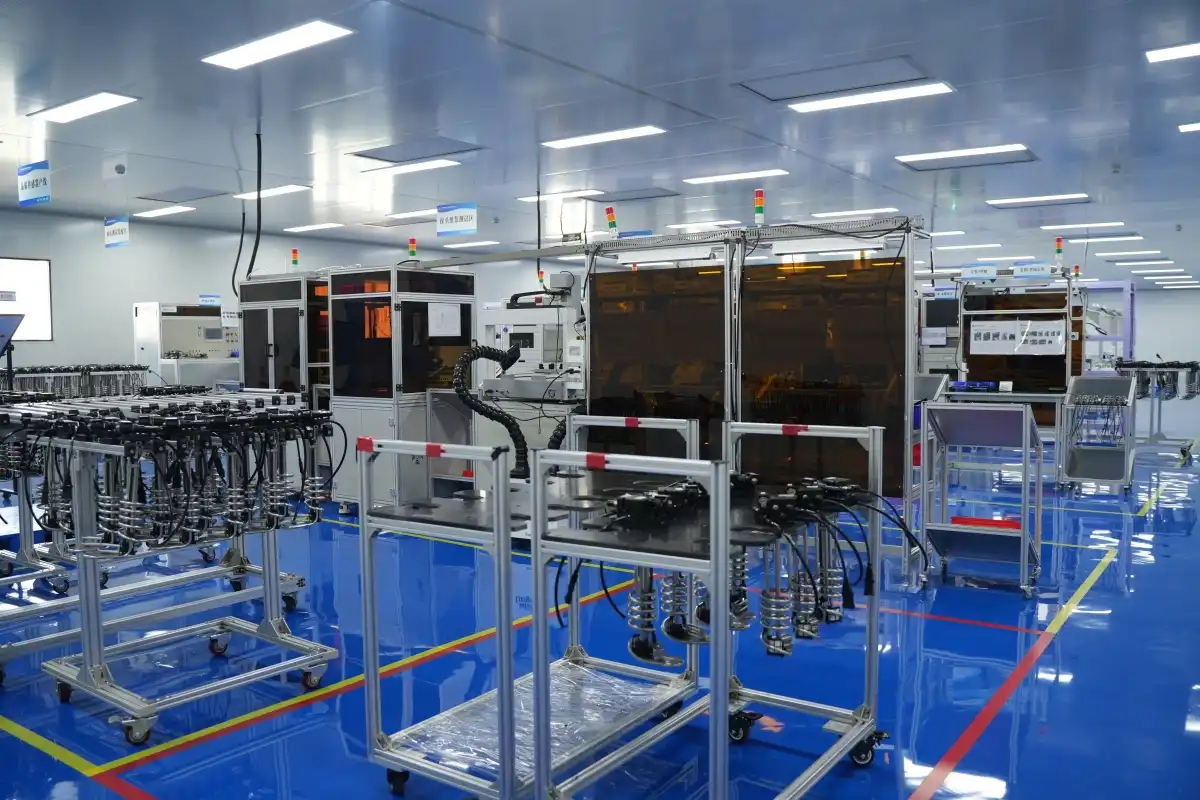
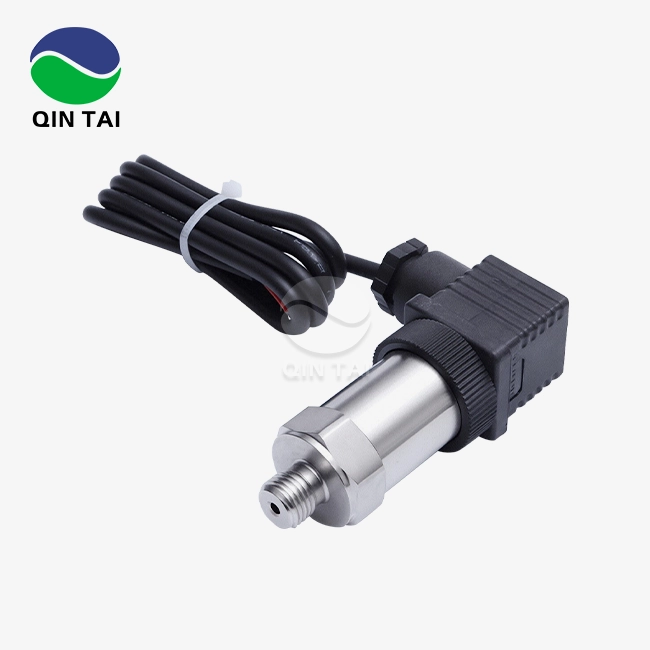
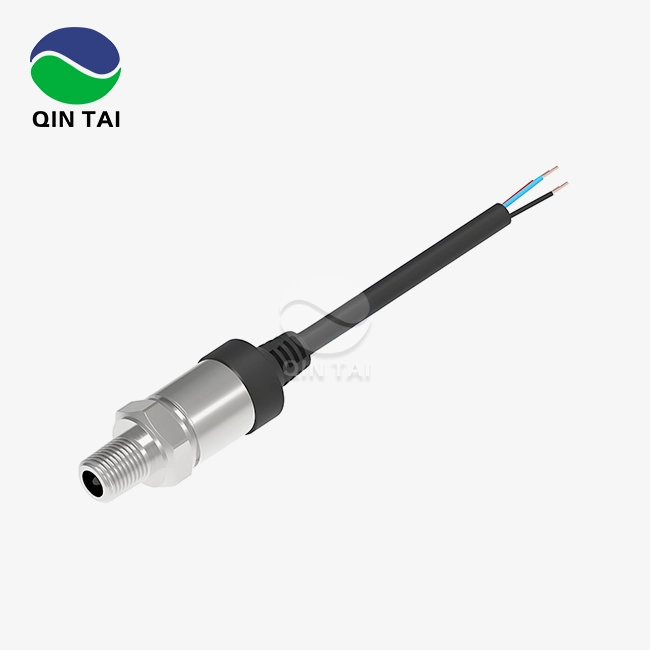
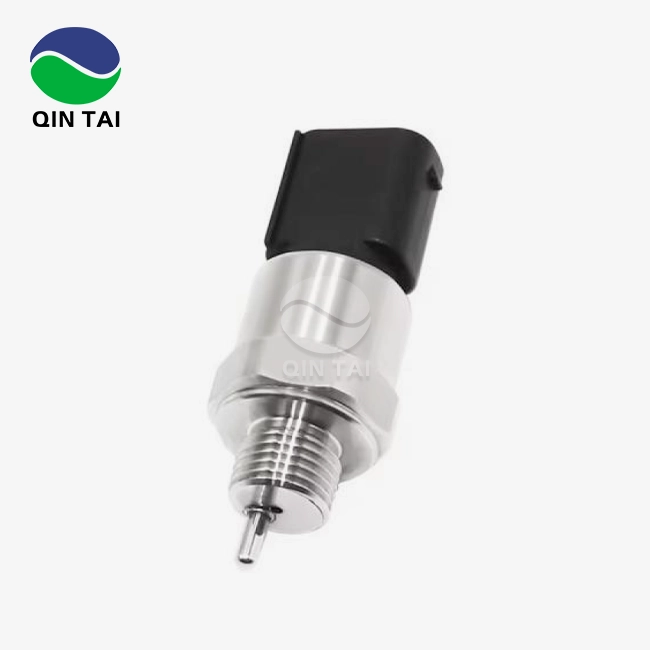
Our QS-P226 urea pressure sensor is the result of twenty years of technical improvement aimed at solving real-world problems that diesel engine makers and aftertreatment system integrators face. We have full control over the quality of production thanks to the sensor core technology we created ourselves. It also lets us make changes to meet the needs of specific applications. This analog output sensor sends ratio-metric signals between 0.5 and 4.5 VDC. These signals work with current ECU platforms, so you don't have to pay for expensive system redesigns.
The full reading range, from -14 psi to +130.5 psi, covers all of the possible ways your SCR system could be used. Finding vacuum conditions during system cleaning stops air from entering and causing dose errors. Also, keeping an eye on peak pressures during maximum flow conditions finds worn pumps or clogged injectors before they cause the system to shut down. Our standard for ±0.5% accuracy guarantees accurate pressure readings, which lead to accurate NOx reduction and a lower chance of damage to components due to over- or under-dosing.
Chemical protection is the most important thing for long-term urea service dependability. The materials in the QS-P226 don't react badly with urea or crystallization, and they stay accurate even when they're introduced to polluted DEF that has sediment or biological growth in it. Thermal stability across changes in running temperature keeps the calibration stable during cold starts and long periods of high temperature operation. shaking resistance comes from strong construction that can handle constant car shaking without affecting the accuracy of the measurements. Additionally, a sealed design keeps moisture and dirt out of the internal parts.
The sensor housing has environmental protection that meets IP67 standards. This means that it can be installed in open underbody areas without the need for extra protective covers. Our 12-month guarantee and extensive technical support network show that we trust the reliability of the product and protect your purchase investment. Before it is shipped, every sensor is tested one hundred percent of the way. This makes sure that there are no problems with the quality, which helps your production line work better and protects your brand's image.
Conclusion
To fix problems with urea pressure sensors properly, you need to follow a set of steps that include electrical testing, physical checking, and making sure the sensors work according to the manufacturer's instructions. Procurement managers and engineering teams can make smart choices that balance performance, reliability, and cost by learning about the basics of sensor technology and the most common ways that sensors fail. Preventive maintenance programs that include regular checks, data analysis, and planned replacements keep equipment from breaking down when it's least expected and increase its useful life. Working with well-known sensor makers who can provide full technical support and have a history of producing high-quality products will help your emission control systems meet government standards and help you reach your operational excellence goals.
FAQ
How often should urea pressure sensors be calibrated or replaced?
Every year, the calibration should be checked to make sure that the accuracy of the urea pressure sensor stays within ±1% of what was specified. If sensors show movement above this level, they need to be replaced because field recalibration makes it hard to track down problems and could void guarantees. Regular replacement every 5 years stops age-related failures before they happen, even if the state of the sensor doesn't seem bad. This is especially important in heavy-duty uses that are exposed to high temperatures or vibrations.
What diagnostic tools are essential for sensor fault analysis?
For professional repair, you need an OBD-II reader that can stream live data, a digital multimeter for testing electrical circuits, and ideally a pressure calibrator to make sure that sensor outputs are accurate. Oscilloscopes are useful for advanced diagnostics because they show signal noise and reaction qualities that simple scan tools can't. Thermal imaging cameras find hot spots that mean there are problems with electrical resistance or not enough heat transfer.
How do environmental factors like temperature affect sensor reliability?
Extreme temperatures can affect the accuracy of sensors by making mechanical parts expand and changing the way electronics work based on temperature. To keep these effects to a minimum, good sensors use temperature compensation methods and materials with matched thermal expansion factors. More dangerous is moisture getting into the connectors, which causes rust and electrical shorts. These problems can be avoided by properly sealing the connections and checking them on a regular basis.
Partner with Qintai for Reliable Urea Pressure Sensor Solutions
Qintai offers tried-and-true pollution control technology that is backed by more than 20 years of engineering and manufacturing success. We know what heavy-duty uses need because we are the top company making urea pressure sensors for China's top diesel engine makers, such as Weichai Power, Yuchai Power, and Quanchai Power. Our 58 invention patents, independent research and development, and approved quality systems like ISO9001 and IATF16949 show that we are a technical leader, which means you can trust our goods.
We offer full OEM and ODM services to help you build your product from the first idea to mass production. Because we can customize sensors in many ways, they can be made to fit your unique interaction needs, environmental conditions, and performance requirements. We have a footprint in over 60 countries around the world, including Europe, the Middle East, and South America. This gives your foreign businesses the supply chain stability and technical support infrastructure they need. Get in touch with our applications engineering team at info@qt-sensor.com to talk about your urea pressure sensor needs and find out how Qintai's solutions can improve the performance of your SCR system while lowering the total cost of ownership.
References
1. Society of Automotive Engineers (SAE). (2019). "Surface Vehicle Recommended Practice J1939: Serial Control and Communications Heavy Duty Vehicle Network." SAE International Standards.
2. Diesel Technology Forum. (2021). "Selective Catalytic Reduction Technology: NOx Emission Control for Diesel Engines." Technical White Paper Series.
3. ISO 22241-1:2019. "Diesel engines — NOx reduction agent AUS 32 — Part 1: Quality requirements." International Organization for Standardization.
4. Johnson, Timothy V. (2020). "Review of Vehicular Emissions and Their Control." SAE International Journal of Engines, Volume 13, Issue 4.
5. Heavy Duty Trucking Magazine. (2022). "SCR System Maintenance Best Practices: Insights from Major Fleet Operators." Fleet Management Technical Report.
6. Manufacturers of Emission Controls Association (MECA). (2023). "Diesel Exhaust Fluid Quality and Storage Guidelines for Commercial Vehicle Applications." Technical Guidance Document.

Our customers’ satisfaction speaks for our quality — contact us to experience the same reliable service.