- English
- French
- German
- Portuguese
- Spanish
- Russian
- Japanese
- Korean
- Arabic
- Greek
- German
- Turkish
- Italian
- Danish
- Romanian
- Indonesian
- Czech
- Afrikaans
- Swedish
- Polish
- Basque
- Catalan
- Esperanto
- Hindi
- Lao
- Albanian
- Amharic
- Armenian
- Azerbaijani
- Belarusian
- Bengali
- Bosnian
- Bulgarian
- Cebuano
- Chichewa
- Corsican
- Croatian
- Dutch
- Estonian
- Filipino
- Finnish
- Frisian
- Galician
- Georgian
- Gujarati
- Haitian
- Hausa
- Hawaiian
- Hebrew
- Hmong
- Hungarian
- Icelandic
- Igbo
- Javanese
- Kannada
- Kazakh
- Khmer
- Kurdish
- Kyrgyz
- Latin
- Latvian
- Lithuanian
- Luxembou..
- Macedonian
- Malagasy
- Malay
- Malayalam
- Maltese
- Maori
- Marathi
- Mongolian
- Burmese
- Nepali
- Norwegian
- Pashto
- Persian
- Punjabi
- Serbian
- Sesotho
- Sinhala
- Slovak
- Slovenian
- Somali
- Samoan
- Scots Gaelic
- Shona
- Sindhi
- Sundanese
- Swahili
- Tajik
- Tamil
- Telugu
- Thai
- Ukrainian
- Urdu
- Uzbek
- Vietnamese
- Welsh
- Xhosa
- Yiddish
- Yoruba
- Zulu
OEM Urea Pressure Sensor Solutions for Diesel Engine Systems
When your diesel engine's SCR system fails an emissions inspection, the culprit is often a faulty DEF pressure sensor that nobody noticed until it was too late. A urea pressure sensor monitors AdBlue hydraulic pressure in real time, feeding data directly to the Dosing Control Unit so the system injects the right amount of fluid at the right moment. Without accurate pressure readings, NOx emissions spike, fault codes appear, and your engine risks entering limp mode. This guide walks OEM engineers and procurement managers through everything they need to know to select, troubleshoot, and source the right AdBlue dosing pressure sensor for their application.
Understanding Urea Pressure Sensors and Their Role in Diesel Engines
What a DEF Pressure Sensor Actually Does?
Inside the AdBlue dosing module, there is a urea pressure sensor that checks the urea solution's hydraulic pressure before it gets to the injector nozzle. It changes the pressure into a ratiometric analog voltage signal that the ECU reads all the time. The signal is usually 0.5 V at low pressure and 4.5 V at high pressure. This real-time feedback loop lets the control unit change the timing and amount of injections to keep NOx reduction within the limits set by Euro VI and EPA Tier 4 Final.
Analog vs. Digital Signal Types
Most SCR systems today use an analog output with a range of 0.5 to 4.5 V and are powered by a 5 V DC supply. For combined sensor modules, some more advanced platforms use the LIN or CAN bus for digital communication. If you know what kind of data your ECU needs before you buy it, you can avoid expensive mistakes. If you connect an analog sensor to a digital input, you will keep getting P204B fault codes that are hard to figure out without the original wiring diagram.
Pressure Range and Why It Matters
Normal dosing systems work with pressures between 0 and 10 bar (about 0 to 145 psi), but starting purge processes can cause short-term low pressures. If a monitor can't measure below air pressure, it will miss these short-term drops, which will hide the fact that the pump is starting to break down early. When engineers choose a monitor whose measurement range includes vacuum conditions, they get a full picture of how healthy the system is. This is why selecting a urea pressure sensor with a range extending into vacuum is important for early fault detection in dosing systems.
Common Challenges and Troubleshooting of Urea Pressure Sensors
Recognizing Failure Symptoms Early
An SCR warning lamp that stays on, AdBlue use that changes, and saved fault codes like P20EE (Reductant Pressure Too Low) or P204B (Sensor Circuit Range/Performance) are the most common signs of a broken DEF pressure sensor. If you don't fix these problems, they will cause the power to drop after a certain number of firing rounds. The fuel economy of 40 cars at a medium-sized logistics company in Ohio dropped by 12%. It took them a while to figure out that the problem was caused by a batch of old sensors that were losing their signal.
Diagnosing Contamination and Electrical Faults
The main reason why sensors aren't accurate is that urea crystallizes inside the detecting box. Minerals from low-grade AdBlue make the flow path inside the fluid narrow, which makes the pressure reading go up. Check the connector pins for corrosion. Contacts that are oxidized create resistance that changes the output voltage by up to 0.3 V. This causes an important pressure error at the ECU. Cleaning the connector and checking the static supply voltage before throwing out the sensor saves money on parts that don't need to be replaced.
When Replacement Is the Right Call
However, if the static voltage checks come back negative and the sensor reading is still more than ±1 psi off from a measured reference gage, it is best to replace the sensor. Sensors with gold-plated terminals and internal chambers with minimal dead volume resist crystallization better and last longer between service visits. According to guarantee return data from SCR system fitters, switching to a 100% factory-tested OEM-grade sensor after a failure always cuts down on the number of times the vehicle needs to be taken back to the shop.

OEM Urea Pressure Sensor Solutions: Features and Advantages
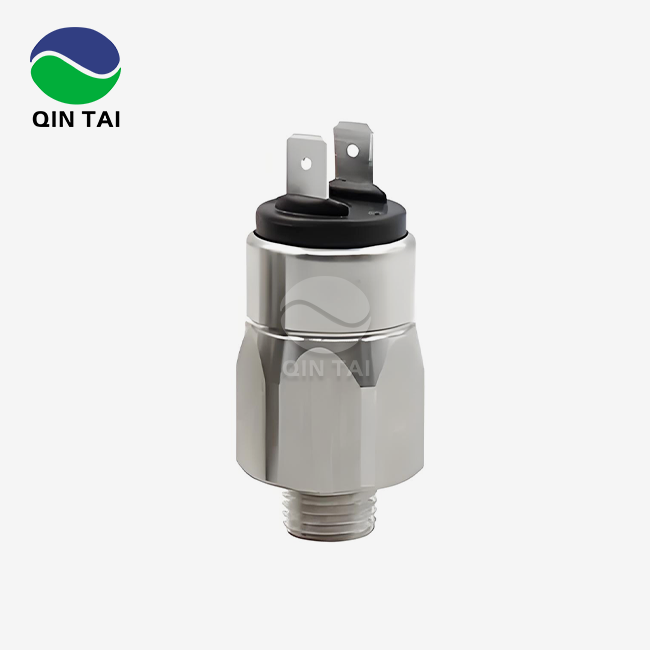
Introducing the Qintai QS-P226
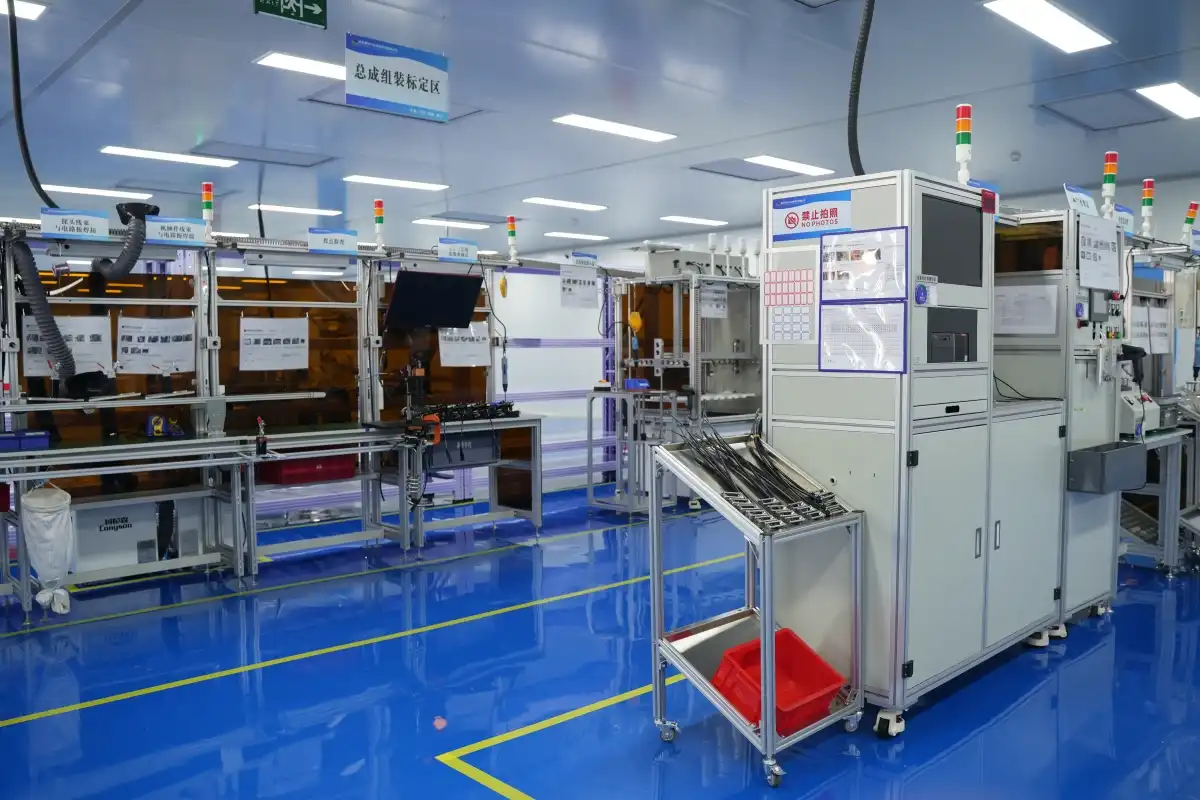
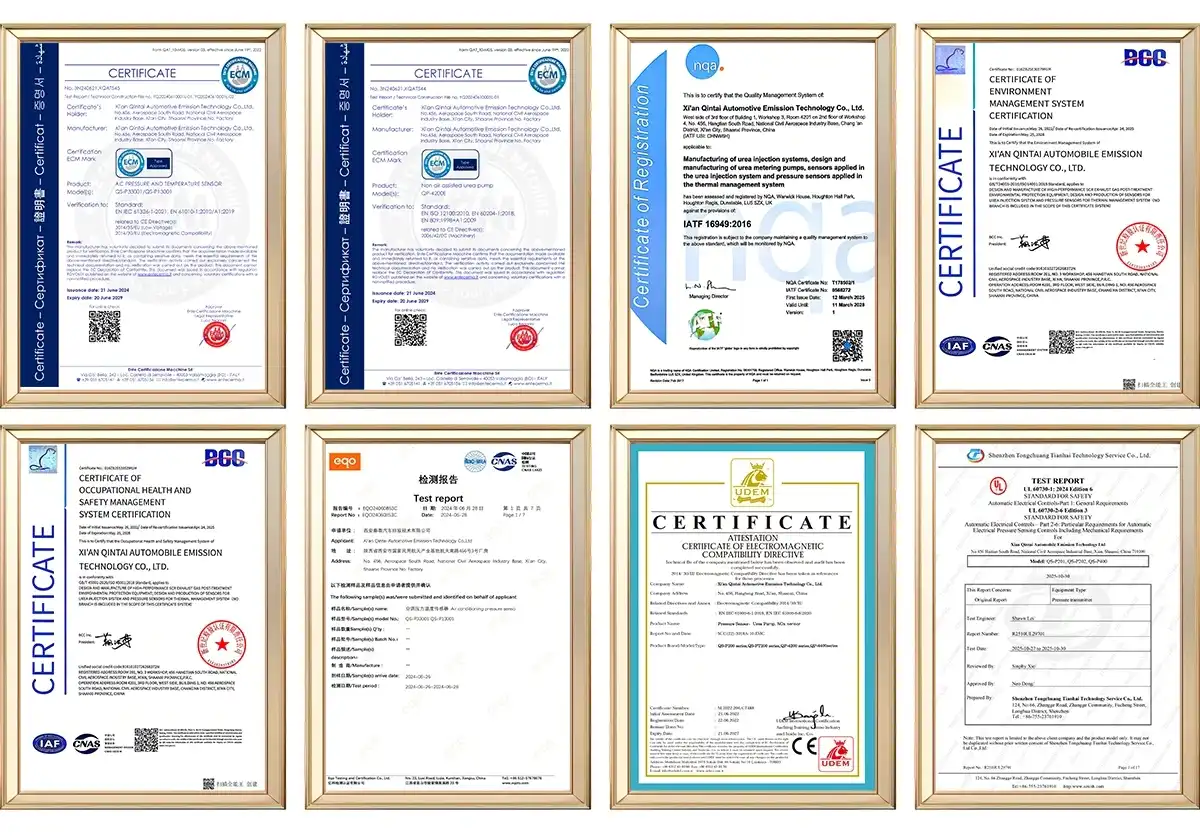
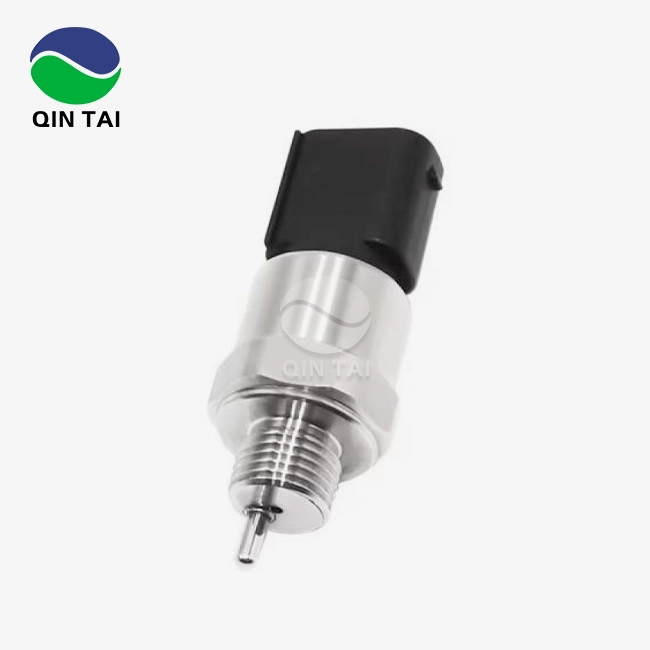
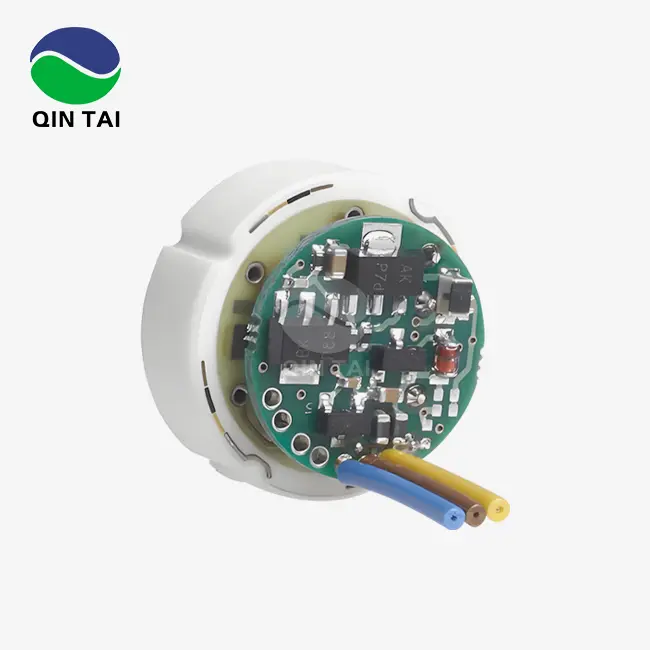
Since 2001, Xi'an Qintai Automotive Emission Technology Co., Ltd. has been making SCR sensors and is certified by both IATF 16949 and ISO 9001. The QS-P226 model is a self-designed and self-made sensor. The core sensing element is made by the company itself. It can measure between -14 psi and +130.5 psi, runs on a 5 V supply, and sends out a 0.5–4.5 VDC ratiometric analog signal that is accurate to within 0.5% of the full scale. Every unit that ships has been tried 100% of the time. This makes the urea pressure sensor QS-P226 a reliable choice for SCR dosing systems.
Core Performance Advantages
The 12-month warranty shows that the company is confident in the quality of the product, and the pressure range reference directly matches OE specifications. The QS-P226 stands out in demanding OEM applications because of its core technical strengths, which are:
- Chemical resistance: The internal materials withstand urea corrosion and crystallization, maintaining accuracy even when AdBlue quality is below specification. This protects the sensing diaphragm over the full service life.
- Freeze expansion tolerance: An internal buffering structure absorbs the approximately 9% volume expansion that occurs when AdBlue freezes, preventing diaphragm rupture during cold-weather startups common in northern U.S. states.
- Vibration resistance: The rigid construction absorbs continuous chassis vibration on heavy trucks and construction machinery without measurement drift, a critical factor for off-road and mining applications.
- Sealed environmental protection: The enclosure blocks moisture and particulate ingress, protecting internal electronics in the muddy, wet conditions typical of agricultural and generator set installations.
How to Choose the Best Urea Pressure Sensor for Your Procurement Needs?
Match the Signal to Your ECU Calibration
Make sure the ECU calibration file lists 0.5–4.5 V ratiometric output before sending out a buy order. 0.25 V to 4.75 V or a SENT digital protocol is used by some older platforms. Installing a sensor with the wrong output characteristic requires a recalibration that many fleet shops can't do on the spot. This turns an easy parts swap into a fix that needs to be done by a dealer.
Evaluate Supplier Certification and Production Capacity
For OEM programs with a lot of units, supplier qualification is more than just price per unit. Look for production certification from IATF 16949, proof that the sensing elements are made in-house, and proof that 100% of the quality testing is done before they are sent out. When an assembler buys diaphragm parts from outside sources, there are often shortages of parts. A seller that controls its own core production doesn't have these problems. Qintai has applied for 58 invention patents and sells its goods in more than 60 countries, which shows that it has the production infrastructure to support global supply chains. These factors make Qintai a dependable supplier for urea pressure sensor programs at scale.
Balance Cost and Total Ownership
Even though aftermarket sensors may cost less per unit, the cost of work per vehicle goes up because they fail more often. Studies of commercial vehicle fleets in Europe show that switching from generic replacement parts to OEM-equivalent sensors cut down on sensor-related downtime by about 30% over the course of 24 months. When you compare total costs, not just billing prices, you should take into account how to handle warranty returns, expert work, and car downtime.
Future Trends in SCR Pressure Sensing Technology
Smarter Sensors for Connected Fleets
Manufacturers of sensors are putting together pressure sensors, temperature sensors, and digital communication sensors all in one body. Combined DEF pressure and temperature sensors make the wiring harness simpler and give the ECU more information to help it predict when a fault will happen. As fleet tracking systems get better, ongoing sensor data will feed machine learning models that can spot wear and tear weeks before a fault code shows up.
Tightening Regulations Drive Higher Accuracy Demands
EPA greenhouse gas Tougher NOx control limits will be needed for trucks made after model year 2027, when Phase 3 standards go into effect. Specifications for sensor precision that were fine under the present rules might not be good enough under future calibration rules. To avoid having to change parts in the middle of a program, procurement teams should ask sellers about their plans for sensors with sub-0.3% accuracy and output choices that work with SENT.
Longer Service Life Targets
OEMs want sensors to last between 15,000 and 20,000 hours of heavy-duty use, which is about the same amount of time that engines need to be serviced. To do this, you need diaphragm materials that can stand up to urea chemistry over many years of exposure and connector designs that can keep the resistance of the contact stable through thousands of thermal cycles.
Conclusion
It is not a choice to have accurate AdBlue pressure measurement tools; it is what keeps SCR systems within legal emission limits and stops expensive engine decelerations. The Qintai QS-P226 is accurate to within 0.5%, can measure pressures from -14 psi to +130.5 psi, and has been tested in heavy-truck, construction machinery, and generator set environments. With IATF 16949 certification, in-house core production, and a supply chain that goes to more than 60 countries, Qintai gives OEM procurement teams and aftertreatment integrators a DEF pressure sensing source that is both technically sound and scalable for business. This makes the Qintai QS-P226 a dependable urea pressure sensor for SCR systems.
FAQ
How often should a urea pressure sensor be replaced on a commercial vehicle?
Most OEM specs say that the sensor should be inspected every major repair period and replaced every 15,000 to 20,000 hours of use or whenever a P204B, P20EE, or similar fault code shows up and the number goes outside the ECU's acceptable range.
Can the QS-P226 be retrofitted to older diesel engines that pre-date China VI?
Yes. The QS-P226 references OE pressure range and connector specifications. As long as the host ECU accepts a 0.5–4.5 V ratiometric signal and the thread size matches, installation is straightforward without ECU recalibration.
What causes the P204B fault code, and how do I prevent it?
P204B typically results from signal drift caused by connector pin corrosion or sensor aging. Gold-plated terminals, as used in Qintai sensors, significantly reduce oxidation-related resistance shifts that trigger this code.
Is the sensor safe when AdBlue freezes at -11°C (12°F)?
Yes. The QS-P226 incorporates an internal buffering structure that accommodates the roughly 9% volume expansion of freezing urea, protecting the sensing diaphragm from mechanical damage during cold starts.
Does Qintai support custom output ranges or connector types for OEM programs?
The QS-P226 has an internal buffering structure that can handle the 9% volume growth of freezing urea. This keeps the sensing diaphragm from getting damaged during cold starts.
Partner with Qintai — A Trusted Urea Pressure Sensor Manufacturer
Your SCR system needs a pressure sensor that is backed by 20 years of experience in diesel aftertreatment engineering. As a top urea pressure sensor provider that is IATF 16949 and ISO 9001 certified, Qintai offers the QS-P226 with full OEM/ODM support for custom programs, 100% factory testing, and OEM-grade accuracy. Our team is ready to help you, whether you need sample units for research and development or a deal for mass production. To get a price right away, email your technical needs to info@qt-sensor.com.
References
1. European Commission. Euro VI Emission Standards for Heavy-Duty Vehicles. Official Journal of the European Union, 2009.
2. U.S. Environmental Protection Agency. Control of Air Pollution from New Motor Vehicles: Heavy-Duty Engine and Vehicle Standards. EPA, 2022.
3. SAE International. SAE J2843: Reductant Quality for SCR Systems in Diesel Engines. SAE International, 2018.
4. Payri, F., & Desantes, J. M. Reciprocating Internal Combustion Engines. Editorial Universitat Politècnica de València, 2011.
5. Baik, S., & Yoon, W. NOx Reduction Performance and Durability of SCR Catalysts for Diesel Engines. Applied Catalysis B: Environmental, 2020.
6. Twigg, M. V. Progress and Future Challenges in Controlling Automotive Exhaust Gas Emissions. Applied Catalysis B: Environmental, 2007.

Our customers’ satisfaction speaks for our quality — contact us to experience the same reliable service.