- English
- French
- German
- Portuguese
- Spanish
- Russian
- Japanese
- Korean
- Arabic
- Greek
- German
- Turkish
- Italian
- Danish
- Romanian
- Indonesian
- Czech
- Afrikaans
- Swedish
- Polish
- Basque
- Catalan
- Esperanto
- Hindi
- Lao
- Albanian
- Amharic
- Armenian
- Azerbaijani
- Belarusian
- Bengali
- Bosnian
- Bulgarian
- Cebuano
- Chichewa
- Corsican
- Croatian
- Dutch
- Estonian
- Filipino
- Finnish
- Frisian
- Galician
- Georgian
- Gujarati
- Haitian
- Hausa
- Hawaiian
- Hebrew
- Hmong
- Hungarian
- Icelandic
- Igbo
- Javanese
- Kannada
- Kazakh
- Khmer
- Kurdish
- Kyrgyz
- Latin
- Latvian
- Lithuanian
- Luxembou..
- Macedonian
- Malagasy
- Malay
- Malayalam
- Maltese
- Maori
- Marathi
- Mongolian
- Burmese
- Nepali
- Norwegian
- Pashto
- Persian
- Punjabi
- Serbian
- Sesotho
- Sinhala
- Slovak
- Slovenian
- Somali
- Samoan
- Scots Gaelic
- Shona
- Sindhi
- Sundanese
- Swahili
- Tajik
- Tamil
- Telugu
- Thai
- Ukrainian
- Urdu
- Uzbek
- Vietnamese
- Welsh
- Xhosa
- Yiddish
- Yoruba
- Zulu
What Are Ceramic Pressure Sensors Used For Industrial Control
Ceramic pressure sensors are widely used in industrial control systems to measure fluid and gas pressure with precision across demanding conditions. These devices convert mechanical pressure into electrical signals using ceramic diaphragms—typically made from 96% Al₂O₃—that resist corrosion, abrasion, and temperature extremes. For purchasing managers and R&D engineers sourcing components for diesel engines, SCR/DPF aftertreatment systems, or generator sets, understanding where and how these sensors apply is the starting point for sound procurement decisions. This guide walks you through applications, selection criteria, procurement steps, and maintenance guidance.
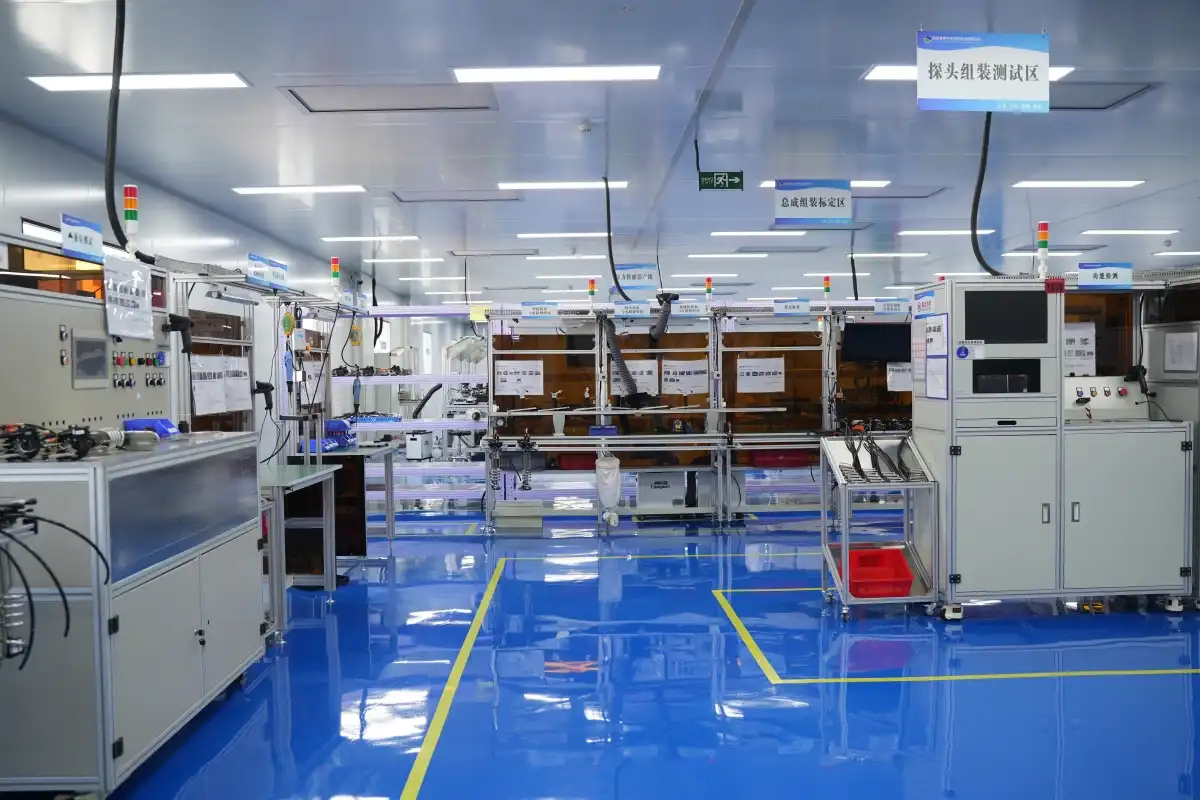
Understanding Ceramic Pressure Sensors and Their Industrial Applications
How They Work
The resistance of a ceramic diaphragm that is connected to strain gages changes when the pressure changes. This is how piezoresistive ceramic pressure monitors work. The diaphragm bends a little when you press on it. You can measure the voltage output that is made when this changes the resistance of the bridge. This system gives correct readings over a large pressure range, from zero bar to 600 bar. Because of this, these gadgets can be used to keep an eye on both low-pressure HVAC systems and high-pressure hydraulic circuits.
Key Technology Variants
An industrial setting is where piezoresistive, capacitive, and piezoelectric sensors are most often used. There is good linearity (≤0.3% FS) and full accuracy within ±0.5% FS for the Qintai QS-P105 and other piezoresistive types. Capacitive clay sensors can find things even when the pressure is low. Types that use piezoelectricity do well when the pressure changes, like when diesel engines burn fuel in bursts. Costs and assembly difficulty don't have to go up for no reason when the sense principle is matched to the application.
Typical Industrial Use Cases
Ceramic diaphragm pressure monitors are used in many areas. For diesel engine OEMs to stay in line with China VI and Euro VI, they keep an eye on the oil pressure, the fuel line pressure, and the exhaust backpressure. People who put together SCR/DPF systems use them to find out how much pressure is different between dust screens. They are used by people who make generator sets to check the pressure of coolant and lube oil in mines and power plants. The scene also has chemical plants, hydraulic systems, and HVAC networks.
Why Choose Ceramic Pressure Sensors for Harsh Industrial Environments?
Resistance to Corrosion and Abrasion
Sensors made of metal often break within months of coming into contact with acidic liquids, slurries, or rough gasses. It's not the same when you use a 96% Al₂O₂ clay. The stuff is one of the hardest industrial ceramics you can find, with a Vickers hardness of more than 1,500 HV. This keeps the sensing surface from being worn down by rough particles in hydraulic oil or exhaust streams. This makes the signal stronger for a longer time. For a ceramic pressure sensors used in abrasive or corrosive environments, this ceramic sensing surface can significantly extend service life.
Stability Across Temperature Extremes
Some places where temperatures can change a lot are diesel engine bays, mine power rooms, and outside work tools. If the pressure range is between -40°C and 135°C, the QS-P105 can work. Its zero temperature shift is less than 0.03 to 0.05% FS/°C. If the temperature stays that stable, there isn't much calibration drift. This means that there is less unplanned maintenance and the costs that come with it.
Proven Reliability Across Industries
When there are a lot of particles in the exhaust, ceramic diaphragm sensors work better than stainless steel ones, as shown by field data from SCR aftertreatment deployments. Researchers from the sensor business have found that ceramic sensing elements last two to three times longer than steel ones in service that is corrosive. For generators that are used as backup power in important places, that difference is very important; it can mean the difference between an asset that can be used and an emergency.

Comparing Ceramic Pressure Sensors with Alternative Technologies
Ceramic vs. Silicon Piezoresistive Sensors
This type of monitor is very sensitive and works best in places that are clean and well-controlled. Silicon diaphragms, on the other hand, are weak and acids can break them. Ceramic diaphragm sensors lose a little sensitivity, but they make up for it with better chemical resistance, a wider temperature range, and the ability to handle safety overloads of up to 200% of full-scale pressure, as shown by the QS-P105 standard.
Ceramic vs. Stainless-Steel Diaphragm Sensors
It's easy to find stainless steel sensors that don't cost much and can handle some pressure. Chlorides and sulfur compounds, which are common in circuits that clean exhaust gas, can still cause pitting erosion. In the same places where steel would rust, ceramic designs keep sensors accurate. When you think about how often ceramic types need to be changed and how little maintenance they need, the total cost of ownership changes greatly in their favor.
When Alternatives Make Sense?
Teams in charge of buying things should know that ceramic sensors cost a little more each than simple steel-diaphragm types. If you only need soft, low-pressure water inside, the extra cost might not be worth it. The right choice depends on how accurate it needs to be, the temperature range, how well it works with the media, and how long it's expected to last. Most of the time, ceramic diaphragm technology is better when any two of those four things aren't working right.
How to Procure Ceramic Pressure Sensors for Industrial Control Systems?
Define Technical Specifications First
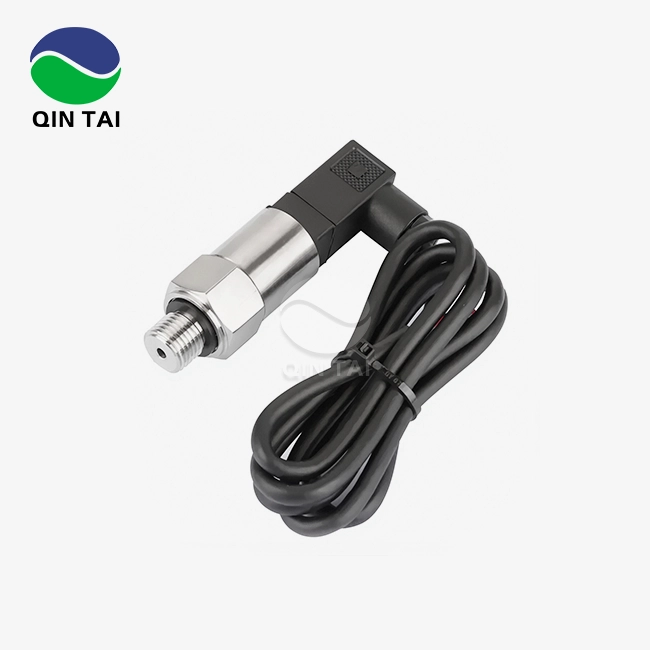
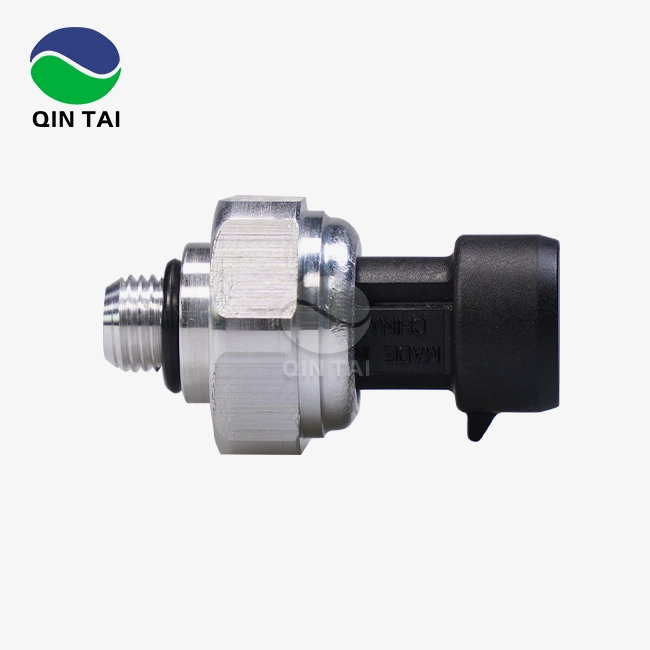
Before asking for quotes, the technical department should make sure they know the range of pressure, the type of process link, the format of the output signal, and the working environment. In this case, the QS-P105 can work with source voltages of 2 to 30 VDC and send messages that are sensitive to 2 to 4 mV/V. Before you place an order, these specs must match the controller input card. If you skip this step, you might have to pay a lot of money for returns and faces delays in your schedule. Confirming these details early is essential when specifying a ceramic pressure sensors such as the QS-P105.
When you buy this item, these are the most important things to keep in mind:
- Pressure range: -1/0 bar to 600 bar, covering both vacuum and high-pressure hydraulic applications
- Material confirmation: 96% Al₂O₃ ceramic diaphragm verified for the target media
- Output compatibility: Bridge resistance of 11 ±30% kΩ matched to signal conditioning hardware
- Mounting: Compact design supports direct installation in tight engine compartment spaces
These things directly match what OEMs and aftertreatment system integrators need, and they let buying teams finish the technical screening process before they start negotiating prices.
OEM and Customization Options
There is no better OEM provider in China than Qintai. Weichai Power, Yuchai Power, and Quanchai Power all depend on them for their needs. With OEM and ODM services, it can help with everything from planning to mass production. It is possible to get pressure ranges, interfaces, and connectors that aren't on this list. It doesn't cost much to get a sample, and production methods that are ISO9001 and IATF16949 certified can handle big orders. Aftermarket dealers can get standard catalog models faster because they come from stock.
Cost and After-Sales Support
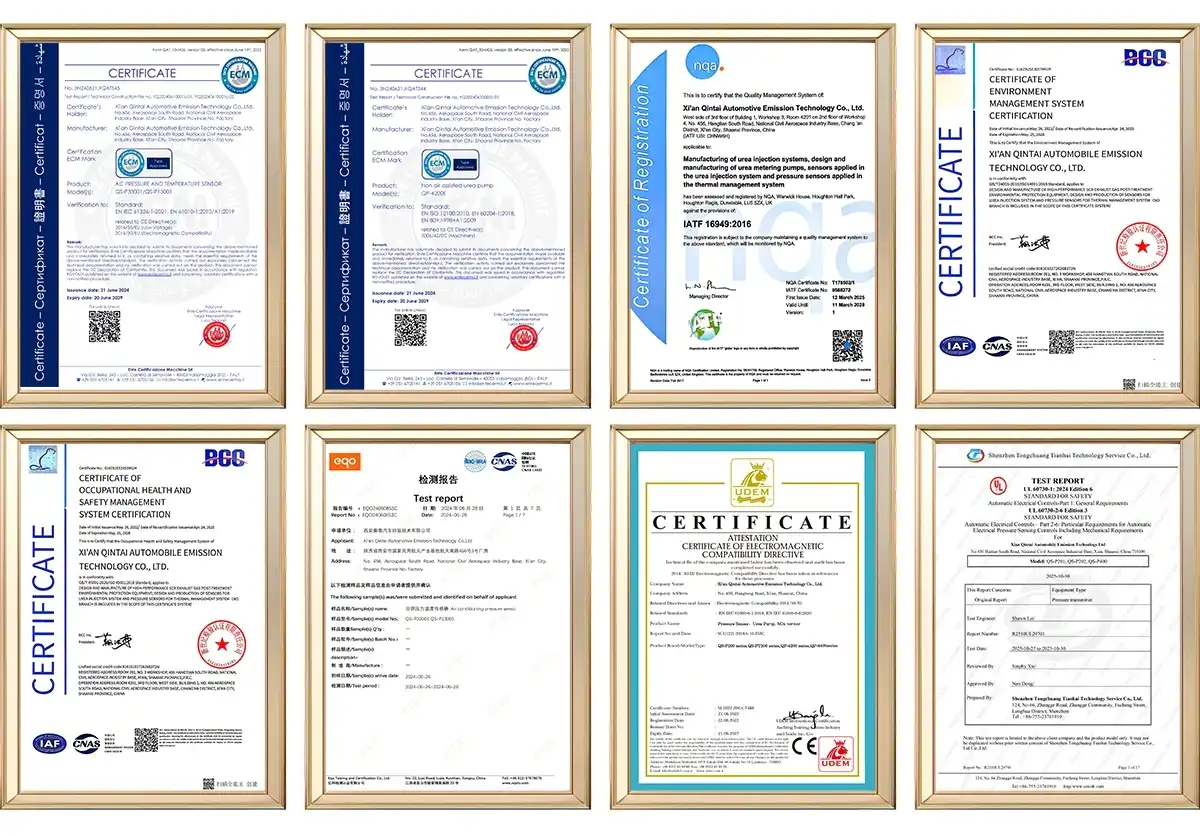
Ceramic pressure monitors cost different amounts based on the range of pressure, the type of link used, and the stock level. Before agreeing to make a lot of something, people often ask to see a sample batch. This makes it safer to buy. Qintai has certifications from CE, UL, REACH, and RoHS, and they offer expert help after the sale. This is proof that procurement managers and their compliance teams need to make sure that suppliers are good enough.
Maintenance, Calibration, and Lifespan of Ceramic Pressure Sensors in Industrial Use
Routine Calibration Practices
How often calibrations are done is based on how tough the job is. For diesel engine OEM uses that need to go through a China VI audit, a yearly calibration against a pressure standard that can be tracked is a good place to start. It's helpful to know that the QS-P105 has a zero output standard of ±0.2 mV/V at 23°C. It's helpful to keep track of calibration results over time so that slow drift can be found before it changes process control decisions. Following this calibration practice keeps a ceramic pressure sensors like the QS-P105 accurate and audit-ready over its service life.
Common Maintenance Issues
The process connection hole and diaphragm face getting dirty is the main reason for most field breakdowns. The pressure ports don't get blocked when the fastening thread is checked for particle growth as part of normal maintenance. If the output values start to change, make sure the source voltage stays stable before replacing the sensor. This will keep you from having to buy redundant parts. The QS-P105 has a safety overload rating of 200% FS. This means that pressure spikes during engine start-up rarely hurt the diaphragm.
Extending Sensor Service Life
Installing it correctly is the best way to make it last longer. Do not tighten the process connection too much, as this can damage the ceramic element. Extra sensors need to be kept dry and in a temperature range of -40°C to 135°C. When using something that shakes a lot, like building tools, make sure that the way the sensor is mounted keeps the body safe from mechanical shock. In these situations, sensors usually last longer than five years if they are placed and taken care of properly.
Conclusion
In industrial control applications, ceramic pressure sensors are used to measure the difference in pressure between the SCR and DPF, keep an eye on the oil pressure in diesel engines, manage the coolant circuits in generator sets, and control chemical processes. They are a good technical and cost choice for tough settings because they don't rust, don't change temperature much, and measure correctly. The Qintai QS-P105 is made of 96% Al₂O₃, has ≤0.3% FS non-linearity, and can work in temperatures from -40°C to 135°C. These are some of its strengths that have been checked. Ceramic diaphragm technology is something that procurement teams should give a lot of thought to when they are trying to find the best balance between performance, compliance, and long-term cost.
FAQ
How does a ceramic pressure sensor differ from a silicon sensor?
Ceramic sensors use an Al₂O₃ diaphragm that resists chemical attack and mechanical wear. Silicon sensors offer higher sensitivity in clean environments but are brittle and vulnerable to corrosive media. For applications involving exhaust gas, hydraulic oil, or abrasive fluids, ceramic construction delivers longer service life.
Can ceramic pressure sensors handle high-temperature industrial environments?
Yes. The QS-P105 operates from -40°C to 135°C with a zero temperature drift of less than 0.03–0.05% FS/°C. This range covers most diesel engine and generator set applications without requiring additional thermal protection measures.
What accuracy can I expect from a piezoresistive ceramic pressure transducer?
Piezoresistive ceramic pressure sensors typically achieve ±0.1% to ±0.5% of full scale. The QS-P105 delivers comprehensive accuracy within ±0.5% FS, meeting the precision requirements of China VI and Euro VI emission control systems.
What is the typical lead time for custom orders?
Lead times vary by specification and volume. Standard models are generally available from stock. Custom configurations—connector type, pressure range, output signal—require additional engineering review time. Contact Qintai directly for project-specific scheduling.
Partner With Qintai for Reliable Ceramic Pressure Sensor Supply
Since 2001, Qintai has sold parts to companies all over the world that make diesel engines, SCR systems, and generator sets. It has ISO9001, IATF16949, CE, UL, and REACH certifications, which means that Qintai is a recognized company that makes clay pressure sensors. For OEM mass production and custom designs, they also have their own R&D team. You can get a sample of the QS-P105 or talk to one of our engineers about what you need it for. First, ask your question at info@qt-sensor.com.
References
1. Fraden, J. Handbook of Modern Sensors: Physics, Designs, and Applications. Springer, 2016.
2. Wilson, J. S. Sensor Technology Handbook. Elsevier/Newnes, 2005.
3. International Electrotechnical Commission. IEC 60770: Transmitters for Use in Industrial-Process Control Systems. IEC, 2010.
4. ASME. Performance Test Codes: Pressure Measurement Instruments. American Society of Mechanical Engineers, 2019.
5. Toth, F. N., & Meijer, G. C. M. "A Low-Cost, Smart Capacitive Position Sensor." IEEE Transactions on Instrumentation and Measurement, 1992.
6. European Automobile Manufacturers' Association (ACEA). Euro VI Heavy-Duty Emission Standards Technical Reference Guide. ACEA, 2021.
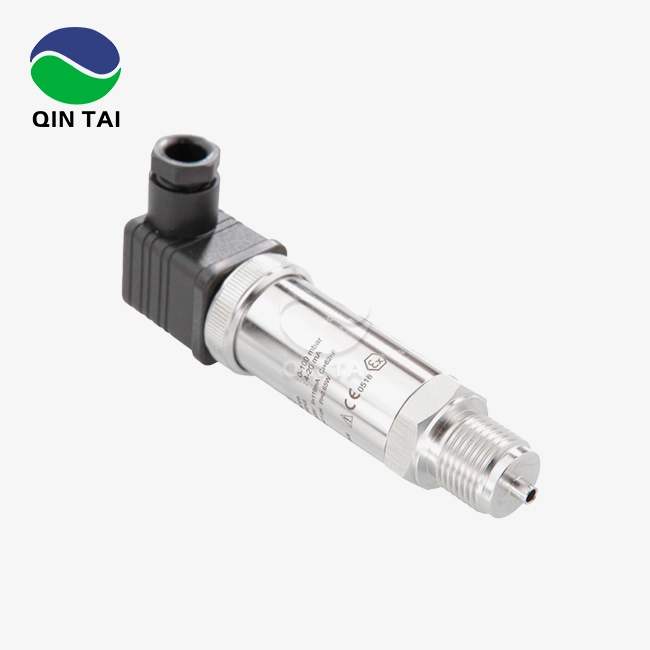
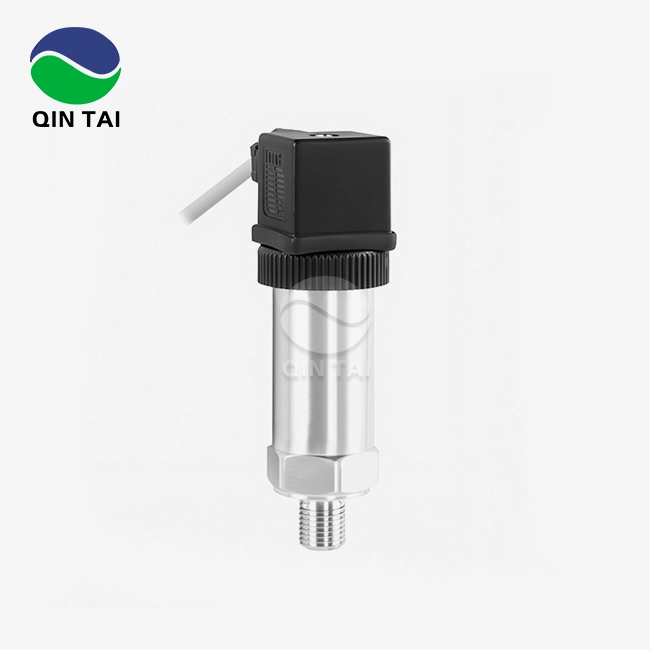

Our customers’ satisfaction speaks for our quality — contact us to experience the same reliable service.