- English
- French
- German
- Portuguese
- Spanish
- Russian
- Japanese
- Korean
- Arabic
- Greek
- German
- Turkish
- Italian
- Danish
- Romanian
- Indonesian
- Czech
- Afrikaans
- Swedish
- Polish
- Basque
- Catalan
- Esperanto
- Hindi
- Lao
- Albanian
- Amharic
- Armenian
- Azerbaijani
- Belarusian
- Bengali
- Bosnian
- Bulgarian
- Cebuano
- Chichewa
- Corsican
- Croatian
- Dutch
- Estonian
- Filipino
- Finnish
- Frisian
- Galician
- Georgian
- Gujarati
- Haitian
- Hausa
- Hawaiian
- Hebrew
- Hmong
- Hungarian
- Icelandic
- Igbo
- Javanese
- Kannada
- Kazakh
- Khmer
- Kurdish
- Kyrgyz
- Latin
- Latvian
- Lithuanian
- Luxembou..
- Macedonian
- Malagasy
- Malay
- Malayalam
- Maltese
- Maori
- Marathi
- Mongolian
- Burmese
- Nepali
- Norwegian
- Pashto
- Persian
- Punjabi
- Serbian
- Sesotho
- Sinhala
- Slovak
- Slovenian
- Somali
- Samoan
- Scots Gaelic
- Shona
- Sindhi
- Sundanese
- Swahili
- Tajik
- Tamil
- Telugu
- Thai
- Ukrainian
- Urdu
- Uzbek
- Vietnamese
- Welsh
- Xhosa
- Yiddish
- Yoruba
- Zulu
How Does Urea Dosing Pump Work in SCR Aftertreatment Systems
If you manage procurement for diesel engines or design SCR aftertreatment systems, you already know that NOx emissions are a serious compliance issue. China VI and Euro VI standards leave very little room for error. At the center of every effective SCR system sits one critical component: the urea dosing pump. This guide breaks down how it works, what can go wrong, and how to choose the right one for your application.
Understanding the Urea Dosing Pump in SCR Systems
A urea dosing pump takes diesel exhaust fluid (DEF, sometimes called AdBlue) from the storage tank and feeds it to the dosing module at a carefully regulated pressure - typically between 5 and 9 bar. The injected urea solution is atomized in the hot exhaust stream and decomposes to ammonia. The ammonia then interacts with the NOx in the SCR catalyst to change the dangerous nitrogen oxides into nitrogen and water vapor. Studies have shown that a well calibrated urea dosing pump may achieve NOx reduction rates of more than 90% which is crucial to fulfill present emission regulations.
How the ECU Controls Dosing?
The pump does not work on its own. It talks directly to the Engine Control Unit (ECU), which in real time analyzes engine load, exhaust flow rate and NOx sensor data. Using this data the ECU then adjusts the dosage amount to the millisecond for both under-dosing (which produces NOx spikes) and over-dosing (which consumes DEF and may pollute the catalyst).
Electric vs. Pneumatic Pump Designs
The electric diaphragm pump is the fundamental component of current SCR systems with accurate pressure control and minimal energy use. Pneumatic models are occasionally employed for applications on industrial generators where compressed air is already present, although they need extra infrastructure. The electric designs are the realistic norm for most OEM diesel engine platforms.
Compact Integrated Modules vs. Standalone Pumps
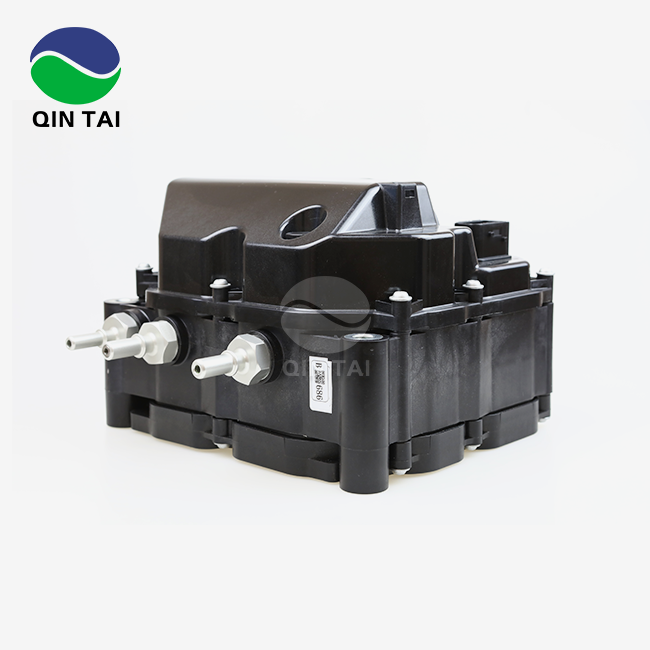
Compact, integrated components include the pump, filter, heater and pressure sensor. The design makes for easier installation and better freeze protection—an actual benefit in cold-weather markets. Stand-alone setups are simpler to replace in the field but do need more room to install and need careful piping. The option to choose one of these two ways when choosing a urea dosing pump for a certain vehicle platform is an essential one.

Common Challenges and Maintenance Tips for Urea Dosing Pumps
Even well-engineered pumps face wear over time, especially when the DEF quality is inconsistent or the system is not purged after shutdown. Understanding the failure modes helps procurement teams set realistic service intervals and negotiate meaningful warranty terms.
Here are the most common issues technicians report in the field:
- Nozzle Clogging: Residue of DEF dries in the injector tip, forming crystals of urea. This inhibits flow and throws error codes. Most of the crystal accumulation is taken care of by a good purge cycle following each engine stop.
- Incorrect dosage: Worn diaphragms or a faulty pressure sensor may cause the flow rate to wander. A 10% dosage miscalculation by itself might provide NOx readings that are greater than authorized during a certification inspection.
- Pump motor failure: Continuous use in high vibration situations like mine generators and construction machinery causes increased wear on the bearings. It is more important than price alone that the pump be rated for the duty cycle that is to be applied.
These failure modes directly affect SCR conversion efficiency and can trigger OBD fault codes that force vehicle derating. Addressing them early protects both the asset and the operator's compliance status.
Routine maintenance should include DEF filter replacement every 1,000 operating hours, dosing accuracy verification every 500 hours, and a full system purge check at each scheduled service. Calibration is straightforward with most modern ECU diagnostic tools and takes under 30 minutes on the bench.
How to Choose the Best Urea Dosing Pump for Your SCR System?
Choosing the right pump goes beyond matching flow rate to engine displacement. The decision affects long-term compliance, operating cost, and supply chain stability. Below are the core factors engineering and procurement teams should evaluate together:
- Flow rate range: Ensure that the lowest and maximum output of the pump fit the NOx generation curve over the whole load range of the engine. If the pump is unable to dose accurately at low idle, it will not pass cold-start compliance testing.
- Pressure stability : Repeatable atomization is guaranteed by steady back pressure against the injector. Accuracy of pressure control within ± 0.3 bar.
- ECU Compatibility Your ECU protocol has to be compatible with the control interface of the pump. Qintai urea dosing pumps are intended to comply with Bosch ECU
- SCR control strategies, integrated on OEM platforms with Bosch engine management is now easy.
- Material compatibility: DEF is somewhat corrosive. Internal parts should be fabricated with rated polymers, PTFE or stainless steel to avoid early degradation.
- Integrated freeze protection: Markets below 0°C require an in-built heater to prevent DEF from freezing at -11°C. This cannot be compromised for operations in winter in North America and Europe.
These factors, taken together, determine whether a pump survives the product lifecycle or generates warranty claims. A slightly higher unit price for a pump that meets all five criteria usually delivers lower total cost over three to five years.
Procurement and Supply Chain Insights for Urea Dosing Pumps
Sourcing decisions carry real operational risk. A dosing pump supply disruption can halt engine assembly lines or leave repair shops unable to complete DEF system repairs. When evaluating a urea dosing pump supplier, prioritize the following:
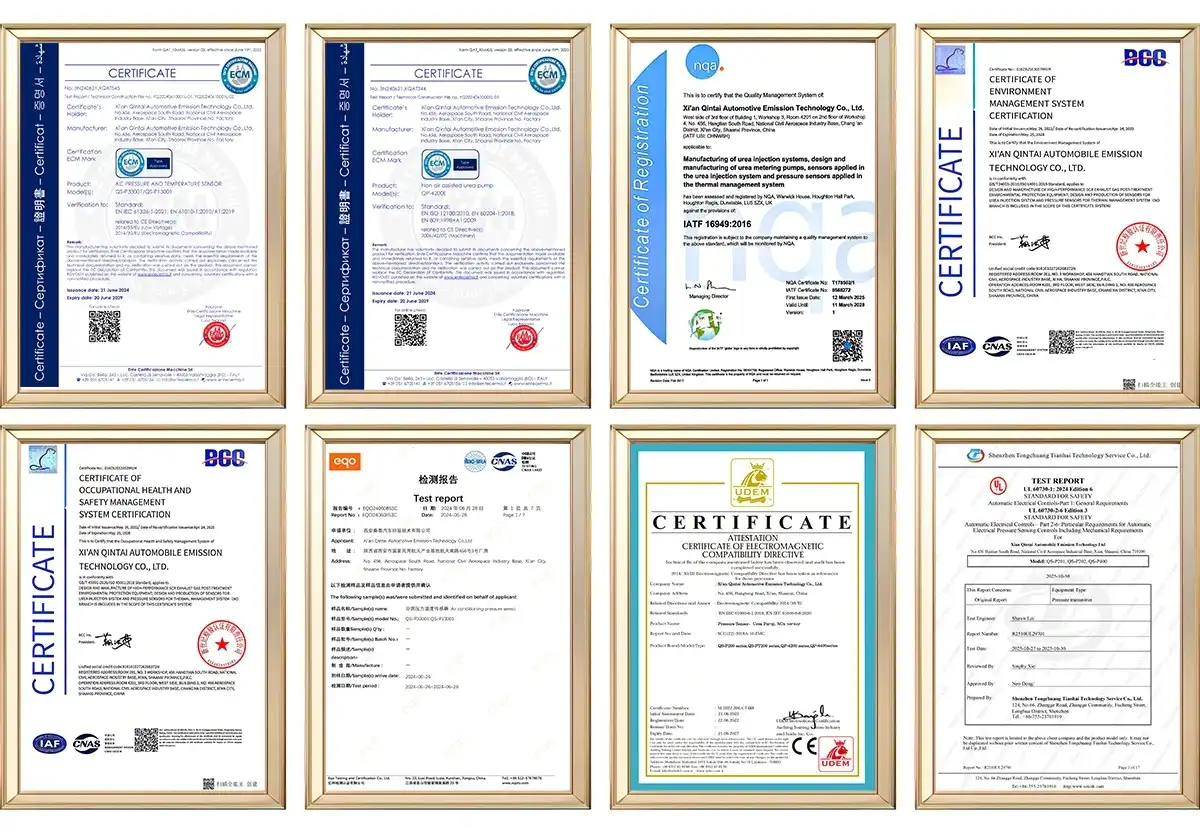
To control the operations at volume and to ensure consistent manufacturing quality, ensure the supplier is ISO 9001 and IATF 16949 certified Check stock availability and lead times for standard and custom options. OEM projects sometimes include ECU parameter adjustments or connection modification. A supplier with in-house R&D may be faster to react with particular configurations than one relying on third-party engineering.
Ask specifically about warranty duration and availability of replacement parts pertaining to aftermarket channels. Repair firms are protected from the danger of dead inventory with a minimum 12 months guarantee and accessible replacement parts.
So there should be a time for sample validation before fully committing to negotiate a bulk buy. Ask for production batch test data, not one prototype report. This step catches manufacturing variation before it gets to your line.
Future Trends in Urea Dosing Pump Technology
With IoT connectivity, fleet operators are operating DEF systems differently. Modern pump modules offer may bus data output that may be used by telematics systems to monitor dose utilization, monitor odd pressure events and schedule repair ahead of a failure. A 2023 study by the International Council on Clean Transportation (ICCT) found predictive maintenance of SCR components reduced unexpected downtime in commercial fleets being tracked by as much as 23%.
Improvements in materials are also lengthening service life. Ceramic coated diaphragm components have far lower wear rates than typical rubber compounds in high temperature exhaust settings. As the enforcement of China VI and Euro VII intensifies, the technical enhancements will move from premium choices to standard specs.
Conclusion
The urea dosing pump is not a passive component—it actively governs whether your SCR system meets emission targets or falls short. Understanding its operating principles, failure modes, and selection criteria gives procurement teams and R&D engineers a real advantage when specifying or sourcing these components. The technology continues to advance, and working with a supplier that invests in R&D and holds recognized quality certifications reduces both technical and supply chain risk over the long term.
FAQ
How often should I calibrate a urea dosing pump?
Calibration checks every 500 operating hours are a reasonable baseline. High-cycle applications like long-haul trucks may benefit from checks every 300 hours. Always recalibrate after replacing the pump or the DEF pressure sensor.
What is the difference between an electric and a pneumatic urea pump?
Electric pumps use a motor-driven diaphragm and offer precise ECU-controlled dosing. They are self-contained and suit mobile diesel platforms. Pneumatic pumps rely on compressed air to move fluid and are more common in stationary industrial exhaust treatment systems where compressed air is already available.
Can a standard chemical dosing pump replace a DEF-specific pump?
No. Standard chemical dosing pumps are not rated for DEF's corrosive properties, lack the pressure accuracy SCR systems require, and have no ECU interface. Using one risks both system damage and emission non-compliance.
Does pump size affect NOx reduction performance?
Yes. A pump undersized for the engine's NOx output cannot inject enough DEF at full load, causing NOx to exceed limits. Always size the pump to the engine's worst-case NOx generation, not average output.
Partner with Qintai for Your SCR Dosing Pump Needs
Qintai has produced SCR aftertreatment components since 2001 and is No. 1 in China for OEM sensor and dosing system supply. Qintai’s urea dosing pump products are ISO 9001, IATF 16949 and applicable emission certification compliant as a key supplier for Weichai Power, Yuchai Power and Quanchai Power. One module, one pump, one filter, one heater, one pressure sensor. Integrated design saves your installation time and streamlines your after-sales service.
If you are looking for a urea dosing pump manufacturer for mass OEM production or a reputable supplier for after-market inventories, Qintai provides OEM/ODM customization, competitive prices and technical assistance in more than 60 countries. Contact our engineering team at info@qt-sensor.com to request a quotation or product datasheet today.
References
1. International Council on Clean Transportation (ICCT). Heavy-Duty Vehicle Emissions and SCR Aftertreatment Performance Review. 2023.
2. SAE International. Selective Catalytic Reduction System Design and DEF Dosing Accuracy Standards. SAE Technical Paper Series. 2022.
3. European Automobile Manufacturers' Association (ACEA). Euro VI Emission Standards: Technical Implementation Guide for Heavy-Duty Engines. 2021.
4. Johnson Matthey. Catalytic Solutions for Diesel Aftertreatment: NOx Reduction via SCR Technology. 2020.
5. China National Heavy Duty Truck Group (CNHTC) Engineering Research Institute. China VI SCR System Integration and Dosing Module Requirements. 2022.
6. Dieselnet Technology Guide. Urea-SCR Technology for Mobile and Stationary Applications. 2023.

Our customers’ satisfaction speaks for our quality — contact us to experience the same reliable service.