- English
- French
- German
- Portuguese
- Spanish
- Russian
- Japanese
- Korean
- Arabic
- Greek
- German
- Turkish
- Italian
- Danish
- Romanian
- Indonesian
- Czech
- Afrikaans
- Swedish
- Polish
- Basque
- Catalan
- Esperanto
- Hindi
- Lao
- Albanian
- Amharic
- Armenian
- Azerbaijani
- Belarusian
- Bengali
- Bosnian
- Bulgarian
- Cebuano
- Chichewa
- Corsican
- Croatian
- Dutch
- Estonian
- Filipino
- Finnish
- Frisian
- Galician
- Georgian
- Gujarati
- Haitian
- Hausa
- Hawaiian
- Hebrew
- Hmong
- Hungarian
- Icelandic
- Igbo
- Javanese
- Kannada
- Kazakh
- Khmer
- Kurdish
- Kyrgyz
- Latin
- Latvian
- Lithuanian
- Luxembou..
- Macedonian
- Malagasy
- Malay
- Malayalam
- Maltese
- Maori
- Marathi
- Mongolian
- Burmese
- Nepali
- Norwegian
- Pashto
- Persian
- Punjabi
- Serbian
- Sesotho
- Sinhala
- Slovak
- Slovenian
- Somali
- Samoan
- Scots Gaelic
- Shona
- Sindhi
- Sundanese
- Swahili
- Tajik
- Tamil
- Telugu
- Thai
- Ukrainian
- Urdu
- Uzbek
- Vietnamese
- Welsh
- Xhosa
- Yiddish
- Yoruba
- Zulu
Pressure and Temperature Transmitter vs Separate Sensors for Buyers
When selecting sensing solutions for diesel engines, SCR aftertreatment systems, or industrial equipment, one decision consistently surfaces: should you choose a combined pressure and temperature transmitter or two separate sensors? A dual-output transmitter measures both pressure and temperature from a single device, reducing wiring, mounting points, and calibration effort.
Separate sensors, by contrast, handle each parameter independently. For procurement engineers managing cost targets, emission compliance deadlines, and installation space, this choice carries real operational weight. This guide breaks down both options so you can make a confident, data-backed decision.

Understanding Pressure and Temperature Transmitters vs Separate Sensors
What Is a Combined Pressure and Temperature Transmitter?
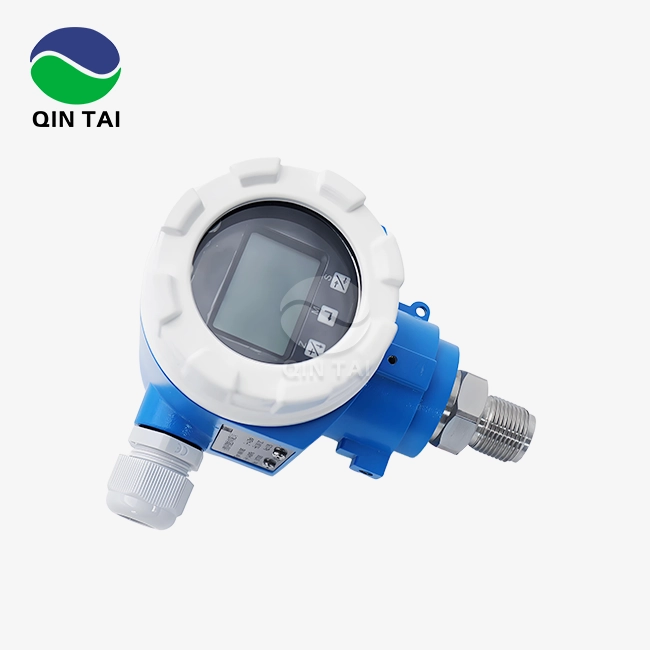
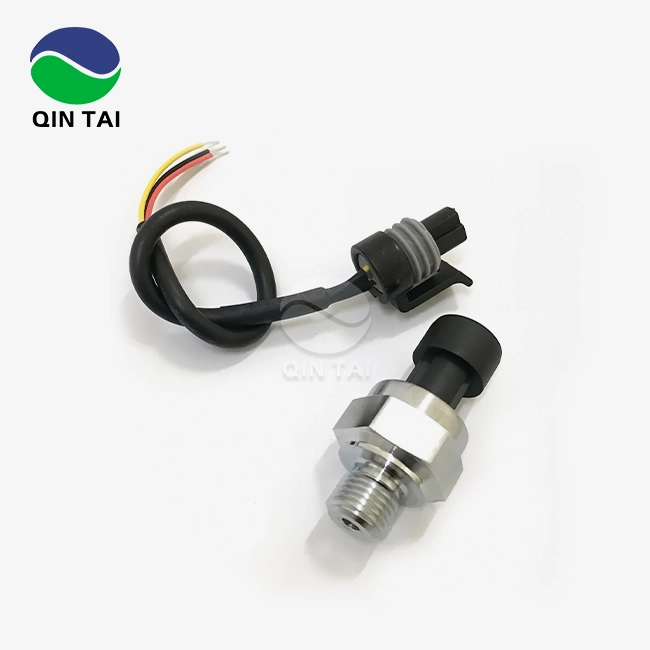
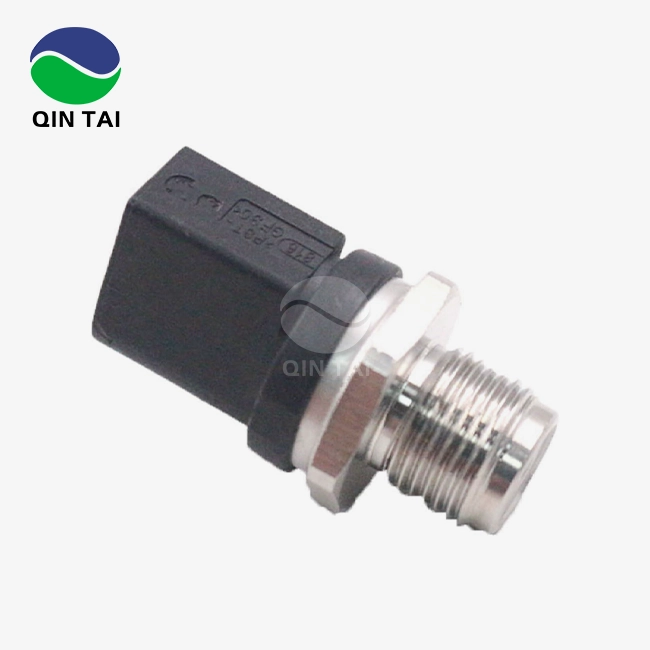
A combined transmitter has two sensing parts built into one housing. These parts are usually a ceramic or piezoresistive pressure element and an NTC thermistor. The device sends out signals for both pressure and temperature at the same time. This design cuts down on the number of process connections that need to be made and makes wiring the control system easier. A single-port dual-parameter device is a practical way to install things in places where mounting space is limited, like diesel engine aftertreatment and HVAC refrigerant circuits.
What Are Separate Pressure and Temperature Sensors?
Separate sensors are tools that work on their own and are each responsible for a different measure. A pressure transducer changes the pressure of a fluid or gas into a 4–20 mA or 0–5 V signal. A temperature sensor, which can be an RTD, thermocouple, or thermistor, sends out an electrical signal that changes based on temperature. Each one connects to the control module in its own way. This method is often used when the two measurement points are very far apart or when the accuracy level or update plan for each parameter is different.
Core Operating Differences
The main difference is how the two things relate to each other in space. When pressure and temperature taps are placed inches or feet apart, the measurements are off. A combined pressure and temperature transmitter, on the other hand, takes both readings at the same point in the fluid stream. This spatial alignment has a direct effect on the accuracy of calculations for superheat in refrigerant systems or fuel condition monitoring in diesel engines.
Key Considerations for Choosing Between Combined and Separate Sensors
Accuracy and Measurement Correlation
Correlation errors are much smaller when temperature and pressure are measured in the same place. This spatial accuracy is helpful for systems that use both parameters to figure out derived values, like those that use superheat, fluid density, or emission adjustment factors. In the -30°C to 130°C temperature range, the Qintai QS-PT225 can measure both pressure and temperature with an error band of ±1.0% F.S. and a total error of ±3%. With two sensors installed independently, it's hard to get that level of performance again and again.
Installation and Wiring Complexity
When you put in two sensors, you need to make two process holes, run two sets of wiring, connect two connectors, and keep two calibration records. That extra level of complexity raises the cost and chance of failure in small engine spaces or hydraulic manifolds. A combined emitter cuts the number of process links in half and only needs one wire for wiring. For OEM production lines that make a lot of parts, this means fewer assembly steps and lower labor costs per unit.
Application-Specific Suitability
A mixed sensor isn't right for every use case. When the points where you measure pressure and temperature are physically separated, like when you watch the inlet and outlet of a heat exchanger, you should still use two sensors. But the measurement point is the same for checking the state of engine oil, the refrigerant circuit, and diesel aftertreatment fluid, so a combined emitter makes more sense.

Comparative Analysis: Combined Transmitters vs Separate Sensors
Performance and Cost Comparison
Studies on buying industrial sensors regularly show that lowering the number of sensors placed lowers the total cost of installation. Control Engineering did a survey of the industry in 2021 and found that 30–40% of the total cost of a sensor system for mobile equipment goes to labor.
At the point of measurement, a pressure and temperature transmitter, which is a combination unit, cuts that work part by about half. In lab-level uses, separate sensors might give slightly higher individual accuracy, but in the field, where there is vibration, thermal cycle, and EMI, a co-located dual-parameter emitter usually keeps the total data quality better.
Communication Protocol and Smart Transmitter Compatibility
More and more, modern procurement teams ask for sensors that work with HART or CAN-bus to help predictive maintenance platforms. The Qintai QS-PT225 sends out a 0.5 V–4.5 V ratiometric signal that works with most automotive and industrial ECUs. It also has built-in protections against overvoltage up to 32 V DC and reverse polarity. This amount of signal conditioning means that the control cabinet doesn't need as many exterior safety circuits, which cuts the cost of the bill of materials.
Procurement and Custom Ordering Considerations
You can easily order separate sensors from catalogs of well-known names like Siemens, Honeywell, or Emerson Rosemount. However, if you need special pressure ranges or non-standard process connections, you may have to wait a long time or place a large order. The QS-PT225 can be customized with different pressure levels (0–5 Bar to 0–40 Bar), multiple process connection threads (G1/4, M12×1.5, M10×1), and OEM marking. It can also be made in large quantities, so it can be used for both prototype testing and large-scale annual contracts.
Market Overview and Brand Insights for Procurement
Leading Manufacturers and Their Positioning
The Siemens SITRANS P line is popular in process control because it works with both HART and PROFIBUS. Honeywell's SmartLine transmitters have been certified as fundamentally safe for use in dangerous places. With its track record of dependability in the field, Emerson Rosemount is the leader in oil and gas plant setups. These names work well for big processing plants, but their catalog items are often too specific and too expensive for use in mobile equipment, diesel engine OEM, and aftertreatment integrator work.
Evaluating Vendors for Long-Term Reliability
Procurement teams should check if a pressure and temperature transmitter supplier is ISO 9001 and IATF 16949 certified, ask for documented Cpk process capability data, and make sure the supplier can support both engineering samples and mass production from the same production line. For aftertreatment system installers, the response time after the sale and the availability of application experts for customizing the interface are both very important.
Future Trends in Dual-Parameter Sensing
As emission standards move toward China VI and Euro VI, there is more demand for sensors that can give accurate real-time data on exhaust aftertreatment. Digital output formats and signal conditioning that is built in are quickly becoming requirements. If suppliers spend money on ceramic sensing elements, which are better at keeping out engine oil and POE lubricants, they will be able to meet the needs of the next generation of emission control systems for durability.

Making the Decision: How to Choose the Best Sensor Solution
Define Your Measurement Requirements First
Make a map of the areas where you need to measure pressure and temperature. A combined emitter is the best choice if both factors need to be known at the same point in the fluid. If the measurement points are more than a few centimeters apart, installing separate sensors keeps the installation from being hacked. Before making a short list of products, make sure you know the output range, supply voltage, and connector type you need.
Match Sensor Specifications to Operating Conditions
With a housing made of 304 stainless steel, the QS-PT225 works reliably from -40°C to 130°C. This makes it suitable for use in the engine bay, hydraulic circuit, and industrial generator set. Its ceramic sensor element can handle engine oil, POE oil, refrigerant, gas, and water. This is the widest range of media that OEM buyers usually come across across product lines.
Best Practices for Installation and Long-Term Performance
To keep the threads from getting damaged, mount the part with torque between 10 and 20 N·m. To keep the output accurate, make sure the supply voltage stays between 4.75 V DC and 5.25 V DC. For situations where there is a lot of shaking, like building equipment, make sure the electrical connector is locked properly. In field service data, these installation details regularly show which sensor setups work well and which ones fail quickly.

Conclusion
Whether you choose a pressure and temperature transmitter or separate sensors depends on where the measurement point is located, how much space you have for installation, your cost goals, and how well you need the system to work together. Most of the time, a co-located dual-parameter sensor is better for diesel engine OEM, aftertreatment integrator, and industrial generator set applications.
It also costs less to install and is easier to maintain. The Qintai QS-PT225 has proven quality for mass production, wide media support, and accuracy within ±1.0% F.S. on both channels. It is backed by IATF 16949 approval and over 20 years of experience as an SCR aftertreatment sensor.
FAQ
What is the main advantage of a combined pressure and temperature transmitter over two separate sensors?
With a combined transmitter, both readings are taken at the same point in the fluid, so there is no spatial measurement offset.
Is the QS-PT225 compatible with automotive ECU signal inputs?
Yes. The QS-PT225 sends out a ratiometric signal between 0.5 V and 4.5 V, which is the normal input range for most industrial and car ECUs. Protect against reverse polarity and 32 V overvoltage to make integration even easier.
What pressure media does the QS-PT225 support?
It can handle diesel engines, HVAC systems, hydraulic circuits, and water. It can also handle engine oil, POE oil, refrigerant, gas, and water.
Can the QS-PT225 be customized for non-standard pressure ranges or process connections?
Yes, OEMs can change the pressure ranges, process connection threads, and output parameters, and Qintai can do full mass production.
How does Qintai ensure product consistency for high-volume OEM orders?
Qintai is certified by IATF 16949 and is a main original equipment manufacturer (OEM) supplier to Weichai Power, Yuchai Power, and Quanchai Power. They have documented process controls that help them make sure the quality of their mass production is always high.
Get Your Custom Pressure and Temperature Transmitter Quote from Qintai
Since 2001, Qintai has sold diesel engine OEMs and SCR aftertreatment integrators in more than 60 countries. As a pressure and temperature transmitter manufacturer with IATF 16949 and ISO 9001 certifications, we offer OEM/ODM design, flexible customization, and high-volume production all from one source. Visit qt-sensor.com or email our tech team at info@qt-sensor.com to ask for a sample or talk about your idea.
References
1. Control Engineering Magazine. (2021). Sensor Installation Cost Benchmarks in Mobile Equipment Applications. Control Engineering.
2. International Society of Automation. (2020). ISA-5.1: Instrumentation Symbols and Identification. ISA Standards.
3. SAE International. (2022). Heavy-Duty Diesel Emission Aftertreatment Sensor Requirements Under Global Emission Standards. SAE Technical Paper Series.
4. Instrument Society of America. (2019). Selection Criteria for Combined vs. Discrete Process Transmitters in Industrial Automation. ISA Transactions.
5. ASHRAE. (2021). ASHRAE Handbook — Fundamentals: Refrigerant Pressure and Temperature Measurement Standards. American Society of Heating, Refrigerating and Air-Conditioning Engineers.
6. IEEE. (2020). IEEE Std 1451: Smart Transducer Interface for Sensors and Actuators — Signal Conditioning and Output Compatibility. IEEE Standards Association.

Our customers’ satisfaction speaks for our quality — contact us to experience the same reliable service.