- English
- French
- German
- Portuguese
- Spanish
- Russian
- Japanese
- Korean
- Arabic
- Greek
- German
- Turkish
- Italian
- Danish
- Romanian
- Indonesian
- Czech
- Afrikaans
- Swedish
- Polish
- Basque
- Catalan
- Esperanto
- Hindi
- Lao
- Albanian
- Amharic
- Armenian
- Azerbaijani
- Belarusian
- Bengali
- Bosnian
- Bulgarian
- Cebuano
- Chichewa
- Corsican
- Croatian
- Dutch
- Estonian
- Filipino
- Finnish
- Frisian
- Galician
- Georgian
- Gujarati
- Haitian
- Hausa
- Hawaiian
- Hebrew
- Hmong
- Hungarian
- Icelandic
- Igbo
- Javanese
- Kannada
- Kazakh
- Khmer
- Kurdish
- Kyrgyz
- Latin
- Latvian
- Lithuanian
- Luxembou..
- Macedonian
- Malagasy
- Malay
- Malayalam
- Maltese
- Maori
- Marathi
- Mongolian
- Burmese
- Nepali
- Norwegian
- Pashto
- Persian
- Punjabi
- Serbian
- Sesotho
- Sinhala
- Slovak
- Slovenian
- Somali
- Samoan
- Scots Gaelic
- Shona
- Sindhi
- Sundanese
- Swahili
- Tajik
- Tamil
- Telugu
- Thai
- Ukrainian
- Urdu
- Uzbek
- Vietnamese
- Welsh
- Xhosa
- Yiddish
- Yoruba
- Zulu
SCR Dosing System vs AdBlue Pump: Which Solution Fits Best Now?
If you manage procurement or engineering for diesel-powered equipment, you already know that emissions compliance is no longer optional. Choosing between a full SCR dosing system and a standalone AdBlue pump can determine whether your fleet passes inspection — or triggers costly fines. Both components play distinct roles inside a selective catalytic reduction setup, but they are not interchangeable. This article breaks down the differences, compares real performance factors, and helps you match the right solution to your specific operation.

Understanding SCR Dosing Systems and AdBlue Pumps
What Is an SCR Dosing System?
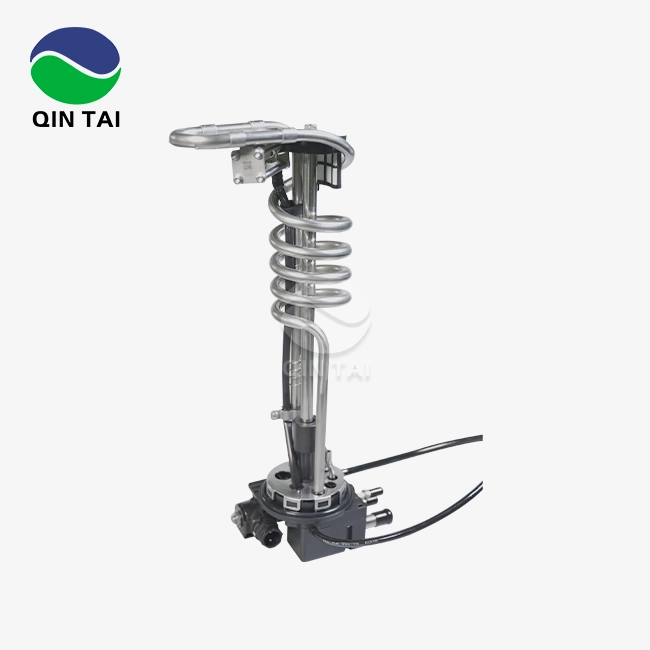
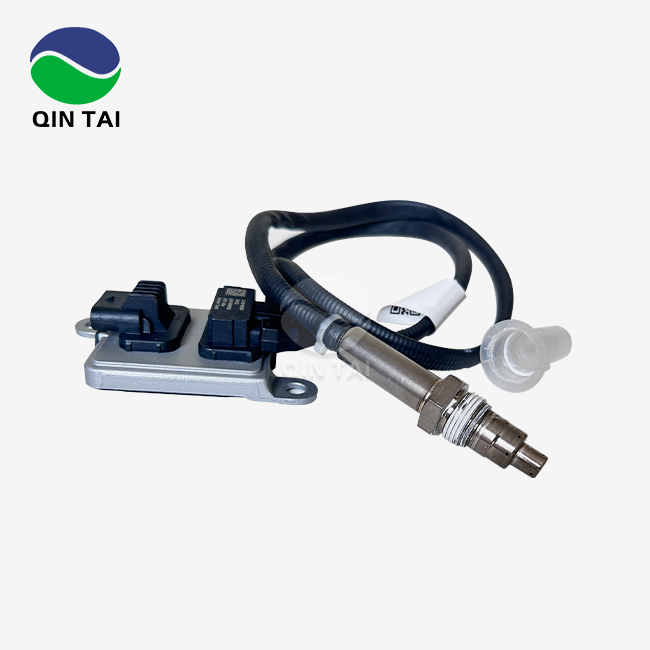
An SCR Dosing System is a single piece that controls the whole process of injecting urea. A dose pump, an injector nozzle, an electronic control unit, a urea pressure monitor, and tank indicators are all built into one unit that works together. The device constantly checks the temperature and amount of NOx in the air and then figures out the exact amount of diesel exhaust fluid (DEF) to add. This closed-loop feedback makes sure that NOx reduction stays the same even when the engine load changes. This is needed to meet Euro VI and EPA Tier 4 Final standards.
What Does an AdBlue Pump Do?
An AdBlue pump is a part that moves things around mechanically. Its main job is to move DEF fluid under controlled pressure from the holding tank to the dosing machine. It doesn't control when injections happen, figure out how much to give, or analyze sensor data. It's like the SCR system's cardiac muscle — it's important, but it doesn't think for itself. When an aftermarket repair is done, replacing a broken AdBlue pump is usually a focused fix rather than a full system rebuild.
How They Work Together
Sensors and the pump itself connect the urea fuel tank to the whole SCR system. A level sensor checks the amount of DEF, a temperature sensor keeps the system from freezing, and a quality sensor makes sure the urea level stays at 32.5%. The AdBlue pump puts pressure on the fluid, and the urea dosing pressure sensor sends real-time hydraulic feedback to the control unit. This makes sure that the injector fires at the right time and with the right amount of fuel.
Comparative Analysis: SCR Dosing System vs AdBlue Pump
Performance and Injection Accuracy
Dosing accuracy of a full SCR Dosing System is within ±2–3% across the entire operating range. This means that NOx reduction rates stay above 90%. When you replace a pump on its own, without recalibrating the control unit or checking the pressure sensor, dosing drift can happen. The urea dosing pressure sensor can pick up drops in pressure that could mean there are leaks, air in the line, or blockages. These are problems that can't be fixed by switching out just one pump.
Cost and Maintenance Considerations
A full dosing system costs more up front than a new pump, but the total cost of ownership usually works out better for the integrated approach. Frequent repairs that only fix the pump and leave sensor problems unfixed can lead to more and more trips to the workshop. Quality systems don't get fault codes like P204B because they have gold-plated terminals and an anti-crystallization chamber design that stops signal drift in old pressure sensors or dirty connector pins.
Compliance and Application Scope
For OEM production lines that make heavy trucks, construction equipment, or generator sets, a certified dosing system is the only way to get China VI or Euro VI type approval. For repair shops changing a broken part on an older platform in the aftermarket, a good AdBlue pump that fits the specs may be all that is needed. The right answer will rely on your use case, number, and regulatory goal.

How to Choose the Optimal Solution for Your Business Needs
Define Your Operational Requirements First
Begin with three inquiries: What level of pollution does the engine have to meet? How much do you make or how many vehicles do you have? What does the foundation of your service look like? A large OEM that makes Tier 4 Final engines for mining equipment needs an SCR Dosing System that has been approved for mass production and has long-term supply agreements. A local dealer who takes care of service orders needs to have reliable, in-stock pump parts that are easy to install and don't break down often.
Match the Solution to the Use Case
By part, these are the main things that make a decision:
- OEM and system integrators: Put certified dosing system parts from IATF16949-approved suppliers, ECU interfaces that can be changed, and recorded emission compliance data at the top of your list. As important as unit price is the supplier's ability to make things and how quickly they can help with technical issues.
- Aftermarket repair and dealers: Make sure the pump works with all engine platforms, that you can get it quickly, and that it's easy to install. A pump that works with more than one type of car makes filling easier and lowers the cost per unit.
- Generator set and industrial applications: For generator sets and other industrial uses, choose parts that can handle continuous duty cycles of more than 15,000 hours. Sensors and pumps that can handle high vibrations and a wide range of temperatures are needed in mines, power plants, and marine installations.
When purchasing managers know these differences, they can avoid either over- or under-specifying parts, which can have real cost effects.
Evaluate Supplier Credibility and Support
For long-term procurement stability, the partnership with the provider is important, not just the specs. Check for certifications like ISO 9001, IATF 16949, and any area approvals that apply. Make sure the seller can give you scientific information, calibration data, and help after the sale. It is a technical requirement, not a choice, for SCR system developers who are making DPF/SCR aftertreatment packages to be able to change the sensor output signals, whether they are 0.5V–4.5V analog or SENT protocol.

Dosing modules made by Bosch, Delphi, Continental, and Denso are used on many major OEM platforms around the world. Many references to Bosch's DENAOXCAT system and Continental's SCR parts can be found in Euro VI car homologation files. When it comes to injection accuracy and computer coupling, these names are the best.
Qintai: China's Leading SCR Sensor Manufacturer
Founded in 2001, Xi'an Qintai Automotive Emission Technology Co., Ltd. dominates China's SCR aftertreatment sensors market. The three largest Chinese diesel engine makers—Weichai Power, Yuchai Power, and Quanchai Power—get most of their parts from Qintai. It holds 58 concept patents and ISO 9001, IATF 16949, CMC, UL, CE, REACH, and RoHS certifications.
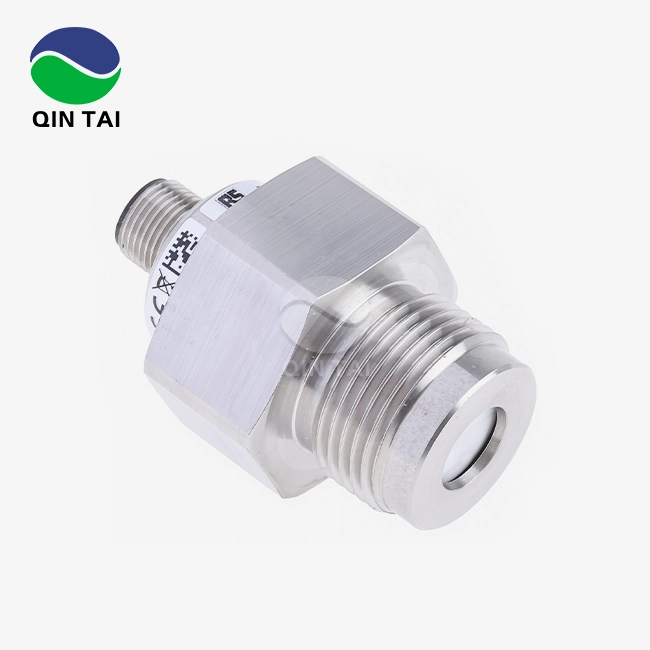
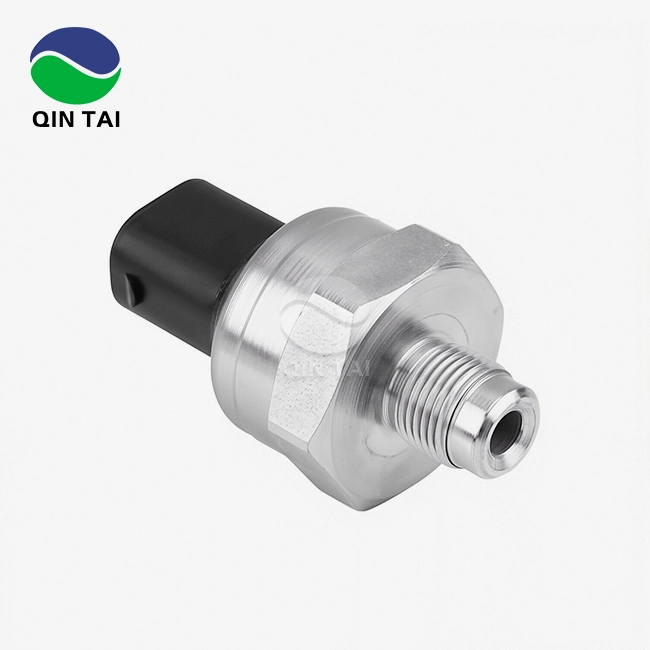
Our urea dosing pressure sensors include adjustable internal buffering to manage AdBlue's 9% freeze-expansion and gold-plated terminals to prevent the P204B failure code. Reduce dead volume and halt crystallization. Their products reach over 60 European, Middle Eastern, and South American nations.
Smart Sensor Technology in Modern SCR Systems
Digital pressure sensors with SENT output can now give closed-loop feedback faster and more accurately than analog designs. Long-haul trucks have sensors that have to stay accurate through more than a million kilometers of road vibrations and changes in temperature. Choosing the right anti-corrosion material has a direct effect on the service life of naval SCR Dosing Systems that work in high-salinity environments. These specs are not based on theory; they come from real-world operation situations that have been checked.
Maintenance, Troubleshooting, and Future Outlook
Routine Maintenance Priorities
Check the signal from the urea pressure sensor every time it's time for service. If the car is not used for a long time, flush the dosing line because DEF can crystallize in low-flow areas. In places with a lot of humidity, check the connector pins for corrosion. Check to see if the AdBlue pump is providing pressure within the system's recommended range, which for most heavy-duty platforms is between 5 and 9 bar.
Diagnosing Common Faults
Pressure drop problems can be caused by leaks, worn pumps, or air getting in. Overpressure problems mean that the DEF is frozen or a valve is stuck. Fault code P204B means that there are problems with the sensor signal range. Usually, replacing just the pressure sensor is enough to fix the problem instead of the whole dosing module. If you fix the actual part that's broken, you'll save a lot of money on repairs compared to replacing whole assemblies that don't need to be replaced.
The Road Ahead for SCR Technology
Stricter NOx limits will be put in place between 2025 and 2030 because of pressure from the EPA, the EU, and China's Ministry of Ecology. Integration of digital controls, remote diagnosis, and maintenance planning based on sensor data will no longer be extras, but normal features. As standards get stricter, there will be fewer problems with procurement plans that lock in certified, scalable sources with a reliable SCR Dosing System.

Conclusion
There is no better or worse choice between a full SCR Dosing System and a replacement AdBlue pump. What matters is that the right answer is used for the right problem. OEMs that are making compliant engines need combined systems that have been verified. Buyers in the aftermarket need parts that work well together and don't cost too much. In either case, the urea dosing pressure sensor is the most accurate part of the device. Getting that part right saves your NOx compliance, lowers the cost of diagnostics, and increases the time between service visits.
FAQ
What is the main difference between a dosing system and an AdBlue pump?
The SCR Dosing System manages the time, amount, and feedback of injections. It is a fully integrated machine. One mechanical part of that system is an AdBlue pump, which only moves fluids and maintains pressure.
What effect does the urea dosing pressure sensor have on NOx compliance?
The pressure sensor tells the control unit about the hydraulics in real time. If you don't give the system accurate pressure data, it can't dose properly, which could cause NOx levels that are higher than the law's limits and the limp mode to start up.
Can I just swap out the AdBlue pump and not have to re-adjust the system?
Yes, in many aftermarket situations, as long as the pump specs match and there are no sensor faults. If, on the other hand, the pressure sensor shows signal drift or the ECU shows range errors, then just changing the pump won't fix the problem.
What certifications should I look for in a supplier of a dosing system?
For quality that meets automotive standards, at the very least, demand ISO 9001 and IATF 16949. For markets that are regulated, check regional emission approvals like EPA or Euro VI type certification paperwork.
How long do quality urea dosing pressure sensors last?
For normal use in commercial vehicles, sensors made to automotive standards can work for 15,000 to 20,000 hours at normal duty cycles.
Partner With Qintai for Your SCR Dosing System Needs
OEMs and aftertreatment integrators in more than 60 countries buy tested SCR Dosing System parts from Qintai. These parts include urea dosing pressure sensors. When it comes to the aftertreatment market in China, Qintai has the biggest share. They offer OEM/ODM customization, fast delivery, and direct technical support. You can email the Qintai team at info@qt-sensor.com or go to their website at qt-sensor.com to talk about your needs, ask for samples, or start a long-term supply partnership.
References
1. Dieselnet Technology Guide — Selective Catalytic Reduction, DieselNet, 2022.
2. European Commission — Euro 6 Emission Standards for Heavy-Duty Vehicles, Official Journal of the European Union, 2019.
3. U.S. Environmental Protection Agency — Diesel Exhaust Fluid and SCR Technology for Heavy-Duty Engines, EPA Publication, 2021.
4. SAE International — Performance Evaluation of Urea-SCR Systems for NOx Reduction in Heavy-Duty Diesel Engines, SAE Technical Paper Series, 2020.
5. Bosch Automotive Handbook, 10th Edition — Exhaust Gas Aftertreatment Systems, Robert Bosch GmbH, 2022.
6. ACEA (European Automobile Manufacturers' Association) — Heavy-Duty Vehicle CO₂ and NOx Regulations: Technical Briefing, ACEA Report, 2023.

Our customers’ satisfaction speaks for our quality — contact us to experience the same reliable service.