- English
- French
- German
- Portuguese
- Spanish
- Russian
- Japanese
- Korean
- Arabic
- Greek
- German
- Turkish
- Italian
- Danish
- Romanian
- Indonesian
- Czech
- Afrikaans
- Swedish
- Polish
- Basque
- Catalan
- Esperanto
- Hindi
- Lao
- Albanian
- Amharic
- Armenian
- Azerbaijani
- Belarusian
- Bengali
- Bosnian
- Bulgarian
- Cebuano
- Chichewa
- Corsican
- Croatian
- Dutch
- Estonian
- Filipino
- Finnish
- Frisian
- Galician
- Georgian
- Gujarati
- Haitian
- Hausa
- Hawaiian
- Hebrew
- Hmong
- Hungarian
- Icelandic
- Igbo
- Javanese
- Kannada
- Kazakh
- Khmer
- Kurdish
- Kyrgyz
- Latin
- Latvian
- Lithuanian
- Luxembou..
- Macedonian
- Malagasy
- Malay
- Malayalam
- Maltese
- Maori
- Marathi
- Mongolian
- Burmese
- Nepali
- Norwegian
- Pashto
- Persian
- Punjabi
- Serbian
- Sesotho
- Sinhala
- Slovak
- Slovenian
- Somali
- Samoan
- Scots Gaelic
- Shona
- Sindhi
- Sundanese
- Swahili
- Tajik
- Tamil
- Telugu
- Thai
- Ukrainian
- Urdu
- Uzbek
- Vietnamese
- Welsh
- Xhosa
- Yiddish
- Yoruba
- Zulu
Why Pressure Transmitter Accuracy Matters in Harsh Environments
When operating diesel engines, SCR aftertreatment systems, or industrial generator sets in demanding conditions, a pressure transmitter does far more than measure pressure — it safeguards your entire system. Accurate pressure data feeds directly into emission control logic, engine protection routines, and regulatory compliance workflows. In harsh environments — extreme heat, constant vibration, chemical exposure — even a 0.5% drift in measurement can trigger false alarms, compliance failures, or catastrophic equipment damage. Choosing a high-accuracy, rugged pressure sensing device is not optional; it is a foundational engineering decision.

Understanding Pressure Transmitter Accuracy in Harsh Environments
Three factors affect how accurately you can measure pressure: uniformity, hysteresis, and repetition. Together, they show if your pressure transmitters give accurate readings during the whole working cycle, not just when they are in a perfect lab.
What Causes Accuracy Degradation
Measurement drift is mostly caused by things in the environment that are stressful. When temperatures get too high, sensor diaphragms expand thermally, which changes the output signals. Noise that messes up readings is caused by mechanical vibration, which happens a lot in heavy trucks and construction equipment. Moisture getting in and exhaust gasses that are corrosive speed up diaphragm wear and electronic corrosion. When differential pressure across a DPF has to be tracked continuously in SCR aftertreatment systems, these errors add up over time and make it harder for your ECU to be precise.
Choosing the Right Transmitter Type
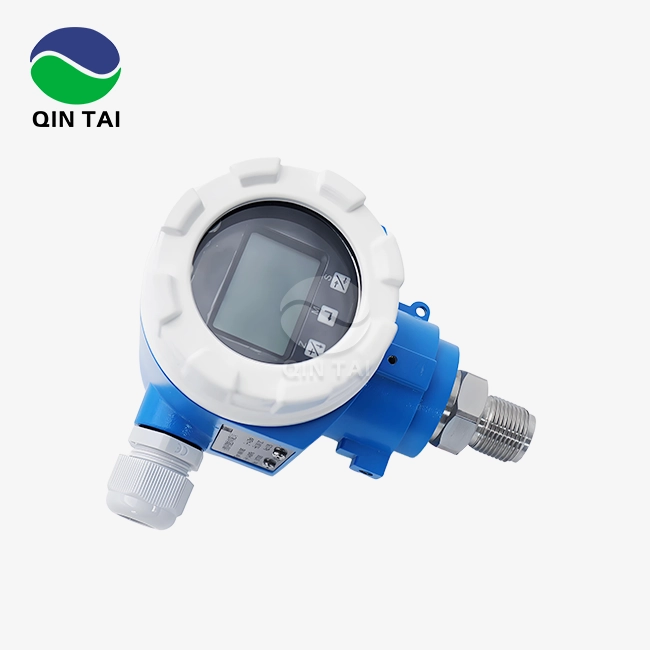
Differential, gauge, and absolute pressure transmitters are all used to measure different things. Differential pressure transmitters keep an eye on the backpressure and filter loading for diesel engines that need aftertreatment. Pressures in the oil circuit and intake manifold are tracked by gauge transmitters.
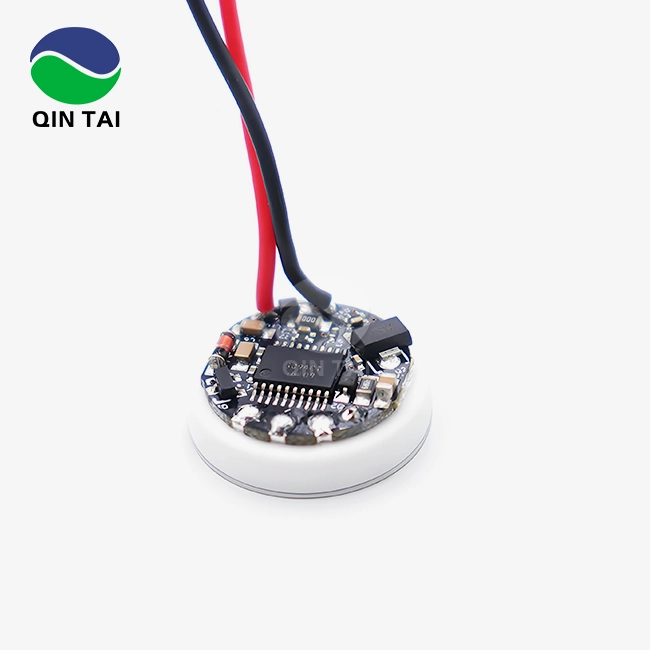
Explosion-proof designs that are ATEX-certified must be used in places like mines and power plants where there is a lot of dust or explosives. Thin-film pressure transmitters use vacuum-sputtering to glue a strain gauge directly onto a stainless steel diaphragm at the molecular level. This stops adhesive creep and thermal instability, which makes them very reliable when the pressure changes.
Why Accurate Pressure Measurement Is Critical to Industrial Operations
Readings that aren't correct don't just mess up instrument logs; they also cause safety incidents, fines from the government, and unplanned downtime. A study published in Measurement in 2022 says that pressure transmitter drift is the cause of about 23% of process control errors in heavy industrial settings.
The Cost of Measurement Error
In a China VI or Euro VI exhaust system, if the pressure transmitter is not calibrated correctly, the ECU may get the wrong reading for NOx reduction efficiency. This leads to chemical dose cycles that aren't needed, urea crystallization, or even worse, the catalyst getting too hot.
If a sensor drifts and misses a high-pressure event in a generator set that powers mines or backup power sources, the generator set could break down without notice. When things like this happen, downtime is never free. The U.S. Department of Energy says that manufacturers lose an average of $260,000 per hour every time their industrial equipment breaks down without warning.
These risks are directly lowered by high-accuracy pressure transmitters. It helps with compliance paperwork for emission checks, improves process control consistency, and lets you do predictive maintenance by spotting slow drift before it turns into a failure event.

How to Select the Best Pressure Transmitter for Harsh Environments
To choose the right gadget, you need to do a structured review that looks at technical, legal, and supply chain factors. Before making a final decision about where to get materials, procurement teams and R&D engineers should look at the following important factors for a pressure transmitter:
- Accuracy class and resolution: ±0.5% full-scale accuracy or better is the standard in the industry for uses that need to be very accurate with emissions. When temperatures are changed, thin-film sensing elements work better than bonded foil gauges.
- Environmental protection rating: Ratings of IP67 or IP69K keep out water and dust. Explosion-proof housings that are approved by ATEX or UL must be used in mines or places where fuel is stored where there is a risk of explosion.
- Signal output compatibility: 4–20mA analog output is still the standard for long-distance communication in the business world. Digital outputs (CAN, RS485) are becoming more popular in modern ECU-integrated systems because they are better at blocking noise.
- Range of operating temperatures: Sensors placed near diesel exhaust systems must stay calibrated from -40°C to +125°C or higher.
- Certifications: ISO9001, IATF16949, CE, and CMC certifications show that the manufacturing process is consistent and that the rules are followed, which is very important for OEM mass production settings.
When these parameters are looked at together, they help procurement professionals find instruments that will keep their measurement accuracy over time. However, if you don't take into account even one measure, like vibration resistance in the case of a big truck, the accuracy guarantees of a well-specified device—including its pressure transmitter—may not apply.
Installation, Calibration, and Troubleshooting for Maintaining Accuracy
If placed wrong, even the most accurate pressure transmitter won't work as well as it should. Output stability is affected by how the device is mounted, how the cables are shielded, and how close it is to heat sources.
Calibration Best Practices
Calibration makes sure that the output of your transmitter still accurately matches the pressure it senses. For diesel engines and SCR systems, calibration cycles of 6 to 12 months are normal. However, shorter cycles are needed for harsh environments like chemical media or ongoing shaking. Always measure against a norm that can be tracked, and write down the results for records of emission compliance.
Diagnosing Common Field Problems
Three of the most common field problems with a pressure transmitter are signal drift, zero offset, and unstable output. Zero offset happens when the transmitter gets a number other than zero at zero pressure. This is usually caused by mechanical stress that was added during installation.
Signal drift usually means that the diaphragm is wearing out or that the detecting element is under a lot of temperature stress. Unstable output is usually caused by electrical interference from nearby ignition systems or cables that aren't properly shielded. If these problems are fixed quickly, they won't cause other systems in the engine management and emission control systems to fail.
Procurement Considerations and How to Buy Pressure Transmitters for Harsh Conditions
When choosing where to get industrial-grade pressure transmitters, you need to look at more than just price per unit. You also need to look at technical specs, the reliability of the supplier, and the total cost of ownership.
When looking for suppliers, it's best to go with those that are IATF16949 certified, have active OEM partnerships, and can do OEM/ODM customization. Verified mass production capacity is just as important as specs. A supplier that can't grow with your production volume causes risk in the supply chain. When problems happen, being responsive to after-sales support, such as calibration help and field troubleshooting, lowers your operational exposure.

Conclusion
Accuracy of the pressure transmitter is not an optional feature; it is an essential engineering need in any harsh setting, from diesel aftertreatment systems to industrial generator sets. Drift, bad calibration, or choosing the wrong sensors can lead to failures to follow the rules, damage to equipment, and big financial losses. One of the best investments an R&D team or procurement manager can make is in pressure sensing tools that have been carefully chosen, approved, and kept in good working order. If you choose devices that work well with the way your system is used, it will be stable, last a long time, and give you regulatory peace of mind.
FAQ
What accuracy level should a pressure transmitter have for emission control systems?
For diesel systems that are compliant with China VI and Euro VI, ±0.5% full-scale accuracy is the bare minimum. Thin-film detecting technology usually gets ±0.25% or better, which is better for DPF differential pressure tracking because small changes can mess up the logic for regeneration.
How often should pressure transmitters be calibrated in harsh environments?
As a general rule, tuning should be done every 6 to 12 months. When used in places with a lot of vibration or chemicals that are bad for you, like mining generator sets or constantly running farm equipment, checking the calibration every three months is a better way to make sure that it stays accurate.
What certifications should I look for when sourcing pressure transmitters?
Check for certifications like ISO9001, IATF16949, CE, and CMC. For use in dangerous areas, look for ATEX or UL explosion-proof certification. These credentials prove that both the quality of the manufacturing and the safety of the deployment are met.
Can a single pressure transmitter model work across multiple applications?
Yes, if OEM/ODM tailoring is used. One platform can work well for diesel engines, generator sets, and SCR integrators because it has signal outputs that can be set to 4–20mA, CAN, or RS485, pressure ranges that can be changed, and housing materials that are made for specific uses.
Partner with Qintai — A Trusted Pressure Transmitter Manufacturer
In 2001, Xi'an Qintai started selling accurate pressure transmitters to OEM customers in over 60 countries. They have since earned several certifications, such as IATF16949, ISO9001, CE, CMC, and Ex. Weichai Power, Yuchai Power, and Quanchai Power all choose Qintai as their top OEM source because they offer industrial-grade dependability and full OEM/ODM customization. You can talk to our expert team about your needs by emailing info@qt-sensor.com or going to qt-sensor.com.
References
1. Measurement — Sensor Drift and Process Control Deviations in Heavy Industry, 2022.
2. ISA (International Society of Automation) — Pressure Transmitter Installation and Calibration Standards, 2021.
3. U.S. Department of Energy — Cost of Unplanned Industrial Downtime Report, 2021.
4. ATEX Directive 2014/34/EU — Equipment for Explosive Atmospheres: Certification Requirements, European Commission, 2014.
5. SAE International Journal of Engines — Sensor Accuracy Requirements in Euro VI Diesel Aftertreatment Systems, 2020.
6. IEEE Transactions on Industrial Electronics — Thin-Film Sensing Technology for High-Reliability Pressure Measurement, 2019.


Our customers’ satisfaction speaks for our quality — contact us to experience the same reliable service.