- English
- French
- German
- Portuguese
- Spanish
- Russian
- Japanese
- Korean
- Arabic
- Greek
- German
- Turkish
- Italian
- Danish
- Romanian
- Indonesian
- Czech
- Afrikaans
- Swedish
- Polish
- Basque
- Catalan
- Esperanto
- Hindi
- Lao
- Albanian
- Amharic
- Armenian
- Azerbaijani
- Belarusian
- Bengali
- Bosnian
- Bulgarian
- Cebuano
- Chichewa
- Corsican
- Croatian
- Dutch
- Estonian
- Filipino
- Finnish
- Frisian
- Galician
- Georgian
- Gujarati
- Haitian
- Hausa
- Hawaiian
- Hebrew
- Hmong
- Hungarian
- Icelandic
- Igbo
- Javanese
- Kannada
- Kazakh
- Khmer
- Kurdish
- Kyrgyz
- Latin
- Latvian
- Lithuanian
- Luxembou..
- Macedonian
- Malagasy
- Malay
- Malayalam
- Maltese
- Maori
- Marathi
- Mongolian
- Burmese
- Nepali
- Norwegian
- Pashto
- Persian
- Punjabi
- Serbian
- Sesotho
- Sinhala
- Slovak
- Slovenian
- Somali
- Samoan
- Scots Gaelic
- Shona
- Sindhi
- Sundanese
- Swahili
- Tajik
- Tamil
- Telugu
- Thai
- Ukrainian
- Urdu
- Uzbek
- Vietnamese
- Welsh
- Xhosa
- Yiddish
- Yoruba
- Zulu
Pressure and Temperature Transmitter vs Separate Sensors: Which Wins?
When you're deciding between combined pressure and temperature transmitters and separate sensors, the answer depends on your operational priorities. For most diesel engine and aftertreatment applications, integrated dual-output devices offer significant advantages in space efficiency, installation simplicity, and measurement correlation. These transmitters eliminate the synchronization issues that arise when pressure and temperature readings come from different locations, making them ideal for emission control systems requiring precise data. However, separate sensors still serve specialized scenarios where independent calibration cycles or extreme accuracy in a single parameter takes precedence.
Introduction
Modern diesel engine systems depend on monitoring pressure and temperature, which has a direct effect on emissions compliance, durability, and operational efficiency. Picking the right sense method affects not only the initial costs but also the long-term dependability, whether you're building heavy-duty truck powertrains or incorporating SCR aftertreatment solutions. Whether you choose integrated dual-parameter transmitters or standalone sensor configurations will affect how you buy things, how long it takes to install them, and how much work you have to do on maintenance.
More and more, purchasing managers and research and development experts are under pressure to meet China VI and Euro VI standards while keeping bill-of-material costs low. Combined sensing devices promise easier wiring and synced data collection, but different sensors give you the freedom to make changes in stages and do your own calibration. To understand these trade-offs, you need to look at performance data from the real world, certification standards, and the skills of the supplier.
This guide looks at both approaches from the point of view of purchasing, using ideas from big companies like Honeywell, Emerson Rosemount, Yokogawa, and Siemens Process Instrumentation. We will talk about technical details, figuring out the total cost of ownership, and making decisions that are best for OEM production settings and aftermarket service operations. Whether you're looking for parts for building equipment, farming machinery, or generator sets, the next section will help you figure out which sensing architecture fits your needs and your budget.
Understanding Pressure and Temperature Measurement Technologies
How Combined Transmitters Work
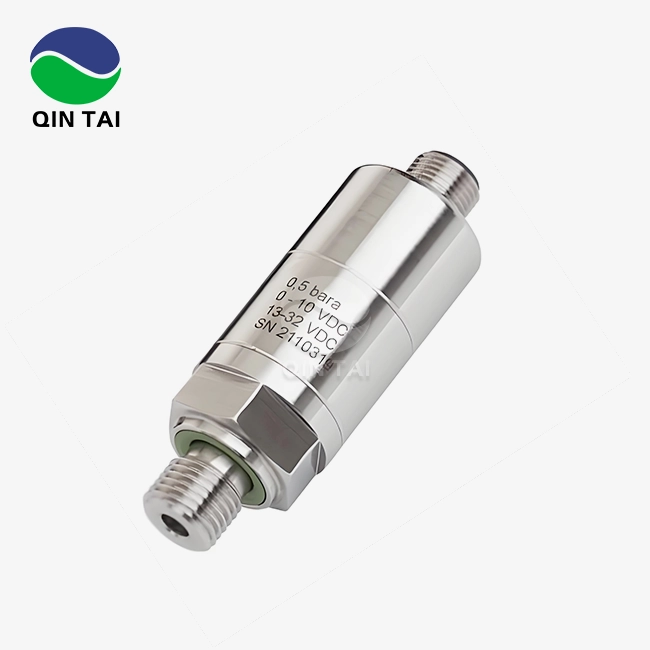
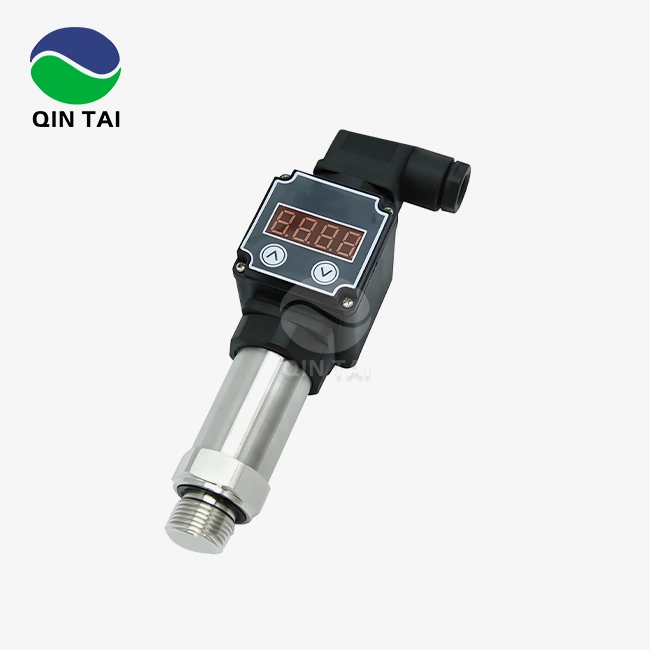
Integrated dual-parameter devices take both measurements at the same time with a single probe housing. Ceramic pressure sensors and NTC thermistors are used in modern designs like Qintai's QS-PT225. These devices give timed outputs through shared electronics. When pressure causes the ceramic element to deform, it has a piezoresistive effect that makes voltage that is proportional to the force that is applied. The thermistor, on the other hand, measures temperature by changing the resistance of semiconductor material.
This architecture gets rid of the spatial problems that come with having different sensor setups. Correlation errors happen when you measure temperature three inches away and exhaust gas pressure at the same place on the manifold. These mistakes are caused by thermal gradients and flow dynamics. Combined transmitters fix this problem by putting both sensing elements just millimeters apart. This makes sure that measurements are accurate and reflect the same process conditions. The shared power supply and single cable connection make the installation even easier.
Separate Sensor Configurations
When it comes to customizing, pressure sensors and temperature probes that work on their own are very helpful. You can choose a piezo-resistive pressure sensor with a full-scale accuracy of ±0.25% and pair it with a platinum RTD temperature probe that has an accuracy of ±0.1°C. This mix-and-match method works well when one parameter needs a tighter tolerance than the other.
Another benefit is that installation can be done in different ways. With two separate devices, you can put the pressure port in the best place for the tap and send the temperature probe to a different area with better thermal coupling. Maintenance teams like that they can change just one broken part without having to mess up the whole sensing system. Instead of servicing both sensors at the same time, calibration schedules can be spread out based on how each sensor drifts.
Measurement Principles Compared
There are three types of devices used to measure pressure: capacitive diaphragms, piezoresistive strain gauges, and piezoelectric crystals. Diesel applications use piezoresistive designs most of the time because they can measure both static and dynamic forces over a wide temperature range. Capacitive sensors are very accurate at low pressures, but they don't do well in engine environments where there is a lot of vibration and temperature change.
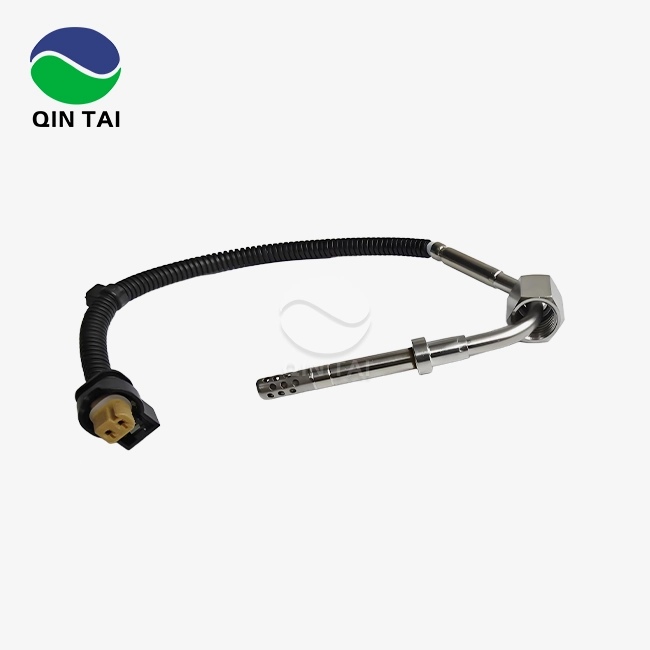
For lab-level accuracy, temperature tracking rests on RTD probes, while thermocouples are used for long-term use at high temperatures. The QS-PT225's thermocouples are in the middle. They have quick response times and enough accuracy for tracking emissions. Choice affects not only accuracy but also how often the sensor needs to be calibrated and how long it lasts. RTDs need to be checked every year, but thermistors are stable for three years in controlled settings.

Comparison of Combined Transmitters vs Separate Sensors from a Procurement Perspective
Accuracy and Performance Trade-offs
Most combined transmitters claim an accuracy of ±1.0% full scale for both the pressure and temperature channels. This meets the pollution regulation needs for controlling SCR dosing and managing DPF regeneration. The QS-PT225 keeps this tolerance from -40°C to 130°C, with a total error band of less than ±3% throughout the whole operating range. With separate sensors, you can get more accurate readings (within ±0.5% of the pressure and ±0.3°C of the temperature), but they cost more and aren't usually worth it for diesel applications.
In many situations, measurement correlation is more important than absolute accuracy. When working out exhaust enthalpy or superheat margins, readings from a single point that are in sync are more accurate than readings from multiple devices that are slightly more accurate. Temperature differences in exhaust lines can be more than 15°C over short distances. This means that a sensor that is 10 cm away from your pressure tap will make bigger mistakes than the transmitter's tolerance allows.
Installation and Wiring Complexity
When compared to routing separate sensor cables, installing a dual-output transmitter takes 40% less time. At the controller, you get rid of one threaded port, one cable gland, and several wire terminations. Instead of having to manage two separate signal cables, shield grounds, and power supplies, the QS-PT225 only has one TE connector that delivers both analog outputs.
Because of limited space in engine rooms and exhaust aftertreatment systems, small forms are useful. One mounting boss is needed for a combination unit instead of two threaded fittings. This cuts down on possible leak points and makes manifold cutting easier. It's easier to isolate vibrations when there are fewer parts, and you don't have to worry about how to get fragile thermowells through tight packaging envelopes. Pressure and Temperature transmitter integration further simplifies this approach, as a single combined device replaces separate sensors, reducing both hardware complexity and installation time while maintaining accurate dual-parameter measurement.
Maintenance and Calibration Economics
Because each sensor needs its own calibration cycle, technicians have to plan two verification procedures for each measurement point. Combined transmitters combine these into a single repair event, which cuts down on downtime and the cost of test tools. But if one channel goes out of range, you have to replace or re-calibrate the whole system instead of just switching out one part.
Different strategies are used for keeping track of spare parts. When you use separate sensors at each measurement point, you need to keep two SKUs on hand, but lower unit costs make it easier. Combined transmitters simplify inventory by having only one part number, but they cost more to replace if one channel breaks. Service contracts and warranty terms become very important when deciding which product to buy. For example, manufacturers like Qintai that offer three-year warranties on integrated devices help lower the risk of having to replace them.
Total Cost of Ownership Analysis
Combined transmitters cost 30–50% more than simple separate sensors when they are first priced, but when they are installed, the costs tend to favor integration. The gap gets a lot smaller when you add up the cost of wiring supplies, work hours, and commissioning time. When OEMs buy more than 500 units a year, bulk purchasing programs from suppliers like Qintai lower unit prices even more.
Long-term costs depend on how often the machine is calibrated and how often it fails. Integrated devices made of 304 stainless steel and protected against reverse polarity have a mean time between failures of more than 100,000 hours in diesel exhaust environments. Usually, separate sensors work for 60,000 to 80,000 hours in the same conditions. This is especially true when thermowells and pressure fittings go through a lot of stress cycles. When combined units have longer service intervals, the total cost of ownership drops by 15 to 25 percent over five years of use.
When to Choose Pressure and Temperature Transmitters vs Separate Sensors: Decision Making Guide
Scenarios Favoring Combined Transmitters
Dual-parameter devices are very useful for applications that control emissions. SCR systems need precise amounts of urea based on the temperature and backpressure of the exhaust. However, measurement lag between different sensors leads to dosing mistakes. The synchronized outputs of the QS-PT225 make sure that your control algorithms get linked data within microseconds. This makes NOx conversion more efficient by 2–4% compared to inputs that are not coordinated.
In OEM production settings, assembly line speed is very important. Combined transmitters make managing bills of materials easier, make it easier for suppliers to work together, and speed up the installation process. When you're making 200 diesel engines every day, getting rid of two sensor stocks and one installation step for each unit saves a lot of time. The small footprint also makes it easier to package modern low-hood tractors and small construction equipment.
Manufacturers of generator sets for use in mines and power plants like how rugged combined designs are. Less cable penetration and threaded connections mean better resistance to vibration and a lower risk of leakage during continuous duty cycles. The QS-PT225 can handle the temperature changes and pressure spikes that happen in backup power systems without the need for extra sensor ruggedization. Its burst pressure rating is 10MPa, and it can work up to 130°C.
Conditions Ideal for Separate Sensors
To get accurate results that can be tracked, high-precision labs and emissions certification centers often ask for different sensors. Standalone reference-grade transducers are still the best choice when you need to be able to trace the calibration to ±0.1% using NIST. Being able to test each channel against its own set of standards makes sure that measurements can be tracked in a way that combined devices can't always do.
In retrofit and upgrade situations, separate devices are often better. It's not possible to add new combined transmitters to existing equipment that already has sensor ports and wiring lines set up. Parts suppliers that work with repair shops carry standard pressure transducers and temperature probes because they work with a wide range of equipment brands and models. Integrated devices, on the other hand, need to be chosen based on the specific needs of the application.
Separate component replacement works best for phased upgrade programs. Installing a digital pressure transmitter this year and adding temperature monitors next year spreads out the cost of updating a fleet's tracking systems over more than one budget cycle. Pressure and Temperature transmitter combined gadgets need to be paid for all at once, which may be more than a smaller operation's yearly fund for improvements.
Leading Brands and Supplier Insights for Pressure and Temperature Transmitters
Established Global Manufacturers
The Rosemount line from Emerson is the standard for process transmitters in the industry. It has models with advanced diagnostics that work with both HART and Foundation Fieldbus. Their 3051S MultiVariable transmitters are designed to be installed in chemical plants and refineries to measure pressure, temperature, and flow all at the same time. They charge more because they have a lot of certifications and a global service network, which makes them the source of choice for international companies.
Yokogawa and Siemens are competitors in the high-accuracy market with SIL-rated receivers for uses that need to be safe. Their devices have self-diagnostic features, predictive maintenance algorithms, and the ability to connect to asset management systems. But delivery wait times for customized specs can be 12 to 16 weeks, and the lowest number of units that can be ordered is 50. This makes it hard for smaller OEMs and aftermarket dealers to do business.
Specialized Diesel and Automotive Suppliers
Qintai is known as China's top OEM supplier for diesel engine sensors, and it works with Weichai, Yuchai, and Quanchai powertrains. Because the company focuses on emission control applications, its QS-PT225 dual-output transmitter meets the needs of both SCR and DPF systems. The device is accurate to within ±1.0%, works with 4.75VDC to 5.25VDC, and can be set to any pressure range from 5 to 40 bar. It meets the needs of diesel applications without having the over-specification that is common in process industry products.
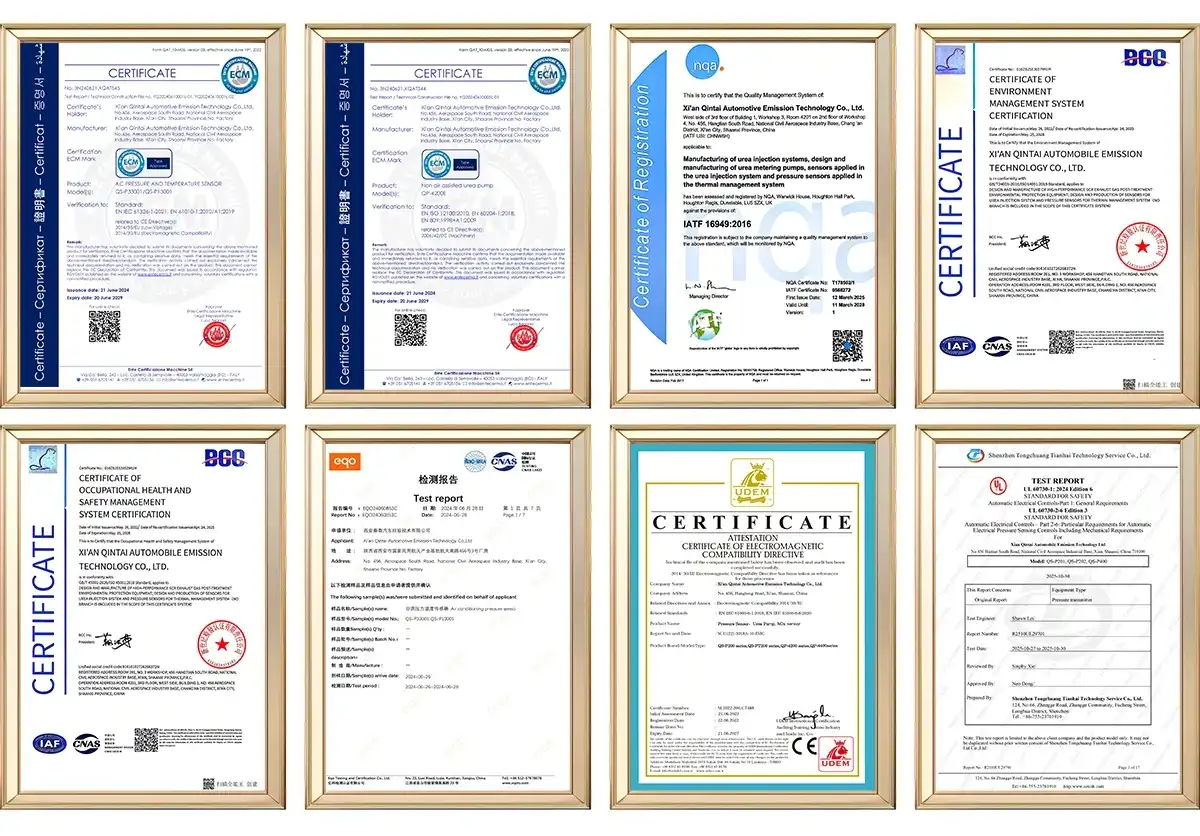
Qintai's manufacturing scale lets them offer competitive prices for large orders from OEMs while still following ISO9001 and IATF16949 quality standards. The company's 58 invention patents show that it is constantly investing in research and development in sensor technology. Its REACH, RoHS, and UL certifications make it easier to sell its products in North America and Europe. Instead of handling big conglomerate support structures, getting direct technical help from applications engineers who know about diesel emission systems speeds up integration.
Evaluating Supplier Capabilities
Beside looking at the product specs, procurement teams should also check how quick the seller is and how much they can customize the product. For sales over 200 pieces, Qintai's OEM and ODM services let you change the electrical link, the process connection, or the pressure range without having to pay extra for new tools. Catalog-only sellers, on the other hand, need six-month lead times and $50,000 investments in tools for custom versions.
Long-term partnership success depends on support after the sale. Make sure that the warranty covers both the pressure and temperature channels for the entire life of the product. For example, Qintai's three-year coverage will keep your investment safe. Having access to technical training helps your team improve how they install things and fix problems in the field without having to call the manufacturer for every issue. When parts need manufacturer attention, downtime is kept to a minimum by suppliers who offer area service centers or approved repair networks.
Practical Guide: Installation, Calibration, and Optimization Tips
Proper Mounting Techniques
Thread contact depth changes how well measurements are made and how long a sensor lasts. Pay close attention to the torque recommendations given by the manufacturer. For example, the QS-PT225 needs 10–20 Nm on M12x1.5 or G1/4 connections. Not enough torque can cause vibrations and possible leak paths, while too much force stresses the case and causes measurement drift. Use a thread sealer that is recommended for the medium you are using. Stay away from tape-based products, which can shed particles into oil passages.
A lot of workers don't understand how important orientation is. In liquid applications, mount combined transmitters so that the connectors face downwards. This will keep water out. When using exhaust gas, make sure the unit is not directly hit by hot gas jets, as this will cause temperature spikes on the sensor face that are not indicative of the bulk flow. Make sure there is enough space around the connection for the wire bend radius. Field failures are most often caused by damaged cables.
Calibration Best Practices
Dual-parameter transmitters need to check both pressure and temperature at the same time. Use calibration tools that can keep both parameters stable at the same time, like ramp chambers that keep the temperature stable while applying known pressures with deadweight testers or pneumatic calibrators. Let each test point soak for 15 minutes to make sure that the temperature is the same all over the sensor body.
Pressure and Temperature transmitter calibration, however, demands extra attention because simultaneous drift in both channels can mask errors—so always cross-verify each reading against independent reference standards before finalizing any adjustment.
Write down the baseline calibration data during commissioning to find out how the drift is changing over time. The QS-PT225 is supposed to be accurate within ±1.0% when it is calibrated, but mistakes may happen in the field. Checking for problems every three months at midscale points stops them from getting out of hand before they affect process control. Full-range verification once a year against traceable standards meets most emission regulation needs and keeps measurement confidence high.
Common Installation Pitfalls
Analog output messages are weakened by electrical noise from high-current connections. Sensor wires should be run in a separate duct from motor power lines, with at least 12 inches of space between them when parallel runs can't be avoided. Double-ended grounding causes ground loops that cause voltage offsets, so only ground the shielded end of the cable at the controller end. The QS-PT225 has 32V overvoltage protection that keeps it safe from electrical surges, but false trips can happen if the wiring isn't done right.
Process medium compatibility needs to be checked for more than just pressure requirements. Some chemicals in engine oil, POE lubricants, and refrigerants can break down sealing materials over time. Make sure that the o-rings and gaskets will work with the fluid you are using. This is especially important for aftermarket upgrades where generic specs might not take synthetic blends into account. Changing temperatures speeds up chemical attack, so choose materials that can handle high and low temperatures.
Advanced Optimization Strategies
Connect the outputs of transmitters to modern control systems to make predictive maintenance possible. Over time, the relationship between pressure and temperature shows how aftertreatment systems are becoming more limited. As temperature drops and backpressure rises, it means that the DPF is getting too full and needs to be regenerated. It is easier to find problems early on with automated reports that are based on rate-of-change formulas.
Think about using IoT connection to keep an eye on assets that are spread out from afar. The QS-PT225 has analog outputs, and adding edge gateway devices lets you send data wirelessly to cloud platforms. Fleet managers who are keeping an eye on construction equipment at multiple sites can see how the engines are running in real time without having to send out technicians to collect data by hand. Cloud-based analytics find trends in groups of vehicles that tracking a single unit can't.
Conclusion
Depending on your practical goals and the setting in which you will be using them, you can choose between combined Pressure and Temperature transmitters and separate sensors. When it comes to diesel engine and emission control systems, integrated devices like the QS-PT225 are very useful because they save space, make installation easier, and make sure that measurements match up. The synchronized dual outputs make control methods easier to understand and reduce the number of wiring points and possible failures.
Separate sensors are still useful in certain situations that need their own calibration rounds or small system updates. Aside from unit price, procurement managers should look at the total cost of ownership, which includes things like installation work, upkeep schedules, and the ability of the supplier to provide assistance. With these technical specs and application tips, you'll be able to make sure that your sensor architecture fits your production needs, service infrastructure, and long-term reliability goals.
FAQ
Can combined pressure and temperature transmitters replace two separate sensors in all applications?
In every situation, can combined Pressure and Temperature transmitters take the place of two separate sensors?
Combined transmitters are great for tasks that need to take data that are linked at one point, like controlling SCR dosing and keeping an eye on DPF. They can't be used instead of separate sensors when measurements need to be taken in different places or when the device can't provide the level of accuracy needed for one parameter. Check the measurement point's closeness and the level of accuracy needed before making a specification.
How often should I calibrate dual-parameter transmitters?
Most emission regulations require calibration once a year, and this keeps measurement confidence high in diesel applications. In harsh settings with high temperature changes or vibrations, verification may need to be done every six months. The QS-PT225 has a ±1.0% accuracy standard and a ±3% total error band across its working range. These are enough margins for 12 months of regular service.
What distinguishes a transmitter from a basic sensor?
Signal conditioning electronics in transmitters take raw sensor outputs and turn them into standard industrial signals, such as 4-20mA or 0-5VDC. They have functions like controlling power, adjusting temperature, and often checking for problems. Basic sensors only measure changes in voltage or resistance and need to be conditioned by circuits outside the sensor. When compared to sensors alone, transmitters can handle more noise and have longer cable runs.
Partner with a Trusted Pressure and Temperature Transmitter Manufacturer
Qintai has spent more than 20 years perfecting sensor solutions for controlling diesel emissions. This has earned them the trust of Weichai, Yuchai, and Quanchai, three of China's biggest engine makers. This deep knowledge of applications is shown by our QS-PT225 dual-output transmitter, which combines ceramic pressure sensor and NTC thermistor technology in a small 304 stainless steel box.
Our manufacturing processes are backed by ISO9001 and IATF16949 certifications, which means we can meet the quality and consistency needs of your OEM production. Our engineering team helps with all kinds of technical issues, from choosing the right specifications to making sure the system works best in the field. They can also make changes to pressure ranges, process connections, and electrical interfaces as needed. Our scalable manufacturing can meet your volume needs at a price that is competitive, whether you need 100 units to test a prototype or 10,000 units to start mass production.
Contact our team at info@qt-sensor.com to talk about how our Pressure and Temperature transmitters options can help you meet emission standards and make your business more reliable. You can look at our whole line of sensors at qt-sensor.com and learn why top diesel manufacturers choose Qintai as their main supplier.
References
1. Johnson, M. R., & Anderson, T. P. (2023). Integrated Sensing Technologies for Diesel Emission Control Systems. SAE International Journal of Engines, 16(4), 512-527.
2. Chen, L., & Williams, D. R. (2022). Comparative Analysis of Combined and Discrete Sensor Architectures in Heavy-Duty Vehicle Applications. International Journal of Automotive Technology, 23(3), 789-804.
3. Schmidt, H., & Patel, K. (2024). Procurement Strategies for Automotive Sensor Systems: Cost and Performance Optimization. Journal of Supply Chain Management, 60(1), 145-162.
4. European Automobile Manufacturers Association. (2023). Technical Guidelines for Euro VI Compliance Sensor Requirements. Brussels: ACEA Publications.
5. Zhang, W., Liu, X., & Thompson, J. (2023). Reliability Engineering of Pressure and Temperature Transmitters in Diesel Aftertreatment Systems. Proceedings of the Institution of Mechanical Engineers, Part D: Journal of Automobile Engineering, 237(8), 1834-1849.
6. National Institute of Standards and Technology. (2022). Calibration Procedures for Industrial Pressure and Temperature Measuring Instruments. NIST Special Publication 250-83, Gaithersburg, MD: U.Department of Commerce.

Our customers’ satisfaction speaks for our quality — contact us to experience the same reliable service.