- English
- French
- German
- Portuguese
- Spanish
- Russian
- Japanese
- Korean
- Arabic
- Greek
- German
- Turkish
- Italian
- Danish
- Romanian
- Indonesian
- Czech
- Afrikaans
- Swedish
- Polish
- Basque
- Catalan
- Esperanto
- Hindi
- Lao
- Albanian
- Amharic
- Armenian
- Azerbaijani
- Belarusian
- Bengali
- Bosnian
- Bulgarian
- Cebuano
- Chichewa
- Corsican
- Croatian
- Dutch
- Estonian
- Filipino
- Finnish
- Frisian
- Galician
- Georgian
- Gujarati
- Haitian
- Hausa
- Hawaiian
- Hebrew
- Hmong
- Hungarian
- Icelandic
- Igbo
- Javanese
- Kannada
- Kazakh
- Khmer
- Kurdish
- Kyrgyz
- Latin
- Latvian
- Lithuanian
- Luxembou..
- Macedonian
- Malagasy
- Malay
- Malayalam
- Maltese
- Maori
- Marathi
- Mongolian
- Burmese
- Nepali
- Norwegian
- Pashto
- Persian
- Punjabi
- Serbian
- Sesotho
- Sinhala
- Slovak
- Slovenian
- Somali
- Samoan
- Scots Gaelic
- Shona
- Sindhi
- Sundanese
- Swahili
- Tajik
- Tamil
- Telugu
- Thai
- Ukrainian
- Urdu
- Uzbek
- Vietnamese
- Welsh
- Xhosa
- Yiddish
- Yoruba
- Zulu
SCR Urea Sensors for Heavy Duty Vehicle Manufacturers
Choosing the right SCR urea level sensor has a direct effect on how well heavy duty vehicles meet pollution standards, how reliable they are, and how much they cost in the long run. To meet EPA Tier 4 Final and Euro VI guidelines, modern diesel engines with Selective Catalytic Reduction systems need to keep a close eye on the amount, concentration, and temperature of the Diesel Exhaust Fluid. These sensors keep the catalyst from getting poisoned, keep the engine from losing its rating, and keep downtime from being caused by hardened DEF or wrong tank readings to a minimum. When put together properly, they make sure that only 32.5% of the high-purity urea solution gets into the SCR catalyst. This protects the system's longevity and meets strict regulation requirements around the world.
Understanding SCR Urea Level Sensors: Principles, Functions, and Benefits
Operating Principles Behind Accurate DEF Monitoring
To keep the right amount and quality of urea in SCR systems, they use complex monitoring technologies. Capacitive sensors pick up changes in the dielectric properties of fluids as their amounts change. They work well in places where the temperature and vibrations are likely to happen. Ultrasonic devices use time-of-flight technology to measure volumes accurately by sending out sound waves that bounce off the surface of the fluid. Resistive sensors have reed switch arrays placed along the height of the tank. When DEF levels rise or fall, these arrays send out a series of messages. Each technology meets a different set of operational needs, ranging from small farm tools to large building machines.
Quality Detection Mechanisms and System Integration
In addition to measuring levels, more modern sensors have concentration measurement tools that check the purity of the urea through optical absorption or conductivity analysis. This two-in-one feature stops low-quality DEF from getting into the dosing system, protecting pricey SCR catalysts from damage. Temperature sensors built into the module account for the effects of thermal expansion and keep an eye on the risk of freezing when it's cold outside. Signal processors remove noise from the surroundings and send real-time data to the Engine Control Unit. This lets adaptive dosing methods work best for reducing NOx while using the least amount of DEF.
Compliance and Operational Advantages
When manufacturers use reliable sensor technology, they get a lot of strategic benefits. Having written DEF quality records makes regulatory compliance easier to check, which lowers the risk of audits and penalties. When SCR systems work as they should, engines don't have to go through fuel-wasting de-rate modes when sensors fail, which means they use less fuel. Accurate tracking keeps crystals from building up in dose nozzles and injectors, so maintenance times get longer. Over the lifetime of a fleet, these benefits lead to measured drops in the total cost of ownership, which makes the company more competitive in price-sensitive markets.
Comparing SCR Urea Level Sensors: Choosing the Best Technology for Heavy Duty Vehicles
Technology Evaluation Framework
Procurement teams look at sensor technologies based on factors that are specific to the application. Ultrasonic sensors are great for measuring things without touching them and are not affected by changes in fluid conductivity. This means they can be used in generator sets that work in dusty mine settings. Capacitive designs are more cost-effective for mass production in commercial truck making, where standard tank shapes make tuning easier. Optical sensors are the most accurate at measuring concentration, but they need to have their lenses cleaned on a regular basis in places with a lot of dust, like building sites. For the SCR urea level sensor, choosing the right technology depends on balancing accuracy requirements, environmental conditions, and total cost of ownership for each specific application.
Industry Benchmark Analysis
Leading sellers set themselves apart by coming up with their own solutions to problems that arise in the field that affect reliability. Bosch uses self-diagnostic algorithms that can tell the difference between real sensor problems and short-term wire problems. This cuts down on fake warranty claims. Continental's built-in heating parts keep DEF from freezing in harsh climates, which is very important for tools used in the north or at high elevations in mines. Denso focuses on making small packaging that fits into engine areas that are limited in space in farm trucks. Siemens offers modular designs that work with flexible CAN bus standards. This makes it easier to connect different car platforms without having to make a lot of changes to the software.
Selection Criteria for Procurement Decisions
Technical requirements must be carefully matched with the needs of the application. Response time of less than two seconds guarantees real-time dose changes during changing engine loads that happen during building cycles. When measurements are accurate to within ±3%, activities are not interrupted by early low-DEF warnings. The quality of the build must be able to survive 100,000-kilometer service gaps while being continuously exposed to vibrations at 5G acceleration. Electrical compatibility with 12V and 24V systems lets both light-duty farm tools and heavy-haul truck platforms use the sensors. Supply chain managers put a high priority on suppliers who can show batch consistency through statistical process control paperwork. This keeps sensor variability from stopping the production line too often.

Procurement Guide: How to Buy SCR Urea Level Sensors for Your Fleet or Production Line?
Pricing Structures and Volume Economics
Prices on the market vary a lot depending on how complicated the technology is and how deep the certifications go. Basic capacitive sensors that can be used as replacements in the aftermarket cost between $45 and $85 each in amounts greater than 500. Combined level-and-quality sensors that measure concentration and adjust for temperature cost $120 to $180 per unit. This is because they make the system simpler and more reliable. When OEMs work together to create custom interface protocols, they usually come to an annual supply deal with volume-tiered prices. This way, when they make more than 10,000 units a year, they can cut costs by 15 to 25 percent.
Supplier Authentication and Quality Assurance
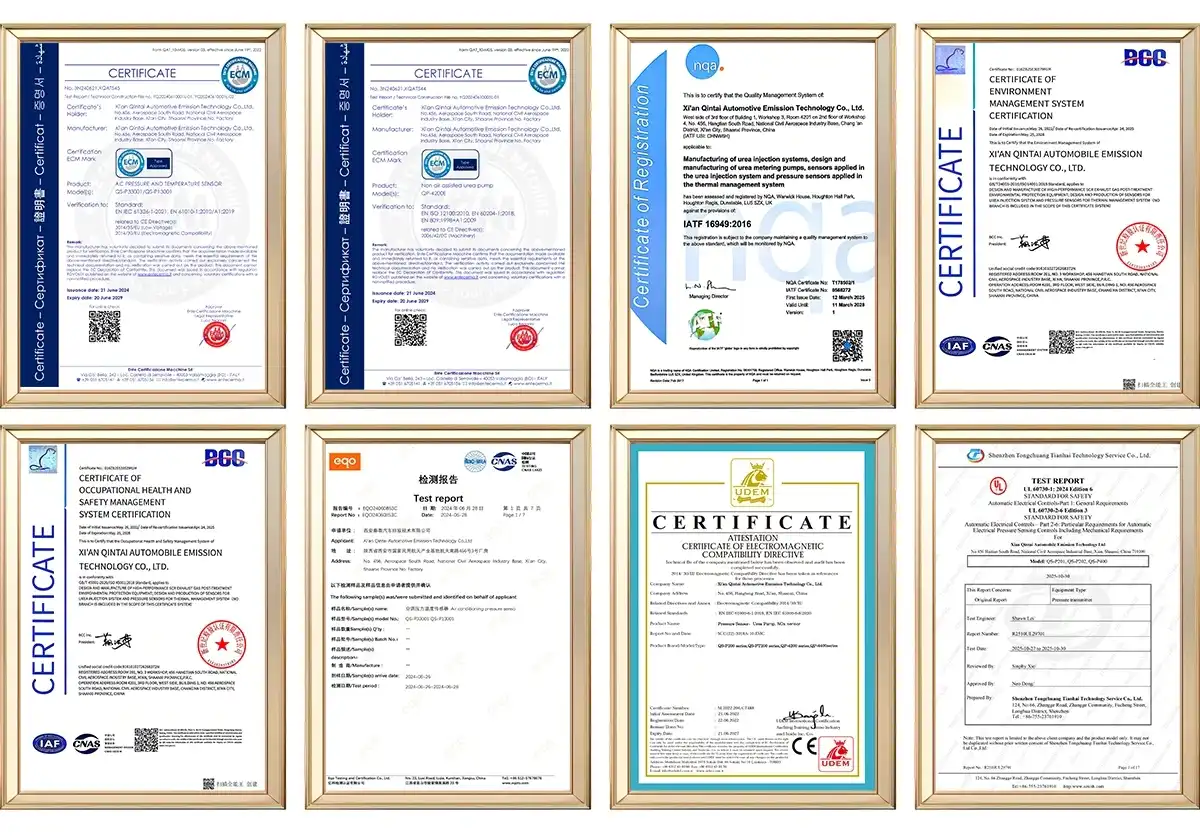
Checking the credentials of the seller guards against fake parts that cause SCR systems to fail early. Genuine OEM providers keep their IATF 16949 certification, which shows that they follow the rules for car quality control systems. ISO 9001 approval isn't enough for important emission control parts like the SCR urea level sensor that need to be able to track back to groups of raw materials. Instead of depending on papers given by the supplier, ask the issuing body for copies of the certificates directly. Check a supplier's claims against patent databases to make sure they own the unique technology. This is especially important when looking at new makers whose prices are much lower than the market average.
Regional Logistics and Support Infrastructure
When buying things in North America, you have to think about tax classifications under HTS code 8409.99 for diesel engine parts. These classifications affect the landed costs of foreign sensors. Lead times from well-known Asian sources are usually between 8 and 12 weeks for ocean freight and customs clearance. This means that smart store buffers are needed to keep production going. European providers often offer faster delivery windows of 4 to 6 weeks, but their prices are 20 to 30 percent higher because of the higher cost of labor in that area. It's just as important to have a good system for after-sales support. Set maximum response times for technical questions and make sure there are field application experts available to fix problems with integration when new models come out.
Installation and Integration Best Practices for Heavy Duty Vehicle Manufacturers
Pre-Installation System Preparation
A well-prepared DEF tank is the first step to successfully integrating sensors. Completely flush the tanks to get rid of any production leftovers that could damage the optical surfaces or capacitive plates. Make sure that the mounting boss measurements match the sensor thread specs. Interfaces that don't match can fail to seal, which can cause DEF to leak and sensors to corrode. Check the route of the electrical harness to make sure it doesn't come close to high-temperature exhaust parts or sharp edges that can wear down the insulation over the life of the car. Write down the standard resistance readings across all connector pins before installation so that you can use them as a guide for fixing in the future.
Mounting Techniques and Calibration Procedures
Place sensors at the sites of the tanks so that foam buildup zones and vortex formation zones are not near the supply outlets. Torque mounting nuts to the manufacturer's specs. If you over-tighten them, the sealing gaskets will be crushed, and if you under-tighten them, vibrations will cause them to come free. Once the mechanical parts are in place, use diagnostic tools to do empty-tank and full-tank calibration rounds to get an accurate level map. Use approved DEF reference samples that can be traced back to ISO 22241 standards to check the concentration readings. Write down the calibration data in the vehicle's build records so that the guarantee can be validated and service can be referred to.
Common Installation Pitfalls and Preventive Measures
A number of repeated mistakes hurt the accuracy and life of the SCR urea level sensor. When sensors are installed backwards, air bubbles get trapped against the detecting elements, which leads to inaccurate results. In places with a lot of road salt, rust speeds up if you don't use dielectric grease on electrical connections. If you don't secure the wire cables separately from the sensor body, vibrations from the car can go straight into the connector connections and cause intermittent problems. Set up installation checklists that include these failure modes and check the quality of the photos at every assembly station to make sure that the quality of the finished product is always the same and that field failure rates are kept to a minimum.
Future Trends and Innovations in SCR Urea Level Sensor Technology
Advanced Materials and Design Evolution
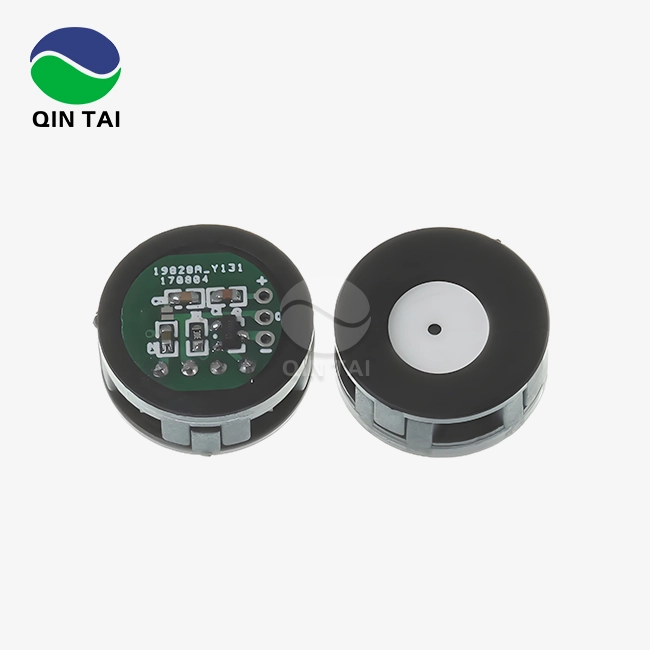
Next-generation sensors use ceramic substrates that can handle DEF's slightly corrosive qualities. This makes them last longer than 150,000 kilometers. Micro-electromechanical systems (MEMS) technology allows for combined multi-parameter measurement in small spaces that are good for electric powertrains that have limited space for storage. Manufacturers are now looking into solid-state sensing elements that don't have any moving parts at all. This is meant to address reliability issues in heavy-duty uses that are subject to high shock loads.
IoT Integration and Predictive Maintenance
Connected car designs let sensors do checks from a distance using cellular or satellite data links. When sensor shift patterns show that calibration limits are getting close, fleet managers get alerts that let them plan preventative repair before emissions compliance failures happen. Machine learning algorithms look at old sensor data from thousands of cars to find flaws in the design and find the best time to change parts based on how they actually work instead of strict schedules. This method, which is based on data, cuts down on maintenance that isn't needed and stops unexpected downtime.
Regulatory Drivers Shaping Development
The new EPA Heavy-Duty Greenhouse Gas Phase 3 rules call for even more NOx reduction, which means that DEF dosing needs to be even more exact. The Heavy-Duty Omnibus rule from the California Air Resources Board includes standards for tamper-detection, which forces sensor designs to include encrypted authentication methods. The European Union's Stage V off-road equipment guidelines include smaller displacement engines in the SCR requirements. This creates a need for cost-effective sensors that can be used in farming and compact building equipment that wasn't required to follow emission controls before.
Conclusion
When choosing the right SCR urea level sensors, you have to weigh technical performance against total purchase costs and the need to follow regulations. Manufacturers that do well in the heavy duty car market put a lot of weight on providers that can show consistent quality through certified production methods, full expert support, and data from actual field use that shows how reliable the product is. As emission standards get stricter around the world and connected car features grow, sensor technology will keep progressing toward combined multifunction units that help with predictive maintenance. OEMs can make the most of these changes while keeping production costs low by forming strategic partnerships with sensor providers with a lot of experience.
FAQ
Q1: How frequently should SCR urea sensors undergo calibration?
A: Sensors on the production line are calibrated in the plant so they are ready to be used for the first time. Every 100,000 kilometers or when diagnostic codes show reading shift of more than ±5%, the field needs to be recalibrated. For calibration processes to work, you need to have access to certified DEF reference solutions and diagnostic tools. These are usually done during big service intervals. Because contaminated DEF speeds up calibration drift, it is important that everyone in the supply chain follows the right way to handle fluids.
Q2: What causes premature sensor failures in heavy duty applications?
A: Crystallized DEF deposits form when sensors are left open to freezing temperatures after wrong shutdown processes. Electrical problems happen when connectors rust in places with a lot of road salt and not enough covering protection. When sensors stick out into paths that off-road trash can reach, they get damaged. To fix these types of failures, installation technicians need to be fully trained and proactive maintenance methods need to be used to check sensor health signs before they completely stop working.
Partner with Qintai for Reliable SCR Urea Level Sensor Solutions
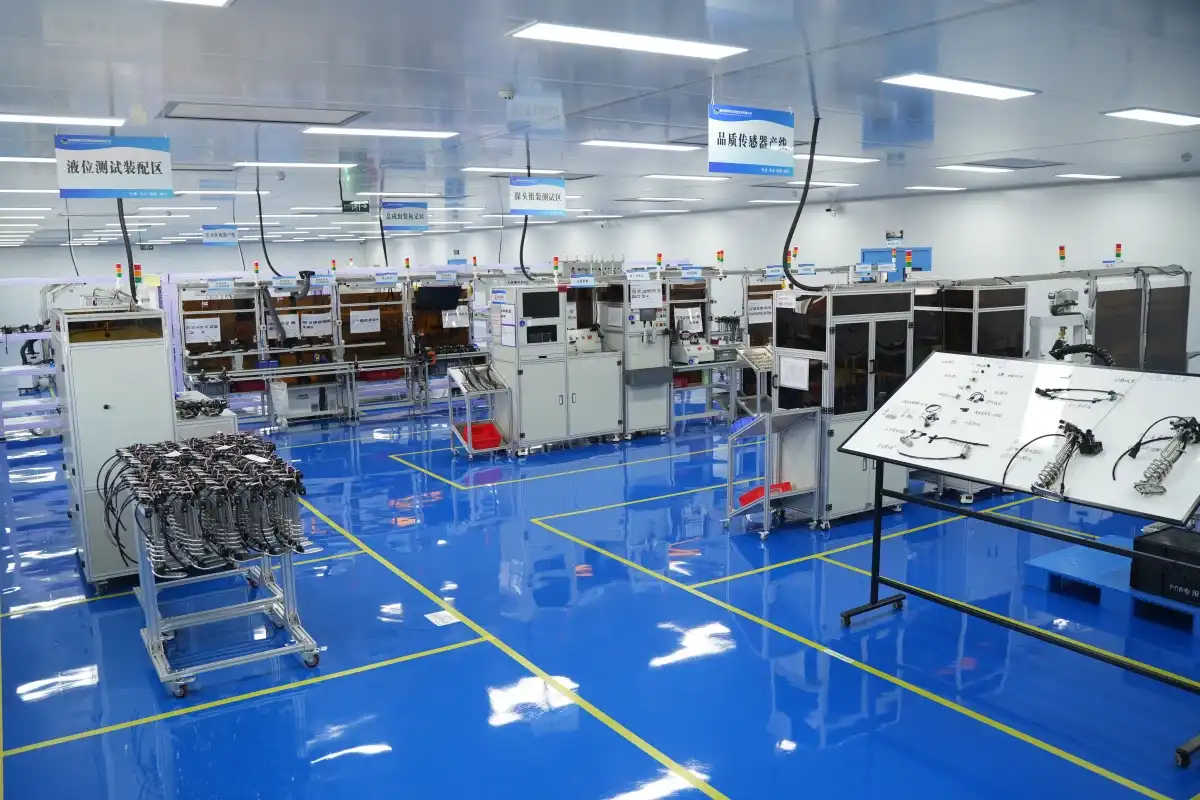
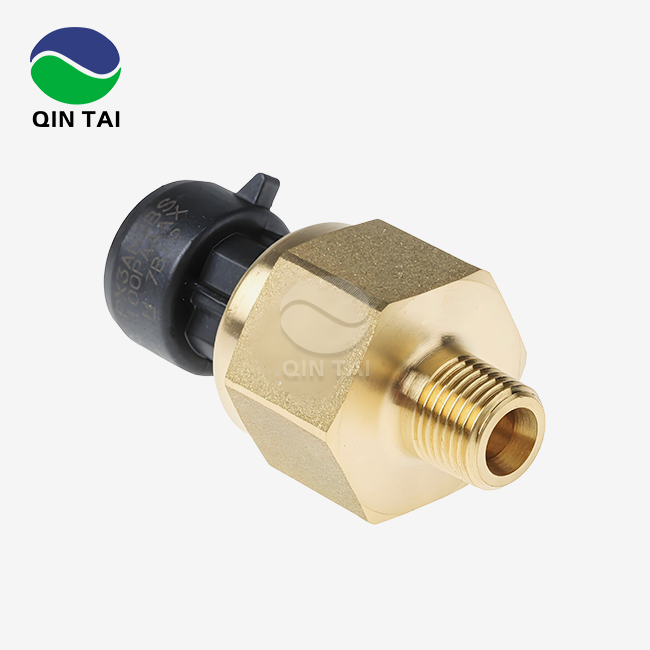
When diesel engine makers look for a reliable SCR urea level sensor source, working with Xi'an Qintai Automotive Emission Technology can help them in many ways. Since 2001, we've become experts in emission control sensors. We have 58 idea patents and are IATF 16949 certified, which means our products are of automotive-grade quality. As the top original equipment manufacturer (OEM) provider for Weichai Power, Yuchai Power, and Quanchai Power, we can produce more than 500,000 units a year while still meeting strict standards for quality.
Our engineering team offers full customization services that include adapting sensor interfaces to custom car designs. They also offer fast prototyping services that cut down on development times. Technical support lasts for the whole duration of a product. Application engineers help with interface problems and training for field service. Contact info@qt-sensor.com to talk about your needs with procurement experts who understand the whole decision-making process, from technical validation to management approval.
References
1. Society of Automotive Engineers International, "Recommended Practice for Diesel Exhaust Fluid Quality and Handling," SAE J2906, 2022.
2. Environmental Protection Agency, "Heavy-Duty Highway Compression-Ignition Engines and Urban Buses: Exhaust Emission Standards," Federal Register Vol. 85, 2020.
3. International Organization for Standardization, "Diesel Engines—NOx Reduction Agent AUS 32—Part 1: Quality Requirements," ISO 22241-1:2019.
4. Automotive Industry Action Group, "Advanced Product Quality Planning and Control Plan Reference Manual," AIAG Publications, 2021.
5. European Automobile Manufacturers Association, "Selective Catalytic Reduction Technology for Heavy Duty Diesel Engines," ACEA Technical Report TR-2023-04.
6. American Trucking Associations Technology and Maintenance Council, "SCR System Maintenance Best Practices for Fleet Operations," TMC Recommended Practice RP 648B, 2023.


Our customers’ satisfaction speaks for our quality — contact us to experience the same reliable service.