- English
- French
- German
- Portuguese
- Spanish
- Russian
- Japanese
- Korean
- Arabic
- Greek
- German
- Turkish
- Italian
- Danish
- Romanian
- Indonesian
- Czech
- Afrikaans
- Swedish
- Polish
- Basque
- Catalan
- Esperanto
- Hindi
- Lao
- Albanian
- Amharic
- Armenian
- Azerbaijani
- Belarusian
- Bengali
- Bosnian
- Bulgarian
- Cebuano
- Chichewa
- Corsican
- Croatian
- Dutch
- Estonian
- Filipino
- Finnish
- Frisian
- Galician
- Georgian
- Gujarati
- Haitian
- Hausa
- Hawaiian
- Hebrew
- Hmong
- Hungarian
- Icelandic
- Igbo
- Javanese
- Kannada
- Kazakh
- Khmer
- Kurdish
- Kyrgyz
- Latin
- Latvian
- Lithuanian
- Luxembou..
- Macedonian
- Malagasy
- Malay
- Malayalam
- Maltese
- Maori
- Marathi
- Mongolian
- Burmese
- Nepali
- Norwegian
- Pashto
- Persian
- Punjabi
- Serbian
- Sesotho
- Sinhala
- Slovak
- Slovenian
- Somali
- Samoan
- Scots Gaelic
- Shona
- Sindhi
- Sundanese
- Swahili
- Tajik
- Tamil
- Telugu
- Thai
- Ukrainian
- Urdu
- Uzbek
- Vietnamese
- Welsh
- Xhosa
- Yiddish
- Yoruba
- Zulu
Sputtered Thin Film Pressure Sensor vs Piezoelectric Sensors
A sputtered thin film pressure sensor and a piezoelectric sensor solve different problems. A sputtered thin film pressure sensor measures strain on a metal diaphragm, so it holds a steady reading for static, slowly changing, and fluctuating pressure over long periods. A piezoelectric sensor produces an electric charge when force acts on a crystal or ceramic. That makes it a good fit for shock, vibration, combustion, and pressure pulses, but it cannot hold a true static value. For diesel engine, aftertreatment, and generator set programs, I usually pick thin film for continuous monitoring and piezoelectric for short test events. Many projects use both.
Sputtered Thin Film Pressure Sensor vs Piezoelectric Sensors: Which Technology Fits Your Application?
The Core Difference in Measurement Principle
Both sputtered thin film pressure sensors and piezoelectric sensors can turn pressure into an electrical output, but they do it in various ways. A thin film design is used to glue the resistance strain parts to a metal diaphragm. When the diaphragm is pressed on, the parts stretch, which changes how much resistance they have. That change will not go away as long as the pressure stays the same. A piezoelectric part does not work like other parts. The electric charge moves in ceramics and crystals when you press on them. It takes a while for the charge to leave the sensor and wire. Most piezoelectric units can track changes well, but because they leak, their output goes down to zero when the load stays the same. This one fact is what most decisions about the engine and exhaust systems are based on.
Where Each Technology Is Strongest?
I put the levels into groups based on what they would learn. The fuel supply, the oil pressure, the hydraulic lines, and the exhaust differential pressure are all signals that can last for seconds, minutes, or hours. They work with a thin film unit. It can handle events that happen between a few microseconds and a few milliseconds, such as knock, blast, and in-cylinder combustion tests. The two also respond to frequencies, overloads, and temperature differences in different ways. Most of the time, thin film transducers send out a signal that a control unit can read right away. These units need a charge amplifier before they can work. First, there is the type of signal. Next, there are the costs and packaging.
When a Hybrid Setup Makes Sense?
Some shows need to see both sides of the pressure. While the engine is being built, the R&D team might put a piezoelectric monitor in the cylinder to study the time of combustion. The same group could put these thin film sensors on the oil gallery, the fuel line, and the part that comes in to the aftertreatment system. During the whole duty cycle, they would record values that stayed the same. What's going on in the cylinder quickly? These two sets of data show how they connect to trends in the rest of the system that change more slowly. Factory engines only keep the thin film sensors to keep an eye on things all the time once the design is set in stone. Because of this split, the price of proof stays cheap.
How Does a Sputtered Thin Film Pressure Sensor Work?
Construction of the Sensing Core
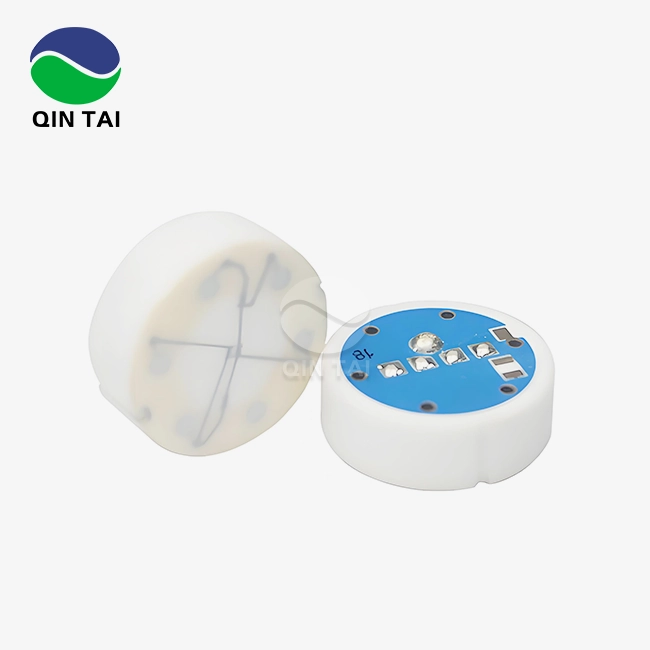
The first part of a sputtered thin film pressure sensor is made of steel and is springy. A layer of insulation is put on top of that element in a chamber with a high vacuum, and then a layer of a metal alloy makes it sense things. The layers don't need glue to stick together because they are very close to each other. When you load something for a long time, an adhesive layer can creep. That stops it. Four resistors make up the detecting layer. They connect to each other to form a Wheatstone bridge. Once the resistors have been cut with a laser, they are balanced and tested to see how they react to changes in temperature. Most of the time, laser or plasma welding is used to connect the sensor core to a pressure port made of stainless steel. There is no longer a need for oil fill and O-ring seals.
From Diaphragm Strain to Output Signal
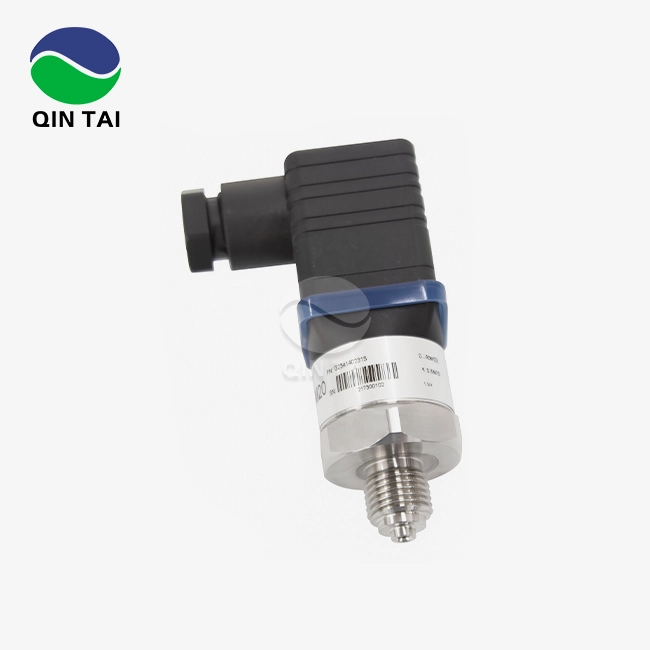
When you press on the piece, only a very small part of it bends. The thin film resistors stretch, which changes how much resistance they have. The bridge changes that shift into a few millivolts of electricity to track the pressure. After that, a small circuit changes and boosts the signal. Most transmission outputs in business are between 0 and 5 V, 0 and 10 V, 4 and 20 mA, and digital links like CAN or J1939. I²C or SPI are also often used for OEM boards. Users can pick the type of output, connection, and pressure port ahead of time. These things should be checked out during the quote stage because Qintai can make changes based on the application.
How Piezoelectric Construction Differs
A thin diaphragm is put in front of a quartz crystal or piezoceramic element in a piezoelectric pressure sensor. When you put force on an element, it gives off a charge equal to that force. It needs either a built-in charge amplifier or a voltage amplifier because the charge is so small. Also, the wire needs to be low in noise and have a high insulator strength. Any signal loss is bad. This design is liked by people who study combustion because it works quickly. Because of the same design flaw, the unit has trouble maintaining a steady pressure. The charge can't be kept for ever. The extra parts cost more and need to be connected to a production car with more care.
Performance Comparison: Sputtered Thin Film vs Piezoelectric Pressure Sensors
Stability, Accuracy, and Drift
For steady readings, thin film works best. The glued film structure keeps the glue from spreading, and the maker's material says it can be used again and again and will stay stable for a long time. I ask all of my suppliers to calibrate their equipment in the plant so that they can give me a test report that includes non-linearity, hysteresis, repeatability, and temperature factors. A piezoelectric sensor can be very accurate during events that only last a short time, but over time, it loses power. Drift is the most important number to look at. If your control unit needs to decide every second based on pressure, drift is more important than peak speed. Check the manual to make sure that the accuracy is the same at all temperatures, not just room temperature.
Frequency Response, Overload, and Vibration
Piezoelectric devices have the best raw frequency reaction most of the time. A lot of them naturally resonate above 100 kHz, which lets them pick up knock and combustion spikes. They work quickly too, since there is no oil fill and the pressure is straight on the steel core. Still, they are chosen for signs that change, not for traces of burning. Heavy loads and vibrations are said to not cause leaks in fully soldered thin film bodies that can handle high peak pressure, shock, and rust. You can always compare the burst pressure, overload rating, and pressure-cycle life on the datasheet. In order to make sure they are correct, I check the published numbers against the real ones. This is because these numbers are different for each model.
Temperature Range and Output Architecture
Limits on temperature depend on how the item is made. Most of the time, thin film sensors can be used in temperatures between -40°C and +150°C for the medium, -40°C to +125°C for the atmosphere, and -50°C to +150°C for storage. Some builds can go as high as 200°C for the clay. Because some piezoelectric designs can work at high temperatures, they are useful for close burning. However, they may need special amps and mounts. To the output side of a thin film unit, it can send bridge, voltage, current, or digital data straight away. It is usual for a piezoelectric unit to need special handling and ways to boost the charge or voltage. It changes how much the parts, wires, and board space cost because of that difference.

Application-Based Selection: When Should You Choose Each Sensor?
Where Thin Film Sensors Fit
A sputtered thin film pressure sensor works well for things that will be used for years with loads that change. Lines are often used for hydraulics and pneumatics, pumps, compressors, safety systems, and process control. In diesel systems, it can be used to keep an eye on oil pressure, fuel flow, and pressure linked to the SCR. It is also used by aftertreatment integrators to measure the pressure across a diesel particulate filter. How full the filter is can be seen by a steady difference reading. In backup power rooms and mines, generator sets need to have steady power and be built to last a long time. Its small size is also useful for mobile tools and small hydraulic blocks that need to save space.
Where Piezoelectric Sensors Fit
Pick a piezoelectric pressure monitor for a quick event. Burn study is the most usual case. Heywood's engine guide says that engineers can study heat release, knock, and failure by keeping track of cylinder pressure crank angle by crank angle. The idea behind shock tubes, blast tests, and measuring impacts is the same. Most of the time, you'll find these sensors on test cells and development engines because they need amplifiers and careful wiring. A piezoelectric unit is not the right tool for keeping an eye on a pressure line for thousands of hours, even though the speed looks good on paper.
OEM Integration Factors
This is what the monitor needs to do: it needs to fit the production line for diesel OEMs. Find out what kind of connector it is, what size the body is, how it is calibrated, and what tests it has passed. The annual volume is important because a supplier needs sputtering and calibration to be done over and over again at production scale. People who buy aftermarket items also like that the parts are simple to find and put together and that the cars don't break down very often.
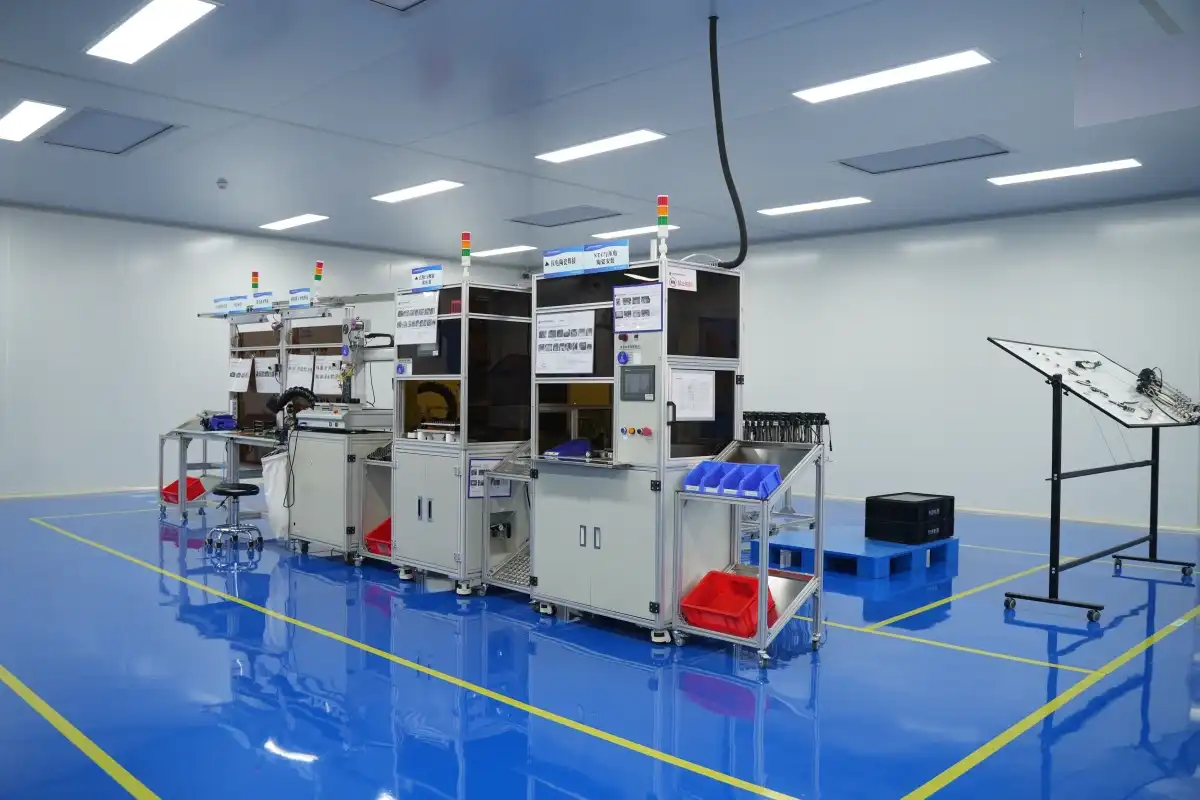
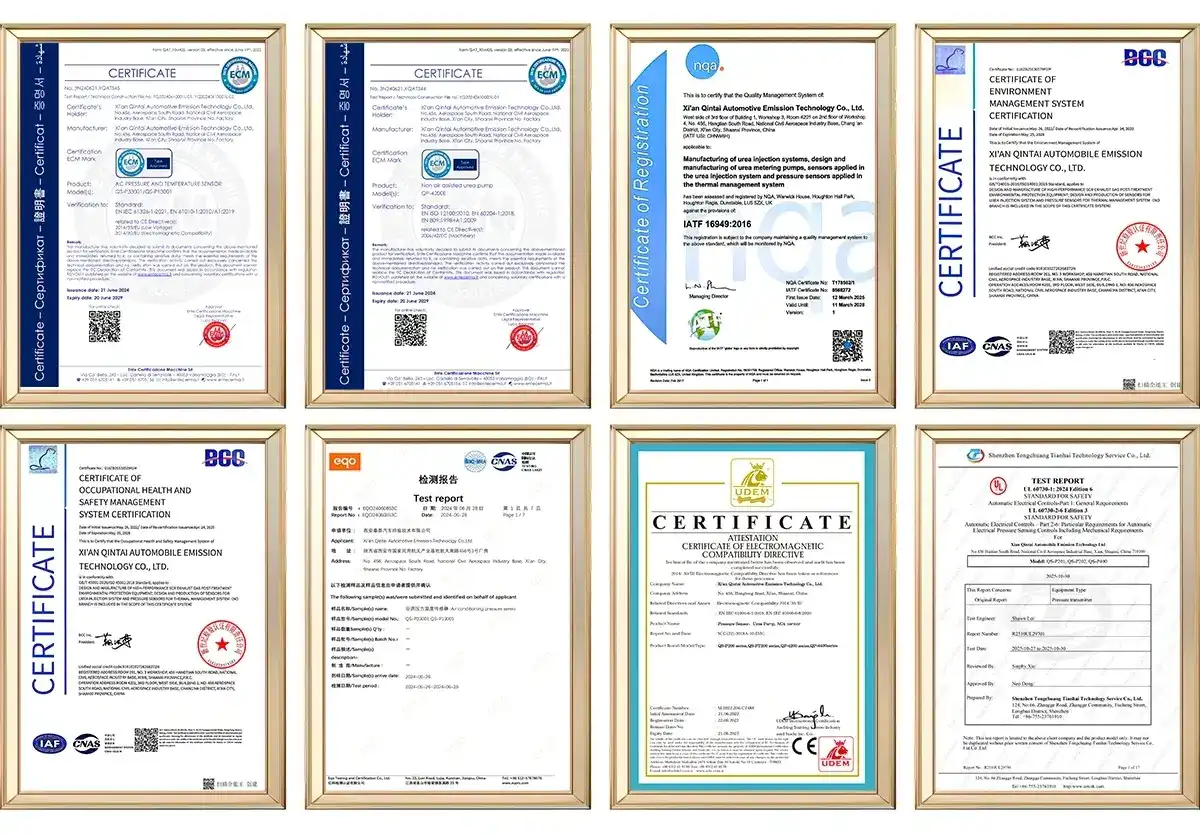
Plans to cut emissions are also putting pressure on them. The US made rules about heavy-duty NOx that are stricter. These rules were made by the EPA in 2023 and will apply to models made after that year. There were also strict rules in China VI and Euro VI. For as long as the engine lasts, the aftertreatment monitors must always work right. ISO9001 and IATF16949 standards mean that Qintai can help with design, production, and more. They can do this as an OEM or ODM service.
How to Choose a Sputtered Thin Film Pressure Sensor and Approve a Supplier?
Define Conditions and Compare Specifications
You should make a clear list of how the business will run before you ask for quotes. Write down the standard range, the highest continuous pressure, the overpressure, the burst requirement, the vacuum, and the pulsation. Also write down the type of pressure (gauge, absolute, or sealed gauge). So that the wet material and port style meet, you need to add the medium, which could be diesel, engine oil, urea solution, or air. Pick a range where the normal pressure is in the middle and there is room for spikes.
The next thing you should look at is the accuracy, nonlinearity, hysteresis, repeatability, zero balance, and temperature coefficients. Keep an eye on both the operating temperature range and the compensated temperature range as well. Check the output, source voltage, connector, and security against water getting in. Ask for REACH and RoHS papers as well as records of tests. Lastly, find out the total cost of ownership, which includes the price of the unit plus the cost of repairs, the warranty, and the time it takes to run.
Supplier and Manufacturer Evaluation
A business that makes sputtered thin film pressure sensors should have control over sputtering, make sure the diaphragm material is regular, do their own calibration, be able to track their products, and have a quality system like IATF16949 that they can show. Always check to see if the company lets you make your own ports, outputs, overload ratings, wetted materials, lead times, and minimum order quantities. Don't compare providers based on where they are located; compare them based on what they can do. Qintai is a national tech company that has been around since 2001. It has taken out 58 idea patents and has certificates from ISO9001, IATF16949, CMC, Ex, UL, CE, REACH, and RoHS. We sell to Weichai Power, Yuchai Power, and Quanchai Power, and our goods go to more than 60 different countries and areas.
Avoid Common Mistakes and Validate Before Approval
The same mistakes are being made by teams. Some people choose a piezoelectric monitor because it keeps the pressure fixed for a long time. They then watch the signal fade. Some people pick based on nominal range, which means they miss events like bursts, spikes, or vacuums. A lot of people don't care about electromagnetic interference, thermal error, media compatibility, or installation stress. There are four things I do to stay away from these. My guess is that the signal is either dead, pulsing, shock, or fire.
Which would you pick? Piezoelectric, thin film, or both? It's my job to keep track of what mechanical, environmental, electrical, and installation work needs to be done. Then I look at the warranty, the lead time, and the price. It is important to test the end system for things like drift, overload, temperature cycle, vibration, EMC, and media before giving it the green light. You should also ask for test results, samples, and records of how the system was used. Because engineering picks the technology, purchasing negotiates the terms, and management signs off on the supplier, each group needs its own proof.
Conclusion
One way to get different kinds of information is to make a sputtered thin film pressure sensor. There are thin film sensors that can measure the stress on a metal part and keep the data the same even when the stress changes. They don't go away or need oil fills or plugs because they are fused together. You can hit piezoelectric sensors hard and they let go of their charge very fast. They can be used in shocks, explosions, and fires because of this. Even so, they can't hold static electricity because their charge leaks. The comparison makes it clear that drift, frequency response, temperature range, and output electronics should all play a role in the decision. Diesel engines, aftertreatment systems, and generator sets should be watched over for a long time with thin film sensors. It's better to test with piezoelectric sensors. An all-in-one setup meets both needs, and proof testing backs up the choice.
FAQ
Is one technology better than the other?
Not at all. A sputtered thin film pressure sensor is better for measuring steady pressure, while a piezoelectric sensor is better for measuring fast changes in pressure. How long the pressure stays the same and how fast it changes will tell you what to do.
Why can't piezoelectric sensors measure constant pressure?
They send electricity to the monitor, wire, and electronics. Once the load stays the same, the output drops until it hits zero. This means that the reading does not match the real pressure.
Can a thin film sensor measure fluctuating pressure?
A thin film monitor might be able to tell when the pressure changes. Yes. Pressure has a direct effect on the steel heart, which makes it easy for the watch to keep track of pulses. Of course, you still need a piezoelectric sensor to find blasts and gas leaks.
What information do I send for a quotation?
Please include the pressure range, temperature, medium, output type, size, number, certifications needed, and a plan for how the product will be made. An engineer can give you a good quote and a good plan if they have these information.
Request a Sputtered Thin Film Pressure Sensor Recommendation
Please send Qintai an email at info@qt-sensor.com with details about how you are using the sensor. What is the pressure range, temperature, medium, output, and yearly volume? Our engineers will look at datasheets and talk about custom OEM choices to help you find a good sputtered thin film pressure sensor. You can get in touch with us if you need a sputtered thin film pressure sensor for a fuel, aftertreatment, or generator set program.
References
1. Handbook of Modern Sensors: Physics, Designs, and Applications, 2016
2. Piezoelectric Sensorics, 2002
3. Sensor Technology Handbook, 2005
4. Internal Combustion Engine Fundamentals, 2018
5. The Measurement, Instrumentation, and Sensors Handbook, 1999
6. U.S. EPA, Control of Air Pollution From New Motor Vehicles: Heavy-Duty Engine and Vehicle Standards, Federal Register, 2023

Our customers’ satisfaction speaks for our quality — contact us to experience the same reliable service.