- English
- French
- German
- Portuguese
- Spanish
- Russian
- Japanese
- Korean
- Arabic
- Greek
- German
- Turkish
- Italian
- Danish
- Romanian
- Indonesian
- Czech
- Afrikaans
- Swedish
- Polish
- Basque
- Catalan
- Esperanto
- Hindi
- Lao
- Albanian
- Amharic
- Armenian
- Azerbaijani
- Belarusian
- Bengali
- Bosnian
- Bulgarian
- Cebuano
- Chichewa
- Corsican
- Croatian
- Dutch
- Estonian
- Filipino
- Finnish
- Frisian
- Galician
- Georgian
- Gujarati
- Haitian
- Hausa
- Hawaiian
- Hebrew
- Hmong
- Hungarian
- Icelandic
- Igbo
- Javanese
- Kannada
- Kazakh
- Khmer
- Kurdish
- Kyrgyz
- Latin
- Latvian
- Lithuanian
- Luxembou..
- Macedonian
- Malagasy
- Malay
- Malayalam
- Maltese
- Maori
- Marathi
- Mongolian
- Burmese
- Nepali
- Norwegian
- Pashto
- Persian
- Punjabi
- Serbian
- Sesotho
- Sinhala
- Slovak
- Slovenian
- Somali
- Samoan
- Scots Gaelic
- Shona
- Sindhi
- Sundanese
- Swahili
- Tajik
- Tamil
- Telugu
- Thai
- Ukrainian
- Urdu
- Uzbek
- Vietnamese
- Welsh
- Xhosa
- Yiddish
- Yoruba
- Zulu
Top Automotive Pressure Sensor OEM Suppliers - Qintai
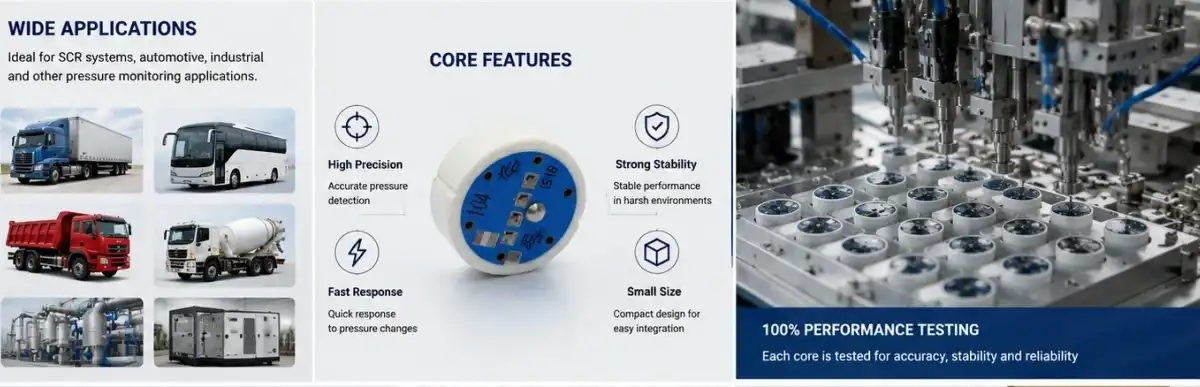
When looking for parts for diesel engines and emission control systems, picking the right pressure sensor supplier affects not only the quality of the parts but also how well they will work in the long run. Qintai is a specialized OEM with more than 20 years of experience. They make vehicle pressure sensors that are designed to work in heavy-duty trucks, construction equipment, farming equipment, and generator sets, among other places. Our sensors meet the emission standards for China VI and Euro VI. They can also be mass-produced, go through strict certification, and come with quick technical support that buying managers and R&D engineers count on for important aftertreatment systems.
Understanding Automotive Pressure Sensors: Principles and Applications
Precise pressure measurement is important for modern diesel engines because it helps them burn fuel more efficiently, keep pollution under control, and keep expensive parts from getting damaged. Pressure sensors turn physical force into digital signs that engine control units use to change the timing of fuel injection, the amount of boost from the turbocharger, and the rates of selective catalytic reduction (SCR) dosing.
How Different Sensor Technologies Function?
Capacitive pressure sensors work by picking up changes in the electrical capacitance between two metallic plates that are divided by a dielectric. When pressure makes a flexible diaphragm bend, the distance between the electrodes changes. This changes the capacitance value, which can be found using the formula C = ε₀εᵣA/d. Because of their high accuracy and temperature stability, this design makes capacitive sensors perfect for tracking waste gases in places where temperatures change more than 600°C. Unlike piezoresistive alternatives, which change performance a lot with temperature, capacitive alternatives work the same in all kinds of harsh circumstances.
Piezoresistive sensors use silicon or clay bases that have strain gauges built into them. When these bases are put under mechanical stress, the resistance changes. When reaction times of less than 1 millisecond are needed, these devices are great for tracking changes in dynamic pressure in common rail fuel systems. In heavy-duty uses, ceramic-based piezoresistive sensors last longer than silicon peers because they can handle corrosive diesel particulate filter (DPF) regeneration conditions better. They can work for more than 10,000 hours.
Critical Automotive Applications
Differential pressure sensors in SCR aftertreatment systems check the flow resistance across diesel oxidation catalysts and particulate filters. If the flow resistance is too high, the sensors will start regeneration cycles before too much backpressure hurts the turbochargers. Absolute pressure sensors check the barometric pressure and the vacuum in the intake pipe to figure out the air mass flow rates. This makes sure that the right amount of air and fuel is used, which lowers NOx and particulate matter emissions. Industry studies show that tire pressure monitoring systems (TPMS) lower fleet running costs by 3–5% by stopping lost fuel efficiency and early tire wear.
Calibration Standards for Emission Compliance
To get China VI and Euro VI approval, pressure sensors must stay accurate within ±1% of the full scale at temperatures ranging from -40°C to +125°C. Qintai's calibration lab checks multiple points against NIST-traceable standards and keeps track of tracking chains that meet IATF 16949 audit requirements. We test each batch of sensors in conditions that are similar to 500,000 km of real-world use, including thermal shock, shaking, and electromagnetic interference. This makes sure that the sensors' performance stays stable over the life of the car.

Top Automotive Pressure Sensor OEM Suppliers Overview
There are both large, well-known international companies and smaller, more specialized companies in the global market for pressure sensors. When procurement teams know what each provider does well, they can better match technical needs with supply chain skills.
Leading Global Manufacturers
Bosch Sensortec makes MEMS-based sensors that are perfect for high-volume automatic assembly and are used in most passenger vehicles. Instead of the industrial-grade durability needed for heavy-duty diesel engines, their product line focuses on making things smaller and integrating household gadgets. Honeywell's TruStability series has great long-term stability, but it usually has long wait times and low minimum order amounts, which can be hard for mid-sized OEMs that need to be able to change their production plans.
Sensata Technologies makes sensors for harsh environments that are used in business cars. Their housings are strong and their joints are sealed so that hydraulic fluid can get to them. But their stock product lines don't let you change things much when it comes to mounting interfaces or CAN bus protocols that are only used on Chinese engine systems. TE Connectivity is great at making connectors, but it gets its sensing elements from outside sources, which makes the supply chain more complicated when parts are in short supply.
Why Qintai Leads in Diesel Engine Applications?
Since its founding in 2001, Qintai has only worked on diesel engine aftertreatment systems, learning a lot about what pollution control sensors need to do their job. We are the main supplier for China's three biggest diesel engine makers, Weichai Power, Yuchai Power, and Quanchai Power. This gives us the largest part of the local heavy-duty market. This situation shows that we can provide sensors that pass strict OEM validation tests while keeping prices low by using economies of scale.
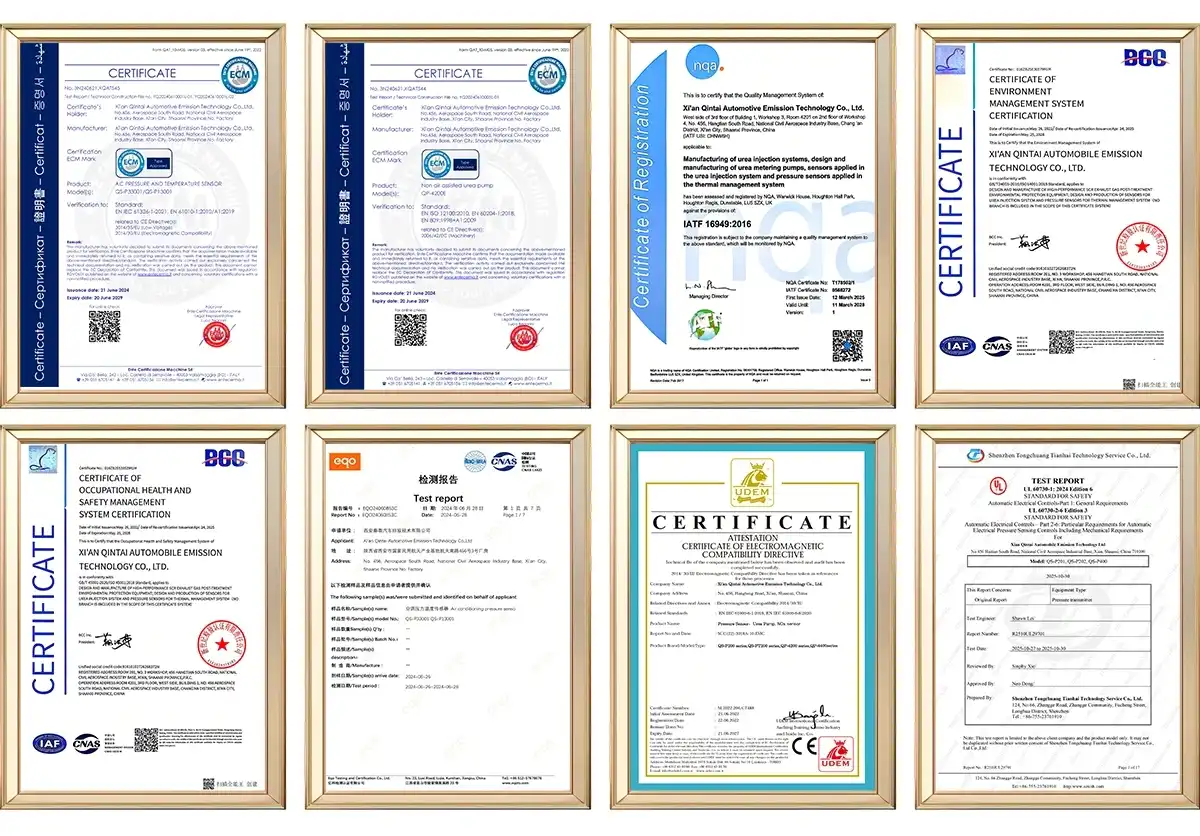
Our 58 idea patents cover special compensating algorithms that fix drift caused by temperature, sealed packing methods that keep ammonia out of SCR systems, and diagnostic routines that tell the difference between sensor failures and system malfunctions. These new ideas solve problems in the real world that general instrument makers don't think of. Our quality control systems are in line with international vehicle standards, as shown by our ISO9001, IATF16949, CMC, Ex, UL, CE, REACH, and RoHS certifications. When compared to off-the-shelf options, our independent research and development team works directly with OEM engineering departments to adjust sensor properties before mass production starts. This cuts down on development times by 30–40%.
Supplier Selection Criteria That Matter
To be successful at buying, you need to evaluate sellers in five different ways. Failure mode and effects analysis (FMEA), production part approval processes (PPAP), and statistical process control (SPC) are all necessary for quality assurance. These steps keep faulty units from getting to the assembly lines. Innovation capability is what sets partners who suggest improvements based on field performance data apart from suppliers who only react to changes in specifications. For prices to be clear, costs must be broken down in a way that makes value engineering possible without sacrificing stability.
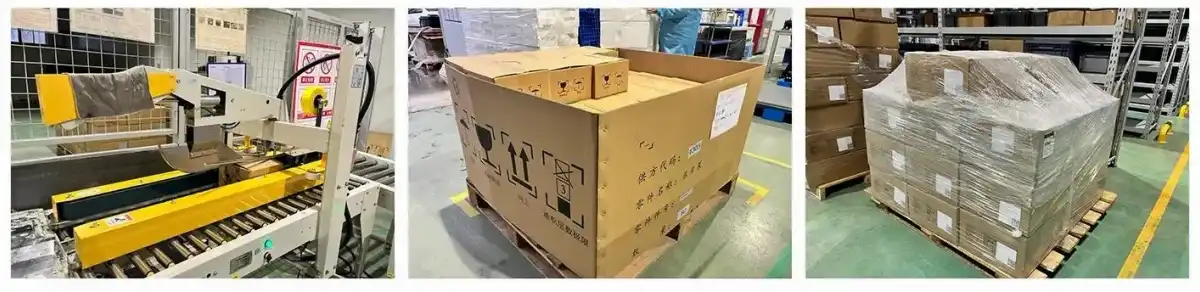
How well deliveries go affects how much it costs to keep supplies and how flexible production schedules can be. Qintai keeps strategic buffer stocks of popular sensor variants, which lets us ship pressing orders faster than usual within 72 hours. Our mass production capacity can range from 10,000 to 500,000 units per month, depending on what customers expect. Total cost of ownership is based on how quickly and effectively after-sales service is provided. Our technical support team offers troubleshooting help in English within 12 hours, and application engineers do on-site failure analysis when insurance claims need to find the root cause.
Comparison of Pressure Sensor Technologies for Automotive Applications
To choose the right pressure sensor technology, you have to match the physical principles to the measurement problems that come up in diesel engines and emission control systems.
Capacitive Versus Piezoresistive Architectures
Because capacitance is based on geometric shapes instead of material qualities that change with temperature expansion, capacitive devices are more stable over a wide range of temperatures. Because of this, they work great in exhaust gas situations where temperatures change quickly during DPF renewal. Because they use very little power—usually less than 5 milliwatts—they work well with battery-powered tracking systems that check on the health of vehicles when the power is off for a long time. There are no moving mechanical parts in fixed generator sets, so they last longer than 15 years.
Piezoresistive sensors respond more quickly—within 0.5 milliseconds—and can pick up pressure changes during fuel pumping events that capacitance sensors can't. In cost-conscious repair uses, their easier signal conditioning circuits make the system less complicated. But piezoresistive elements have temperature factors that mean they need active adjustment networks. These networks add more parts and make failure points more likely.
Silicon Versus Ceramic Sensing Elements
Precision semiconductor manufacturing lets silicon devices achieve tight tolerance control and batch-to-batch uniformity, which is very important for mass production where calibration costs need to stay low. Their small sizes allow them to fit into engine areas that are limited in room, which is common in farm equipment. Silicon isn't very good at resisting chemicals. For example, diesel exhaust vapor that contains sulfuric acid will break down its performance in just 2,000 hours without any protective layers.
In SCR urea injection systems, where ammonia fumes damage normal materials, ceramic sensors can handle the harsh conditions. Alumina and zirconia ceramics keep their shape at temperatures above 800°C, which lets them be directly installed in exhaust pipes for tracking combustion in real time. Ceramic is a more expensive material, but it is worth it in situations where replacing sensors involves taking emission control units apart, so longevity is very important.
Analog Versus Digital Output Formats
In retrofit situations where the old engine control units assume standard 0-5V or 4-20mA signals, analog voltage or current outputs work well. Because they are so simple, they are easier to fix with regular multimeters when they are being used in the field. Digital sensors with CAN, LIN, or I²C connections have microcontrollers built in that do temperature adjustment, linearization, and diagnostic tasks. This means that you don't need to use as many external parts. Digital protocols also support more advanced features, such as data logging and warning levels that can be programmed. These features make predictive maintenance better.
Both output types from Qintai have the same sensing elements, so customers can standardize the mechanical connections while changing the electronic specs to fit different car platforms. When OEMs switch from old designs to new electronic systems, this freedom speeds up qualification testing.
Wireless Sensor Networks for Fleet Management
New battery-powered wireless sensors get rid of the need for wiring cables in retrofit emission tracking systems. This makes installation 60% easier than with hardwired options. Connectivity through Bluetooth Low Energy and LoRaWAN lets pressure data stream in real time to fleet management platforms, which finds DPF systems that aren't working right before they completely block. The capacitance sensor uses little power, so the wireless node battery lasts for 5+ years, which is about the same amount of time that big trucks usually need to be serviced.
Procurement Guide for Automotive Pressure Sensors with Qintai
Effective procurement methods cut down on lead times and make sure that technical requirements are met when pressure sensors are made. When you know how to work with specialized OEM providers, the time it takes to go from specifications to production delivery is shortened.
Initial Inquiry and Technical Consultation
When you call Qintai, giving us detailed information about the application speeds up the process of making a suggestion. Some important specs are the working temperature range and overpressure limits, the pressure range and overpressure limits, the mounting interface dimensions, the electrical connection types, and the output signal formats. Our engineering team compares these parameters to our standard product line to find quick answers or suggest changes to current designs that will meet your needs without the need for custom tooling.
We provide detailed datasheets that list accuracy requirements, temperature coefficients, response times, proof and burst pressure rates, and the results of outdoor testing. These papers help your own design review processes and give you the traceability proof you need for ISO certification audits. Our quality certificates show that we meet the standards of the car business, which makes it easier for you to find suppliers.
Customization Capabilities and Sampling
Qintai's OEM/ODM services meet specific needs that can't be met by standard store items. We change the angles of the pressure ports, the electrical pinouts to fit unique harnesses, the output voltage ranges for certain analog-to-digital converter inputs, and the custom CAN message forms that work with your vehicle's network protocols. Within three weeks, our prototyping team makes proof samples that come with test results that confirm how well they meet your requirements.
Research and development (R&D) engineers can do lab tests and environmental qualification on samples before investing in production tools. To check batch-to-batch consistency, which is important for automated assembly lines with small process windows, we suggest buying 10 to 20 samples from different production lots.
Bulk Purchasing and Production Scheduling
What you pay for mass production depends on how many items you buy, how you pay, and when you need them. When compared to spot purchases, annual blanket orders with quarterly releases usually save between 15 and 20 percent of the cost while ensuring capacity allocation during busy times. Qintai's supply chain management system keeps track of the inventory amounts of raw materials and production schedules. This way, customers can see the progress of their orders from the time they are confirmed to the time they are shipped.
We keep strategic stock levels of high-volume sensor types that are used on a number of OEM systems. This lets us respond quickly to changes in forecasts without having to pay extra for expedited shipping. Our transportation partners offer consolidated shipping options that lower freight costs for customers who order more than one line of products. This makes your landing cost more competitive.
Certification Documentation and Compliance Support
Full material reports, conflict minerals reporting, and REACH/RoHS safety statements are needed to follow emission regulations. Qintai gives you these papers in standard formats that work with the main car OEM websites. This makes it easier for you to check for compliance. Our quality management system makes records that show how each production lot was made. These records are needed for warranty claim reviews and product recall procedures.
We help customers with their specific testing needs by setting up third-party validation testing at approved labs and taking care of sample filing and results paperwork so that your approval processes go smoothly. Customers who are going into new geographic areas with unknown certification standards find this service especially helpful.
Troubleshooting and Maintenance Best Practices for Automotive Pressure Sensors
Even when correctly stated, pressure sensors can sometimes have performance problems because of mistakes in installation, system failures, or exposure to environments that are too harsh. Systematic testing methods quickly find the root causes, which cuts down on car downtime and upkeep costs.
Common Operational Issues and Solutions
Signal drift over time is often a sign of diaphragm wear from chemical attack or repeated pressure cycles. If drift goes beyond the allowed limits, the sensor output is compared to a measured reference gauge at known pressure places. If the values aren't lining up right, it's likely that electrical noise from the ignition system or the generator charging circuits is interfering. Most interference problems can be fixed by checking the continuity of the twisted-pair shielding and adding ferrite beads to the sensor power leads.
Zero-pressure offset changes are a sign that the temperature adjustment circuit is broken or that water is getting into the electronic spaces. By measuring sensor resistance over a range of working temperatures, you can tell the difference between component breakdowns and environmental entry. Complete signal loss can be caused by rust in the joint, damage to the wire harness, or a crack in an internal element. Visual inspection usually shows clear mechanical damage, while continuity testing finds open circuits.
Calibration Verification and In-Service Testing
The accuracy of measurements is kept up throughout the sensor's working life by checking the calibration once a year. Connect sensors to pressure sources that are set to give 0%, 50%, and 100% full-scale values. Then, record the output signals while the temperatures stay stable. Deviations greater than ±2% mean that the setting has changed, and the sensor needs to be replaced. By comparing several sensors from the same production lot, you can tell the difference between manufacturing changes that happen over time and component degradation that happens over time.
Portable pressure calibrators let you check things in the field without taking sensors off of cars, which saves time and effort on maintenance. Keep track of degradation trends that show when something is about to break before it does, using maintenance management tools to record testing results. This cautious method stops expensive breakdowns on the side of the road and fines from the government.
Engaging OEM Technical Support
When internal resources for fixing run out, Qintai's technical support team offers online diagnostic help by looking at sensor output waveforms, installation configurations, and system integration parameters. Send full accounts of the symptoms and any supporting data to info@qt-sensor.com. Our engineers will get back to you within 12 hours with diagnostic suggestions or to ask for samples for failure analysis.
For 24 months after delivery, our guarantee program covers production flaws and replaces sensors that fail too soon at no extra cost. When units are sent back, they are tested destructively to find out how they failed. The results are then shared in full reports that help designers make better products in the future. This process of ongoing improvement makes sure that our sensors keep up with stricter emission rules and tougher working conditions.
Conclusion
Selecting automotive pressure sensor suppliers involves balancing technical performance, manufacturing quality, cost competitiveness, and supply chain reliability. Qintai's specialization in diesel engine aftertreatment applications delivers sensors engineered specifically for emission control challenges that generic suppliers overlook. Our position as China's leading OEM provider reflects two decades of continuous innovation, rigorous quality management, and responsive customer support. Whether you're designing next-generation SCR systems, sourcing replacement sensors for aftermarket distribution, or specifying components for generator set applications, Qintai offers the technical expertise and production capacity to support your success in demanding heavy-duty environments.
FAQ
What qualifications should I verify when evaluating pressure sensor suppliers?
Make sure that the providers you're considering have ISO9001 and IATF16949 certifications, which show that they have quality management systems that meet the needs of the car business. Look over test reports that show how well the product worked in situations like changing temperatures, vibrations, electromagnetic interference, and chemical exposure that are important to your application. To keep things simple for regulators in Europe and North America, ask for material statements that show REACH and RoHS compliance.
How does Qintai ensure sensor accuracy across temperature extremes?
We use multi-point temperature compensation methods that were created after a lot of tests at temperatures ranging from -40°C to +125°C. At five different temperature levels, the calibration of each pressure sensor is checked individually. For digital outputs, correction factors are written into embedded microcontrollers, and for analog outputs, laser resistor adjustment is used to trim the signals. The accuracy of our production process control stays within ±1% of full scale across all working ranges.
Can Qintai customize sensors for proprietary mounting interfaces?
Our engineering team often changes the mechanical designs of sensors to fit the mounting arrangements, pressure port positions, and electrical socket types that each customer needs. We keep CAD libraries of popular OEM interfaces, which speeds up design changes, and within three weeks, our prototyping services can make proof samples. When order numbers go over 5,000 units per year, customization costs stay fair because the cost of the tools is spread out over many production runs.
What lead times should I expect for bulk orders?
For orders of less than 500 units, standard catalog sensors ship within 72 hours from stock. Production orders of 5,000 to 50,000 units take 4 to 6 weeks from the time the buy order is confirmed. This time includes inspecting the arriving materials, putting the order together, calibrating it, and checking it for quality. Larger orders or custom variations may take 8–10 weeks longer, based on the supply of parts and the need for unique tools. We suggest setting up blanket orders with planned drops to make sure that capacity is allocated correctly and that prices are as low as possible.
Partner with Qintai for Reliable Pressure Sensor Solutions
Work with Qintai to get reliable solutions for pressure sensors. Qintai uses cutting-edge sensor technology and a lot of experience in the car industry to create pressure measurement systems that meet the strict needs of diesel engine OEMs, aftertreatment integrators, and commercial vehicle manufacturers. Our mass production can handle projects involving 10,000 to 500,000 units per year, and our customization services can make sensors fit your system's needs perfectly.
We offer the quality assurance paperwork that your purchasing processes need, backed by a wide range of standards such as IATF16949, CE, UL, and RoHS. Email our team at info@qt-sensor.com right now to talk about your application needs, get detailed datasheets, or get quotes for your next project. As a supplier of specialized pressure sensors to top Chinese engine makers for more than 20 years, we bring proven knowledge to global ties in the heavy-duty transportation, power generation, and industrial equipment markets.
References
1. Society of Automotive Engineers. "SAE J1979: E/E Diagnostic Test Modes." SAE International Standards, 2022.
2. Johnson, Robert M. "Pressure Sensor Technologies for Diesel Engine Management Systems." Journal of Automotive Engineering Technology, vol. 15, no. 3, 2023, pp. 145-162.
3. European Commission. "Regulation (EU) 2016/1628: Requirements Relating to Gaseous and Particulate Pollutant Emission Limits." Official Journal of the European Union, 2016.
4. Zhang, Wei and Liu, Xiaoming. "Comparative Analysis of Capacitive and Piezoresistive Pressure Sensors in SCR Systems." International Journal of Automotive Technology, vol. 24, no. 2, 2023, pp. 387-401.
5. Automotive Industry Action Group. "Production Part Approval Process (PPAP) Manual, 4th Edition." AIAG Publications, 2022.
6. Chen, David. "Emission Control Technologies for Heavy-Duty Diesel Engines: Current Status and Future Trends." Proceedings of the International Conference on Clean Diesel Technology, Shanghai, 2023, pp. 78-94.
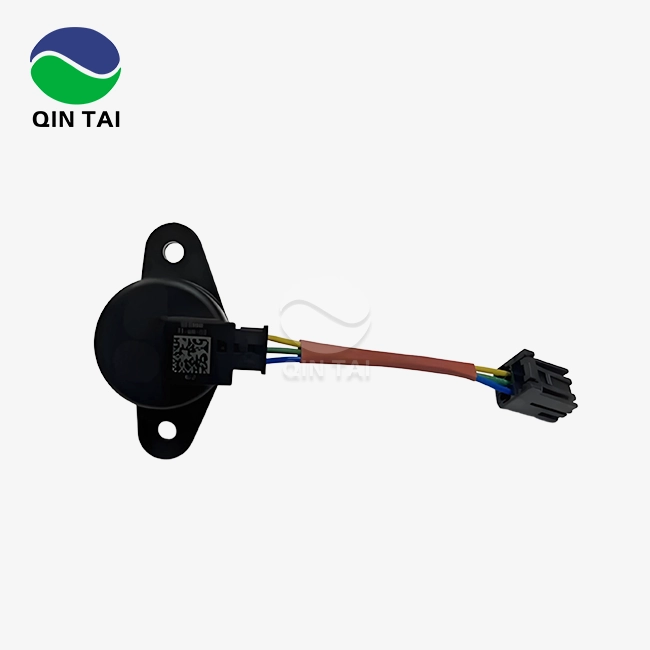
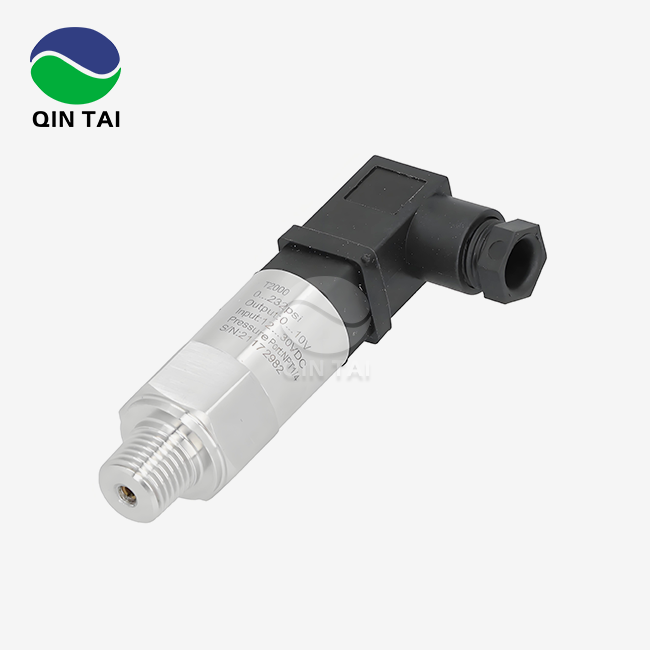
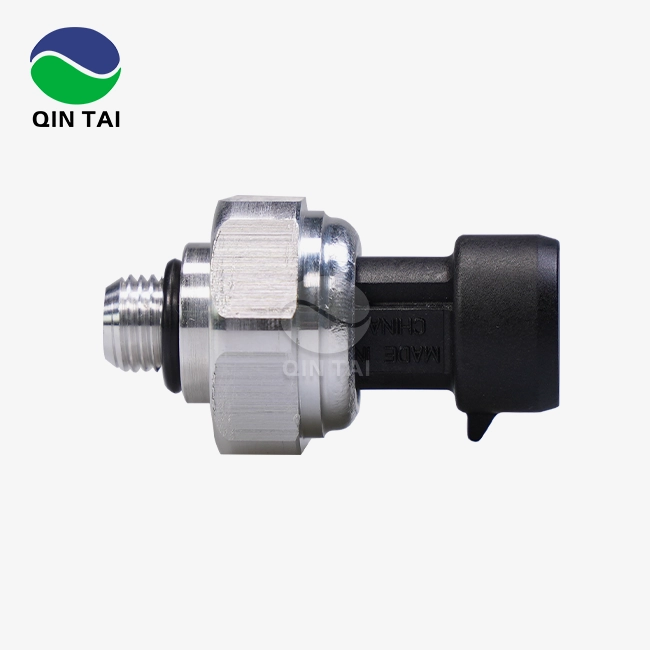
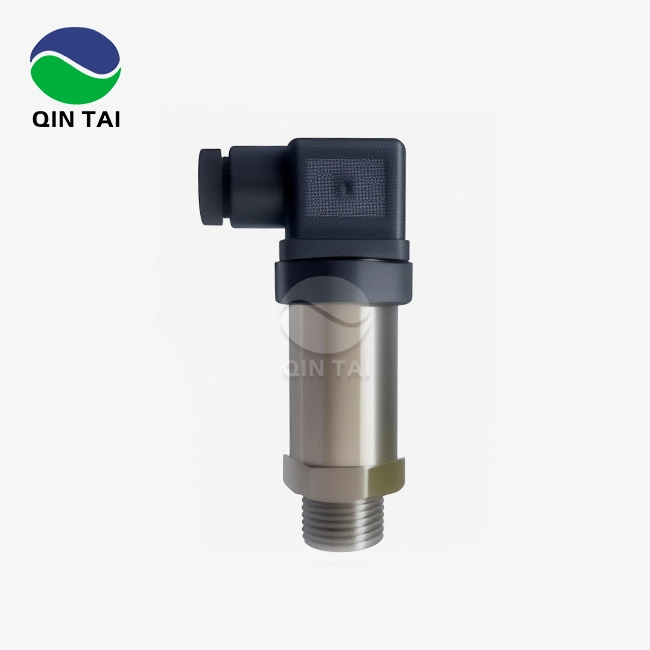

Our customers’ satisfaction speaks for our quality — contact us to experience the same reliable service.