- English
- French
- German
- Portuguese
- Spanish
- Russian
- Japanese
- Korean
- Arabic
- Greek
- German
- Turkish
- Italian
- Danish
- Romanian
- Indonesian
- Czech
- Afrikaans
- Swedish
- Polish
- Basque
- Catalan
- Esperanto
- Hindi
- Lao
- Albanian
- Amharic
- Armenian
- Azerbaijani
- Belarusian
- Bengali
- Bosnian
- Bulgarian
- Cebuano
- Chichewa
- Corsican
- Croatian
- Dutch
- Estonian
- Filipino
- Finnish
- Frisian
- Galician
- Georgian
- Gujarati
- Haitian
- Hausa
- Hawaiian
- Hebrew
- Hmong
- Hungarian
- Icelandic
- Igbo
- Javanese
- Kannada
- Kazakh
- Khmer
- Kurdish
- Kyrgyz
- Latin
- Latvian
- Lithuanian
- Luxembou..
- Macedonian
- Malagasy
- Malay
- Malayalam
- Maltese
- Maori
- Marathi
- Mongolian
- Burmese
- Nepali
- Norwegian
- Pashto
- Persian
- Punjabi
- Serbian
- Sesotho
- Sinhala
- Slovak
- Slovenian
- Somali
- Samoan
- Scots Gaelic
- Shona
- Sindhi
- Sundanese
- Swahili
- Tajik
- Tamil
- Telugu
- Thai
- Ukrainian
- Urdu
- Uzbek
- Vietnamese
- Welsh
- Xhosa
- Yiddish
- Yoruba
- Zulu
Top Urea Dosing Pressure Sensors for Reliable DEF System Control
When it comes to keeping diesel engines compliant with EPA Tier 4 Final and Euro VI standards, a urea dosing pressure sensor is one of the most consequential components in any SCR aftertreatment system. These sensors feed real-time hydraulic pressure data to the Dosing Control Unit (DCU), which then adjusts AdBlue injection with precision. Poor sensor performance leads directly to NOx non-compliance, limp mode triggers, and costly system failures. This guide helps procurement managers and R&D engineers identify the right AdBlue pressure sensor, understand how to maintain it, and source it strategically.

Understanding Urea Dosing Pressure Sensors: Working Principles and Applications
How the Sensor Functions Inside a DEF System
A DEF pressure monitor checks the urea solution's hydraulic pressure as it flows through the dose module. It sends out a proportional analog voltage signal, which is usually between 0.5V and 4.5V. The ECU uses this signal to control the timing and volume of injection. The SCR catalyst can't lower NOx emissions to below the legal limit without correct pressure input.
Common Failure Symptoms to Watch For
Sensor degradation usually shows up as saved fault codes like P204B (Pressure Circuit Range/Performance), dosing that doesn't make sense, or limp mode activation that you didn't expect. When there is a problem with injecting AdBlue, exhaust NOx levels rise sharply. Studies from the International Council on Clean Transportation show that commercial vehicles' SCR systems not working properly are one of the main reasons why they don't meet emissions standards while on the road.
Calibration and Maintenance Best Practices
Every time they are due for service, sensors should be checked for corrosion on the connector pins and signal drift. Gold-plated connections make oxidation-related problems much less likely. It is also suggested to flush the dose lines and look for urea crystallization around the sensing chamber. This is especially important for operations that take place in cold climates, where AdBlue freezes and grows by about 9% in volume.
Top Urea Dosing Pressure Sensors in the Market: Comparison and Selection Guide
Leading Manufacturers and Their Differentiators
Pressure monitors for SCR systems come from a number of different brands. Many people know Bosch for having tight accuracy tolerances and a wide range of OEM compatibility. Continental has sensors with strong EMC shielding, which is important in places with a lot of disturbance, like mine equipment. Honeywell has a wide range of industrial-grade temperatures and a history of long-term service in the field, including the urea dosing pressure sensor. Each brand has its own strengths that depend on the use, such as for a heavy truck, farm equipment, or stationary generator sets.
Qintai QS-P226: A Practical, Verified Alternative
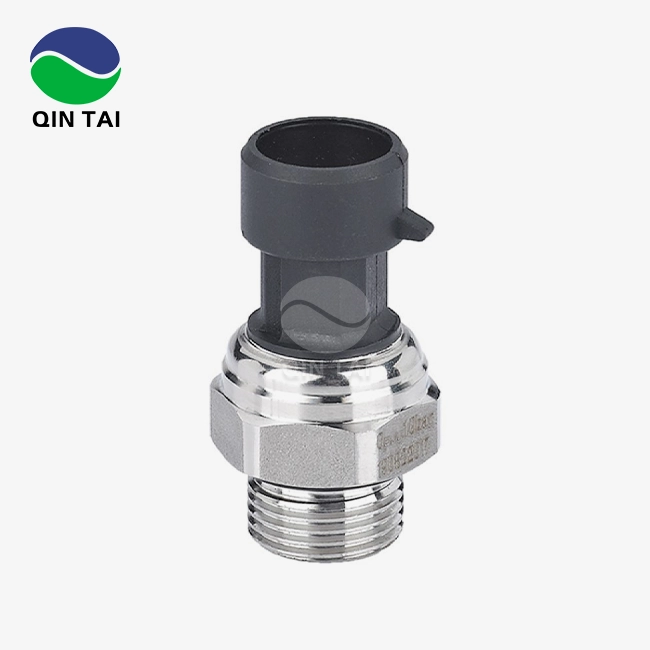
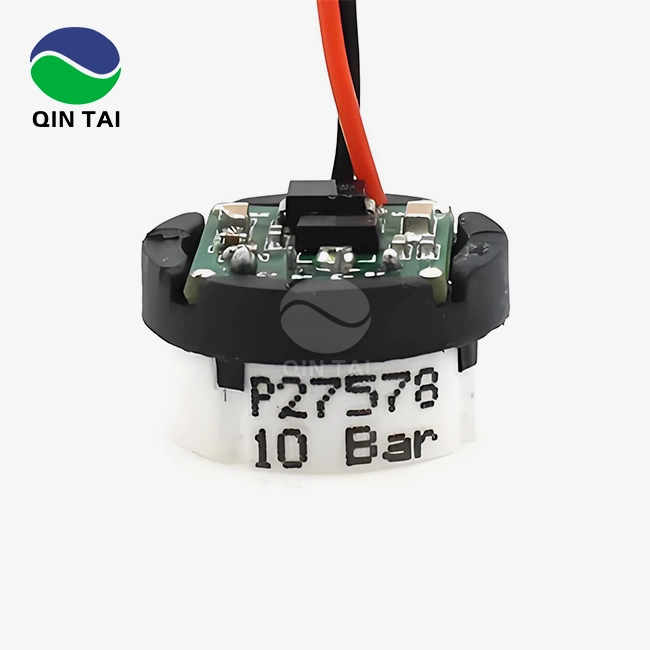
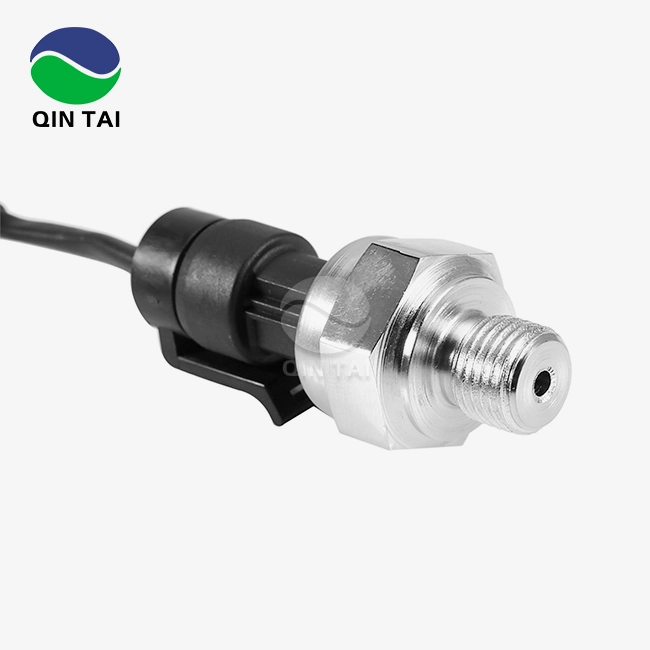
Model of Qintai Our company made the QS-P226 SCR pressure sensor so that it can be directly integrated into OEM products. Here are the main technical details that set it apart in the market:
- Measurement Range: -14 psi to +130.5 psi
- Signal Output: 0.5–4.5 VDC ratiometric analog
- Supply Voltage: 5V
- Accuracy: ±0.5%
- Quality Standard: 100% tested before shipment
- Warranty: 12 months
- Measuring Medium: Urea (AdBlue)
These standards are exactly the same as OEM-level requirements for compliance with China VI and Euro VI. The self-developed sensor core gets rid of the need for a third-party supply chain, which gives procurement teams a more stable way to get supplies.
Selection Criteria for B2B Bulk Buyers
In addition to specs, choices about what to buy should take into account supplier certifications, the ability to change the minimum order size, and the ability to support customization. A case study from a Chinese heavy-truck OEM showed that switching to a certified, in-house-made DEF pressure sensor cut the number of parts that failed every year by more than 30% and the cost of replacing them by about 18% over two production cycles. These numbers show why the sensor's certifications and the ability to track its production are just as important as its technical specs.
Troubleshooting and Optimizing Urea Dosing Pressure Sensor Performance
Diagnosing Electrical and Mechanical Faults
If you see a trouble code, start with the wire harness. Check the urea dosing pressure sensor port for chafed insulation, loose connectors, or water getting in. If the signal isn't between 0.5V and 4.5V, it's probably because of a broken sensing element or a shorted circuit, not because of a problem with the program.
Environmental Factors That Accelerate Wear
Urea is a 32.5% water mix that is mildly acidic. Repeated freeze-thaw cycles are bad for sensors that don't have enough diaphragm protection, like those made of 316L stainless steel or PPS (Polyphenylene Sulfide). These sensors break down faster. Over time, the high vibrations found in construction and mining equipment also put stress on sensor housings. For off-highway applications, IP69K-rated ingress protection is a must.
Optimization Through Smarter Integration
Putting the sensor as close to the dose syringe as possible lowers pressure lag and makes the DCU feedback loops more accurate. By connecting sensor data to onboard IoT platforms, fleet repair teams can see how pressure changes over time and find problems before they shut down the system. Large business fleet owners who are focused on uptime efficiency use this method all the time.
How to Procure Urea Dosing Pressure Sensors for Your DEF System: A Comprehensive Buying Guide
Sourcing from Certified Manufacturers vs. Distributors
Direct manufacturer partnerships usually give you more information about prices, faster lead times for large orders, and the ability to customize as an OEM or ODM. Distributors can help you buy things on the spot and mix SKUs, but they usually charge extra, which adds up over time. When purchasing teams are in charge of tens of thousands of units a year, a direct supply deal is almost always the best way to save money.
Negotiating Volume Discounts and Customization
Most well-known makers will discuss different prices for orders with more than 500 units. Aside from price, buyers should also try to get dedicated technical support, agreed-upon lead-time guaranties, and the chance to work with the seller to create sensor configurations that meet their specific DCU calibration needs. Qintai, for example, offers full OEM and ODM services, from helping with the initial design to mass production, and can make more than two million sensors every year.
After-Sales Support and Warranty Coverage
In this field, a 12-month warranty is normal, but the technical help that comes with it varies a lot. Buyers should make sure that a supplier offers more than just a returns process and direct engineering support for the urea dosing pressure sensor. This is especially important for SCR system integrators who need to quickly figure out what went wrong when something goes wrong in the field.

Future Trends in DEF Pressure Sensing Technology
MEMS and Smart Sensor Architectures
Traditional thick-film strain gages are being replaced by piezoresistive MEMS technology, which has smaller sizes and responds faster. These microfabricated sensing elements give more stable results over a wider temperature range. This is very important for generator set uses in harsh places like open-pit mines or power plants that are far away.
IoT Integration and Predictive Maintenance
If your DEF pressure sensors have a digital output protocol, like SENT (Single Edge Nibble Transmission), they can send structured data straight to cloud-based fleet management systems. This lets you schedule maintenance based on conditions instead of replacing parts at set times, which cuts down on both parts use and unplanned downtime. McKinsey & Company says that predictive maintenance techniques can cut the cost of repair in commercial transportation by 10 to 25 percent.
Tighter Regulations Driving Sensor Precision Demands
As the U.S. EPA keeps lowering the limits on NOx emissions and California's Advanced Clean Trucks rule grows, OEMs are under more and more pressure to make sure their SCR systems work perfectly throughout the entire duty cycle. This lowers the accuracy level needed for sensors from ±1.5% full scale to ±0.5% full scale, which the QS-P226 already meets.
Conclusion
Getting the right urea dosing pressure sensor (AdBlue pressure sensor) is a direct indicator of whether or not your DEF system meets emission standards, runs continuously, and stays strong under heavy duty cycles. Every choice in this process has a clear effect, from comprehending how things work and figuring out what's wrong to picking reliable sources and making plans for the next generation of sensor technology.
The QS-P226 from Qintai is a technically tested and mass-production-ready choice that was made to meet the needs of current SCR systems for accuracy and durability. When it comes to choosing a supplier, teams that focus on credentials, accurate sensors, and long-term expert help will always do better than teams that only look at price.

FAQ
How often should a DEF pressure sensor be calibrated?
Under normal operating conditions, these sensors do not require periodic recalibration if installed correctly. However, signal drift from connector corrosion or aging diaphragms warrants inspection every 100,000 miles or at major service intervals.
What is the difference between a urea dosing pressure sensor and a standard pressure transducer?
A standard pressure transducer measures general fluid pressure. A DEF-specific sensor is designed for the chemical compatibility requirements of 32.5% aqueous urea, incorporating corrosion-resistant materials and freeze-expansion buffering structures that a general-purpose transducer does not provide.
Does bulk purchasing offer real advantages?
Yes. Beyond unit price reductions, bulk purchasing with a direct manufacturer provides access to dedicated account management, priority production scheduling, and co-development options — advantages that are unavailable through spot market channels.
What happens if the pressure sensor fails mid-operation?
The ECU loses accurate pressure feedback, AdBlue injection becomes unregulated, NOx emissions increase, and the vehicle may enter limp mode. In generator set applications, this can trigger system shutdowns that disrupt power supply.
Can the QS-P226 work with different SCR system brands?
The QS-P226 outputs a 0.5–4.5V ratiometric signal, which is compatible with most standard DCU configurations. For non-standard ECU calibrations, Qintai's engineering team provides customization support to match specific interface requirements.
Connect with Qintai for Verified DEF Pressure Sensor Solutions
From 2001 to now, Qintai has sold SCR aftertreatment sensors to OEM customers in over 60 countries. As a main supplier to Weichai Power, Yuchai Power, and Quanchai Power, we back up every urea dosing pressure sensor with engineering know-how and production quality that can be checked. We have ISO9001 and IATF16949 certifications, as well as 58 registered invention patents. If you need a certified urea dosing pressure sensor supplier for large OEM contracts or a technical partner for integrating an SCR system, please email us at info@qt-sensor.com or go to qt-sensor.com to get a quote.
References
1. International Council on Clean Transportation (ICCT). On-Road NOx Emissions from Heavy-Duty Diesel Vehicles. ICCT, 2022.
2. McKinsey & Company. Predictive Maintenance in Commercial Transport: Cost Reduction Strategies. McKinsey & Company, 2023.
3. SAE International. SCR System Performance and Urea Dosing Accuracy in Heavy-Duty Diesel Applications. SAE Technical Paper Series, 2021.
4. U.S. Environmental Protection Agency (EPA). Diesel Exhaust Fluid and SCR Technology for NOx Reduction. EPA Office of Transportation and Air Quality, 2022.
5. Robert Bosch GmbH. Diesel Engine Management: Systems and Components. Springer Vieweg, 2014.
6. ISO/TC 22. ISO 11992: Road Vehicles — Interchange of Digital Information on Electrical Connections Between Towing and Towed Vehicles. International Organization for Standardization, 2023.

Our customers’ satisfaction speaks for our quality — contact us to experience the same reliable service.