- English
- French
- German
- Portuguese
- Spanish
- Russian
- Japanese
- Korean
- Arabic
- Greek
- German
- Turkish
- Italian
- Danish
- Romanian
- Indonesian
- Czech
- Afrikaans
- Swedish
- Polish
- Basque
- Catalan
- Esperanto
- Hindi
- Lao
- Albanian
- Amharic
- Armenian
- Azerbaijani
- Belarusian
- Bengali
- Bosnian
- Bulgarian
- Cebuano
- Chichewa
- Corsican
- Croatian
- Dutch
- Estonian
- Filipino
- Finnish
- Frisian
- Galician
- Georgian
- Gujarati
- Haitian
- Hausa
- Hawaiian
- Hebrew
- Hmong
- Hungarian
- Icelandic
- Igbo
- Javanese
- Kannada
- Kazakh
- Khmer
- Kurdish
- Kyrgyz
- Latin
- Latvian
- Lithuanian
- Luxembou..
- Macedonian
- Malagasy
- Malay
- Malayalam
- Maltese
- Maori
- Marathi
- Mongolian
- Burmese
- Nepali
- Norwegian
- Pashto
- Persian
- Punjabi
- Serbian
- Sesotho
- Sinhala
- Slovak
- Slovenian
- Somali
- Samoan
- Scots Gaelic
- Shona
- Sindhi
- Sundanese
- Swahili
- Tajik
- Tamil
- Telugu
- Thai
- Ukrainian
- Urdu
- Uzbek
- Vietnamese
- Welsh
- Xhosa
- Yiddish
- Yoruba
- Zulu
Top 5 Urea Dosing Pump Features for Reliable AdBlue Delivery
If you manage procurement or engineering for diesel-powered equipment, you already know that SCR aftertreatment performance lives or dies by one small but critical component: the urea dosing pump. This device draws DEF (Diesel Exhaust Fluid) from the tank and delivers it to the dosing injector at precise pressure and flow rates. When the pump works correctly, NOx emissions drop to compliant levels. When it fails, you face downtime, fines, and warranty headaches. Below, I break down the five features that separate a dependable AdBlue delivery pump from one that causes problems on the production line or in the field.

Precision and Accuracy in Urea Dosing Pumps
Every SCR system that works well starts with accurate metering. Based on real-time data from the NOx monitor and exhaust flow, a well-calibrated pump sends just the right amount of urea solution to the catalyst—no more, no less.
Stepper Motor Drive Technology
Stepper motor-driven pumps break up each turn into separate steps. This lets the control unit fine-tune the flow output. This means that the dose will stay the same even when the engine load changes. This is important for big trucks and building machines that need to start quickly or speed up suddenly.
Variable Flow Control
The pump's output can be changed from low to high without mechanical hunting or pressure spikes when the flow rate is variable. For generator sets that run continuously, this feature makes it possible to predict how much reagent will be used, which lowers operating costs over thousands of service hours.
Compliance with Emission Regulations
NOx limits are very strict in China VI and Euro VI. For heavy-duty engines, China VI limits NOx to 0.46 g/kWh only. To regularly meet those levels, you need a pump whose dosing mistake stays within ±2–3% across all temperature and pressure ranges. Precision directly equals compliance, which is a must for any relationship between an OEM and a supplier.
Robust Construction and Material Quality
The materials used for the wet parts, housing, and sealing elements have a big impact on how long a pump lasts in tough settings. AdBlue can slightly corrode some metals and break down some polymers over time, so choosing the right material isn't just a matter of style.
Corrosion-Resistant Wetted Parts
PTFE-coated valve seats, chemically resistant O-rings, and stainless steel diaphragm chambers make these valves last a lot longer than regular plastic housings. In mine and power plant generator uses, where the pump may run nonstop for months, internals that don't rust directly lower the number of times it needs to be replaced.
Certified Build Standards
Pumps with ISO 9001 and IATF 16949 certifications come from factories that make sure quality is checked at every step of the production process. When buying managers compare sellers, certification paperwork shows that the process is being followed, not just marketing speak. AdBlue freezes at -11°C (12°F), and Qintai supplies the urea dosing pump and has these certifications along with CE, RoHS, and REACH. This makes the source approval process very clear.
Freeze Protection and Purge Function
Crystallization in the supply line can't happen after the engine has stopped because the pump has a built-in heater and an automatic purge cycle. This built-in safety feature is especially useful for fleets that work in northern U.S. states or at high elevations where temperatures drop below freezing at nite.
Ease of Installation and Integration
If it takes two hours to install a pump instead of four hours, that's a big difference in the cost of work on a large scale. For aftertreatment system integrators who build dozens of vehicles a month, installation efficiency grows very quickly.
ECU Compatibility
The urea dosing pump talks to the Engine Control Unit directly to change the amount of urea that is injected based on the load of the engine, the flow of waste, and data from NOx sensors. Qintai urea pumps are made to work well with Bosch ECU-specific SCR control methods. This means that R&D engineering teams don't have to spend as much time and energy on integration.
Compact Integrated Design
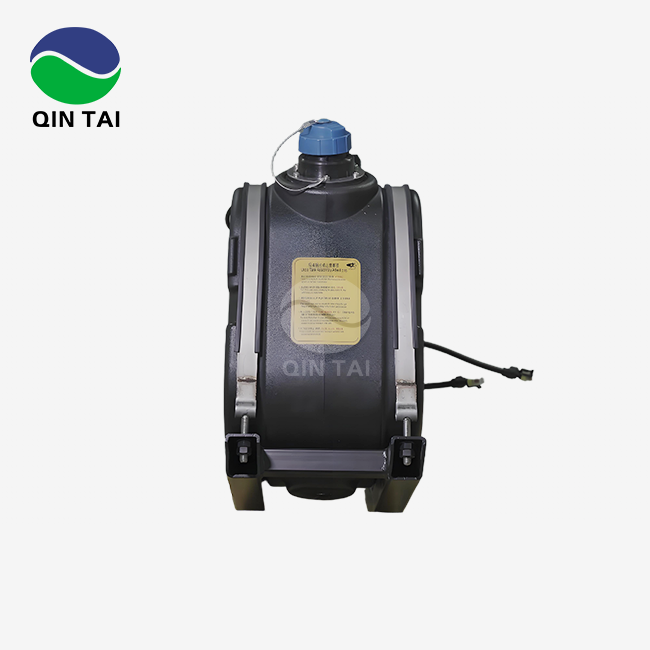
When the urea dosing pump is combined with pump-filter-heater systems packed into a single unit, they have fewer connection points, are easier to wire, and take less time to install than three-piece setups. A small integrated section also means faster service bay turnover for repair shops and sellers who deal in aftermarket parts.
Standard Interface Options
Clear size guidelines, standard pressure and voltage interfaces, and written mounting dimensions make it possible for procurement teams to match pumps to existing brackets and harnesses without having to make new ones. This plug-compatible method helps lines change over more quickly in mass production settings.

Maintenance-Friendly Design and Troubleshooting Support
It costs money to be down. A cheaper pump that needs to be taken apart and cleaned by an expert takes longer to own because it takes longer for the technician to check, clean, and put back together.
Here are the main aspects of design that have a direct effect on how well maintenance works:
- Accessible valve and diaphragm chambers: Tool-accessible service points let technicians check for wear or debris without taking the pump off the vehicle. This includes valve and diaphragm chambers that can be reached. With quick-release fittings, routine inspections take a lot less time.
- Low-noise, low-energy operation: Pumps that use less than 5W at rated flow make less heat and vibration, which means that interior parts last longer and wear less quickly.
- Automatic self-diagnostics: The built-in fault detection sends error codes to the ECU. This way, technicians can tell before they even open a single fastener whether the problem is a clogged filter, a broken pressure sensor, or a worn diaphragm.
These design features keep repair costs stable and cut down on unplanned stops, which is important for both fleet owners and OEM guarantee cost management teams.
Along with the hardware including the urea dosing pump, it's also important to have solid assistance from the seller. Manufacturers that offer thorough service instructions, troubleshooting tips in multiple languages, and helpful after-sales techs give buying teams the support they need when problems happen in the field.
Advanced Control Features and Customizability
Standard pump types can be used for many tasks, but OEM programs on a big scale and projects that treat industrial exhaust often need something more tailored. Engineering teams have the power they need thanks to flow rates that can be changed, controlled dose logic, and remote diagnostic ports.
Adjustable Dosing Algorithms
Pumps that can read preset dose tables from the ECU can change how the engine is set up without having to make any hardware changes. This adaptability is important for R&D engineers who are testing a single pump platform on a range of engine sizes or power levels.
Remote Monitoring and Diagnostics
The CAN bus or LIN bus output ports on the pump let fleet management systems record real-time data on how well the pump is working. Remote fault awareness keeps small problems from turning into major failures in places like power plants and mines where repair visits don't happen very often.
OEM and ODM Customization
Qintai provides OEM and ODM services for large-scale purchasing plans that include unique housing sizes, voltage requirements, connector types, and labels. This level of service helps purchasing managers find a supplier who can work with their private-label needs and production schedules.

Conclusion
To choose the best AdBlue delivery pump, you need to think about more than just the price per unit for your urea dosing pump. Over the course of its full service life, how well your SCR system works depends on its precise metering, long-lasting materials, easy installation, low-maintenance design, and numerous control options.
These five things are useful for OEMs, installers, and aftermarket buyers to look at when choosing a urea dosing pump provider. Since 2001, Qintai has been a seller of diesel engine aftertreatment parts. It has IATF 16949 and ISO 9001 certifications and is the top OEM supplier to big Chinese engine makers like Weichai Power and Yuchai Power in terms of market share.
FAQ
Can I use a standard chemical dosing pump instead of a dedicated urea pump?
No, regular chemical pumps don't have the freeze protection, purge cycles, or ECU interface protocols that SCR systems need. Using a urea dosing pump that isn't rated properly can cause line crystallization and wrong dosing, which can lead to fault codes and possible emission violations.
How do I choose the right pump size for my engine?
Match the pump's recommended flow range to the highest amount of DEF that your engine can use, which depends on its size and NOx output. Most heavy-duty diesel engines that use 3 to 5 percent of their fuel volume for DEF need a pump that can handle 0.5 to 2.0 liters of diesel per minute at 5 to 9 bar of working pressure.
How often should a urea dosing pump be serviced?
Check the filter and check valve every 50,000 km or once a year, whichever comes first under normal conditions. In places with a lot of dust or very cold temperatures, repair times may need to be shortened. Always follow the maintenance plan written down by the maker.
Does pump material affect AdBlue compatibility?
Yes, over time AdBlue breaks down some metals and plastics. To keep your pumps clean and from breaking down too soon, choose ones with PTFE-lined wetted parts and AdBlue-rated elastomers.
Partner with Qintai for Your Urea Dosing Pump Supply
OEMs and integrators in more than 60 countries can get certified urea dosing pump solutions from Qintai. Because Qintai has 58 invention patents, IATF 16949 approval, and a focused R&D team, it is a company that is built for long-term business-to-business partnerships. Today, ask for a technical datasheet, a unique price, or a sample of the product. To start evaluating suppliers, email our team at info@qt-sensor.com or go to qt-sensor.com.
References
1. SAE International Journal of Engines — "NOx Reduction Efficiency in Heavy-Duty SCR Systems," SAE International, 2022.
2. Emission Control Science and Technology — "AdBlue Dosing Accuracy and Its Effect on Catalyst Performance," Springer, 2021.
3. Journal of Cleaner Production — "Euro VI Compliance Strategies for Diesel Aftertreatment Systems," Elsevier, 2020.
4. Diesel Progress North America — "SCR System Integration Challenges for OEM Engine Platforms," Diesel Progress, 2023.
5. International Journal of Automotive Technology — "Freeze Protection Mechanisms in Urea Injection Systems," Korean Society of Automotive Engineers, 2021.
6. Fleet Owner Magazine — "Total Cost of Ownership for SCR Aftertreatment Components," Endeavor Business Media, 2022.

Our customers’ satisfaction speaks for our quality — contact us to experience the same reliable service.