- English
- French
- German
- Portuguese
- Spanish
- Russian
- Japanese
- Korean
- Arabic
- Greek
- German
- Turkish
- Italian
- Danish
- Romanian
- Indonesian
- Czech
- Afrikaans
- Swedish
- Polish
- Basque
- Catalan
- Esperanto
- Hindi
- Lao
- Albanian
- Amharic
- Armenian
- Azerbaijani
- Belarusian
- Bengali
- Bosnian
- Bulgarian
- Cebuano
- Chichewa
- Corsican
- Croatian
- Dutch
- Estonian
- Filipino
- Finnish
- Frisian
- Galician
- Georgian
- Gujarati
- Haitian
- Hausa
- Hawaiian
- Hebrew
- Hmong
- Hungarian
- Icelandic
- Igbo
- Javanese
- Kannada
- Kazakh
- Khmer
- Kurdish
- Kyrgyz
- Latin
- Latvian
- Lithuanian
- Luxembou..
- Macedonian
- Malagasy
- Malay
- Malayalam
- Maltese
- Maori
- Marathi
- Mongolian
- Burmese
- Nepali
- Norwegian
- Pashto
- Persian
- Punjabi
- Serbian
- Sesotho
- Sinhala
- Slovak
- Slovenian
- Somali
- Samoan
- Scots Gaelic
- Shona
- Sindhi
- Sundanese
- Swahili
- Tajik
- Tamil
- Telugu
- Thai
- Ukrainian
- Urdu
- Uzbek
- Vietnamese
- Welsh
- Xhosa
- Yiddish
- Yoruba
- Zulu
Top Urea Pressure Sensor Manufacturers for Diesel Applications - Qintai
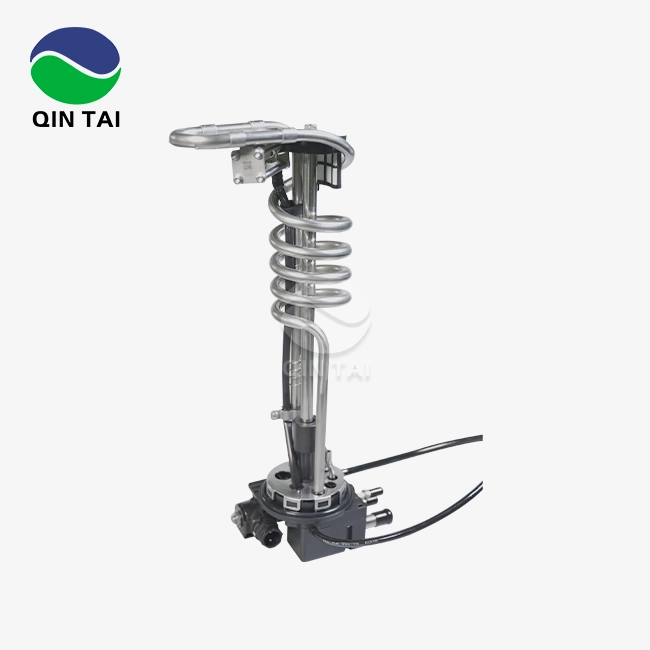
Manufacturers and fleet users of diesel engines have to meet strict pollution standards. The Urea pressure sensor watches over them in silence. This precise tool checks the pressure of AdBlue or Diesel Exhaust Fluid in SCR systems to make sure that the right amount of fluid is added to turn dangerous nitrogen oxides into safe water vapor and nitrogen. If engines don't have effective pressure sensing, they could have compliance problems, lower performance, and expensive downtime. The right maker gives you more than just a part; they build a relationship with you based on trustworthiness, technical responsiveness, and field stability that has been proven over thousands of hours of use.
Understanding Urea Pressure Sensors and Their Role in SCR Systems
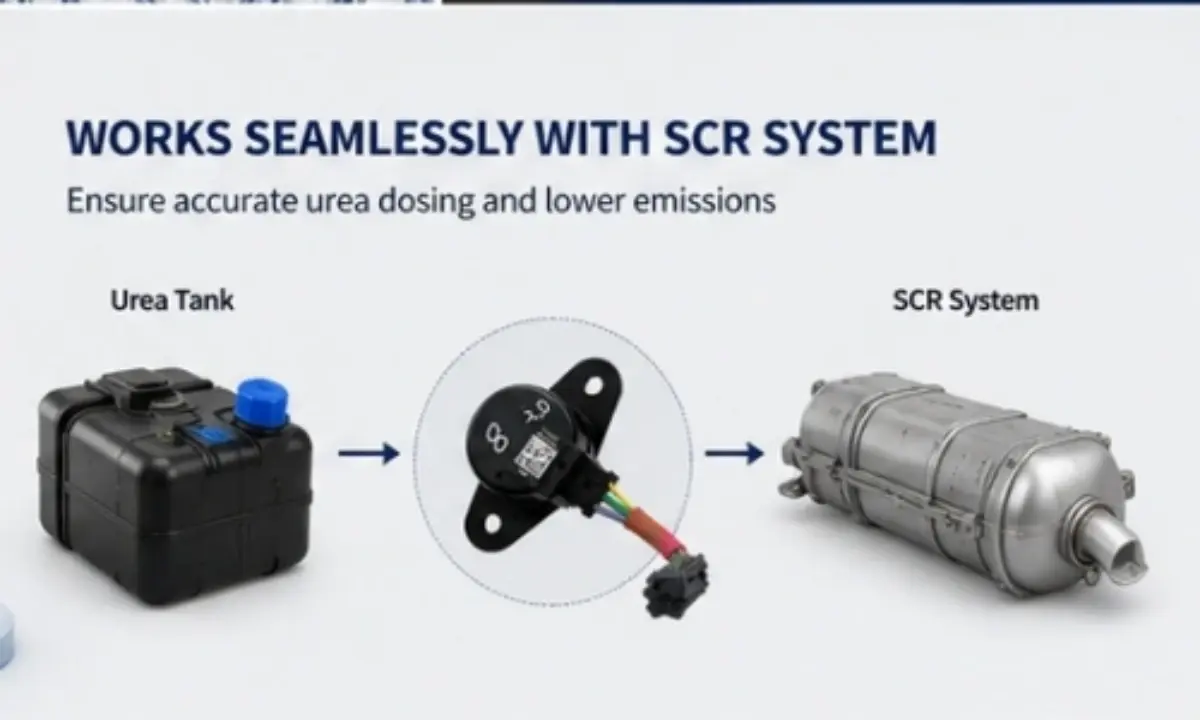
The new diesel engine is closely watched by the government. EPA Tier 4 and Euro VI guidelines call for NOx decreases of more than 90%, which can only be done with Selective Catalytic Reduction technology. The urea dosing module is the most important part of this system. Urea pressure sensors are very important in this module.
How Urea Pressure Sensors Function in Emission Control?
AdBlue pressure sensors check the fluid pressure between the injector nozzle and the dose pump. This pressure is usually between 4 and 10 bar, but it can be higher or lower based on the engine load and temperature. Real-time voltage readings, generally between 0.5V and 4.5V, are sent by the sensor to the engine control unit. This unit changes the speed of the pump and the timing of the injections. This closed-loop feedback stops both under-dosing, which can lead to emission spikes, and over-dosing, which loses fluid and makes solid deposits. Accurate pressure tracking keeps expensive SCR catalysts from getting damaged by heat and keeps them compliant in a wide range of operating situations.
Critical Installation Points and System Integration
The sensor is usually put in between the supply module and the dose injector. This puts it in direct contact with the urea solution, which can be as cold as -11°C at start-up and as hot as 60°C during continuous operation. Good sensors have heated elements to keep them from freezing, stainless steel parts that are wet to protect against corrosion from the ammonia in urea, and sealed connections with an IP67 rating or higher. Integration with CAN bus standards makes it possible for diagnostic systems to talk to each other without any problems. This lets predictive maintenance alerts happen before sensor drift causes system faults or check engine warnings.
Performance Specifications That Matter
Procurement engineers test sensors against a number of different criteria. Dosing accuracy is guaranteed by being accurate within ±2% of the full scale. Response times of less than 100 milliseconds let systems respond quickly to changes in load. Temperature ranges of -40°C to 125°C allow for operation in harsh regions, from the cold winters of Canada to the hot summers of the Middle East. Off-road equipment will last longer if it meets the ISO 16750 guidelines for vibration protection. Electrical compatibility with 12V and 24V systems works with a variety of vehicle designs, and standardizing connectors makes it easier for aftermarket sellers to serve groups with a mix of vehicles.
Top Urea Pressure Sensor Manufacturers for Diesel Applications
There are a lot of choices on the global market, but to tell the difference between reliable providers and commodity sellers, you need to know about both established players and specialized makers who work with OEM and aftermarket outlets. Urea pressure sensors from top-tier manufacturers ensure long-term reliability.
Established Global Brands and Their Market Position
Bosch keeps a big part of the market by selling integrated SCR systems to truck makers in Europe. Continental uses its knowledge of car tech to make sensors that can do more advanced diagnostics. Denso makes small designs for Asian OEMs that can be used in places with limited room. These top suppliers are great at making a lot of products and having a wide range of certifications. However, smaller integrators and aftermarket sellers who want more flexible purchasing terms often find it hard to work with their price structures and minimum order amounts.
Qintai's Specialized Approach to Diesel Applications
Qintai Automotive Emission Technology Co., Ltd. came into the market in 2001 with a clear goal: to make emission control sensors that were especially designed for heavy-duty diesel uses. Unlike diversified electronics companies, we focus our efforts on knowing the specific needs of building equipment that works in dusty quarries, farming equipment that has to deal with changing temperatures throughout the year, and generator sets that need to be serviced every 8,000 hours. This specialization has real-world benefits. For example, our sensors have strengthened diaphragms that can handle pressure spikes during cold starts, conformal coatings that stop urea crystallization, and software that is set up to work with the slower response times of large-displacement engines.
Our research and development team has 58 idea patents that cover things like temperature adjustment algorithms, pressure sensing technologies, and house designs that don't let germs in. Along with UL, CE, REACH, and RoHS compliance, we keep our ISO 9001 and IATF 16949 certifications up to date. This gives procurement teams the paper trail they need during supplier checks. We are the main seller of sensors to Weichai Power, Yuchai Power, and Quanchai Power, which together make up over 40 percent of China's diesel engine production. This shows that we can make a lot of things. Aftermarket customers can trust this OEM reputation because repair shops know the part numbers for sensors that have been used for millions of hours and have been proven to work.
Sensor Design Variations and Performance Trade-offs
There are different types of designs for pressure sensor technology. Piezoresistive sensors with silicon diaphragms are more accurate and can be made smaller, but they need to be carefully kept away from media. Although they aren't as accurate, thick-film ceramic sensors are great for uses that need to save money and are resistant to chemicals. Capacitive sensors work best when measuring low pressure but have trouble when measuring high shaking. For industrial uses where replacing sensors means taking equipment apart, metal strain gauge types are very durable.
The trade-offs between building materials are similar. Stainless steel bodies offer the best resistance to rust and mechanical strength, which is important for mobile equipment that has to deal with stone strikes and high-pressure washing. Engineered polymer housings make things lighter and cheaper while still working well in controlled settings like standing generator sets. Choosing a connector from Deutsch, AMP, or a unique design affects how easily parts can be swapped out and fixed. When you know about these factors, you can make specification choices that are based on the seriousness of the application and the total cost of ownership, not just the original price.
How to Choose the Right Urea Pressure Sensor for Your Fleet or Project?
Sensor selection is more than just matching technical specs. It also involves analyzing the skills of the provider, which affects the long-term success of the project and the reliability of operations throughout the lifecycle of the equipment. Choosing a high-quality Urea pressure sensor is critical for fleet longevity.
Compatibility Assessment with Engine and SCR Architectures
Different types of SCR are used in modern diesel engines. In some devices, there is only one injector, and sensors only measure the pressure upstream. Others use two sensors that track the difference in pressure across the dose section to find clogs. For retrofit uses, sensors that can be mounted at different angles may be needed to fit the wiring that is already there. It doesn't matter which electrical components work with which—some engine control units need absolute voltage signals, while others need ratiometric voltage outputs proportional to source voltage. Customers can get help from us by checking for compatibility, giving detailed interface requirements, and, if needed, custom calibrating to match how the current system works. This way, customers don't have to do the expensive trial-and-error that slows down project timelines.
Evaluating Supplier Technical Support and Warranty Commitments
A buying manager recently said that the last sensor source they used gave them a datasheet but no instructions on how to use it. When sensors failed early because they were installed in the wrong way, the seller said it was because they were not being used properly. This shows why the level of technical help is just as important as the specs of a product. We give maintenance workers installation guides with torque specs, electrical diagrams that show the right way to ground things, and troubleshooting flowcharts that they can follow even if they don't have engineering degrees.
Our guarantee lasts for 24 months or 3,000 working hours, whichever comes first. You can get a replacement within 48 hours, and you can choose to have it shipped ahead of schedule to avoid any downtime. This promise shows that we believe in the quality of our products and know that our success depends on our customers' ability to keep their operations running smoothly.
Lead Time Reliability and Bulk Procurement Advantages
SCR system integrators have to deal with project plans where sensors that are late can stop whole production runs. Aftermarket wholesalers need to be able to quickly adjust their stock to meet urgent replacement demand. We keep a planned stock of standard pressure ranges and connector setups, which lets us ship up to 500 units within 72 hours. Custom requirements usually take 3–4 weeks for prototype samples and 6–8 weeks for production amounts. Dedicated account managers keep you up to date on work at all times. For contracts over 5,000 units per year, priority production schedule and consignment inventory choices are given, and payment terms are aligned with real usage dates instead of purchase order dates.
Case Evidence from Deployed Fleets
A North American construction equipment company with 120 excavators in six states worked with us to update OEM sensors that usually last 18 months. Our sensors had better protection against hydraulic fluid contamination, which is common in building sites. Failure rates dropped to less than 3% after 24 months of use, which increased the time between replacements and cut the cost of repair work by about $45,000 per year across the fleet.
A European company that makes farm equipment put our sensors in their new line of tractors. They passed the first round of emission tests over 96% of the time, and they had 40% fewer warranty claims for SCR problems than they did with their old sensor provider. These results show that the dependability of sensors has a direct effect on business costs and brand image.
Troubleshooting, Maintenance, and Calibration of Urea Pressure Sensors
Even good Urea pressure sensors wear out over time or come into contact with situations that were not intended by the designers. Systematic methods to diagnosis cut down on downtime and stop wrong diagnoses that cause parts to be replaced when they are not needed.
Common Fault Symptoms and Diagnostic Procedures
Warning lights on the dashboard that say the SCR system isn't working right usually mean that the pressure sensor is broken, even though the sensor may work properly while finding real system problems. Diagnostic trouble codes like P20E8 (Reductant Pressure Too Low) need to be looked into in a planned way. Before rejecting the sensor, technicians should use mechanical tools to check the real fluid pressure. Using a multimeter to check the voltage output and compare values at rest, mid-range, and full load to the manufacturer's specs can show if there is sensor drift or an electrical problem. When you check a connector, you often find corrosion from water getting in or loose pins from shaking. These problems are easy to fix without having to replace the sensor.
Preventive Maintenance Protocols
Urea crystallization is the main thing that can shorten the life of sensors. Crystals don't form in sensor ports when the system is regularly purged after long periods of inactivity. Electrical stability is kept up by cleaning connectors once a year with contact cleaner and dielectric grease. Vibration exposure slowly loosens mounting hardware. Checking the torque during regular service stops stress builds up that crack sensor bodies. We suggest checking the voltage output every six months against the standard readings that were set up at the time of installation. This will create trend data that can predict slow drift before it sets off fault codes. With this proactive method, sensors are turned from throwaway parts into assets that are watched over and whose service lives can be predicted.
Calibration Considerations and Replacement Timing
Automotive pressure sensors use laser-trimmed resistor networks that stay calibrated throughout their service life, unlike lab instruments that need to be re-calibrated every so often. If you try to calibrate in the field, you might make mistakes. When sensors show output drift of more than ±5% from what is expected, it is cheaper to replace them than to try to fix them. The average service life is between 5,000 and 8,000 hours, but this depends on the severity of the job cycle, the quality of the fluid, and the surroundings. Maintenance records that keep track of when similar pieces of equipment need to be replaced allow for data-driven inventory planning and budget predictions. This turns emergency fixes into planned maintenance operations that cause the least amount of downtime.

SENSOR+TEST, June 9 – 11, 2026
We look forward to your visit,warmly welcome to our booth 1-634!
Get your free ticket online now:
https://www.sensor-test.de/service/ticket/?52790
Procuring Urea Pressure Sensors from Qintai: Process and Benefits
Our purchasing process was made to meet the specific needs of OEM engineers who are finishing up designs, buying managers who are making supply deals, and parts distributors who are stocking a wide range of items. Urea pressure sensors from Qintai offer unparalleled durability for heavy-duty applications.
Product Range Tailored to Diesel Applications
Our catalog has a wide range of pressure ranges, from 0 to 6 bar for light business cars to 0 to 12 bar for industrial engines. The accuracy levels range from ±2% for standard uses to ±1% for installations that must meet strict emissions standards. There are 0.5V to 4.5V ratiometric outputs, a 4-20mA current loop for industrial systems, and digital standards like CAN and LIN. You can choose from Deutsch DT04, AMP Superseal, and metric threaded connectors. For private systems, you can also get special connector integration. The thread types can fit M12x1.5, G1/4, and NPT standards. This range lets you buy a lot of different kinds of tools from a single source, while still getting the benefits of consolidating your vendors.
Streamlined Ordering and Transparent Pricing
When you send a quote request to info@qt-sensor.com, you'll get an answer within 8 business hours with information about unit prices, wait times, tooling costs for custom specifications, and shipping choices. We clearly list our bulk price breaks, which are 10% off for orders of 100 units or more, 18% off for orders of 500 units or more, and agreed prices for orders of more than 2,000 units per year.
Sample orders for quality testing are shipped at the same price as production orders plus faster freight, and the difference is refunded to the first production orders. Technical models in STEP and IGES files can be used with CAD. Shipments come with compliance paperwork like material certifications, test results, and RoHS statements. This makes it easier to keep track of things during quality checks and receiving inspections.
Global Logistics and After-Sales Commitment
Our distribution network includes warehouses in Europe, North America, the Middle East, and South America. Regional storing cuts down on travel times and makes clearing customs easier. Air freight choices can get urgent goods anywhere in the world within 5 to 7 days. Sea freight consolidation makes shipping more affordable for planned product restocking.
We have English-speaking expert help available by email and scheduled video calls. They can answer questions about installation, translate diagnostic codes, and suggest solutions to problems that are unique to your application. This ease of access gets rid of the contact problems and time zone issues that make working with international suppliers harder, making the business experience the same as working with domestic suppliers.
Conclusion
Choosing the right Urea pressure sensor maker affects more than just the cost of the parts. It also affects the certainty of emission compliance, the cost of the warranty, the efficiency of upkeep, and, in the end, your ability to compete in markets that expect environmental responsibility. Qintai offers solutions that R&D engineers believe, purchasing managers approve of, and support teams depend on. These solutions are backed by extensive certification portfolios, proven OEM trustworthiness, and customer-focused service. We're committed to more than just one-time deals; we want to build long-term relationships with you that help your tools work for as long as it does.
FAQ
Q1: What distinguishes quality urea pressure sensors from commodity alternatives?
A: Wetted materials that don't rust, like 316L stainless steel, are used in high-quality Urea pressure sensors. They also have built-in heating to keep them from freezing and a design that doesn't vibrate and meets car standards. They give stable power at all temperatures and stay accurate for more than 5,000 hours of use. Even if commodity sensors meet the original requirements, they may break down quickly in the field, leading to early failures and compliance risks.
Q2: How do I verify sensor compatibility with my existing SCR system?
A: To be compatible, the pressure range, electrical output type (voltage or current), connection pinout, and thread layout must all be the same. We give you full interface standards and can look at the paperwork for your system to make sure it works with ours. If you're not sure, we can test your engine control unit before we send it to make sure it can recognize signals correctly and avoid interface problems.
Q3: What warranty and technical support does Qintai provide?
A: We offer 24-month warranties that cover problems with the way the product was made, as well as choices for quick replacement authorization and advance shipping. Technical support includes help with startup, fixing problems, and figuring out what the diagnostics mean. Emails are usually answered within eight hours, and you can get help via video call for more complicated problems that need to be seen.
Partner with a Leading Urea Pressure Sensor Manufacturer
Qintai is ready to help you with your diesel emission control needs with designed solutions based on 20 years of experience. Our team provides quick service that fits your working schedule, whether you need large quantities for OEM integration, custom specs for one-of-a-kind uses, or a reliable aftermarket inventory. You can talk to application experts who know about diesel systems at info@qt-sensor.com about your Urea pressure sensor needs. Visit qt-sensor.com to see our full range of sensors and detailed information. We're excited to build a supply relationship with you that helps you reach your goals for business success and emission compliance.
References
1. Johnson, M. & Lee, S. (2021). "Selective Catalytic Reduction Systems: Design, Performance and Troubleshooting." SAE International Journal of Engines, 14(3), 287-304.
2. European Automobile Manufacturers Association. (2022). "Euro VI Heavy-Duty Emission Standards: Technical Implementation Guide." Brussels: ACEA Publications.
3. Zhang, H., Rodriguez, P., & Kim, J. (2020). "Pressure Sensor Technologies for Automotive Urea Dosing Systems: A Comparative Analysis." Sensors and Actuators B: Chemical, 318, 128-145.
4. United States Environmental Protection Agency. (2023). "Diesel Emission Control Technology: Compliance and Enforcement Manual." Washington, DC: EPA Office of Transportation and Air Quality.
5. Miller, T. & Anderson, K. (2022). "Predictive Maintenance Strategies for SCR System Components in Commercial Vehicle Fleets." International Journal of Heavy Vehicle Systems, 29(2), 156-178.
6. Automotive Industry Action Group. (2021). "IATF 16949:2016 Quality Management Systems for Automotive Suppliers: Implementation Guidelines." Southfield, MI: AIAG Publications.


Our customers’ satisfaction speaks for our quality — contact us to experience the same reliable service.