- English
- French
- German
- Portuguese
- Spanish
- Russian
- Japanese
- Korean
- Arabic
- Greek
- German
- Turkish
- Italian
- Danish
- Romanian
- Indonesian
- Czech
- Afrikaans
- Swedish
- Polish
- Basque
- Catalan
- Esperanto
- Hindi
- Lao
- Albanian
- Amharic
- Armenian
- Azerbaijani
- Belarusian
- Bengali
- Bosnian
- Bulgarian
- Cebuano
- Chichewa
- Corsican
- Croatian
- Dutch
- Estonian
- Filipino
- Finnish
- Frisian
- Galician
- Georgian
- Gujarati
- Haitian
- Hausa
- Hawaiian
- Hebrew
- Hmong
- Hungarian
- Icelandic
- Igbo
- Javanese
- Kannada
- Kazakh
- Khmer
- Kurdish
- Kyrgyz
- Latin
- Latvian
- Lithuanian
- Luxembou..
- Macedonian
- Malagasy
- Malay
- Malayalam
- Maltese
- Maori
- Marathi
- Mongolian
- Burmese
- Nepali
- Norwegian
- Pashto
- Persian
- Punjabi
- Serbian
- Sesotho
- Sinhala
- Slovak
- Slovenian
- Somali
- Samoan
- Scots Gaelic
- Shona
- Sindhi
- Sundanese
- Swahili
- Tajik
- Tamil
- Telugu
- Thai
- Ukrainian
- Urdu
- Uzbek
- Vietnamese
- Welsh
- Xhosa
- Yiddish
- Yoruba
- Zulu
Urea Dosing Pressure Sensor vs Standard Pressure Sensor Guide
A urea dosing pressure sensor is built for diesel exhaust fluid, while a standard pressure sensor is built for air, water, or oil. DEF, sold in many markets as AdBlue, is a 32.5% urea solution that corrodes some common sensor materials and leaves crystals when it dries. A dedicated sensor uses wetted materials, seals, and an electrical output matched to SCR service, so the ECU receives a steady signal and controls dosing accurately. A standard sensor may share the same thread and still drift or fail early. In this guide, I compare the two types and cover specifications, selection, troubleshooting, and sourcing for OEMs, engineers, and purchasing managers.
What Is a Urea Dosing Pressure Sensor and How Does It Work?
What a Urea Dosing Pressure Sensor Measures
There is a pressure sensor called a urea dosing pressure sensor that is connected to the pump, the dosing module, the supply line, or the injector rail. It checks the pressure of the DEF solution and sends an electrical signal to the ECU based on that force. As the pressure changes, a diaphragm bends inside. The movement is then turned into either an analog or digital output by a signal-conditioning circuit. As a urea dosing pressure sensor, an AdBlue pressure sensor, an SCR pressure sensor, or a DEF pressure sensor, people look for the same part. Because some product names sound the same, I don't trust them. The specs are different for each platform, though. I instead look at the range of pressure, the type of output, the connection, and how well it works with chemicals.
Where the Sensor Sits in the SCR System?
Most SCR systems have a tank where DEF goes. After that, it goes to the stress line, the sensor, the pump, and the dosing injector. In the beginning, during priming, during the usual dose, during pressure release, and during shutdown, the monitor watches this movement. The SCR controller compares the pressure to a target level and changes the mode, speed, or time it takes to dose. There are tight rules: the U.S. this loop is important because DEF cuts nitrogen oxides. For heavy-duty NOx, the EPA set a limit of 0.20 g/bhp-hr in 2010, and Euro VI set a limit of 0.40 g/kWh for steady-state events. Making sure the measurements are accurate also includes making sure they are in the right place and that the threads are engaged and tightened properly.
Why the ECU Depends on This Signal?
The ECU does more with the pressure input than just govern the dose. It finds clogged lines, leaks, pumps that aren't priming properly, and lines that are blocked. There are diagnostic trouble codes stored for when readings are not in the normal range. A code P204B means that there is a problem with the range or performance of a sensor for adding pressure. Most of the time, signal loss or dirty connection pins are to blame. The manager will not be able to fix the delivery of DEF if the signal disappears or changes. The car could go into a low-power mode, the amount of NOx in the air could rise, and the injection system could stop to protect parts. Because of this, OEMs will have to deal with warranty issues. Service shops and trucks will be closed during that time. Things like these can't happen at the source if the data is stable and correct.
Urea Dosing Pressure Sensor vs. Standard Pressure Sensor: Key Differences
Let me quickly compare the two types of sensors now that I understand the basics.
Chemical Exposure and Wetted Materials
ISO 22241 says that DEF is of a certain quality since it is made up of 32.5% urea and distilled water. Still, it can hurt carbon steel, copper, brass, and zinc. Steel and some plastics, on the other hand, are strong enough to handle it. Standard monitors for oil, water, or air often have covers and parts that can get wet. The output can move if these parts rust, swell, or leak DEF. Materials and covers that have been wet and chosen for DEF service are used in a special urea dosing pressure sensor. I always ask for the list of wet materials before I look at the datasheet. It tells me more about the service life than any marketing claim.
Crystallization, Freezing, and Temperature
DEF freezes at about 12°F (-11°C), so monitors that are used in cold places need to be able to handle rounds of freezing and thawing. When DEF dries, urea crystals can get stuck in ports and make the sensing surface dirty. The output stays the same even when conditions change thanks to the way a special sensor is built and how the temperature is controlled. A sensor's description will usually list a temperature range. However, that range won't include frozen urea or crystal layers. When engineers ask suppliers how the sensor works when temperatures change, freeze, and thaw, they should ask for test results instead of a general answer. Your guarantee and service are both protected by tests that are done at the coldest temperature possible.
Why a Dedicated Sensor Is Usually the Safer Choice
There is no way for any sensor to fit the thread and still not work chemically or electrically. Because it is made of the same materials, seals, output signal, and pressure range as a DEF sensor, it is safer to use one that is only used for urea. That makes dosing more stable, diagnostics clearer, and it easier to qualify for OEM or fleet use. I would only use a standard sensor in certain situations and only if the seller could prove that it works with certain chemicals, is calibrated, sealed, doesn't get damaged by vibration, works well at different temperatures, and is electrically compatible. Teams should look at more than just price when they buy something. They should also consider things like service life, downtime, warranty risk, and the availability of long-term replacements. There may not be a big difference in cost per unit after one fix on the side of the road.

Technical Specifications and Application Selection
After making a list of what you need to do, read each datasheet.
Specifications Buyers Should Compare
The pressure range gets the most attention, but it shouldn't be the only thing that's written down. Many people use the 0–10 bar (about 145 psi) and 0–16 bar (about 232 psi) ranges. Which range to use will depend on the normal working pressure, pulse, proof pressure, and burst pressure. Next, check to see how exact, repeatable, quick, and free of temperature errors the findings are. Then check the power supply, the signal output, the mounting thread, the pinout of the connector, and the safety features. You can look at test results, datasheets, calibration charts, and measurement models to make sure that each number is correct. Two sensors with the same range might not work together on the same ECU if their output curves or supply tolerances are different.
Matching the Sensor to the Application
Cars for regular people like small sensors that work well in cold weather and answer quickly. Parts for trucks and busses need to be able to handle shaking, work with 24 V, and be fixed at any time. For this reason, sealing is more important for machines used in farming and building that have to deal with shocks, water, dust, and mud. Generators in mines and backup power rooms need to be able to keep turning on during the day. For dosing systems that work with Bosch or other brands, check the pressure range, calibration, connector, pinout, thread, and dimensions to make sure they can be switched out. You should also check the voltage range against the 12 V or 24 V ratings on the label. This has to be done so that the sensor source and the ECU reference are in sync.
Output Signal and ECU Matching
Because it is ratiometric, the signal changes as the supply voltage does. If you give it 5 V, a 0.5–4.5 VDC ratiometric sensor will send about 10% of the power at the low end and 90% at the high end. That power is then turned into pressure by the ECU. Even if the sensor works, it will still give wrong readings if the ECU wants a different curve or a digital protocol like SENT. So, before you place your order, I think you should send the ECU calibration data, the connector drawing, and the OE pressure range. This step helps make sure that compatibility issues don't happen. Because the signal type and source voltage are linked, there aren't many changes to the wiring.
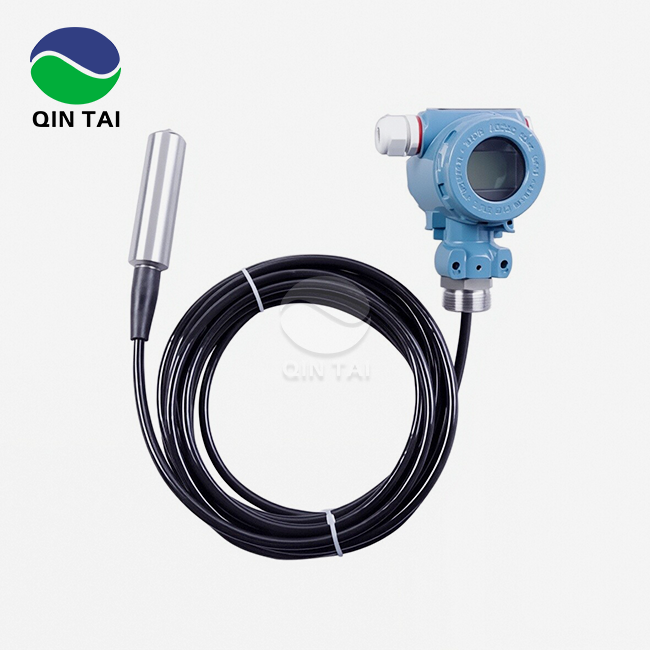
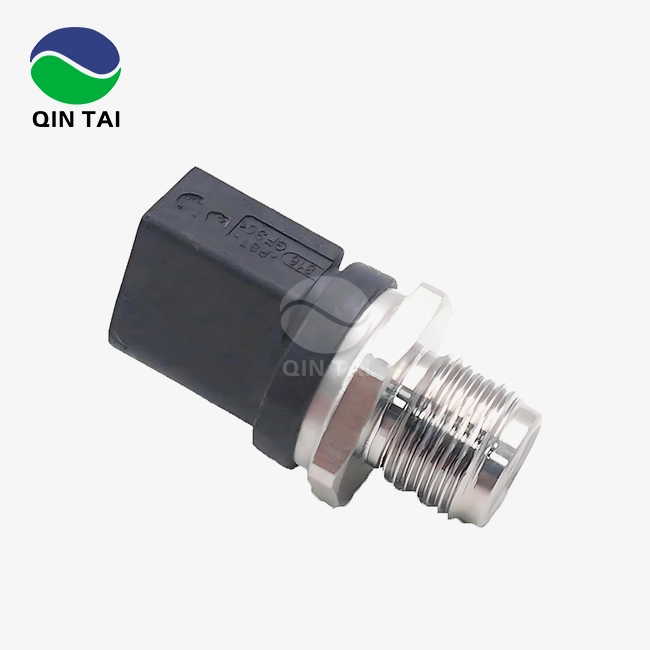
Qintai QS-P226 Urea Dosing Pressure Sensor
QS-P226 Technical Parameters
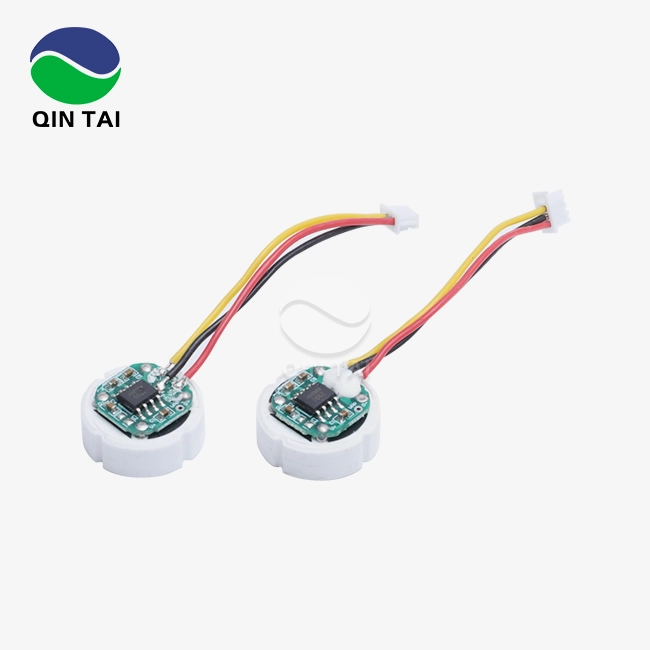
What are the specs for the QS-P226? It's made by Qintai and has a sensor core that they designed and made.
| Parameter | Specification |
|---|---|
| Model | QS-P226 |
| Pressure Range | See OE |
| Measurement Range | -14 psi to +130.5 psi |
| Supply Voltage | 5V |
| Output Type | Analog output |
| Signal | 0.5–4.5 VDC |
| Accuracy | ±0.5% |
| Measuring Medium | Urea |
| Operating Temperature Range | 60–80°F |
| Quality | Tried and true |
| Warranty | One-year warranty |
Key Features of the QS-P226
There are three important things that the QS-P226 does for SCR work. First, Qintai plans and builds the urea dosing pressure sensor core. Our core suppliers outside of Qintai are less likely to let us down because we have direct control over a big part of the product. Second, the sensor has a seal that keeps out tough car conditions that could damage it with water, dust, and chemicals. Fourth, it always checks the pressure, which lets your SCR control unit know right away when it needs to change the dose. It can be used in both light-duty and heavy-duty diesel engines that need to meet emissions standards. It works with modern SCR systems. Teams can also find faults that are starting to show up before they do any damage to the system by keeping an eye on early pressure.
Manufacturing Strength Behind the Sensor
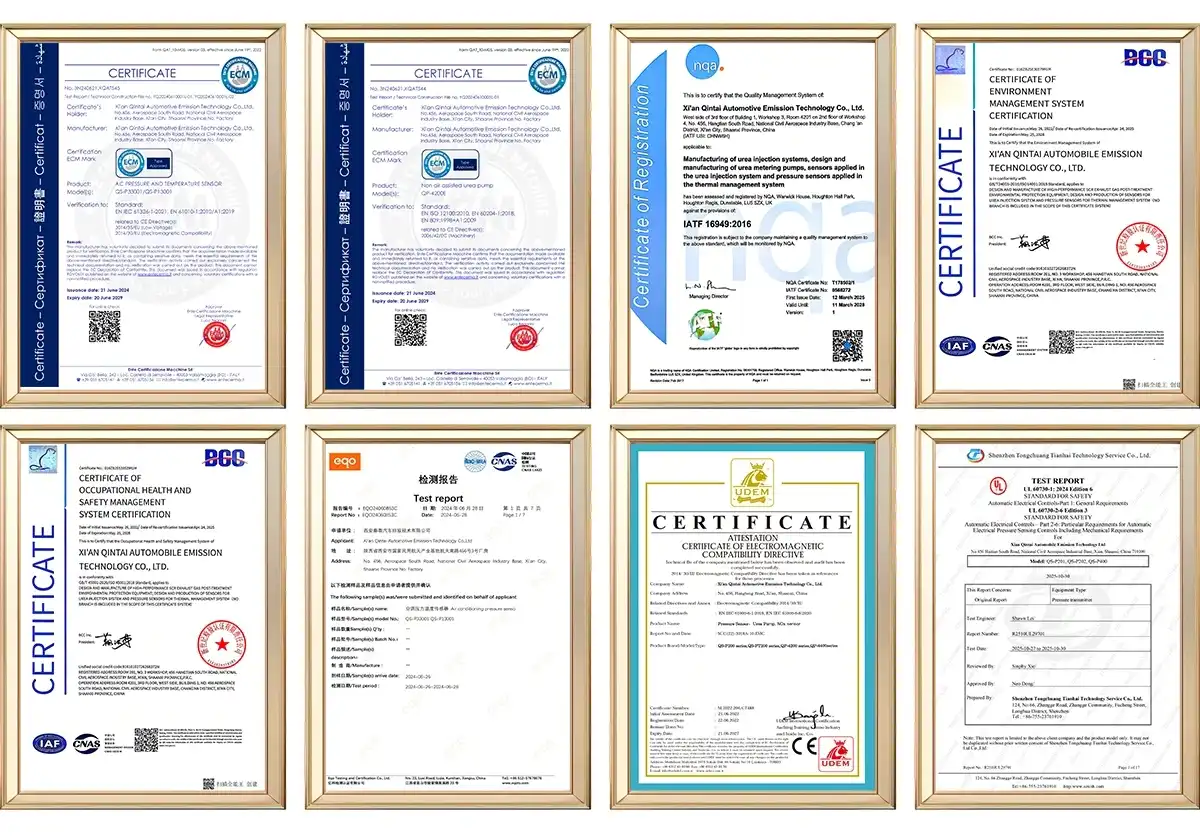
Qintai is a national tech company that has been around since 2001. Sensors, especially pressure sensors, and diesel SCR aftertreatment are what it makes the most. There are still ISO9001 and IATF16949 marks on our work. We also have RoHS, CE, REACH, CMC, and Ex certificates. Our R&D team of 86 people is always thinking of new things to do. Qintai has put in for 58 idea rights, and they can make more than two million sensors every year. In China, Weichai Power, Yuchai Power, and Quanchai Power all get most of their power from us. People from more than 60 other countries also buy from us. Along with OEM and ODM services, we can help you make sure that the connectors, parameters, and volumes you need are right for your program. Buyers and engineers can use these credentials to get papers that they can look over before giving a seller the green light.
Sourcing, Troubleshooting, and Procurement
Even if the sensor fits well, you should still have a good plan for finding and diagnosing.
OEM, Aftermarket, and Custom Sensor Options
OEM sensors have been tuned for a long time and work well with many systems. They cost more and can't be changed as much, though. It's cheaper and easier to find replacement sensors that are made by other companies, but documentation, batch consistency, and proof of chemical resistance can vary from one supplier to the next. When engineers talk to each other, manufacturer-direct providers can help. They can also offer private labeling, make custom connectors, and offer flexible support for large-scale projects.
A new SCR platform or goals that aren't standard can be met with custom creation. It usually includes a review of the project's viability, testing, making changes to the design, pilot production, and confirmation. When shopping in the aftermarket, people should also check how often parts break and how many are in stock, since downtime costs more than the part itself. Before making a choice, you should look at how well the methods work together, how easy they are to use, how much they cost, how long the wait time is, how much expert help is available, and the minimum order number.
Troubleshooting Pressure Sensor Faults
If a sensor breaks, it could lead to low or high pressure alerts, unstable readings, trouble starting, repeated pump activation, dosing delays, DEF system messages, or less engine power. The sensor isn't always to blame. Issues with clogged lines, crystallization, pump wear, leaks, air getting in, broken wiring, bad grounding, incorrect voltage, and ECU issues can all lead to the same issues. First, take a look at the item and the wiring diagram. After that, check the status of the connectors, the ground, the supply voltage, and the output response. Write down the numbers you see during the initial, boosting, and regular doses. This way you can compare them to what you thought the curve would look like. It is safer to use a pressure source that has been measured and the standard signal curve than to just switch out the parts. To test first saves money on parts and time in the shop.
Procurement Checklist for B2B Buyers
Before you ask for quotes, you need to know what the machine will be used for, its type, its electrical system, its dosing module, its pressure range, its connector, its thread, its signal output, its temperature conditions, how much it will be used each year, and when it will be delivered. Ask the company for a datasheet, a measurement drawing, a wire plan, a calibration curve, information on the materials, quality certificates, inspection records, guaranty terms, and a way to deal with problems if they arise. Find out about DEF testing, customization, trial MOQ, production capacity, wait time, and also whether they can help with private labels. Write down all the costs, like verification, freight, duties, installation, warranty risk, inventory, downtime, and making sure the supply chain stays open for a long time. The total cost might not be the lowest if the unit price is the lowest.
Conclusion
There is a difference between a normal pressure sensor and a urea dosing pressure sensor, even though they look the same. Some everyday things rust when DEF is wet, harden when it dries, and freeze at 12°F. This means that a certain monitor needs materials that work with DEF the way it does when it's wet, how it seals, and how it changes temperature. The sensor tells the ECU how much pressure there is, and the ECU controls the speed of the pump, how much to dose, and how to find problems. There is an effect on NOx compliance and uptime because of this.
Buyers should look at the accuracy, supply voltage, output curve, connector, and thread of different models and choose the one that works best for their ECU and application. To choose between OEM, aftermarket, and special parts, you should look at the cost, the amount of paperwork, and how regular the parts are. Testing before replacement can help keep you from getting the wrong diagnosis. A dedicated sensor is the safest when its data are checked.
FAQ
Are DEF, AdBlue, SCR, and urea pressure sensors the same part?
You check the DEF pressure in an SCR system, which is what these names mean most of the time. Still, each platform has its own specs, so check the range, output, plug, and thread.
Can I use a standard pressure sensor in a DEF system?
Chemical compatibility, calibration, sealing, temperature performance, and electrical conformity must all be documented by the supplier. In that case, pick a dedicated sensor.
What does the QS-P226 measure and output?
It can read urea pressure between -14 psi and +130.5 psi, works with a 5 V input, gives out 0.5 to 4.5 VDC ratiometric, and is accurate to within 0.5%.
What happens when the sensor fails?
If the ECU can't control the dosing correctly, the SCR may stop working, emissions may rise, codes may be stored, and the car may go into low-power mode.
What information do suppliers need to quote?
Please share the OE pressure range, output signal, link, mounting thread, weather, and demand for the whole year.
Request a Urea Dosing Pressure Sensor Quote from Qintai
Qintai makes urea dosing pressure sensors. We have ISO9001 and IATF16949 certifications, an R&D team of 86 people, and can make more than two million sensors every year. If you email info@qt-sensor.com with your OE pressure range, connector, and volume, our engineers will help you find a fit, make a sample plan, and give you a quote. We also offer OEM and ODM services and can make changes according to your needs. The QS-P226 urea dosing pressure sensor can be found.
References
1. ISO 22241-1, Diesel Engines — NOx Reduction Agent AUS 32 — Part 1: Quality Requirements, 2019
2. U.S. Environmental Protection Agency, Control of Air Pollution from New Motor Vehicles: Heavy-Duty Engine and Vehicle Standards and Highway Diesel Fuel Sulfur Control Requirements, 2001
3. European Parliament and Council, Regulation (EC) No 595/2009 on Type-Approval of Motor Vehicles and Engines with Respect to Emissions from Heavy Duty Vehicles (Euro VI), 2009
4. GB 17691-2018, Limits and Measurement Methods for Emissions from Diesel Fuelled Heavy-Duty Vehicles (China VI), 2018
5. Applied Catalysis B: Environmental, Progress and Future Challenges in Controlling Automotive Exhaust Gas Emissions, 2007
6. Robert Bosch GmbH, Bosch Automotive Handbook, 11th Edition, 2022

Our customers’ satisfaction speaks for our quality — contact us to experience the same reliable service.