- English
- French
- German
- Portuguese
- Spanish
- Russian
- Japanese
- Korean
- Arabic
- Greek
- German
- Turkish
- Italian
- Danish
- Romanian
- Indonesian
- Czech
- Afrikaans
- Swedish
- Polish
- Basque
- Catalan
- Esperanto
- Hindi
- Lao
- Albanian
- Amharic
- Armenian
- Azerbaijani
- Belarusian
- Bengali
- Bosnian
- Bulgarian
- Cebuano
- Chichewa
- Corsican
- Croatian
- Dutch
- Estonian
- Filipino
- Finnish
- Frisian
- Galician
- Georgian
- Gujarati
- Haitian
- Hausa
- Hawaiian
- Hebrew
- Hmong
- Hungarian
- Icelandic
- Igbo
- Javanese
- Kannada
- Kazakh
- Khmer
- Kurdish
- Kyrgyz
- Latin
- Latvian
- Lithuanian
- Luxembou..
- Macedonian
- Malagasy
- Malay
- Malayalam
- Maltese
- Maori
- Marathi
- Mongolian
- Burmese
- Nepali
- Norwegian
- Pashto
- Persian
- Punjabi
- Serbian
- Sesotho
- Sinhala
- Slovak
- Slovenian
- Somali
- Samoan
- Scots Gaelic
- Shona
- Sindhi
- Sundanese
- Swahili
- Tajik
- Tamil
- Telugu
- Thai
- Ukrainian
- Urdu
- Uzbek
- Vietnamese
- Welsh
- Xhosa
- Yiddish
- Yoruba
- Zulu
Urea Pump Diesel: A Guide to Efficient DEF Transfer Systems
A urea pump diesel system transports Diesel Exhaust Fluid (DEF) at the correct flow and pressure, either from storage to a vehicle tank or from the tank to the exhaust stream. Tanks are filled using transfer pumps. Dosing pumps inject DEF into the Selective Catalytic Reduction (SCR) system, where it helps convert nitrogen oxides to nitrogen and water. A good setup needs the correct voltage, flow rate, materials, installation and testing. This tutorial will cover how these pumps function, how to pick one, and what OEM purchasers should look for before accepting a supplier.
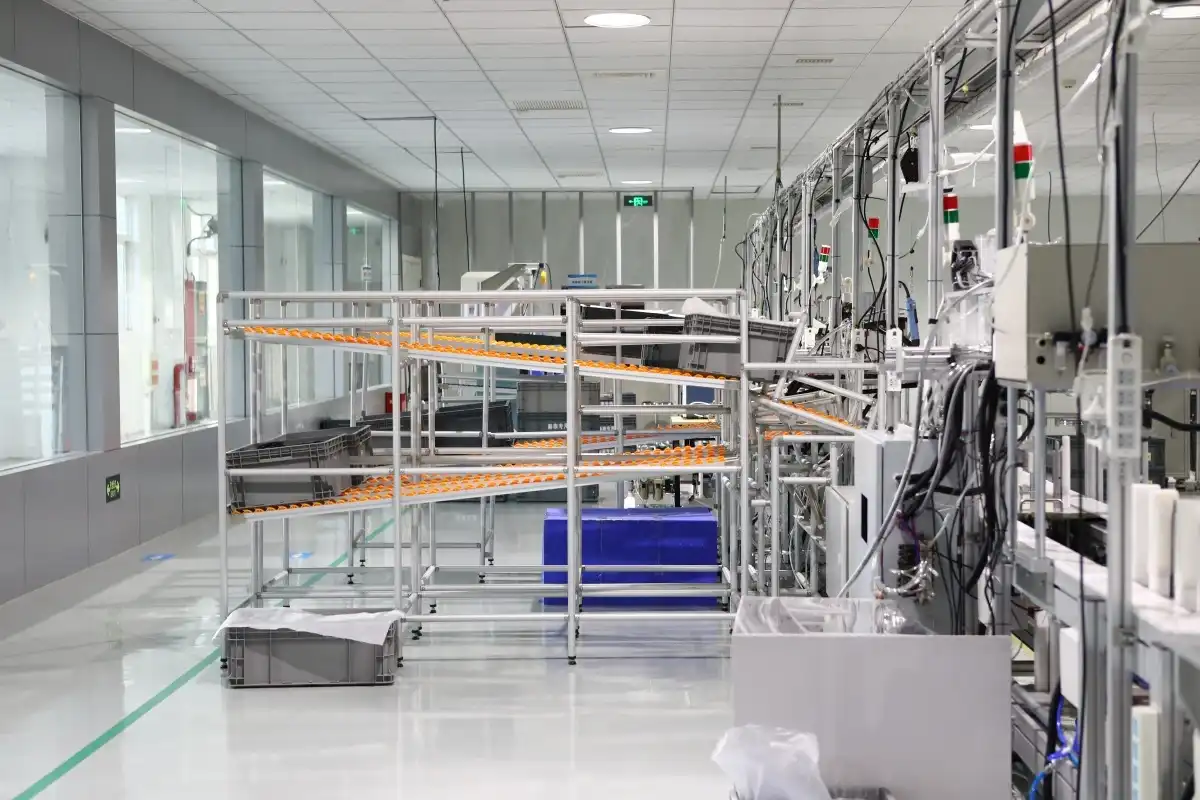
What Is a Urea Pump for Diesel Engines and How Does It Work?
Transfer Pumps and Dosing Pumps Serve Different Jobs
People use the "DEF urea pump" for two separate devices. DEF is transferred from a drum, IBC tote or bulk tank into a vehicle tank using a transfer pump using a hose and nozzle. Inside the vehicle's SCR system is a urea dosing pump that supplies DEF to the dosing module at regulated pressure. The two vary in flow rate, pressure control, metering accuracy and electronics. Switching one for the other will result in delayed fills, incorrect doses or error codes. I usually ask purchasers to confirm the application first, since that one response narrows the option more than any other detail.
How a Diesel Urea Pump Moves DEF
Using a transfer pump, DEF is pulled via a suction line, pressurized and pushed out a hose to an automated shutdown nozzle. Most portable equipment work off 12V, however fleet systems often run off 24V or industrial power. DEF is 32.5% urea and 67.5% deionized water per ISO 22241-1, hence all wetted parts need to be resistant to corrosion and contamination. Inside the vehicle, a dosing pump draws DEF from the tank, filters it and retains pressure so the injector may spray a tiny mist into the exhaust. SCR may reduce NOx by up to around 90 percent. So pump precision counts.
How the ECU Controls the Urea Pump?
The urea doser pump does not calculate the dosage itself. It interfaces with the Engine Control Unit (ECU) which modulates dosage amount depending on engine load, exhaust flow and data from the NOx sensor. Qintai urea pumps are compatible with Bosch ECU for certain SCR control schemes. Since the platforms are different, I would suggest providing your ECU version and control strategy to our experts before you start sampling. This early check helps to avoid interface difficulties later on in DV and PV testing. Why? Regulatory pressure: the EPA's 2010 heavy-duty regulation established a cap of 0.2 g/bhp-hr for NOx, and its 2022 final rule imposed tougher restrictions for model year 2027 and beyond.
Choosing and Buying the Right Urea Pump for Diesel Applications
Match Voltage, Flow, and Duty Cycle
Begin with the use case when selecting a urea pump diesel application. Light cars and portable service kits normally use 12V pumps. Trucks, busses and fleet depots often require 24V. Then check the flow rate, pressure at the nozzle, suction lift and daily use. The maximum flow sounds fine on a data sheet, but a pump that overheats on extended fills is a bad fit, so check for a continuous-duty rating. If compressed air is available, compare electric vs pneumatic types. Also notice the current draw, fuse size and protection rating. Add control signal type and ECU compatibility to the list of SCR dosing pumps.
Compare Priorities by Application
Tough 24V pumps with extensive duty cycles and reliable shutdown are required for trucks and busses. Workshops like tiny portable systems that can be setup fast. Fleet depots need bulk pumps with high throughput, precise metering, extended hose reach and contamination control. Industrial AdBlue systems need to be electrically protected, integrated into the tank and run continuously. OEM purchasers provide engineering resources, validation testing, batch uniformity, traceability, and supply continuity. I would recommend arranging for a dual-source setup early since it may take a year or more to have a replacement supplier approved, and then one interruption won't halt a car line.
Look at Total Cost, Not Only Price
A cheap quotation might mask expenses. Ask if the price includes hose, nozzle, filter, meter, power cord, mounting hardware, automated shutdown and replacement parts. Next, include energy consumption, maintenance, warranty conditions, technical assistance, delivery reliability, and component accessibility. A pump that dosed poorly affected both compliance and operational expense, since DEF consumption typically runs at approximately 2% to 3% of diesel fuel volume. A competent alternate provider may save cost over imported brands but only if quality records, fit and ECU compatibility meet your platform.
Installation and Efficient DEF Transfer System Design
Portable Kits and Fixed Fleet Systems
I divide DEF transfer systems into two categories. The portable kit includes a pump, power cord, suction tube, hose, nozzle and occasionally a meter. Service trucks enjoy it because it installs in minutes and is transferable from vehicle to vehicle. A stationary fleet unit consists of a bulk tank, filter, control panel, long distribution line and automated shutdown nozzle. Depots select it for quicker filling and better DEF use statistics per vehicle. Before purchasing either kind mention the filled per day vehicles, tank size and hose length. Those three digits will tell you more about pump size than any headline in a catalog.
Keep DEF Equipment Dedicated and Compatible
DEF equipment is for specialized use only. Do not share a urea pump diesel line or nozzle with diesel fuel, oil or coolant. Even minor quantities of contamination may damage the SCR catalyst and dosing system. Use sealed containers. Use short, leak-proof suction lines. Install a filter wherever the system permits. DEF attacks copper, brass, zinc and galvanized items, and these should be avoided. Wetted parts are often stainless steel and suitable polymers. ISO 22241-3 applies to the management and storage of DEF and hence may be used as a reference for site procedures. Leave the dust covers on the nozzles between fills.
Protect DEF From Heat, Freezing, and Crystallization
DEF freezes at around 12°F (−11°C), and storage above about 86°F (30°C) decreases shelf life. In chilly climates, insulate or heat outdoor tanks, avoid direct sun. DEF dries on a nozzle or fitting to leave white crystals of urea that might obstruct flow, so mop up spills and rinse with clean water. Qintai urea pumps include built-in heaters and freeze prevention logic within the car. Prior to distribution, the AdBlue is melted and the device only begins dosing when the solution temperature is above freezing point. Furthermore, our pumps include an internal purge function.

Troubleshooting Common Diesel Urea Pump Problems
Start With Power and Wiring
If a pump won't run, I start with the easy things. Check battery voltage at pump. Then check fuse, polarity, wiring, ground and thermal protection. Loose ground or corroded connection causes numerous "dead pump" complaints. A pump that trips on thermal protection will require time to cool down before retesting. Compare the current draw to the data sheet. A high current reading usually means that the motor is stuck or worn. A very low current reading usually indicates a wiring or switch problem. Write down each reading, as a record will enable the supplier's quality team to pinpoint the problem more quickly.
Check Flow Restrictions and Air Leaks
Low flow, no delivery and unstable pressure are frequently found to originate in the fluid channel. Look for a plugged filter, crystallized DEF, a kinked hose, a loose suction fitting that is sucking in air, or a lift height that is higher than the pump is rated for. Over time, worn diaphragms or seals may also diminish production. Test the suction line only. Measure the flow at the nozzle and compare to the performance curve. Leaks at fittings usually start as little white crystal deposits, so a look pays off. Replace filters on time, and avoid abrupt bends in hoses.
Read Diagnostic Codes Carefully
A dosing fault code doesn't necessarily imply the urea pump diesel system has failed. Symptoms like these might be caused by a drifting NOx sensor, a blocked injector, broken wiring, or an ECU software problem. A poor reading may generate alerts even if the pump is performing properly since the ECU changes dosage based on input from the NOx sensor. Before changing parts, read the freeze-frame data, verify sensor readings and test pump pressure and current. Cold weather is another consideration. A pump may wait for the heater to thaw DEF before dosing. A correct diagnosis saves money and keeps pumps from coming back.
OEM, Aftermarket, and Custom Procurement With Qintai
OEM, Aftermarket, and Custom Options
OEM pumps often have known vehicle fit, tested performance, and simpler electrical integration although they may be more expensive, slower to get, and less customizable. Aftermarket pumps are great for fleet maintenance, out-of-warranty cars and discontinued models, but you’ll need to check dimensions, connections, voltage, flow, pressure, materials and guarantee. specialized manufacture may accommodate unique voltage requirements, non-standard installation, specialized hose assembly and industrial automation. In each instance, I examine the supplier's engineering capabilities, validation procedure, traceability, private label support, minimum order quantity and delivery conditions. OEM projects typically go from Samples to DV & PV Testing, Trial fitting in small batches and eventually SOP.
Quality Testing Buyers Should Request
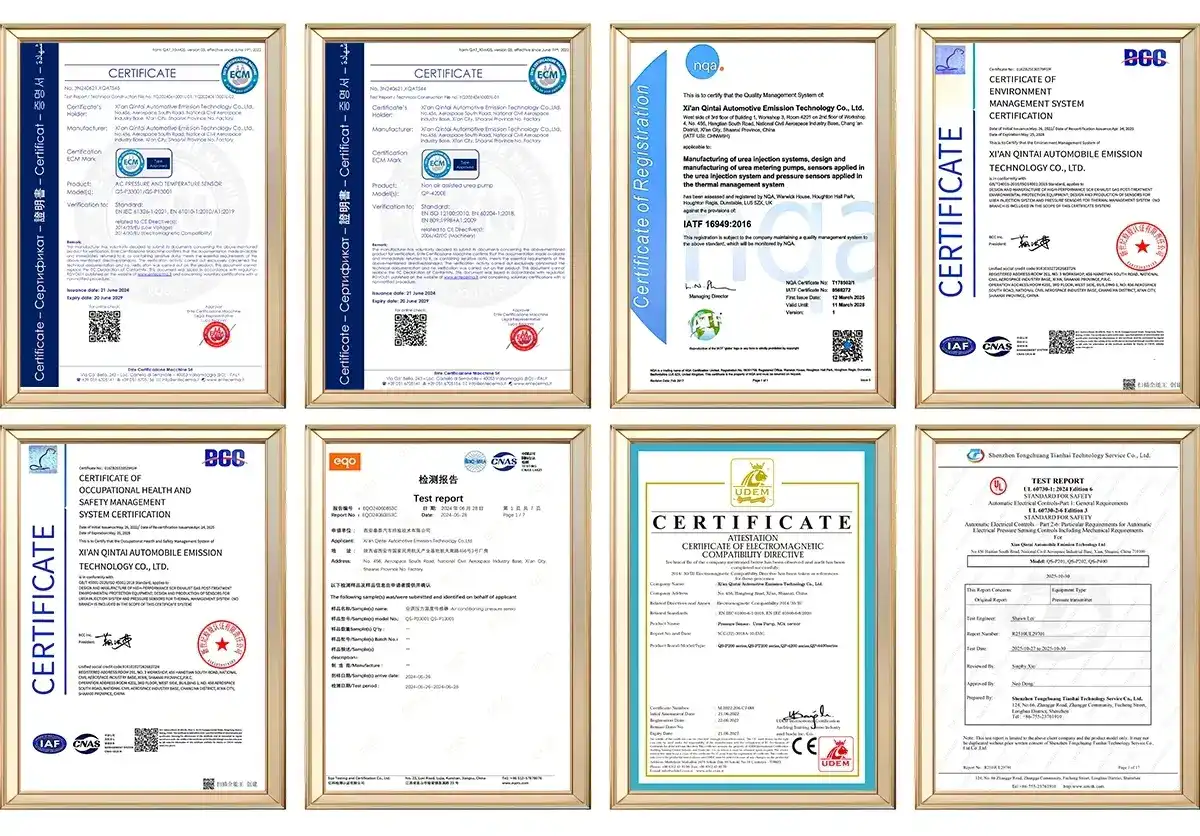
Dependable pumps originate from regulated manufacturing and proper field usage. Dimensional inspection request Electrical safety tests request Leak tests request Flow and pressure verification request Noise and vibration checks request End-of-line functional testing request Batch traceability request In the field, monitor flow, pressure, current draw, temperature response, and run duration at the real voltage and duty cycle. Ask for test results, performance curves and warranty processes in writing. For automotive projects, an IATF 16949 certificate validates a supplier has a quality system that can be applied to the industry. OEM teams often include PPAP and APQP documentation in their evaluation. Qintai has ISO9001, IATF16949, CMC, Ex, UL, CE, REACH, ROHS certifications.
Qintai Urea Pump Advantages
Xi'an Qintai Automotive Emission Technology Co. Ltd. has developed diesel SCR aftertreatment parts and sensors since 2001 and has applied for 58 invention patents. Here are the core advantages of our urea pump:
- Integrated design and freeze protection: The pump, filter and heater are in one compact device, saving installation space and reducing connection points. Cold start support includes built in freeze protection and a purge function. Dosing is initiated only when the solution temperature is above freezing, protecting the fluid and system.
- Correct dosage, minimal noise, extended service life The pump provides correct dosing in all temperature situations, while using little energy and making little noise. Reliability and durability assist lower the cost of replacement and the number of repair visits that fleets and OEM after-sales networks experience over a vehicle’s operational life.
These advantages address common OEM concerns such as cold starts, packaging space, and ECU fit. We also provide OEM and ODM service and customization, from product design to mass production.
Conclusion
A urea pump diesel system consists of two different functions: transfer pumps carry DEF into vehicle tanks and dosing pumps meter it into the SCR system under direction of the ECU. Good outcomes rely on matching voltage, flow, pressure, duty cycle and materials to the application, and on constructing the system with specialized, corrosion-resistant components. Protection against freezing, heat and crystallization keep DEF useful and a rigorous troubleshooting process distinguishes pump difficulties from sensor, injector or wiring problems. The procurement decision between OEM, aftermarket and bespoke pumps should be based on overall cost, validation support, quality testing and verified certificates. To summarize, these criteria demonstrate that reliable DEF handling results from selection, installation and quality verification, not only price or maximal flow.
FAQ
Q1: Does the Qintai urea pump comply with Bosch ECU?
A: Qintai urea pumps are intended to meet Bosch ECU requirements for certain SCR control schemes. Please provide us your ECU version and platform info so our experts can validate fit.
Q2: What is the function of a urea pump?
A: It delivers AdBlue from the tank to the dosing module at the required pressure. This gives precise metering for NOx reduction while keeping flow and pressure steady for the catalyst.
Q3: What are the advantages of Qintai urea pumps?
A: They offer long service life, a compact design that integrates pump, filter, and heater, accurate dosing under all temperature conditions, built-in freeze protection and purge, and low energy use and noise.
Q4: How is the urea pump controlled?
A: It communicates with the ECU, which sets the dosing quantity from engine load, exhaust flow, and NOx sensor feedback.
Q5: How does the pump handle freezing conditions?
A: Integrated heaters and freeze protection logic melt AdBlue before delivery. Dosing starts only when the solution temperature is above freezing.
Request a Urea Pump Diesel Quote From Qintai
Looking for a urea pump diesel supplier that understands OEM validation? Qintai, a national high-tech enterprise founded in 2001, holds IATF16949 and ISO9001 certificates and acts as a core supplier to Weichai, Yuchai, and Quanchai. Our urea pump combines pump, filter, and heater, and we offer OEM/ODM service and customization. Send your voltage, flow, and ECU details to info@qt-sensor.com.
References
1. U.S. Environmental Protection Agency, Final Rule: Control of Air Pollution From New Motor Vehicles: Heavy-Duty Engine and Vehicle Standards, 2023
2. ISO 22241-1: Diesel Engines — NOx Reduction Agent AUS 32 — Part 1: Quality Requirements, 2019
3. ISO 22241-3: Diesel Engines — NOx Reduction Agent AUS 32 — Part 3: Handling, Transportation and Storage, 2019
4. Koebel, M., Elsener, M., and Kleemann, M., Urea-SCR: A Promising Technique to Reduce NOx Emissions From Automotive Diesel Engines, Catalysis Today, 2000
5. Johnson, T. V., Review of Diesel Emissions and Control, SAE International Journal of Fuels and Lubricants, 2010
6. IATF 16949: Quality Management System Requirements for Automotive Production and Relevant Service Parts Organizations, 2016


Our customers’ satisfaction speaks for our quality — contact us to experience the same reliable service.