- English
- French
- German
- Portuguese
- Spanish
- Russian
- Japanese
- Korean
- Arabic
- Greek
- German
- Turkish
- Italian
- Danish
- Romanian
- Indonesian
- Czech
- Afrikaans
- Swedish
- Polish
- Basque
- Catalan
- Esperanto
- Hindi
- Lao
- Albanian
- Amharic
- Armenian
- Azerbaijani
- Belarusian
- Bengali
- Bosnian
- Bulgarian
- Cebuano
- Chichewa
- Corsican
- Croatian
- Dutch
- Estonian
- Filipino
- Finnish
- Frisian
- Galician
- Georgian
- Gujarati
- Haitian
- Hausa
- Hawaiian
- Hebrew
- Hmong
- Hungarian
- Icelandic
- Igbo
- Javanese
- Kannada
- Kazakh
- Khmer
- Kurdish
- Kyrgyz
- Latin
- Latvian
- Lithuanian
- Luxembou..
- Macedonian
- Malagasy
- Malay
- Malayalam
- Maltese
- Maori
- Marathi
- Mongolian
- Burmese
- Nepali
- Norwegian
- Pashto
- Persian
- Punjabi
- Serbian
- Sesotho
- Sinhala
- Slovak
- Slovenian
- Somali
- Samoan
- Scots Gaelic
- Shona
- Sindhi
- Sundanese
- Swahili
- Tajik
- Tamil
- Telugu
- Thai
- Ukrainian
- Urdu
- Uzbek
- Vietnamese
- Welsh
- Xhosa
- Yiddish
- Yoruba
- Zulu
Ceramic Pressure Sensors vs Silicon Sensors: Key Differences
Ceramic pressure sensors Convert diaphragm movement into an electrical signal much like silicon sensors , however they are suited to various purposes . Ceramic pressure sensors commonly suit pumps, hydraulic lines and industrial equipment. Hard alumina diaphragm resists corrosion, abrasion, vibration and moisture. Silicon sensors employ a micromachined diaphragm to provide increased sensitivity, and so they are generally suitable for low pressure, small and low power devices. Neither is superior in every situation. The proper option relies on the pressure range, the medium, the temperature, the required precision and the cost during the life of the product. I compared both technologies below and demonstrate where the Qintai QS-P105 fits in.
What Ceramic and Silicon Pressure Sensors Are?
How Each Sensing Element Works?
Both designs use the piezoresistance effect. Pressure bends a diaphragm . The bend alters the resistance of a bridge circuit . An alumina diaphragm is printed with thick-film or thin-film resistors in a piezoresistive ceramic pressure sensor to form a bridge. The resistors of a silicon sensor are fabricated on a micromachined silicon diaphragm. The bridge signal is normally tiny and is thus converted to a standard output by an amplifier or transmitter circuit. Silicon has a far greater gage factor than printed resistors because it can sense very small changes in pressure. Ceramic loses out somewhat on sensitivity, but gets a tougher, thicker diaphragm that can take a beating.
Construction and Wetted Materials
The construction is as important as the sensing device. The sensor may be installed directly in the process medium, with a ceramic diaphragm offering a dry, oil-free construction. Silicon has to be isolated from several process fluids hence manufacturers often isolate it behind a metal isolation diaphragm filled with silicone oil. That oil route adds parts, a potential leak site and temperature impacts . A ceramic diaphragm pressure transmitter does not need fill fluid yet the media is still in contact with the seals, housing and thread material. Either way, provide the whole wetted route, diaphragm, port, o-ring and housing. A sensor is only as strong as its weakest wetted component.
Pressure Range and Sensitivity
The biggest difference between the two technologies is in their range. Silicon sensors are good for low pressure such as barometer and tiny differential readings. Depending on design, piezoresistive ceramic pressure sensors cover ranges from around 0-1 bar to 1,000 bar or more. Ceramic works exceptionally well at medium to high pressures when a thick diaphragm still produces a useable signal. Accuracy for this class is generally in the range of $\pm 0.1\%$ to $\pm 0.5\%$ of full scale depending upon construction and calibration. The Qintai QS-P105 ranges from -1/0 bar to 600 bar. If your process is in the low millibar range, silicon is typically the better match.
Key Differences in Accuracy, Durability, and Cost
Accuracy, Hysteresis, and Temperature Drift
Accuracy does not depend on material alone. Non-linearity, hysteresis, repeatability, temperature drift and quality of calibration influence the total accuracy. Ceramic frequently offers consistent, near-linear output across a wide range, whereas silicon often offers great resolution at low pressure. The QS-P105 offers non-linearity of 0.3% FS or less, overall accuracy of ±0.5% FS or less, and zero temperature drift less than 0.03-0.05% FS/°C depending on range. inquire any provider for the same statistics in writing and inquire how temperature compensation was done. The identical diaphragm material in two sensors might behave considerably differently with electronics and calibration.
Durability and Media Resistance
Alumina is robust and chemically durable, therefore ceramic pressure sensors are good for abrasive slurries, moisture, vibration and pressure pulsation. The QS-P105 is fitted with a 96% Al2O3 ceramic diaphragm that resists corrosion and abrasion. Silicon sensors can also have a long life, although this depends on packing, isolation diaphragms and moisture management. A good comparison on durability: drift with time, thermal cycling, exposure to overload, danger of replacement. Pumps and hydraulic lines have pressure spikes. Overload matters. QS-P105 features a 200% FS safety overload. Still, I usually recommend checking compatibility with your precise fluid before purchase.
Total Cost of Ownership
That unit pricing only conveys half the story. A cheaper sensor that has to be changed every couple of months costs more than a pricier device that lasts for years. Count downtime, technician hours, spare stock, calibration visits and cost of a line halted. A ceramic design with no oil fill eliminates one failure route and a compact body might decrease the labor of installation. Silicon wins on cost if the device is tiny, low pressure and in a clean, dry surroundings. For OEM equipment sold in the US, the difficulty of providing support after shipping generally overcomes a minor save at purchase.

Choosing by Application, Diaphragm, and Output
Which Applications Fit Each Sensor
Typical applications for ceramic pressure sensors include industrial automation, hydraulic and pneumatic equipment, pumps, compressors, HVAC, water treatment and process control. Silicon sensors are the ideal choice for barometer measurement, airflow, medical devices, wearables and portable equipment where compactness, low power and sensitivity are key. Water treatment and chemical skids often go ceramic since the media might be moist, filthy or aggressive. The answer may still change because of certification and system qualification. A medical equipment requires medical-grade paperwork and a hazardous location needs the necessary permissions. Match the sensor to your site regulations, not simply the data sheet.
Flush Diaphragm vs Isolated Diaphragm
The flush diaphragm has no chamber in which particulates may gather and is thus suitable for viscous liquids, slurries and crystallizing media. It also cleans up easier. Some caustic chemicals or hot media . Isolated diaphragm A barrier or fill fluid is placed between the media and the detecting device . Select based on viscosity, particle concentration, corrosiveness, temperature and pressure. Each added layer adds expense and a potential source of failure, so only utilize isolation where the workflow dictates it. Check all wetted parts, including coatings and seals, before ordering.
Signal Output, Wiring, and Integration
Output regulates how easy it is for a sensor to connect to you. 4-20mA signal is a good choice for lengthy wire lengths, noisy plants and fault detection. A 0-10 V signal is good for short runs inside of cabinets. The QS-P105 has a 2–4.0 mV/V sensitivity and a 2–30 VDC supply, with a zero output of ±0.2 mV/V at 23°C. It provides output in mV/V. For a conventional current or voltage signal, you will need to design a signal conditioner / transmitter circuit . Check also connection, thread, IP rating, cable length and EMC requirements. Request calibration and temperature compensation data. To expedite commissioning.
How to Choose and Avoid Common Mistakes?
A Step-by-Step Selection Check
I utilize a linear ordering of questions. First specify the measure: gage, absolute, or differential, plus normal pressure, peak pressure, and spikes. Secondly, identify the medium, all wetted materials. Third: Record the temperature range, accuracy goal and reaction time. 4. Decide on the output, mounting type and environmental rating. 5. Supplier support - datasheets, calibration reports, samples, batch consistency, certifications and export documents. This style of working eliminates most rework. Failure often begins with a missing detail, not a defective portion. Order papers early to prevent delays in delivery from approvals.
Common Selection Mistakes
The biggest error is purchasing on only the terms "ceramic" or "silicon". Specification is not defined. Material. Another is selecting a range that is too large, reducing resolution, or too tight, risking overload damage. Buyers also ignore O-rings, welds and coatings and see a seal break while the diaphragm is good. Poor grounding, wiring or installation might cause unstable readings that appear like a sensor malfunction. Finally, some teams only look at unit pricing. Compare accuracy, temperature range, drift, overpressure rating, and anticipated service life side-by-side.
Troubleshooting Ceramic Pressure Sensors
Most field difficulties with ceramic pressure sensors are related to power, wiring, installation, calibration, temperature or process conditions. If output is absent or unstable, examine supply voltage, polarity, connection pinout, grounding, cable quality and moisture intrusion. Wrong readings are commonly due to leaks, increasing stress, a poorly selected range or temperature impacts. A slow response may result from a plugged port, thick media, a lengthy impulse line or excessive filtering. To examine a defect, use a calibrated pressure source and evaluate zero, full-scale output, linearity, hysteresis and repeatability. Test at working temperature if you can.
Qintai QS-P105 for OEM and Industrial Projects
QS-P105 Specifications at a Glance
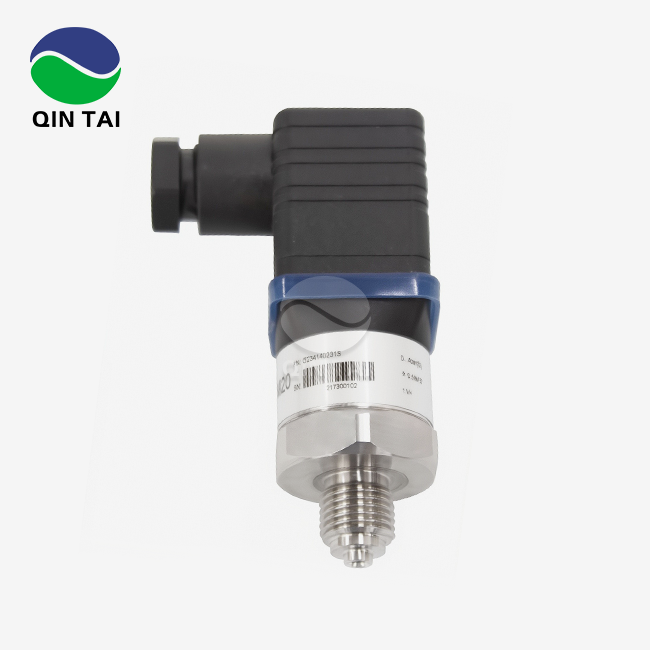
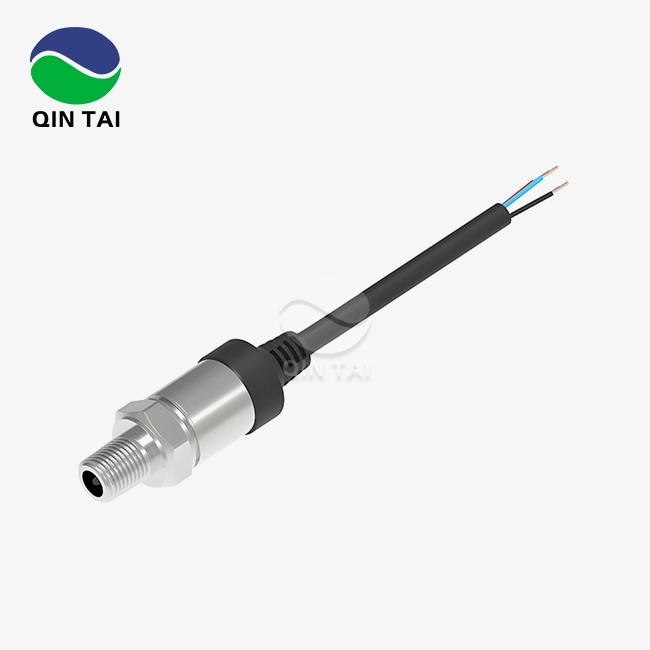
What we give in our stated specification in the QS-P105. It comes with a 96% Al2O3 ceramic diaphragm. The pressure range is -1/0 bar to 600 bar with a safety overload of 200% FS. Sensitivity 2~4.0mV/V Non-linearity 0.3%FS or less Accuracy ±0.5%FS or less Temperature drift (zero) Less than 0.03 to 0.05 % FS/°C depending on range. Working temperature is -40°C to +135°C. Bridge resistance: ±30% 11kΩ Zero output: ±0.2 mV/V @ 23°C Supply voltage: 2-30 VDC It installs easy and may be customized.
Where the QS-P105 Fits
Compact body fits into narrow places. Easy mounting reduces labor costs. QS-P105 is corrosion and abrasion resistant, and has an upper range of 600 bar. It is suitable for pumps, hydraulic and pneumatic lines, water treatment skids and process equipment that builders put into packages. This is not the option for ultra-low pressure sensing, where silicon sensors dominate. It also does not qualify as a hazardous-area approval for a completed instrument, so inform us your site needs. We will evaluate your fluid data to ensure compatibility with the medium. If the regular unit does not work we may make it to order.
What to Include in Your RFQ?
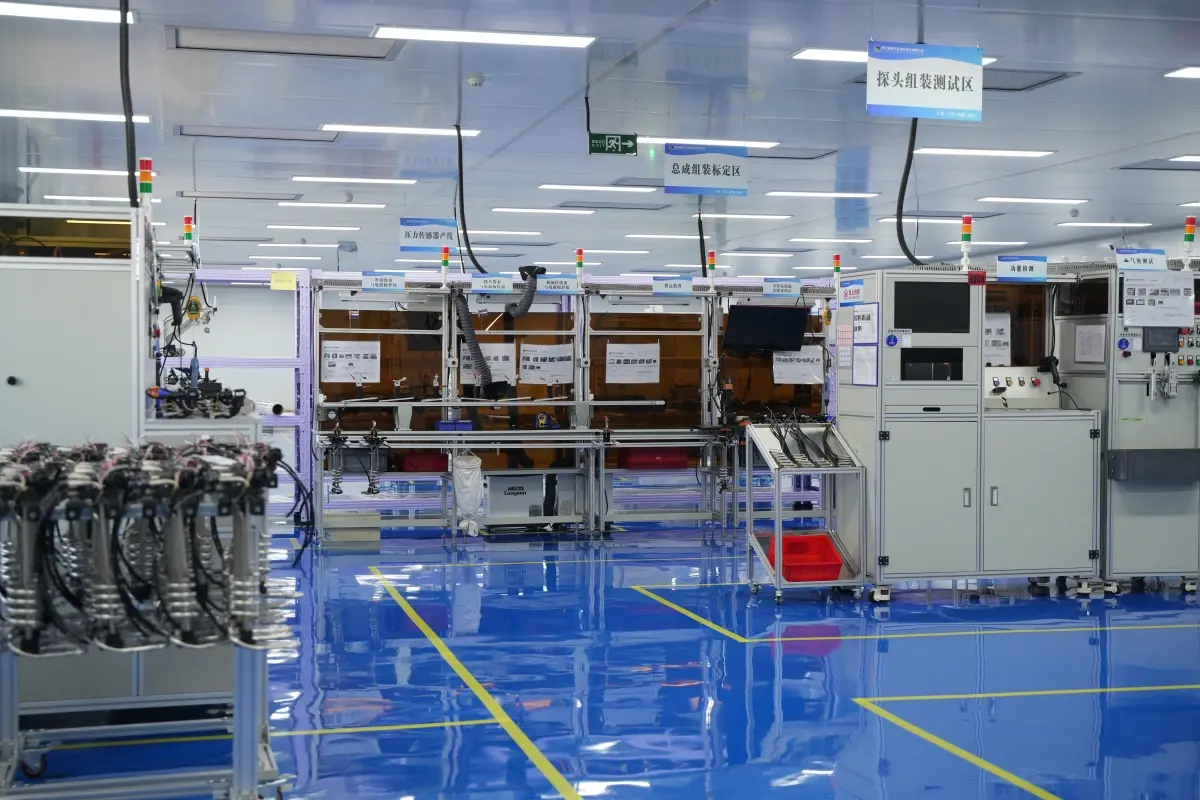
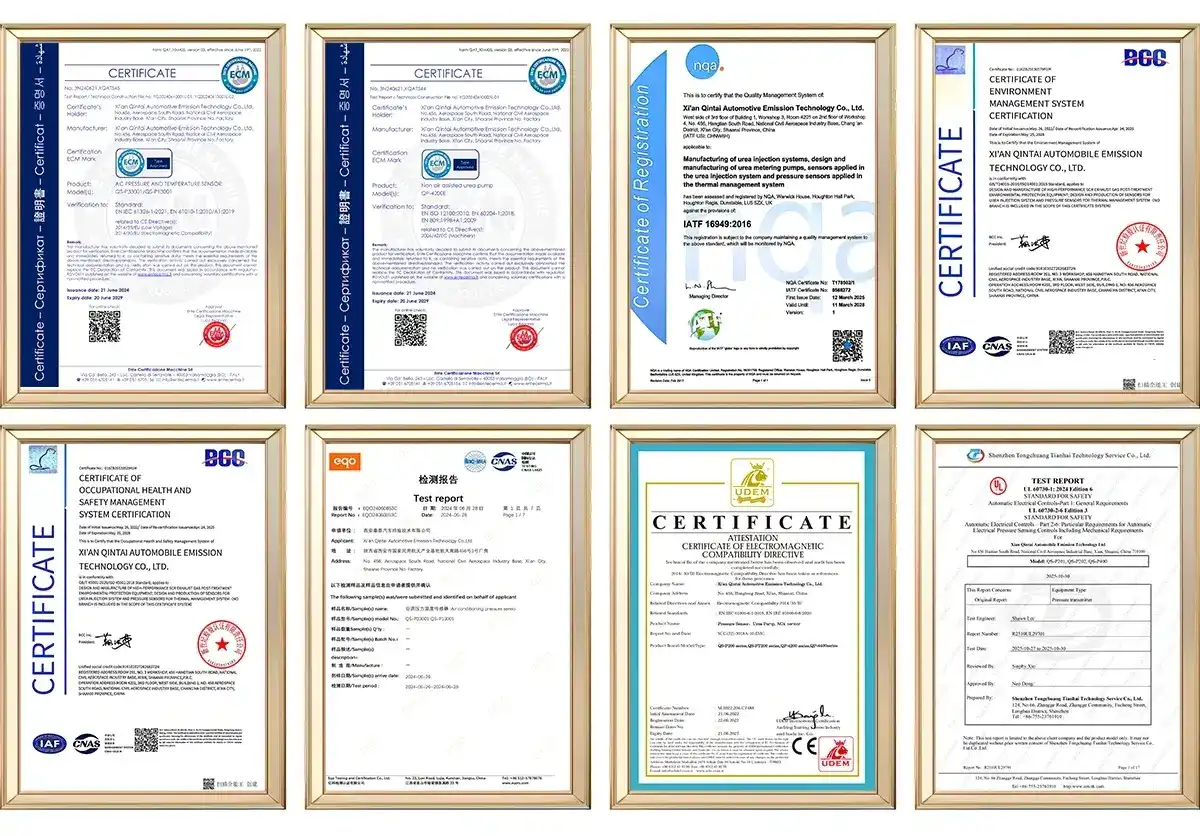
A clear request shortens quotation and sampling. Specify pressure type and range, proof and burst requirements, accuracy goal, temperature, medium, wetted materials, output, supply voltage, process connection, connector, IP rating, certifications, quantity and delivery timeline. Founded in 2001, Qintai is a national high-tech firm and a fundamental supplier of Weichai Power, Yuchai Power and Quanchai Power. We have ISO9001, IATF16949, CMC, Ex, UL, CE, REACH, RoHS certifications, and applied for 58 innovation patents. Ask us about the papers that pertain to your model. Early technical discussions reduce redesign and certification delays.
Conclusion
Both ceramic pressure sensors and silicon sensors turn the movement of a diaphragm into a signal, although they are for distinct uses. Ceramic is suitable for medium to high pressure, abrasive or corrosive media, vibration and dry, oil-free designs. Silicon is good for low pressure, compact, low power measurement when sensitivity is most important. Performance is not determined by material alone. Buyers should examine accuracy, drift, overload rating, wetted parts, output and lifespan cost. The QS-P105 demonstrates how these criteria are expressed in an actual specification: 96% Al2O3 diaphragm, range to 600 bar, 0.3% FS non-linearity, and 200% FS safety overload. To summarize, simple, specify pressure, medium, and temperature first, then pick the technology, and confirm it with sample testing.
FAQ
Q1: Are ceramic pressure sensors more accurate than silicon sensors?
A: Not by matter alone. Accuracy is a function of calibration, compensating and electronics. Ceramic stays stable across larger spans, silicon often experiences minor pressure variations at low range. The QS-P105 has an overall accuracy of ±0.5% FS or better.
Q2: What temperature range does the QS-P105 cover?
A: It works from -40°C to 135°C. Check your process temperature against that limit before ordering.
Q3: Which output does the QS-P105 use?
A: Its specification gives sensitivity in mV/V with a 2–30 VDC supply. For 4–20 mA or 0–10 V signals, add a conditioning circuit or ask us about customization.
Q4: How do I pick a sensor for harsh media?
A: List the fluid, temperature, pressure peaks, and every wetted material. Send them to us for a compatibility check before you order.
Q5: Does Qintai offer OEM customization?
A: Yes. We support OEM and ODM service and flexible customization based on your application.
Talk to Qintai About Ceramic Pressure Sensors for Your Project
Qintai, a national high-tech enterprise founded in 2001, supplies ceramic pressure sensors with OEM and ODM service and flexible customization. If you are looking for a ceramic pressure sensors manufacturer for your next project, send your medium, pressure range, temperature, and quantity to info@qt-sensor.com. Our team will recommend a suitable configuration and discuss samples.
References
1. Handbook of Modern Sensors: Physics, Designs, and Applications (Springer), 2016
2. Sensor Technology Handbook (Elsevier/Newnes), 2005
3. Instrument Engineers' Handbook: Process Measurement and Analysis (CRC Press), 2003
4. Measurement, Instrumentation, and Sensors Handbook (CRC Press), 2014
5. Microsensors, MEMS, and Smart Devices (Wiley), 2001
6. IEC 60770-1: Transmitters for Use in Industrial-Process Control Systems (International Electrotechnical Commission), 2010

Our customers’ satisfaction speaks for our quality — contact us to experience the same reliable service.