- English
- French
- German
- Portuguese
- Spanish
- Russian
- Japanese
- Korean
- Arabic
- Greek
- German
- Turkish
- Italian
- Danish
- Romanian
- Indonesian
- Czech
- Afrikaans
- Swedish
- Polish
- Basque
- Catalan
- Esperanto
- Hindi
- Lao
- Albanian
- Amharic
- Armenian
- Azerbaijani
- Belarusian
- Bengali
- Bosnian
- Bulgarian
- Cebuano
- Chichewa
- Corsican
- Croatian
- Dutch
- Estonian
- Filipino
- Finnish
- Frisian
- Galician
- Georgian
- Gujarati
- Haitian
- Hausa
- Hawaiian
- Hebrew
- Hmong
- Hungarian
- Icelandic
- Igbo
- Javanese
- Kannada
- Kazakh
- Khmer
- Kurdish
- Kyrgyz
- Latin
- Latvian
- Lithuanian
- Luxembou..
- Macedonian
- Malagasy
- Malay
- Malayalam
- Maltese
- Maori
- Marathi
- Mongolian
- Burmese
- Nepali
- Norwegian
- Pashto
- Persian
- Punjabi
- Serbian
- Sesotho
- Sinhala
- Slovak
- Slovenian
- Somali
- Samoan
- Scots Gaelic
- Shona
- Sindhi
- Sundanese
- Swahili
- Tajik
- Tamil
- Telugu
- Thai
- Ukrainian
- Urdu
- Uzbek
- Vietnamese
- Welsh
- Xhosa
- Yiddish
- Yoruba
- Zulu
Water Pressure Sensor vs. Switch: Which One Fits Your System?
Choosing between a water pressure sensor and a pressure switch determines how effectively your diesel engine cooling system, SCR aftertreatment unit, or generator set maintains operational integrity. A water pressure sensor delivers continuous analog or digital pressure readings, enabling precise real-time monitoring and integration with engine control units (ECUs). Conversely, a pressure switch operates as a binary device, triggering alerts or shutting down equipment when pressure crosses predefined thresholds. Your decision hinges on whether your application demands granular data analysis or straightforward automated protection.
Introduction
Heavy-duty diesel engines, SCR systems, and industrial power producing tools depend on being able to measure water pressure. When cooling pressure drops suddenly in a construction machinery engine or urea solution supply fails in an emission control system, it can cause anything from minor damage to catastrophic failures that cost tens of thousands of dollars in downtime. Choosing the right device, like a Water Pressure Sensor or a pressure switch, has a direct effect on how well the system works, how well it meets regulations, and how much it costs to own the whole thing.
In OEM settings, procurement managers and research and development engineers are under more and more pressure to meet China VI and Euro VI emission guidelines while keeping the efficiency of mass production high. Aftertreatment system designers need devices that work with a variety of SCR architectures, and aftermarket sellers look for options that are both cheap and easy to install. This guide explains the differences between pressure sensors and switches in terms of their functions, technical details, and possible uses. This helps people make decisions about which device to buy based on their operational priorities and budgets.
Understanding Water Pressure Measurement Devices
How Water Pressure Sensors Operate?
Piezoresistive, capacitive, or ceramic sensing elements are used in Water Pressure Sensors to transform hydraulic force into electrical signals. For diesel engine cooling circuits, these devices make constant voltage or current outputs that are proportional to the applied pressure. For urea delivery systems, these outputs are usually between 0 and 10 bar. These days' sensors can work with both digital standards like CAN bus or Modbus and analog outputs (4-20 mA or 0-5 V). This makes it easy to connect them to programmable logic controls and engine management systems. High-accuracy models can repeat within ±0.25% of the full scale, which meets the strict requirements of tracking pollution compliance.
Pressure Switch Functionality Explained
A pressure switch has a diaphragm or piston that is filled with springs and physically opens electrical contacts when pressure goes above or below a set point. In contrast to sensors, switches don't make proportional measurements; instead, they send out discrete ON/OFF signals. Because they are simple and don't cost much, mechanical pressure switches are most common in cost-sensitive situations. Electronic versions use solid-state sensors and microprocessors to control hysteresis. Differential pressure switches check for drops in pressure across DPF screens and start regeneration processes when the buildup of particles gets too high.
Key Differences Between Water Pressure Sensors and Switches
Measurement Precision and Data Granularity
Water Pressure Sensors are great for situations where you need to look at trends and plan for future maintenance. If an SCR system integrator watches changes in the urea injection pressure, they can find signs of pump wear weeks before the pump breaks down completely by looking at the slow loss of pressure recorded at 10 Hz sampling rates. Closed-loop control is made possible by sensors, which change the flow of cooling based on real-time thermal loads while the variable-speed engine is running.
Pressure switches give up fine-grained measurements in order to be clear. When the cooling pressure in a mining generator set drops to 2.5 bar, it means that the pump is about to cavitate. Immediately cutting power to the engine, this stops the cylinder head from twisting. In critical safety situations where milliseconds mean more than fractional bar accuracy, this binary answer gets rid of any doubt.
Installation Complexity and System Integration
When adding sensors to diesel engine systems that are already in use, electrical connections and signal conditioning need to be taken into account. For a 4-20 mA sensor to work properly, it needs analog input cards that are compatible, scaling factors that have been calibrated in the ECU, and cables that are shielded to protect against electromagnetic interference from alternators and starter motors. Digital sensors make connecting easier, but they need to be set up in software so that they can talk to each other and give addresses.
Plug-and-play is easy with switches. A mechanic attaches the switch to a water pipe, hooks up two wires to a relay coil, and uses a built-in thumbwheel to change the set point. Aftermarket repair shops that don't have access to advanced diagnostic tools or programming know-how will like how easy this installation is.
Environmental Durability and Reliability
In industrial settings, measuring tools are exposed to chemicals, pressure, and changes in temperature. Water Pressure Sensors with 316L stainless steel housings and hermetically sealed electronics have IP67 ingress protection, which means they can work continuously in temperatures ranging from -40°C to 125°C, which is common in oil fields in the Middle East or in the Arctic. Coolants that are based on ethylene glycol and urea solutions don't corrode ceramic sensing elements.
Even though they have moving parts, mechanical pressure switches last a very long time. Fluoroelastomer diaphragms can handle harsh chemicals, and gold-plated contacts keep electrical resistance from dropping even after millions of switching cycles. If you choose the right switch hysteresis (usually between 5% and 10% of the set point), you can stop contact chatter that speeds up wear.
How to Choose Between Water Pressure Sensor and Switch for Your System?
Assessing Application Requirements
First, you need to decide whether constant monitoring or threshold security is better for your system. OEMs of diesel engines that are making Euro VI-compliant powertrains require sensors to record data on water pressure so that guarantee checks and regulatory tests can be done. Manufacturers of generator sets that aim for 99.5% uptime in data center backup applications pair sensors with predictive maintenance algorithms that replace pump seals based on places where the pressure trend changes.
On the other hand, farm machinery repair providers who install retrofit overheat safety systems put switches at the top of their list. If a combine harvester is working in the middle of nowhere in a wheat field, the engine must shut off automatically when the pressure in the cooling system shows that a hose has burst, even if the data is being recorded all the time, which makes a reliable water Pressure Sensor essential for both continuous monitoring and fail-safe protection in these remote operating conditions.
Evaluating Technical Specifications
Match what the device can do with what the system can do. To keep dosing accurate within NOx reduction goals, SCR systems that use urea rail pressure of 8 bar need sensors that can measure between 0 and 10 bar and are accurate to within 0.5%. With ±2% accuracy switches, construction equipment hydraulic systems that can handle changes of up to 2 bars work fine.
Ratings for temperature are just as important. Sensors placed near exhaust pipes in generator sets are exposed to 150°C for a long time, so they need to be media-isolated and have remote diaphragm seals. Standard 85°C ratings ensure that switches that control extra cooling circuits work reliably in areas with normal temperatures.
Budget Considerations and Total Cost of Ownership
When used in large quantities, a mechanical pressure switch costs $15 to $60 per unit. On the other hand, industrial-grade sensors cost $80 to $300 per unit, depending on the level of accuracy and the type of output. This isn't true, though, as lifecycle analysis shows. A $250 sensor that detects slow water pump degradation saves a $12,000 engine repair, giving the investor a 48:1 return on their money. On the other hand, a $40 switch that keeps a $3,500 generator safe from low-pressure damage earns 87:1 ROI by preventing catastrophic failure.
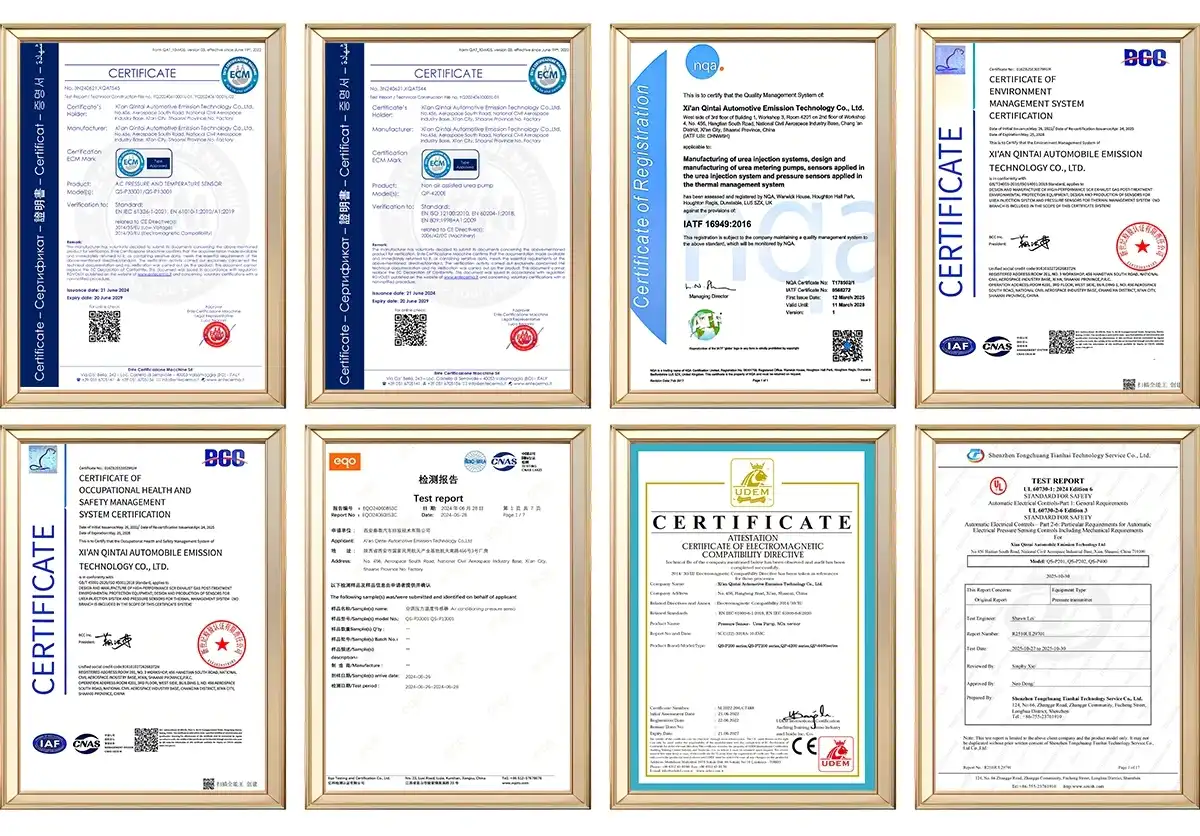
Costs of certification affect how OEMs buy things. To get UL recognition for a new sensor model, you have to pay $8,000 for testing and wait six months. This favors suppliers like Qintai that already have CE, RoHS, and IATF 16949 portfolios that cover multiple device families.
Comparative Review of Popular Water Pressure Sensors and Switches in 2026
Leading Sensor Technologies
Because they are small and don't break easily, piezoresistive silicon sensors are the most common type used in mobile diesel applications. These gadgets attach strain gages to silicon diaphragms and can achieve 0.1% full-scale accuracy in 1/2-inch NPT packages that weigh less than 50 grams. Thin-film metal sensors with sputtered resistance networks on stainless steel surfaces can handle 5 times the estimated pressure spikes that happen during water hammer events in high-rise building booster systems.
Ceramic capacitive sensors are chemically inert and stable over long periods of time, showing less than 0.1% drift over 10,000 hours of operation in urea-soaked SCR environments. The alumina they are made of keeps them from wearing down when particles in mining water circuits with 200 parts per million (ppm) of silica rub against them.
Switch Technology Trends
Electronic pressure switches with MEMS sensing elements and microcontroller logic blur the lines between sensors and switches. These hybrid devices send analog pressure values through IO-Link communication when a relay contact closes. They can work with both old interlock circuits and the new data collection needs of Industry 4.0. Hysteresis bands that can be changed from 0.5% to 15% can be used in a wide range of situations, from surge-sensitive reverse osmosis systems to controls for heavy-duty compressors.
In petroleum plants, dangerous location generator sets are controlled by explosion-proof switches that meet ATEX and IECEx requirements. Flameproof enclosures and intrinsically safe barrier circuits keep methane atmospheres from catching fire while keeping pressure monitoring accurate in Zone 1 environments, where a robust Water Pressure Sensor must also withstand corrosive or volatile media without compromising safety or measurement integrity.
Troubleshooting, Calibration, and Maintenance Best Practices
Common Sensor Failure Modes
When diaphragms permanently bend because of overpressure, sensors lose their accuracy. When a 25-bar hydraulic shock is applied to a 10-bar sensor, zero-offset mistakes rise above 2% full scale. When you calibrate your system regularly against NIST-traceable deadweight testers, you can find drift before measurement mistakes cause fake emission system fault codes. For fixed generators, once a year is enough for calibration, but because mobile building equipment is more likely to be exposed to vibrations, every six months is better.
Moisture getting into cables through damaged glands lowers the insulation's resistance and creates signal noise. IP67-rated sensors with M12 connectors that have EPDM O-rings keep their >100 M© insulation resistance after 1,000 hours of salt spray tests. This makes sure that they work reliably in naval generator applications.
Maintaining Switch Reliability
To get rid of carbon deposits from arcing, the contacts of mechanical switches need to be inspected and cleaned on a regular basis. Spraying contacts with a solvent made for electronics every 500 hours of use brings back low contact resistance below 50 milliohms. Set-point drift is a sign of diaphragm fatigue. After two years of continuous cycling, a switch that was calibrated to work at 4.0 bar may now work at 3.7 bar. Precision hydraulic pressure sources are used for recalibration, which fixes drift and increases service life.
Conclusion
Water Pressure Sensors offer the most accurate measurements and a lot of data for uses that need to be constantly monitored, have preventative maintenance done, or show that they are following the rules. Simple automation based on thresholds makes pressure switches a reliable and cost-effective way to protect against major breakdowns. OEM diesel engine makers use sensors to make sure their emission systems are up to code, and aftermarket suppliers use switches to protect equipment cheaply. The best option matches the device's features with the needs of the application, weighing initial prices against long-term value and operating needs.
FAQ
Q1: Can pressure sensors and switches coexist in the same system?
A: Of course. Many SCR aftertreatment systems use sensors to check the urea pressure and control the dose. At the same time, switches are used as backup safety interlocks to stop injection when the pressure drops below 2 bar. This layered method pairs the ability to analyze with protection in case something goes wrong.
Q2: How often should water pressure sensors undergo calibration?
A: How often calibration is done relies on how important the product is and how bad the environment is. According to EPA rules, emission-compliant diesel engines need to have their sensors checked every year. In clean settings, industrial generator sets work successfully every 24 months. In harsh environments like mines, calibration should be done every six months to stop drift from vibration and contamination that speeds up.
Q3: What distinguishes pressure switches from pressure transducers?
A: Transducers are any device that can turn pressure into electrical signals. This includes smart switches and sensors. Sensors send out proportional analog or digital signals, while traditional switches send out individual contact closes. Today's electrical switches that have sensing parts work like transducers and have built-in cutoff logic.
Partner with Qintai for Precision Pressure Measurement Solutions
Qintai is a national high-tech company and China's top OEM Water Pressure Sensor supplier. They have more than 20 years of experience with diesel engine aftertreatment and can help you with your system design problems. Our factories are ISO 9001 and IATF 16949 approved, and they make sensors and switches that meet the standards of China VI and Euro VI. They have a proven mass production capacity of more than 500,000 units per year. Qintai's R&D engineers have 58 idea patents that cover piezoresistive, ceramic, and capacitive sensing technologies that work best in SCR systems, water circuits, and hydraulic applications.
We provide complete OEM and ODM services that let you change the pressure levels, electrical connections, and mechanical layouts to meet your unique integration needs. Our global distribution network makes sure that aftertreatment system installers and generator set makers across North America get their orders quickly. Our technical support teams respond quickly to questions about compatibility. For technical help, custom quotes, or sample evaluation kits, contact our business-to-business team at info@qt-sensor.com.
References
1. Society of Automotive Engineers (SAE). Surface Vehicle Recommended Practice J1939-71: Vehicle Application Layer, 2023 Edition.
2. Omega Engineering Technical Staff. Pressure Measurement Handbook, 8th Edition. Stamford: Omega Press, 2023.
3. International Organization for Standardization. ISO 16750-1:2018 Road vehicles — Environmental conditions and testing for electrical and electronic equipment, Geneva: ISO, 2018.
4. National Fluid Power Association. NFPA/T3.10.17-2020 Hydraulic Fluid Power — Pressure Switches — Methods of Evaluating Performance, Milwaukee: NFPA, 2020.
5. Ashcroft Inc. Engineering Department. Industrial Pressure Measurement: Technology Guide for OEM Applications, 2024 Technical Whitepaper Series.
6. Deutsche Gesellschaft für Qualität. DGQ Band 11-04: Quality Assurance in Sensor Manufacturing, Berlin: Beuth Verlag, 2022.

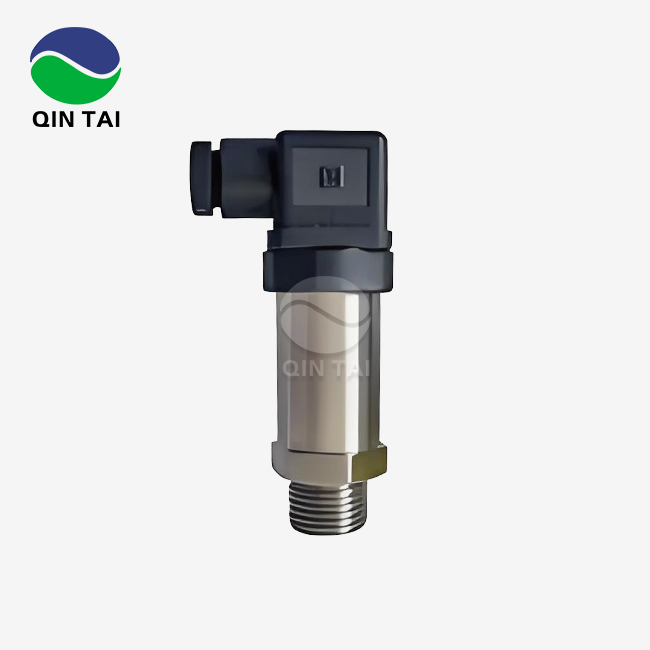
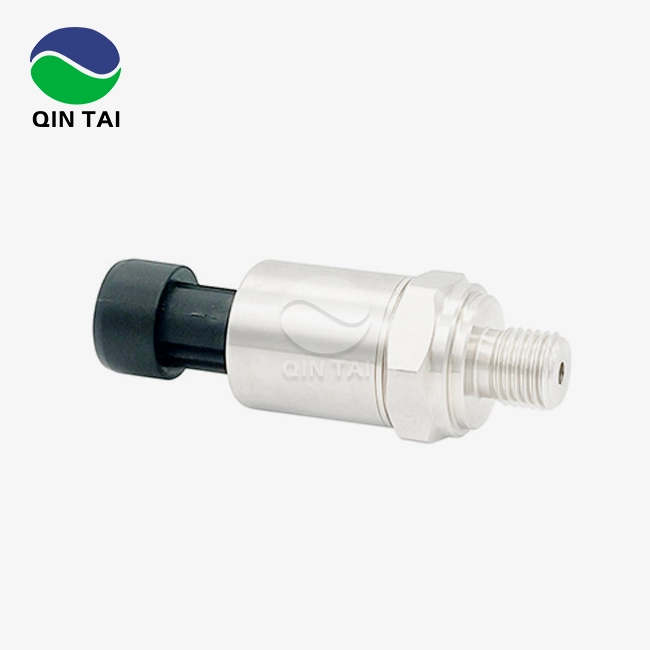

Our customers’ satisfaction speaks for our quality — contact us to experience the same reliable service.