- English
- French
- German
- Portuguese
- Spanish
- Russian
- Japanese
- Korean
- Arabic
- Greek
- German
- Turkish
- Italian
- Danish
- Romanian
- Indonesian
- Czech
- Afrikaans
- Swedish
- Polish
- Basque
- Catalan
- Esperanto
- Hindi
- Lao
- Albanian
- Amharic
- Armenian
- Azerbaijani
- Belarusian
- Bengali
- Bosnian
- Bulgarian
- Cebuano
- Chichewa
- Corsican
- Croatian
- Dutch
- Estonian
- Filipino
- Finnish
- Frisian
- Galician
- Georgian
- Gujarati
- Haitian
- Hausa
- Hawaiian
- Hebrew
- Hmong
- Hungarian
- Icelandic
- Igbo
- Javanese
- Kannada
- Kazakh
- Khmer
- Kurdish
- Kyrgyz
- Latin
- Latvian
- Lithuanian
- Luxembou..
- Macedonian
- Malagasy
- Malay
- Malayalam
- Maltese
- Maori
- Marathi
- Mongolian
- Burmese
- Nepali
- Norwegian
- Pashto
- Persian
- Punjabi
- Serbian
- Sesotho
- Sinhala
- Slovak
- Slovenian
- Somali
- Samoan
- Scots Gaelic
- Shona
- Sindhi
- Sundanese
- Swahili
- Tajik
- Tamil
- Telugu
- Thai
- Ukrainian
- Urdu
- Uzbek
- Vietnamese
- Welsh
- Xhosa
- Yiddish
- Yoruba
- Zulu
Why Use Digital Pressure Sensors in Automation
Modern industrial automation demands precision, reliability, and seamless connectivity across every monitoring component. Digital pressure sensors have emerged as critical instruments that transform how we measure and control fluid systems in automated environments. Unlike legacy analog devices that convert pressure readings into continuous voltage signals, digital pressure sensors output discrete binary data through standardized communication protocols, eliminating signal degradation and electromagnetic interference issues. This technological shift enables procurement managers, R&D engineers, and technical managers across diesel engine manufacturing, aftertreatment systems, and environmental protection equipment sectors to achieve compliance with stringent emission regulations while maintaining operational stability. The adoption of digital sensing technology directly addresses core industrial needs including measurement consistency, system integration capabilities, and long-term reliability that traditional analog solutions cannot match.
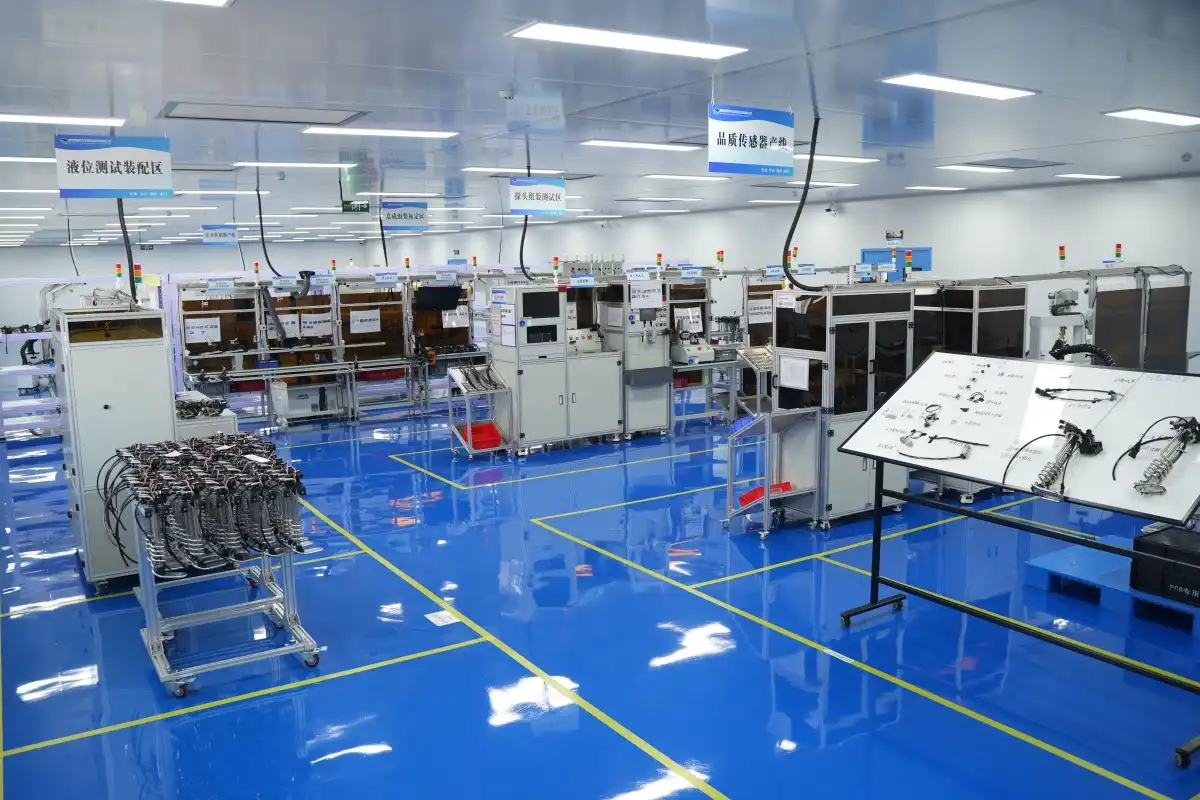
Understanding Digital Pressure Sensors in Automation
Digital Pressure Sensors represent a big step forward in the way that automatic manufacturing systems measure things. These Digital Pressure Sensors measure changes in the physical pressure in fluid lines and turn them into digital signals that control systems can use right away, without having to go through the extra work of converting analogue signals to digital ones.
What Makes Digital Sensors Different?
What makes these Digital Pressure Sensors different is how they handle measurement data. Traditional analogue sensors send out steady electrical signals that are related to the pressure they measure. Before automation systems can use this information, it has to go through extra conditioning circuits and conversion steps. Digital Pressure Sensors have pressure-sensing parts and microprocessors built in. The microprocessors do signal conditioning, temperature adjustment, and digital conversion all in one small housing. This combination gets rid of multiple places where signal degradation or interference could happen. This makes it possible to send measurement data straight to PLCs, SCADA systems, or remote control networks with very high accuracy.
Communication Protocols and Integration
Digital Pressure Sensors talk to each other using well-known industrial protocols, such as I2C, SPI, UART, and more and more, CAN bus interfaces that are common in cars and heavy machinery. These standard ways of talking to each other let R&D workers add Digital Pressure Sensors to automation systems that are already in place without having to build unique interfaces. Because these signals are digital, they can be sent over longer cable runs without losing any of their strength. This is very helpful in large buildings that manage water treatment systems, HVAC installations, or hydraulic control networks that span big construction or farming equipment.
Core Technical Advantages
Digital Pressure Sensors offer intelligence that analogue devices can't match, going beyond just sending signals. Built-in tests keep an eye on the health of the Digital Pressure Sensor all the time, finding membrane breakdown or electronic drift before they affect the accuracy of the measurements. Many more complex models keep their calibration factors in memory that doesn't lose its data when the power goes out. This way, they can keep their accuracy levels over time without having to be recalibrated often, which would cost more in maintenance costs and system downtime.
Why Digital Pressure Sensors Outperform Analog in Industrial Automation?
When it comes to demanding industrial automation situations, where measurement reliability directly affects legal compliance and working efficiency, the performance gap between digital and analogue pressure measurement technologies is especially clear.
Signal Quality and Measurement Stability
Analogue sensors are naturally vulnerable to electrical noise, temperature drift, and changes in wire resistance, all of which make measurements less accurate over time. In places with a lot of electromagnetic interference (EMI), like generator sets or construction sites, keeping analogue signals intact is hard and costs a lot of money. This is because you need expensive shielded cables and signal conditioning equipment. These worries are taken away by Digital Pressure Sensors, which change pressure readings to digital format at the receiving point. This way, electromagnetic interference can't affect the data being sent along the signal path. This main benefit means that measurements are always accurate, no matter where they are installed or how long the wire is.
Calibration Longevity and Cost Reduction
When calibrating an analogue sensor, the zero and span settings usually need to be changed every so often to account for effects of electrical component ageing and weather exposure. For big systems, these calibration processes require specialised tools, trained workers, and breaks in production that add up to a lot of money spent on running the business. Digital Pressure Sensors have built-in memory that stores factory calibration data. They use mathematical correction algorithms to look at raw Digital Pressure Sensor readings and make them correct in real time. This method keeps measurement parameters much longer than analogue alternatives, which lowers the number of times calibration needs to be done and the labour costs that come with it. It also increases system uptime, which is important for buying managers who are focused on total cost of ownership.
Real-World Performance in Critical Applications
Differential pressure readings between stages of filtration are used by HVAC systems that control the quality of the air inside to make the best use of energy and set off maintenance alerts. Digital Pressure Sensors that keep an eye on these pressure differences provide the stable measurements needed for predictive maintenance algorithms that change filters based on when they actually stop working well instead of just randomly choosing times. For the same reason, SCR systems that clean up diesel engine fumes need accurate pressure input to keep urea injection rates within strict legal limits. Diesel engine makers must meet China VI and Euro VI pollution standards, and Digital Pressure Sensors help them do that by giving accurate measurements.
How to Choose the Best Digital Pressure Sensor for Your Automation Needs?
To choose the right Digital Pressure Sensors, you have to make sure that the device's specs match the needs of the application and the working conditions that are typical of industrial automation deployments.
Pressure Range and Accuracy Requirements
The most important decision factor is to understand the operating pressure envelope. Depending on the application, industrial water systems can work at pressures ranging from hoover to several hundred bar. For example, municipal water treatment, hydraulic machinery control, and high-pressure cleaning systems all work at different pressure levels. The best way to get accurate and precise measurements is to match the Digital Pressure Sensor's full-scale range to its real working conditions. When measuring low pressures, Digital Pressure Sensors that are too big lose resolution, and Digital Pressure Sensors that are too small risk damage from too much pressure. standards for accuracy must match the needs of the control system. For example, systems that measure DEF injection pressure need to be accurate within ±0.5% of the reading, but for general industrial process monitoring, ±2% accuracy standards are acceptable for less money.
Environmental Compatibility Factors
Extreme temperature changes, vibrations, water getting in, and chemicals being exposed are all things that happen in industrial settings that can damage Digital Pressure Sensors and shorten their life. When used in mining operations or as a backup power source, generator sets expose Digital Pressure Sensors to high temperatures and heavy vibrations for long periods of time. Agricultural gear Digital Pressure Sensors have to deal with temperature changes from below zero to extreme summer heat, as well as being wet and getting chemically contaminated from fertilisers. Technical managers need to check the external ratings of Digital Pressure Sensors, such as their working temperature range, ingress protection ratings, shaking tolerance, and media compatibility, to make sure that the devices work properly in the installation conditions they were made for and last as long as they are supposed to.
Interface and System Integration Considerations
The choice of communication link decides how hard it is to integrate and how flexible the system will be in the long run. Standard industrial protocols make it easy for Digital Pressure Sensors to work with existing automation systems. On the other hand, proprietary interfaces might need to be custom developed, which can raise project costs and limit future supplier choices. When supply chain managers look at aftertreatment system parts, they should focus on Digital Pressure Sensors with flexible interface setups that work with a number of OEM control architectures. This will make inventory management easier across a wide range of customer installs.
Supplier Qualifications and Certification Requirements
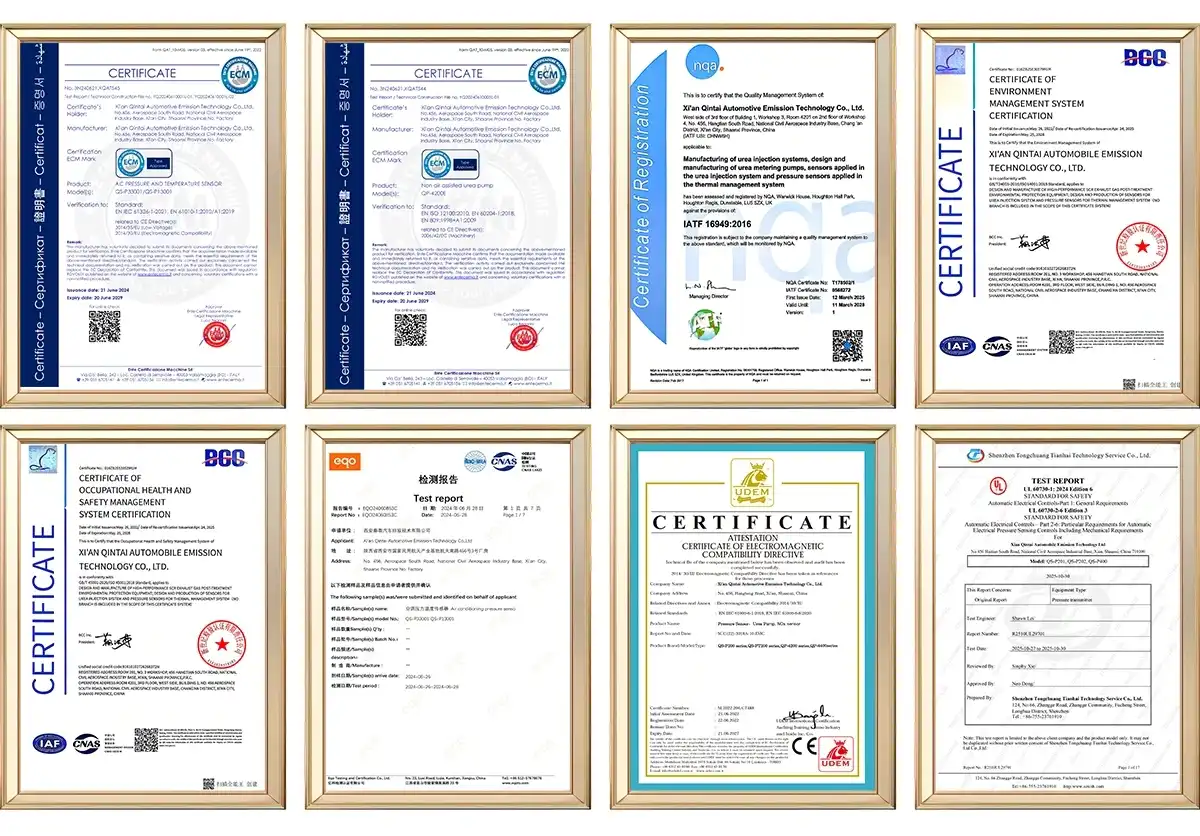
When making a purchase choice, the total cost of the item must be weighed against the technical skills, quality certifications, and compliance paperwork that the dealer offers. OEMs of diesel engines that sell their products all over the world need Digital Pressure Sensors that have the right certification marks. For example, UL marking is needed for North American markets, CE marking is needed for European markets, and REACH/RoHS compliance is needed for environmental laws. Manufacturers like Xi'an Qintai Automotive Emission Technology have a wide range of certifications, such as IATF16949 automotive quality systems, CMC measurement certification, and explosion-proof ratings, that show they can support emission-critical applications in markets around the world. Purchasing managers can be sure that Digital Pressure Sensor providers keep up-to-date with quality systems that allow for consistent mass output and meet legal standards across target markets with these certifications.

Integrating Digital Pressure Sensors in Automation Systems
A successful Digital Pressure Sensor deployment includes more than just choosing the right device. It also includes following the right installation, calibration, and upkeep methods to make sure that measurements are accurate for as long as the Digital Pressure Sensors are in use.
Installation Best Practices
When Digital Pressure Sensors are mounted correctly, they don't make mistakes in measurements or break down early. It is best to put Digital Pressure Sensors in places where the flow patterns stay stable. This way, results won't be messed up by turbulent areas right after valves, pumps, or pipe bends. When mounting Digital Pressure Sensors that measure liquid pressure, they should be put in a way that faces downwards so that air pockets don't form and cause measurement drift. For reliable sealing, process links must use thread sealants or gaskets that are compatible with the measured media. Even small leaks can cause measurement mistakes and safety risks in high-pressure situations.
Calibration Procedures and Verification
Digital Pressure Sensors stay calibrated longer in the factory than analogue ones, but they still need to be checked on a regular basis to make sure they stay accurate. During calibration, the output of the Digital Pressure Sensor is compared to reference standards that can be traced back to national measurement institutes. Any departure from the specifications is recorded. In many industrial settings, multiple calibration checks are done across the working pressure range to make sure uniformity and find measurement drift patterns that show when a device is getting close to the end of its useful life. This proactive approach lets replacements happen during planned maintenance windows instead of having to be fixed when something breaks down unexpectedly, which stops production.
Troubleshooting Common Integration Challenges
Communication problems are the most common problem that comes up when Digital Pressure Sensors are put together. Even if Digital Pressure Sensors work correctly, data transmission may not be possible if the protocol is not set up correctly, the termination resistor is not installed correctly on multi-drop networks, or the cables are damaged. Systematic troubleshooting starts with checking the physical connections, making sure that the communication settings between Digital Pressure Sensors and control systems are correct, and using protocol analyser tools to make sure that the communication is secure. Power supply quality also affects how well Digital Pressure Sensors work. If the supply voltage is too low or there is too much ripple, it can cause irregular behaviour that looks like a failed Digital Pressure Sensor but is actually caused by problems with the infrastructure that need to be fixed before replacing the Digital Pressure Sensor can fix the problem.
Future Trends and Innovations in Digital Pressure Sensor Technology
Digital sensing technology is still changing quickly. This is because of the growth of the Industrial Internet of Things and the need for better operational intelligence in automated systems.
Miniaturisation and progress in integration
With MEMS manufacturing methods, Digital Pressure Sensor packages can get smaller and smaller, and they can be built right into the housings of components instead of having to be mounted on the outside and connected to fluids. This movement toward integration is especially helpful for mobile equipment uses that need to save room and are likely to be subject to vibrations. Manufacturers of construction equipment are increasingly asking for hydraulic cylinders and gearbox units to have integrated pressure tracking. This gives real-time performance data that helps with predictive maintenance plans and increases the time between component service intervals.
Ultra-Low Power Consumption
Applications that use batteries or collect energy need Digital Pressure Sensors that can work at microampere current levels so that they can be used for years without having to be replaced. These very low-power devices make it possible for wireless sensor networks to monitor remote installations where the cost of wiring is too high. For example, wireless Digital Pressure Sensors that get their power from differences in temperature or vibrations in the environment can be used to monitor pressure across large water distribution systems or oil field installations.
IIoT Connectivity and Intelligence at the Edge
Edge computing is built into next-generation Digital Pressure Sensors so they can do local analytics, find strange trends, and send alerts without always being connected to the cloud. This distributed intelligence lowers the amount of bandwidth needed for the network while letting it respond more quickly to critical situations. Edge analytics help environmental protection equipment keep an eye on industrial exhaust gas treatment systems and find patterns of filter clogging or catalyst degradation in real time. This helps schedule maintenance better and avoids compliance violations that lead to fines from the government.
Predictive Maintenance Enablement
Advanced diagnostic algorithms look at long-term trends in Digital Pressure Sensor data to find signs of slowing performance that come before major failures. Machine learning models that have been trained on past failure patterns can spot small changes in signatures that mean an item is getting close to the end of its useful life. This lets replacements happen before they break during planned repair times. This ability to predict is especially useful in mission-critical settings where sudden failures can put people in danger or cause expensive production delays. For example, generator sets that provide backup power for hospitals or data centers can't handle unplanned downtime, which predictive Digital Pressure Sensor maintenance helps avoid.
Conclusion
Digital Pressure Sensors are clearly better than analogue ones in many industrial automation situations. They offer better signal quality, more stable calibration, and the ability to work with other systems, which directly meets the needs of companies that make diesel engines, aftertreatment systems, and environmental equipment. Digital sensing technology has built-in intelligence, is resistant to electromagnetic interference, and uses standard communication protocols. These features make installation cheaper, maintenance easier, and measurement accuracy better over longer periods of time. As more devices connect to the Industrial Internet of Things and rules about emissions get stricter, switching from analogue to digital pressure measurement is not just a matter of taste when it comes to technology; it's a basic need for competitive businesses that want to be as efficient as possible while still following the rules in global markets.
FAQ
How do digital pressure sensors improve aftertreatment system reliability?
Digital Pressure Sensors give accurate readings of pressure, which is very important for managing the amount of urea injected into SCR systems. Built-in temperature compensation and diagnostic tools can find measuring drift before it affects pollution compliance. This helps diesel engine OEMs keep up with the strict China VI and Euro VI standards they have to follow.
What datasheet parameters matter most when selecting digital pressure sensors?
For technical managers, the most important things are accuracy specifications across the operating temperature range, communication protocol compatibility with existing control systems, a pressure range that matches the actual operating conditions, and environmental ratings that make sure the device can withstand the highs and lows of temperature, vibration, and media contact that it will be exposed to during its service life.
Can digital sensors integrate with existing analog control systems?
A lot of Digital Pressure Sensors have analogue output modes that let you send voltage or current signals that work with older control systems. These modes also let you keep the digital communication features in case you want to improve your system in the future. This two-mode operation lets you use gradual migration plans that protect your current investments in automation infrastructure while also getting operations ready for a digital transformation in the future.
Partner with Qintai for Your Digital Pressure Sensor Needs
Work with Qintai to get the Digital Pressure Sensors you need. Xi'an Qintai Automotive Emission Technology has been making sensors for more than 20 years and can help you with your automation system needs. We are China's top OEM provider for Weichai Power, Yuchai Power, and Quanchai Power, so we know what diesel engine makers and aftertreatment system installers need in terms of accuracy, dependability, and approval. Our wide range of Digital Pressure Sensors is certified by IATF16949, ISO9001, UL, CE, REACH, and RoHS, which lets us sell our products all over the world.
We offer customisable services that can change the specs of the sensor to fit your specific application needs. This is backed up by quick technical support and the ability to produce large quantities, so you can be sure of a steady supply for your mass production plans. Our independent research and development team is always coming up with better sensor technologies, which helps us stay the top choice for challenging industrial uses that need Digital Pressure Sensors. Get in touch with our expert team at info@qt-sensor.com to talk about your needs and find out how Qintai sensors can improve the performance of your automation system.
References
1. Chen, J. (2023). Digital Sensing Technologies for Industrial Automation Systems. Industrial Instrumentation Press.
2. Morrison, T., & Kumar, R. (2022). Pressure Measurement in Emission Control Applications. Automotive Engineering Journal, 48(3), 112-128.
3. Weber, S. (2024). MEMS Sensor Integration in Hydraulic Control Systems. Journal of Fluid Power Technology, 31(2), 45-62.
4. Anderson, P. (2023). Comparative Analysis of Analog versus Digital Pressure Sensors in HVAC Applications. Building Automation Quarterly, 17(4), 88-103.
5. Liu, H., & Zhang, W. (2022). Predictive Maintenance Strategies Using IIoT-Connected Pressure Sensors. Industrial Internet of Things Review, 12(1), 34-51.
6. Thompson, M. (2024). Certification Requirements for Automotive Emission System Components in Global Markets. International Standards Compliance Handbook, 9th Edition.
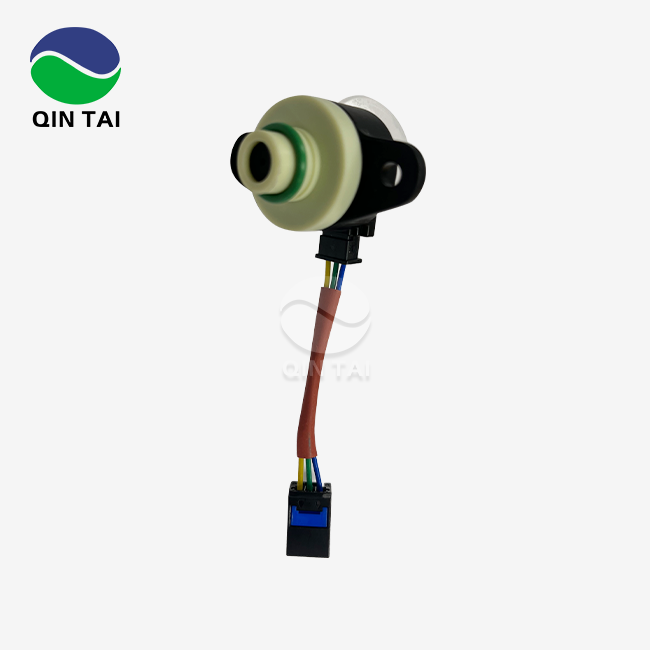
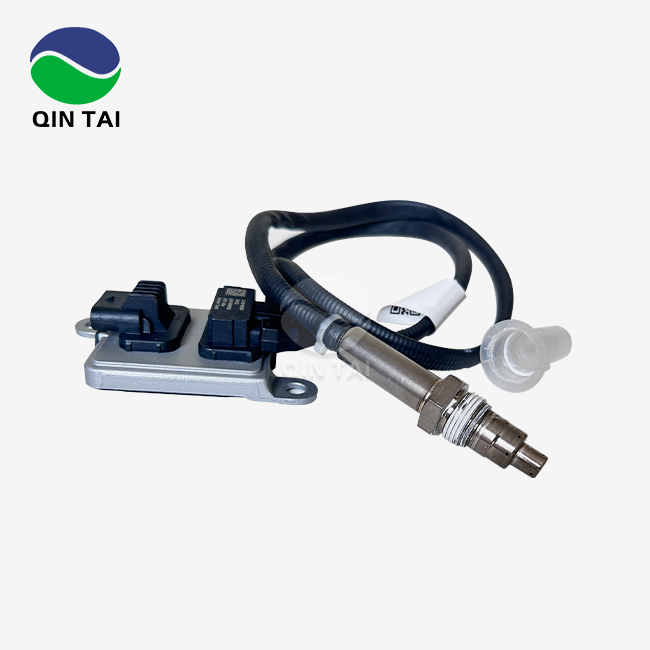

Our customers’ satisfaction speaks for our quality — contact us to experience the same reliable service.