- English
- French
- German
- Portuguese
- Spanish
- Russian
- Japanese
- Korean
- Arabic
- Greek
- German
- Turkish
- Italian
- Danish
- Romanian
- Indonesian
- Czech
- Afrikaans
- Swedish
- Polish
- Basque
- Catalan
- Esperanto
- Hindi
- Lao
- Albanian
- Amharic
- Armenian
- Azerbaijani
- Belarusian
- Bengali
- Bosnian
- Bulgarian
- Cebuano
- Chichewa
- Corsican
- Croatian
- Dutch
- Estonian
- Filipino
- Finnish
- Frisian
- Galician
- Georgian
- Gujarati
- Haitian
- Hausa
- Hawaiian
- Hebrew
- Hmong
- Hungarian
- Icelandic
- Igbo
- Javanese
- Kannada
- Kazakh
- Khmer
- Kurdish
- Kyrgyz
- Latin
- Latvian
- Lithuanian
- Luxembou..
- Macedonian
- Malagasy
- Malay
- Malayalam
- Maltese
- Maori
- Marathi
- Mongolian
- Burmese
- Nepali
- Norwegian
- Pashto
- Persian
- Punjabi
- Serbian
- Sesotho
- Sinhala
- Slovak
- Slovenian
- Somali
- Samoan
- Scots Gaelic
- Shona
- Sindhi
- Sundanese
- Swahili
- Tajik
- Tamil
- Telugu
- Thai
- Ukrainian
- Urdu
- Uzbek
- Vietnamese
- Welsh
- Xhosa
- Yiddish
- Yoruba
- Zulu
What Is a Capacitive Pressure Sensor Used For
Capacitive pressure sensors serve as critical measurement devices across industrial, automotive, and environmental applications. These sensors detect pressure changes by measuring variations in capacitance between two electrodes—typically a flexible diaphragm and a fixed plate. When pressure is applied, the diaphragm deforms, altering the gap distance and thus the capacitance. This change converts into an electrical signal proportional to the applied pressure, enabling precise monitoring in systems ranging from diesel engine aftertreatment to hydraulic machinery and generator sets.


Understanding Capacitive Pressure Sensors
Operating Principle and Core Technology
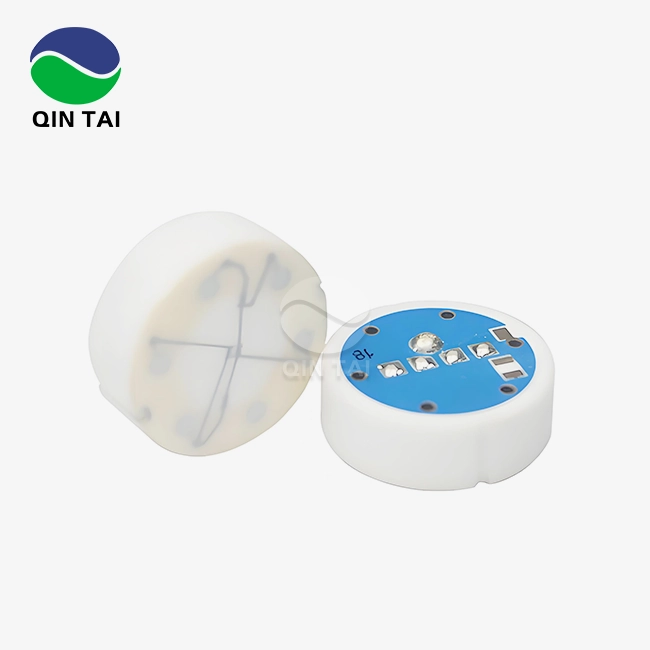
The basic idea behind capacitive pressure sensors is simple, but it works well. One electrode is a cushion made of metal or clay, and the other is a plate that stays in place. When you press on the diaphragm, the distance between these wires changes, which changes the capacitance. 96% alumina ceramic diaphragms are used in modern designs because they are better at resisting chemicals and being stable mechanically. Capacitive pressure sensor designs use less power and are very sensitive, especially at lower pressure levels, compared to piezoresistive sensors that depend on changes in resistance when they are stressed.
Technical Advantages for Industrial Applications
There are real perks to the ceramic capacitive pressure sensor design for harsh settings. These sensors have very little hysteresis—usually less than 0.1% full scale a year—so they stay accurate over time without needing to be re-calibrated often. Because it has a high elasticity modulus (about 310 GPa), the diaphragm can handle pressure spikes up to 40 times the rated range without getting damaged. Temperature adjustment circuits takes into account how sensitive the device is to changes in temperature, keeping it accurate from -40°C to 135°C. This makes them perfect for diesel engine pollution control systems where the temperature of the gas changes a lot.
Comparison with Alternative Sensor Technologies
When looking at different ways to measure pressure, it's important to know what the pros and cons of each type of sensor are. Piezoresistive sensors are built to last and can detect a wide range of pressures, but they use more power and are more sensitive to temperature changes. Piezoelectric monitors are great at tracking changes in dynamic pressure, but they can't keep track of changes in static pressure.
Although strain gauge devices are cheaper, they are not accurate enough for pollution compliance. Capacitive pressure sensors have a high level of accuracy (±0.5% FS), a low power requirement (suitable for 2-30 VDC systems), and great overload protection. This makes them perfect for SCR/DPF aftertreatment systems that need to comply with China VI and Euro VI.
Key Applications of Capacitive Pressure Sensors Across Industries
Diesel Engine Emission Control Systems
Today's rules on emissions require precise pressure monitoring all the way through the aftertreatment chain. Capacitive pressure sensors measure the difference in pressure across diesel particulate filters (DPF) to start renewal processes. This keeps backpressure from building up, which makes the engine less efficient. These sensors keep an eye on the urea pumping pressure in selective catalytic reduction (SCR) systems to make sure the right dose rates are used, which is important for reducing NOx without letting ammonia slip in. The wide pressure range (-1 to 600 bar) and 200% safety overload rate of the QS-P105F model protect against pressure changes during DPF regeneration. Its 0.3% non-linearity also makes sure that regulation compliance data is correct.
Heavy-Duty Machinery and Hydraulic Systems
Construction machines, farm tools, and systems for moving things around depend on hydraulic circuits that work at 400–600 bar of pressure. Capacitive pressure sensors keep an eye on these high-pressure lines in real time, which lets maintenance be planned ahead of time and stops catastrophic failures before they happen. The ceramic diaphragm doesn't let hydraulic fluid or particles get into it, so readings stay the same over long periods of time between service. Aftermarket service providers need installations to be as simple as possible so that techs can quickly change sensors without having to use special tools or go through long calibration processes.
Generator Set and Uses for Backup Power
In mines, remote facilities, and backup installations, stationary power generation systems work all the time, even when the load changes. Pressure sensors keep an eye on fuel supply, lubrication systems, and water lines to find problems before they shut down the engine. Industrial-grade dependability comes from the ceramic construction's resistance to drift caused by vibration and its ability to stay calibrated over thousands of thermal cycles. When installed outside where temperatures change by 40°C or more every day, the low zero temperature drift (<0.03% FS/°C for mid-range pressures) is very useful.
Environmental Monitoring and Process Control
Sensors that stay accurate in acidic media are needed for systems that process chemicals, treat wastewater, and keep an eye on leaks. Acids, bases, and organic solvents that would break down metallic sensing elements can't get through the 96% alumina ceramic diaphragm. In places with a lot of wetness, hermetic closing to IP67/68 standards stops water from getting in. The sensor's built-in electromagnetic interference (EMI) resistance keeps data stable even when it's close to high-power electrical equipment, which is common in industrial settings. This is because the sensor doesn't need expensive shielding or filters.
How to Pick the Right Capacitive Pressure Sensor for Your Needs
Defining Application Requirements
Writing down operating parameters is the first step in choosing the right capacitive pressure sensors. The starting point is the pressure range, which includes not only the normal working pressure but also possible transients and overload conditions. This is taken care of by the QS-P105F, which has ranges that can be set anywhere from a vacuum of -1 bar to 600 bar and 200% overload protection that keeps it from breaking during hydraulic hammer or pressure spike events. Extremes of operating temperature must match sensor values.
The temperature range of -40°C to 135°C fits most diesel engine compartments and outdoor installations. The level of accuracy needed depends on how important the application is. For example, ±0.5% FS or better is needed for emission compliance, but ±1-2% FS is fine for less important monitoring.
Evaluating Supplier Capabilities and Certifications
Specifications are only one part of the story of buying. Suppliers who are certified by ISO 9001 and IATF 16949 show that they follow a structured quality management process, which is necessary for consistent mass production. Industry-specific approvals, such as Ex (explosion-proof), CE, and RoHS compliance, make it easier to integrate new products and lower the risk of breaking the law. Qintai's 58 invention patents show that the company is always coming up with new ideas that will make designs that will last. Established OEM relationships with major diesel engine makers like Weichai and Yuchai show that the product has been reliable in the field, which lowers the risk of using designs that haven't been tried in important situations.
Customization and Integration Considerations
Standard store devices don't usually cover all the details of a program. Customizable connections let sensor outputs (mV/V, 4-20mA, digital protocols) connect directly to control systems, without the need for signal shaping in between. The type of mounting—threaded ports, flange adapters, or flat diaphragms—affects how hard it is to install and how reliable the seal is. The QS-P105F's sensitivity range of 2–4 mV/V works with a number of signal capture methods and doesn't affect noise. A bridge resistance of 11±30% kΩ makes sure that it works with common Wheatstone bridge amps found in industrial instruments.

Procurement Insights: Buying Capacitive Pressure Sensors in Bulk
Understanding Cost Drivers in High-Volume Orders
Unit prices go down a lot as number goes up, but knowing how costs work helps you negotiate better. The prices of raw materials have stayed pretty much the same. This is especially true for high-purity alumina clay and precision electronics. For custom designs, amortization of the tools is spread out over multiple production runs. This means that larger initial orders are more cost-effective for non-standard configurations. Testing and calibration cost a lot per unit. Suppliers with automatic calibration units cut these costs while keeping the same level of quality. Lead times balance the costs of keeping inventory with the security of knowing there will be enough of it. Setting up blanket purchase orders with scheduled releases makes the best use of working capital.
Supply Chain Reliability and Quality Assurance
Global supply chain problems have made delivery reliability, along with price and specifications, an important factor in choosing capacitive pressure sensors. Vertically integrated manufacturers—those that handle clay processing, electronics assembly, and final calibration—have more supply security than those that rely on a lot of suppliers.
With more than 20 years of experience making things in Xi'an, Qintai has access to China's well-established industrial supply base and can make anything from a sample to a million units. Quality measures, such as defect rates per million (DPPM) and guarantee return percentages, show how reliable something is. Well-known OEM providers usually get performance levels below 100 DPPM by using statistical process control in a planned way.
Building Strategic Supplier Partnerships
Transactional buying relationships often miss chances to work together to make things better. Suppliers with their own research and development (R&D) teams can change current designs to meet new needs, like adding new types of refrigerants to HVAC systems or making engine systems compatible with other fuels. Problems are solved faster with responsive technical support during integration than with catalog-based sourcing.
Development cycles are sped up by having access to applications engineers who understand both sensor physics and end-use requirements. When you sign a long-term agreement with a volume commitment, you can get better pricing, priority handling when capacity is limited, and the chance to work together on developing next-generation solutions that fit with your product roadmaps.
Calibration, Maintenance, and Performance Optimization
Importance of Regular Calibration
Calibration keeps measurements accurate over the life of a capacitive pressure sensor. In industrial settings, sensors are exposed to shaking, changing temperatures, and contaminated media, all of which can cause drift. Setting calibration intervals—usually once a year for important uses or every 10,000 hours of operation—balances the cost of maintenance with the guarantee of accuracy. Traceable calibration to national standards (NIST, PTB) makes sure that regulated industries follow the rules during audits. The QS-P105F's full accuracy standard of ±0.5% FS takes into account effects like linearity, hysteresis, and repeatability, which makes testing against regulatory limits easier.
Temperature Compensation Strategies
Ceramic capacitive pressure sensors are naturally stable, but they work better when they are actively compensated for temperature changes. On-chip temperature monitors allow real-time correction methods that take into account the different thermal expansion coefficients of the diaphragm and housing materials. The QS-P105F's specification for zero temperature drift—less than 0.03% FS/°C for mid-range models—shows that compensation is working well. When sensors are mounted near exhaust manifolds or hydraulic pumps, system designers should still use thermal barriers or heat sinks to keep the sensors from being exposed to temperatures that are too high.
Environmental Protection and Durability Enhancement
How long a sensor lasts in harsh environments depends on how well it is installed and protected. Thread seals need to work with both sensor materials and process media. PTFE tape or liquid anaerobic compounds usually work well and don't react chemically. Heat-shrink tubes, potted joints, or industrial plugs with a minimum IP67 rating are all external sealing options for electrical connections. In high-vibration environments like construction equipment, elastomeric mounting washers keep failures from happening due to fatigue. Filtration of the media before the sensor ports stops particles from building up on the diaphragms, which could slow down the response or change the calibration.

Conclusion
Capacitive pressure sensors are accurate, reliable, and resistant to the environment, making them perfect for use in heavy machinery, diesel engine aftertreatment, and industrial processes. Their ceramic design can handle rough media and wide ranges of temperatures, and it keeps the calibration stable, which is important for meeting emission standards and running efficiently.
To be successful at procurement, you need to match technical specifications to application needs, choose suppliers with proven quality systems and the ability to customize products, and build partnerships that support the long-term evolution of products. These sensors are able to meet the strict needs of current industrial and car systems because they are made of advanced materials, go through a lot of testing, and are configured for each application.
FAQ
What accuracy can I expect from capacitive pressure sensors?
These days' ceramic capacitive pressure sensors can get full-scale accuracy within ±0.3% to ±0.5% by combining errors in linearity, hysteresis, and repeatability. The QS-P105F stays accurate to within ±0.5% FS across its entire working temperature range, which meets the measurement needs of emission regulations. Extreme temperatures have a small effect on accuracy. Specifications like zero temperature drift (<0.03% FS/°C) help system designers figure out how big of an effect this is.
Are these sensors suitable for corrosive media?
Because the 96% alumina ceramic diaphragm doesn't react with most acids, alkalis, and organic solvents, capacitive pressure sensors are great for tough industrial settings and chemical processing. It is still important to check the compatibility of wet materials with specific media; manufacturers offer detailed chemical resistance charts. Leakage paths that could expose less-resistant parts can be stopped by installing correctly with the right seals and process connections.
How does supply voltage affect sensor performance?
The QS-P105F can work with voltages from 2 to 30 VDC, making it useful for both battery-powered mobile devices and commercial 24VDC control systems. No matter what the supply voltage is, the sensitivity stays the same (2–4.0 mV/V), which makes signal processing easier. Lower source voltages use less power, which is important for wireless tracking nodes. Higher voltages, on the other hand, improve the signal-to-noise ratio in places with a lot of electrical noise.
Partner with Qintai for Reliable Capacitive Pressure Sensor Solutions
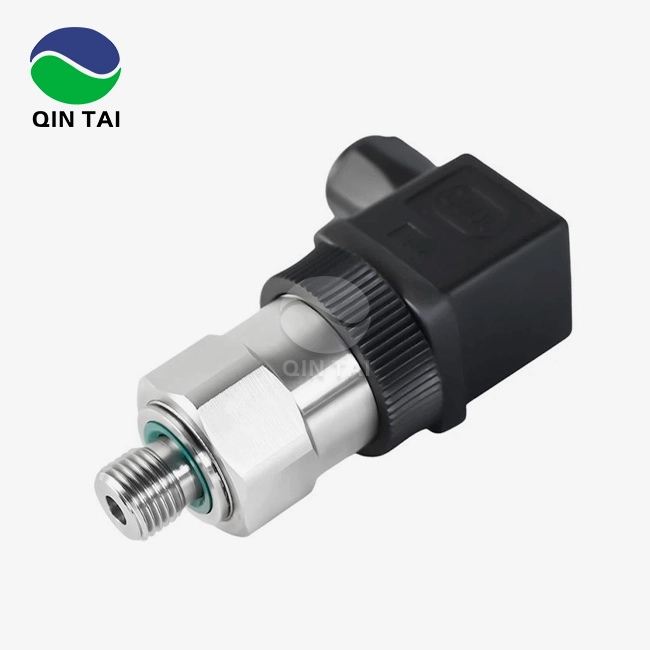
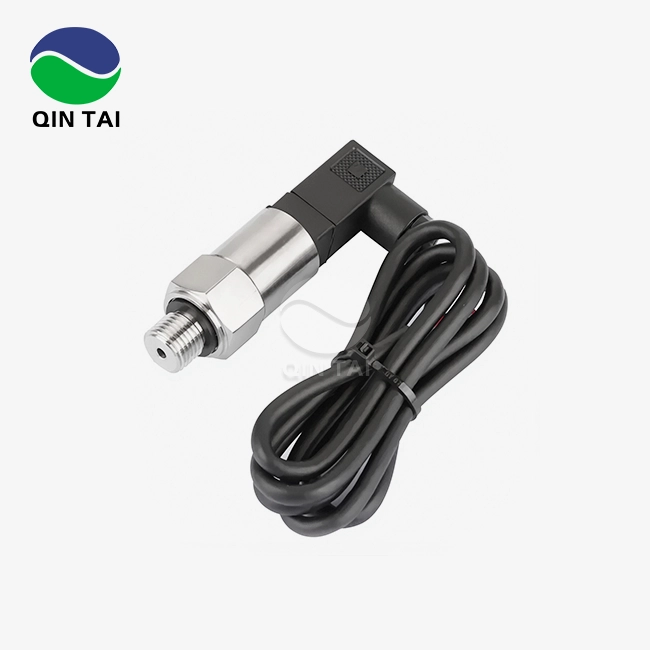
Qintai Automotive Emission Technology Co., Ltd. Ltd has more than twenty years of experience making capacitive pressure sensors for industry and diesel engine aftertreatment settings. As the main OEM capacitive pressure sensor provider to Weichai, Yuchai, and Quanchai, China's three largest engine makers, we know how hard it is to meet strict emission standards, make sure products last a long time, and make a lot of them cheaply. Our QS-P105F ceramic capacitive pressure sensor has a track record of good performance, with a working range of -40°C to 135°C and a number of standards such as ISO 9001, IATF 16949, and Ex ratings.
We can fully customize the pressure ranges, electrical interfaces, and mounting configurations to meet your exact needs. Our responsive technical support and flexible production volumes are also here to help. Email our engineering team at info@qt-sensor.com to talk about your application needs and get full specs that are made to fit your buying needs. Visit qt-sensor.com to see all of our sensors and learn why OEMs around the world trust Qintai to provide their pressure measurement needs.
References
1. Webster, J.G. (2018). The Measurement, Instrumentation, and Sensors Handbook: Spatial, Mechanical, Thermal, and Radiation Measurement. CRC Press.
2. Fraden, J. (2016). Handbook of Modern Sensors: Physics, Designs, and Applications (5th ed.). Springer.
3. Bao, M. (2019). Analysis and Design Principles of MEMS Devices. Elsevier Science.
4. Nawrocki, W. (2015). Introduction to Quantum Metrology: Quantum Standards and Instrumentation. Springer International Publishing.
5. Shimazoe, M. & Matsuoka, Y. (2017). High-temperature capacitive pressure sensors for automotive applications. Journal of Micromechanics and Microengineering, 27(8), 085007.
6. Chen, J. & Liu, C. (2020). Ceramic capacitive pressure sensors for harsh environment applications: Design considerations and performance optimization. Sensors and Actuators A: Physical, 315, 112298.

Our customers’ satisfaction speaks for our quality — contact us to experience the same reliable service.