- English
- French
- German
- Portuguese
- Spanish
- Russian
- Japanese
- Korean
- Arabic
- Greek
- German
- Turkish
- Italian
- Danish
- Romanian
- Indonesian
- Czech
- Afrikaans
- Swedish
- Polish
- Basque
- Catalan
- Esperanto
- Hindi
- Lao
- Albanian
- Amharic
- Armenian
- Azerbaijani
- Belarusian
- Bengali
- Bosnian
- Bulgarian
- Cebuano
- Chichewa
- Corsican
- Croatian
- Dutch
- Estonian
- Filipino
- Finnish
- Frisian
- Galician
- Georgian
- Gujarati
- Haitian
- Hausa
- Hawaiian
- Hebrew
- Hmong
- Hungarian
- Icelandic
- Igbo
- Javanese
- Kannada
- Kazakh
- Khmer
- Kurdish
- Kyrgyz
- Latin
- Latvian
- Lithuanian
- Luxembou..
- Macedonian
- Malagasy
- Malay
- Malayalam
- Maltese
- Maori
- Marathi
- Mongolian
- Burmese
- Nepali
- Norwegian
- Pashto
- Persian
- Punjabi
- Serbian
- Sesotho
- Sinhala
- Slovak
- Slovenian
- Somali
- Samoan
- Scots Gaelic
- Shona
- Sindhi
- Sundanese
- Swahili
- Tajik
- Tamil
- Telugu
- Thai
- Ukrainian
- Urdu
- Uzbek
- Vietnamese
- Welsh
- Xhosa
- Yiddish
- Yoruba
- Zulu
What Is a NOx Sensor? Complete Guide for Diesel Engines
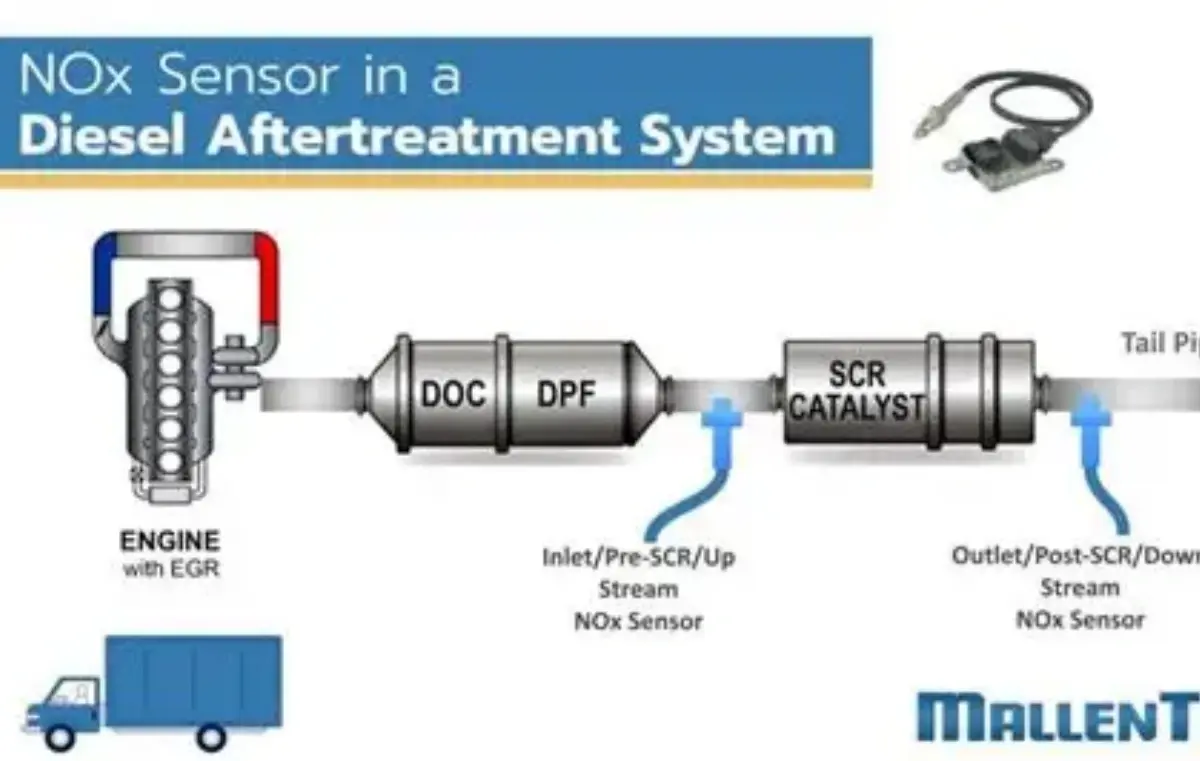
The NOx Sensor is a special kind of diagnostic tool that is put into diesel engine exhaust systems to measure the amount of nitrogen oxide in the air right now. By checking the amounts of nitrous oxide before and after the catalytic converter, these sensors help Selective Catalytic Reduction (SCR) systems meet strict pollution standards like EPA 2010 and Euro VI. Unlike oxygen monitors, which improve the efficiency of combustion, these devices target harmful pollution and precisely inject Diesel Exhaust Fluid (DEF) to turn pollutants into harmless nitrogen and water vapour. To stay in line with regulations and run your business efficiently, you need to know how these parts work.
Understanding NOx Sensors: Definition and Function
When diesel engines burn at high temperatures, nitrogen oxides are released into the air. These gases pose major health and environmental risks. To control these dangerous byproducts, modern pollution control technology relies on measuring tools that are very exact.
What Makes NOx Sensors Different from Other Emission Monitors
These sensors are very different from oxygen sensors in how they are made and what they are used for. Oxygen (O2) sensors help engines find the best mix of air and fuel for burning, and NOx Sensors keep an eye on the pollution levels in systems that clean up pollution. They work at very high temperatures, from 100°C to 800°C, and use yttria-stabilized zirconia ceramic parts that move oxygen ions through solid solutions.
The device has more than one measurement area. First, an oxygen pump cell controls the amount of oxygen in the first chamber. Next, a secondary detecting cell breaks down nitrogen fumes into nitrogen and oxygen ions using a catalytic process. The electrical current that is made is directly related to the amount of pollution, and it can give accurate readings between 0 and 2500 parts per million.
How Dual-Sensor Systems Optimize Emission Control
In the SCR design of modern diesel cars, there are usually two sensors. The upstream sensor, which is near the turbocharger outlet, measures the emissions that come from the engine. With this information, the engine control unit can figure out the exact amount of DEF that is needed for catalytic reduction to work.
The sensor further downstream, which is located after the SCR catalyst, checks that the treatment worked. This makes a closed-loop feedback system where the second monitor tells the system when urea injection isn't enough or DEF injection causes ammonia slip. If a device further downstream finds high readings, it sends fault codes and, eventually, starts engine derate protocols to force maintenance that needs to be done.
This setup of two sensors makes sure that heavy trucks, building equipment, and farm tools stay in compliance for as long as they are used. When purchasing managers look at emission solutions, they should focus on systems that offer strong dual-sensor integration and flexible communication protocols.
Diagnosing and Troubleshooting NOx Sensor Issues
Keeping sensors healthy has a direct effect on meeting regulations and keeping operations running. Early detection of failure symptoms keeps engines from derating, which costs a lot of money, and extends the life of parts.
Common Symptoms Indicating Sensor Malfunction
Several warning signs point to possible sensor degradation. The most obvious signs are the warning lights on the dashboard, especially the check engine light and the DEF system alerts. When the engine control unit goes into failsafe mode with conservative fuel mapping, drivers may notice that the car uses more petrol.
Sensor problems often lead to a drop in performance. Engines may have less power, idle problems, or trouble keeping steady RPMs when they're under load. In business fleets, drivers often say that their vehicles are using too much DEF because sensors that aren't working right measure the injection needs wrong.
Root Causes Behind Sensor Failures
The main way things fail is through contamination. Diesel air has sulphur compounds, lead particles, and ash leftovers that stick to sensor parts and build up. When these particles are exposed to zirconia ceramic for a long time, they break it down, which makes measurements less accurate and reaction times slower. NOx Sensor failure is particularly vulnerable to this process, as the same contaminants directly degrade its sensing element.
Electrical problems also play a big role in breakdowns. Signals can't get from the sensor to the engine control module when connectors are corroded, wiring harnesses are broken, or water gets inside. Going back and forth between very high and very low temperatures causes stress that causes the seal to finally fail. Ceramic parts can be broken by road debris, incorrect fitting torque, or vibrations from the exhaust system. To lower these risks, procurement teams should look at monitors that have sealed, waterproof designs and strong mounting options.
Diagnostic Procedures Using OBD-II Systems
Diagnostic trouble codes can be found using OBD-II scanners, which is the first step in effective troubleshooting. P2201 means "circuit range/performance," P2202 means "circuit low," and P229F means "sensor stuck rich." These codes help technicians figure out if the problem is with the sensor itself or with parts that are connected to it after treatment.
Monitoring live data gives you more information. Technicians should look at the readings from the upstream and downstream sensors while the engine is under different loads. When the SCR system works right, sensors that are healthy show clear difference, with downstream values being much lower than upstream readings.
In addition to electronic tests, physical observation is also useful. Mechanical problems can be fixed by checking the connection pins for corrosion, the wire insulation for heat damage, and the proper mounting pressure. Before changing sensors, techs should fix underlying problems that cause them to break down faster, such as using too much oil or DEF that is contaminated.
Selecting the Best NOx Sensor for Diesel Engines
To pick the right devices, you need to weigh the technical specs, the trustworthiness of the brand, and the total cost of ownership. To make sure long-term performance and stability, engineering teams have to look at a lot of different factors.
Comparing Sensor Technologies and Performance Parameters
Electrochemical sensors are the most common type used in diesel engines because they are accurate and last a long time. Solid electrolytes made of zirconia are used in these devices. They keep ion conduction stable over a wide temperature range. Measurement range, accuracy tolerance, and reaction time are some of the most important performance measures.
The technical specs of Qintai sensors are the best and are designed to work best in challenging industrial settings. Our gadgets can find concentrations between 0 and 2500 ppm and are accurate to within 10 ppm at low ranges. They also have response times of less than 1400 ms. This quick input lets SCR systems change how much DEF they inject on the fly when the load changes.
The time it takes for the lights to go out is another important factor. Standard sensors in the industry need 165 seconds to reach working temperature, which leaves gaps in compliance during cold starts. Modern sensor designs cut this time down by a large amount, which lets emission control systems work faster and lower the amount of uncontrollable emissions that happen during warmup cycles.
Evaluating Brand Reputation and OEM Compatibility
Manufacturers with a history of success, such as Bosch, Denso, and Delphi, know how to control emissions in cars. These names cover a wide range of applications and come with strong guarantee support. On the other hand, procurement managers should also think about manufacturers that only make aftertreatment technology. NOx Sensor specialists, in particular, often fall into this latter category, offering focused expertise that complements the broader capabilities of the larger suppliers.
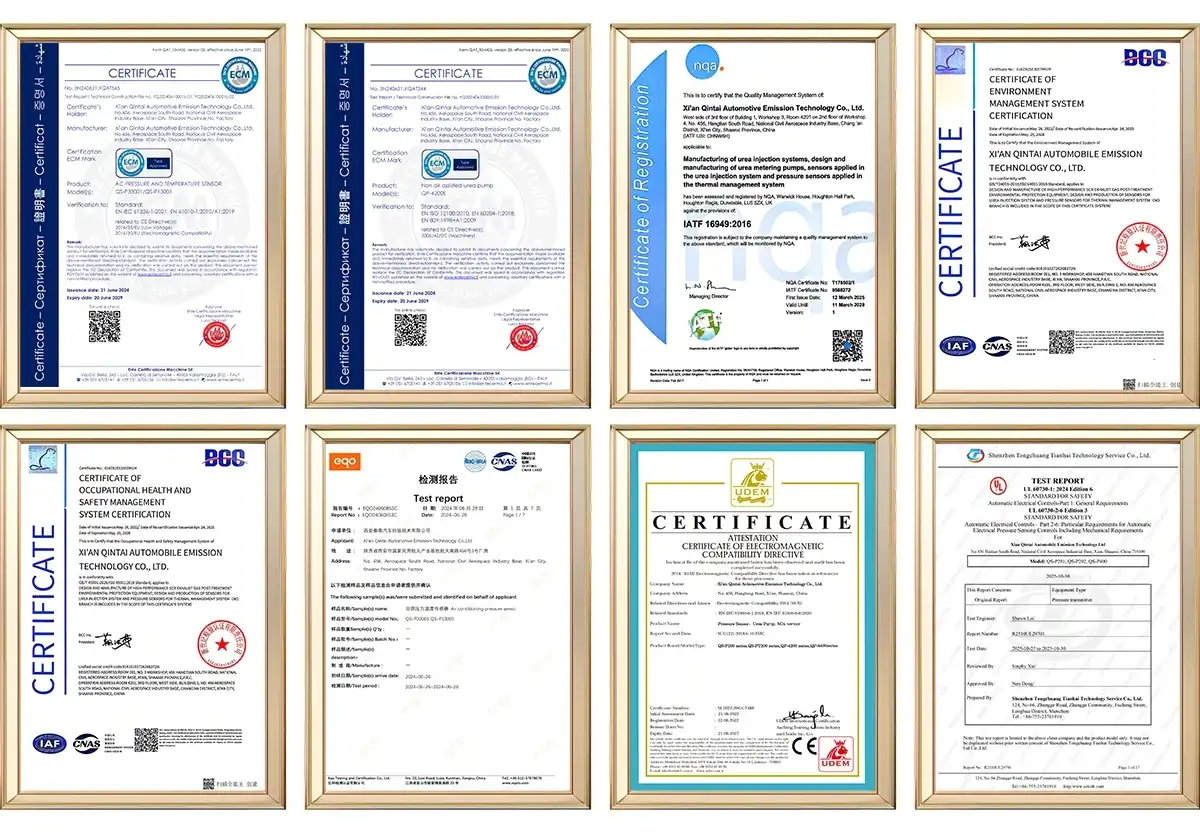
Qintai Automotive Emission Technology Co., Ltd. Ltd, which has been around since 2001, works with Weichai Power, Yuchai Power, and Quanchai Power to be the biggest OEM provider in China. Our ISO9001, IATF16949, and CMC certifications show that we make great products, and our 58 invention patents show that we are always coming up with new sensor technologies.
When choosing between OEM and aftermarket options, you should look at the total cost over the whole lifecycle, not just the price of the initial purchase. Premium sensors with long service lives (up to 6000 hours) cut down on the number of replacements needed and the cost of labour for upkeep. Our sensors have better poison protection against lead and sulphide contaminants, so they stay accurate longer than other options in tough working conditions.
Critical Decision Factors for Procurement Teams
Compatibility is the most important thing to think about. The communication protocols, mounting threads (usually M18x1.5 or M20x1.5), and electrical connector types of the sensors must match those of the engine control unit. Heavy trucks, power sets, and building equipment all have different needs that can be met by customisable interfaces.
Production consistency is affected by how reliable the supply chain is. Look at lead times, inventory depth, and regional spread when deciding which providers to work with. When manufacturers offer big discounts and specialised technical support, they help procurement teams make the best use of their buying strategies while still meeting quality standards.
Certifications prove that you follow the rules set by regulators. For US markets, sensors should meet EPA standards. For European uses, they should meet Euro VI standards. Having extra approvals like UL, CE, REACH, and RoHS shows that you care about safety and the environment, which makes the qualification process easier for OEM installers.
Procurement Guide: Buying NOx Sensors for Business Use
To strategically source emission monitors, you need to know how the market works, what your suppliers can do, and how to handle your supplies. When B2B buyers use smart buying practices, they can cut business costs by a large amount.
Market Pricing Trends and Bulk Purchasing Benefits
Sensor prices vary a lot depending on the specifications and the number of orders. Aftermarket replacement units usually cost between $150 and $400 each, while OEM prices drop a lot when large quantities are ordered. Wholesale wholesalers have tiered pricing systems, which mean that orders of 100 or more units get 15–25% off the regular price compared to orders of less than 100 units.
Pricing tactics are affected by how the markets in different areas work. The United States has strong demand because of strict EPA rules that apply to Class 8 trucks and off-road equipment. European markets put a lot of emphasis on Euro VI compliance, which is good for sellers who can make items with two certifications that can be used in more than one area.
It gives you options to work with manufacturers that support both OEM and aftermarket channels. By working directly with the maker, you avoid the markups that come from going through a distributor and get access to technical tools and customisation services that distributors can't offer.
Supplier Assessment Criteria for Risk Mitigation
Quality certifications are the main thing that is used for screening. Suppliers should keep their ISO9001 quality control systems and IATF16949 approval for the car industry up to date. As a result of these standards, production processes are consistent, products can be tracked, and methods for ongoing growth are used.
Warranty terms show that the company that made the product is confident in its durability. Standard warranties last between 12 and 24 months, but premium suppliers offer longer warranties based on the number of hours or miles used. When things break, downtime is kept to a minimum by comprehensive warranty programs that include advance replacement.
Support services after the sale are what set apart great providers. Technical support teams should offer advice on program building, fixing steps, and training materials. International buyers can communicate more easily with suppliers who offer multilingual support and customer service that is based on time zones.
Inventory Management Strategies for Operational Continuity
To figure out the best amount of stock to keep on hand, procurement teams should look at past failure rates and repair plans. For example, generator sets at power plants and mining tools need more safety stock than cars that aren't as important.
Just-in-time delivery deals with dependable providers cut down on carrying costs while keeping parts readily available. Distributed warehousing lets vendors fill emergency orders within 24 to 48 hours, which keeps equipment from being down for long periods of time. NOx Sensor availability is especially critical in this framework, as a delayed replacement can immediately trigger downtime despite the most efficient logistics.
Another option is consignment inventory programs, in which providers keep stock at the customer's location and only hand over ownership when parts are used in production or upkeep. This setup improves cash flow and makes sure that parts are available right away.
Future Trends and Technological Advances in NOx Sensors
As rules get stricter and digital integration gets deeper, emission control technology keeps changing. Procurement and tech teams can get ready for next-generation needs by learning about new trends.
Integration with Smart Engine Management Systems
More and more advanced sensors have built-in diagnostic tools and can talk back and forth with engine control units. These smart devices keep an eye on the performance of the heater element, find any changes in tuning, and guess how much useful life is left based on how they are being used. Ethernet-based car networks are now part of connectivity protocols, in addition to the more common CAN bus designs. This lets more data be sent at once and supports more complex emission control techniques that make DEF injection work better with millisecond accuracy.
Qintai sensors work with a wide range of engine control platforms from around the world because they handle more than 300 different transmission protocols. This makes it easier for makers of aftertreatment systems to work with a variety of car platforms and types of tools.
Impact of Stricter Emission Standards
The Advanced Clean Truck rule in California and similar laws around the world require even lower nitrogen oxide emissions. To meet the 0.02 g/bhp-hr guidelines, devices need to be more accurate at low concentrations and respond more quickly. At the same time, standards for onboard diagnosis are getting stricter. New rules will require that the efficiency of emission control systems be constantly checked, and problem detection levels will have to be raised. Sensors must stay accurate for the whole time they are working, without a lot of calibration drift.
These regulatory pressures push people to come up with new materials that are poison-resistant and sensing elements that can heal themselves. As older sensor designs become less useful, companies that invest in new ceramic formulas and protective covering technologies will control the markets for the next generation.
Preparing for IoT and Predictive Maintenance Applications
NOx Sensor data is being used more and more by fleet management systems to schedule repairs ahead of time. By looking at patterns in sensor readings, DEF use, and recharge rates, operators can find parts that are breaking down before they fail. Cloud-based analytics systems collect data from tens of thousands of cars, showing trends of failure and figuring out the best time to replace parts. This method is based on data and replaces parts based on their real state instead of random time or mileage intervals. This lowers the cost of upkeep.
Strategies for buying things should focus on sensors that work with telematics systems and can log data. Devices that support industry-standard diagnostic protocols can be easily integrated with current fleet management systems, which increases the return on technology investments.
Conclusion
NOx Sensors are important parts of modern diesel emission control systems that help cars meet stricter environmental rules. Knowing how they work, what care is needed, and how to buy them gives engineering teams and purchasing managers the information they need to make choices that balance following the rules, making sure the machines work reliably, and lowering the total cost of ownership. For long-term success in heavy-duty diesel applications, it's important to choose suppliers with proven engineering skills, a wide range of certifications, and a strong support infrastructure. This is because emission standards are getting stricter and sensor technology is getting smarter and more connected.
FAQ
What distinguishes NOx sensors from oxygen sensors in diesel systems?
Both sensors measure the makeup of waste gases, but they are used for very different things. Oxygen sensors, which work mostly in the engine management system, keep an eye on the ratio of air to fuel to get the best combustion efficiency. NOx Sensors precisely measure the amount of pollution in the aftertreatment system, which allows for precise control of DEF input. They also work at higher temperatures and use different ways to measure, such as catalytic breakdown instead of just finding the oxygen concentration.
What is the typical replacement cost for commercial vehicle NOx sensors?
The cost of replacement depends a lot on the type of car and the specifics of the sensor. Light-duty truck sensors cost $250 to $450 per unit, while aftermarket sensors for heavy-duty trucks cost $150 to $300 per unit. OEM sensors usually cost 20 to 30 percent more than good aftermarket options. Depending on how easy it is to get to the sensors and the shop's rates, labour costs add $75 to $150. By buying in bulk and working directly with manufacturers, fleet owners can get much lower prices per unit.
Are aftermarket sensors viable for commercial fleet applications?
When properly described, quality aftermarket sensors from approved makers are great options to OEM parts. Some important things to think about are certifications (IATF16949, ISO9001), warranty coverage, and the availability of technical support. Reliable alternative providers often make sensors for OEM uses under their own brand names, which means they offer the same quality at lower prices. Procurement teams should make sure that products work with certain engine control systems and make sure that sellers keep enough stock for the fleet's ongoing needs.
Partner with Qintai for Reliable NOx Sensor Solutions
Qintai makes NOx Sensors that are industrial-grade and designed to work with diesel engines in heavy trucks, construction equipment, and power generation systems. Our sensors have response times of less than 1400 milliseconds and service lives of more than 6000 hours, which is longer than the industry standard and better at keeping measurements accurate in tough environments. Our solutions work well with a range of aftertreatment architectures because the connectors, cable lengths, and communication protocols can be changed to fit your needs.
We are China's top OEM supplier and have both IATF16949 and ISO9001 certifications. We offer full technical help from application planning to mass production. Our sealed, waterproof designs keep lead and sulphide poisoning at bay, which lowers the need for upkeep and the overall cost of ownership. Email our team at info@qt-sensor.com to talk about your particular needs and get full technical specs. NOx Sensor makers, system integrators, and fleet owners who want reliable emission control parts backed by a history of excellent engineering are free to contact us.
References
1. Johnson, M. & Williams, R. (2022). Advances in Automotive Emission Sensors: Technology and Applications. Society of Automotive Engineers International.
2. Environmental Protection Agency (2021). Heavy-Duty Diesel Engine Emission Standards and Compliance Strategies. EPA Technical Report Series.
3. Chen, L., Zhang, H., & Kumar, S. (2023). Zirconia-Based NOx Sensors: Materials Science and Performance Optimization. Journal of Emission Control Science and Technology, 9(2), 145-162.
4. European Automobile Manufacturers Association (2022). Euro VI Compliance Guide for Commercial Vehicle Operators. ACEA Technical Documentation.
5. Thompson, D. & Martinez, A. (2023). Predictive Maintenance Strategies for Diesel Aftertreatment Systems. International Journal of Fleet Management, 18(4), 287-303.
6. Anderson, P., Lee, K., & Schmidt, F. (2021). SCR System Diagnostics and Sensor Technology in Modern Diesel Engines. Diesel Engine Technology Handbook, 3rd Edition. Professional Engineering Publishers.
 Sensor.webp)

Our customers’ satisfaction speaks for our quality — contact us to experience the same reliable service.