- English
- French
- German
- Portuguese
- Spanish
- Russian
- Japanese
- Korean
- Arabic
- Greek
- German
- Turkish
- Italian
- Danish
- Romanian
- Indonesian
- Czech
- Afrikaans
- Swedish
- Polish
- Basque
- Catalan
- Esperanto
- Hindi
- Lao
- Albanian
- Amharic
- Armenian
- Azerbaijani
- Belarusian
- Bengali
- Bosnian
- Bulgarian
- Cebuano
- Chichewa
- Corsican
- Croatian
- Dutch
- Estonian
- Filipino
- Finnish
- Frisian
- Galician
- Georgian
- Gujarati
- Haitian
- Hausa
- Hawaiian
- Hebrew
- Hmong
- Hungarian
- Icelandic
- Igbo
- Javanese
- Kannada
- Kazakh
- Khmer
- Kurdish
- Kyrgyz
- Latin
- Latvian
- Lithuanian
- Luxembou..
- Macedonian
- Malagasy
- Malay
- Malayalam
- Maltese
- Maori
- Marathi
- Mongolian
- Burmese
- Nepali
- Norwegian
- Pashto
- Persian
- Punjabi
- Serbian
- Sesotho
- Sinhala
- Slovak
- Slovenian
- Somali
- Samoan
- Scots Gaelic
- Shona
- Sindhi
- Sundanese
- Swahili
- Tajik
- Tamil
- Telugu
- Thai
- Ukrainian
- Urdu
- Uzbek
- Vietnamese
- Welsh
- Xhosa
- Yiddish
- Yoruba
- Zulu
What Is the Difference Between Pressure Sensor and Pressure Transmitter?
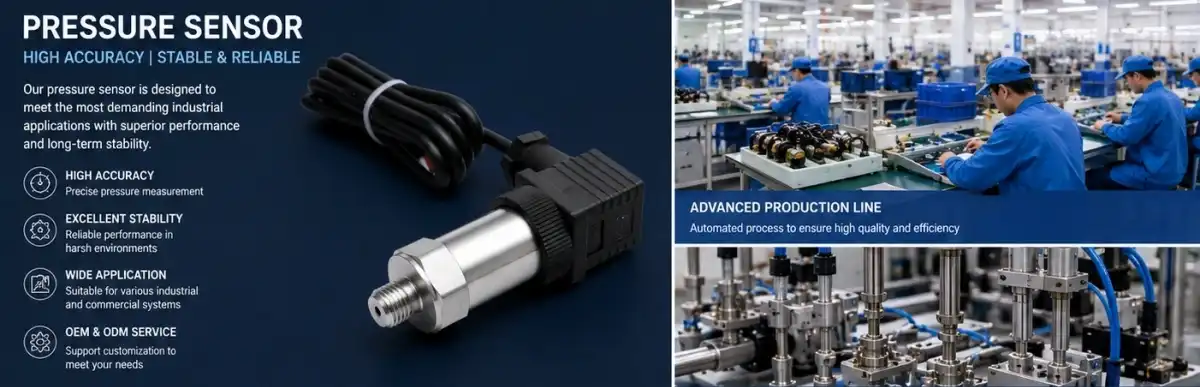
When selecting pressure measurement equipment for diesel engine aftertreatment systems or industrial applications, understanding the distinction between pressure sensors and pressure transmitters becomes crucial. A pressure sensor detects pressure variations and generates a raw electrical signal, often in millivolts, responding directly to mechanical force. In contrast, a pressure transmitter incorporates a sensor element but adds signal conditioning circuitry that amplifies, linearizes, and converts the output into industry-standard signals like 4-20 mA or digital protocols. A pressure sensor, commonly deployed in cooling systems and hydraulic circuits, exemplifies this core sensing function by transforming pressure changes into measurable electrical responses suitable for monitoring applications.
Understanding the Basics: What Are Pressure Sensors and Pressure Transmitters?
Fundamental Operating Principles of Pressure Sensors
Pressure sensors work as devices that change how they work physically when pressure is applied. Piezoresistive sensors use silicon diaphragms whose electrical resistance changes when they are put under mechanical stress. Capacitive sensors, on the other hand, measure how much pressure causes the plates of a capacitor to move apart. These devices make low-level analog signals that are related to the amount of pressure. For actual use in control systems, these signals need to be processed by an outside source.
How Pressure Transmitters Build on Sensor Technology
Pressure-sensing parts are built into transmitters, which also have complex electronics inside tough industrial cases. Before sending out standardized signals, the embedded microprocessors do diagnostic tasks, temperature compensation, and linearization algorithms. This combination makes it possible to connect directly to programmable logic devices and distributed control systems, without the need for signal conditioning equipment in between. This makes installation easier in complex industrial settings.
Signal Output Characteristics That Define Each Device
Raw sensor outputs are usually between 10 and 100 millivolts full scale, which means that they can be affected by electrical interference over cable lengths longer than three meters. This problem can be fixed by transmitters, which turn weak signals into current loops that stay accurate over hundreds of meters of wires. Digital transmitters improve capabilities even more through HART, Modbus, or CANbus protocols. They allow configuration from a distance and diagnostics in real time, which is something that traditional sensors can't do.
Key Technical Differences Between Pressure Sensors and Pressure Transmitters
Signal Processing and Conditioning Capabilities
When you look at the internal parts, the architectural difference becomes clear. Sensors give changes in voltage or resistance that are directly linked to changes in pressure. These changes need to be amplified and converted from analog to digital outside the sensor. Transmitters build these functions right into themselves and use special compensation algorithms that take into account effects like temperature drift, nonlinearity, and hysteresis. Because of this internal processing, measurement errors are less than ±0.075% of the span, which is much lower than the ±0.5% that is common for basic sensors.
For factories that make SCR systems that meet China VI and Euro VI standards, measurement stability is needed from -40°C to +125°C. Transmitters do this by calibrating multiple points and correcting the temperature in real time, pressure sensor being a critical part of that stable measurement chain. Basic sensors, on the other hand, need to be in a controlled environment or connect to an external adjustment network, which makes the system more complicated and increases the number of ways it can fail.
Calibration Requirements and Long-Term Stability
Industrial transmitters are calibrated in the factory against standards that can be tracked, and performance across a certain range is documented on certificates. A lot of them have EEPROM storage that keeps the calibration factors even after the power goes out and on again. Basic sensors don't have this memory feature, so they need to be re-calibrated every time they are removed from their conditioning circuits. When used in stable situations, quality transmitters can be calibrated every 24 to 36 months. Sensors, on the other hand, may need to be checked every three months to make sure they stay accurate.
Application Suitability and Environmental Robustness
It is best to use pressure monitors in labs, OEM equipment with controlled conditions, or cost-effective situations where there is already external data processing in place. Their small size and lower unit costs make them good for high-volume consumer goods and tracking jobs that aren't very important.
Transmitters work best in harsh industrial settings where they have to withstand vibrations, electromagnetic interference, and changes in temperature. Housings made of stainless steel that are rated to IP67 or IP68 can handle being cleaned and installed outside. Explosion-proof certifications allow deployment in dangerous places where flammable gases or dust could start a fire. These qualities are right for places like diesel engine test rooms, mining equipment, and generator set setups where dependability has a direct effect on safety.

How to Choose Between a Pressure Sensor and a Pressure Transmitter for Your Application
Evaluating Measurement Range and Accuracy Requirements
The decision framework starts by figuring out how much an application needs. Transmitters with 0–10 bar ranges and an accuracy of ±0.25% are required by law for emission control verification when measuring diesel exhaust pressure in SCR systems. Agricultural machinery hydraulic systems that work at 250 to 350 bar pressure levels need receivers that can withstand up to 150% of their maximum working pressure. This keeps the membrane from rupturing during hydraulic shocks.
To figure out how much measurement uncertainty is acceptable, you need to know how pressure data affects control decisions. For uses where pressure readings set off safety locks or change the timing of fuel injections, they need to be very accurate and have response times of less than 10 milliseconds. Monitoring programs that look for slow changes can handle lower levels of accuracy when simple sensors are more cost-effective.
Assessing Environmental and Installation Conditions
By looking at where the devices will be mounted, environmental stressors can be found that affect the choice of device. Applications that are placed on engines are constantly vibrating at 10 to 50 Hz and are subject to shock loads during combustion events. For this kind of service, transmitters are made with vibration-dampening bases and sealed electronics that keep connections from dropping. Switching between cold starts and full load operation puts a lot of thermal stress on sensing elements that simple sensors that don't have compensation circuitry can't handle while still staying calibrated.
Factoring Supplier Capabilities and Support Infrastructure
Wiring infrastructure limits often determine the results of choosing. To keep the integrity of the signal when adding analog sensors to old equipment, separate signal conditioners and shielded cabling must be installed. Pressure sensor selection, however, can shift this balance: if you choose transmitters that work with loop power, you don't need separate power lines. This cuts down on installation labor and material costs, even though the parts cost more.
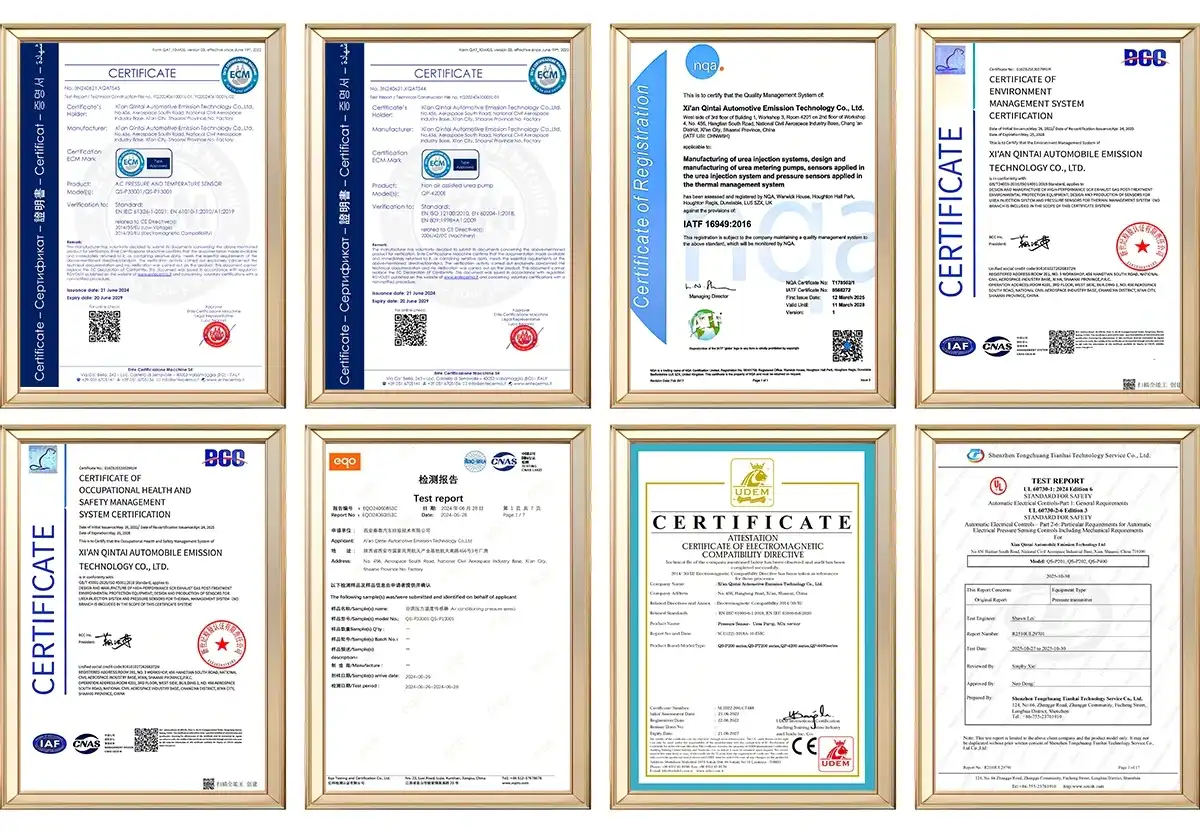
Procurement strategies need to look at the technical skills and service networks of suppliers. Application engineering teams at well-known makers help customers choose the right products by giving them information on things like pressure-temperature rates, media compatibility checks, and electrical connection specs. When suppliers let you change the pressure ports, process connections, and output configurations, they make it possible to standardize across product lines, which makes inventory less complicated. Long-term relationships with suppliers who have ISO 9001 and IATF 16949 certifications make sure that the quality of each batch of production is the same.
Common Challenges and How to Avoid Them with Pressure Sensors and Transmitters
Addressing Accuracy Drift and Calibration Issues
Over the course of an operation's life, performance degradation shows up as changes in zero-point shift and spread. Some of the things that can cause this are diaphragm creep from long-term pressure, seal degradation from chemical exposure, and old electronic parts. By using predictive maintenance plans that check readings from installed devices against portable reference standards, drift can be found before measurements get too far off from what is acceptable.
When working with diesel exhaust condensate, urea solutions, and hydraulic fluids that contain high pressure chemicals, choosing devices made with 316L stainless steel diaphragms and EPDM seals will increase their service life. Material suitability charts from reputable makers help you make choices that will keep things from breaking down too soon because of corrosion or chemical attack.
Managing Environmental Stress Factors
Extreme temperatures can damage both sensor parts and the electronics that connect them. Thermal cycling makes the housing materials and sensing diaphragms expand and contract at different rates. This creates mechanical stress that changes the calibration. Transmitters with temperature monitors close to the pressure elements allow real-time compensation methods that stay accurate over temperature ranges of 165°C.
Another important failure mode is moisture getting in. Applications that will be used outside or in washdown procedures need designs that are hermetically sealed and cable glands that can be submerged continuously. When manufacturers use glass-to-metal seal technology in electrical feedthroughs, they get rid of the leak paths that could damage the electronics inside. Specifying IP67 minimum protection grades makes sure that devices can be submerged in one meter of water for 30 minutes without losing their functionality.
Ensuring Proper Installation and System Integration
When measuring in liquid-filled systems, where trapped air or sediment builds up and changes how pressure is transmitted, the direction of the mounting affects how accurate the measurements are. Installation instructions say to place it upright and have the process connections come in from below. This makes it easier to make self-draining designs that keep air pockets from forming. Isolation valves make it possible to take out devices for testing without letting the system lose pressure, which helps preventive maintenance programs.
How electrical installations are done has a big effect on signal quality. By separating emitter wires from variable frequency drives and ignition systems, electromagnetic coupling that adds noise to measurement signals can be avoided. Signal-to-noise ratios above 60 dB can be maintained by using twisted-pair shielded wires and proper grounding methods. This is necessary for detecting small changes in pressure in low-differential applications.
Future Trends and Innovations in Pressure Measurement Technology
Integration with Industrial IoT Ecosystems
More and more modern transmitters have wireless communication modules that let them connect directly to monitoring platforms in the cloud. These smart devices send pressure data, diagnostic codes, and maintenance warnings in real time without the need for a separate wiring system. Pressure sensor data, when integrated with Manufacturing Execution Systems, lets you connect changes in pressure to parameters of production, which lets you find ways to improve the process that use less energy and make equipment last longer.
Advancements in Sensor Materials and Manufacturing
When upgrading old equipment and installing cables would be too expensive, wireless pressure monitoring comes in very handy. Energy-harvesting technology in battery-powered transmitters lets them work for 5 to 10 years without any upkeep, keeping an eye on faraway pump stations and storage tank levels across multiple sites. Since infrastructure costs are gone, high prices for advanced wireless devices can be justified in situations where they were previously thought to be too expensive to instrument.
MEMS fabrication techniques make it possible to make pressure sensors that are smaller than 5 mm while still meeting industrial-grade performance standards. These small devices can be used in places where space is limited, like fuel rails for cars and small hydraulic manifolds. When manufacturers combine MEMS detecting elements with application-specific integrated circuits, they can make transmitters that work in packages that are 70% smaller than usual ones.
Predictive Analytics and Diagnostic Capabilities
Sensing elements made of silicon carbide and sapphire can work at temperatures above 400°C, which lets them be directly mounted in exhaust streams and used for combustion monitoring tasks that used to need cooling systems. These high-tech materials can handle sudden changes in temperature and the corrosive results of combustion that quickly wear down regular stainless steel diaphragms. This means that they don't need as much upkeep in harsh settings.
Next-generation transmitters have machine learning techniques built in that look at data trends and find outliers that could mean problems are starting to happen before they happen completely. Intelligent devices can guess how much service life is left with 85% accuracy by keeping an eye on signal noise characteristics, temperature compensation coefficients, and calibration drift rates. This feature lets you use condition-based repair plans that lower the number of extra parts you need to keep on hand and stop unplanned downtime.
Conclusion
To tell the difference between pressure sensors and emitters, you need to know how they are built and what they can be used for. Pressure sensor models are cheap options for controlled environments that already have external signal conditioning. Transmitters, on the other hand, are very reliable because they have electronics built in and are built to last. When making a purchase decision, people have to weigh the initial costs against the total costs of ownership, which include labor for installation, calibration, and downtime due to failure.
New smart transmitter technologies that use wireless connections and predictive diagnostics are smart investments that make operations run more smoothly. Working with qualified makers who have the right certifications guarantees consistent products and technical support that protects system performance over time in tough industrial settings.
FAQ
Can pressure sensors and transmitters be used interchangeably in all applications?
The ability to interchange rests on the needs of the system and the infrastructure that is already in place. Basic sensors work well in situations where signal conditioning equipment is already in place and the environment is controlled. Industrial systems that need to connect directly to a PLC, work in dangerous places, or handle high temperatures must use receivers. When sensors are used in places that need transmitters, they cause measurement mistakes, installation problems, and early failures that cancel out any cost savings that were made at first.
What calibration intervals do industrial water pressure sensors require?
The frequency of calibration depends on how important the application is, how bad the surroundings is, and what the rules say. Safety-critical systems used in aircraft or pharmaceuticals must be checked against traceable standards every three months. In general, industrial monitoring applications usually set intervals of 12 to 24 months. Shorter calibration cycles are better for devices that are exposed to changing temperatures, pressure spikes, or media that is corrosive.
Condition-based monitoring that keeps track of measurement drift lets you schedule calibrations in the best way possible, balancing the need to meet compliance standards with the need to run the business efficiently. water pressure sensors require consistent monitoring to ensure long-term accuracy.
How do bulk purchasing considerations affect cost comparisons?
Buying in bulk has a big effect on unit economics, especially for OEM applications that need thousands of devices every year. The volume discounting curves for basic sensors are higher, and buying 10,000 units cuts costs by 40–50% compared to buying sample amounts. Because they are harder to make, transmitters have smaller bulk savings of 20 to 30 percent. However, when you look at the total installed costs that include wiring, conditioners, and calibration labor, it's common to find that transmitters have lower system-level costs, even though the components cost more. This is especially true when the costs are the same across product families.
Partner with Qintai for Advanced Pressure Measurement Solutions
Qintai Automotive Emission Technology Co., Ltd. has been making water pressure sensors for diesel engine OEMs and aftertreatment system installers around the world since 2001. Our wide range of products includes precise sensors and receivers made for heavy-duty uses like measuring hydraulic pressure, following emission control rules, and keeping an eye on exhaust systems. We promise quality standards that meet the strictest buying requirements because we are certified to IATF 16949, ISO 9001, REACH, and RoHS.
The independent research and development team at our company has been granted 58 invention patents. They have created custom sensor solutions that can work in temperatures ranging from -40°C to +150°C and with pressures from 0 bar to 50 bar. We are a major producer of water pressure sensors to Weichai Power, Yuchai Power, and Quanchai Power. Each year, we make more than 2 million units, and each batch is fully traceable and consistent. Procurement managers and technical experts are welcome to talk to us about unique application needs, ask for technical datasheets, or get price quotes for large orders.
Visit qt-sensor.com or email our engineering team at info@qt-sensor.com to learn more about how our pressure measurement skills can help you make your diesel engine systems and aftertreatment platforms more successful in the global market.
References
1. Smith, J.R. and Wilson, M.K. (2021). Industrial Pressure Measurement: Principles and Applications. McGraw-Hill Professional Engineering Series, 4th Edition.
2. Anderson, T.L. (2020). Sensor Technology Handbook for Automotive and Heavy-Duty Applications. SAE International Publications, Technical Paper Series.
3. European Committee for Standardization (2019). Pressure Transmitters for Industrial Process Control - Performance Requirements and Testing Methods. EN 61298 Standard Documentation.
4. Chen, W. and Roberts, P.D. (2022). MEMS Pressure Sensors: Design, Fabrication and Applications. Springer Advanced Manufacturing Series.
5. International Society of Automation (2020). Pressure Measurement Instrumentation: Selection, Installation and Maintenance Best Practices. ISA Technical Report ISA-TR37.25.
6. Kumar, S. and Thompson, R.H. (2021). Predictive Maintenance Strategies for Industrial Instrumentation Systems. Elsevier Process Control Engineering Monographs.

Our customers’ satisfaction speaks for our quality — contact us to experience the same reliable service.