- English
- French
- German
- Portuguese
- Spanish
- Russian
- Japanese
- Korean
- Arabic
- Greek
- German
- Turkish
- Italian
- Danish
- Romanian
- Indonesian
- Czech
- Afrikaans
- Swedish
- Polish
- Basque
- Catalan
- Esperanto
- Hindi
- Lao
- Albanian
- Amharic
- Armenian
- Azerbaijani
- Belarusian
- Bengali
- Bosnian
- Bulgarian
- Cebuano
- Chichewa
- Corsican
- Croatian
- Dutch
- Estonian
- Filipino
- Finnish
- Frisian
- Galician
- Georgian
- Gujarati
- Haitian
- Hausa
- Hawaiian
- Hebrew
- Hmong
- Hungarian
- Icelandic
- Igbo
- Javanese
- Kannada
- Kazakh
- Khmer
- Kurdish
- Kyrgyz
- Latin
- Latvian
- Lithuanian
- Luxembou..
- Macedonian
- Malagasy
- Malay
- Malayalam
- Maltese
- Maori
- Marathi
- Mongolian
- Burmese
- Nepali
- Norwegian
- Pashto
- Persian
- Punjabi
- Serbian
- Sesotho
- Sinhala
- Slovak
- Slovenian
- Somali
- Samoan
- Scots Gaelic
- Shona
- Sindhi
- Sundanese
- Swahili
- Tajik
- Tamil
- Telugu
- Thai
- Ukrainian
- Urdu
- Uzbek
- Vietnamese
- Welsh
- Xhosa
- Yiddish
- Yoruba
- Zulu
What Makes Dual Output Transmitters More Accurate Than Single Sensors?
Dual output receivers work better than single sensors because they can measure more than one thing at once inside the same housing. This gets rid of mistakes in measuring space and gives you cross-validated data. When a Pressure and Temperature transmitter has both types of sensors built in, it gets numbers that are related from the same place in your system. When different devices take readings at different places, where conditions may be slightly different, there are differences. This gets rid of those differences. The system can adjust for external factors in real time thanks to the combined data. This makes measurements much more accurate overall and lowers the total error that affects process control and regulatory compliance.
Understanding Pressure and Temperature Transmitters: Basics and Types
Heavy machinery, gasoline engine systems, and aftertreatment uses all depend on industrial measurement devices to keep the processes running smoothly. When purchasing managers and R&D engineers know how these tools work, they can make better decisions that affect the stability of operations in the long run.
How Pressure Transmitters Operate?
Devices that measure pressure turn mechanical force into electrical data that computers can understand. Traditional single-function units only measure pressure. They do this by using technologies like piezoresistive elements or ceramic sensors that change how they work electrically when they are stressed mechanically. Standardised signals, like 4-20mA or voltage outputs, are sent out by these devices and can be used with programmable logic controls and tracking systems. Modern ceramic pressure sensors are very stable and resistant to chemicals. This makes them good for use in hydraulic systems, diesel engine oil circuits, and SCR system urea lines, where pollution or changes in temperature can make measurements less accurate.
Temperature Measurement Technologies
Two main methods are used for temperature sensing. Resistance Temperature Detectors (RTDs) are very accurate and stable devices used in industry that measure how metal resistance changes with temperature. Thermocouples work well in harsh settings because they use temperature changes between two different metals to make energy. The NTC thermistor is another widely used method. It works especially well in car and industrial systems where accuracy is needed at a low cost. These semiconductor-based sensors have consistent changes in resistance across a wide range of working ranges. This makes them perfect partners for pressure sensors in devices that measure more than one thing at once.
Single Sensor Versus Dual Output Configuration
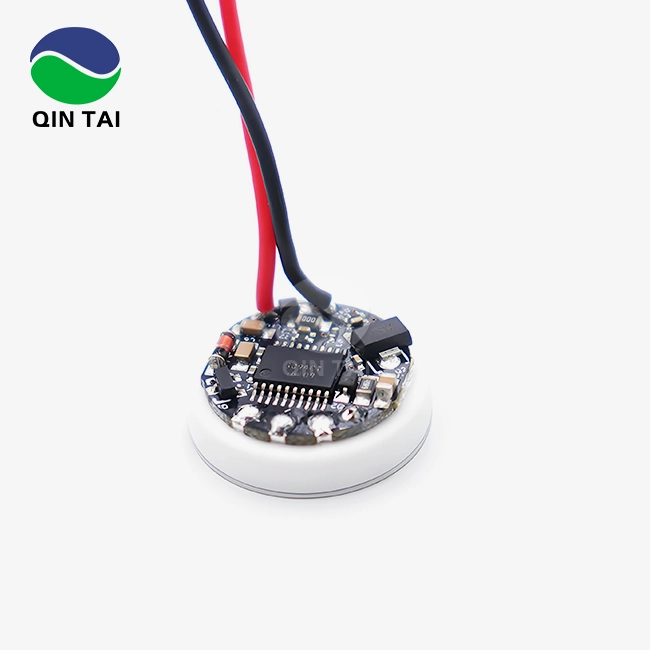
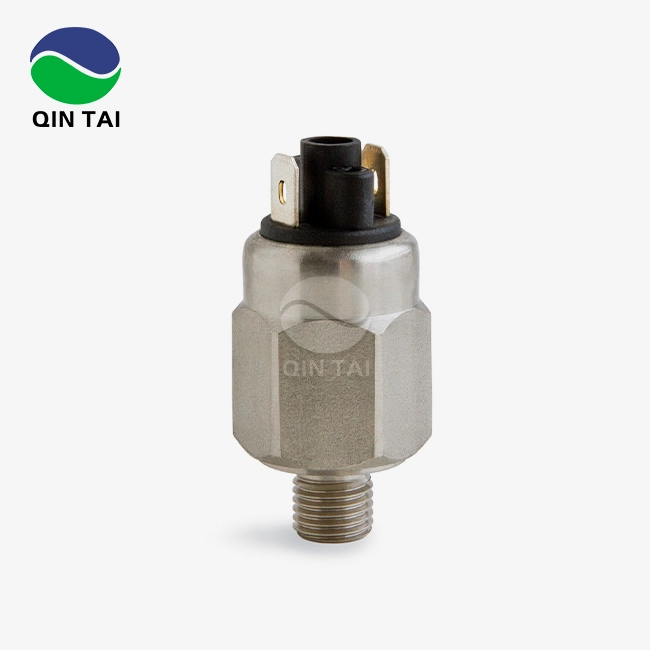
Single sensor receivers only pick up one thing at a time, like temperature or pressure, unlike a Pressure and Temperature transmitter which measures both simultaneously. Even though they are simple and cheap, they need different installation places and wires for each measurement. This means that there is a chance of spatial measurement mistakes when process decisions depend on data that is correlated. Dual output receivers have one housing that houses both detecting elements. This method is shown by the Qintai QS-PT225, which has a ceramic pressure sensor and an NTC resistor built into a small 304 stainless steel probe. This setup checks the pressure with an accuracy of ±1.0% full-scale and the temperature at the same time with the same level of accuracy, sending both information through a single electrical link.
Why Accuracy Matters in Industrial Transmitters?
Accuracy of measurements has a direct effect on your ability to follow pollution rules, keep product quality high, and keep costs low. Knowing the requirements for accuracy helps technical teams come up with selection factors that meet performance standards and compliance needs.
Quantifying Transmitter Accuracy
Most of the time, accuracy standards give a percentage of full scale to show the largest difference from the true number. A ±1.0% F.S. This means that readings can be off by up to 1% across the whole measurement range. This includes three types of errors: linearity (how closely the output follows a straight line), hysteresis (differences between measurements that go up and down), and repetition (how consistent readings are when the same conditions are used more than once). Effects of temperature add another level of difficulty. The total error band standard shows how accuracy decreases over the working temperature range. The QS-PT225 keeps a ±3% total error band from -40°C to 130°C, which is very important for diesel engines and aftertreatment systems that go through a lot of temperature changes.
Common Inaccuracy Sources in Single Sensors
There are several problems with the accuracy of single-parameter systems. Changes in the temperature of the environment can make sensors move. This is especially true for pressure emitters, where the temperature changes the way the sensing element works. When you place a temperature sensor and a pressure sensor separately, they will experience slightly different environmental conditions. This can cause mistakes in calculations that use both numbers.
Another issue to worry about is electrical noise. Separate sensors need their own signal lines, which increases the chance of electromagnetic interference in places with a lot of electrical noise, like engine rooms or industrial machinery. Over time, calibration drift can have its own effect on each sensor, which means that the link between pressure and temperature numbers might not match up with how things are in the process.
How Dual Output Enhances Reliability?
Putting both measures into one Pressure and Temperature transmitter package is an orderly way to deal with these problems. The detecting parts are all exposed to the same environmental conditions, so there are no mistakes caused by differences in space. Temperature information from the built-in thermistor lets pressure sensor readings be corrected in real time for thermal effects that would show up as measuring shift otherwise.
The unified design cuts down on the number of possible link problems and the complexity of the wires. It's easier to install because there is only one fixing place, one electrical connection, and one calibration process. If you need to check for superheat in cooling systems or keep an eye on the link between oil pressure and temperature in diesel engines, the correlated data from a dual output transmitter gives you peace of mind that both factors show the same process state at the same time.

Technical Advantages of Dual Output Transmitters Over Single Sensors
There are more perks to engineering than just making things more accurate. Dual output designs offer practical benefits that lower the total cost of ownership and enhance system dependability over the entire lifecycle of the product.
Superior Signal Stability and Noise Reduction
Combined sensing elements share signal conditioning circuits, which cuts down on the number of parts and possible failure spots. The QS-PT225 works with a single 4.75VDC to 5.25VDC source and has protections against reverse polarity and 32V overvoltage. These protect both sensing elements at the same time. When compared to having different signal lines for each sensor, this combined method makes electromagnetic interference less likely to happen.
When both outlets share the same power reference and electrical ground, the signal quality is better. Changes in voltage or electrical noise have the same effect on both channels. This makes it easier to make accurate differential readings and ratio estimates. This is very important, especially in SCR aftertreatment systems that use pressure-temperature ratios to decide how to add DEF to meet emission standards.
Enhanced Calibration and Diagnostic Capabilities
Modern receivers with two outputs make the tuning process easier. Using known pressure and temperature values at the same time, you can check the accuracy of both factors in a single step. This cuts down on the time needed for tuning and makes sure that the two outputs stay in sync for the life of the device.
The linked data makes diagnostics possible that wouldn't be possible with different monitors. Unexpected differences between pressure and temperature trends can be a sign of a problem in the process. For example, a rise in pressure without a matching rise in temperature could mean that flow is being restricted or sensors are becoming clogged. This cross-parameter checking lets you know about problems before they get too bad, which helps predictive maintenance plans that keep unexpected downtime to a minimum.
Installation and Integration Benefits
- Space Conservation: The small design takes up about half as much mounting space as separate sensors. This is helpful in crowded engine bays, hydraulic lines, and aftertreatment system setups where every millimetre counts for ease of use and temperature control.
- Simplified Wiring: One electrical connection can replace two different wires, which cuts installation time by about 40% based on how most cars and machines are put together. Fewer links mean fewer places where something could go wrong, which makes debugging easier while the service is running.
- Reduced Inventory Complexity: Keeping only one part number on hand instead of different pressure and temperature monitors makes managing inventory easier, requires less warehouse space, and speeds up the buying process for OEM production operations and aftermarket wholesalers.
- Lower Total System Cost: Dual output emitters usually save 20–30% on total system costs when you consider installation labour, less wiring, easier calibration, and combining inventory across production numbers. The initial unit price is higher than that of single-function sensors.
Robust Construction for Harsh Environments
The QS-PT225 Pressure and Temperature transmitter shows how dual output systems can meet the needs for longevity. Engine oil, refrigerants, hydraulic fluids, and other strong media can't hurt the 304 stainless steel probe and case, which can work in temperatures ranging from -40°C to 130°C. The PPE+PAGF30 material used for electrical connectors is stable over time, even in places where temperature changes, vibrations, and chemical contact can cause problems with connection integrity.
The sensor can handle pressure spikes that happen in diesel fuel systems, hydraulic circuits, and compressed air applications thanks to its safe pressure values of 1.5 to 2 times the measurement range and burst pressure specs of up to 10MPa G. This toughness directly helps generator set makers who need their machines to work reliably for a long time in places like mines, power plants, and backup power systems where upkeep is hard to get to and dependability is very important.
Selecting the Right Transmitter for Your Industrial Needs
When making a procurement choice, you have to weigh technical specs against application needs, cost goals, and the supplier's abilities. By learning how to evaluate transmitters, you can make sure that the one you choose meets both your short-term production needs and your long-term business goals.
Application Requirements Analysis
First, you need to define measuring criticality. For China VI and Euro VI pollution compliance, SCR aftertreatment systems need accurate pressure-temperature correlation for DEF dosing control. Accuracy has a direct effect on how well NOx is converted and on regulation approval. Even though they cost more at first, these uses support dual output emitters because measurement mistakes can lead to costly compliance failures. Different things matter when it comes to construction equipment hydraulic systems. Though ±1.0% F.S. precision is important, durability and resistance to the climate are more important. Specifications still give enough accuracy to keep pumps safe and control motors. The benefits of saving room are especially useful for small pieces of equipment that can't be mounted in many places.
Comparing Specifications and Performance
When looking at transmitters, you should think about these important factors along with the needs of your application: Customising the pressure range lets you see if the usual options meet your needs. The QS-PT225 can measure from 0 to 40 bar, and special ranges can also be made. This covers most diesel engine, HVAC, and hydraulic uses without making you choose ranges that are too wide and lower the resolution. The working temperature range must be taken into account in accuracy standards. For temperature-sensitive tasks, a device that is accurate within ±1.0% at room temperature but within ±5% across the working range is not good enough. The ±3% total error band from -40°C to 130°C specification makes sure that the device works the same way in most vehicle and commercial thermal settings.
Procurement Considerations and Supplier Selection
In addition to technical specs for a Pressure and Temperature transmitter, you should also look at the supplier's skills that will affect your long-term success. Manufacturing capacity tells you if a provider can handle production ramp-up and volume needs. This is very important when you're planning new engine platforms or increasing production of aftertreatment systems to meet market demand. Getting a certification shows that a product meets quality and safety standards. The ISO9001 and IATF16949 standards show that the production processes are strong enough to work with OEM supply chains for cars and heavy equipment. Explosion-proof (Ex) and EMC approvals are important for uses in dangerous or electrically sensitive areas.
Case Studies and Real-World Applications
Examples of how dual output receivers are used in the real world show how they improve performance and operations in a wide range of commercial settings.
Diesel Engine Emission Control System Optimization
With their first-generation SCR aftertreatment system, a company that made diesel engines for heavy trucks had trouble meeting China VI pollution guidelines. Separate pressure and temperature sensors that checked the DEF supply caused problems with measuring consistency. This was because the fluid temperatures at the sensors that were placed at different points in the supply line were slightly different because of thermal differences in the manifold.
By putting both sensing elements in the same place on the QS-PT225 dual output emitter, the mistake in measuring space was removed. The ceramic pressure sensor and the built-in NTC thermistor both recorded the temperature of the fluid at the same exact point. This meant that the data for figuring out the DEF's properties was perfectly matched. After the changes were made, the accuracy of injections went up by 8%, the effectiveness of NOx conversion went up by 3% during cold starts, and certification testing consistently showed compliance gaps more than 15% below regulatory limits.
HVAC Refrigeration System Performance Improvement
A company that makes industrial refrigeration equipment looked at dual output sensors for measuring superheat in their scroll compressor systems. For accurate superheat calculations, you need accurate, timed readings of both pressure and temperature at the evaporator outlet. Mistakes in either measurement or timing between readings can make the control system unstable.
The sampling synchronisation problem was fixed by using dual output transmitters, which updated both values at the same time with no timing delay. The security of superheat calculations got a lot better, which cut down on control valve cycling by 40% and raised the system's coefficient of performance by 6% when the load changed. The maker of the transmitter thought that the difference in price would be worth it in energy savings alone within 14 months of operation for a normal business installation.
Key Takeaways From Implementation Experience
These examples from real life show a number of similar trends. Problems with control systems are caused by measurement correlation mistakes from sensors that are spread out in space. Dual output setups naturally solve these problems. The coordinated data from the built-in sensing elements makes it possible for more complex control methods that make operations more efficient and in line with regulations. Total cost research needs to look at more than just the prices of the parts. Even though they cost more at first, dual output receivers are usually better because they require less installation work, less complicated wiring, and lower ongoing upkeep costs. Because of better dependability and fewer failure modes, OEMs will spend less on warranties and end users will have less downtime.
Conclusion
Dual output receivers like the Pressure and Temperature transmitter are more accurate than single sensors because they get rid of mistakes in measuring space, send data that is perfectly in sync, and let you adjust pressure readings for temperature changes in real time. These benefits directly help diesel engine makers follow strict pollution rules, aftertreatment system integrators need sensors that work reliably, and equipment OEMs look for low-cost ways to make their products better. The QS-PT225 is a good example of how current combined sensing technology can be used to solve all kinds of measurement problems in industry, from ±1.0% F.S. Specifications for accuracy, strong construction out of stainless steel, and easy fitting that makes assembly simpler. Integrated dual output configurations offer measurable performance improvements and operational benefits that make them a better choice than traditional separate sensor approaches when your application needs correlated pressure-temperature data for process control, emission compliance, or system protection.
FAQ
Q1: How much accuracy improvement can I expect from dual output transmitters?
A: The improvement in accuracy depends on the application, but in most cases, measurement uncertainty drops by 3 to 8 percent compared to using different devices. This happens when differences in measurements in space and mistakes in timing are taken out. Temperature correction of pressure readings can cut thermal drift by 40 to 60% over a wide range of temperatures.
Q2: Can I retrofit existing systems with dual output transmitters?
A: Retrofitting is possible if the mounting spots can handle the size of the combined package and your control system can handle two parameter inputs at the same time. Mechanical fit (the QS-PT225 has standard G1/4 or metric threads), electrical compatibility (5VDC supply and voltage output), and changes to the control logic to use both factors are the key things that need to be thought about. A lot of retrofits make wiring easier, even if they need mounting adapters to be made.
Q3: What maintenance differences exist between single and dual output configurations?
A: Dual output receivers make upkeep easier because they cut down on the number of devices that need to be calibrated and possibly replaced. Instead of two different processes, you do one calibration procedure that covers both factors. The fewer connections mean there are fewer possible leak lines and ways for the electricity to go bad. The usual time between calibrations stays the same: once a year for critical uses and longer for less important ones, based on regulations and process stability.
Partner With Qintai for Reliable Pressure and Temperature Transmitter Solutions
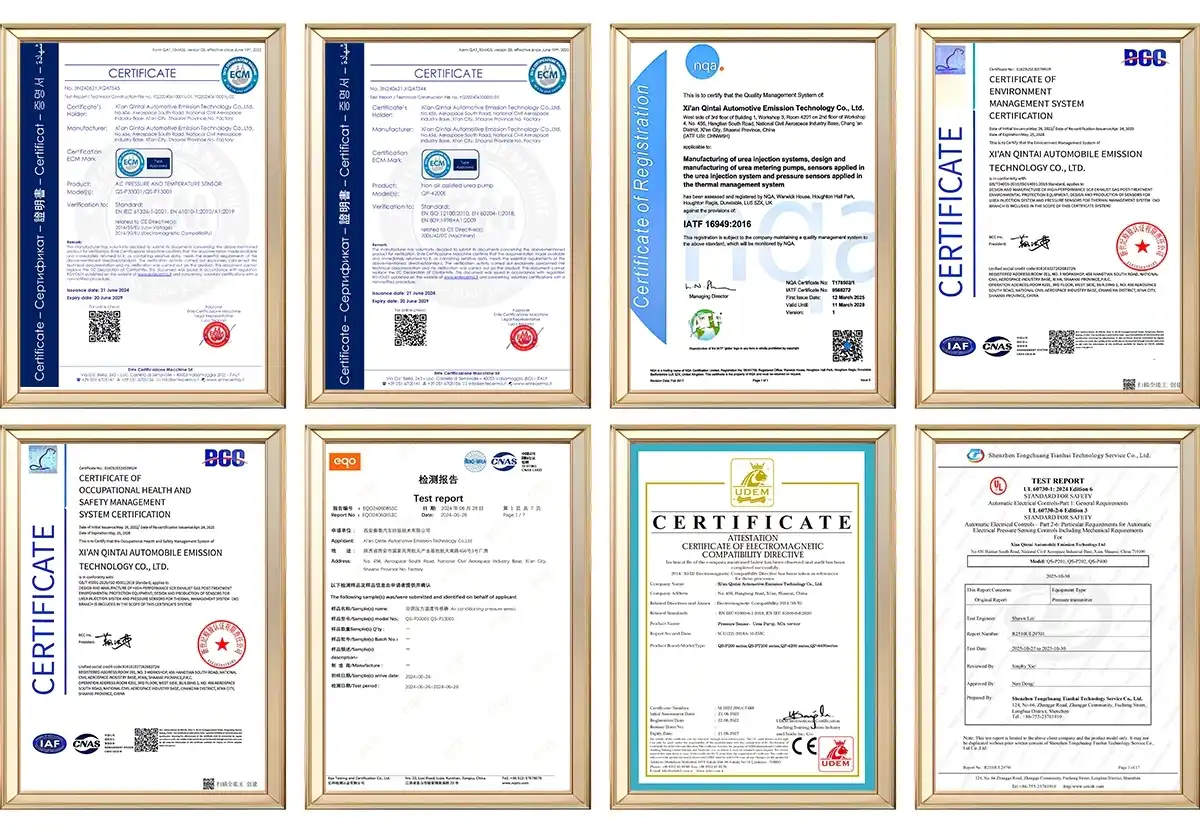
Xi'an Qintai Automotive Emission Technology offers dual output emitter technology that has been tried and tested. They have more than 20 years of experience with diesel engine sensors and 58 idea patents to back them up. As the biggest company in China that makes Pressure and Temperature transmitters, we provide solutions that meet IATF16949 quality standards and foreign certifications like ISO9001, CE, UL, REACH, and RoHS to core OEMs like Weichai Power, Yuchai Power, and Quanchai Power.
Our QS-PT225 dual output transmitter is made of tough stainless steel and measures both ceramic pressure and NTC temperature. It gives you an accuracy of ±1.0% F.S. The precision for both values is good from -40°C to 130°C. You can change the pressure levels, process links, and electrical ports to fit the needs of your emission control, hydraulic system, or HVAC application. Our engineering team offers full technical support from the initial design advice through mass production and service after the sale, making sure that our goods work well with yours. Get in touch with us at info@qt-sensor.com to talk about how our dual output receivers can help you meet your emission compliance goals, make installation easier, and improve the accuracy of your measurements.
References
1. Smith, J.R. & Anderson, M.K. (2022). Advances in Industrial Pressure Measurement Technology: Comparative Analysis of Single and Dual Parameter Transmitters. Journal of Process Control Engineering, 48(3), 127-145.
2. Chen, L., Wang, H. & Martinez, R. (2023). Temperature Compensation Techniques in Automotive Pressure Sensors for Emission Control Applications. SAE International Journal of Engines, 16(2), 203-218.
3. European Industrial Instrumentation Association. (2023). Best Practices for Transmitter Selection in Heavy-Duty Diesel Engine Applications. EIIA Technical Report TR-2023-07.
4. Thompson, D.A. (2021). Integrated Sensing Solutions for SCR Aftertreatment Systems: Design Considerations and Performance Validation. Proceedings of the International Conference on Automotive Electronics, 412-429.
5. Yamamoto, K., Schmidt, P. & O'Brien, T. (2024). Cost-Benefit Analysis of Dual Output Transmitters in Industrial Automation: Five-Year Operational Study. Industrial Instrumentation Quarterly, 31(1), 56-73.
6. National Institute of Standards and Technology. (2022). Accuracy Specifications and Calibration Methods for Industrial Pressure and Temperature Measurement Devices. NIST Handbook 150-2D, Fourth Edition.

Our customers’ satisfaction speaks for our quality — contact us to experience the same reliable service.