- English
- French
- German
- Portuguese
- Spanish
- Russian
- Japanese
- Korean
- Arabic
- Greek
- German
- Turkish
- Italian
- Danish
- Romanian
- Indonesian
- Czech
- Afrikaans
- Swedish
- Polish
- Basque
- Catalan
- Esperanto
- Hindi
- Lao
- Albanian
- Amharic
- Armenian
- Azerbaijani
- Belarusian
- Bengali
- Bosnian
- Bulgarian
- Cebuano
- Chichewa
- Corsican
- Croatian
- Dutch
- Estonian
- Filipino
- Finnish
- Frisian
- Galician
- Georgian
- Gujarati
- Haitian
- Hausa
- Hawaiian
- Hebrew
- Hmong
- Hungarian
- Icelandic
- Igbo
- Javanese
- Kannada
- Kazakh
- Khmer
- Kurdish
- Kyrgyz
- Latin
- Latvian
- Lithuanian
- Luxembou..
- Macedonian
- Malagasy
- Malay
- Malayalam
- Maltese
- Maori
- Marathi
- Mongolian
- Burmese
- Nepali
- Norwegian
- Pashto
- Persian
- Punjabi
- Serbian
- Sesotho
- Sinhala
- Slovak
- Slovenian
- Somali
- Samoan
- Scots Gaelic
- Shona
- Sindhi
- Sundanese
- Swahili
- Tajik
- Tamil
- Telugu
- Thai
- Ukrainian
- Urdu
- Uzbek
- Vietnamese
- Welsh
- Xhosa
- Yiddish
- Yoruba
- Zulu
What Pressure Range Should a Water Sensor Support
A pressure water sensor should support a range that covers your normal operating pressure and your highest expected pressure spike, with a safety margin on top. I look for the narrowest range that does both. Normal pressure should sit near the middle of the span, roughly between one-third and two-thirds of full scale. For example, a booster system running at 2–3 bar (29–44 psi) fits a 0–6 or 0–10 bar sensor. A 25 bar (363 psi) cleaning system usually needs 0–40 bar (580 psi) or more. Below, I explain how to reach that number.

Start With the Real Water Pressure Requirement
Map the Full Pressure Profile
The whole pressure profile, not just the pump nameplate, is what you use to choose a range. I keep track of the lowest, normal, highest, static, and discharge pressures over the course of a full operating cycle. Then I add transients from starting the pump, valves closing quickly, and water hammer. Rush pressure can get much higher than steady line pressure. Wylie and Streeter's book Fluid Transients in Systems goes into great detail about the physics behind this. I also check the pressure water sensor and all the parts that are attached to it for overload and burst values. Even if the average pressure looks safe, the diaphragm can drift or break if a spike is bigger than the sensor's maximum limit. Calculations often miss jumps that can be seen in a short data log from a test pressure water sensor.
Match the Range to Common Applications
Applications tend to fall into expected groups. Low ranges, like 0–6 bar (87 psi), are often used for home booster pumps, irrigation lines, and small filters. When standing pressure goes over 80 psi, the International Plumbing Code says that a pressure-reducing valve must be used. Because of this, building systems rarely need more than 0–10 bar (145 psi). 0–10 or 0–16 bar (232 psi) is often used in HVAC loops and water treatment skids. Systems for ships, industrial pumps, and pressure washers may need 25, 40, or 60 bar. Heat and vibration are made worse by diesel engines, generator sets, and test benches. I handle each of those as a separate case and check the range against the circuit's own pressure data.
Choose Gauge, Absolute, or Differential Measurement
Next, I choose what the pressure water sensor will measure against. A gauge sensor compares the reading to the air pressure and works with most pumps, tanks, and pipes. An absolute sensor compares its reading to a vacuum reference, which is useful when the conditions of height or suction are important. A differential sensor checks two points, like the filter's inlet and outlet, and lets you know when it starts to clog up early. For feed, permeate, concentrate, and differential pressure, reverse-osmosis skids often have more than one pressure water sensor. It's hard to fix mistakes that happen when you choose the wrong reference, so I make sure I know the type of reference before I talk about range. This step only takes five minutes and keeps you from having to pay a lot of money to reorder.
Match Range, Accuracy, and Output Signal
Use the Narrowest Practical Range
A pressure water sensor that is too big wastes resolution. I put in a 0–40 bar pressure water sensor and the booster system is running at 2–3 bar. The driver only sees a small part of the signal span. A range of 4–20 mA amounts to 16 mA. As the bar level changes from 0 to 40 bars, the output changes by 0.4 mA. The same 1 bar moves a 0–10 bar pressure water sensor by 1.6 mA. A PLC can find small changes much more easily because of that difference. It's the opposite of what you want when the range is too narrow: signal saturation and overload damage. A good rule of thumb for me is to keep the normal pressure between one-third and two-thirds of the span and the highest spike below the rated limit.
Read Accuracy as a Percentage of Full Scale
When talking about accuracy, specs usually mean full scale, so a bigger range means a bigger exact error. On a range of 0 to 10 bars, an FS pressure water sensor with a tolerance of ±0.5% can be off by 0.05 bar. On a range of 0 to 40 bars, the same percentage gives you 0.2 bars of error. At 2.5 bar working pressure, that's 2% of the number instead of 8%. It's also important to compare things like reaction time, consistency, hysteresis, temperature effects, and long-term stability. You don't have to respond quickly to pulsating pumps, but you do have to monitor tanks slowly. I always check to see if the accuracy number includes temperature error, since datasheets aren't all the same on this point.
Compare Sensors, Switches, and Output Signals
A pressure switch turns on or off at a set point, which works well for basic pump safety. A pressure water sensor, which is also known as a transducer or transmitter, sends a steady signal that can be used for monitoring, controlling, and diagnosing. A pressure water sensor is what the controller needs when it wants to see trends instead of just alarms. Flow measurement is not the same as pressure measurement, and many systems need both. Choice of output is also important. A 4–20 mA signal works well over long wire runs and doesn't pick up electrical noise, which is why industrial plants like it. One to ten volts is good for short runs to a device close by. Because it tracks the 5 V supply, a 0.5–4.5 V ratiometric output is common in engine control units.
Check Materials, Installation, and Environmental Protection
Match Wetted Materials to the Water
Everything that touches the water has to be able to handle it. There is a review of the pressure port, housing, seals, and diaphragm of the pressure water sensor. Stainless steel is good for many jobs that need to be done with clean water, and ceramic sensor elements can handle many harsh media. Different kinds of water, like chlorine, seawater, wastewater, and cleaning chemicals, put different kinds of stress on materials. I get a list of the materials that have been wet from the seller and compare it to the water analysis. For potable water projects, you might need materials that are approved for contact with drinking water. There are places where seals like EPDM or FKM can leak, so they are just as important as the metal body. Water that freezes can also hurt a diaphragm, so places that are cold need extra care.
Verify Ingress Protection, Temperature, and Certifications
IP ratings are based on IEC 60529. IP65 protects against dust and water jets, and IP67 protects against short-term immersion. Sites outside, in agriculture, on the water, or in industry often need one of these ratings or higher. I also look at the temperature range of both the media and the air around it. The same care should be taken with condensation, vibration, and electromagnetic interference. The system needs to have the right supply power, reverse-polarity safety, and EMC performance. People who want to buy things in the US often ask for UL, CE, and RoHS documents. Proof of a quality system, like ISO 9001 or IATF 16949, helps suppliers get approved. It's important for me to get these files early because missing paperwork can hold up a project that is otherwise ready to go.
Install and Wire the Sensor Correctly
What the pressure water sensor reads depends on where it is. The control goal tells me where to put it: at the pump's inlet or outlet, in the filter, in the tank, or at the end of the line. With isolation valves and manifolds, maintenance is easier, and pulsation is stopped. Before I place an order, I make sure I know the thread standard (like NPT or BSP) and the way the item will be sealed. From there, I look at the two-, three-, or four-wire diagram and check the polarity, shielding, grounding, and input resistance of the controller. I don't over-tighten the fitting, put too much stress on the cable, or run signal wires next to motors or variable-frequency drives. After setting it up, I check the readings at several pressure points against a calibrated reference gauge.
Test, Specify, and Approve Before Production
Run Incoming Inspection and Bench Tests
Before I give the go-ahead for production, I check the label, housing, connector, pressure port, and seals of the pressure water sensor for damage, contamination, and water entry. When I put pressure on it from a known source, I read the output at zero, mid-range, and close to full scale. To be sure, I've checked that the output of a 4–20 mA unit reads 4 mA at zero and 20 mA at full scale. Pressure cycling shows signals that are unstable, have zero drift, and hysteresis. There is a set way to do leak and overload tests, and they don't go over the burst limits. Before the first package comes in for large orders, I make plans for sampling, acceptance standards, calibration records, and tracking.
Write a Complete RFQ Specification
An RFQ that is clear cuts down on weeks of changes for a pressure water sensor. I list the type of pressure, its range, its units, its accuracy, its reaction time, its output, its source voltage, its connection, the materials that will be wet, its temperature, its IP rating, its certifications, its packing, and its calibration needs. Then I look at how well the standard and custom models fit technically, how long it takes to make them, how many I need to order at once, what tools are available, and whether samples are available. The unit price is important, but so are the ability to produce, the documentation, the warranty, and the expert help. A cheaper part that breaks down more often costs more in the long run. For HVAC projects, building automation outputs may be needed. Marine projects need corrosion resistance. OEM projects often need custom housings, labels, and the ability to track them.
What Qintai Offers for Pressure Sensing
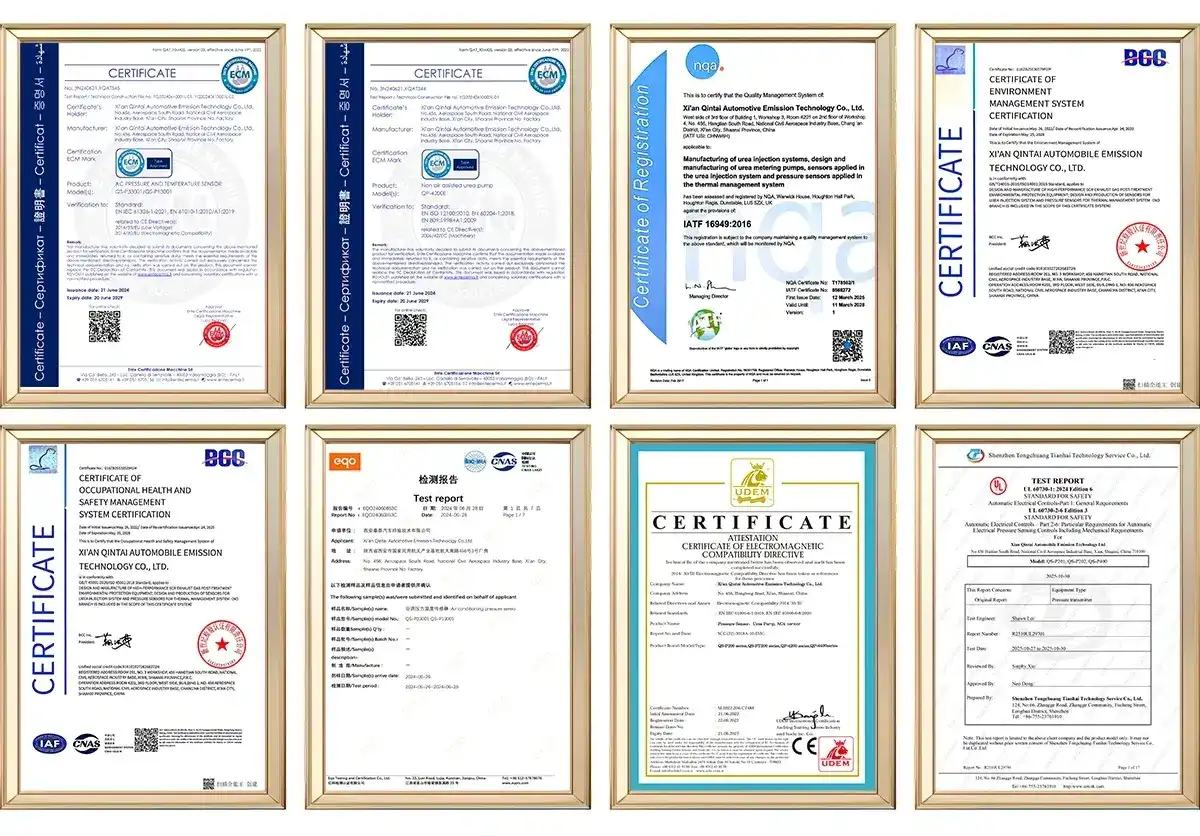
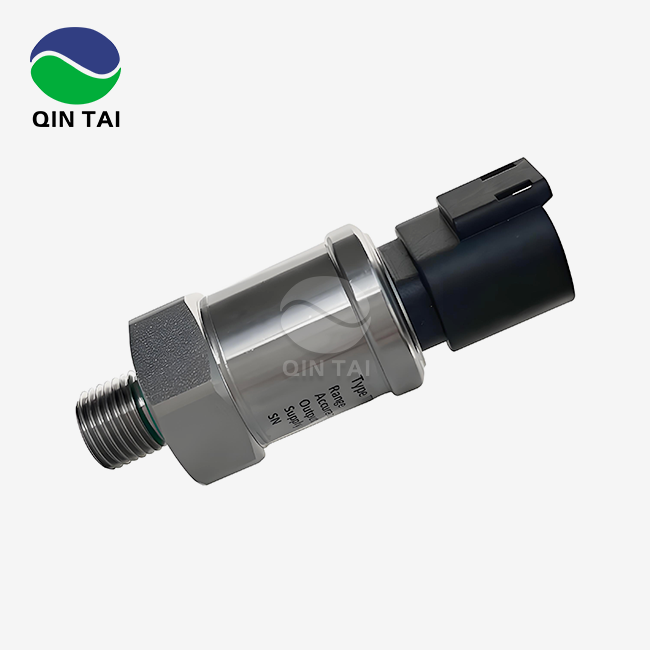
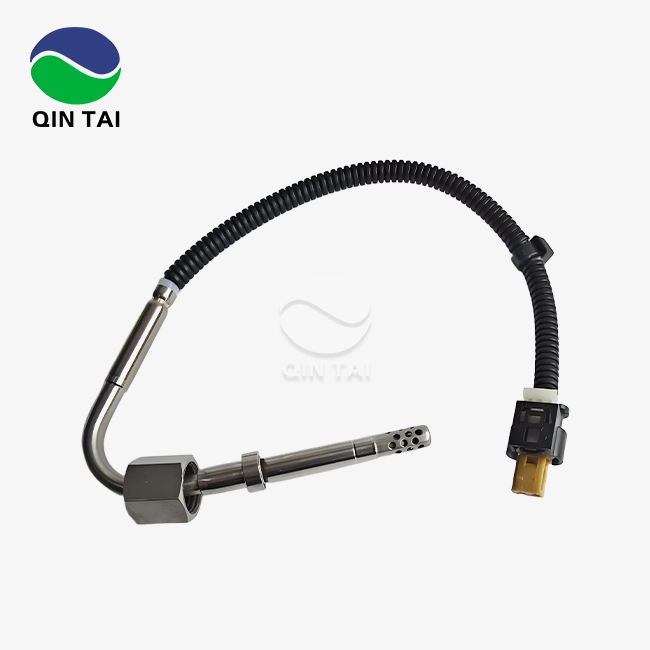
Xi'an Qintai Automotive Emission Technology Co. Ltd is a national high-tech company that was set up in 2001. Our main focus is on pressure water sensors, but we also design, make, sell, and service SCR aftertreatment systems and sensors for diesel engines. ISO9001, IATF16949, CMC, Ex, UL, CE, REACH, and RoHS are some of the certifications we have. We also have 58 invention patents. Weichai Power, Yuchai Power, and Quanchai Power all buy from us, and our market share in China is the biggest in the country. Our separate research and development team helps with OEM and ODM services, from planning to mass production and making changes to fit specific needs. We sell in over 60 places and countries.
Avoid Mistakes and Make the Final Decision
Avoid the Most Common Selection Errors
Most failures are caused by not fully analyzing the system, not by broken pressure water sensors. Picking a range from the pump's nameplate doesn't take into account pressure losses, elevation, valve position, or measurement site. Some buyers get the accuracy rating and the pulsation or water hammer rating mixed up. Others order an output that the controller can't read. At low pressure, a high-range pressure water sensor is not always correct. Costs for upkeep and downtime can go up when you use a cheap part. Each of the following things I look at: total cost of ownership, operating pressure, transients, resolution, materials, electrical compatibility, documentation, and transients are all looked at together. Most problems are found before a purchase order is sent out because of that habit.
Apply the Range to Real Examples
The method is shown in three ways. First, a 2–3 bar (29–44 psi) booster works well with a 0–6 or 0–10 bar pressure water sensor. A 0–40 bar unit, on the other hand, loses detail. When it comes to pulsation, a 25 bar (363 psi) pressure washer works best with a 0–40 bar pressure water sensor that has strong overload resistance. A snubber may also be helpful. Third, a reverse-osmosis skid needs two different ranges for low-pressure feed and low-pressure permeate. It also needs a differential sensor between the filters. The steps are the same in every case: find the average pressure, find the biggest spike, and then choose a safe, narrow range.
Follow a Simple Decision Sequence
This is the order I use. First, I set the normal operating pressure. Then I figure out the biggest transient that could happen and look at the ratings of the pipes, pumps, valves, tanks, and fittings. As long as spikes stay below the overload limit and normal pressure is close to the middle of the range, I choose the narrowest range. After that, I make sure of the reference type, accuracy, output, materials, installation, and the ability of the supplier. If I'm not sure about a temporary value, I record the pressure first and then make my choice. So, we have a pressure water sensor that works well and can read clearly even when the power goes up.
Conclusion
A pressure water sensor needs a range that includes both the normal working pressure and the largest predicted transient. The range should be as small as possible while still leaving a safety buffer. In the article, it was shown that the range was set by a full pressure profile, the right gauge (absolute or differential), and the type of application. As you can see from the comparison of the 0–10 bar and the 0–40 bar, smaller spans improve resolution and small-scale error. The output signal, the materials that get wet, the IP rating, the certifications, the installation, and the testing all play a role in how well the pressure water sensor works in real life. Less work needs to be redone if the RFQ is written down and common mistakes are caught, like getting the size from the pump label. One rule is proven by the examples: measure first, size second, and check before making.
FAQ
What range suits a 3 bar pump system?
A 0–6 or 0–10 bar pressure water sensor works most of the time. To protect resolution, it covers pump spikes and keeps normal pressure close to the middle of the span. It wouldn't make sense to use a 0–40 bar model here. Before you place the order, make sure you understand the highest transient and overload rating.
Is 4–20 mA better than 0–10 V?
For long cables and noisy plants, 4–20 mA is usually better because current loops don't let interference happen. For short runs to a device close by, 0–10 V works. In place of that, many engine controllers use 0.5 to 4.5 V. Always make sure that the output and the command input are the same.
How do I choose between a sensor and a switch?
Use a switch for simple on/off pump protection. Switches are less expensive, but they don't show trends. When you need to control, trend, or diagnose something, use a continuous pressure water sensor. A lot of systems use both, and when volume data is important, they also use flow measurement.
Can Qintai customize a pressure water sensor?
Yes. Qintai does offer OEM and ODM services as well as creative design for different uses. We have ISO9001 and IATF16949 certificates. Email us at info@qt-sensor.com with your range, output, connection, and quantity, and we'll look over your needs.
Request a Pressure Water Sensor Quote From Qintai
Qintai can help you find a pressure water sensor that works with your engine, generator, or water system in terms of its range, output, and connection. We are a pressure water sensor manufacturer with ISO9001 and IATF16949 certifications, 58 invention patents, and OEM/ODM service. We can help with custom designs from the beginning stages of design to mass production. Email info@qt-sensor.com with your pressure range, output signal, and order number.
References
1. International Plumbing Code (International Code Council), 2021.
2. IEC 60529: Degrees of Protection Provided by Enclosures (IP Code), 2013.
3. Instrument and Automation Engineers' Handbook: Process Measurement and Analysis (CRC Press), 2016.
4. Fluid Transients in Systems (Wylie and Streeter), 1993.
5. IATF 16949: Quality Management System Requirements for Automotive Production and Relevant Service Parts Organizations, 2016.
6. ISO 9001: Quality Management Systems – Requirements, 2015.

Our customers’ satisfaction speaks for our quality — contact us to experience the same reliable service.