- English
- French
- German
- Portuguese
- Spanish
- Russian
- Japanese
- Korean
- Arabic
- Greek
- German
- Turkish
- Italian
- Danish
- Romanian
- Indonesian
- Czech
- Afrikaans
- Swedish
- Polish
- Basque
- Catalan
- Esperanto
- Hindi
- Lao
- Albanian
- Amharic
- Armenian
- Azerbaijani
- Belarusian
- Bengali
- Bosnian
- Bulgarian
- Cebuano
- Chichewa
- Corsican
- Croatian
- Dutch
- Estonian
- Filipino
- Finnish
- Frisian
- Galician
- Georgian
- Gujarati
- Haitian
- Hausa
- Hawaiian
- Hebrew
- Hmong
- Hungarian
- Icelandic
- Igbo
- Javanese
- Kannada
- Kazakh
- Khmer
- Kurdish
- Kyrgyz
- Latin
- Latvian
- Lithuanian
- Luxembou..
- Macedonian
- Malagasy
- Malay
- Malayalam
- Maltese
- Maori
- Marathi
- Mongolian
- Burmese
- Nepali
- Norwegian
- Pashto
- Persian
- Punjabi
- Serbian
- Sesotho
- Sinhala
- Slovak
- Slovenian
- Somali
- Samoan
- Scots Gaelic
- Shona
- Sindhi
- Sundanese
- Swahili
- Tajik
- Tamil
- Telugu
- Thai
- Ukrainian
- Urdu
- Uzbek
- Vietnamese
- Welsh
- Xhosa
- Yiddish
- Yoruba
- Zulu
What's the best industrial temperature sensing and transmitters supplier for factory automation?
Looking for industrial temperature sensing and transmitters demands balancing technical correctness, regulatory compliance, and long-term relationship value. We know from years of experience in the automation and emission control sectors that suppliers with proven manufacturing capabilities and multiple certifications usually perform better. ISO9001, IATF16949, and UL-approved temperature sensors make Xi'an Qintai Automotive Emission Technology Co., Ltd. a good choice. It owns 58 concept patents and has been an OEM for major diesel engine manufacturers for over 20 years. Their expertise with sensors in harsh conditions makes them reliable in plant automation, diesel aftertreatment systems, and industrial process control.
Introduction
The basis of current workplace automation is industrial temperature sensing and transmitters, which convert temperature measurements into data to optimize operations and keep equipment safe. Choosing the correct supplier influences measurement accuracy, business continuity, legal compliance, and total cost of ownership during an equipment's 10-15 year lifespan. Procurement managers and R&D professionals must choose technical specs, approval requirements, customization possibilities, and post-sale support structures. The stakes are enormous for diesel engine, construction equipment, and generator manufacturers. SCR and DPF systems must be properly monitored for temperature changes under emission requirements like EPA Tier 4 and Euro VI. This tutorial examines the fundamental differences between exceptional and ordinary providers. It helps you make purchases that increase system stability and lower expenses.
Understanding Industrial Temperature Sensing and Transmitters
Field-level equipment and control systems depend on industrial temperature sensing and transmitters. These devices convert raw temperature data into standard signals for PLCs, SCADA platforms, and remote control systems. The fundamental design includes a sensing device, commonly an RTD or thermocouple, and signal processing circuits that amplify, linearize, and convey data.
How Temperature Transmitters Work?
Platinum element (Pt100/Pt1000) resistance changes predictably with temperature, therefore RTD sensors exploit this. This makes them stable and precise from -200°C to +850°C. In contrast, thermocouple emitters monitor metal junction voltage. The quicker reaction times are ideal for usage that require to alter temperatures quickly. Digital receivers' microprocessors can do cold-junction correction, linearization, and self-diagnosis, unlike their analog counterparts.
Key Differences Between Sensors and Transmitters
Avoid common purchase blunders by recognizing this distinction. Temperature alters the physical characteristics of passive sensors. These changes are converted to conventional outputs by transmitters using 4-20 mA current loops or HART/Modbus digital systems. Benefits of signal filtering include enhanced noise protection over long cable runs, galvanic isolation to protect control systems from abrupt field voltage fluctuations, and no need for costly compensating cables for direct thermocouple wiring.
Types of Transmitters for Automation Environments
Field-mounted receivers are placed at measurement sites. This strengthens the signal and simplifies wiring in complex plant layouts. Head-mounted variants slot into sensor connection heads, saving space while field-conditioning signals. Rail-mounted DIN receivers are ideal for centralized tracking control cabinets since they house several channels. Hazardous chemical processing and power plant regions employ ATEX or IECEx-approved explosion-proof kinds.
Calibration and Installation Best Practices
A properly installed transmitter is the first step to proper operation. This involves eliminating mounting hardware heat conduction errors, decreasing vibration, and immersing the probe thoroughly in the process liquid. Depending on how critical the application is and how much drift you want to accept, calibrating it annually against NIST-traceable standards is industry best practice. Digital calibrators that communicate over HART allow field adjustments without putting equipment out of operation, reducing maintenance time.
Key Criteria for Selecting a Temperature Sensing and Transmitter Supplier
The ideal strategy to pick a provider is to consider various variables besides the original purchasing price. We've noticed that unit-cost-only purchases lead to greater lifetime expenses due to increased failure rates, compatibility issues, and insufficient expert integration aid for temperature sensing and transmitters.
Product Quality and Certification Standards
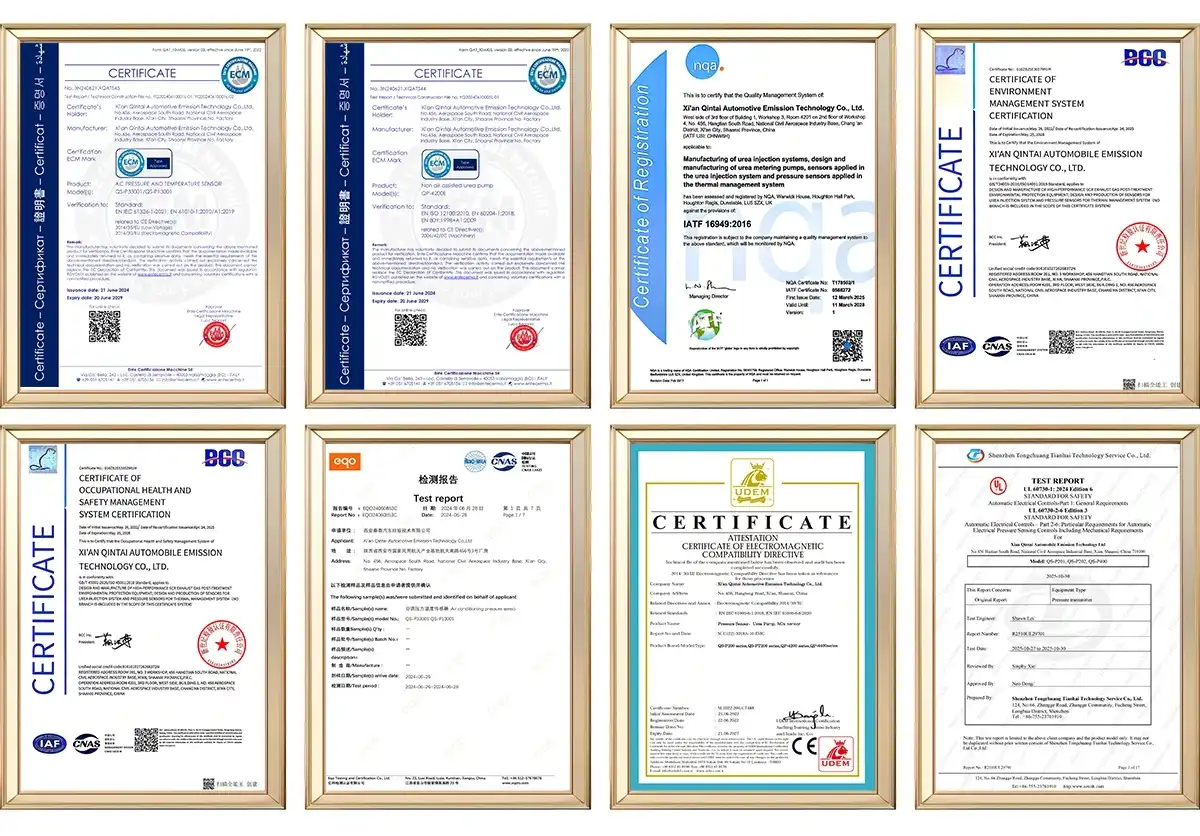
Manufacturing quality affects measurement accuracy and durability. ISO9001 certification demonstrates that quality management is planned, while IATF16949 meets auto industry necessities such statistical process control and continuous improvement. Design certifications from ATEX, IECEx, or UL provide explosion safety for fundamentally safe uses. Environmental regulations are critical for European and North American markets, hence RoHS and REACH compliance is crucial. Carefully read measurement accuracy specifications. Performance within 0.1°C costs more than within 0.5°C, but precision procedures justify the expenditure. Stability parameters demonstrate long-term drift. High-quality receivers maintain ±0.05% annual calibration.
Technological Capabilities and Customization
Industrial automation initiatives don't always meet stock needs. System designers benefit from providers who offer customized services including modified mounting arrangements, unique output ranges, and integrated multi-parameter measurement. With 58 design rights, Qintai's research and development team may provide unique solutions to specific issues. Another difference is their digital contact ways. HART-compatible 4-20 mA wiring allows configuration and troubleshooting, and Modbus RTU/TCP connectivity works well with remote control systems. For process organizations that need complete device diagnostics and predictive maintenance, sophisticated vendors provide Foundation Fieldbus or PROFIBUS.
Delivery Reliability and Production Capacity
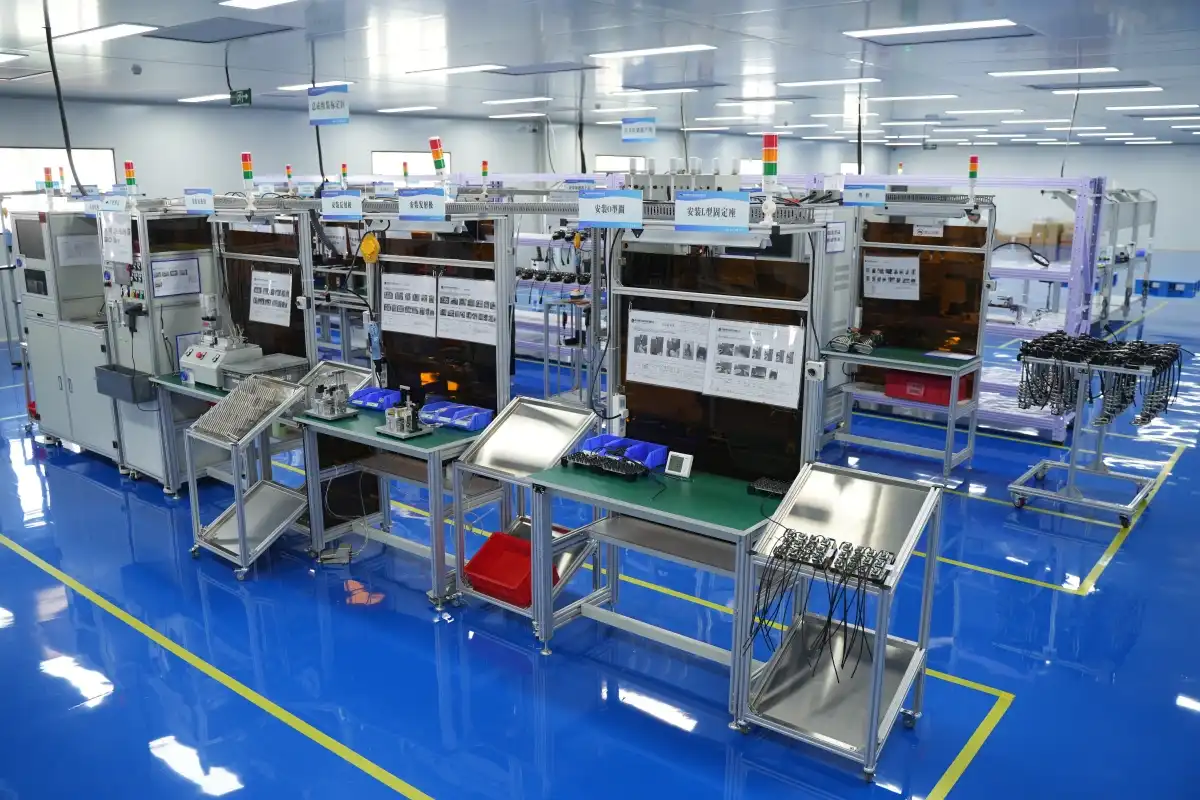
Suppliers must have large-scale manufacturing knowledge to suit mass production demands while setting up several production lines or standardizing across sites. Normal lead times are 2–4 weeks for regular items and 6–8 weeks for bespoke forms. These timeframes might be considerably reduced amid strong demand. When suppliers supply popular configurations, project delays are reduced. This helps aftermarket users when downtime costs mount fast.
Technical Support and After-Sales Service
Complex automation connection setup and troubleshooting benefit from experienced support. Application engineering support from suppliers helps identify sensor kinds, install them, and configure transmission settings, speeding up project completion. Field breakdowns are smoothed by 18–36-month warranties and advance repair arrangements.
Top Industrial Temperature Sensing Transmitter Brands in 2026
The worldwide market for temperature sensing and transmitters has major multinational and small, specialized players. Each has advantages that may be applied to different scenarios and purchase goals.
Established Global Leaders
Due to devices like the 3144P temperature sensor, which is accurate and uses the HART protocol, Rosemount, part of Emerson's automation solutions, dominates the process industries. They charge a lot for connectivity, but their installed base is reliable. Siemens SITRANS T transmitters function well with bigger control systems including Siemens PLCs and HMIs. With iTEMP series devices that can measure within 0.05°C, Endress+Hauser emphasizes measurement precision. Pharmaceutical and food industry apps require tight legal certification, hence they cost more. Honeywell's STT3000 smart transmitters warn maintenance crews of sensor failure before measurement errors. This improves condition-based maintenance. These brands offer thorough paperwork, worldwide support networks, and huge certification portfolios, but their costs are typically too costly for cost-sensitive applications or significant purchases.
Specialized and Emerging Suppliers
ABB temperature sensors are built to withstand extreme conditions. Mobile machinery can utilize vibration-resistant varieties that can withstand temperatures between -55°C and +85°C. WIKA's customizable transmitters allow field configuration changes as production processes evolve. For precise semiconductor production and lab work, Yokogawa's YTA series emphasizes accuracy and stability.
Strategic Supplier Selection: The Qintai Advantage
Xi'an Qintai is unique in its expertise in diesel engine aftertreatment sensors (where temperature affects emission control) and industrial automation. Qintai, the main OEM provider of Weichai Power, Yuchai Power, and Quanchai Power, can produce over 100,000 units a year while satisfying IATF16949 quality requirements. Their temperature sensors can withstand high-current electrical systems, mobile equipment vibrations, and 600°C exhaust fumes. This insight relates to industrial technology's reliability, which encounters similar external challenges. The company's 58 concept patents demonstrate its constant innovation in sensor use, signal processing, and packaging durability.
Purchasing teams prefer that Qintai may be adjusted to fulfill integration demands by changing the interface, output range, and connection standards. Their OEM/ODM service works for buying standard items and creating custom products. China's efficient production procedures allow these items to be 20–35% cheaper than European or North American choices without sacrificing quality. UL, CE, and RoHS certificates demonstrate this.
How to Optimize Temperature Sensing and Transmission for Factory Automation?
Using the correct execution techniques will ensure that temperature sensing and transmitters perform as intended for as long as they are used, maximizing their return on investment and reducing unscheduled maintenance.
Installation Guidelines for Measurement Accuracy
Thermal conduction mistake occurs when heat flows via sensor sheaths or attachment hardware instead of from the process being recorded. Keeping the submerging depth at 10–15 times the sensor's diameter reduces this impact. Vibration dampening is crucial in moving machinery or high-speed fluid flows because mechanical stress accelerates sensor breakdown. Sensor replacement is possible without halting the process using thermowells constructed of corrosive materials like process media. Electrical installation requires attention to grounding practices and cable routing. Put transmitter cable in a conduit away from high-voltage power lines to avoid electromagnetic interference. Ground loops that produce measurement noise may be avoided by grounding your shield appropriately.
Calibration Methods and Maintenance Scheduling
Newer digital receivers are better at calibrating. Remote HART verification is possible with handheld communicators. This enables workers compare field readings to reference standards without shutting off receivers. This feature reduces calibration costs by 40–60% compared to bench calibration, which requires equipment to be disassembled, delivered to metrology laboratories, and reassembled. Risk-based calibration times maximize maintenance resources. Measurements that affect product quality or safety should be evaluated every three or six months. Non-critical measures can be examined annually or biannually. Keep track of standard performance throughout commissioning to discover slow drift tendencies using trend analysis. This aids predictive maintenance techniques that replace transmitters before they fail.
System Integration Considerations
Modern workplace automation requires data to flow easily from field equipment to supervision systems. Consider existing infrastructure while picking a transmitter. Facility that employ 4-20 mA analog systems need different supplies than Foundation Fieldbus digital networks. Protocol converters allow inclusion when transmitters don't have native compatibility, while direct support simplifies designs and reduces errors. Smart receivers with diagnostic functions provide operators more than temperature readings. Status signals for sensor open-circuits, extreme temperatures, and electrical faults make problems easier to locate and solve. Advanced models save temperature profiles and warning history to assist process evaluations locate the main problem.
Procurement Guide: Buying Temperature Sensing Transmitters for Factory Automation
Strategic procurement techniques for temperature sensing and transmitters consider cost, delivery time, technical fit, and supplier relationship to fulfill short-term project demands and long-term corporate goals.
Direct Manufacturer Engagement vs. Distribution Channels
Buying directly from manufactures like Qintai allows you to obtain technical support with specs, make adjustments that typical distributor catalogs can't, and get lower costs on large purchases. OEM users that wish to add sensors to existing equipment benefit from direct partnerships since they can work together to optimize product performance. Authorized wholesalers offer local inventory to reduce wait times for urgent requirements, different part types from a single supplier, and clear payment terms to simplify budgeting. Setting up framework relationships with manufacturers for scheduled purchases and communicating with distributors for emergencies are hybrid strategies that balance these issues.
Evaluating Total Cost of Ownership
Purchase price is only one portion of product life expenses. Transmitters with straightforward wiring or plug-and-play connection reduce installation effort, which raises project expenses. Product reliability greatly affects maintenance expenses. High-end transmitters with MTBFs above 200,000 hours have lower lifetime maintenance costs than inexpensive ones that need to be replaced regularly. Warranty coverage reduces risk and usually covers more than production defects. Performance loss is covered within the warranty. Manufacturers with 36–60-month warranties are confident in their products. How soon after-sales support reacts affects failure downtime expenses. Advance replacement programs reduce production disruptions more than those that require defective equipment to be returned before shipping replacements.
International Procurement Considerations
When buying from Chinese enterprises like Qintai across borders, you must follow import processes, customs documentation, and the restrictions. Reputable suppliers provide technical documentation for regulatory clearances. Certifications, test results, and compliance declarations are included. FOB and CIF influence shipping costs and risk. Foreign initial sales frequently involve letters of credit. As connections strengthen, wire transfers or trade accounts are employed. When you commit to a volume that gets you better prices, consider the expenses of holding items against the unit savings. Supply quantities between 3 and 6 months work well for most folks.
Conclusion
Look at more than catalog specs to locate the top industrial temperature sensing and transmitters provider. Consider certifications, personalization, production volume, and a long-term partnership. Famous brands offer many goods and support networks worldwide, but they demand a lot of money, which may not work for low-cost projects or many products. Xi'an Qintai is a fantastic choice because of its OEM part experience, certifications, and reasonable costs from effective company operations. Strategic buying strategies that include whole lifespan costs rather than simply purchase prices always yield superior outcomes, making systems more dependable and maximizing budgets.
FAQ
Q1: What distinguishes temperature sensors from temperature transmitters?
A: RTDs and thermocouples are passive temperature sensors whose physical characteristics vary with temperature. temperature sensing and transmitters have active electronics that amplify, straighten, and convert data into control system-friendly output signals. Transmitters have galvanic isolation, noise tolerance, and diagnostic characteristics that sensors lack.
Q2: How often should industrial temperature transmitters be calibrated?
A: The importance, accuracy, and prior performance of the application determine how often you must calibrate. Safety and quality measurements should be reviewed against NIST-traceable standards every six months or year. Applications that don't need continual monitoring can go every two years. High-quality receivers with ±0.05% yearly drift require less frequent calibration than less stable choices.
Q3: Which suppliers balance quality, pricing, and technical support effectively?
A: Suppliers with vast production facilities, several certifications, and a proven track record provide the greatest value. Qintai balances high-quality IATF16949 systems, cheap pricing from efficient business operations in China, and specific understanding in harsh-environment usage from many OEM connections. Their prompt response to customisation requests and technical support solve procurement issues that commodity providers don't.
Partner with Qintai for Reliable Temperature Sensing Solutions
Procurement teams seeking dependable temperature sensing and transmitters benefit from working with experienced industrial automation manufacturers. OEM sensor maker Qintai has been around for almost 20 years. Their ISO9001, IATF16949, UL, and CE-certified products have been tested in tough diesel engine aftertreatment conditions and proven reliable. This impacts industrial automation performance.
Our tech team develops requirements, implements adaptations, and fixes integration issues throughout a project. Competitive price based on efficient manufacturing saves 20–35% without sacrificing quality. As China's leading diesel engine sensor OEM, we can produce a few prototypes to hundreds of thousands of units each year. Our technical specialists at info@qt-sensor.com will help you choose solutions that fit your automation design, environment, and budget.
References
1. Chen, W., & Zhang, L. (2023). Industrial Temperature Measurement Systems: Design, Selection, and Implementation Best Practices. Process Automation Press.
2. International Society of Automation. (2022). ANSI/ISA-50.00.01-2018: Fieldbus Standard for Use in Industrial Control Systems. ISA Standards and Practices Department.
3. Morrison, R. (2024). "Evaluating Temperature Transmitter Performance in Harsh Industrial Environments." Journal of Process Control Engineering, 47(3), 112-128.
4. National Institute of Standards and Technology. (2023). Temperature Calibration Procedures and Uncertainty Analysis. NIST Technical Publication 1297.
5. Patel, S., Kumar, A., & Thompson, J. (2023). "Comparative Analysis of RTD and Thermocouple Transmitter Technologies in Factory Automation." International Journal of Industrial Instrumentation, 31(2), 45-62.
6. Winters, M. (2024). The Procurement Manager's Guide to Industrial Sensors: Total Cost of Ownership Analysis for Process Automation Components. Industrial Press Inc.
 Sensors.webp)

Our customers’ satisfaction speaks for our quality — contact us to experience the same reliable service.