- English
- French
- German
- Portuguese
- Spanish
- Russian
- Japanese
- Korean
- Arabic
- Greek
- German
- Turkish
- Italian
- Danish
- Romanian
- Indonesian
- Czech
- Afrikaans
- Swedish
- Polish
- Basque
- Catalan
- Esperanto
- Hindi
- Lao
- Albanian
- Amharic
- Armenian
- Azerbaijani
- Belarusian
- Bengali
- Bosnian
- Bulgarian
- Cebuano
- Chichewa
- Corsican
- Croatian
- Dutch
- Estonian
- Filipino
- Finnish
- Frisian
- Galician
- Georgian
- Gujarati
- Haitian
- Hausa
- Hawaiian
- Hebrew
- Hmong
- Hungarian
- Icelandic
- Igbo
- Javanese
- Kannada
- Kazakh
- Khmer
- Kurdish
- Kyrgyz
- Latin
- Latvian
- Lithuanian
- Luxembou..
- Macedonian
- Malagasy
- Malay
- Malayalam
- Maltese
- Maori
- Marathi
- Mongolian
- Burmese
- Nepali
- Norwegian
- Pashto
- Persian
- Punjabi
- Serbian
- Sesotho
- Sinhala
- Slovak
- Slovenian
- Somali
- Samoan
- Scots Gaelic
- Shona
- Sindhi
- Sundanese
- Swahili
- Tajik
- Tamil
- Telugu
- Thai
- Ukrainian
- Urdu
- Uzbek
- Vietnamese
- Welsh
- Xhosa
- Yiddish
- Yoruba
- Zulu
Which Ceramic Pressure Sensors Offer the Best Long-Term Stability?
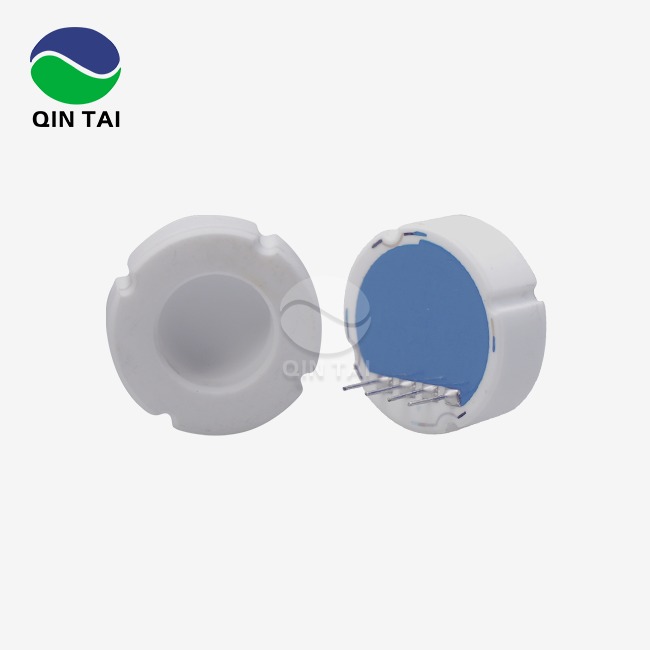
The finest long-term stability is obtained by ceramic pressure sensors which couple a high quality alumina diaphragm with a low stress assembly, reliable seals, suitable temperature correction and verified calibration. Ceramic alone does not ensure low drift. The Qintai QS-P105 has a 96% Al2O3 element that resists corrosion and abrasion. But your outcomes will rely on medium, temperature, overpressure and supplier consistency. In this article I’ll show you how to determine zero drift, span drift and temperature behavior and verify the data before you make a bulk purchase.
How Ceramic Pressure Sensors Work and Why Stability Matters?
Why Long-Term Stability Drives Purchasing Decisions?
Drifting costs money. When the zero point of a sensor shifts, techs recalibrate more frequently, lines halt for inspections and operators start to question the data. Unstable readings may also compromise compliance and product quality in regulated and safety-critical systems. Drift also contains warranty claims and refunds for OEM buyers and distributors. I look upon stability as a buying quality, not a complimentary feature. The aim is a sensor that maintains its zero, sensitivity and repeatability during years of use, not only on shipping day. A higher unit price part could be cheaper throughout its life if it avoids a single accidental shutdown.
How a Ceramic Sensing Element Converts Pressure to Signal?
The pressure acting on a ceramic pressure sensor causes its diaphragm to flex a little. Thick-film resistors, normally deposited in a Wheatstone bridge configuration onto the diaphragm, vary in resistance with surface strain. The change is converted into a millivolt signal proportionate to the input voltage. Then it may be converted into 0 – 10 V , 4 – 20 mA or a digital output by signal conditioning circuitry . Capacitive sensing is used in several ceramic designs. The diaphragm is rigid and unflexible thus it returns to its original shape after each pressure cycle with very little lasting distortion and that contributes to reliable readings.
Construction Details That Influence Drift
A typical construction consists of electrodes, a ceramic element based on alumina, a pressure port, seals, a housing and compensating circuitry . Each component influences drift. Purity of material and surface polish affect strength and chemical resistance. The sensitivity and overload margin depend on the shape of the diaphragm. The hysteresis and temperature response depend on the quality of resistor and electrode. Low-stress assembly is important since uneven clamping or seal compression might alter the zero point. The often quoted accuracy for piezoresistive ceramic sensors is ±0.1 to ±0.5 % of full scale, depending upon construction and calibration. And thus two sensors with the same ceramic might act extremely differently.
What Determines the Long-Term Stability of Ceramic Pressure Sensors?
Zero Drift, Span Drift, and Repeatability
Zero drift is the change in output at the reference pressure. Span drift is a shift in sensitivity over the range. Hysteresis and repeatability are measurements of how near readings return to the same value when you approach a point from above or below, or when you repeat the same pressure. When you compare datasheets for ceramic pressure sensors, be sure that each figure indicates its test circumstances, such as temperature, pressure range and time duration. Compare proof pressure with burst pressure and linearity also. Accuracy at an instant in time is described by a non-linearity of ≤0.3%FS. It does not indicate drift over years (age data requested).
Temperature, Media, and Mechanical Stress
Many occurrences of apparent drift are caused by temperature. The QS-P105 offers temperature drift of <0.03% FS/°C to <0.05% FS/°C depending on the range. A change of 20C moves zero by around 0.6% FS at 0.03% FS/C. Compensation in electronics hence is of importance for outdoor equipments, motors and hot fluids. Media compatibility applies to the diaphragm, seals and port. A good ceramic may be behind a seal that swells or hardens. Vibration, moisture, pollution, overpressure and frequent cycling put additional stress. Select a pressure range that include spikes, not just regular operation.
Common Stability Problems and First Checks
Readings drift, but it isn't necessarily the sensor's fault. Drift may be simulated by wiring mistakes, ground loops, electrical interference, low supply voltage, installation stress, blocked ports, trapped air and excessive damping. I begin troubleshooting with the zero reference, supply voltage, ground, cable and connector condition, pressure connection, operational temperature and calibration status. Recalibrate or replace the sensor if it is out of spec, leaks, has a broken connection, or does not pass repeatability testing. For crucial installs, retain documented calibration records so you can observe a pattern instead of guess work.
Ceramic Pressure Sensors vs. Silicon and Stainless Steel
Where Ceramic Performs Well?
Ceramic diaphragms are resistant to moisture, various corrosive environments and particle abrasion in the fluid. Alumina is durable and chemically inert. Therefore ceramic elements are used in water, wastewater, chemical and hydraulic equipment. Many versions are rated to perform from -40C to 150C or higher. Small size allows for tight fit applications. Ceramic sensors are also often less expensive than other pressure technologies. These characteristics make a ceramic pressure transducer a good fit for tough media with a solid cost objective. But ceramic doesn't immediately win in every area, so the following comparison is critical.
Where Silicon and Stainless Steel Fit?
Silicon sensors support integrated electronics, compact packaging, and sensitive low-pressure measurement. Stainless-steel designs offer strong mechanical durability, broad pressure capability, and compatibility with demanding industrial assemblies. Each choice has trade-offs. Silicon often needs isolation from aggressive fluids, and metal diaphragms can suffer in certain corrosive media. Compare the whole sensor, not the diaphragm material alone. Review accuracy, temperature behavior, overload capacity, media compatibility, pressure range, packaging, output, lifecycle cost, and application conditions. A well-built ceramic pressure sensor can outperform a poorly compensated alternative, and the reverse also holds.
Matching Sensors to Applications
Integrated electronics, small packaging and sensitive low pressure measurement are possible with silicon sensors. Stainless-steel designs provide high mechanical strength, a large pressure range and compatibility with demanding industrial assembly. Every option involves trade-offs. Silicon has to be isolated from aggressive fluids and metal diaphragms may fail in corrosive conditions. Not just the diaphragm material, but the complete sensor. Check for accuracy, temperature behavior, overload capacity, media compatibility, pressure range, packaging, output, lifetime cost and application circumstances. A well-built ceramic unit will out-perform a poorly compensated equivalent and vice-versa.
How to Identify, Verify, and Buy Stable Ceramic Pressure Sensors?
Define the Measurement Environment First
Job dependent. The greatest option. Automotive and engine systems need vibration and thermal-cycle resistance, compactness, and fuel compatibility. HVAC and refrigeration need refrigerant compatibility and condensation resistance. Water and wastewater equipment values corrosion resistance, moisture protection, tolerance to pressure spikes and minimal zero drift. Hydraulic and pneumatic systems need sufficient proof pressure, burst pressure and reaction time. Medical and automation equipment may be designed for repeatability, compact size, cleanability and OEM customisation. Media compatibility and documentation are added by chemical and process equipment makers. Validate any candidate in the actual application since these demands overlap, but are different.
Verify Stability With Data and Samples
Start with the genuine working circumstances. Type of state pressure, maximum and nominal pressure, exposure to vacuum, transient spikes, cycle frequency and overload requirements. Then specify goals for accuracy, zero drift, span drift, repeatability, reaction time and whole temperature performance. Tailor it to your cable line and control system. A 4–20 mA signal is frequently good for long cable lengths, 0–10 V is good for shorter routes, and a raw millivolt element requires conditioning devices. Port, connection, mounting, vibration and installation torque Check thread, port, seals Give these information to your supplier early. The easiest way to recurrent replacements is to choose the incorrect medium or range.
Choose a Manufacturer That Can Repeat Results
A datasheet is merely the beginning. Check the criteria associated with each figure: accuracy, temperature coefficients, working range, overpressure rating, supply voltage, wetted materials, and electrical protection. Then samples of ceramic pressure sensors are tested under actual pressure, temperature, vibration, moisture and media. Ask for statistics on aging, temperature cycling, pressure cycling, calibration, failure rates, and batch consistency. Don't take marketing statements at face value. The IEC 61298 series describes the procedures for assessing the performance of process measuring devices. You have a common reference with the vendors. Determine the entire cost of ownership: maintenance, recalibration, replacement, downtime, inventory, certification, warranty, and engineering time.
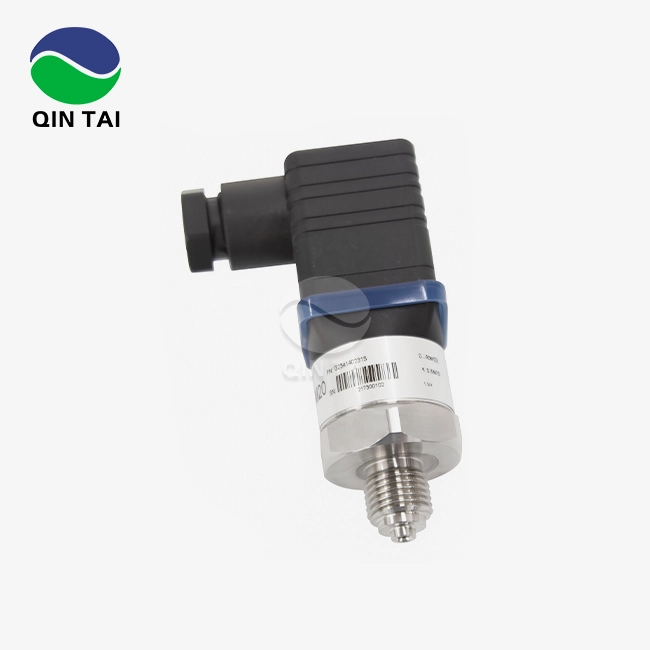
Qintai QS-P105: A Ceramic Pressure Sensor Built for Harsh Media
Material and Build
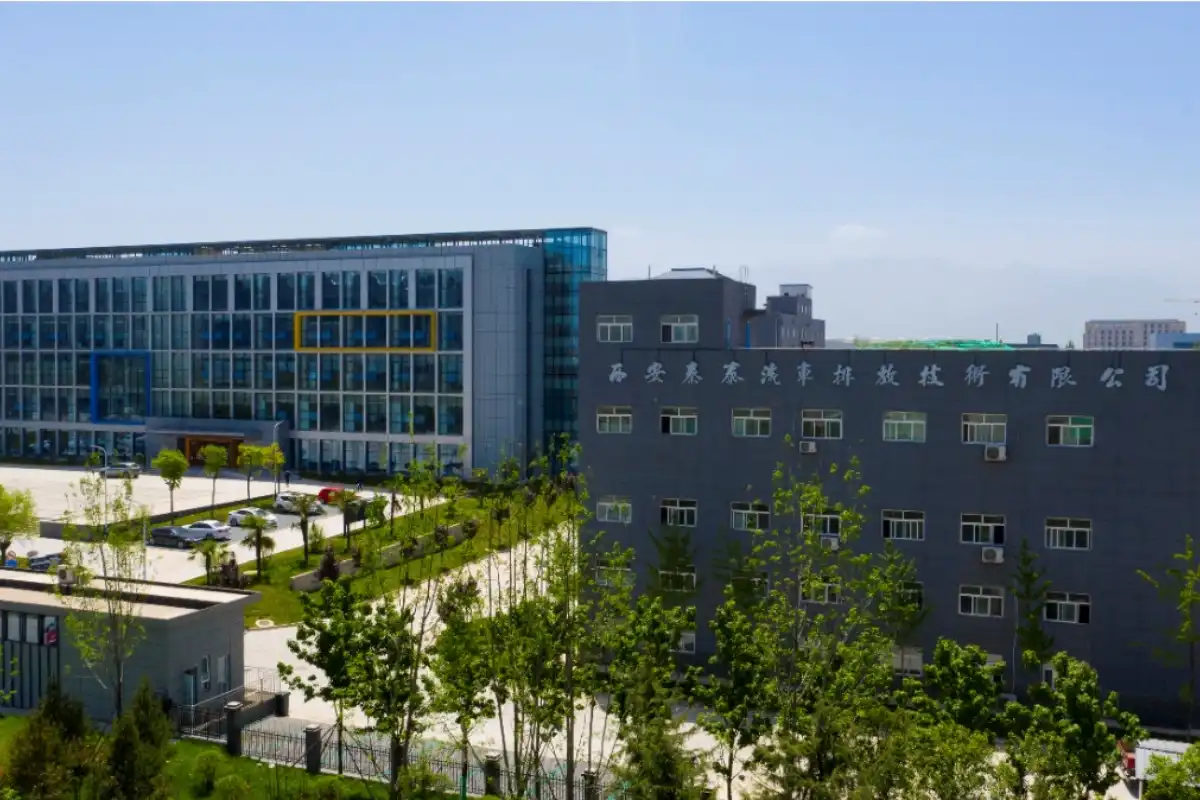
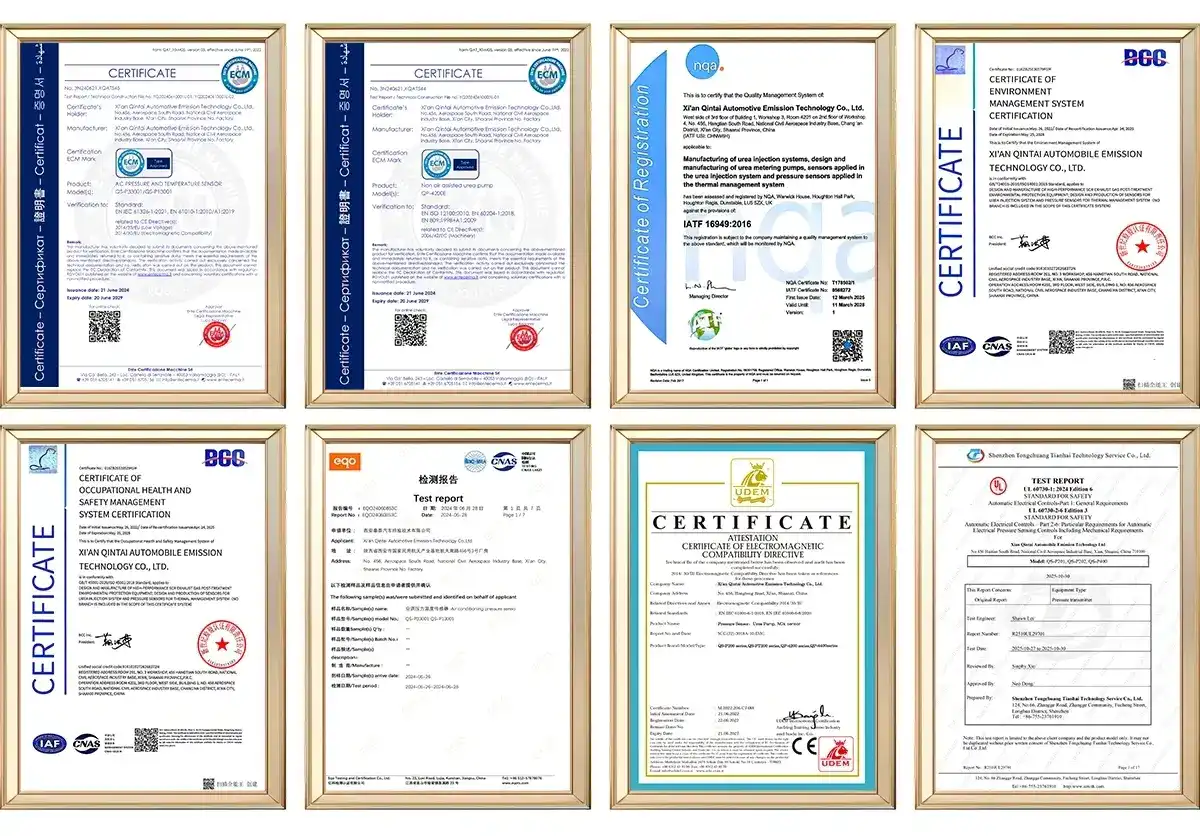
Batch-to-batch uniformity depends on supplier competence. Inquire about sourcing ceramic elements, assembly controls, automated calibration, traceability, inspection, export experience, and manufacturing capacity. Before placing an order, please confirm minimum order quantities, tooling and development costs and sample lead times and production schedules. Qintai is a national high-tech firm created in 2001, with ISO 9001, IATF 16949, CMC, Ex, UL, CE, REACH and RoHS certifications, and has filed for 58 innovation patents. It sells items to over 60 nations and regions. These credentials are not a substitute for your own sample testing, but they do represent a quality system and a habit of documenting that is worth looking out.
Core Advantages
Here are the core advantages of this model for process equipment builders.
- Strong corrosion and abrasion resistance: The 96% Al2O3 ceramic withstands aggressive fluids and wear from rough media. In demanding process equipment, that resistance helps the sensing element stay in service longer, so your maintenance team makes fewer replacement trips, and you face fewer warranty claims and unplanned stops.
- Built for high-pressure use: The range runs from -1/0 bar to 600 bar, with a safety overload of 200% FS. That overload margin gives you room for pressure spikes, a common source of premature drift, and it lets one platform cover many system sizes and project requirements.
- Easy mounting and customization: The compact design fits tight spaces, and simple mounting options cut labor during installation. Qintai also supports customization, which helps OEM teams match the sensor to their equipment and signal electronics instead of redesigning the assembly around a catalog part. Share your requirements, and the engineering team can review them.
These advantages address a common production problem: frequent sensor swaps caused by harsh media and pressure spikes.
QS-P105 Technical Specifications
These figures come from the QS-P105 specification.
| Parameter | Specification |
|---|---|
| Model | QS-P105 |
| Pressure Range | -1/0 bar to 600 bar |
| Sensitivity | 2–4.0 mV/V |
| Non-linearity | ≤ 0.3% FS |
| Zero Temperature Drift | < 0.03–0.05% FS/°C (varies by range) |
| Supply Voltage | 2–30 VDC |
| Zero Output | ± 0.2 mV/V (23°C) |
| Accuracy | ≤ ± 0.5% FS |
| Material | 96% Al2O3 Ceramic |
| Bridge Resistance | 11 ± 30% kΩ |
| Working Temperature | -40°C to 135°C |
| Safety Overload | 200% FS |
The sheet lists temperature drift but no multi-year drift figure. For a long-term stability review, ask Qintai for aging and pressure-cycle test data, and plan how your electronics will compensate the millivolt output.
Conclusion
The highest long-term stability in ceramic pressure sensors comes from the complete design, not the ceramic alone. A high-purity alumina diaphragm resists corrosion and abrasion and recovers to form after pressure cycles. Drift also relies on seals, electronics, temperature adjustment, calibration, installation, and media. Zero drift, span drift, hysteresis, repeatability, and temperature coefficients offer the fairest foundation for comparison, and each figure requires defined test circumstances. Ceramic fits hard, wet, or abrasive media, whereas silicon and stainless steel fulfill other purposes. Defining the environment, testing samples, seeking aging and batch data and assessing total cost of ownership reduces the chance of a bad decision. The QS-P105 illustrates how these principles convert to specifications, but you should still ask for and verify its long-term drift statistics.
FAQ
Q1: Is ceramic always more stable than silicon or stainless steel?
A: No. Ceramic does a good job of resisting moisture, corrosion and abrasion but stability is a function of the whole design: seals, electronics, compensation, calibration and operating conditions. Compare test data, not substance.
Q2: Which output suits long cable runs?
A: The 4-20mA output is often used for long cable lengths since a current signal is less prone to noise and voltage drop. Short connections will have a 0–10 V output. The QS-P105 has millivolt bridge output, therefore electronics for conditioning determine the final signal.
Q3: What should I request before a bulk order?
A: Request datasheets that specify the test circumstances, samples tested in your medium and temperature, aging and pressure-cycle data, calibration reports, and records of batch consistency. Also, confirm lead time and guarantee.
Q4: What range does the QS-P105 cover?
A: It covers -1/0 bar to 600 bar, works from -40°C to 135°C, and carries a safety overload of 200% FS.
Request Ceramic Pressure Sensors From Qintai for Your Next Project
Looking for a ceramic pressure sensors manufacturer that supports OEM and ODM projects? Qintai offers the QS-P105 and application-based customization. Send your pressure range, media, temperature, output signal, and annual volume to info@qt-sensor.com, and our team will recommend a suitable model and share datasheets.
References
1. Sensor Technology Handbook, 2005
2. Measurement, Instrumentation, and Sensors Handbook, 1999
3. Ceramic Materials: Science and Engineering, 2007
4. Process/Industrial Instruments and Controls Handbook, 1999
5. IEC 61298-3: Process Measurement and Control Devices – General Methods and Procedures for Evaluating Performance, 2008
6. Fundamentals of Industrial Instrumentation and Process Control, 2005

Our customers’ satisfaction speaks for our quality — contact us to experience the same reliable service.