- English
- French
- German
- Portuguese
- Spanish
- Russian
- Japanese
- Korean
- Arabic
- Greek
- German
- Turkish
- Italian
- Danish
- Romanian
- Indonesian
- Czech
- Afrikaans
- Swedish
- Polish
- Basque
- Catalan
- Esperanto
- Hindi
- Lao
- Albanian
- Amharic
- Armenian
- Azerbaijani
- Belarusian
- Bengali
- Bosnian
- Bulgarian
- Cebuano
- Chichewa
- Corsican
- Croatian
- Dutch
- Estonian
- Filipino
- Finnish
- Frisian
- Galician
- Georgian
- Gujarati
- Haitian
- Hausa
- Hawaiian
- Hebrew
- Hmong
- Hungarian
- Icelandic
- Igbo
- Javanese
- Kannada
- Kazakh
- Khmer
- Kurdish
- Kyrgyz
- Latin
- Latvian
- Lithuanian
- Luxembou..
- Macedonian
- Malagasy
- Malay
- Malayalam
- Maltese
- Maori
- Marathi
- Mongolian
- Burmese
- Nepali
- Norwegian
- Pashto
- Persian
- Punjabi
- Serbian
- Sesotho
- Sinhala
- Slovak
- Slovenian
- Somali
- Samoan
- Scots Gaelic
- Shona
- Sindhi
- Sundanese
- Swahili
- Tajik
- Tamil
- Telugu
- Thai
- Ukrainian
- Urdu
- Uzbek
- Vietnamese
- Welsh
- Xhosa
- Yiddish
- Yoruba
- Zulu
Which HAVC Pressure Transmitter Features Matter for HVAC Systems?
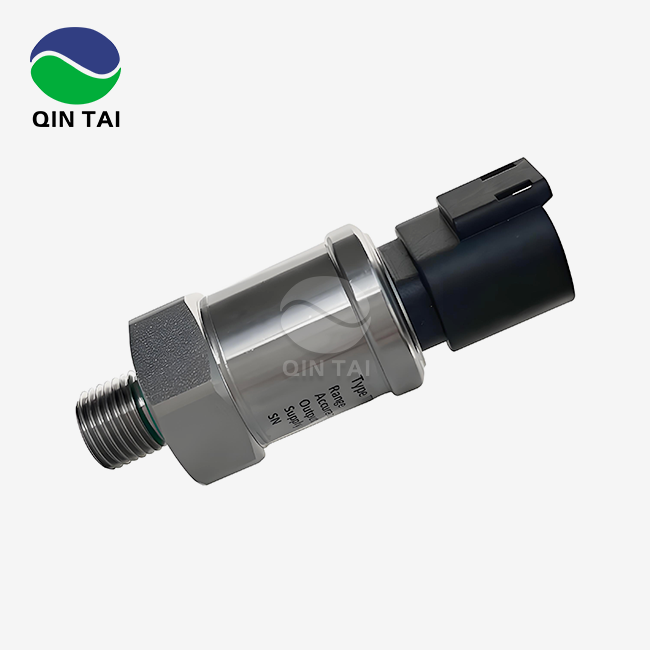
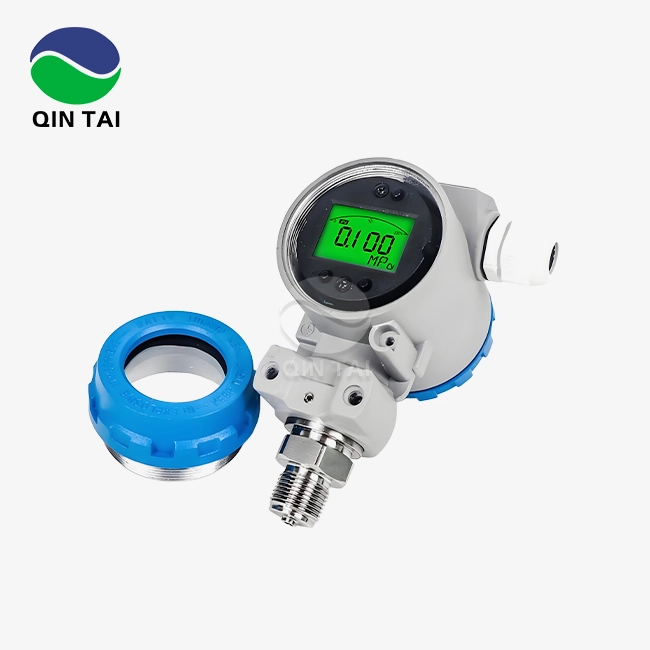
The most important qualities of a HAVC pressure transmitter are pressure range, measurement type, accuracy, long-term stability, output signal, medium compatibility and mounting style. It is contingent upon the range and kind of measurement , whether the instrument can even read your system . The accuracy and stability of the reading will determine if it is still effective after months of heat, vibration and humidity. The output signal must be compatible with your controller and the wetted materials must be compatible with your media. Finally, completed certifications and regular manufacturing prevent your project from delays. I'll explain each aspect in simple terms so that you are confident in comparing possibilities and ordering the proper sample.
Understand What an HVAC Pressure Transmitter Does
How the Sensing Element Becomes a Control Signal?
A pressure transmitter comprises a sensor device, signal circuitry and a pressure port. When pressure is applied to the element, it bends a little. Piezoresistive, capacitive and thin film devices convert the movement into a little electrical shift. The electronics then scale and rectify the change and put out a standard signal, such as 4-20 mA or 0-10 V. A PLC, unit controller or building management system interprets the signal and takes action. In a rooftop unit, the controller may speed up the fan if duct pressure is low. In a refrigeration circuit it may cause protection to trip as discharge pressure rises.
Transmitter, Sensor, or Switch?
These three words are commonly misunderstood. A pressure switch will open or shut a contact at one fixed point. It safeguards equipment but does not provide trend data. A simple sensor or transducer may generate a raw millivolt signal that has to be conditioned outside. The transmitter puts out a standardized signal that the controller can read directly. If you simply require basic on/off protection I would propose a switch. If you need continuous readings, trending or configurable alerts then a transmitter. Many unit builders employ both, with a switch serving as a hardwired safety backup. Manufacturers use the term "transducer" differently, so always verify the sort of output the device provides in the datasheet.
Where You Will Use It?
The same measurement technique works in numerous vocations. A HAVC pressure transmitter controls the air flow in ducts and monitors filters. A differential measurement across a filter will signal pressure decline and advise you when to replace it. In refrigeration systems, high-side and low-side readings help to promote effective cooling and protection. Chilled water loops need to be at the right pressure to provide steady cooling. Hydronic heating systems rely on pressure sensors at pumps and pipework to verify that water is flowing properly. Varied jobs need varied ranges, resources and outputs. Hence the following part begins with range and measurement type, the two decisions that control everything else.
Match Range, Measurement Type, and Accuracy to the Job
Pick a Range That Fits Normal Operation
The range is the initial filter in any selection. A regular operating pressure is often established in the center of the span with sufficient headroom for starting spikes and upset circumstances. The overpressure rating should also be higher than the worst spike you anticipate to see. There is a silent difficulty in going too broad. A transmitter that covers 0-40 bar on a 0-10 bar circuit is only using a fraction of its span. tiny pressure changes create tiny steps in the signal. This means losing resolution and controllability. If you go too thin you risk saturation and harm. In low pressure air measurement, sensitivity, zero stability and low hysteresis are more important than big overload margin.
Differential, Gauge, or Absolute
Differential transmitters measure the difference between two pressures. They are suitable for filter monitoring and ventilation operations when the high pressure port is connected upstream and the low pressure port downstream. Pressure transducers detect pressure relative to the surrounding air and are suitable for most refrigerant, water and general system measurements. Absolute transmitters are calibrated against a perfect vacuum . Therefore they suit vacuum systems and barometer measurements. Picking the incorrect kind gives figures that appear realistic, but vary with weather or room circumstances. If you are not sure, write down what you measure, where the reference point is, and what the controller expects. Then share that letter with your supplier.
Read the Accuracy Number Carefully
HVAC pressure transmitters are often accurate to within +/- 0.5% to +/- 1% of full scale, with some high-precision devices reaching +/- 0.1%. The ultimate result depends on pressure range, ambient circumstances and calibration. Here is a basic example . A ±1% device over a 10 bar full scale may be 0.1 bar out of calibration. That inaccuracy is large on a tiny pressure window. When you look at any HAVC pressure transmitter, don't just look at the headline figure. Ask about linearity, hysteresis, repeatability, temperature inaccuracy, and long term drift. Outdoor equipment and rooftop units undergo extreme temperature fluctuations and the specified temperature adjustment range should be carefully examined.
Choose the Output, Wiring, and Installation Details
4–20 mA or 0–10 V
The output has to match your controller input. A 4–20 mA signal has a live zero so if you see 0 mA you know the loop is broken. It’s also immune to electrical noise and voltage drops over long lengths of wire, hence it's used in industrial and centralized building systems. A 0 to 10 V signal is widespread and easy to implement on unit controllers with short wire lengths . It may be garbled by long wires and loud settings, and a dead sensor might seem like a real zero measurement. For wiring in and around inverters and compressors I want current output. But pick the signal your controller accepts and your assembly team can wire consistently.
Digital and Wireless Options
In certain applications, the necessity arises for digital communication such as Modbus over RS-485 or BACnet compliant equipment. These alternatives may convey supplementary data, such as diagnostics, and allow several devices to use a single connection. They also need addressing , firmware and commissioning , so make sure your staff can help them . Wireless modules save the cabling effort in retrofits, but you have to watch battery life, signal coverage, cybersecurity and long-term reliability. Ease of validation and ease of swapping out makes analog outputs a popular option for OEM equipment. Get your provider to write down the output possibilities a model has, and make compatibility the primary rule.
Installation and Wiring Habits
A decent transmitter will offer bad data if it is installed poorly. First, check the range and pressure type. Select a clean measurement location free from turbulence, connect the tubing, wire the instrument, check the zero reading and validate the output. Vibration , heat , humidity , clogged tubing and leaks may all provide a false reading . A loose fit in refrigeration equipment may also leak refrigerant so make sure you are using the suitable connection and sealing technique for the port. Check wiring at the controller terminals for polarity, shielding and grounding. A two-wire 4-20 mA device is wired differently from a three-wire voltage device so be sure to check the terminal definitions in the product instructions before applying power.

Fit the Transmitter to the Application and Avoid Common Problems
Air-Side Uses: Ducts, Filters, Fans, and VAV
Fan and VAV control need a steady feedback and a signal that the controller can accept. ASHRAE Guideline 36 has procedures to reset duct static pressure setpoints depending on zone demand. That approach only works when the pressure measurement is stable. For extremely low pressures such as those seen in filter monitoring and cleanrooms, the most important qualities are low-pressure sensitivity and zero stability. A general purpose transmitter with a large range can not resolve a few pascals. Check that the range matches the actual pressure in the duct or filter and that the medium is clean air unless otherwise indicated on the datasheet.
Refrigerant and Water-Side Uses
A HAVC pressure transmitter doesn't work as well on refrigerant circuits. Just be careful to check refrigerant compatibility, wetted materials, temperature limitations and overpressure protection before you accept a model. Units that use R410A or R32 operate at quite high pressures, so be careful to check both the rated pressure and the burst pressure. The sensor element might also be stressed by compressor pulsation. If a sensor leaks or is damaged, it typically results in a field failure that applies to the complete device, thus I look at sealing and material choice as major aspects. Chilled water and hydronic circuits have additional water quality and freezing hazards. Never reuse an air-rated transmitter on a refrigerant or liquid line unless its data sheet states it is suitable.
Troubleshooting Wrong Readings
Most inaccurate readings are from installation and not sensor failure. Begin with the easy stuff: range, inverted ports, leaky or obstructed tubing, zero offset. Then verify for supply voltage stability and electrical interference near motors and compressors. False differential pressure may be caused by condensation in the tubing. Poor tap location might pick up turbulence. If the signal is zero, check the connections and power. If it hops, check shielding and ground. If it reads incorrect but stable, check the controller scaling against the transmitter span. If a unit is replaced, record the previous configuration, validate mechanical and electrical compatibility, isolate the system securely and update calibration data.
Evaluate Suppliers, Documents, and Long-Term Care
Build a Selection Checklist
A checklist makes choices uniform. Across projects and buyers. Pressure. Type of list, range of operation, overpressure, precision, repeatability, reaction time and drift. Electrical requirements. Output, wiring, supply voltage, EMC performance and protection. Mechanical requirements: port connection, enclosure rating, humidity, vibration, mounting and materials. You need data sheets, wiring diagrams, calibration certificates and certification papers for your target market for documentation. Many customers seek for UL & CE documents on completed equipment thus ask for these early rather than close shipping. Use the same list for supplier comparison, sample approval and purchase order review.
What to Ask a Manufacturer
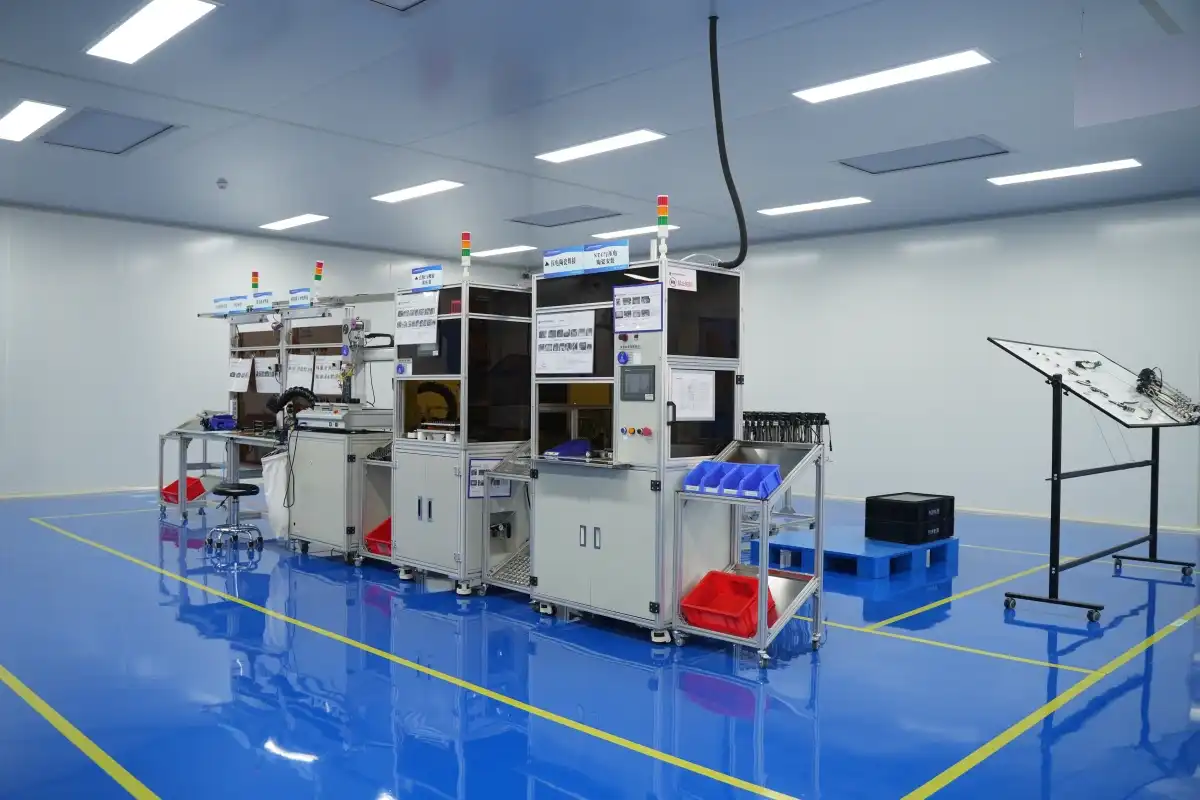
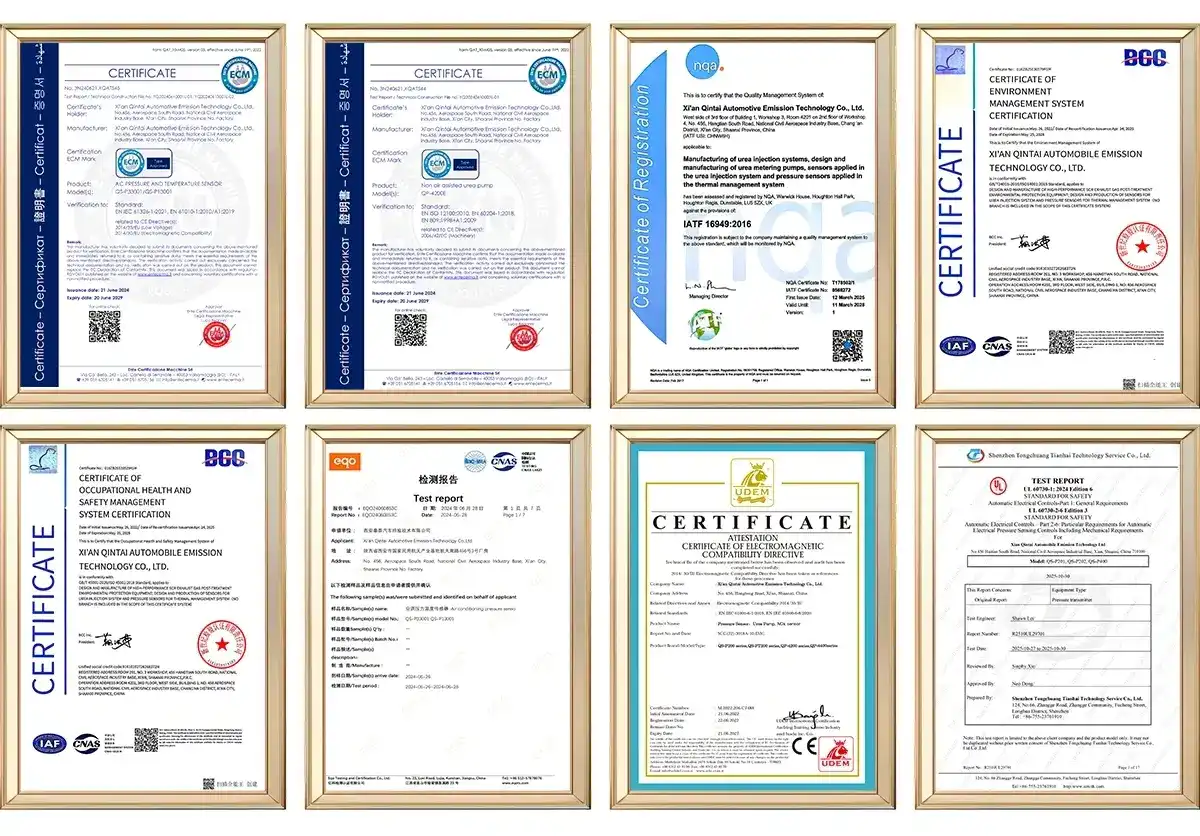
Price is important, but delivery, consistency and paperwork are what keep a project on time. Ask about quality control, test records, export experience, warranty and technical response time. Ask the provider about their busy-season order process. Qintai is concentrating on sensors since 2001, mainly on pressure sensor. We have ISO9001, IATF16949, UL, CE, REACH and RoHS certifications and have filed for 58 innovation patents.
IATF16949 is a quality standard for the automobile industry that represents regulated manufacturing procedures. We provide to OEM clients like Weichai Power, Yuchai Power, etc. Our products are sold in over 60 countries and regions. We also provide OEM/ODM service and customization. Please check whether certifications are applicable to your model and get samples to try out before placing bulk orders.
Maintenance and Calibration Plan
Reliable readings need regular inspections. Schedule inspection of tube, fittings, mounting, power supply, signal output, zero point, corrosion, controller scaling. Establish calibration intervals based on the criticality of the application, operating circumstances, needed precision, manufacturer's recommendation, and drift history. In cleanrooms and hostile sites checking is more frequent. Keep dated calibration records, since these will assist you to identify modest drift before it causes inaccurate fan control or early filter replacements. Having a few types of transmitters in comparable projects makes it easier to educate the people, handle spare parts, develop processes and paperwork, which saves time for maintenance teams and buying managers.
Conclusion
The most crucial elements of a HAVC pressure transmitter are those that fit the application. The range should be suitable for regular operation with some headroom for spikes and the measurement type should be appropriate for the application: differential for filters and ventilation, gage for most system readings and absolute for vacuum operations. Accuracy is a function of context; most devices will quote a ±0.5% to ±1% of full scale, and that number will vary with range, environment and calibration. The output must match the controller and proper installation, wiring and sealing avoid a lot of false readings. On the air side sensitivity to low pressure is desired, while on the refrigerant side compatibility, materials and overpressure must be considered. Those decisions are documented and consistently produced and designed to be calibrated to operate during the service life.
FAQ
Q1: How accurate are HVAC pressure transmitters?
A: Standard models are quoted as ±0.5% to ±1% of full size, high precision models may be as good as ±0.1% The outcome will be affected by pressure range, ambient conditions and calibration, therefore compare the whole error band on the data sheet.
Q2: What types of HVAC pressure transmitters are available?
A: Differential models read the difference between two pressures, gage models read against ambient air, and absolute models read against a vacuum. Differential types are often used for filter and ventilation operations; gage types for most system measurements.
Q3: Should I choose 4–20 mA or 0–10 V output?
A: Choose the signal that your controller likes. Current output is for lengthy connections and loud locations and it shows a broken loop. The voltage output is suitable for short, uncomplicated lines where wiring is easily managed.
Contact Qintai for Your HAVC Pressure Transmitter Project
Send your pressure range, output signal, medium, and quantity to Qintai at info@qt-sensor.com, and our team will help you select a suitable HAVC pressure transmitter. As a HAVC pressure transmitter manufacturer with ISO9001, IATF16949, UL, and CE certificates, plus OEM/ODM service and customization, we welcome sample and bulk inquiries.
References
1. ASHRAE Handbook—HVAC Applications, 2023
2. ASHRAE Handbook—Fundamentals, 2021
3. ASHRAE Guideline 36, High-Performance Sequences of Operation for HVAC Systems, 2021
4. ASHRAE Standard 62.1, Ventilation and Acceptable Indoor Air Quality, 2022
5. ASHRAE Handbook—Refrigeration, 2022
6. Instrument Engineers' Handbook, Volume 1: Process Measurement and Analysis, 2003
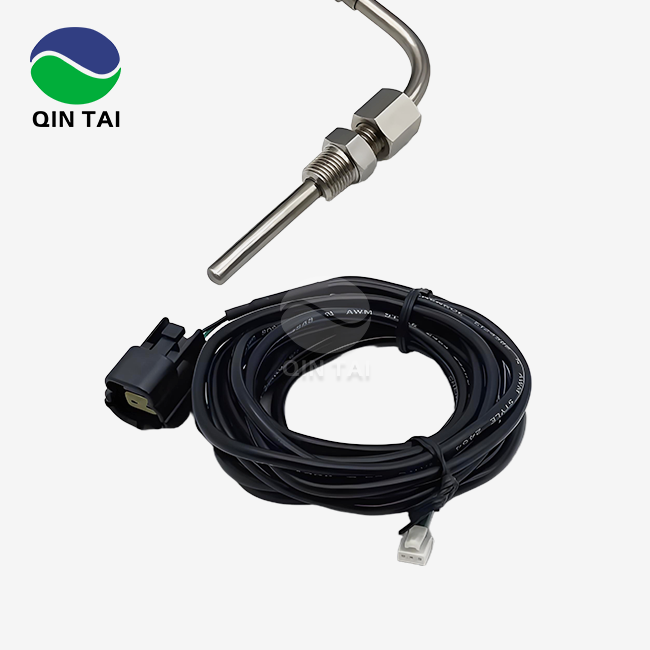
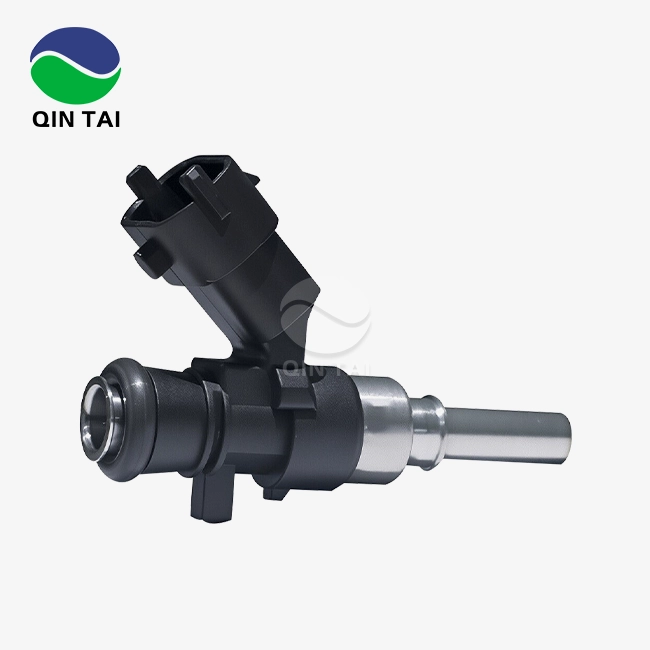

Our customers’ satisfaction speaks for our quality — contact us to experience the same reliable service.