- English
- French
- German
- Portuguese
- Spanish
- Russian
- Japanese
- Korean
- Arabic
- Greek
- German
- Turkish
- Italian
- Danish
- Romanian
- Indonesian
- Czech
- Afrikaans
- Swedish
- Polish
- Basque
- Catalan
- Esperanto
- Hindi
- Lao
- Albanian
- Amharic
- Armenian
- Azerbaijani
- Belarusian
- Bengali
- Bosnian
- Bulgarian
- Cebuano
- Chichewa
- Corsican
- Croatian
- Dutch
- Estonian
- Filipino
- Finnish
- Frisian
- Galician
- Georgian
- Gujarati
- Haitian
- Hausa
- Hawaiian
- Hebrew
- Hmong
- Hungarian
- Icelandic
- Igbo
- Javanese
- Kannada
- Kazakh
- Khmer
- Kurdish
- Kyrgyz
- Latin
- Latvian
- Lithuanian
- Luxembou..
- Macedonian
- Malagasy
- Malay
- Malayalam
- Maltese
- Maori
- Marathi
- Mongolian
- Burmese
- Nepali
- Norwegian
- Pashto
- Persian
- Punjabi
- Serbian
- Sesotho
- Sinhala
- Slovak
- Slovenian
- Somali
- Samoan
- Scots Gaelic
- Shona
- Sindhi
- Sundanese
- Swahili
- Tajik
- Tamil
- Telugu
- Thai
- Ukrainian
- Urdu
- Uzbek
- Vietnamese
- Welsh
- Xhosa
- Yiddish
- Yoruba
- Zulu
Best OEM Urea Dosing Pump Supplier for Commercial Vehicles
The finest OEM urea dosing pump provider for commercial cars must be compatible with your SCR system, provide customisation and issue test records and certifications for every batch. The urea dosing pump will pump the AdBlue (also known as diesel exhaust fluid (DEF)) from the tank to the dosing module with the pressure and flow the ECU requires. Check for ECU compatibility, flexible prototype and small-batch support, and defined quality processes. Qintai was established in 2001, and is a national high-tech firm. Producing diesel SCR aftertreatment products with OEM and ODM assistance. This article covers how to define, compare and source the proper pump.
What Is a Urea Dosing Pump and Who Needs One?
How a Urea Dosing Pump Works?
In an SCR system, the engine exhaust contains nitrogen oxides (NOx). It sprays a urea solution into the exhaust stream where a catalyst breaks the NOx into nitrogen and water. That spray is made possible by the pump. It takes AdBlue from the tank, builds up stable pressure and pumps fluid to the dosing module. The ECU measures engine load, exhaust flow and NOx sensor data, and informs the pump how much to give. buyers seek this part too for a def urea pump, urea doser pump, or urea pump diesel. The nomenclature may change but the task remains the same: precise measurement. POOR METERING WASTES FLUID OR LETS NOx THROUGH THE TAILPIPE.
Why SCR Rules Matter for US Commercial Vehicles?
The US EPA’s 2001 heavy-duty regulation established a NOx standard of 0.20 grams per brake horsepower-hour for new diesel engines, phased in from 2007 to 2010. Many heavy-duty diesel companies utilize SCR to fulfill that restriction, and California's 2020 Heavy-Duty Omnibus Regulation establishes tougher requirements for that state. Urea-SCR has been reported in 2000 as a potential approach to decrease diesel NOx by researchers writing in Catalysis Today. For a buyer, this history indicates the pump is in a controlled system and a weak pump may put an engine out of compliance. That danger is why OEMs want data from suppliers, not just pricing.
Who Needs a Commercial Vehicle Urea Dosing Pump?
This is a part that is sourced by many buying groups. The truck and bus makers, OEMs of farm and construction equipment and SCR system integrators require a pump with a fixed drawing, connector and communication protocol. Fleet shops and DEF suppliers require replacement units that can be used in current vehicles. The manufacturers of industrial diesel equipment may require a pump for generators or machines. Integrators usually purchase multiple versions in small batches, and they have to meet project deadlines while a new vehicle model waits for clearance. Early on, telling a supplier your job and application lets the engineer offer a matched configuration instead of a generic model.
How to Specify and Compare Urea Dosing Pump Designs?
Start With System Data, Not Price
For purchasers, I usually recommend starting with the system drawing when specifying a urea dosing pump. Check the flow range, operating and maximum pressure, voltage, current, connector type, mounting dimensions, temperature range, fluid compatibility and control method. Also check the connection protocol with the ECU; a pump that mechanically fits might still be a failure if the signals are not right. The wetted parts must be compatible with AdBlue, which is defined in ISO 22241-1 as 32.5 percent urea in deionized water. Price follows these criteria. A cheaper pump that requires a new mounting or wiring harness can frequently cost more when you include the cost of the integration work.
Sizing the Flow Rate
Flow demand is a function of engine displacement , power , NOx , exhaust flow , SCR calibration and injector duty cycle . A simple formula is useful: flow rate needed = dosing volume per cycle times dosing frequency Final sizing should still include ECU and SCR design data from the engine manufacturer. Do not make the pump oversized, but allow some operational margin. Oversized units mean more heat, more recirculation, more power consumption and quicker wear. Ask the supplier for a flow curve and a pressure curve and see how they both perform at low and high voltage before building the first prototype.
Comparing Pump Types
No one design wins every job. Diaphragm pumps are self-priming, compact and work at various pressures. Peristaltic pumps retain fluid inside a replaceable tube, which may simplify servicing. Gear pumps provide a steady flow and are ideal for greater pressures. Compressed air may be used for pneumatic designs, but you need air management parts. Electric pumps function effectively in cars connecting to 12V or 24V systems and ECU control. Variable speed motors, PWM control and feedback sensors may increase the uniformity of the dose. I see the kind of pump as a means to satisfy the specification, not an end in itself.

How to Choose the Best OEM Urea Dosing Pump Supplier?
Engineering and ECU Integration Skills
A supplier should be able to show that it understands SCR applications – not just pump gear. Ask about expertise with DEF and AdBlue, ECU integration and validation testing. Ask engineers how they deal with a change in connection, cable length, or mounting bracket. Good suppliers react with designs and test plans, not slogans. Integration defects are hard to track down. You want a partner that can look at a failure with you and help you isolate pump faults from sensor, wiring or software problems. That assistance decreases the likelihood of joint-claim conflicts with the engine or vehicle manufacturer and keeps the project timeline on track.
Prototype and Small-Batch Flexibility
Many integrators manufacture numerous types of urea dosing pump for various clients, each in low volume. Such orders may be turned down by large manufacturers. Slow sampling may delay nomination for a new vehicle model. Ask each supplier how they deal with designs, technical agreements, sample builds, trial fittings and monthly repeat orders. Please provide documented lead timeframes for each phase. A typical project proceeds from sketch to quote, sample, small-batch trial and ultimately bulk delivery – and it typically takes several months. The provider that responds quickly at the initial stage is frequently the same one down the line. Before you sign on the dotted line, shop for quantity and terms price reductions.
Quality Records and Certificates
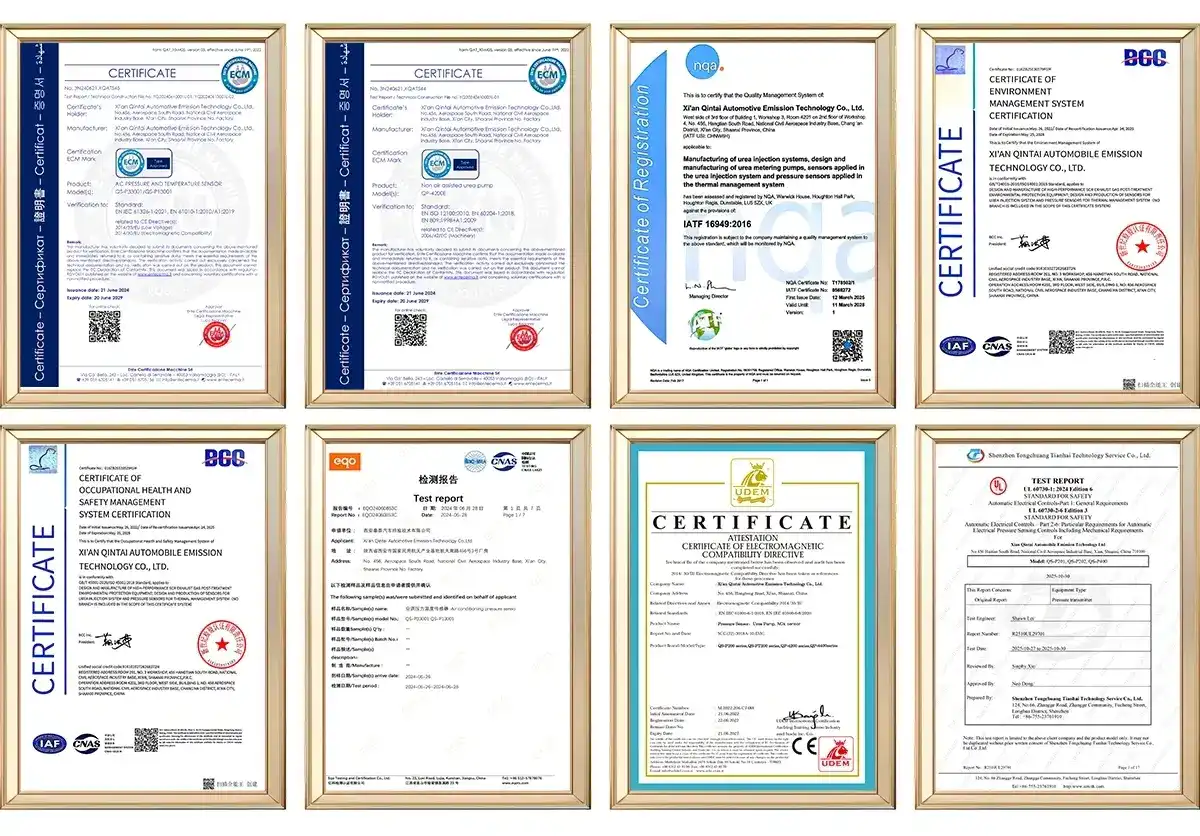
Manufacturing inspections are as important as design. Ask about incoming material control, leak test, electrical test, end of line inspection and batch traceability. Then ask for their credentials. Export purchasers usually want documentation for ISO 9001, IATF 16949, CE, REACH and RoHS and they verify that each of these certifications corresponds to the real product and factory. Also want a warranty statement, a product-change notification method, and spare-part support. Documents don't substitute tests thus ask also for sample validation findings. Keep these documents in your project file for future audits and client feedback.
Qintai Urea Dosing Pump Solution for Commercial Vehicle OEMs
About Qintai
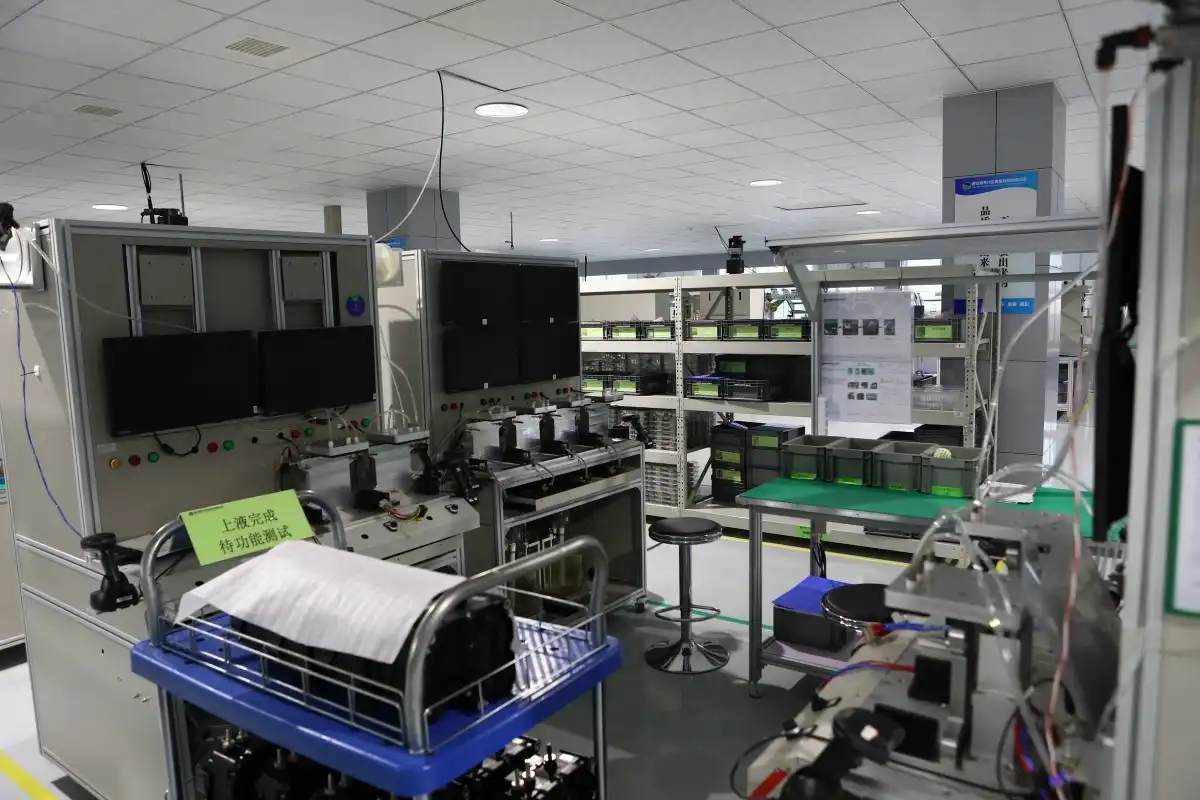
Qintai Xi'an Qintai Automotive Emission Technology Co., Ltd. was created in 2001 and is a national high-tech firm. We are engaged in R&D, production, sales and after-sales service of diesel engine SCR aftertreatment and sensors, notably pressure sensors. We hold ISO9001, IATF16949, CMC, Ex, UL, CE, REACH, RoHS certifications, and applied for 58 innovation patents. We are the primary supplier for Weichai Power, Yuchai Power, Quanchai Power and No. 1 in China market share. We export to over 60 countries and locations including Europe, the Middle East and South America. We provide OEM and ODM services from product design to mass manufacturing, and allow flexible customization for unique applications.
Core Product Advantages
Here are the core advantages of the Qintai urea pump for diesel SCR systems.
- Compact integrated design: The unit combines the pump, filter, and heater in one body. This reduces the number of separate parts your team must source, mount, and wire, and it helps assembly crews work with fewer connection points. Fewer parts also mean fewer places to check when a fault appears.
- Accurate dosing in all temperatures: Built-in freeze protection and a purge function support metering in cold climates, where AdBlue freezes at about minus 11 °C (12 °F). That matters for fleets running northern US routes in winter, since frozen fluid can stall dosing and trigger fault warnings on the vehicle display.
- Long service life with low noise and energy use: We design the pump for long service life, low power consumption, and quiet operation. These traits matter in vehicles where drivers work near the equipment all day and where the electrical budget is limited. Ask us for test data that fits your duty cycle.
These advantages target three common problems: part count, cold-weather dosing faults, and thin test evidence.
ECU Control and Bosch Compatibility
The Qintai urea dosing pump is connected to the engine control unit (ECU), which modulates the dosage amount depending on the engine load, the exhaust flow and the NOx sensor data. Our pump for Bosch ECU is suited for several SCR control techniques. Each project has its unique calibration. I propose discussing the communication protocol, interface and electrical characteristics with our engineers from the beginning. Our engineers may then look at the match before sampling starts. An early fit check can save you a late redesign. Qintai also produces pressure sensors and other sensors for diesel SCR systems, so you may discuss various parts in one session.
Maintenance, Troubleshooting, and Procurement Cost
Preventing Crystallization and Contamination
Most pump issues originate with the fluid. When water evaporates from urea solution , it leaves behind white crystals . The crystals may clog lines , filters and nozzles . Dirty or off-spec fluid accelerates the issue. Use DEF that is ISO 22241-1 compliant and keep containers sealed. At each service interval, inspect the hoses, fittings, connections, filters and mounting points and verify that pressure and flow are within range. Crystals are frequently a sign of a little leak. Wipe it off and check the source. Test the heating and purging functions before the cold season. These basic tests safeguard the pump and downstream catalyst.
Troubleshooting Common Faults
Check Voltage & Wiring First If Pump Won't Start Low or swinging flow is generally caused by a clogged filter, air in the line, frozen fluid or a damaged valve or diaphragm. Abnormal noise or vibration may be caused by cavitation, loose mount or overpressure. Leaks are frequently caused by fittings, seals or faulty hoses. Start with basic causes and move to complicated ones . Record the pressure and flow values for each stage . If the pump is the cause, note the batch number for the supplier to check traceability data. When replacing a unit, ensure that voltage, flow, pressure, ports, connections, mounting and ECU compatibility are the same. Test the system for leaks and dosing accuracy.
Price, MOQ, and Total Cost
The unit pricing only conveys half the story. The cost is determined by the pump mechanism, wetted materials, motor, voltage, flow and pressure range, heating function, connections, brand, packaging, certification, tooling and order quantity. Compare online vendors and direct factories. Ask for the same things. Specs, samples, test results, warranty conditions, incoterms, payment arrangements and delivery dates. Samples, small quantities and full orders have different costs, therefore ask for a pricing ladder. If the documentation is sparse or support is delayed, a low quotation could mean a higher total lifespan cost. Remember to include rework, downtime and warranty claims in your comparison.
Conclusion
The correct urea dosing pump begins with the SCR system itself. The pump transports AdBlue from the tank to the dosing module at the pressure and flow rate requested by the ECU, and severe NOx regulations make this work controlled and quantifiable. The buyer should first describe the flow, pressure, voltage, connection and communication protocol, and then evaluate diaphragm, peristaltic, gear and pneumatic designs against these requirements. A good supplier displays competency in ECU integration, flexible support for prototypes and small batches, verifiable quality records and legitimate certifications. Integrated pump, filter and heater designs that are freeze protected may decrease part counts and cold weather failures. Regular inspection, rapid fault tracing and clean fluid reduce crystallization and downtime. True value of purchase is overall cost not unit pricing.
FAQ
Q1: What is the function of a urea pump?
A: It delivers AdBlue from the tank to the dosing module at the required pressure. This gives precise metering for NOx reduction and keeps flow and pressure steady for catalyst performance.
Q2: What are the advantages of Qintai urea pumps?
A: They offer long service life, a compact design with pump, filter, and heater, accurate dosing across temperatures, built-in freeze protection and purge, and low energy use and noise.
Q3: How is the urea pump controlled?
A: It communicates with the ECU, which sets dosing quantity from engine load, exhaust flow, and NOx sensor feedback.
Q4: Does it comply with Bosch ECU?
A: Yes. Qintai urea pumps are designed to comply with Bosch ECU for specific SCR control strategies. Share your protocol, and our engineers will check the match.
Q5: How do I choose the right urea dosing pump?
A: Start with flow, pressure, voltage, connector, and ECU protocol. Then compare pump types, ask for test data, and check certificates and warranty terms.
Contact Qintai for an OEM Urea Dosing Pump Quote
Need an OEM urea dosing pump supplier for commercial vehicles? Qintai, a national high-tech enterprise founded in 2001, holds ISO9001 and IATF16949 certificates and offers OEM/ODM service with flexible customization. Send your drawings, voltage, flow, and pressure needs to info@qt-sensor.com. Our engineers will review your requirements and reply with a suitable pump configuration.
References
1. U.S. Environmental Protection Agency. Control of Air Pollution from New Motor Vehicles: Heavy-Duty Engine and Vehicle Standards and Highway Diesel Fuel Sulfur Control Requirements, 2001.
2. International Organization for Standardization. ISO 22241-1: Diesel Engines — NOx Reduction Agent AUS 32 — Part 1: Quality Requirements, 2019.
3. Koebel, M., Elsener, M., and Kleemann, M. Urea-SCR: A Promising Technique to Reduce NOx Emissions from Automotive Diesel Engines. Catalysis Today, 2000.
4. Johnson, T. V. Vehicular Emissions in Review. SAE International Journal of Engines, 2016.
5. Johnson, T. V. Diesel Emissions in Review. SAE International Journal of Engines, 2011.
6. California Air Resources Board. Heavy-Duty Omnibus Regulation, 2020.

Our customers’ satisfaction speaks for our quality — contact us to experience the same reliable service.