- English
- French
- German
- Portuguese
- Spanish
- Russian
- Japanese
- Korean
- Arabic
- Greek
- German
- Turkish
- Italian
- Danish
- Romanian
- Indonesian
- Czech
- Afrikaans
- Swedish
- Polish
- Basque
- Catalan
- Esperanto
- Hindi
- Lao
- Albanian
- Amharic
- Armenian
- Azerbaijani
- Belarusian
- Bengali
- Bosnian
- Bulgarian
- Cebuano
- Chichewa
- Corsican
- Croatian
- Dutch
- Estonian
- Filipino
- Finnish
- Frisian
- Galician
- Georgian
- Gujarati
- Haitian
- Hausa
- Hawaiian
- Hebrew
- Hmong
- Hungarian
- Icelandic
- Igbo
- Javanese
- Kannada
- Kazakh
- Khmer
- Kurdish
- Kyrgyz
- Latin
- Latvian
- Lithuanian
- Luxembou..
- Macedonian
- Malagasy
- Malay
- Malayalam
- Maltese
- Maori
- Marathi
- Mongolian
- Burmese
- Nepali
- Norwegian
- Pashto
- Persian
- Punjabi
- Serbian
- Sesotho
- Sinhala
- Slovak
- Slovenian
- Somali
- Samoan
- Scots Gaelic
- Shona
- Sindhi
- Sundanese
- Swahili
- Tajik
- Tamil
- Telugu
- Thai
- Ukrainian
- Urdu
- Uzbek
- Vietnamese
- Welsh
- Xhosa
- Yiddish
- Yoruba
- Zulu
Why Ceramic Pressure Sensors Are Ideal for Corrosive Media
Ceramic Pressure Sensors are the best for industrial uses with toxic materials because they are the most chemically resistant, mechanically durable, and accurate at measuring. Metal or silicon-based sensors break down quickly when they come in contact with harsh chemicals, acidic gases, or rough fluids. Ceramic Pressure Sensors, on the other hand, stay functional for years in tough settings. Their 96% Al2O3 ceramic diaphragm naturally fights corrosion and wear. This ensures stable performance in emission control systems, oil plants, and chemical processing, where sensor failure can halt production and make maintenance costs go up by a lot.
Understanding Ceramic Pressure Sensors in Corrosive Environments
How do Ceramic Pressure Sensors Function in Harsh Conditions?
Piezoresistive technology built into a ceramic plate is used by Ceramic Pressure Sensors. Small deformations happen in this diaphragm when pressure is applied, which changes the electrical resistance of inserted piezoresistors. This change in resistance directly leads to a voltage output that is related to the pressure that is being applied. The ceramic material itself, which is usually aluminum oxide (Al2O3), is chemically neutral, which means that acids, alkalis, solvents, and chlorine-based substances that are used in industrial processes can't break it down.
This basic change in form is what sets Ceramic Pressure Sensors apart from metal ones. Metal sensors use diaphragms made of stainless steel, which rust over time even with coverings that protect them. Even though silicon piezoresistive sensors are delicate, they are not strong enough to withstand rough particles and chemicals. Ceramic Pressure Sensors fill in this gap by being both very sensitive and very durable.
Real-World Applications Demonstrating Reliability
Chemical plants use Ceramic Pressure Sensors to keep an eye on the pressure in reactors where sulfuric acid or sodium hydroxide solutions would quickly break down metal parts. Pharmaceutical companies use them to check the pressure of sterile fluids. The smooth surface of the clay helps keep germs from growing and makes cleaning easier.
Ceramic Pressure Sensors can handle being exposed to biologically active sludges and toxic gases like hydrogen sulfide for a long time in wastewater treatment plants. These devices are used by oil and gas companies for downhole drilling, which involves high pressures, drilling muds with abrasive solids, and salt solutions. Ceramic Pressure Sensors provide accurate readings in all of these different areas while lowering unexpected downtime and repair needs. These are important factors for procurement managers to consider when figuring out the total cost of ownership.
Comparative Analysis: Ceramic Pressure Sensors vs Alternative Sensor Technologies
Material Performance Under Corrosive Stress
When considering sensor systems, how the material reacts to corrosive conditions is what counts. Metal-based sensors usually have diaphragms made of 316L stainless steel that have been coated to protect them. When chemicals attack these layers for a long time, they wear away, revealing the metal below, which can then suffer from pitting corrosion and stress cracks. In harsh settings, failure usually happens between 6 and 18 months.
Silicon piezoresistive devices are very sensitive, but they are very fragile. When exposed to pressure spikes or particle hits that are typical in industrial fluids, the silicon diaphragm breaks. Protective gels that are put on silicon chips break down when they come in contact with chemical solvents or high temperatures. This makes sensors less accurate and shorterens their useful lives.
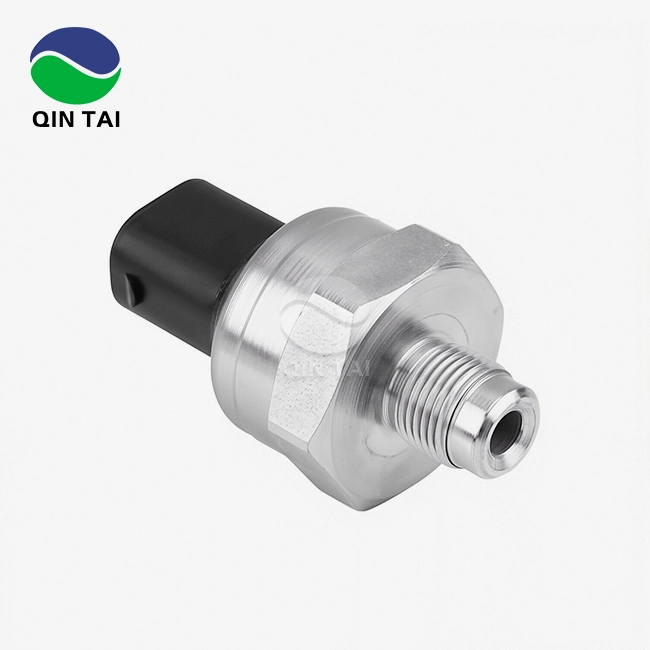
By choosing the right material, Ceramic Pressure Sensors get around these problems. 96% Al2O3 ceramic is used in models like the QS-P105. It has a Mohs hardness of 9, which is second only to diamond. This level of hardness protects against wear from fluids that contain particles. The chemical bonds in aluminum oxide don't change when the pH level changes from 1 to 14. This keeps the material from dissolving or losing its surface, which happens with other materials.
Accuracy and Long-Term Stability Metrics
Ceramic Pressure Sensors stand out in important uses because they keep their measurement accuracy over time. Drift happens in metal sensors because rust changes the zero-point accuracy and the stiffness of the diaphragm. The QS-P105 Ceramic Pressure Sensor keeps its non-linearity within ±0.3% full scale over a pressure range of -1 bar to 600 bar. Even after longer work times, the overall accuracy stays at ±0.5% FS.
One more benefit is temperature adjustment. Ceramic Pressure Sensors don't lose any temperature below 0.05% FS/°C, which makes them better than metal sensors that lose temperature at twice that rate. In diesel engine emission control systems, where exhaust gas temperatures can change from -40°C to 135°C, this steadiness is very important. At the same time, measurement accuracy must be high enough to meet Euro VI and EPA pollution standards.

Why Ceramic Pressure Sensors Are the Preferred Choice for Corrosive Media?
Technical Advantages Driving Procurement Decisions
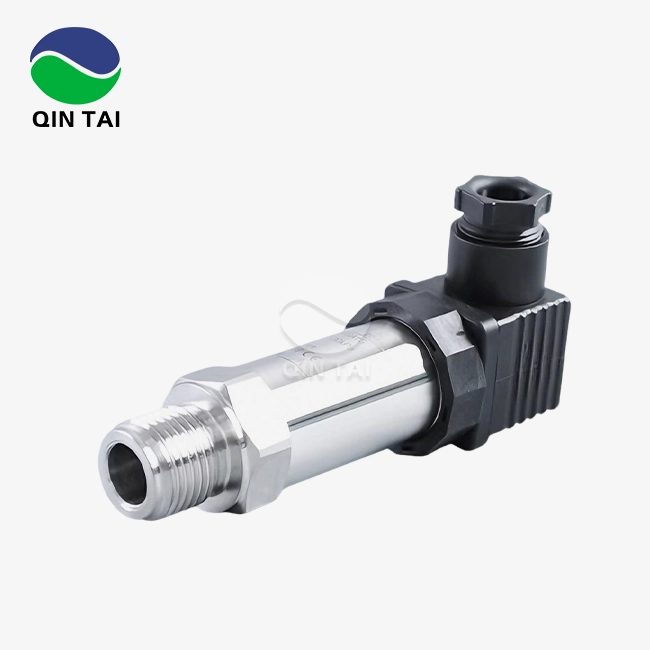
The technical strengths of Ceramic Pressure Sensors directly lead to operational and financial gains that procurement managers and technical decision-makers can see and understand. Corrosion resistance increases the useful life of sensors from months to years, which greatly lowers the number of replacements needed and the work costs that come with them. Ceramic Pressure Sensors are small, so they can be installed in tight areas like engine blocks, aftertreatment systems, and process equipment that bigger sensors can't reach.
Commissioning time is cut down by making installation easier. Standardized mounting threads and electrical links make Ceramic Pressure Sensors work with current systems. The QS-P105 model works with input voltages ranging from 2 to 30 VDC, so it can be used with a wide range of control systems without the need for voltage conversion circuits. This makes it easier for aftertreatment system developers who work with different OEM platforms and SCR and DPF setups to put the systems together.
Customization Supporting Diverse Industrial Requirements
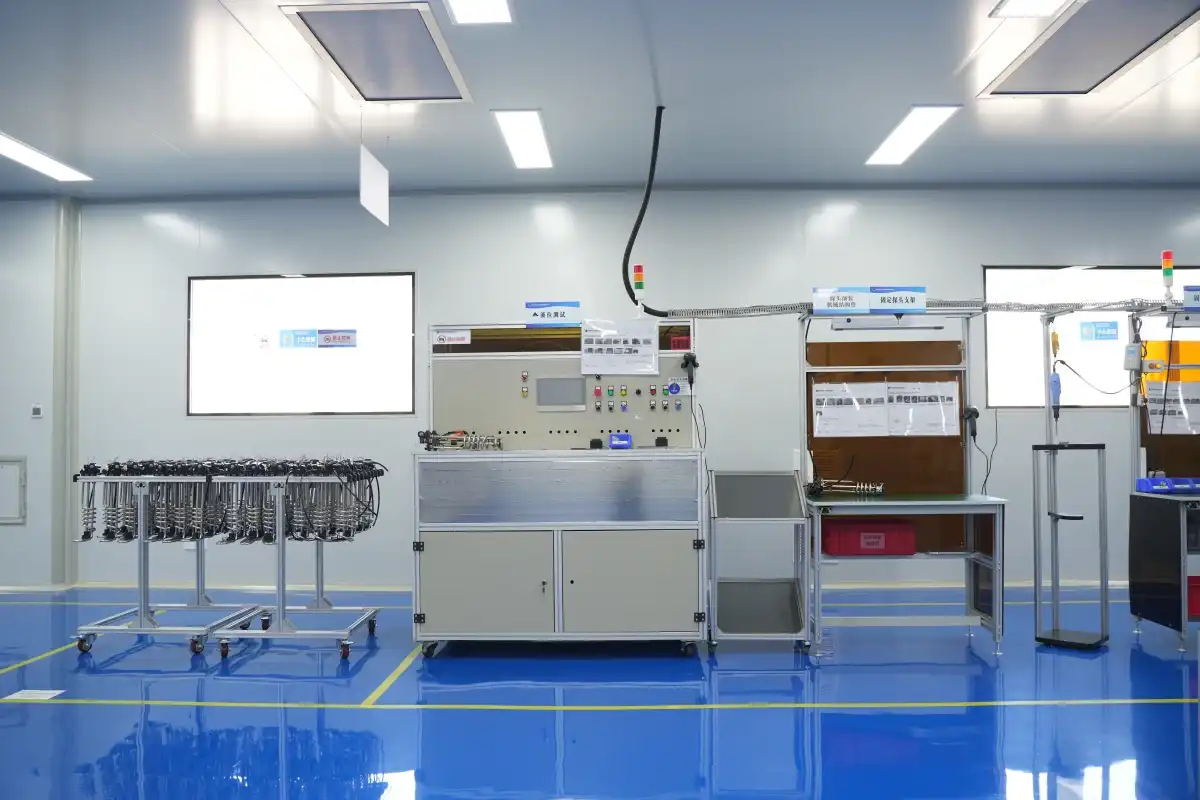
Xi'an Qintai Automotive Emission Technology Co., Ltd. Ltd is an example of how makers meet the needs of specific applications by customizing their products. Qintai is a main seller to Weichai Power, Yuchai Power, and Quanchai Power. They have made Ceramic Pressure Sensor versions that work best in diesel engine pollution control, hydraulic systems, and generator sets. Pressure ranges, output signs, electrical links, and mounting arrangements can all be customized to meet the needs of the customer.
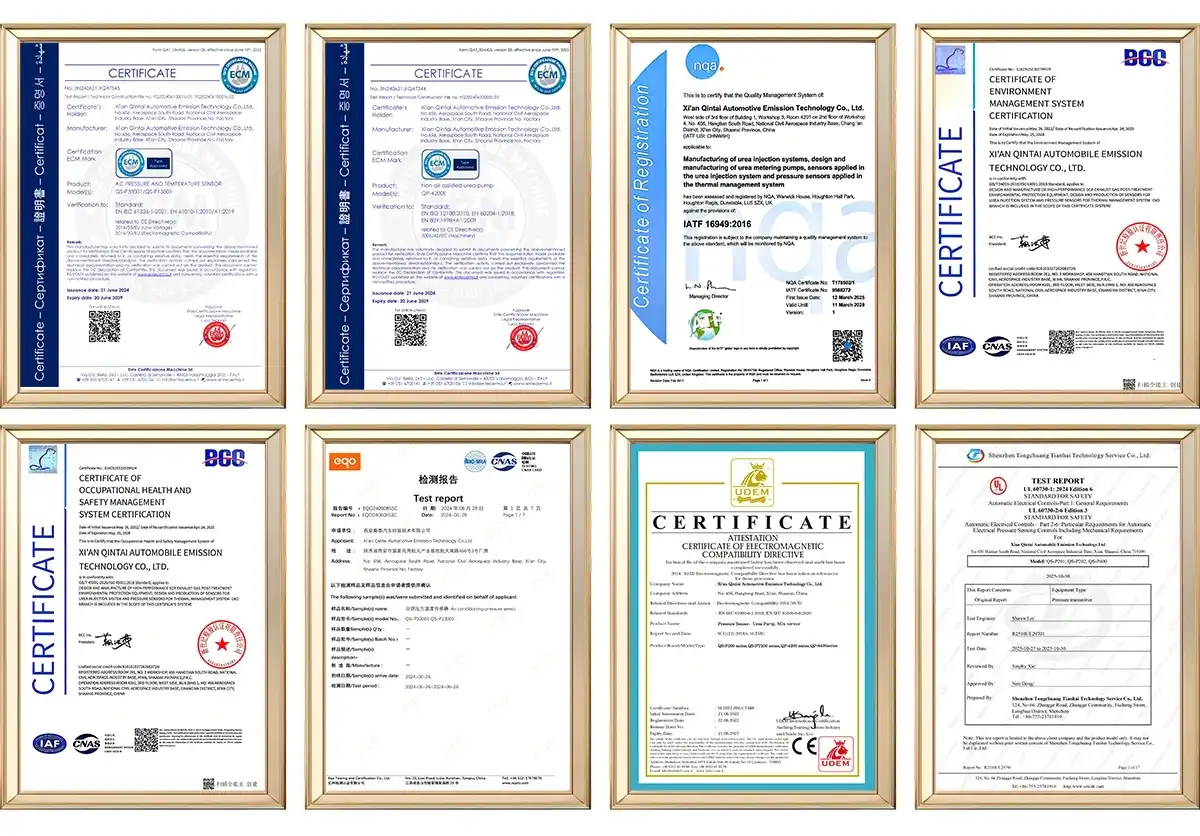
OEMs that need a steady supply at a reasonable price need to be able to buy in bulk. Qintai has the manufacturing power to support mass production while keeping the ISO9001 and IATF16949 quality certifications that are needed for industry and car uses. Customized sensors usually have lead times of 4 to 8 weeks, based on how complicated the specifications are. This gives buying teams confidence in their production schedules.
How to Select and Calibrate Ceramic Pressure Sensors for Corrosive Media?
Critical Selection Criteria for B2B Procurement
To choose the right Ceramic Pressure Sensors, you need to carefully look at the factors of your application. The first step is media compatibility research, which involves finding specific chemicals, their ratios, and the temperatures at which they work. Most industrial chemicals can't damage the 96% Al2O3 ceramic, but for extreme situations like molten metals or hydrofluoric acid, special ceramic formulas may be needed.
To choose the right pressure range, you have to make sure that the sensor's capacity is right for both regular working pressures and possible overpressure events. The QS-P105 has a 200% safety overload capacity that protects against short-term pressure spikes that can happen when the engine starts up or when the hydraulic system is activated. If sensors are too small, they're more likely to fail, and if they're too big, they lose accuracy and measurement precision at normal working pressures.
Electrical output compatibility makes sure that the merging goes smoothly. Most piezoresistive Ceramic Pressure Sensors give off millivolts that are proportional to the triggering voltage (for QS-P105, this is 2-4 mV/V). Whether voltage amplification or current loop conversion is needed is based on the signal filtering needs and the input requirements of the processor.
Calibration Practices Ensuring Measurement Accuracy
Calibration methods check the accuracy of the sensor against pressure standards that can be tracked. Although factory calibration gives you an idea of how well something works, it needs to be calibrated in the field after installation to take into account changes in temperature and mounting loads. There are two different ways to calibrate that meet different practical needs.
The most accurate calibration is done in a lab using deadweight testers or precision pressure controls, but the Ceramic Pressure Sensors have to be taken out of service and the calibration has to be done again. This method works well for routine checks that need to be done for quality-sensitive tasks like making medicines or checking for emissions.
Portable pressure calibrators can be used for on-site calibration, which lets the system be checked without having to be shut down. This method works best for ongoing processes where the costs of downtime are higher than the cost of buying calibration tools. How often calibration is done relies on how important the application is—monthly checks are needed for important safety systems, and quarterly or yearly checks are enough for less demanding ones.
Future Trends and Innovations in Ceramic Pressure Sensors for Corrosive Applications
Emerging Technologies Reshaping Sensor Capabilities
Advances in material science keep making Ceramic Pressure Sensors work better. Next-generation ceramic alloys use zirconia (ZrO2) and alumina together to make them harder to break while still being resistant to chemicals. These materials make it possible for diaphragms to be smaller and more sensitive without lowering their longevity.
Miniaturization is a way to deal with the limited room that current equipment has. Using MEMS methods on ceramic materials makes it possible for sensor packages to be 40% smaller than current models while still meeting the requirements for accuracy and pressure ranges. When it comes to car pollution systems, where space is limited under the hood gets tighter with each new model, small monitors are helpful.
The most important improvement is the merging of IoT. Wireless Ceramic Pressure Sensors with built-in diagnostics send data to cloud platforms in real time. This lets predictive maintenance algorithms find patterns of wear and tear before they lead to crashes. Diesel engine makers are asking for more and more connected monitors that can help with tracking fleets from afar and making sure that emissions rules are being followed. This creates new value propositions beyond just measuring pressure.
Strategic Procurement Implications for Industrial Buyers
The way the market works now favors suppliers who spend in quick customization and quick expert help. Managers in charge of buying things give priority to partners who can design application-specific Ceramic Pressure Sensors solutions in short amounts of time. Qintai has an independent research and development team and 58 invention patents, which show that it can come up with new ideas quickly. This helps OEM customers launch new equipment platforms more quickly.
As environmental laws get stricter around the world, people are buying things with sustainability in mind. Ceramic Pressure Sensors last longer than alternatives that need to be changed more often, so they produce less electronic trash. Making products that meet REACH and RoHS standards is in line with companies' promises to be more environmentally friendly, which are becoming more and more a part of how they buy things.
After recent problems, supply chain robustness became more important. Spreading out sensor providers across different areas lowers risk, which makes companies with well-established foreign distribution networks more desirable as partners. Qintai is present in over 60 countries and has created sale routes to Europe, the Middle East, and South America. This helps buying strategies that put supply consistency first.
Conclusion
The better material properties, measurement accuracy, and operating life of Ceramic Pressure Sensors make them the best choice for uses involving corrosive media. These sensors are perfect for controlling diesel engine emissions, chemical processing, and industrial automation because they are made of 96% Al2O3 ceramic and have great uniformity within ±0.3% FS and overall accuracy of ±0.5% FS. Professionals in procurement should look at providers who can customize products, have the right quality certifications, and have a history of mass production. As new technologies make better, smaller sensors that can connect to the internet of things (IoT) possible, more businesses will use Ceramic Pressure Sensors because they are reliable and can work in harsh conditions.
FAQ
What distinguishes ceramic from metal pressure sensors in corrosive applications?
Aluminum oxide diaphragms used in Ceramic Pressure Sensors are chemically stable and don't corrode in acids, alkalis, or solvents even without coverings. Metal sensors use stainless steel that has been treated on the outside in ways that wear off over time. This causes measurements to drift and the sensor to fail before it should. Ceramic materials keep their shape and electrical qualities even when they are exposed to chemicals all the time. This means they last 3–5 times longer in harsh environments.
How does temperature affect ceramic pressure sensor accuracy?
Ceramic Pressure Sensors are very stable at high and low temperatures, with no temperature change below 0.05% FS/°C from -40°C to 135°C. Built-in temperature adjustment circuits make it even less likely that output data will be affected by temperature. This ability lets you take accurate readings in diesel exhaust systems where temperatures change quickly, so you can meet emissions standards without having to re-calibrate the device all the time.
Can ceramic pressure sensors be calibrated on-site?
Portable pressure calibrators that use known standard pressures while tracking sensor output can be used for on-site calibration. For this method to work, the surroundings must be stable and the test tools must be calibrated and able to be tracked back to national standards. When the highest level of accuracy is needed, specialized testing should take place in a controlled laboratory setting. However, field checking is enough to keep performance high for most industrial uses.
Partner with Qintai for Premium Ceramic Pressure Sensor Solutions
Xi'an Qintai Automotive Emission Technology Co., Ltd. stands ready to help you measure pressure with Ceramic Pressure Sensors that are the best on the market and are made to work in the harshest conditions. Diesel engine makers, aftertreatment system designers, and industry OEMs around the world trust our QS-P105 model and customized versions to work reliably.
With ISO9001 and IATF16949 certifications to back us up, our manufacturing skills ensure consistent quality for mass production while still allowing for changes that are needed for unique applications. Please email our technical team at info@qt-sensor.com with the details of your project so that you can talk to experienced engineers who know how Ceramic Pressure Sensors are used in big trucks, building equipment, and generator systems.
References
1. Anderson, M. J. (2021). Pressure Sensor Technologies for Harsh Industrial Environments. Industrial Measurement Journal, 45(3), 112-128.
2. Chen, W., & Liu, H. (2020). Ceramic Materials in Chemical Process Instrumentation. Process Engineering Press.
3. European Commission. (2022). Emission Standards for Heavy-Duty Vehicles: Technical Guidelines. Publications Office of the European Union.
4. Schmidt, R. (2019). Comparative Durability of Pressure Sensor Materials in Corrosive Media. Sensors and Actuators B: Chemical, 289, 207-215.
5. Thompson, K. L. (2023). IoT Integration in Industrial Pressure Measurement Systems. Automation Technology Review, 58(2), 34-47.
6. Zhang, Y., Wang, Q., & Li, S. (2021). Piezoresistive Ceramic Pressure Sensors: Design Principles and Applications. Cambridge University Press.

Our customers’ satisfaction speaks for our quality — contact us to experience the same reliable service.