- English
- French
- German
- Portuguese
- Spanish
- Russian
- Japanese
- Korean
- Arabic
- Greek
- German
- Turkish
- Italian
- Danish
- Romanian
- Indonesian
- Czech
- Afrikaans
- Swedish
- Polish
- Basque
- Catalan
- Esperanto
- Hindi
- Lao
- Albanian
- Amharic
- Armenian
- Azerbaijani
- Belarusian
- Bengali
- Bosnian
- Bulgarian
- Cebuano
- Chichewa
- Corsican
- Croatian
- Dutch
- Estonian
- Filipino
- Finnish
- Frisian
- Galician
- Georgian
- Gujarati
- Haitian
- Hausa
- Hawaiian
- Hebrew
- Hmong
- Hungarian
- Icelandic
- Igbo
- Javanese
- Kannada
- Kazakh
- Khmer
- Kurdish
- Kyrgyz
- Latin
- Latvian
- Lithuanian
- Luxembou..
- Macedonian
- Malagasy
- Malay
- Malayalam
- Maltese
- Maori
- Marathi
- Mongolian
- Burmese
- Nepali
- Norwegian
- Pashto
- Persian
- Punjabi
- Serbian
- Sesotho
- Sinhala
- Slovak
- Slovenian
- Somali
- Samoan
- Scots Gaelic
- Shona
- Sindhi
- Sundanese
- Swahili
- Tajik
- Tamil
- Telugu
- Thai
- Ukrainian
- Urdu
- Uzbek
- Vietnamese
- Welsh
- Xhosa
- Yiddish
- Yoruba
- Zulu
Why Choose a Pressure and Temperature Transmitter for HVAC Control?
Choosing the right sensing technology directly affects how well an HVAC system performs. A pressure and temperature transmitter combines two critical measurements into one compact device, giving engineers real-time data on refrigerant conditions, fluid behavior, and thermal load. Instead of wiring two separate sensors and reconciling their outputs, you get synchronized readings from a single installation point. That accuracy matters when your system needs to maintain tight control over superheat, chilled water pressure, or boiler conditions — all while keeping energy consumption and maintenance costs in check.
Understanding Pressure and Temperature Transmitters in HVAC Systems
Ac and heat pump systems need accurate data to plan how to move air, change refrigerants, and move heat around. When you use a mixed sensing device, you can measure both factors at the same time. This makes the process faster than when you use two different devices.
How a Dual-Output Transmitter Works
An electronic device with two outputs has two different sensing parts inside the same body. A clay sensor picks up on changes in shape and turns them into a voltage signal that tells you how much pressure there is. An NTC thermostat measures changes in heat resistance to figure out how hot or cold it is. When both outputs are worked on at the same time, results that are in sync show how the system really is at the same measurement point.
Signal Outputs and System Integration
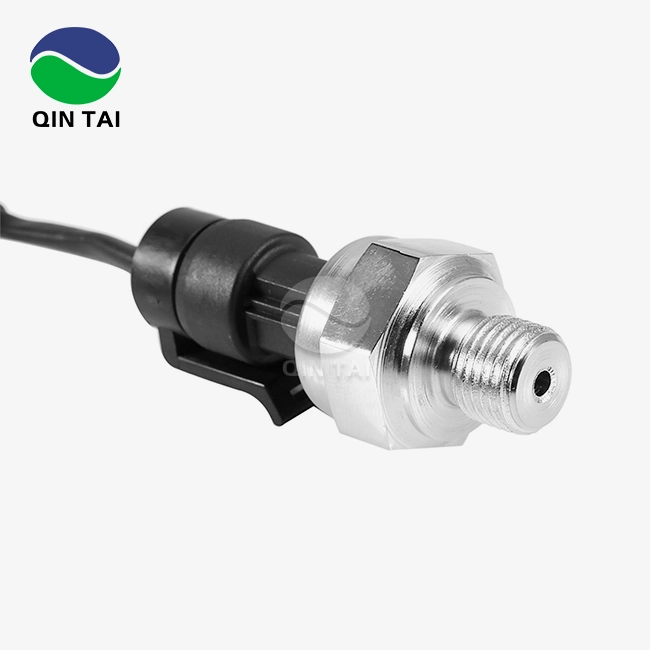
It is possible for most HVAC control systems to work with standard analog inputs. Because it makes 0.5V to 4.5V DC (10% to 90% VCC), the Qintai QS-PT225 works well with most PLCs and building management systems. It can be used with power supplies from 4.75VDC to 5.25VDC and can handle reverse polarity. This means that it can be added to systems that control current without adding any extra hardware. These features make the QS-PT225 a practical pressure and temperature transmitter for HVAC and building automation integration.
Combined vs. Separate Sensors
When you put two sensors in slightly different spots, you get measurement error in space, which is very bad when you're trying to figure out the superheat of the refrigerant. When you use a combination device, that imbalance goes away for good. Cooling engineers say that measuring both chilled water and refrigerant at the same time makes superheat calculations more accurate. This directly helps meet goals to protect compressors and save energy.
Core Applications and Industry Needs for HVAC Systems
In business and industry HVAC systems, the need for sensor gear keeps going up. Systems have to work longer hours, meet tougher goals for efficiency, and keep records of how well they do so that they can be checked for compliance.
Refrigerant and Chilled Water Systems
These systems must always keep an eye on both pressure and temperature in order to deal with expansion valves and find issues. In chilled water plants, pressure sensors keep an eye on how well the pumps work, and temperature sensors keep an eye on the difference in temperatures between the supply and return lines. At key measurement places, a single device meets both needs. This means that big air handling units don't need as many parts.
Heat Exchangers and Boilers
The heat exchanger doesn't work as well when there is more noise across the unit because of dirt and grime. The amount of heat loss can be seen by operators when they compare the pressure reading to the temperature at the inlet. In boiler systems that work the same way, changes in temperature and pressure are early signs of scale buildup or valve failure.
Energy Efficiency and Compliance Pressures
To meet ASHRAE Standard 90.1 and Title 24 requirements, system performance data must be written down. When facilities teams use monitors that measure both pressure and temperature, they can record data with just one timestamp, which makes it easier to report on audits. This is what the U.S. Department of Energy says: About 40% of the energy used in business buildings goes to HVAC equipment. Getting the measurements right is one of the easiest ways to bring down that number.
How to Choose the Best Pressure and Temperature Transmitter for Your HVAC Needs?
Selecting the wrong device costs money twice: once at purchase, and again when you replace it early or troubleshoot avoidable errors. Here are the core specifications to evaluate before committing to a supplier.
Accuracy, Range, and Environmental Tolerance
Accuracy of ±1.0% F.S. for both pressure and temperature — as found in the QS-PT225 — is appropriate for most HVAC applications. The device covers pressure ranges from 0–5 Bar up to 0–40 Bar (customizable), and operates reliably from -40°C to 130°C with a total error band of ±3% across -30°C to 130°C. Those numbers matter in outdoor mechanical rooms or rooftop units exposed to wide temperature swings. This level of accuracy and range makes the QS-PT225 a dependable pressure and temperature transmitter for demanding HVAC environments.
Certifications and Compliance
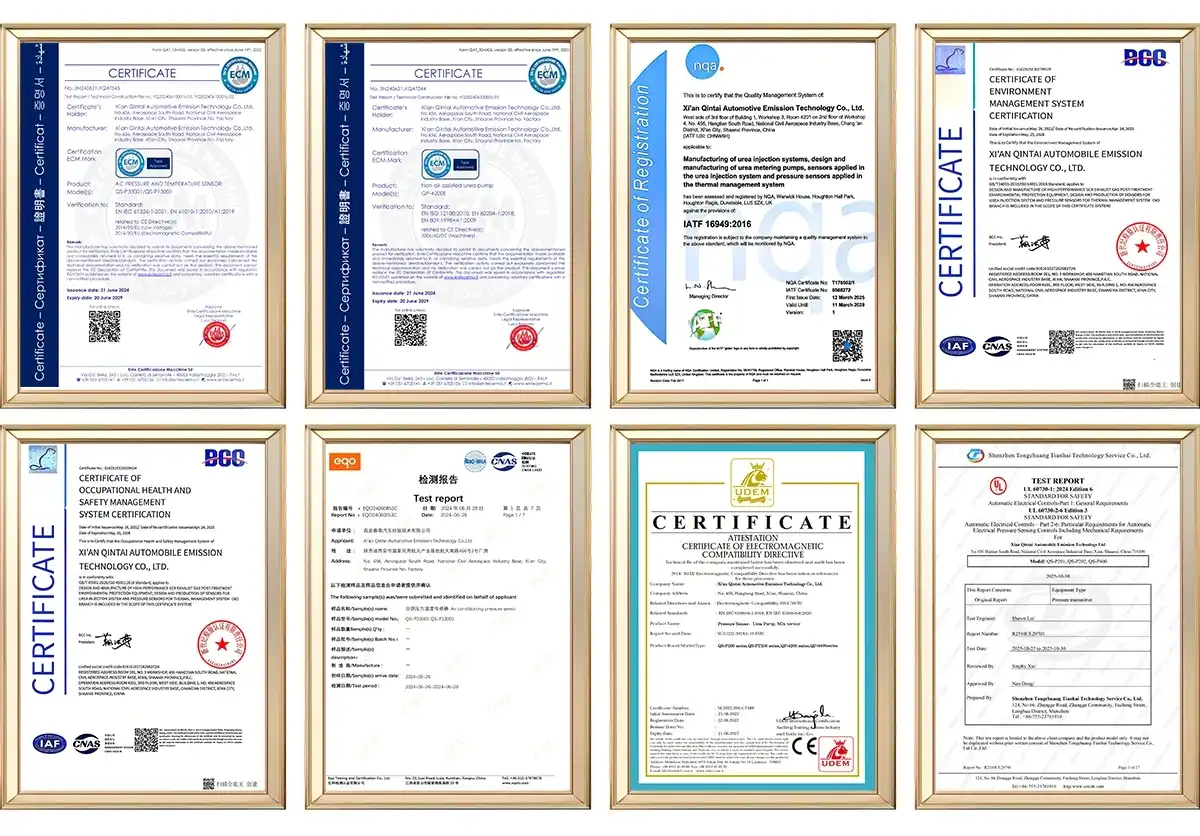
For procurement managers at OEM and aftermarket levels, certification documentation is non-negotiable. Look for ISO 9001 and IATF 16949 compliance at minimum. Qintai holds both, along with CE, RoHS, REACH, and UL certifications. That certification stack reduces your supplier qualification workload and satisfies most end-customer requirements without additional third-party verification.
Customization and Lead Time
Standard process connections on the QS-PT225 include G1/4, M12×1.5, and M10×1. If your application requires a different thread or connector configuration, Qintai's OEM/ODM service accommodates those requests. For aftermarket parts managers who need in-stock availability, Qintai's mass production capacity supports consistent delivery schedules — an important factor when managing vehicle fleets or commercial building portfolios.
These criteria — accuracy, certifications, and supply flexibility — are the three evaluation gates that most technical departments use when shortlisting suppliers. Passing all three before price negotiation begins saves significant back-and-forth later in the approval process.

Addressing Common Challenges and Calibration Best Practices
It doesn't matter how well the monitors are made if they aren't put in place or kept up to date. Three things cause most problems with combined transmitters in the field: sensor drift, electrical interference, and using too little force when installing the transmitters.
Preventing Sensor Drift
An NTC thermostat and a ceramic pressure element both move a little over time. To make sure that results stay within the device's rated accuracy band, test it on a regular basis—every 12 months in normal HVAC settings and every 6 months in high-vibration or chemically active settings. If you need to fill out paperwork for quality control, you should always calibrate against a standard that can be tracked.
Managing Electrical Interference
Drives that change frequencies and noisy contactor coils are in the same box as the HVAC control panels. Power cables and signal cables for sensors should not be run together. If the run is longer than 3 meters, shielded wiring should be used. The overvoltage safety on the QS-PT225 is set to 32V DC. This is another way to protect it from short-lived voltage spikes on the power line. These wiring practices and built-in protection help ensure the QS-PT225 pressure and temperature transmitter performs reliably in electrically noisy HVAC control panels.
Installation Torque and Sealing
The QS-PT225 gives a fixing force of 10 to 20 N·m. If you put too little torque on something, fluid could leak, and if you put too much torque on something, the process link or sensor element could crack. Use a torque wrench that has been calibrated and thread glue that is made for the process medium, like POE oil, refrigerant, or water, to make sure the fitting goes smoothly every time.
Future Trends and Innovations in HVAC Transmitter Technology
What procurement teams want from sensing hardware is changing because smarter buildings leave less of a carbon footprint.
Green Building Standards and Sensor Selection
Both LEED v4.1 and BREEAM need long-term data on energy performance that is written down. Analytics platforms that receive pressure and temperature data in real time can help building managers find issues with heat exchangers or compressors weeks before they break. So, there is less money lost on unplanned downtime costs. For these certifications to be given, facilities need sensors that are accurate over time and have records of how they were calibrated. The body of the QS-PT225 is made of 304 stainless steel, which doesn't rust in wet places. That's good for green building audits because it means it can last a long time between service calls.
Miniaturization and Multi-Parameter Devices
New HVAC equipment is small, and people want to make wiring easier, so they are moving toward small devices with more than one parameter. Pressure and temperature receivers that fit a G1/4 port take up a lot less room than two separate sensors. They are great for flexible chiller skids and next-generation small air handling units because of this.
Conclusion
You need to always know what's going on in your heat exchanger, cold water loop, or refrigerant circuit in order for your HVAC system to work well. If you have a pressure and temperature transmitter that does both, you can see everything from one place. It's accurate enough to meet business and industry standards. The QS-PT225 from Qintai is accurate to within ±1.0% F.S. on both lines. It is certified by ISO 9001, IATF 16949, CE, and UL, and it works in a lot of different temperatures. This is a smart and inexpensive choice whether you're buying new gear or aftermarket parts to replace old ones.
FAQ
Can a combined transmitter replace two separate sensors in all HVAC applications?
In most standard HVAC applications — refrigerant circuits, chilled water systems, air handling units — yes. The key condition is that both measurements need to be taken at the same point. If your system design requires measuring pressure and temperature at different locations in the circuit, you still need separate devices. For co-located measurement needs, a combined unit is the more accurate and cost-efficient option.
How often should I calibrate a dual pressure-temperature transmitter in an HVAC environment?
Annual calibration is standard for most commercial HVAC installations. In harsher environments — high vibration, wide temperature cycling, or exposure to aggressive refrigerants — calibrate every six months. Always use a traceable reference standard and document the results to satisfy ISO 9001 or IATF 16949 quality records.
What certifications should I require from a pressure and temperature transmitter supplier?
At minimum, require ISO 9001 for quality management and CE marking for European or export-bound equipment. For automotive or heavy machinery OEM applications, IATF 16949 is the relevant quality standard. RoHS and REACH compliance matter if your end product ships to the EU. Qintai holds all of these, simplifying your supplier qualification process.
Is the QS-PT225 compatible with standard HVAC control systems?
Yes. Its 0.5V–4.5V ratiometric output is compatible with most PLCs and BMS controllers. The TE 1-967640-1 electrical connector is a widely stocked automotive-grade component, and the standard process connections (G1/4, M12×1.5, M10×1) fit common HVAC fittings without adapters.
Partner with Qintai for Your Next HVAC Sensing Project
Qintai has helped OEMs and aftermarket users in more than 60 countries with their precise sensor needs since 2001. We make pressure and temperature transmitters and have ISO 9001, IATF 16949, CE, UL, and RoHS certifications. All of our products come with engineering support and a number of OEM/ODM options. You can email us at info@qt-sensor.com to find out more about the QS-PT225.
References
1. ASHRAE. ASHRAE Standard 90.1: Energy Standard for Buildings Except Low-Rise Residential Buildings. American Society of Heating, Refrigerating and Air-Conditioning Engineers, 2022.
2. U.S. Department of Energy. 2022 Commercial Buildings Energy Consumption Survey (CBECS). Energy Information Administration, 2022.
3. International Organization for Standardization. ISO 9001:2015 Quality Management Systems — Requirements. ISO, 2015.
4. ASHRAE. ASHRAE Handbook — HVAC Systems and Equipment. American Society of Heating, Refrigerating and Air-Conditioning Engineers, 2020.
5. National Institute of Standards and Technology. Guidelines for Evaluating and Expressing the Uncertainty of NIST Measurement Results. NIST Technical Note 1297, 2020.
6. U.S. Green Building Council. LEED v4.1 Building Design and Construction Reference Guide. USGBC, 2021.

Our customers’ satisfaction speaks for our quality — contact us to experience the same reliable service.