- English
- French
- German
- Portuguese
- Spanish
- Russian
- Japanese
- Korean
- Arabic
- Greek
- German
- Turkish
- Italian
- Danish
- Romanian
- Indonesian
- Czech
- Afrikaans
- Swedish
- Polish
- Basque
- Catalan
- Esperanto
- Hindi
- Lao
- Albanian
- Amharic
- Armenian
- Azerbaijani
- Belarusian
- Bengali
- Bosnian
- Bulgarian
- Cebuano
- Chichewa
- Corsican
- Croatian
- Dutch
- Estonian
- Filipino
- Finnish
- Frisian
- Galician
- Georgian
- Gujarati
- Haitian
- Hausa
- Hawaiian
- Hebrew
- Hmong
- Hungarian
- Icelandic
- Igbo
- Javanese
- Kannada
- Kazakh
- Khmer
- Kurdish
- Kyrgyz
- Latin
- Latvian
- Lithuanian
- Luxembou..
- Macedonian
- Malagasy
- Malay
- Malayalam
- Maltese
- Maori
- Marathi
- Mongolian
- Burmese
- Nepali
- Norwegian
- Pashto
- Persian
- Punjabi
- Serbian
- Sesotho
- Sinhala
- Slovak
- Slovenian
- Somali
- Samoan
- Scots Gaelic
- Shona
- Sindhi
- Sundanese
- Swahili
- Tajik
- Tamil
- Telugu
- Thai
- Ukrainian
- Urdu
- Uzbek
- Vietnamese
- Welsh
- Xhosa
- Yiddish
- Yoruba
- Zulu
Why Choose a Pressure Sensor for Hydraulic and Process Control?
Choosing the right pressure sensor for hydraulic and process control directly affects how well your system performs, how long it lasts, and how much it costs to maintain. A pressure sensor converts physical force—whether from fluid, gas, or steam—into a readable electrical signal, giving engineers and control systems the real-time data they need to act. In hydraulic circuits and industrial process lines, even small pressure deviations can trigger equipment failure or regulatory non-compliance. Selecting a well-matched sensing solution is not a minor detail; it is a core engineering decision.

Understanding Pressure Sensors in Hydraulic and Process Control
How Pressure Sensing Works
A pressure sensor measures the force that is being applied per unit area and turns it into an electrical output, which can be 0–5 V, 4–20 mA, or digital standards such as CAN or I²C. How accurate the measurements are, how fast they respond, and how stable the signal is all depend on the transduction technology and signal conditioning circuitry that are built into the unit.
Common Sensor Technologies
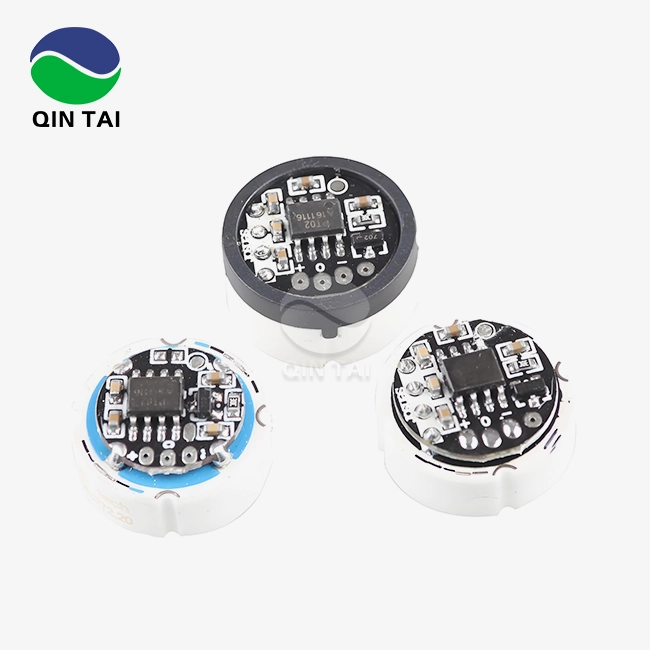
Four types of sensors are most common in industrial settings. Piezoresistive sensors are fairly cheap and work well. They have strain-sensitive resistors attached to a diaphragm. Micro-Electro-Mechanical Systems (MEMS) sensors are very small versions that are built on silicon wafers.
They have high sensitivity and can be used over and over again. Piezoelectric devices make electricity when they are dynamically loaded and work well in places with a lot of vibrations or impacts. Absolute and gage sensors use different starting points. Absolute sensors measure against a vacuum, while gage sensors measure against the pressure of the air around them.
Industries That Rely on These Devices
Pressure sensing is important for companies that make heavy trucks, construction and farm equipment, generator sets, HVAC systems, and industrial exhaust gas treatment systems to make sure their processes stay within the rules. Different industries have different needs when it comes to temperature range, media compatibility, output signal, and certification standards.
Why Pressure Sensors Are Critical for Hydraulic and Process Control Systems
Real-Time Monitoring Prevents Costly Failures
Load conditions for hydraulic systems are always changing. A quick rise or fall in pressure can damage pumps, valves, and actuators before anyone can fix the problem if there isn't accurate, constant pressure data. A properly adjusted pressure sensor sends information to the control unit in milliseconds, which lets the system act before damage happens.
Regulatory Compliance and Emission Standards
OEMs of diesel engines that work with the China VI and Euro VI standards must keep an eye on the pressure in the aftertreatment systems, especially in the DPF and SCR circuits, in order to stay in compliance. Pressure sensor accuracy matters here, because sensors that meet the standards of IATF16949 and ISO9001 can be tracked back in a way that regulators and OEM quality teams need for audits. A report from 2022 by the International Council on Clean Transportation says that accurate monitoring of aftertreatment is directly linked to long-term NOx reduction performance.
Operational Efficiency and Energy Savings
When pressure data is used to match pump output to real demand, energy savings can be seen in process plants and by generator set workers in mines and power plants. Studies have shown that hydraulic systems that are optimized can use 15–30% less energy than systems that run at a fixed speed without feedback control. Something that measures pressure is the first link in that feedback process.
How to Choose the Right Pressure Sensor for Your Application
Define Your Pressure Range and Media
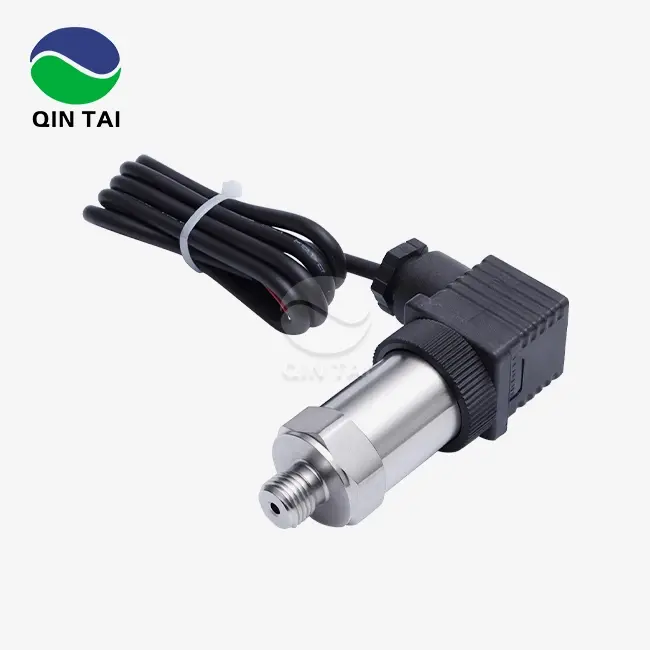
First, make sure you know what the lowest and highest working pressures will be for your system, including surge situations. Then, choose the media, such as hydraulic oil, water, diesel exhaust fluid, or compressed air. The diaphragm material (stainless steel, ceramic, or silicon) must be compatible with the media. When media and materials don't match, sensor life is drastically cut down.
Evaluate Environmental and Mechanical Stressors
Here are the main factors to consider before finishing a specification:
- Temperature range: Industrial hydraulic circuits routinely expose sensors to –40 °C to +125 °C. Confirm both storage and operating limits in the datasheet.
- Vibration and shock resistance: Off-road construction and agricultural machinery generate continuous vibration. Look for sensors tested to IEC 60068-2-6 or equivalent.
- Ingress protection: A minimum of IP67 is standard for mobile machinery; IP69K is preferred for washdown environments.
- Output signal compatibility: Match the sensor output (analog, CANbus, digital) to your ECU or PLC input card to avoid costly signal conversion modules.
If you match these factors to the conditions of your application, you'll have fewer problems in the field and fewer warranty claims further down the supply chain.
Assess Supplier Qualifications and Lead Times
B2B procurement teams need to check that a supplier has the right certifications, such as ISO9001, IATF16949, CE, and RoHS, and that they can handle large amounts of production with consistent quality across batches. Before committing to a production order, ask for written Cpk data and pressure sensor sample units to test on a bench. This will help you keep your production plan on track. Compare the wait times and minimum order amounts from at least three reliable sources.

Advantages of MEMS and Piezoelectric Pressure Sensors in Modern Systems
MEMS Sensors: Precision in a Small Package
MEMS pressure monitors are made using semiconductor processes, which makes them very accurate in terms of size and stability from batch to batch. Their silicon sensing elements don't change much over time, which makes them a good choice for long-term uses like generator sets in remote power plants where they can't be re-calibrated often. Because they don't use much power, they can also be used in monitoring nodes that are powered by batteries or connected to the internet of things (IoT).
Piezoelectric Sensors: Built for Dynamic Conditions
Because they react to changes in pressure so quickly, piezoelectric sensors are the best choice for hydraulic shock testing, fuel injection analysis, and high-cycle fatigue tracking. For signal generation, they don't need an outside power source, but they still need signal conditioning amplifiers. Their tough ceramic or quartz elements can handle pressure pulses with high amplitudes without wearing out.
Calibration and Verification
Both MEMS and piezoelectric devices need to be calibrated on a regular basis to keep the accuracy of their measurements. A common industry standard for hydraulic systems is to be calibrated every 12 months. However, high-cycle systems may need to be checked more often. When recalibrating in the field, always follow the manufacturer's instructions and use a dead-weight tester or reference gage that can be tracked.
Procurement Considerations for Pressure Sensors in B2B Markets
Sourcing Channels and Supplier Evaluation
Industrial pressure sensors can be bought from authorized distributors, directly from the manufacturer, and on industrial platforms online. The easiest way to get customization, certified documentation, and bulk pricing is to buy directly from the manufacturer. Ask for full technical datasheets, material declarations (REACH, RoHS), and references from similar OEM programs when you are looking at suppliers.
Negotiating Bulk Orders and Lead Times
For most producers, volume price starts to matter when an order has more than 500 units. Talk about more than just the unit price. Agree on how to pay for tools over time, how they should be packaged, and how long people should be told about technical changes. Setting up a buffer stock agreement with your supplier can keep your production lines from stopping because of a lack of parts. This is something that many original equipment manufacturers (OEMs) learned during the recent global supply disruptions.
Using Technical Support as a Selection Criterion
It is just as important for a supplier to offer professional help before and after the sale as it is for the product itself. Make sure the seller can deliver new units, failure analysis reports, and application engineering help within the time frame you decided upon. This system helps keep things from falling apart, which lowers the chance of expensive production delays.

Conclusion
Selecting a pressure sensor for hydraulic and process control is a decision that spans technical specification, supplier qualification, and long-term cost management. The right device—matched to pressure range, media, temperature, and output protocol—keeps systems running within design parameters, supports regulatory compliance, and reduces unplanned maintenance costs. Whether you are an OEM building diesel engines, an aftertreatment integrator, or a parts supplier serving the commercial vehicle market, the fundamentals of good sensor selection remain the same: verify the specs, qualify the supplier, and test before you commit.
FAQ
How often should hydraulic pressure sensors be calibrated?
A 12-month calibration cycle is a good place to start for most industrial hydraulic systems. More often, like every three to six months, you should look over high-cycle or safety-critical systems. Always do things the way the maker tells you to and use a reference tool that can be tracked.
What is the difference between absolute and gauge pressure sensors?
An absolute pressure monitor finds the pressure in relation to a vacuum, which is equal to zero pressure. As compared to the air pressure at the moment, a gage pressure indicator measures pressure. Gage sensors are the best choice for most hydraulic and fluid power tasks. Absolute monitors are more often used in barometric, vacuum, and altitude detecting systems.
Are MEMS pressure sensors durable enough for off-road machinery?
Yes, as long as it's properly packed. The silicon sensing element is fragile, but commercial MEMS pressure sensors for use in cars and factories are protected by stainless steel or ceramic cases that meet IP67 or higher ratings for water and dust entry and pass strict vibration tests. Before specifying for off-road use, check the datasheet for the exact mechanical ratings.
Can pressure sensors be customized for specific output signals or connectors?
A lot of companies that make industrial pressure sensors let you change the output signal type, connector style, pressure range, and thread specifications through OEM/ODM. Lead times for unique versions range from four to eight weeks, but this depends on how many are ordered.

Partner with Qintai for Your Pressure Sensor Needs
In more than 60 countries since 2001, Qintai has sold pressure monitors to OEM programs. Qintai is the top company in China for pressure sensors used in diesel engine aftertreatment. They work with Weichai Power, Yuchai Power, and Quanchai Power and have ISO9001, IATF16949, CE, UL, and Ex certifications. For qualified B2B buyers, our team offers application engineering help, trial units, and bulk discounts. Visit qt-sensor.com or email us at info@qt-sensor.com to get a sample or talk about your project needs right away.
References
1. International Council on Clean Transportation (ICCT). Heavy-Duty Vehicle Emission Standards: China VI and Euro VI Compliance Monitoring. 2022.
2. Bosch Automotive Handbook. Sensors in Automotive Engineering: Pressure Measurement Technologies. 10th ed., 2022.
3. ISA (International Society of Automation). Industrial Pressure Measurement: Principles and Applications. 2020.
4. IEEE Sensors Journal. Long-Term Stability of MEMS Piezoresistive Pressure Sensors Under Industrial Operating Conditions. Vol. 21, No. 4, 2021.
5. SAE International. Pressure Sensor Calibration Methods for Hydraulic Control Systems in Off-Highway Machinery. SAE Technical Paper Series, 2021.
6. Hydraulics & Pneumatics Magazine. Selecting Pressure Transducers for Mobile Hydraulic Applications. 2023.


Our customers’ satisfaction speaks for our quality — contact us to experience the same reliable service.