- English
- French
- German
- Portuguese
- Spanish
- Russian
- Japanese
- Korean
- Arabic
- Greek
- German
- Turkish
- Italian
- Danish
- Romanian
- Indonesian
- Czech
- Afrikaans
- Swedish
- Polish
- Basque
- Catalan
- Esperanto
- Hindi
- Lao
- Albanian
- Amharic
- Armenian
- Azerbaijani
- Belarusian
- Bengali
- Bosnian
- Bulgarian
- Cebuano
- Chichewa
- Corsican
- Croatian
- Dutch
- Estonian
- Filipino
- Finnish
- Frisian
- Galician
- Georgian
- Gujarati
- Haitian
- Hausa
- Hawaiian
- Hebrew
- Hmong
- Hungarian
- Icelandic
- Igbo
- Javanese
- Kannada
- Kazakh
- Khmer
- Kurdish
- Kyrgyz
- Latin
- Latvian
- Lithuanian
- Luxembou..
- Macedonian
- Malagasy
- Malay
- Malayalam
- Maltese
- Maori
- Marathi
- Mongolian
- Burmese
- Nepali
- Norwegian
- Pashto
- Persian
- Punjabi
- Serbian
- Sesotho
- Sinhala
- Slovak
- Slovenian
- Somali
- Samoan
- Scots Gaelic
- Shona
- Sindhi
- Sundanese
- Swahili
- Tajik
- Tamil
- Telugu
- Thai
- Ukrainian
- Urdu
- Uzbek
- Vietnamese
- Welsh
- Xhosa
- Yiddish
- Yoruba
- Zulu
Why Non-Linearity Matters in Capacitive Pressure Sensors
Engineers often run into a crucial requirement when they are looking for pressure measuring options for heavy-duty industry uses or diesel engine aftertreatment systems: non-linearity. Anyone working with SCR systems, controlling emissions, or keeping an eye on processes needs to know why this one number can make or break system success. A capacitive pressure sensor finds out how much pressure there is by monitoring changes in the electrical capacitance between two metal plates. When pressure is put on a movable diaphragm, it changes the distance between the sensors, which changes the capacitance in the same way. Non-linearity is the measurement of how far the sensor's output deviates from a perfect straight-line reaction across its measurement range. Even small variations can make the measurement less accurate in emission-critical situations where precise measurements are needed to meet regulations.
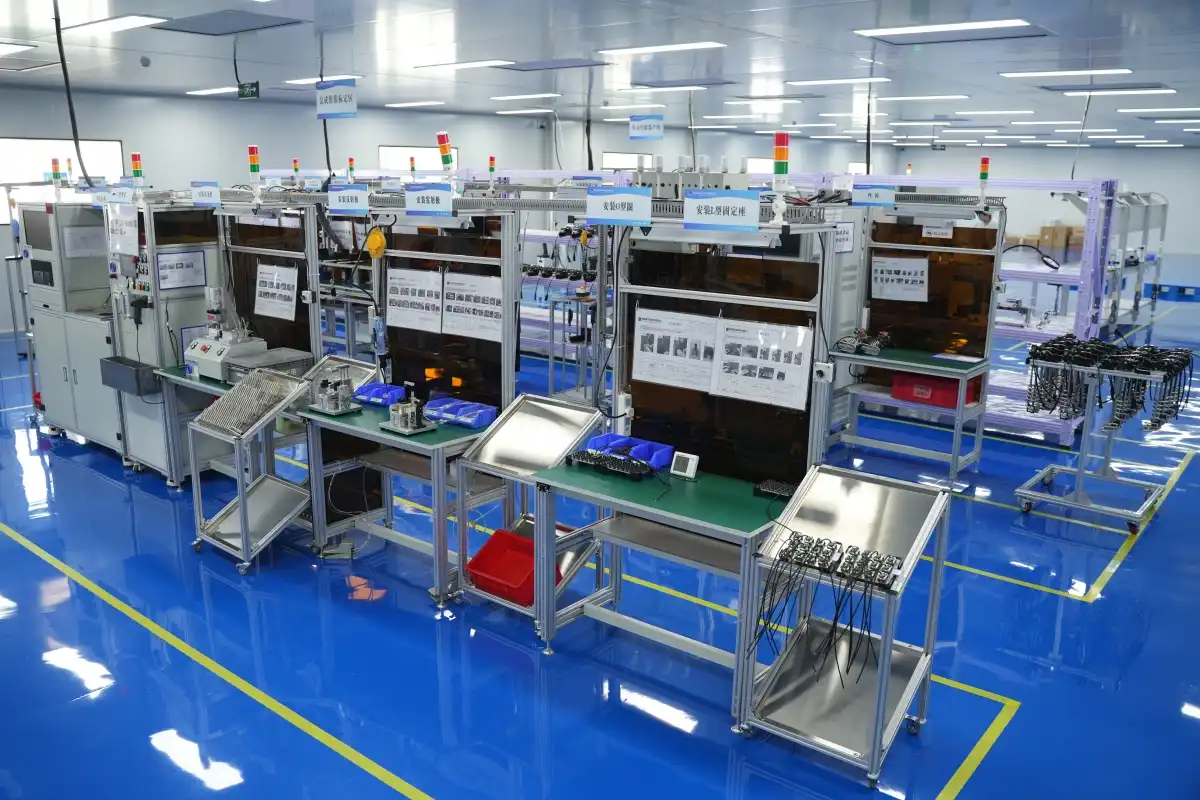
Understanding Non-Linearity in Capacitive Pressure Sensors
What Non-Linearity Really Means?
Non-linearity is a measure of how far a sensor's output is from a best-fit straight line. It is given as a percentage of full-scale output. When we see specs like 0.3% FS (full scale), it means that the sensor's reading could be up to 0.3% off from the real value across its whole pressure range. This difference is very important in situations where diesel engines need to meet China VI or Euro VI pollution standards. Even small measurement mistakes can lead to false diagnoses or systems running outside of compliance windows.
Root Causes Behind Measurement Deviations
Pressure sensors don't always behave in a straight line because of a number of physical and technical factors. The diaphragm's elastic properties don't always respond exactly linearly to applied force, especially near the ends of the measurement range. This is because of the material properties. When designing an electronic circuit, the signal conditioning steps can also introduce errors, which means that the capacitance-to-voltage transfer may not stay perfectly proportional. Variables in the environment add another level of difficulty. Changes in temperature have an effect on both the dielectric constant of materials and the mechanical tension in sensing elements. Vibration and mechanical stress in heavy truck or building machinery environments can also temporarily change the shape of sensors.
Industry Impact and Real-World Consequences
When non-linearity is not handled, it has real costs for the shipping and manufacturing sectors. In SCR aftertreatment systems, wrong pressure data can cause the wrong amount of urea to be added, which can either cause too many fumes or damage to the catalyst from crystallization. Manufacturers of generator sets have said that non-linear sensor drift has led to early repair alerts, which has caused extra downtime and service costs. A company that makes building equipment found that sensors with 1.5% non-linearity led to diagnostic trouble codes that came and went, which led to warranty claims and unhappy customers. Changing the sensors to ones with 0.5% non-linearity or better fixed 90% of the problems.
Core Principles Behind Capacitive Pressure Sensor Non-Linearity
How Capacitive Sensing Technology Works?
The basic function depends on the equation C = ε₀εᵣA/d, which says that capacitance changes in the opposite direction of the distance between electrodes. When pressure moves the diaphragm, the gap gets smaller, which makes the capacitance higher. But this relationship only works if the diaphragm moves in a straight line. In real life, the center deflection is greater than the edge deflection, which makes the capacitance change curve a little less straight. To lessen this geometric non-linearity, more advanced systems use corrugated diaphragms or different patterns of capacitors.
Comparing Sensor Technologies for Linearity
Piezoresistive sensors usually have nonlinearity of 0.5 to 1.0%, but they are more sensitive to temperature, so they need a lot of correction. Piezoelectric types are great at measuring changes in pressure, but they can't measure steady pressure. Capacitive pressure sensors are a good compromise because they use little power, work well at low temperatures, and can have nonlinearity below 0.3% with careful planning. Because of this, they work great in car settings where battery draw is important and in systems that need to keep measurements stable over time.
Design Factors Influencing Linear Performance
The choice of diaphragm material has a direct effect on uniformity. Ceramic materials, such as 96% Al2O3, are more elastic than metal materials and keep their bending characteristics more consistently across temperature ranges. The design of the sensor is also important; dual-capacitor differential setups can get rid of a lot of common-mode errors. Precision capacitance-to-digital converters with built-in linearization methods can be used in circuit design to make up for nonlinearities in the real world. During manufacturing, calibration methods like multi-point trimming across the full pressure range set adjustment factors that are kept in the sensor memory. This makes the output linearity much better.

Industrial Implications: Why Addressing Non-Linearity is Essential
Evaluation Criteria for Procurement Teams
When looking at different pressure monitors, whether they are OEM replacements or aftermarket additions, non-linearity should be one of the main things you look at, along with accuracy and stability. Purchasing managers need to know that a sensor that says it is accurate to within 0.5% but has non-linearity of 1% might not work as well as one that says it is accurate to within 0.75 % and has non-linearity of 0.3%, based on the working pressure range of the application. Technical comparisons can be made with the help of detailed datasheets that show non-linearity specs, temperature factors, and long-term stability data.
Cost-Performance Considerations
Higher uniformity usually means higher prices, but when you look at the total cost of ownership, precise devices usually win out. An SCR system integrator discovered that buying 15% more sensors with 0.3% nonlinearity instead of 0.8% nonlinearity cut the number of calibrations needed from once a year to every three years, which saved a lot of time and effort. Generator set makers who make backup power systems for important systems know that fake alarms caused by sensors cost a lot more in emergency service calls than the extra money spent on better parts. The important thing is to make sure that the sensor's specs fit the needs of the application. For example, not all systems need 0.2% uniformity, but emission-critical ones do.
Practical Calibration and Troubleshooting
Calibration services that can be done on-site make sensors last longer and keep their accuracy. During installation, technical teams should take baseline readings at known reference pressures. They should then plan regular checks against standards that can be tracked. If you think you might have a problem with non-linearity, test across the whole measurement range instead of just one point. This is because non-linear mistakes are easiest to see at the range's ends. Temperature cycling tests show if drift is caused by poor thermal adjustment or real non-linearity, which helps figure out what needs to be done to fix the problem.
Solutions and Best Practices to Mitigate Non-Linearity Issues
Advanced Compensation Technologies
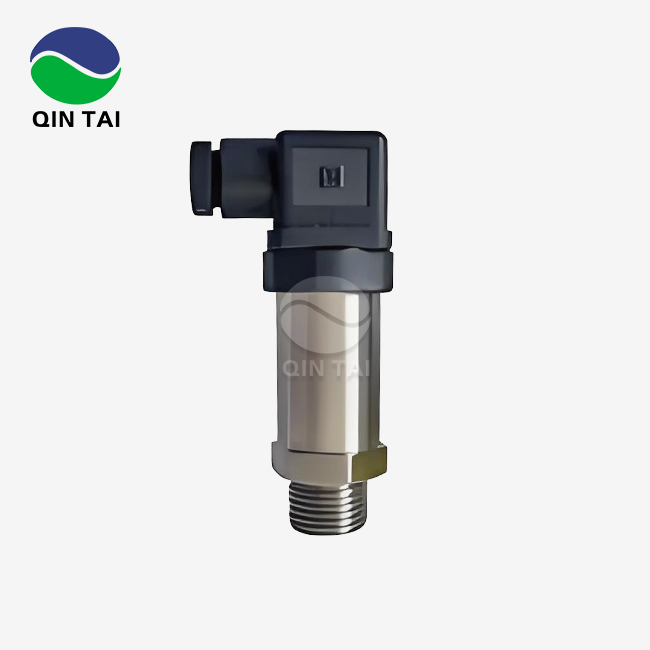
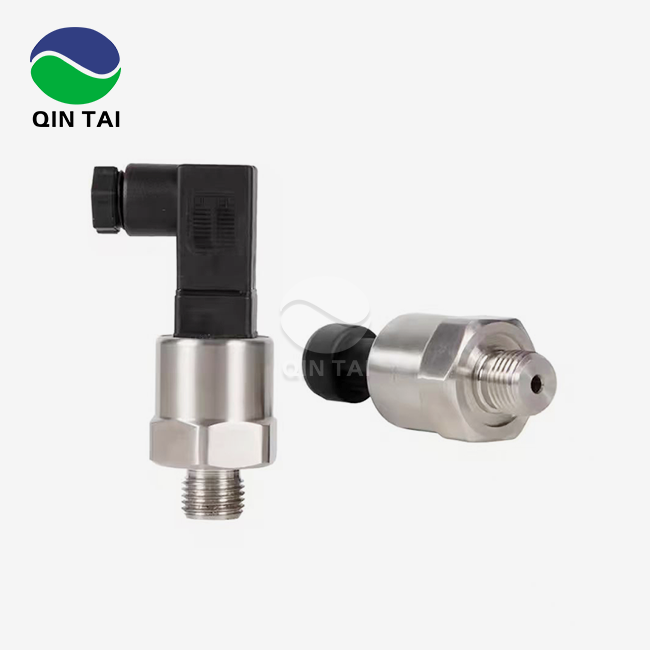
The accuracy of modern pressure measuring tools is very high because they use complex data processing. Digital output sensors with built-in microprocessors run correction methods in real time, using polynomial equations to deal with expected nonlinear behavior. Having temperature monitors built in lets you dynamically compensate for changes in temperature that happen on both computer and mechanical parts. This method is shown by the Qintai QS-P105F, which achieves 0.3% FS non-linearity across pressure ranges from zero to 600 bar with the help of precise engineering and advanced compensation circuits.
Because of these main technical benefits, the QS-P105F can be used in difficult industrial settings:
• Exceptional Linearity: The 0.3% FS standard guarantees accurate readings that are needed for emission compliance. The sensitivity of 2-4.0 mV/V provides strong signal quality that doesn't get messed up by noise in electrically harsh car settings.
• Strong Overload Protection: A 200% FS safety grade keeps expensive sensors from failing during pressure jumps that happen during engine regeneration cycles or hydraulic system transients.
• Thermal Stability: There is no temperature shift below 0.03% FS/°C (2-50 bar range), so the accuracy stays the same from -40°C to 135°C, which includes working in harsh environments like mines in the Arctic and building sites in the desert.
• Flexible Integration: The ability to work with a wide range of 2-30 VDC input voltages makes system design easier, and the 11–30% kΩ bridge resistance makes sure that the device works reliably with the signal conditioning interfaces that different OEMs use.
• Material Durability: The 96% Al2O3 ceramic diaphragm has great resistance to rust and wear, which is important for long-term dependability in exhaust gas settings with sulfur compounds and particles.
These specifications directly address the needs of diesel engine manufacturers who must certify emissions compliance, aftertreatment calibrators requiring capacitive pressure sensor compatibility across multiple ECU platforms, and generator set builders demanding long-term system stability. The flexible capacitive pressure sensor platform allows Qintai's engineering team to modify pressure ranges and electrical interfaces to match application requirements without protracted development cycles. A capacitive pressure sensor optimized for urea dosing applications differs significantly from one designed for fuel rail monitoring—the former emphasizing chemical compatibility and low-temperature performance, the latter prioritizing high-temperature stability and faster response. Qintai's capacitive pressure sensor architecture accommodates these distinctions through modular design, enabling OEMs to standardize on a single sensor family while still obtaining application-specific variants for each installation point across the vehicle or genset.
Partnering with Manufacturers for Custom Solutions
When you work together with sensor providers, you can get better options than you could get by just choosing products from a catalog. Sharing specific application needs, such as pressure ranges, media compatibility, mounting limitations, and extreme weather conditions, lets engineering teams suggest specific changes to the design. Accuracy in the real world is higher when custom testing is done based on the actual working conditions instead of normal lab procedures. Technical help for the whole product lifetime, from prototyping to production and field service, makes sure that sensors keep performing as expected as systems change.
Maintenance Schedules Supporting Long-Term Performance
Setting preventative recalibration intervals stops precision loss from getting worse over time and becoming a reliability issue. Generator sets used in mines should be checked once a year, but in less demanding settings, the times could be extended to two to three years. Keeping track of the past of calibration creates useful information that shows if certain applications or working conditions make drift worse. This information helps designers make better next-generation systems. Supplier relationships that offer testing services with standards that can be tracked and approval make it easier to keep up with regulations.
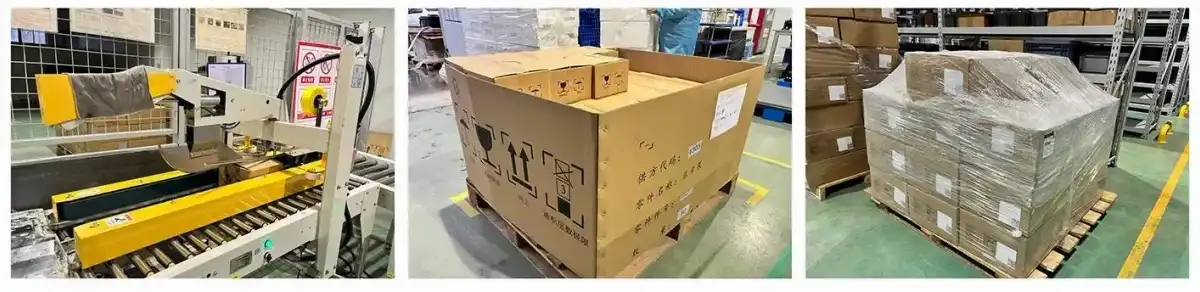
Future Trends and Innovations in Capacitive Pressure Sensor Linearity
Emerging Technology Enhancements
Improvements in MEMS fabrication make it possible to make micromachined structures that are more complicated and have better geometric accuracy, which lowers the nonlinearity that comes with physical systems. Using nanomaterials, like carbon nanotube electrodes and graphene-based dielectrics, together could make devices much more sensitive and stable at high temperatures. Artificial intelligence programs that have been taught on large datasets of calibrations can identify and fix complex multivariable drift patterns that regular polynomial correction can't handle. These programs may be able to achieve less than 0.1% non-linearity across wide temperature ranges.
Digital Transformation in Calibration Services
Cloud-connected sensors with built-in communication units make it possible to check and change calibrations from afar. A group of building machines could get overnight changes on their calibrations based on collected performance data and machine learning analysis. This way, the machines would stay as accurate as possible without any manual service. By looking at measurement trends and using predictive maintenance algorithms, problems with nonlinearity could be found before they affect operations. This would allow proactive sensor replacement to happen during planned maintenance windows instead of emergency breaks.
Strategic Implications for OEM Procurement
These new ideas give the buying and tech teams both chances and problems to solve. As we move toward smart devices with advanced onboard processing, simple hardware is losing value in favor of integrated systems that include sensing elements, signal processing, and software. OEMs' ties with sensor providers are becoming more and more like technology partnerships instead of just buying parts. When companies invest in providers that show they can do research and development, have a wide range of certifications, and commit to long-term support, they set themselves up to take advantage of new skills as they develop. Companies like Qintai have 58 idea patents, which means they have put a lot of money into research, which leads to next-generation products.
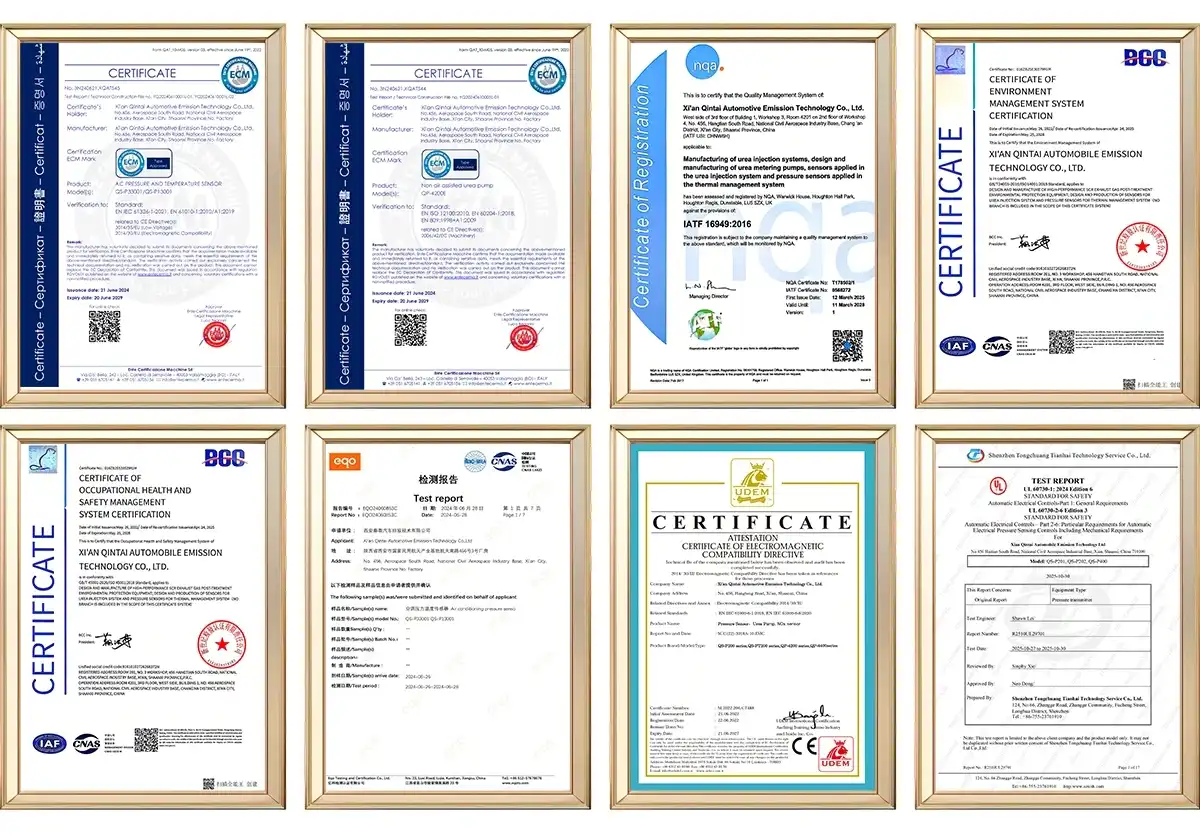
Conclusion
Nonlinearity in a capacitive pressure sensor significantly affects measurement reliability and accuracy in industrial and emissions-critical applications. Understanding the physical mechanisms causing deviation, testing capacitive pressure sensor units against appropriate criteria, and following proper calibration procedures separate successful operations from those experiencing persistent issues. As emissions regulations tighten and systems grow more complex, attention to capacitive pressure sensor linearity specifications during procurement and integration becomes increasingly important. The convergence of smart signal processing, advanced materials, and digital connectivity will continue improving capacitive pressure sensor accuracy. Organizations that build strong technical partnerships with capable capacitive pressure sensor manufacturers will benefit most from these advances.
FAQ
What level of nonlinearity should I aim for in apps that use SCR after treatment?
Sensors with 0.5% FS non-linearity or better are usually needed for emission control devices that need to follow the rules. This makes sure that the measurements are accurate enough for urea dose methods that reduce NOx as much as possible while keeping ammonia from slipping. The 0.3% guideline for the Qintai QS-P105F gives it a safe cushion for even the strictest emission standards.
How does temperature affect sensor non-linearity?
Temperature influences both the mechanical properties of the sensing diaphragm and the electrical characteristics of signal conditioning circuits. Good sensors, like the QS-P105F, have temperature correction built in that keeps drift below 0.03% FS/°C. This makes sure that the uniformity stays the same across the -40°C to 135°C temperature range that is common in industrial settings.
Can calibration improve a sensor's non-linearity specification?
Physical nonlinearity can't be changed by calibration, but multi-point calibration with saved correction factors makes output linearity much better. Digital sensors with built-in processors make these changes in real time, which reduces the appearance of nonlinearity. It is still better to choose sensors that are made for low nonlinearity than to do a lot of post-correction.
What distinguishes capacitive sensors from piezoresistive types regarding linearity?
Most of the time, simpler mechanical structures with fewer temperature-sensitive parts help capacitive pressure sensors achieve better uniformity. Piezoresistive sensors depend on changes in strain gauge resistance that are less linear and more sensitive to temperature, so they need more complex adjustment circuits. Cost, size, and specific application needs are some of the trade-offs.
Partner with Qintai for Precision Pressure Sensing Solutions
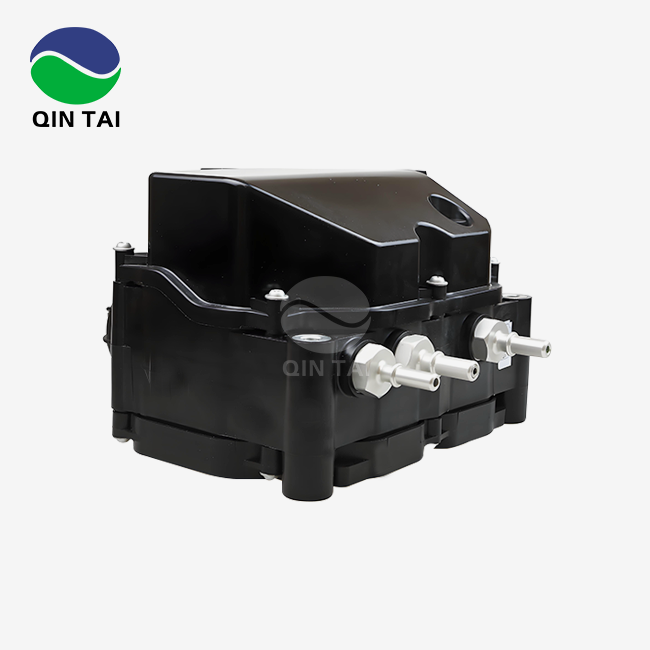
With more than 20 years of experience in diesel engine aftertreatment systems, Xi'an Qintai Automotive Emission Technology is ready to help you with your pressure measuring needs. We understand the high standards for accuracy and dependability that your applications need because we are China's top OEM capacitive pressure sensor provider to Weichai Power, Yuchai Power, and Quanchai Power. Our QS-P105F pressure sensor has the best non-linearity of 0.3% in the business and is backed by a number of standards, such as IATF16949, ISO9001, and REACH compliance. Our independent research and development team works with your engineers to improve performance, whether you need stock goods or solutions that are specifically designed for your needs in terms of pressure and environment. Get in touch with our tech support team at info@qt-sensor.com to talk about how our pressure measuring products can help your system work better and follow the rules.
References
1. Webster, J.G., Eren, H. (2018). Measurement, Instrumentation, and Sensors Handbook: Spatial, Mechanical, Thermal, and Radiation Measurement. CRC Press, Second Edition.
2. Wilson, J.S. (2005). Sensor Technology Handbook. Newnes Publishing, Chapter 12: Pressure Sensors.
3. Bao, M. (2000). Micro Mechanical Transducers: Pressure Sensors, Accelerometers and Gyroscopes. Elsevier Science, Handbook of Sensors and Actuators Series.
4. Fraden, J. (2016). Handbook of Modern Sensors: Physics, Designs, and Applications. Springer International Publishing, Fifth Edition.
5. Kimura, M., Tsuji, K. (2014). "Non-linearity Compensation Techniques for High-Accuracy Capacitive Pressure Sensors." Journal of Microelectromechanical Systems, Vol. 23, No. 4, pp. 892-901.
6. Norton, H.N. (1989). Sensor and Analyzer Handbook. Prentice Hall, Section on Pressure Measurement Fundamentals and Calibration Practices.

Our customers’ satisfaction speaks for our quality — contact us to experience the same reliable service.