- English
- French
- German
- Portuguese
- Spanish
- Russian
- Japanese
- Korean
- Arabic
- Greek
- German
- Turkish
- Italian
- Danish
- Romanian
- Indonesian
- Czech
- Afrikaans
- Swedish
- Polish
- Basque
- Catalan
- Esperanto
- Hindi
- Lao
- Albanian
- Amharic
- Armenian
- Azerbaijani
- Belarusian
- Bengali
- Bosnian
- Bulgarian
- Cebuano
- Chichewa
- Corsican
- Croatian
- Dutch
- Estonian
- Filipino
- Finnish
- Frisian
- Galician
- Georgian
- Gujarati
- Haitian
- Hausa
- Hawaiian
- Hebrew
- Hmong
- Hungarian
- Icelandic
- Igbo
- Javanese
- Kannada
- Kazakh
- Khmer
- Kurdish
- Kyrgyz
- Latin
- Latvian
- Lithuanian
- Luxembou..
- Macedonian
- Malagasy
- Malay
- Malayalam
- Maltese
- Maori
- Marathi
- Mongolian
- Burmese
- Nepali
- Norwegian
- Pashto
- Persian
- Punjabi
- Serbian
- Sesotho
- Sinhala
- Slovak
- Slovenian
- Somali
- Samoan
- Scots Gaelic
- Shona
- Sindhi
- Sundanese
- Swahili
- Tajik
- Tamil
- Telugu
- Thai
- Ukrainian
- Urdu
- Uzbek
- Vietnamese
- Welsh
- Xhosa
- Yiddish
- Yoruba
- Zulu
High Accuracy Pressure Sensors for Process Control Systems
When making strong industrial systems, the pressure measuring technology you choose has a direct effect on how well they work, how well they follow the rules, and how well you control costs over time. Accurate pressure monitors are like the brains of process control settings; they turn physical events into data that can be used. Ceramic Pressure Sensors have become the best choice for challenging uses among the different sensing technologies. Because they are made of 96% alumina ceramic, they are very strong and don't react with chemicals. This makes them very useful in corrosive settings like diesel engine emissions tracking, hydraulic systems, and industrial fluid management. This guide talks about the important things that procurement managers and R&D engineers need to think about when they need to find reliable pressure measurement solutions that balance accuracy, durability, and the total cost of ownership.
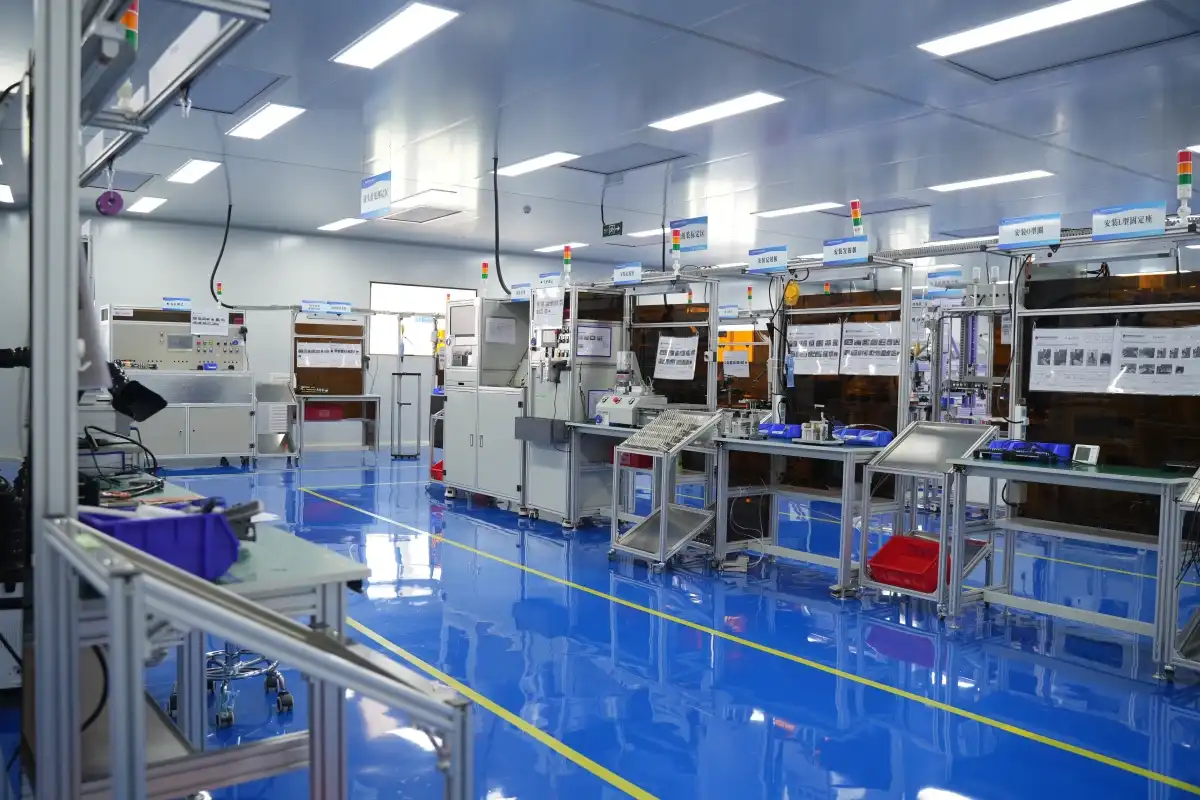
Understanding Ceramic Pressure Sensors and Their Advantages
The basic working principle of piezoresistive Ceramic Pressure Sensors is to measure how resistance changes in the ceramic diaphragm as pressure exerts mechanical force. Unlike traditional metal sensors that rust when they come into contact with harsh media, clay materials stay structurally sound for long periods of time. The 96% Al2O3 ceramic structure has built-in benefits that directly address problems that diesel engine makers and people who put together aftertreatment systems have to deal with.
Why Material Selection Matters for Harsh Environments?
Many things can shorten the life of sensors in industrial settings. Metal sensors break down faster when they are exposed to chemicals from hydraulic fluids, exhaust gases, and process chemicals. When the temperature changes from -40°C to 135°C, the dimensions change, which makes the calibration less stable. The molecular structure of ceramics keeps its stability through changes in temperature and chemical exposure, making them resistant to these external stresses. This means that even when temperatures change a lot, SCR systems that watch urea injection pressure or DPF regeneration processes will always work the same way.
Performance Characteristics That Drive Selection Decisions
Precision in measurements is the key to good process control. Ceramic Pressure Sensors have non-linearity requirements of ≤0.3% full scale. This makes sure that results stay true to real conditions across the whole measurement range. This level of accuracy helps meet China VI and Euro VI emission standards, where accurate pressure input lets the catalyst work at its best. The full accuracy of ≤±0.5% FS meets the strict needs of generator set makers, who count on stable numbers for maintenance plans that look ahead.
Comparing Ceramic Technology Against Alternative Sensing Methods
Metal sensors are cheaper to buy at first, but they need to be replaced often in places where they are likely to rust. Silicon-based sensors are very sensitive, but they break when they are hit by mechanical shocks, which happen a lot in mobile equipment. Piezoelectric devices are great for measuring changes in motion, but they move over time when put under steady loads. Ceramic Pressure Sensors occupy a unique position by combining chemical resistance, mechanical robustness, and long-term stability. This combination works really well for industrial car aftermarket uses, where installation is hard to get to and replacing sensors costs money and takes time away from the vehicle.
Selecting the Right Ceramic Pressure Sensor for Industrial Process Control
To match sensor specs to application needs, you need to carefully look at how the Ceramic Pressure Sensors will be used and how well you expect it to work. The first step in the decision process is to decide on the pressure measurement range. For diesel engines, this range could be anywhere from vacuum conditions in the intake systems to 600 bar in the common rail fuel systems. Temperature range factors take into account both the outside temperature and the heat produced by the process.
Critical Specification Parameters for B2B Procurement
Besides the basic pressure range, the choosing process is guided by a number of scientific factors. The signal strength for processing circuits is set by sensitivity standards that range from 2 to 4 mV/V. Supply voltage ranges from 2 to 30 VDC, so it can work with a wide range of system designs without needing separate power suppliers. Specifications for zero temperature drift below 0.05% FS/°C make sure that measurements are accurate even when temperatures change with the seasons, which can affect outdoor equipment installations. Bridge resistances of about 11 kΩ are the same as those used in normal industrial controller signal filtering circuits.
Application-Specific Considerations for Different Industries
Heavy truck makers look for sensors that can withstand shaking tests and stay calibrated through 500,000-kilometer repair intervals. When construction equipment is used on rough ground, it needs to be able to withstand impacts. Agricultural equipment needs to be protected from getting wet and fertilizer getting on it. When installing a generator set, the monitors need to be able to keep their accuracy over years of constant use, not just hours. Once buying teams understand these complex needs, they can choose tools that will work reliably in all of these situations.
Evaluating Suppliers and Manufacturing Capabilities
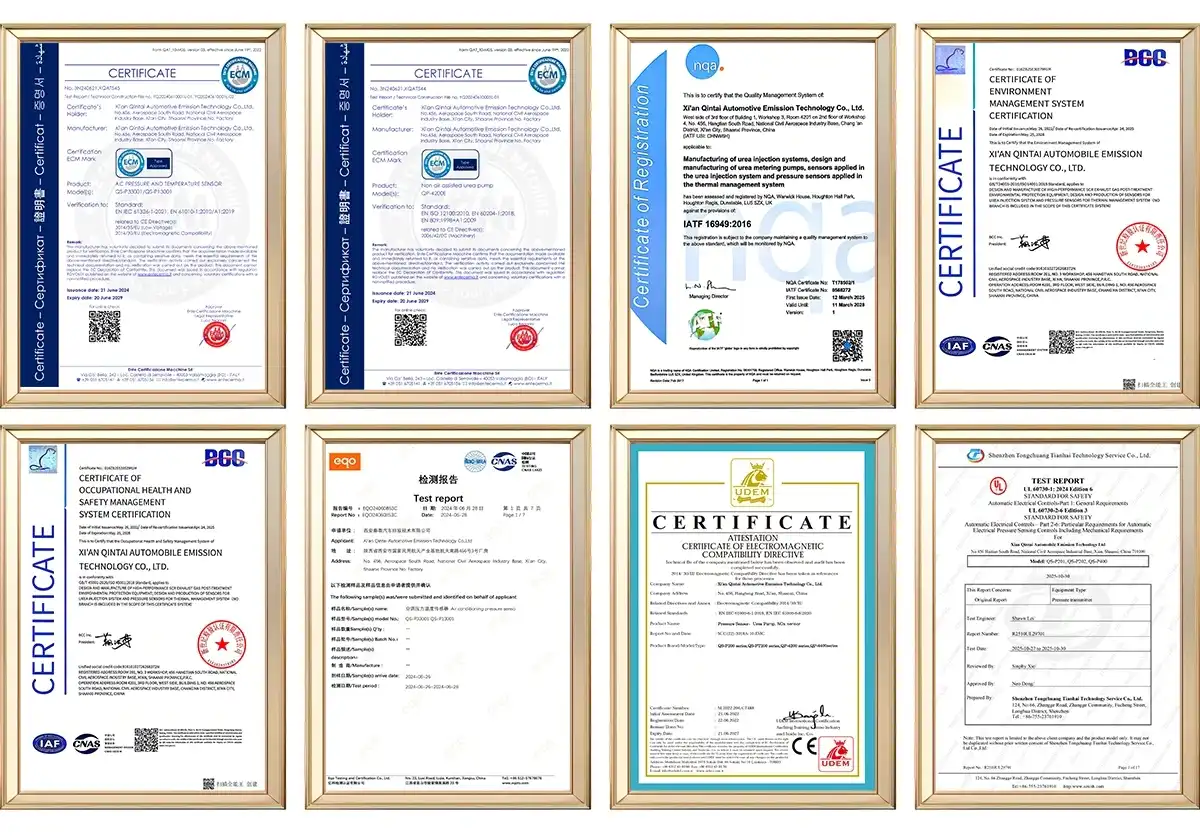
Not only do product specs play a role in choosing a supplier, but so do manufacturing skills and quality systems. Certifications like ISO9001 and IATF16949 show that quality methods for the car industry are being followed. Certifications like CMC, Ex, and UL cover safety needs for installs in dangerous places. Patent files show that there is ongoing research and development (R&D) that helps products get better. OEM relationships with big engine makers like Weichai, Yuchai, and Quanchai prove that the company can make things and keep the standard high on a large scale.

Introducing the Qintai QS-P105 Ceramic Pressure Sensor
The QS-P105 type uses cutting-edge Ceramic Pressure Sensors technology that is perfect for tough industrial uses. This device, which is based on a 96% alumina ceramic sensing element, meets the main needs of diesel engine OEMs and aftertreatment system developers by using material science and precise manufacturing. The design of the sensor comes from 20 years of research and development that was focused on emission control uses in cars.
Technical Foundation and Material Benefits
Alumina ceramic construction gives it great mechanical strength while still keeping the electrical insulation qualities that are needed for precise piezoresistive readings. Chemicals like acidic condensates, alkaline urea solutions, and hydrocarbon fuels that break down metal sensor elements quickly can't damage this material. The corrosion protection makes the working life much longer than with stainless steel alternatives, which means that it doesn't needs to be replaced as often and doesn't cost as much to maintain.
Their small size lets them be installed in places with limited room, which is common for current engine designs. The mounting interface makes installation easier, which cuts down on the time needed for initial setup and future repair events. Different OEM systems need different thread sizes, electrical connections, and pressure port configurations, which can be met by customization choices.
Specification Details and Performance Capabilities
The QS-P105 can measure pressures from vacuum (-1 bar) to 600 bar, so it can be used to check things like fuel injection systems, exhaust systems, intake pipes, and hydraulic circuits. Specifications for sensitivity between 2 and 4 mV/V give strong signal levels that stay true in settings with electrical noise like those found in mobile devices. The non-linearity requirement of ≤0.3% FS makes sure that results are correct across the measurement range, which helps control methods work more accurately.
Temperature compensation keeps the zero output within ±0.2 mV/V at reference conditions. Accuracy is maintained across the working range of -40°C to 135°C with drift standards below 0.05% FS/°C. This thermal stability is very important for emission control systems that have to deal with sudden changes in temperature during cold starts and recovery events. The 200% full-scale overload limit keeps the pressure from rising too high, which can happen during engine transients.
The ability to operate at voltages ranging from 2 to 30 VDC makes it easier to connect to 12V and 24V car electrical systems as well as 24V control lines in factories. The 11 kΩ bridge resistance works with all amplifier input impedances, so you don't need impedance matching networks. The full accuracy of ≤±0.5% FS takes into account the effects of non-linearity, hysteresis, and temperature change, giving a reasonable performance standard for designing the system.
Application Benefits Across Target Industries
When it comes to target market groups, these technology features help with specific pain points. Diesel engine makers get a sensor that stays calibrated during guarantee times, which lowers the number of warranty claims. Integrators of aftertreatment systems can use common interfaces without losing the ability to make changes for unique setups. Aftermarket sellers for commercial vehicles get reliable solutions that don't cost too much so that customers don't have to worry as much. Generator set makers make sure that the monitors they use are durable enough to be used in continuous-duty situations. Each type of customer gets value that fits with their business goals.
Procurement and Supply Chain Insights for Ceramic Pressure Sensors
When choosing where to get Ceramic Pressure Sensors, it's important to think about a lot of things, like unit price, total cost of ownership, supply chain stability, and easy access to expert help. When volume agreements allow for committed technical resources and customized production runs, direct relationships with manufacturers are better than going through distributors.
Strategic Sourcing Approaches for OEM Customers
When OEM customers need large amounts, it's better for them to form strategic partnerships instead of casual buying relationships. Such relationships let people work together to make products, and as engine systems and sensor specs change, so do the products themselves. As part of joint development deals, specific production capacity assignments can be made. This makes sure that supplies don't run out during production ramps. Clear acceptance standards and corrective action processes are set up in quality agreements so that the quality that comes in stays the same.
Minimum order amounts are based on the economics of making and the costs of keeping inventory on hand. Standard setups usually have lower MOQs than personalized versions that need special tools. Framework agreements are negotiated by procurement managers. These agreements set price tiers based on annual volume commitments while still allowing for call-off schedule that fits with production forecasts.
Pricing Factors and Cost Optimization Strategies
Ceramic Pressure Sensors are priced based on more than just the cost of the materials they are made of. Standard thread sizes and electrical connections keep tooling costs low, so the amount of customization has a big effect on unit economy. The pressure range changes the width of the diaphragm and the rate at which it is made. Getting certified adds costs for tests that have to be spread out over a larger amount of output. Logistics costs are affected by the type of packaging used, especially for foreign packages that need export compliance paperwork.
Strategies for lowering costs go beyond negotiating unit prices. Total cost of ownership research takes into account changes in reliability that lower the cost of warranties. Maintenance labor prices go down when repair intervals are longer. Better precision could make the system simpler by getting rid of unnecessary sensors. When looking at the whole span of a product, these bigger picture value factors often make it worth paying more for higher-quality sensors.
Quality Assurance and Supplier Performance Metrics
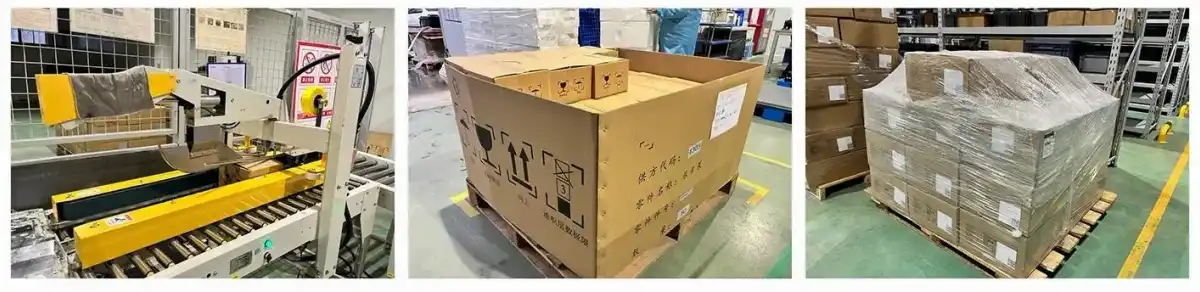
Setting clear quality metrics saves everyone by measuring success in an objective way. Acceptable failure rates are usually given in parts per million in incoming quality goals. Needing a calibration license makes sure that the results can be tracked back to national standards. Specifics for packaging keep things from getting damaged while they're being shipped or stored. On-time delivery rates and lead time uniformity are tracked by delivery performance measures. Regular reviews of a business look at performance trends and find ways to make things better before problems get so bad that they stop production.
Installation, Calibration, and Maintenance of Ceramic Pressure Sensors
The performance potential built into high-quality Ceramic Pressure Sensors is maximized when they are deployed correctly. The installation steps need to cover things like mechanical mounting, closing the pressure port, making electrical connections, and protecting the environment. Each part makes the measurements more accurate and reliable over time.
Installation Best Practices for Optimal Performance
Specifications for mounting torque stop both poor sealing that lets air in and too much stress that hurts the sensor body. Thread sealants should be safe for measured media and should only be used on threads that don't close, so they don't get into the pressure passage. For electrical links to work in settings with shaking, the pins must be inserted deeply enough and the retention clips must be engaged properly. Environmental seals keep water out of connecting backshells, which would stop the electricity from working.
When measuring flexible liquid, where you are physically changes how accurate your measurements are. When sensors are placed above process lines, air bubbles can rise and get away from the diaphragm. Putting sensors on the ground horizontally keeps sand from building up against the diaphragm. Isolating the sensor from sources of heat stops temperature-related mistakes that happen outside of its adjusted range.
Calibration Procedures and Frequency Recommendations
Before the system is put into use, the performance of the sensors is confirmed by an initial calibration check. This method uses known pressures across the test range while keeping track of the electrical outputs. By comparing the results to the manufacturer's specs, any damage that happened during shipping or fitting can be found. Documentation makes standard records that can be used in the future.
Periodic recalibration times depend on how important the application is and how fast the drift is being seen. Applications that depend on emissions may need to be checked once a year to make sure they are still in line with regulations. For tracking purposes that aren't important, the intervals can be pushed back to every two years or based on certain conditions. Interval optimization is based on drift analysis from earlier calibrations. When too much drift shows up, schedules are tightened, and when stability meets standards, intervals are widened.
Maintenance Activities That Extend Sensor Lifespan
Visual checks that are done regularly find problems before they become fails. Corrosion in the connector means it needs to be cleaned or replaced. A pressure port check shows that garbage has built up and needs to be cleaned. Electrical continuity tests make sure that the wiring is solid. Analysis of process data trends shows steady shift, which suggests that the system needs to be re-calibrated.
The ceramic diaphragm must not be damaged during cleaning. Chemical cleaners break down layers, while soft brushes get rid of fine dirt. Chemical attack can be avoided if cleaning products are compatible with wet materials. When you rinse, you get rid of any cleaner residue that could get into other processes. Documentation keeps track of maintenance tasks so that quality system standards are met and problems can be easily fixed.
Future Trends and Innovations in Ceramic Pressure Sensors for Industrial Use
Ceramic Pressure Sensors are always getting better as technology changes, which also opens up new uses for them. Improvements in material science lead to pottery with better qualities. New ideas in manufacturing cut prices and made things more consistent. Integration technologies make it possible for better sensors to have processing built in.
Materials Development and Performance Enhancement
Researchers who study ceramic compositions look into how to make recipes that best suit certain traits. A higher alumina percentage makes it more resistant to chemicals in harsh settings. Doping techniques change the electrical properties of materials to make them more sensitive. Controlling the microstructure through improved sintering methods makes the material stronger. Because of these improvements, the next wave of devices will be able to work in larger areas and be more reliable.
Digital Integration and Smart Sensor Capabilities
With embedded microprocessors, sensors can do more than just send analog signals. They can also use digital communication methods. CAN bus connections make connecting to car networks easier. Industrial automation devices can link to IO-Link. For retrofit uses, wireless methods get rid of the need for wires. With local processing, sensors can diagnose themselves, report their health state, and account for external factors that were not taken into account when they were factory calibrated.
Sustainability Considerations and Market Evolution
People who care about the environment want monitors that last longer and don't need to be replaced as often, which cuts down on waste. Energy-efficient designs keep battery-powered devices from using too much power. Circular economy ideas are supported by materials that can be recycled and less packing. As sustainability joins standard technical and economic factors as a factor in purchasing decisions, manufacturers who respond to these goals will strengthen their market positions.
Conclusion
Choosing high-accuracy Ceramic Pressure Sensors is a smart choice that will affect the performance of the system, compliance with regulations, and running costs over the lifespan of the product. Ceramic Pressure Sensors have strong benefits because they are better at resisting chemicals, staying stable at high temperatures, and being strong mechanically. They can handle the tough needs of diesel engine systems, aftertreatment uses, and industrial process control. For B2B users who need accurate measurements in tough conditions, the QS-P105 is a great example of how modern ceramic technology can turn material science into useful solutions. When choosing providers, smart tactics look at more than just the products they offer. They also look at how well they can make the products, their quality control systems, and their willingness to work with the company. When companies take the time to do thorough selection processes and follow the right rollout practices, their systems work better, have more uptime, and cost less to maintain.
FAQ
How do ceramic pressure sensors compare to metal sensors for corrosive applications?
In places that are prone to corrosion, Ceramic Pressure Sensors work much better than metal ones. Acids, bases, and organic molecules can't damage the 96% alumina ceramic construction as quickly as they can damage stainless steel and other metal diaphragms. Ceramic Pressure Sensors have been used in the field and have been shown to stay calibrated for years, while metal sensors fail within months. This longer service life cuts down on the number of replacements needed and the costs of downtime.
What pressure ranges can ceramic sensors accurately measure?
Depending on the shape of the diaphragm, ceramic sensing technology can work with pressures ranging from zero to 600 bar. Low-pressure versions measure the vacuum in the intake pipe at about -1 bar. In some designs, high-pressure setups can handle common rail fuel systems up to 2,000 bar. The QS-P105 works with pressures from -1 bar to 600 bar, meeting most of the needs of diesel engines and hydraulic systems.
How often do ceramic pressure sensors require recalibration?
Recalibration times rely on how important the service is and how stable it is seen to be. Applications that depend on emissions usually check the accuracy once a year to stay in line with regulations. In industrial tracking uses, intervals are often pushed back to 24 months after steadiness has been shown. Ceramic materials are naturally stable, so there isn't much drift. This means that correction times can be longer than with other sensing technologies.
Partner with Qintai for Advanced Ceramic Pressure Sensor Solutions
Qintai has worked with customers for more than 20 years and is an expert in Ceramic Pressure Sensors technology and controlling emissions in cars. As the main provider of Ceramic Pressure Sensors to China's top engine makers, such as Weichai, Yuchai, and Quanchai, we know the exact standards that need to be met for long-term stability and emission compliance. Our QS-P105 ceramic pressure sensor shows this skill by working well in millions of uses around the world.
We help diesel engine OEMs, aftertreatment system integrators, and equipment makers with a wide range of services, from helping them come up with initial specifications to supplying them with products and providing expert support after the sale. Customization options let you choose fastening needs, pressure ranges, and electrical connections that are perfect for your purpose. Our manufacturing methods are IATF16949-certified, which means that the quality is always the same, no matter how many units are made, from prototypes to millions of units every year.
Technical teams are ready to talk about your unique needs and suggest the best ways to meet them. We offer quick service that fits your development schedule, whether you need samples for proof testing, engineering help for integration, or price for mass production. Get in touch with us at info@qt-sensor.com to talk about how Qintai Ceramic Pressure Sensors can help your system work better and give you an edge over your competitors.
References
1. Webster, J.G. (2018). The Measurement, Instrumentation, and Sensors Handbook: Spatial, Mechanical, Thermal, and Radiation Measurement. CRC Press.
2. Bao, M. (2020). Analysis and Design Principles of MEMS Devices. Elsevier Science.
3. Tian, B., Zhao, Y., Jiang, Z., Zhang, L., & Liao, N. (2017). "The Design and Analysis of Beam-Membrane Structure Sensors for Micro-Pressure Measurement." Review of Scientific Instruments, 88(5), 055001.
4. Fraden, J. (2016). Handbook of Modern Sensors: Physics, Designs, and Applications. Springer International Publishing.
5. Norton, H.N. (2019). Sensor and Analyzer Handbook. Prentice Hall.
6. Wilson, J.S. (2021). Sensor Technology Handbook. Newnes Press.

Our customers’ satisfaction speaks for our quality — contact us to experience the same reliable service.