- English
- French
- German
- Portuguese
- Spanish
- Russian
- Japanese
- Korean
- Arabic
- Greek
- German
- Turkish
- Italian
- Danish
- Romanian
- Indonesian
- Czech
- Afrikaans
- Swedish
- Polish
- Basque
- Catalan
- Esperanto
- Hindi
- Lao
- Albanian
- Amharic
- Armenian
- Azerbaijani
- Belarusian
- Bengali
- Bosnian
- Bulgarian
- Cebuano
- Chichewa
- Corsican
- Croatian
- Dutch
- Estonian
- Filipino
- Finnish
- Frisian
- Galician
- Georgian
- Gujarati
- Haitian
- Hausa
- Hawaiian
- Hebrew
- Hmong
- Hungarian
- Icelandic
- Igbo
- Javanese
- Kannada
- Kazakh
- Khmer
- Kurdish
- Kyrgyz
- Latin
- Latvian
- Lithuanian
- Luxembou..
- Macedonian
- Malagasy
- Malay
- Malayalam
- Maltese
- Maori
- Marathi
- Mongolian
- Burmese
- Nepali
- Norwegian
- Pashto
- Persian
- Punjabi
- Serbian
- Sesotho
- Sinhala
- Slovak
- Slovenian
- Somali
- Samoan
- Scots Gaelic
- Shona
- Sindhi
- Sundanese
- Swahili
- Tajik
- Tamil
- Telugu
- Thai
- Ukrainian
- Urdu
- Uzbek
- Vietnamese
- Welsh
- Xhosa
- Yiddish
- Yoruba
- Zulu
Why Pressure Sensor Accuracy Is Important for Automation
Pressure sensor accuracy sits at the foundation of every dependable automation system. When a sensor delivers a reading that is even slightly off, the entire control loop—fuel injection timing, exhaust backpressure management, filter regeneration cycles—can drift out of specification. In diesel engine aftertreatment, SCR and DPF systems depend on pressure data to meet China VI and Euro VI emission standards.
A single percentage point of measurement error can trigger false regeneration events, waste reagent, and push emissions above legal limits. Getting accuracy right is not optional; it determines whether your production line ships compliant engines or faces costly rework.
Understanding Pressure Sensor Accuracy in Automation
Core Accuracy Parameters You Must Know
In real life, there are three things that affect how accurate a monitor is. It is possible to find out how linear a sensor's output is by seeing how closely it tracks a straight line over its whole pressure range. It is the change in output when the set point for pressure goes up and down.
The word "repeatability" tells you how often the monitor gives you the same number when things are the same. When you put these three things together, they show you if you can trust a measurement system after thousands of uses. Before approving a plan for mass production, every R&D expert who is choosing devices must make sure of this.
Accuracy vs. Precision: A Practical Distinction
A lot of the time, these two words are used to mean different things. If a sensor always gives the same reading, then it is precise. If that reading is close to the real value, then it is accurate. A monitor that is very accurate but not always right can make the control unit always pick the wrong option.
In automatic gasoline pollution systems, both of these things are very important. Buyers should not just rely on one "accuracy" number on a datasheet. Instead, they should ask for full error budgets that include data on temperature correction, linearity, and hysteresis.
Factors That Affect Measurement Reliability
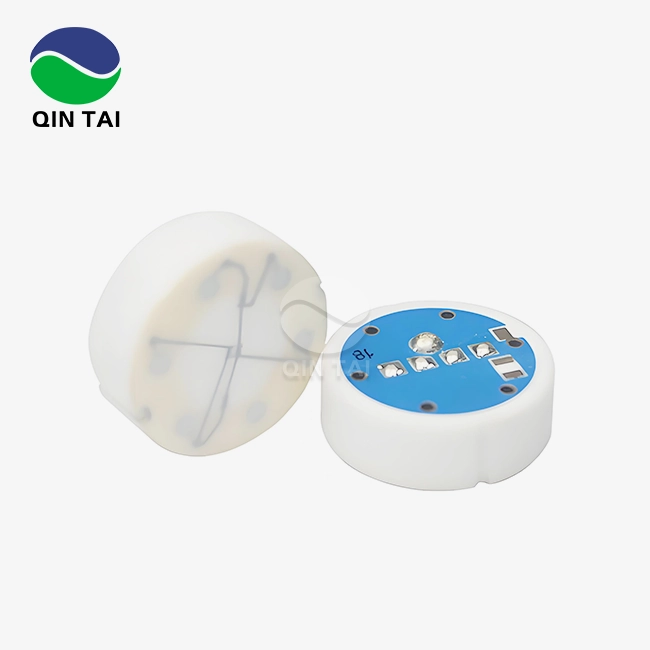
When accuracy is lost, weather changes are the main cause. To find out how much pressure there is, these tools check how the electrical capacitance (C = ₀±A/d) changes between two metal plates. One good thing about them is that they don't change as much when the temperature does, so they are good for use inside.
Not only the type of sensor but also how well it is installed is important. Low signal noise can be achieved with vibration mounts, proper ports, and clean electrical lines. Long-term drift is kept within accepted ranges by calibrating against a baseline that can be tracked.
The Role of Pressure Sensor Accuracy in Industrial Automation
Impact on Process Control and Product Quality
Systems in cars, chemicals, and HVAC can keep setpoints tight if they have correct differential pressure data. The DPF differential pressure sensor checks the fuel aftertreatment for soot in real time. If the number is off by more than 5%, the ECU starts the regeneration process early.
The filter doesn't last as long and more gas is used. When it says "low," soot builds up more than what is safe. According to the International Society of Automation, measurement errors cause up to 30% of unplanned downtime in manufacturing settings.
Safety and Compliance Risks from Inaccurate Readings
Heading 3: Wrong information about pressure leads directly to regulatory risk. During type approval tests, a Euro VI engine that even slightly exceeds the NOx standards will not be allowed to be used. If you run a generator set in a mine with an intake manifold pressure monitor that isn't set up right, the generator could use too much fuel, which makes the exhaust hotter and increases the risk of a fire. It's not possible for these things to happen; OEM quality teams test for them during engine validation programs.
Financial Cost of Measurement Error
If the line that makes big trucks suddenly stops, it can cost tens of thousands of dollars an hour. It does more harm than just cost money to fix when the problem is a pressure transmitter that doesn't work right. It also hurts the brand's reputation and makes warranty claims more expensive. If you choose suppliers who offer accurate data on paper, calibration certificates, and long-term consistency across production batches, you can avoid these costs.

Comparing Pressure Sensor Types: Accuracy and Suitability for Automation
Analog vs. Digital Sensors in Automated Systems
Most of the time, an analog sensor sends out a regular pulse of 0–5 V or 4–20 mA. They are easy to connect to control hardware that is already in place, but long wire runs can cause electrical noise. Digital sensors that use standards like SPI or I²C change analog signals to digital ones on the part that detects them.
This cuts down on the noise that they pick up. Diesel engine ECUs that work near fuel injectors and alternators often have digital output that is more accurate than a better analog sensor that is installed in the same wiring harness. This is because digital output is less affected by electromagnetic interference.
Piezoelectric, Strain Gauge, and Capacitive Technologies Compared
Each sensor system is accurate to a different degree. To track burning with small bursts of pressure, piezoelectric devices are great because they make a charge when the dynamic pressure changes. A resistance part is linked to a diaphragm by strain gage sensors. When the diaphragm bends, the resistance changes, and the sensors can accurately read a wide range of pressures.
Capacitive versions of pressure sensor perform better in suppressing temperature drift compared with piezoresistive types, and deliver fast response for low-pressure applications. First, pick the right technology for the pressure range, temperature range, and signal chain. This will help you obtain measurement readings that meet the requirements.
Wired vs. Wireless Sensing for Industrial Reliability
Tracking DPF backpressure and SCR reagent line pressure is still the safest way to do work that needs to be done in places that shake a lot. Wired sensors are the best way to do these jobs. Their latency is always the same, and they don't mess up radio waves.
It's not always possible to run signal cables to faraway mine sites to check on generator sets, so wireless pressure nodes are becoming more popular. Make sure that the update rate and control loop cycle time are the same when you are looking at wireless options. Slow wireless updates can hide pressure changes that only last a short time.
Ensuring and Maintaining Pressure Sensor Accuracy in Procurement and Use
Calibration Best Practices and Scheduling
Follow the steps in ASME B40.100 or the maker of the sensor for calibration. Use a deadweight tester or reference measure that is at least four times as accurate as the thing being tested. No less than once a year, monitors used in emission-controlled engines should be made true.
Testing might need to be done more often in places where temperatures change a lot, like in a factory. Calibration records should be kept and linked to each sensor's unique serial number so that they can be used as proof during reviews of emission compliance.
Selecting a Qualified Pressure Sensor Manufacturer
A lot of buying managers look for these things in a pressure sensor supplier:
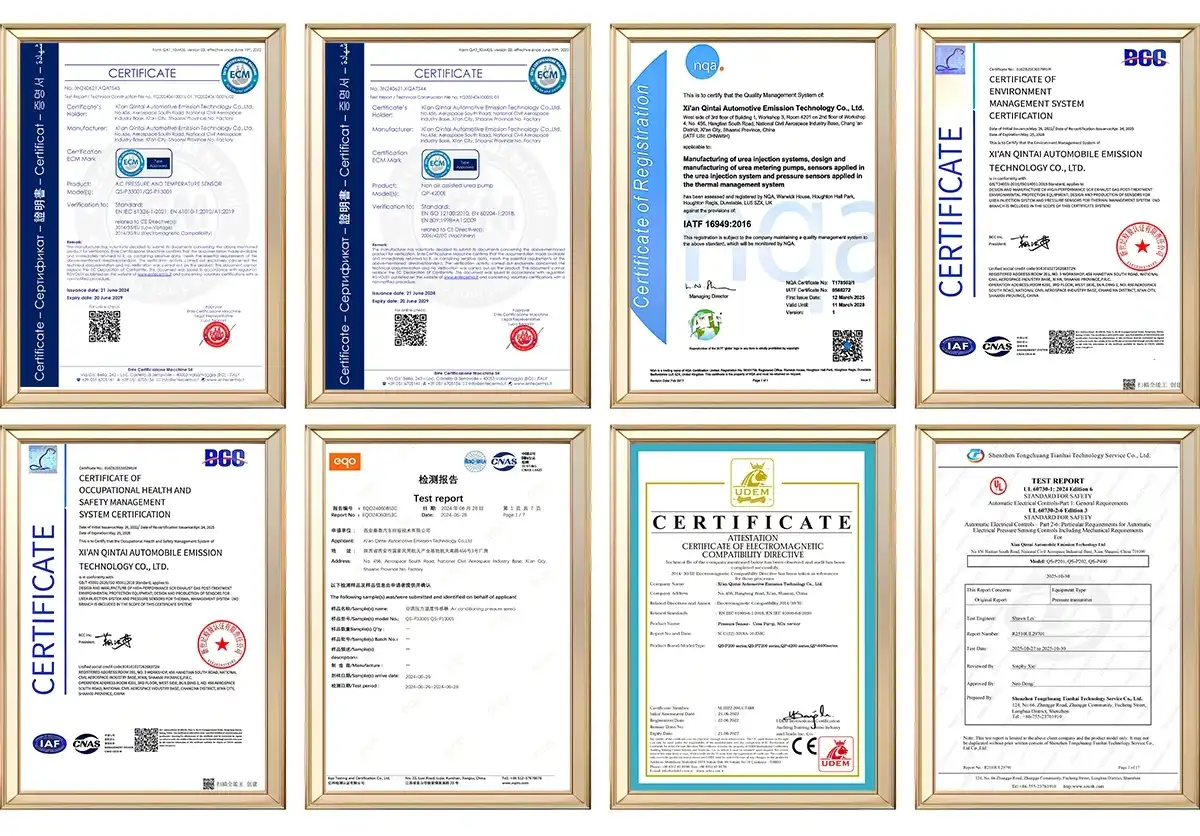
- Certification coverage: Look for ISO 9001, IATF 16949 (automotive quality management), and application-specific marks such as CE, UL, or ATEX/Ex for hazardous locations.
- Technical documentation: A reputable pressure sensor manufacturer provides full error budgets, environmental test reports, and batch-level consistency data—not just a headline accuracy figure.
- Mass production track record: Verify that the supplier has demonstrated stable volume output. Production consistency across thousands of units matters as much as single-sample performance.
- After-sales and customization support: OEM and ODM capability, fast replacement parts availability, and responsive technical support reduce total cost of ownership over a product's service life.
There should be more than just a headline accuracy number. There should be full error budgets, environmental test reports, and batch-level consistency data from a reputable pressure sensor manufacturer.
Troubleshooting Common Accuracy Problems in the Field
As diesel engine OEMs follow these rules, the process of type approval goes more smoothly and the number of guaranty claims goes down.
Future Trends in Pressure Measurement for Automation
Smart Sensors and On-Board Signal Conditioning
A lot of new pressure sensors are made with temperature adjustment and signal conditioning built right into the housing. This change cuts down on the number of outside parts that control modules need and brings error correction closer to the point of measurement. There is no need to add more work to make the method more effective.
IoT Connectivity and Real-Time Monitoring
Through IoT-connected pressure nodes, fleet managers can check on the SCR chemical pressure and DPF loading in a huge number of cars from a single screen. This way, you can do regular repair instead of fixing things on the side of the road when they break down. McKinsey & Company's 2022 manufacturing study says that predictive maintenance programs cut down on machine downtime by 10–25%.
AI-Assisted Calibration and Drift Compensation
It is possible for machine learning models that were trained on old sensor data to find calibration drift before plans with set intervals. There are already software changes on some systems for industrial sensors that let you use learned compensation factors without having to re-calibrate the sensor itself. This makes it cheaper to service large groups of generators at power plants that are far away.
Conclusion
The accuracy of the pressure sensor has a direct effect on the performance, compliance, and cost goals of an automatic system. As you keep an eye on the SCR chemical line and check the amount of soot in the DPF, every decision in a diesel engine's aftertreatment system is based on accurate pressure data.
Regulatory risk and long-term operating costs are lower when you choose sensors that have been calibrated before, have the right certifications, and have been mass-produced before. When IoT connections and smarter electronics on board get better, there will be a bigger gap between simple and high-accuracy sensing options. This means it's smart to buy things early on when it comes to measurement quality.
FAQ
How often should I calibrate an industrial pressure sensor?
Annual calibration is the standard minimum for emission-regulated engine applications. Environments with wide temperature swings or high vibration may require semi-annual checks. Always follow ASME B40.100 or the manufacturer's published schedule and retain records for audit purposes.
What is the accuracy difference between piezoelectric and strain gauge sensors?
Piezoelectric sensors excel at dynamic, high-frequency pressure events but show charge leakage over time, which limits static measurement accuracy. Strain gauge sensors deliver stable, low-drift readings across a wide static and dynamic range, making them the more common choice for general industrial automation and diesel engine management.
Do digital pressure sensors eliminate electrical signal noise?
Digital sensors perform analog-to-digital conversion at the sensing element, which substantially reduces noise pickup along cable runs. They do not eliminate all sources of error—power supply ripple and EMI can still affect output—but they outperform analog sensors in high-EMI environments typical of diesel engine bays and industrial control panels.
What certifications should I require from a pressure sensor supplier?
At minimum, request ISO 9001 and IATF 16949 for automotive-grade quality. For hazardous locations such as mines or power plants, ATEX/Ex certification is mandatory. CE and UL marks are standard for equipment sold into European and North American markets respectively.
Partner with Qintai for High-Accuracy Pressure Sensors
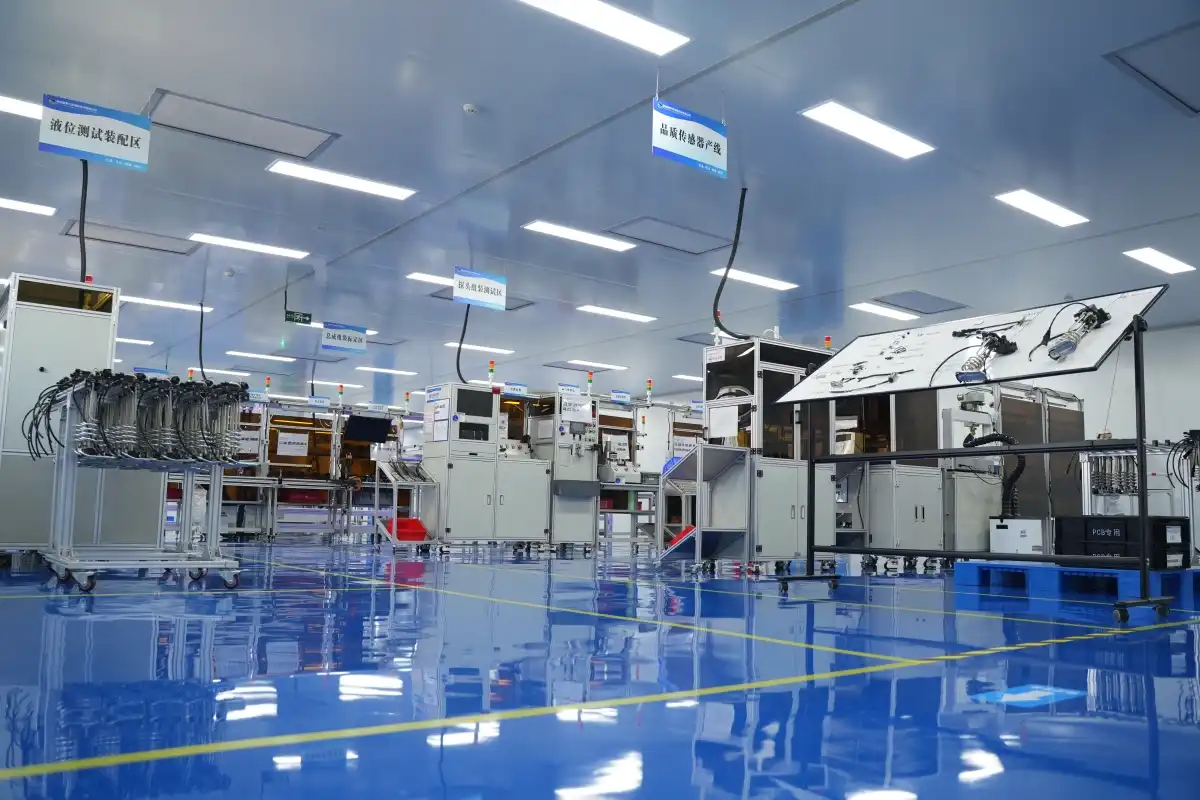
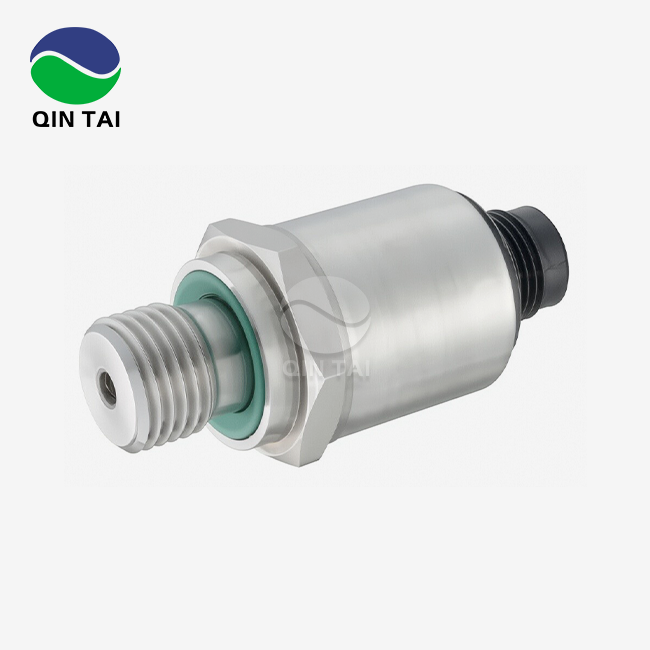
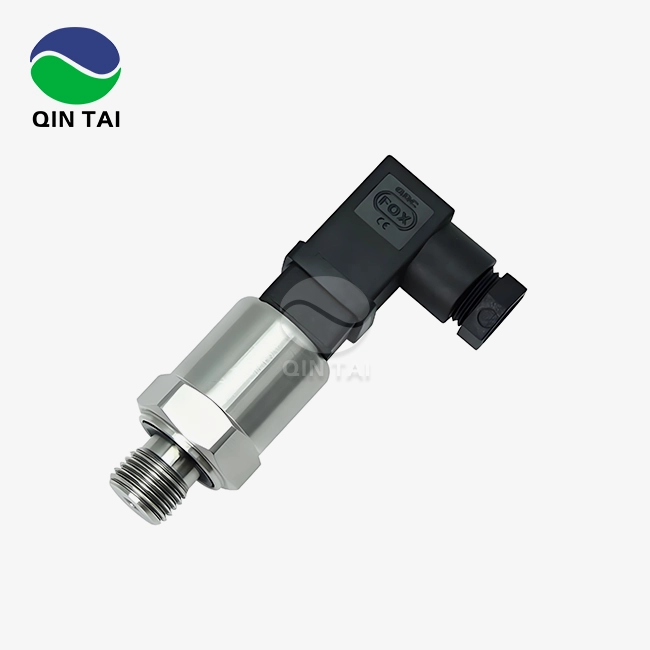
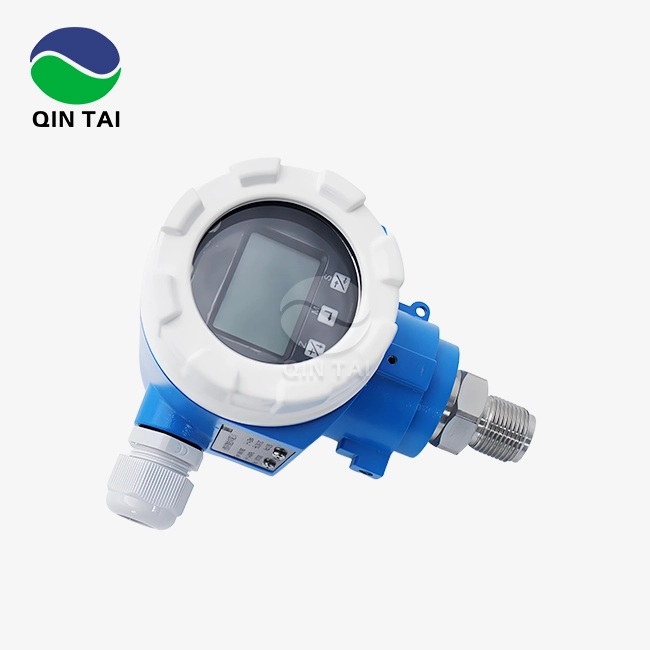
Xi'an Qintai Automotive Emission Technology Co., Ltd. has been a diesel engine OEM and SCR/DPF programr provider since 2001. ISO 9001, IATF 16949, CE, UL, and Ex seals are on all of its sensor products. Weichai Power, Yuchai Power, and Quanchai Power all buy their pressure sensors from Qintai more than any other company in China. Their OEM/ODM customization options are great, and they can make a lot of sensors. They also have great technical support. To get datasheets and start talking about your next buying cycle, go to qt-sensor.com or email our team at info@qt-sensor.com.
References
1. American Society of Mechanical Engineers (ASME). ASME B40.100: Pressure Gauges and Gauge Attachments. ASME, 2013.
2. International Society of Automation (ISA). ISA-7.0.01: Quality Standard for Instrument Air. ISA, 2019.
3. McKinsey & Company. Predictive Maintenance and the Future of Manufacturing Operations. McKinsey Global Institute, 2022.
4. National Institute of Standards and Technology (NIST). Guidelines for Evaluating and Expressing the Uncertainty of NIST Measurement Results. NIST Technical Note 1297, 1994.
5. Fraden, Jacob. Handbook of Modern Sensors: Physics, Designs, and Applications. Springer, 2016.
6. Bently, John P. Principles of Measurement Systems. 4th ed., Pearson Education, 2004.

Our customers’ satisfaction speaks for our quality — contact us to experience the same reliable service.