- English
- French
- German
- Portuguese
- Spanish
- Russian
- Japanese
- Korean
- Arabic
- Greek
- German
- Turkish
- Italian
- Danish
- Romanian
- Indonesian
- Czech
- Afrikaans
- Swedish
- Polish
- Basque
- Catalan
- Esperanto
- Hindi
- Lao
- Albanian
- Amharic
- Armenian
- Azerbaijani
- Belarusian
- Bengali
- Bosnian
- Bulgarian
- Cebuano
- Chichewa
- Corsican
- Croatian
- Dutch
- Estonian
- Filipino
- Finnish
- Frisian
- Galician
- Georgian
- Gujarati
- Haitian
- Hausa
- Hawaiian
- Hebrew
- Hmong
- Hungarian
- Icelandic
- Igbo
- Javanese
- Kannada
- Kazakh
- Khmer
- Kurdish
- Kyrgyz
- Latin
- Latvian
- Lithuanian
- Luxembou..
- Macedonian
- Malagasy
- Malay
- Malayalam
- Maltese
- Maori
- Marathi
- Mongolian
- Burmese
- Nepali
- Norwegian
- Pashto
- Persian
- Punjabi
- Serbian
- Sesotho
- Sinhala
- Slovak
- Slovenian
- Somali
- Samoan
- Scots Gaelic
- Shona
- Sindhi
- Sundanese
- Swahili
- Tajik
- Tamil
- Telugu
- Thai
- Ukrainian
- Urdu
- Uzbek
- Vietnamese
- Welsh
- Xhosa
- Yiddish
- Yoruba
- Zulu
Why QS-PT225 Is Ideal for Refrigerant Monitoring Applications
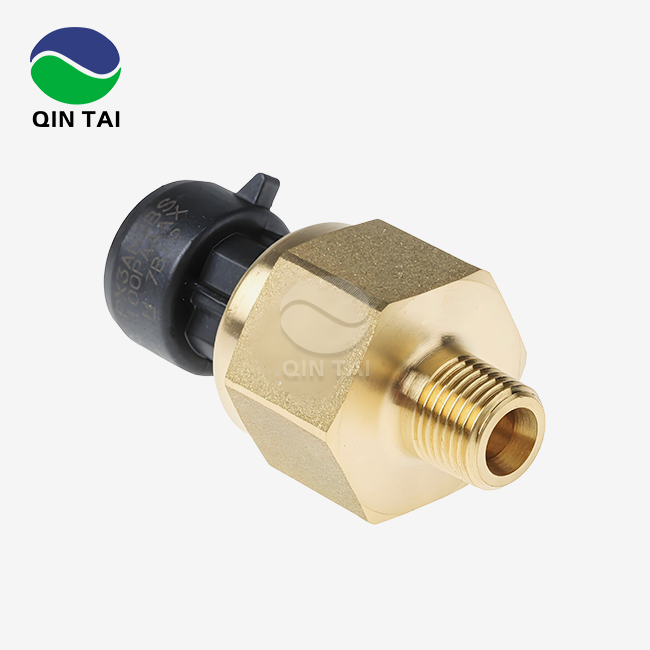
Safe and efficient HVAC and industrial refrigeration operations depend on refrigerant monitoring. Dual-parameter measurement in one small instrument makes the QS-PT225 Pressure and Temperature transmitter ideal for refrigerant settings. The ceramic sensor-based system provides ±1.0% full-scale accuracy for pressure and temperature readings, avoiding correlation errors from separate sensor installations. 304 stainless steel structure and compatibility with POE oils and different refrigerants allow the QS-PT225 to withstand harsh chemical exposure in cooling systems while retaining measurement precision throughout wide temperature ranges.
Introduction
Maintaining HVAC and industrial refrigeration system performance, safety, and compliance requires refrigerant monitoring. Precision pressure and temperature measurement improves efficiency and eliminates costly downtime or catastrophic equipment breakdowns. Choosing a refrigerant-specific transmitter provides dependability, accuracy, and cost-effectiveness throughout equipment lifespan. The QS-PT225 is a purpose-built solution with industry-grade precision and durable engineering. This transmitter uses sophisticated ceramic pressure sensing technology and accuracy NTC thermistor temperature measurement to fulfill strict requirements in large-scale refrigeration applications. This tutorial explains why the QS-PT225 is the best monitoring solution for B2B procurement executives seeking demonstrable ROI.
Understanding Refrigerant Monitoring Challenges in Industry
Industrial refrigerant systems have distinct measuring issues compared to ordinary fluid monitoring. Sensor durability and accuracy are affected by humidity, chemical exposure, mechanical vibrations, and high temperature variations. These criteria are crucial for system safety and efficiency.
Environmental Stressors on Measurement Equipment
Refrigerator chemicals increase corrosion and destroy sensor materials. Environmental constraints cause generic transmitters to fail, causing sensor drift and calibration issues. Installation faults make maintenance harder and more expensive. Lubricating lubricants, refrigerant fumes, and temperature cycling reduce industrial sensor lifespans.
The Cost of Measurement Inaccuracy
Incorrect pressure and temperature measurements waste energy, reduce cooling efficiency, and prematurely damage compressors. Correlation errors affect superheat estimates when sensors detect these values at various places. This measurement gap might cause liquid refrigerant to enter the compressor or inadequate cooling. Enhanced durability, accurate calibration, and quick refrigerant dynamic response are provided by specialized transmitters.
System Integration Complexity
Building management systems and SCADA platforms must integrate with modern refrigeration systems. Understanding these industry-specific challenges emphasizes the need for customized monitoring equipment that simplifies installation and improves measurement reliability.

Core Features of the QS-PT225 Pressure and Temperature Transmitter
Modern ceramic sensor and NTC thermistor technologies provide precise pressure detection and temperature measurement in the QS-PT225 Pressure and Temperature transmitter. This integration provides accurate analog voltage output signals for industrial refrigeration applications.
Dual-Parameter Measurement Architecture
Both metrics are combined into a small container, minimizing system complexity. Ceramic pressure sensors offer ±1.0% full-scale accuracy from 0-5 Bar to 0-40 Bar, whereas NTC thermistors offer ±1.0% full-scale temperature precision. This integrated solution eliminates sensor timing differences by synchronizing data collecting. The 0.5V to 4.5V DC output signal transmits cleanly and resists industrial electrical noise. The transmitter protects against common electrical failures with 4.75-5.25 VDC power supply, reverse polarity protection, and 32V DC overvoltage protection.
Environmental Resilience
The transmitter's probe and enclosure are made of 304 stainless steel to endure harsh refrigerant conditions. When exposed to refrigerants, POE oils, and other pressure media, this material resists corrosion. Chemical protection and mechanical endurance are added by PPE+PAGF30 connectors. From low-temperature freezer systems to high-ambient commercial cooling solutions, the operating temperature range is -40°C to 130°C. Storage temperatures range from -50°C to 135°C, protecting devices during transportation and off-season storage.
Installation and Maintenance Advantages
The easy-to-use architecture accommodates multiple system configurations with G1/4, M12x1.5, and M10x1 process connectors. A mounting torque of 10-20 N·m is recommended for effective sealing without thread damage. The TE 1-967640-1 electrical connector is dependable and ingress-protected. Maintenance reduction features from strong ceramic sensor technology and superior building materials ensure long-term cost savings and operational consistency. The device can sustain 1.5-2 times the specified range and 10 MPa burst pressure, offering significant pressure transient safety margins.

Comparing QS-PT225 with Other Market Solutions
Installation and data synchronization are easier with the QS-PT225's all-in-one dual-parameter monitoring transmitter than with separate transmitters. This comparison contrasts the gadget with market alternatives.
Integrated vs. Separate Sensor Systems
Separate pressure and temperature sensors need two installation places, double wiring complexity, and separate calibration. By integrating both functionalities in one probe, the Pressure and Temperature transmitter QS-PT225 removes these inefficiencies. This unification decreases installation labor costs by 40-50% over dual-sensor setups and reduces failure spots. When both parameters are from the same place, measurement correlation improves greatly. Superheat calculations need exact pressure-temperature relationships, but sensor separation creates inaccuracies that lower system control accuracy. The integrated design gives great reading correlation.
Competitive Positioning Analysis
The QS-PT225 offers affordable cost without compromising accuracy or durability compared to Rosemount, Yokogawa, and Honeywell. Premium models may provide HART communication protocols or digital displays, but many refrigeration applications simply need essential measuring tasks that the QS-PT225 provides. Ceramic sensors are as accurate and stable as more expensive ones. At cheaper cost, 304 stainless steel offers comparable corrosion resistance to rival materials.
Total Cost of Ownership
Cost-benefit analysis by procurement managers must evaluate purchase price, installation costs, maintenance, and lifetime costs. The QS-PT225 is valuable in all these ways. Project economics increase with lower starting costs and installation complexity. Durable and integrated, the gadget saves replacement frequency and maintenance time. The QS-PT225 is ideal for multi-installation scalable deployments due to bulk purchase and customisation. Pressure range modification helps refrigeration equipment fleet managers use a single transmitter type for different application needs.
Practical Applications of QS-PT225 in Refrigerant Monitoring
Through precise dual-parameter monitoring, the QS-PT225 improves performance in many refrigeration applications.
HVAC System Optimization
The transmitter continually monitors refrigerant pressure and temperature at compressor discharge, evaporator outlet, and condenser intake in commercial HVAC installations. This real-time data optimizes cooling cycles and preventative maintenance to improve equipment life and save energy. The QS-PT225 excels in superheat management. Device provides exact superheat computation for expansion valve control by synchronizing pressure and temperature data at the evaporator outlet. Maintaining proper superheat levels increases cooling and prevents compressor liquid slugging.
Industrial Refrigeration Performance
Large-scale industrial refrigeration systems for cold storage, food processing, and chemical manufacture require comprehensive monitoring. Its chemical compatibility with industrial refrigerants including ammonia, CO2, and synthetic blends and wide operating temperature range make the QS-PT225 appropriate for these demanding applications. Early identification of refrigerant charge problems, heat exchanger fouling, and component deterioration improves system uptime. Trending pressure and temperature data allows periodic maintenance rather than emergency repairs by detecting issues before they fail.
Control System Integration
The Pressure and Temperature transmitter integrates easily into existing control infrastructures since it works with PLCs and SCADA systems. Standard controller inputs can directly connect to the 0.5-4.5V DC analog output without signal processing. Multiple transmitters can be powered by one control system power supply with 15mA maximum power consumption. Modern industrial environments require operational control and data accessibility, which this flexibility improves. Centralized remote monitoring of dispersed refrigeration equipment reduces site trips and speeds up system anomaly reaction.
How to Select and Procure QS-PT225 for Your Refrigerant Systems?
Selecting the right transmitter configuration requires analyzing various application-specific parameters for maximum performance and regulatory compliance.
Application Requirements Assessment
Establishing maximum and minimum working temperatures, pressure ranges, and refrigerant types begins environmental exposure evaluation. The QS-PT225's configurable pressure ranges suit low-pressure refrigeration and high-pressure industrial cooling systems. Securing refrigerant compatibility maintains sensor stability and accuracy. Application accuracy requirements vary. The ±1.0% full-scale standard is suitable for most refrigeration monitoring needs, ensuring precise system management and safety monitoring. A total error band of ±3% covers sensor performance impacts due to thermal effects across all temperatures. Available space, process connection needs, and electrical connectivity affect model selection. Equipment rooms and machinery compartments have limited space, thus the compact integrated design helps. Various threads suit system pipe specifications.
Procurement Process and Customization
Potential clients can contact Qintai via numerous channels to explore application needs. Technical guidance from the company's engineering staff matches transmitter specs with system demands. For companies with many refrigeration installations, bulk purchase reductions enable fleet-wide uniformity cost-effective. Beyond pressure range selection, product customization includes process connections, cable lengths, and output signal layouts. Flexibility offers best fit for unique refrigerant system designs and retrofit applications with space or connection restrictions.
After-Sales Support and Service
Comprehensive warranty coverage safeguards procurement expenditures and shows manufacturer product reliability. Technical support is offered for installation, troubleshooting, and application optimization throughout the product lifespan. Calibration services maintain measurement accuracy and system safety during long service durations. Procurement managers can trust their investments and performance with this entire support system.
Conclusion
The QS-PT225 Pressure and Temperature transmitter's integrated dual-parameter design, industrial-grade build, and cheap pricing make it ideal for refrigerant monitoring. The ceramic sensor and NTC thermistor combo offer ±1.0% accuracy in readings and can survive severe refrigerant conditions at various temperatures. Procurement managers benefit from easier installation, less maintenance, and better measurement correlation than individual sensor systems. Compatible with numerous refrigerants, variable pressure ranges, and flexible connecting choices, the device is appropriate for HVAC, industrial refrigeration, and specialty cooling applications across multiple sectors.
FAQ
Q1: How does the QS-PT225 differ from standard industrial transmitters?
A: The QS-PT225's 304 stainless steel construction resists refrigerant and oil exposure, combined pressure and temperature measurement in one probe location for perfect data correlation, and wide operating temperature range cover typical refrigeration conditions. Many industrial transmitters lack refrigerant compatibility and dual-parameter functionality.
Q2: Can the QS-PT225 integrate with wireless monitoring systems?
A: A wireless data collecting module or controller is needed to integrate the QS-PT225's analog voltage output with wireless monitoring. Integration is made easier by low power consumption and uniform signal format. Retrofit applications where new wiring is difficult are simplified by the device's small size and single-point installation.
Q3: What calibration and maintenance intervals are recommended?
A: Though ceramic sensor technology is stable, important applications require annual calibration verification to maintain measurement accuracy. Normal system maintenance should include visual check of electrical connections and process threads. The durable structure reduces maintenance compared to strain gauge or other pressure-sensing devices more subject to drift and environmental deterioration.
Partner with Qintai for Superior Refrigerant Monitoring Solutions
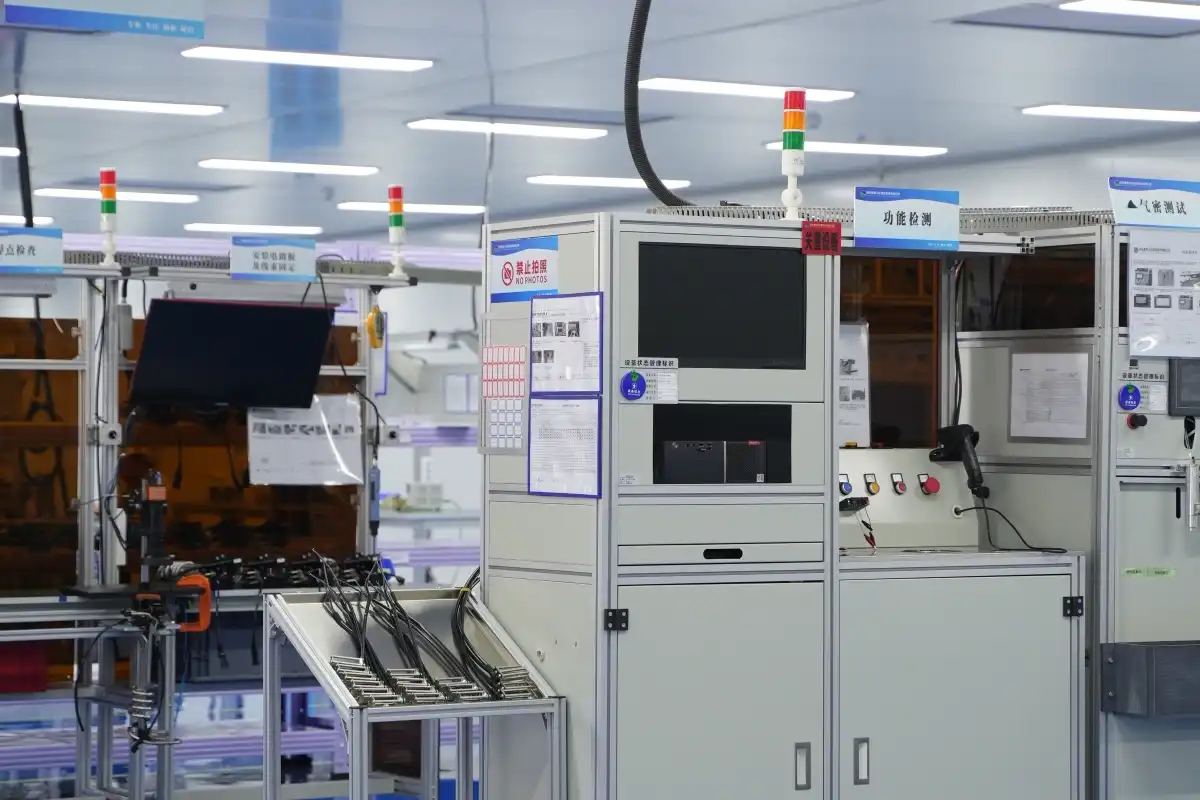
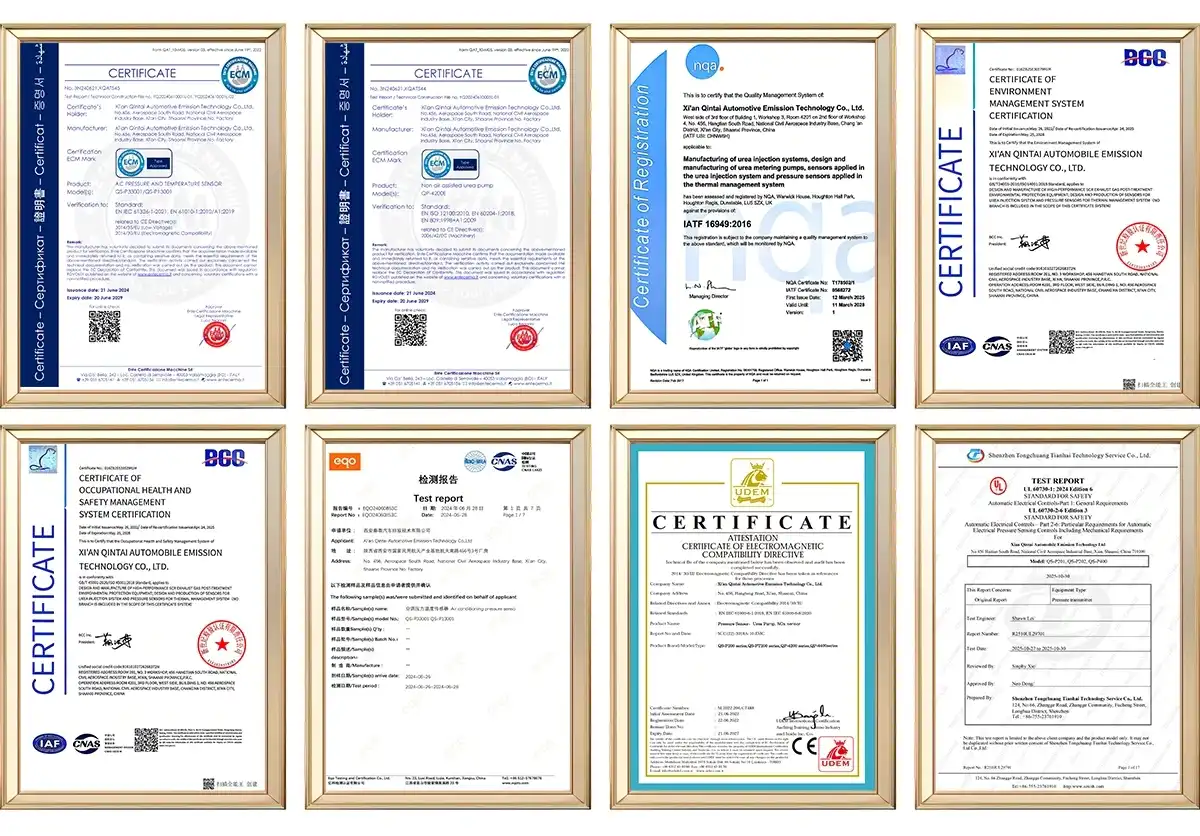
Qintai, a national high-tech company founded in 2001, has over two decades of sensor manufacturing experience for refrigeration monitoring. The top Pressure and Temperature transmitter manufacturer in China with ISO9001, IATF16949, and many international certifications, we provide industrial-grade dependability backed by 58 innovation patents. Our independent R&D team develops sensor technology to fulfill industrial needs.
The QS-PT225 demonstrates our engineering excellence and customer value. For OEM diesel engine manufacturers, aftertreatment system integrators, and industrial equipment suppliers, our OEM/ODM services and customization skills provide solutions that meet your standards. As important suppliers to Weichai Power, Yuchai Power, and Quanchai Power, major manufacturers trust our quality and dependability. Please email info@qt-sensor.com to discuss your refrigerant monitoring needs. We provide fast delivery, affordable bulk pricing, and product lifetime technical support.
References
1. American Society of Heating, Refrigerating and Air-Conditioning Engineers. "ASHRAE Handbook—Refrigeration Systems and Applications." ASHRAE Technical Publications, 2022.
2. International Institute of Refrigeration. "Guidelines for Pressure and Temperature Measurement in Refrigeration Systems." IIR Technical Report Series, 2021.
3. Johnson, M.R. and Stevens, P.A. "Integrated Sensor Technologies for HVAC System Optimization." Journal of Building Performance Measurement, Vol. 15, No. 3, 2023, pp. 142-158.
4. National Institute of Standards and Technology. "Calibration Procedures for Pressure and Temperature Transmitters in Industrial Applications." NIST Special Publication 250-89, 2020.
5. Peterson, K.L. "Ceramic Sensor Technology for Refrigerant Monitoring: Performance Analysis and Application Guidelines." International Journal of Refrigeration Engineering, Vol. 48, No. 2, 2023, pp. 215-231.
6. Refrigeration Service Engineers Society. "Best Practices for Instrumentation in Commercial Refrigeration Systems." RSES Technical Manual TM-2024, 2024.

Our customers’ satisfaction speaks for our quality — contact us to experience the same reliable service.