- English
- French
- German
- Portuguese
- Spanish
- Russian
- Japanese
- Korean
- Arabic
- Greek
- German
- Turkish
- Italian
- Danish
- Romanian
- Indonesian
- Czech
- Afrikaans
- Swedish
- Polish
- Basque
- Catalan
- Esperanto
- Hindi
- Lao
- Albanian
- Amharic
- Armenian
- Azerbaijani
- Belarusian
- Bengali
- Bosnian
- Bulgarian
- Cebuano
- Chichewa
- Corsican
- Croatian
- Dutch
- Estonian
- Filipino
- Finnish
- Frisian
- Galician
- Georgian
- Gujarati
- Haitian
- Hausa
- Hawaiian
- Hebrew
- Hmong
- Hungarian
- Icelandic
- Igbo
- Javanese
- Kannada
- Kazakh
- Khmer
- Kurdish
- Kyrgyz
- Latin
- Latvian
- Lithuanian
- Luxembou..
- Macedonian
- Malagasy
- Malay
- Malayalam
- Maltese
- Maori
- Marathi
- Mongolian
- Burmese
- Nepali
- Norwegian
- Pashto
- Persian
- Punjabi
- Serbian
- Sesotho
- Sinhala
- Slovak
- Slovenian
- Somali
- Samoan
- Scots Gaelic
- Shona
- Sindhi
- Sundanese
- Swahili
- Tajik
- Tamil
- Telugu
- Thai
- Ukrainian
- Urdu
- Uzbek
- Vietnamese
- Welsh
- Xhosa
- Yiddish
- Yoruba
- Zulu
Industrial Capacitive Pressure Sensor Buying Guide
Choosing the right method for measuring pressure is a big choice that has a direct effect on meeting emission standards, making production more efficient, and lowering long-term costs. A capacitive pressure sensor finds out how much force is being applied by picking up changes in capacitance between electrode plates that are divided by a dielectric. The gap between the sensors changes when pressure changes the bendable diaphragm. This changes capacitance in a proportional way. This idea gives diesel engine aftertreatment systems, SCR integration, and industry exhaust tracking very high levels of sensitivity and stability. When buying managers and research and development experts understand these basics, they can choose sensors that meet both regulatory standards and durability requirements for heavy-duty uses.

Understanding Capacitive Pressure Sensors: Principles and Benefits
Core Operating Mechanism
The way capacitive pressure sensors work is very simple, but it works very well. A capacitor is made up of two conducting plates and a dielectric layer, which is usually made of clay, rubber, or air. When pressure is put on the moveable diaphragm, it bends. This shortens the distance between the electrodes and raises the capacitance, as shown in the equation C = ε₀εᵣA/d. Signal filtering circuits take these tiny changes in capacitance and turn them into voltage or current outputs that can be measured. In contrast to strain gauge options, this design doesn't use any moving parts, so it has much less wear and a much longer useful life.
Comparative Advantages Over Alternative Technologies
Capacitive pressure sensor designs keep their zero points stable over a wide range of temperatures, while piezoresistive designs drift as the temperature changes. Piezoelectric sensors are great at measuring changes in motion, but they're not very good at measuring steady pressure, which is important for controlling the recycling of diesel particulate filters. Capacitive technology has better uniformity, less hysteresis, and better accuracy. The ceramic diaphragm design naturally resists corrosion, which is important for exhaust gas conditions that have sulfur compounds, wetness, and particles. Because of these features, capacitive pressure sensors work really well in China VI and Euro VI emission control systems, where measurement accuracy has a direct effect on how well the catalysts work and how much NOx they remove.
Industry-Specific Application Value
In systems that clean diesel engines after they've been used, capacitive pressure sensors measure the difference in pressure across the DPF surfaces and set off regeneration processes at the right times. Integrators of SCR systems need correct data on the pressure in the input manifold in order to figure out the right urea dose rates. Manufacturers of generator sets need sensors that can stay calibrated even when they are vibrating and heating up and cooling down all the time in mine or backup power situations. The technology's low power needs make it good for tracking systems that run on batteries, and its resistance to electromagnetic interference makes it safe to use near electrical parts that carry a lot of current. Because it can be used in so many different ways, it has become very popular in the automobile, building equipment, and industrial power generation sectors.
Key Technical Criteria to Evaluate When Buying Capacitive Pressure Sensors
Accuracy and Sensitivity Specifications
Measurement accuracy has a direct effect on how well a system works and how well it meets pollution standards. Non-linearity specs show how far away the reaction curves are from being perfect. Values below 0.5% FS (full scale) are thought to be industrial-grade. The QS-P105 has 0.3% FS non-linearity, which means that readings are accurate across the whole measurement range. With sensitivity rates between 2 and 4 mV/V, the signal quality is very good, which makes it easier to connect to engine control units and aftertreatment systems. For emission-critical uses, the total accuracy requirements, which include nonlinearity, hysteresis, and repetition, shouldn't be more than ±0.5% FS. These parameters tell us if the capacitive pressure sensors meet the strict standards of diesel OEMs that want to get certified.
Environmental Durability Requirements
Operating temperature ranges need to cover all service situations, from -40°C for a cold start to 135°C for long-term tracking of high-temperature exhaust. The 96% Al2O3 ceramic diaphragm material is very stable at high temperatures and doesn't react chemically with acidic condensates that form during emission control processes. Zero temperature drift specs show how much signal offset happens per degree Celsius, which is important for making sure that the calibration stays true even when temperatures change with the seasons. Safety overload levels of 200% FS protect against pressure spikes that happen when the turbocharger surges or when the DPF regenerates. Resistance to vibration and tolerance for mechanical shocks make sure that building and farming equipment works reliably.
Signal Output and Interface Compatibility
Supply power ranges from 2 to 30 VDC, which lets it work with a variety of electrical designs, ranging from 12V car systems to 24V industrial vehicle platforms. Low power use is good for data logging apps that run on batteries and lowers thermal self-heating effects that could affect accuracy. What kind of output signal is sent—voltage, digital protocols, or millivolt ratiometric signals—must match the type of device that is getting them. Specifications for bridge resistance of 11±30% kΩ show stable electrical properties and work with common Wheatstone bridge conditioning circuits. Knowing these interface settings can help you avoid expensive delays in integration and make sure that sensors and control systems can talk to each other without any problems.

Comparing Capacitive Pressure Sensors with Alternative Technologies
Performance Trade-offs and Cost Analysis
The higher price of capacitive pressure sensors compared to piezoresistive ones is usually because they are more precisely made and use better materials. This initial investment lowers the total cost of ownership by allowing for longer service life, more frequent calibrations, and less need for drift correction. Piezoresistive sensors respond faster, but they need to be re-calibrated more often because the silicon strain gauges wear out faster. Piezoelectric designs are great at measuring shock and shaking, but they can't measure static pressure, which means they can't be used for steady-state tracking. Costs must be weighed against upkeep costs, calibration frequency, and replacement cycles over a normal five- to ten-year operating time.
Application-Specific Technology Selection
OEMs of diesel engines that care about emissions choose capacitive pressure sensors because they are stable and accurate, which directly helps improve catalyst efficiency. When cost is more important than accuracy for measurements that aren't critical for emissions, aftermarket parts sellers may choose piezoresistive choices. The longer calibration intervals of capacitive technology help generator set makers who work with equipment in rural areas by lowering the number of times they need to do maintenance. Companies that make environmental protection tools that keep an eye on industrial air treatment systems need ceramic capacitive designs because they are resistant to chemicals and stable over time. For each application model, efficiency needs must be carefully weighed against budget constraints.
How to Choose the Right Capacitive Pressure Sensor for Your Industrial Needs?
Pressure Range and Measurement Requirements
When you match the capacitive pressure sensor range to the application pressures, you keep the accuracy high and make sure there are enough safety gaps. The QS-P105 has 14 selectable settings, from vacuum (-1 bar) to 600 bar, so it can be used for a wide range of tasks, from tracking the intake manifold to checking the fuel pressure in the common rail. To get the best linearity and overload safety, choose a range that is about twice the maximum predicted pressure. Narrower ranges that improve precision are best for applications where pressure changes don't happen very often. Wide-ranging pressure profiles, like those found in hydraulic systems that are having surge conditions, need longer measurement spans and strict safety overload rules to keep the diaphragm from getting damaged.
Environmental Condition Assessment
The operating world determines how sensors should be built and how they should be protected. For exhaust gas tracking, you need ceramic diaphragms that don't corrode and electrical parts that can handle high temperatures. Sensors on construction tools have to be able to handle constant shaking, mechanical shock, and being near hydraulic fluids and oils. Agricultural gear needs to be protected from getting wet, getting dirty with dust, and having big changes in the temperature outside. When generator sets are used in mines or on offshore platforms, they need sensors that can handle situations with explosives and salt spray. Comparing these conditions to the sensor's specs stops it from breaking down too soon and makes sure it's in line with regulations.
Supplier Capability and Support Evaluation
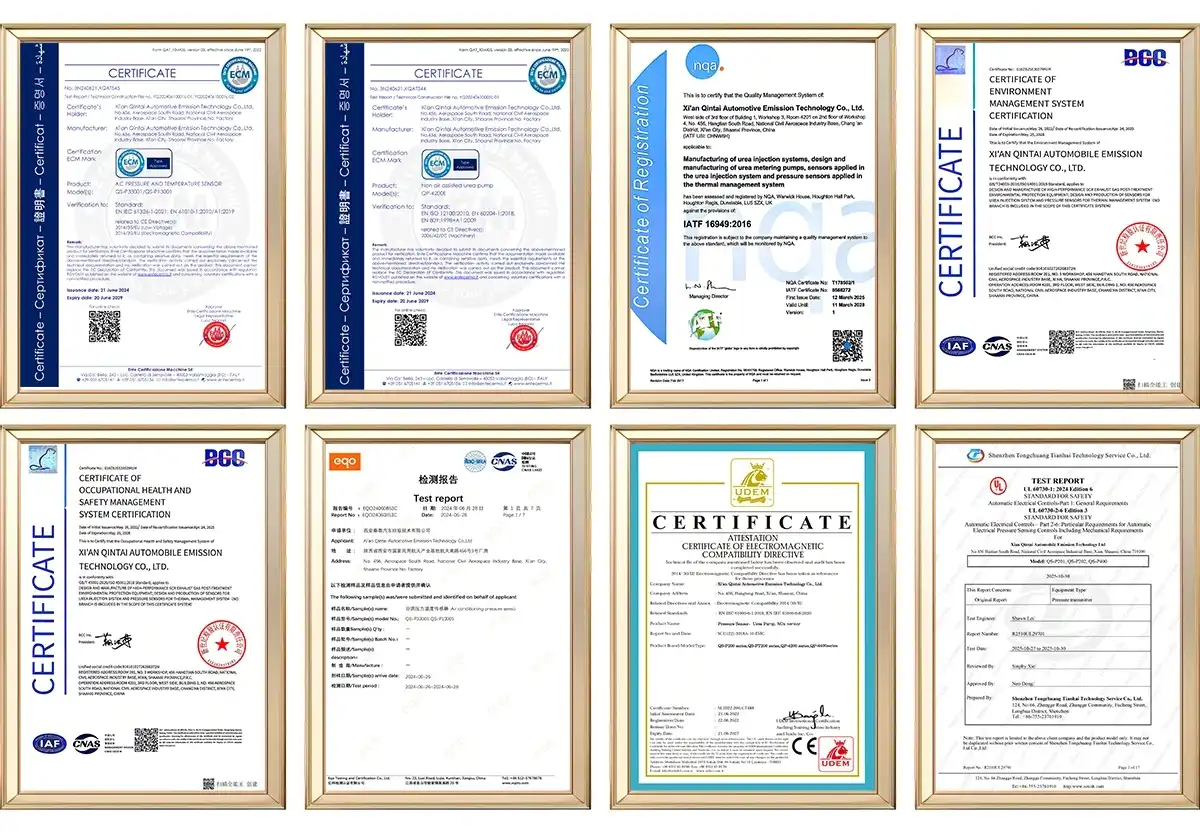
Manufacturer qualifications give you peace of mind about the quality of the product and the stability of the supply chain. The ISO9001 and IATF16949 certifications show that the quality management system is mature enough to be used in industry and automobile settings. ATEX, UL, and CE approvals show that the product meets safety and electromagnetic compatibility guidelines in the area. When there are problems with merging or troubleshooting, how quickly technical help responds is very important. Customization options let sensors be changed to fit different mounting arrangements, electrical ports, or pressure link needs. Sample testing tools let you make sure that the monitor works well in real-world situations before you buy a lot of them.
Procurement Process and Best Practices for Industrial Capacitive Pressure Sensors
Sourcing Channel Selection
When you work directly with a capacitive pressure sensor manufacturer, you can get access to professional advice, customization services, and better prices for large orders. Authorized wholesalers offer local supplies, faster shipping, and the ability to source from more than one seller, which is helpful for prototyping or small-batch needs. Online industrial markets let you compare specifications and bid against other people, but you have to be very careful to make sure that the seller is real and that the products are of good quality. OEM suppliers with established mass production ability give car and heavy equipment makers the consistency they need. The most efficient way to buy things is to compare different channel choices based on lead time needs, technical help needs, and total acquisition costs.
Datasheet Analysis and Specification Verification
A thorough study of all the datasheets stops specification mismatches that lead to integration problems. It is important to carefully check the pressure range, accuracy class, output signal type, and electrical link details against what the system needs. Temperature rates must include the worst possible conditions for operation, such as cold starts and long periods of high load. Response time standards tell you whether the device is good for steady-state tracking or dynamic readings. Certification marks show that the product meets the rules for the market it's meant for, like China VI, Euro VI, EPA standards for car use, or ATEX approval for installations in dangerous atmospheres. Costly procurement mistakes can be avoided by asking for explanation on unclear specs.
Sample Testing and Validation Protocols
Before committing to a large order, pre-production testing makes sure that the sensors work properly in real-world situations. Temperature cycling tests show how things move and how stable they are at different temperatures. Pressure cycle checks how long a machine will last and makes sure that it stays accurate after being loaded and unloaded many times. During vibration testing, stresses that happen during movement and use of mobile tools are simulated. Verifying the signal output makes sure that it works with the received equipment and blocks out enough noise. Chemical resistance testing shows that the diaphragm material is safe to use with process fluids or exhaust gases. By writing down test methods and acceptable criteria, you can set clear performance benchmarks for ongoing quality control.
Spotlight on Qintai's QS-P105 Capacitive Pressure Sensor
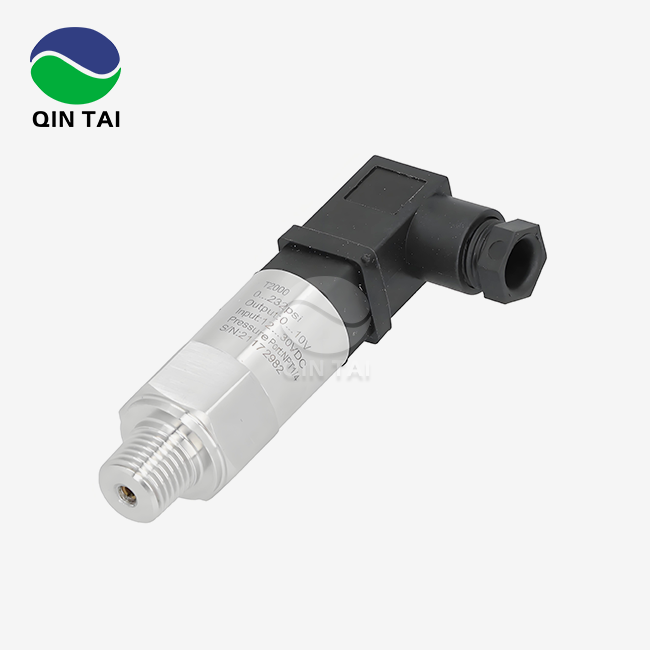
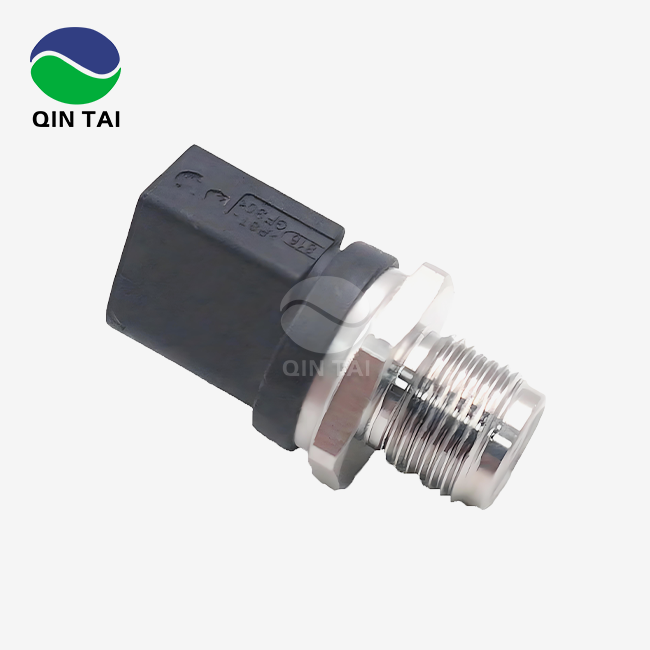
The QS-P105 is a great example of an industrial-grade capacitive pressure sensor designed to work well in challenging power generation and emission control tasks. The 96% alumina ceramic diaphragm makes it very resistant to corrosion from acidic exhaust condensates and keeps its shape over the entire working range of -40°C to 135°C. This sensor meets the strict OEM standards for emission compliance certification. It has a nonlinearity of 0.3% FS and an overall accuracy of ±0.5% FS. The 200% FS safety overload limit keeps you safe from turbocharger surges and hydraulic pressure spikes that happen a lot in heavy-duty diesel uses.
The signal quality stays high up to a sensitivity of 2 to 4 mV/V, which means it can produce a strong signal over long wire runs and in noisy electrical settings. For lower ranges, zero temperature drift below 0.03% FS/°C provides stable calibration even when temperatures change with the seasons. The 2-30 VDC feed voltage is flexible enough to work with a wide range of electrical system designs without the need for separate power regulation. Integration into current aftertreatment assemblies is made easier by pressure connections that can be changed and easy mounting setups. This cuts down on engineering work and speeds up time-to-market.
With fourteen pressure ranges ranging from -1 bar to 600 bar, a single sensor family can be used for uses such as tracking the intake manifold, measuring the differential pressure in the diesel particulate filter, common rail fuel systems, and hydraulic control. This flexibility makes it easier for aftermarket providers and equipment makers to keep track of extra parts and lowers the number of parts that need to be stored. The monitor works well with SCR controls and DPF regeneration systems, which makes it easier for solution providers to integrate aftertreatment systems.
Conclusion
To choose the right pressure sensors, you have to weigh the technical specs, how long they will last in different environments, and the supplier's skills against the needs of the application and your budget. For diesel engine uses that need to be accurate, stable, and last a long time, capacitive pressure sensors are the best choice. It can also be used to integrate aftertreatment systems and track industrial power generation. The QS-P105 shows how advanced ceramic construction, exact manufacturing, and full covering of all specifications can meet the strict needs of OEMs.
When you carefully look at pressure ranges, accuracy standards, temperature performance, and a supplier's credentials, you can be sure that the choices you make about what to buy will help you meet regulations, keep your business running smoothly, and save money in the long run. Getting certified makers with responsive technical support and a history of mass production is the best way to make sure that the purchase goes smoothly.
FAQ
What is the typical lifespan of industrial capacitive pressure sensors?
Capacitive pressure sensors of good quality usually work reliably for 5 to 10 years in the right situations. The length of time something lasts relies on how it's used and things like temperature changes, how often the pressure changes, chemical exposure, and shaking levels. In stable settings, sensors that work within their rated specs and get regular calibration checks usually last longer than 10 years. If the exhaust is constantly monitored at high temperatures or there is a lot of shaking, the service life may be cut to three to five years. Choosing sensors with the right environmental grades and safety gaps makes them last a lot longer.
How frequently do these sensors require recalibration?
Calibration intervals rely on how important the application is and what the rules say. Diesel engine monitors that are important for emissions control usually need to be checked once a year to keep their safety certification. When working in stable temperature ranges, industrial process control systems may be able to stretch periods to 18 to 24 months. Because they are more stable over time, capacitive sensors usually don't need to be calibrated as often as piezoresistive ones. Changes in temperature and chemical contact in the environment can speed up drift, which could mean that it needs to be checked more often. Setting a standard for performance through initial testing helps figure out the best calibration plans for each application.
Can capacitive sensors operate in explosive atmospheres?
Capacitive sensors that have been properly approved can work safely in dangerous places when they are rated for use in exploding atmospheres. ATEX, IECEx, or similar approvals show that the design is intrinsically safe and doesn't allow sources of fire. Energy-limiting circuits in these sensors keep the electricity power below the level needed to start a fire in flammable gases or dust. In order to work in petroleum plants, food handling operations, or mines, sensors need to be rated for use in dangerous areas. No matter what the technical specs say, standard industrial monitors that aren't certified as explosion-proof should not be used in secret areas.
Partner with Qintai for Precision Pressure Measurement Solutions
Xi'an Qintai Automotive Emission Technology makes high-performance pressure sensors for diesel engine OEMs, aftertreatment developers, and companies that make industrial equipment. We are China's top seller of capacitive pressure sensors and work with Weichai Power, Yuchai Power, and Quanchai Power. Our products are reliable and have been certified by ISO9001, IATF16949, and other international safety groups. Our own research and development (R&D) helps us make special sensors that work with different pressure levels, mounting options, and electrical connections. For large promises, mass production ensures uniform quality and affordable price, and quick technical support speeds up integration and debugging.
Email our engineering team at info@qt-sensor.com to talk about the specifics of your application and to ask for QS-P105 samples to be tested for quality assurance. To make purchasing choices easier, we offer detailed datasheets, CAD models, and application advice. With more than 20 years of experience in emission control and products sold in more than 60 countries around the world, Qintai is ready to help you with all of your pressure measurement needs, from the pilot stage to mass production.
References
1. Webster, J.G. (2019). The Measurement, Instrumentation, and Sensors Handbook: Spatial, Mechanical, Thermal, and Radiation Measurement. CRC Press.
2. Bao, M. (2020). Analysis and Design Principles of MEMS Devices. Elsevier Science.
3. Fraden, J. (2016). Handbook of Modern Sensors: Physics, Designs, and Applications (5th ed.). Springer International Publishing.
4. Society of Automotive Engineers. (2021). Pressure Sensors for Automotive Applications: Selection and Specification Guidelines. SAE Technical Paper Series.
5. Johnson, R.H. (2018). Industrial Pressure, Level & Density Measurement (2nd ed.). Springer-Verlag.
6. International Organization for Standardization. (2017). ISO 9001:2015 Quality Management Systems - Requirements for Automotive Production and Relevant Service Parts Organizations. ISO Standards Publication.

Our customers’ satisfaction speaks for our quality — contact us to experience the same reliable service.