- English
- French
- German
- Portuguese
- Spanish
- Russian
- Japanese
- Korean
- Arabic
- Greek
- German
- Turkish
- Italian
- Danish
- Romanian
- Indonesian
- Czech
- Afrikaans
- Swedish
- Polish
- Basque
- Catalan
- Esperanto
- Hindi
- Lao
- Albanian
- Amharic
- Armenian
- Azerbaijani
- Belarusian
- Bengali
- Bosnian
- Bulgarian
- Cebuano
- Chichewa
- Corsican
- Croatian
- Dutch
- Estonian
- Filipino
- Finnish
- Frisian
- Galician
- Georgian
- Gujarati
- Haitian
- Hausa
- Hawaiian
- Hebrew
- Hmong
- Hungarian
- Icelandic
- Igbo
- Javanese
- Kannada
- Kazakh
- Khmer
- Kurdish
- Kyrgyz
- Latin
- Latvian
- Lithuanian
- Luxembou..
- Macedonian
- Malagasy
- Malay
- Malayalam
- Maltese
- Maori
- Marathi
- Mongolian
- Burmese
- Nepali
- Norwegian
- Pashto
- Persian
- Punjabi
- Serbian
- Sesotho
- Sinhala
- Slovak
- Slovenian
- Somali
- Samoan
- Scots Gaelic
- Shona
- Sindhi
- Sundanese
- Swahili
- Tajik
- Tamil
- Telugu
- Thai
- Ukrainian
- Urdu
- Uzbek
- Vietnamese
- Welsh
- Xhosa
- Yiddish
- Yoruba
- Zulu
Why Urea Dosing Pressure Sensors Fail in Heavy-Duty DEF Systems
In heavy-duty DEF systems, a urea dosing pressure sensor failure is one of the most common causes of SCR non-compliance and unexpected vehicle downtime. These sensors monitor AdBlue fluid pressure in real time, feeding critical data to the ECU for accurate injection control. When they malfunction—due to chemical corrosion, thermal stress, vibration, or poor installation—the entire aftertreatment system suffers. NOx emissions spike, fault codes trigger, and in many cases, the engine enters limp mode. Understanding why these sensors fail is the first step toward preventing costly breakdowns.
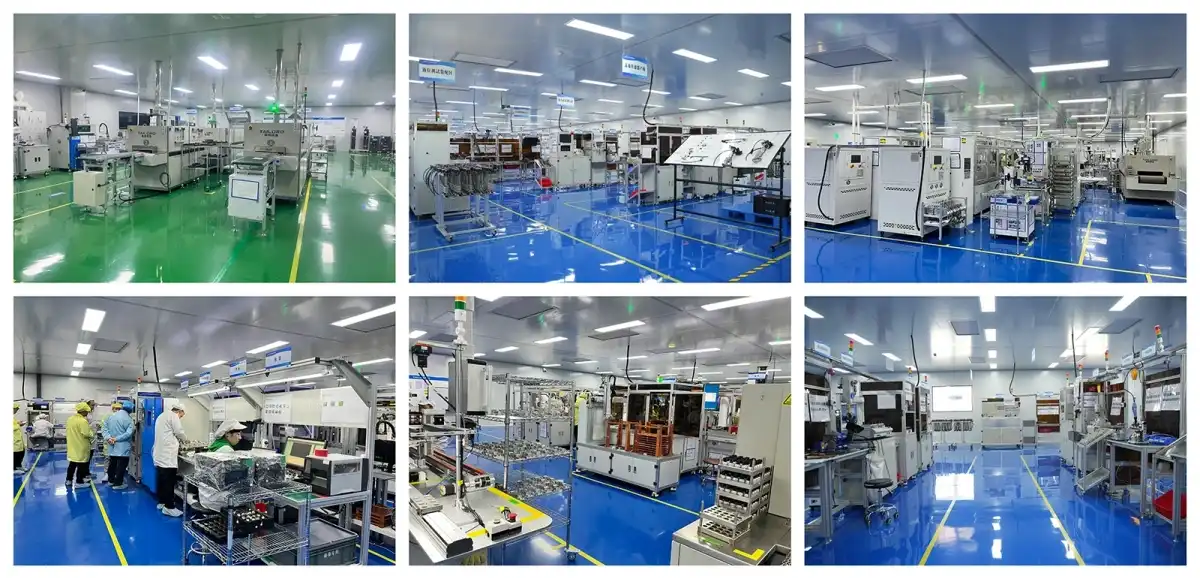
Understanding Urea Dosing Pressure Sensors in Heavy-Duty DEF Systems
What These Sensors Actually Do
A urea dosing pressure sensor checks the urea solution's hydraulic pressure inside the dose module and sends that information to the Dosing Control Unit (DCU) or ECU. This feedback loop precisely manages the amount of AdBlue that is added to the exhaust stream. Without correct pressure information, the SCR catalyst can't lower NOx pollution to the amounts needed by Euro VI or EPA Tier 4 Final rules.
Sensor Technologies and Their Trade-offs
In this field, there are three main technologies: capacitive types, ceramic thick-film strain gauges, and piezoresistive MEMS. Piezoresistive sensors are very sensitive and respond quickly. Ceramic diaphragm types, on the other hand, are better at withstanding 32.5% liquid urea. When it comes to reliability, accuracy, and working with OEM calibration curves, each technology has its own pros and cons.
Why Signal Quality Matters
The output signal from the sensor has a direct effect on how accurately the drug is dosed. The ECU can accurately figure out the pressure because it has a calibrated analog signal of 0.5–4.5 VDC ratiometric. Even small changes in the signal can lead to over- or under-dosing, which can cause urea formation downstream or high NOx readings during regulatory checks.
Common Causes of Urea Dosing Pressure Sensor Failures
When urea dosing pressure sensors are used in heavy-duty situations, they are put through conditions that test the limits of every part. It's helpful for both R&D engineers and fleet maintenance teams to understand these failure modes because it helps them make better choices during the design and purchase stages.
Chemical Corrosion from AdBlue
AdBlue is a solution of 32.5% urea that is very toxic when it gets hot. Over time, sensors that don't have diaphragms made of 316L stainless steel or PPS-grade plastics break down. Corrosion damages the sensor element, which can lead to signal loss or drift. This is often where the fault code P204B (Urea Pressure Sensor Circuit Range/Performance) comes from.
Thermal and Freeze-Thaw Cycling
DEF freezes at -11°C (12°F) and grows by about 9% in size. When this force acts on sensors that don't have internal buffering structures, they break. On the high end, temperatures under the hood of big trucks can get above 120°C in some mounting areas. In these conditions, sensors that haven't been tested to work in temperatures between -40°C and +125°C will break down early.
Mechanical Vibration and Improper Installation
Construction and farming equipment cause a lot of vibration loads. When sensors are installed without the right torque or close to mounts that are prone to vibration, the connectors wear out and the diaphragm cracks. Electrical failure is sped up even more by a strained wiring harness, incorrect thread contact (M10×1 or M12×1.5 are typical standards), and dirty connector pins.
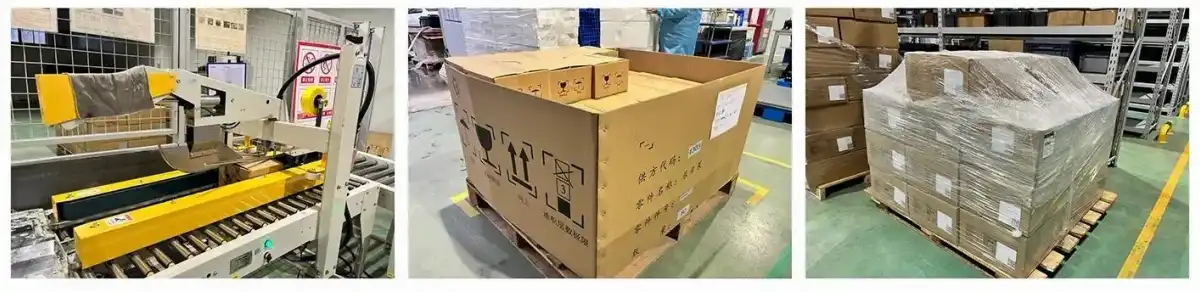
Troubleshooting and Maintenance: Prolonging Sensor Life
Reading Fault Codes and Diagnosing the Source
When the ECU stores a DTC about AdBlue pressure, the first thing that needs to be done is to tell the difference between a wiring problem, a dirty connector, and a real urea dosing pressure sensor failure. Before you blame the sensor itself, get the fault code, check the harness for chafing or water getting in, and make sure the 5V reference voltage is working at the sensor connector.
Calibration and Output Verification
Connect a measured pressure reference to the DEF circuit and make sure that the output of the sensor matches the predicted voltage at points where the pressure is known. A good sensor that sends a ratiometric signal between 0.5 and 4.5 VDC should move in a straight line across its measurement range. In high-cycle situations like mining or long-haul trucking, calibration checks should be done every 500 hours.
Preventive Maintenance Practices
Failure rates are lower when the sensor port is regularly checked for urea crystal buildup, connector seals are checked for cracks, and the DEF circuit is flushed at times suggested by the maker. Protective sleeving on the harness and regular cleaning of the connectors with an approved contact cleaner are good ways to keep sensors working well in machines that work in dusty or chemically harsh environments.
Selecting the Right Urea Dosing Pressure Sensor for Your SCR System
Matching Specifications to Application Requirements
Before buying a urea dosing pressure sensor, it's important to check the measurement range, signal type, accuracy class, and operating temperature. Heavy-duty diesel uses can use a measurement range of -14 psi to +130.5 psi, which is accurate to within 0.5%. Make sure the signal coming out matches how your ECU was calibrated. You can't use an analog ratiometric sensor with a SENT protocol sensor without recalibration.
Evaluating Chemical and Mechanical Durability
For field durability, you can't go without IP69K ingress protection, a diaphragm made of stainless steel or PPS, and a freeze-expansion limit. If a sensor hasn't been tested for freeze-cycle resilience, it will stop working during the first winter in cold places. Before accepting a part for mass production, ask sources for material data sheets and accelerated life test results.
Qintai QS-P226: A Purpose-Built Solution
The Qintai QS-P226 is an AdBlue pressure sensor that the company made itself and was designed to work with heavy-duty SCR systems. These are the most important technical specs of this device:
- Supply Voltage: 5V
- Output Signal: 0.5–4.5 VDC ratiometric analog
- Measurement Range: -14 psi to +130.5 psi
- Accuracy: ±0.5%
- Measuring Medium: Urea (AdBlue)
- Warranty: 12 months, 100% tested before shipment
Since Qintai makes the sensor core itself, it doesn't need to rely on third-party parts and can be sure that the quality will be the same in every batch. The QS-P226 has strong environmental sealing that keeps out water, dust, and chemicals. These design features directly address the three main failure modes we talked about above: rust, freeze-thaw damage, and vibration fatigue. This makes it a reliable choice for both OEM integration and aftermarket replacement.
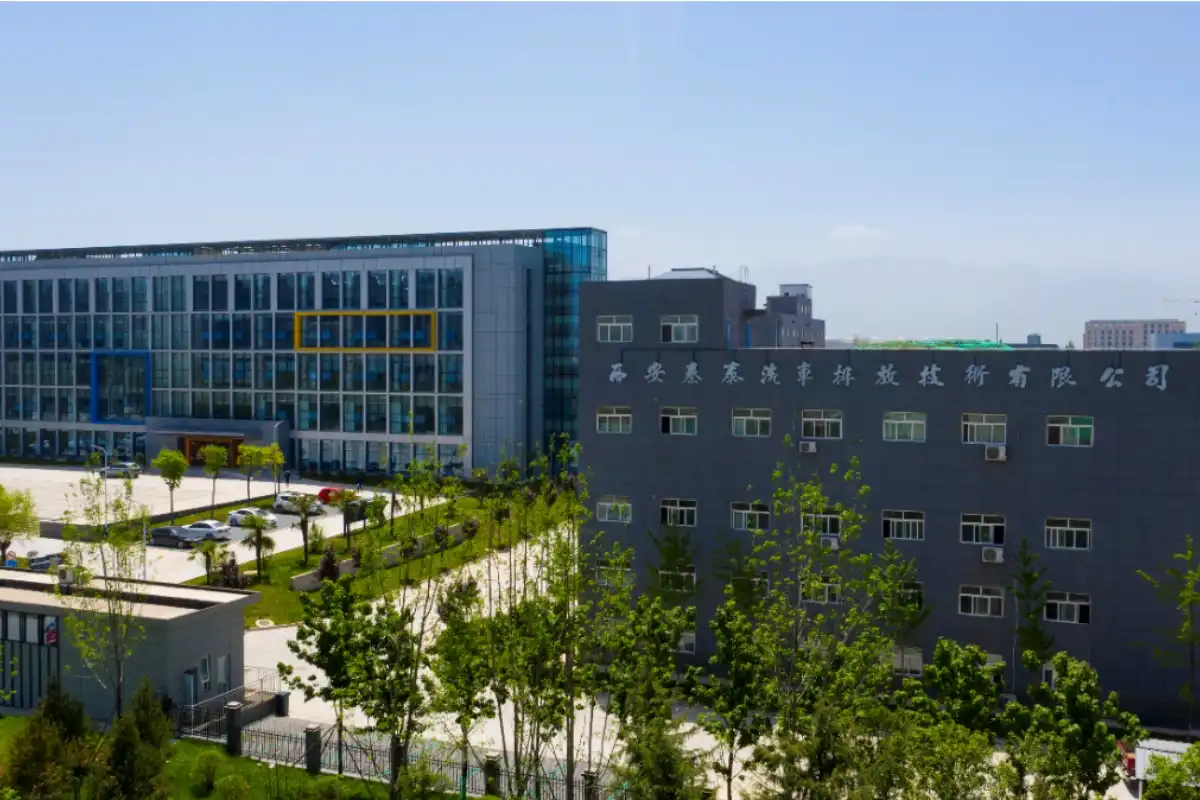
Procurement Insights for Bulk Buyers and OEM Clients
Supplier Qualification Criteria
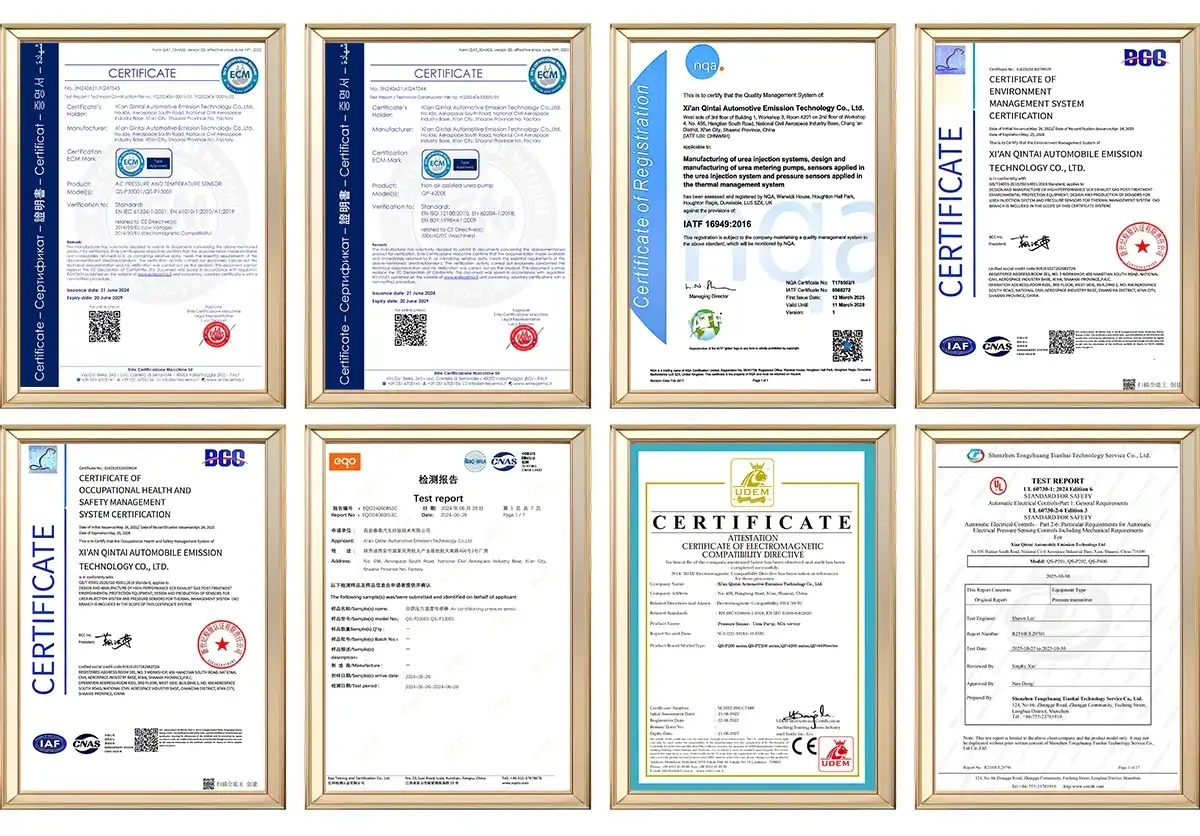
To find a lot of urea dosing pressure sensors, you need to do more than just compare prices. For OEMs using the China VI, Euro VI, or EPA Tier 4 frameworks, the quality of the parts directly impacts the number of warranty claims, field return rates, and regulatory audit outcomes. Make sure the supplier has ISO 9001 and IATF 16949 certifications.
These show that the quality management systems are good enough for production, not just for paper. Qintai also holds approvals from CMC, CE, REACH, and RoHS. The company's 86-person research and development team has applied for 58 invention patents in the field of diesel emission control technology, and they can make more than two million sensors every year.
Volume Pricing and Customization
If an OEM buyer needs to buy more than a certain amount, they should ask about tiered price structures and OEM/ODM customization choices. Qintai lets you fully customize everything, from the thread specifications and connector types to the signal output format, so it can work with existing SCR system designs without having to re-calibrate the ECU.
Supply Chain Reliability
Weichai Power, Yuchai Power, and Quanchai Power all buy a lot of parts from Qintai. In China, Qintai has the largest share of the diesel sensor market. People in more than 60 countries buy our products. Because of the size of this supply network, large orders get the same wait times and expert help in all areas.
Conclusion
Heavy-duty DEF systems often have problems with urea dosing pressure sensors because of chemical corrosion, damage from freeze-thaw cycles, and mechanical stress from vibrations. These problems can be made worse by bad fitting or not meeting the right material requirements.
Taking these failure modes into account during the design and purchase stage lowers the total cost of ownership, keeps SCR systems within emission limits, and cuts down on breakdowns that happen in the field. It is necessary for any serious OEM or fleet user to choose a sensor that has been tested for accuracy, is sealed to IP standards, and can handle freeze-expansion.
FAQ
How often should a DEF pressure sensor be calibrated?
Every 500 hours of use is a good amount of time to check the calibration of high-cycle applications like mining equipment or long-haul trucks. For lighter-duty generator sets, most service schedules allow for checks once a year.
What fault code indicates a failing AdBlue pressure sensor?
Can aftermarket sensors work in OEM SCR systems?
Yes, as long as the type of output signal and the range of pressures are the same as the OEM ECU tuning. A 0.5–4.5 VDC ratiometric sensor can't be used instead of a SENT-protocol sensor because the ECU needs to be re-calibrated. Always make sure that the signal will work before installing.
How does a quality sensor handle AdBlue freezing?
A well-made sensor has a flexible internal storage structure that can handle the 9% increase in volume that happens when urea freezes without breaking or sending the wrong signal. This trait is necessary for working in cold weather.
What is the expected se
The most common sign is fault code P204B, which stands for "Urea Pressure Sensor Circuit Range/Performance." This number usually means that the signal is drifting because the connection is dirty or the sensor is old, not that the sensor has failed completely.
rvice life?
Quality DEF pressure sensors are made to last 15,000 to 20,000 hours of use in normal commercial settings, as long as they are installed and maintained according to the manufacturer's instructions.
Partner with Qintai for Your DEF Pressure Sensor Needs
Diesel pollution monitors have been made by Xi'an Qintai Automotive Emission Technology Co., Ltd. since 2001. As a certified urea dosing pressure sensor supplier that major OEMs in more than 60 countries trust, Qintai can fully customize the QS-P226 for OEMs and ODMs, offer competitive volume pricing, and provide direct technical support. Get in touch with our technical team to get details, examples, or a quote for a large order. To start the buying process right away, email us at info@qt-sensor.com or go to qt-sensor.com.
References
1. Reitz, R. D., & Duraisamy, G. (2015). Review of High Efficiency and Clean Reactivity Controlled Compression Ignition (RCCI) Combustion in Internal Combustion Engines. Progress in Energy and Combustion Science.
2. Johnson, T. V. (2014). Vehicular Emissions in Review. SAE International Journal of Engines, 7(3).
3. European Commission. (2019). Euro VI Emission Standards for Heavy-Duty Vehicles. Official Journal of the European Union.
4. U.S. Environmental Protection Agency. (2016). Tier 4 Final Emission Standards for Nonroad Diesel Engines. EPA Office of Transportation and Air Quality.
5. Payri, F., Broatch, A., Serrano, J. R., & Margot, X. (2010). Diesel Engine Aftertreatment: SCR System Modeling and Sensor Integration. International Journal of Engine Research, 11(4).
6. SAE International. (2021). DEF System Reliability and Sensor Failure Modes in Heavy-Duty On-Highway Applications. SAE Technical Paper Series.

Our customers’ satisfaction speaks for our quality — contact us to experience the same reliable service.