- English
- French
- German
- Portuguese
- Spanish
- Russian
- Japanese
- Korean
- Arabic
- Greek
- German
- Turkish
- Italian
- Danish
- Romanian
- Indonesian
- Czech
- Afrikaans
- Swedish
- Polish
- Basque
- Catalan
- Esperanto
- Hindi
- Lao
- Albanian
- Amharic
- Armenian
- Azerbaijani
- Belarusian
- Bengali
- Bosnian
- Bulgarian
- Cebuano
- Chichewa
- Corsican
- Croatian
- Dutch
- Estonian
- Filipino
- Finnish
- Frisian
- Galician
- Georgian
- Gujarati
- Haitian
- Hausa
- Hawaiian
- Hebrew
- Hmong
- Hungarian
- Icelandic
- Igbo
- Javanese
- Kannada
- Kazakh
- Khmer
- Kurdish
- Kyrgyz
- Latin
- Latvian
- Lithuanian
- Luxembou..
- Macedonian
- Malagasy
- Malay
- Malayalam
- Maltese
- Maori
- Marathi
- Mongolian
- Burmese
- Nepali
- Norwegian
- Pashto
- Persian
- Punjabi
- Serbian
- Sesotho
- Sinhala
- Slovak
- Slovenian
- Somali
- Samoan
- Scots Gaelic
- Shona
- Sindhi
- Sundanese
- Swahili
- Tajik
- Tamil
- Telugu
- Thai
- Ukrainian
- Urdu
- Uzbek
- Vietnamese
- Welsh
- Xhosa
- Yiddish
- Yoruba
- Zulu
AdBlue Dosing System Components and Working Principles
An adblue dosing system is the mechanical and electronic core of any Selective Catalytic Reduction (SCR) setup on modern diesel engines. It meters a precise volume of Diesel Exhaust Fluid (DEF), commonly called AdBlue, into the exhaust stream, where it triggers a chemical reaction that converts nitrogen oxides (NOx) into harmless nitrogen gas and water vapor. For OEMs, fleet operators, and aftertreatment integrators working toward Euro VI or EPA Tier 4 compliance, understanding each component and its function is the first step toward making a sound procurement decision.
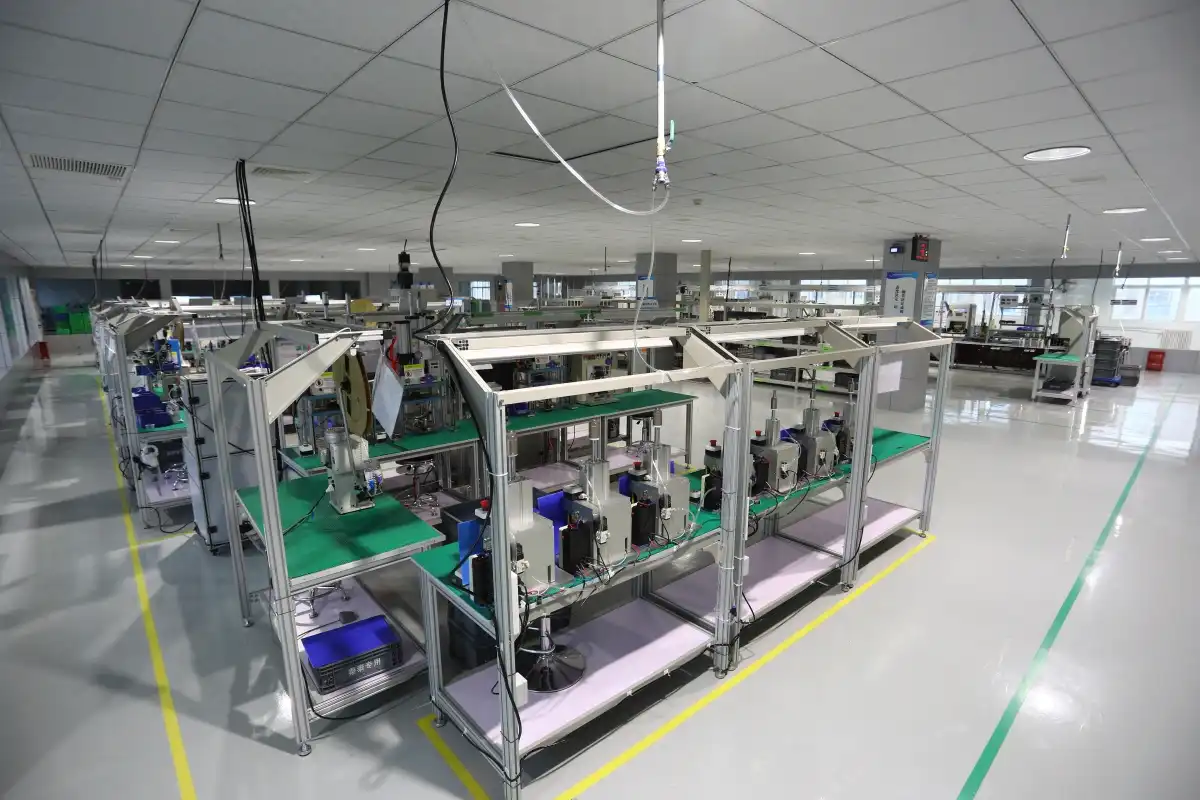
Understanding the AdBlue Dosing System: Components and Functionality
Every diesel engine with SCR needs a very unique set of tools to work. These are the six most important things you should know.
Dosing Pump
It gets DEF from the tank and pumps it up to 5 to 9 bar of pressure before sending it to the injector. People in the business use electric diaphragm pumps because they can keep flow rates steady at a lot of different temperatures. Having too much NOx is directly caused by a broken pump, so one of the first things that procurement experts should check is how good it is.
DEF Injector and Metering Valve
AdBlue is turned into tiny droplets by the injector inside the exhaust pipe. The metering valve controls the exact amount that is released each time the injector works. When you change the spray angle and diameter of the injector nozzle, the urea mist will mix with the exhaust gasses better. There are times when atomization goes wrong and urea crystallizes. This is a main reason why injectors get clogged and SCR catalysts get damaged.
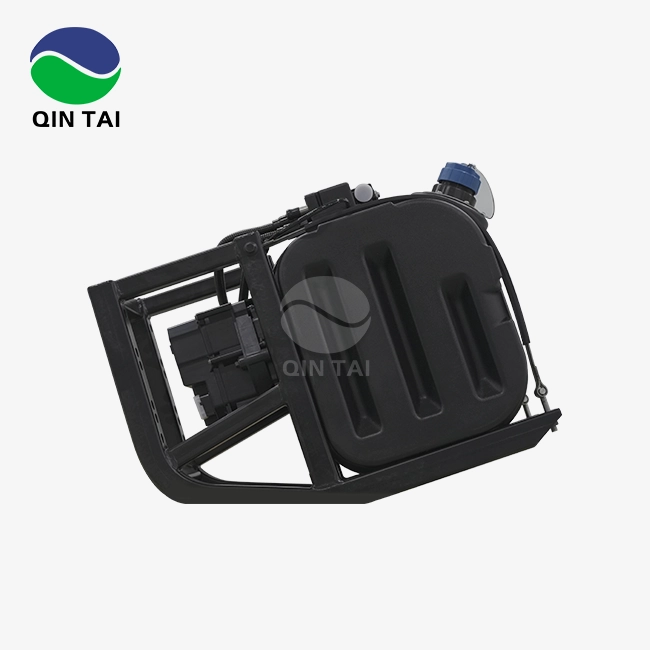
DEF Tank, Heater, and Urea Filter
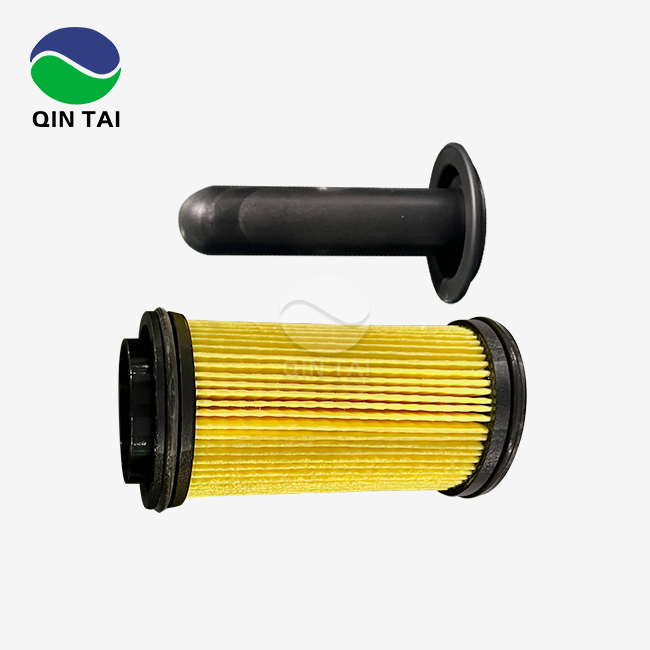
AdBlue freezes at -11°C, so the DEF tank fitted with heating elements is a core part of the adblue dosing system. This tank stores the 32.5% urea solution. A urea filter installed between the tank and pump is also essential. A high-quality filter with synthetic media and a 5–10 micron rating is required. It intercepts solid particles and crystalline deposits before they reach the pump. Failure to replace filters will lead to premature pump failure and substantial extra costs for your adblue dosing system.
NOx and Temperature Sensors
With the help of upstream and downstream NOx monitors, the Engine Control Unit (ECU) can figure out how much to dose in real time. Checkers that check the exhaust temperature make sure that the SCR catalyst is at a temperature between 200°C and 600°C, which is its working range. Depending on how well the sensors work, the ECU puts in too much or too little DEF. Both situations set off warning lights and could lead to "limp mode."

Technical Insights: Working Principles and Emission Benefits
This process is easy to understand when you break it down into steps. When AdBlue comes in contact with the hot exhaust stream, it first breaks down into ammonia (NH₀) and carbon dioxide (CO₂). This takes place by thermolysis and hydrolysis. After that, the ammonia and NOx on the SCR catalyst's surface mix to make N₂ and H₂O.
It says that 4NH₂ + 4NO + O₂ → 4N₂ + 6H₂O.
When the DEF injection system is set up and works right, up to 90% less NOx can be released. To meet Euro VI guidelines, you need to get to this level. The European Environment Agency says that the best and least expensive way for heavy-duty diesel cars to cut down on NOx right now is to use SCR with proper dosing control.
As a general rule for the adblue dosing system, the urea filter should be changed every 120,000 to 200,000 km, the injector nozzles should be inspected for crystallization at each service interval, and sensor signals should be checked with a diagnostic scanner before diagnosing mechanical faults.
Comparing AdBlue Dosing Systems: Making an Informed Procurement Decision
Every DEF injection tool is different. Most of the time, buyers look at three things: how well the pump works in the same situation, how much it costs to own, and the technology behind it.
Electric pumps are better because they can be controlled by speed and are easier to connect to other ECUs. Mechanical pumps, on the other hand, are easier to use, less expensive, and not as exact when the load changes. Electric dose pumps are almost always the best choice at the Euro VI level.
When it comes to well-known companies, many European truck OEMs use Bosch's DCU dosing control units because they are very good at handling closed loops. Small modular units made by Continental are often used in farm equipment. Denso makes injectors that work well in generator sets because they can handle high temperatures. Each brand has a different price range and range of spare parts that can be bought. Buying teams have to look at where their fleet is located and how easy it is to get to service networks to make decisions.
The total cost of owning the car is more than what it costs to buy. If a pump has an MTBF rate of 15,000 hours, it is a better deal than a cheaper one that needs to be changed every 8,000 hours. And this is especially true in mines and long-haul trucks, where downtime costs a lot more than the part itself.
How to Choose the Right AdBlue Dosing System for Your Fleet or OEM Needs
To pick the right system, you need to make sure that your work style fits with the hardware needs of the system. When making the choice, you should think about these three useful areas of evaluation.
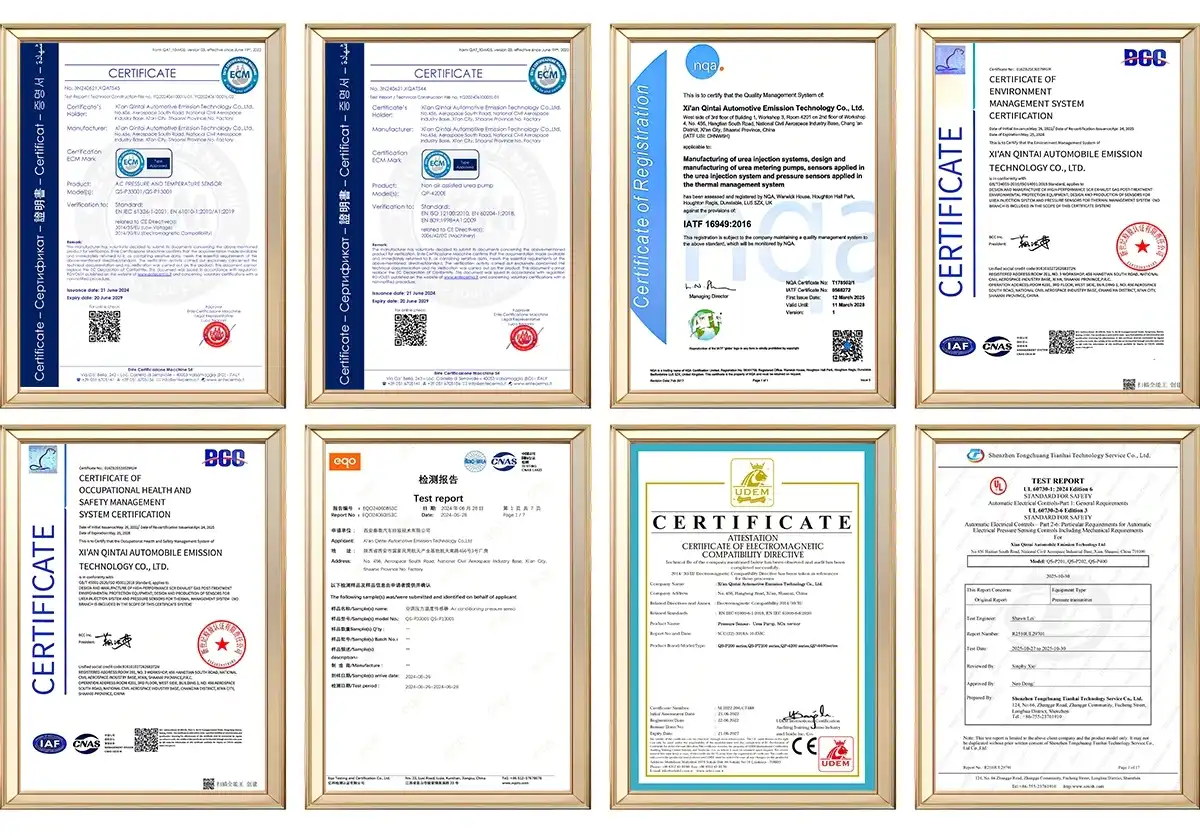
First, look at the emission regulatory requirements for your adblue dosing system. Verify the supplier holds IATF 16949 certification and their components are approved to meet your market control standards such as EPA Tier 4, Euro VI, or China VI. Beyond datasheets, you should request relevant test records.
Make sure the dose is right and that it works with the ECU. More than ±3% of the dose could be wrong, which could cause either insufficient NOx reduction or ammonia slip, both of which are illegal. Make sure that the CAN bus standard works with the ECU you already have before you send in your order.
Third, check to see how flexible the delivery and customization options are. Should be able to do both OEM and ODM work if you are a big OEM that does a lot of business. Ask other OEM buyers for examples of wait times that were kept and get them in writing.
Future Outlook: Innovations and Trends in AdBlue Dosing Technology
In order for the next generation of DEF injection systems to work, sensors will need to be better integrated. Closed-loop NOx control with real-time feedback changes is already built into prototype platforms. They also have predictive maintenance algorithms that use engine data logs and better low-temperature doses that can work below -15°C.
More pressure is being put on officials to make rules tighter from markets in the U.S., EU, and China. This means that exact dose standards will only go up. Long-term relationships should be made with suppliers who fund research and development, have a lot of different certifications, and work closely with tier-1 engine makers.
Conclusion
Understanding how each component within the adblue dosing system functions—and why its quality matters—puts procurement teams in a much stronger position to avoid costly system failures and compliance risks. From the dosing pump and urea filter to the NOx sensor and ECU interface, every part contributes to the system's overall performance.
Choosing a supplier with verified certifications, proven mass production capability, and responsive technical support is not optional when your product must meet Euro VI or equivalent standards. The investment in quality components at the procurement stage consistently outperforms the cost of reactive repairs.
FAQ
How often should the urea filter be replaced?
Replace the urea filter every 120,000 to 200,000 km, or at major service intervals. In high-dust environments like construction sites or mining operations, shorter replacement cycles prevent pump strain and protect injector tips.
Can a urea filter be cleaned and reused?
No. The synthetic media traps particles deep within its fiber structure. Attempting to clean it damages the fibers and allows debris to pass through, which leads to injector failure and potential SCR catalyst poisoning.
What causes a DEF dosing system to malfunction?
Common causes include clogged urea filters, crystallization at the injector nozzle, sensor signal errors, and pump wear. Increased DEF consumption, NOx sensor fault codes, and engine derating are early warning signs.
Can older diesel engines be retrofitted with an AdBlue dosing system?
Yes, retrofit SCR kits are available, but ECU compatibility and exhaust pipe geometry must be verified beforehand. A qualified aftertreatment integrator should handle the calibration to ensure dosing accuracy meets the target emission standard.
Partner with Qintai for Your AdBlue Dosing System Needs
If you do a lot of work, or every 120,000 to 200,000 km, you should change the urea filter. It is better for the pump and injector tips to have shorter replacement rounds in places with a lot of dust, like mines or building sites. Particles get stuck in the fiber structure of the man-made media. It's bad for the fibers to be cleaned because it lets dirt and other things through, which can damage the injector and harm the SCR catalyst. For more information, please contact us at info@qt-sensor.com.
References
1. European Environment Agency. Air Quality in Europe — 2022 Report. EEA, 2022.
2. International Organization for Standardization. ISO 22241: Diesel Engines — NOx Reduction Agent AUS 32. ISO, 2019.
3. Deutsches Institut für Normung. DIN 70070: Requirements for AdBlue Quality in SCR Systems. DIN, 2016.
4. Johnson, M. T., & Majewski, W. A. Diesel Emissions and Their Control. SAE International, 2020.
5. European Commission. Regulation (EC) No 595/2009 on Type-Approval of Motor Vehicles and Engines with Respect to Emissions from Heavy Duty Vehicles (Euro VI). Official Journal of the European Union, 2009.
6. SAE International. SAE J2786: Urea Solution (AUS 32) Dispensing and Handling Equipment for Diesel-Powered Vehicles. SAE International, 2021.

Our customers’ satisfaction speaks for our quality — contact us to experience the same reliable service.