- English
- French
- German
- Portuguese
- Spanish
- Russian
- Japanese
- Korean
- Arabic
- Greek
- German
- Turkish
- Italian
- Danish
- Romanian
- Indonesian
- Czech
- Afrikaans
- Swedish
- Polish
- Basque
- Catalan
- Esperanto
- Hindi
- Lao
- Albanian
- Amharic
- Armenian
- Azerbaijani
- Belarusian
- Bengali
- Bosnian
- Bulgarian
- Cebuano
- Chichewa
- Corsican
- Croatian
- Dutch
- Estonian
- Filipino
- Finnish
- Frisian
- Galician
- Georgian
- Gujarati
- Haitian
- Hausa
- Hawaiian
- Hebrew
- Hmong
- Hungarian
- Icelandic
- Igbo
- Javanese
- Kannada
- Kazakh
- Khmer
- Kurdish
- Kyrgyz
- Latin
- Latvian
- Lithuanian
- Luxembou..
- Macedonian
- Malagasy
- Malay
- Malayalam
- Maltese
- Maori
- Marathi
- Mongolian
- Burmese
- Nepali
- Norwegian
- Pashto
- Persian
- Punjabi
- Serbian
- Sesotho
- Sinhala
- Slovak
- Slovenian
- Somali
- Samoan
- Scots Gaelic
- Shona
- Sindhi
- Sundanese
- Swahili
- Tajik
- Tamil
- Telugu
- Thai
- Ukrainian
- Urdu
- Uzbek
- Vietnamese
- Welsh
- Xhosa
- Yiddish
- Yoruba
- Zulu
Aftertreatment Dosing Unit Uses: A Guide to SCR System Selection
If you manage procurement or engineering for diesel-powered equipment, you already know how much pressure there is to meet emission standards like EPA Tier 4 Final and Euro VI. The aftertreatment dosing unit sits at the center of that challenge. It controls how precisely urea — or DEF (Diesel Exhaust Fluid) — gets injected into the exhaust stream inside an SCR system. Get this component right, and your NOx conversion rates stay compliant. Get it wrong, and you risk system faults, limp mode triggers, and costly downtime. This guide walks through how these units work, what to look for when selecting one, and how to keep them running long-term.
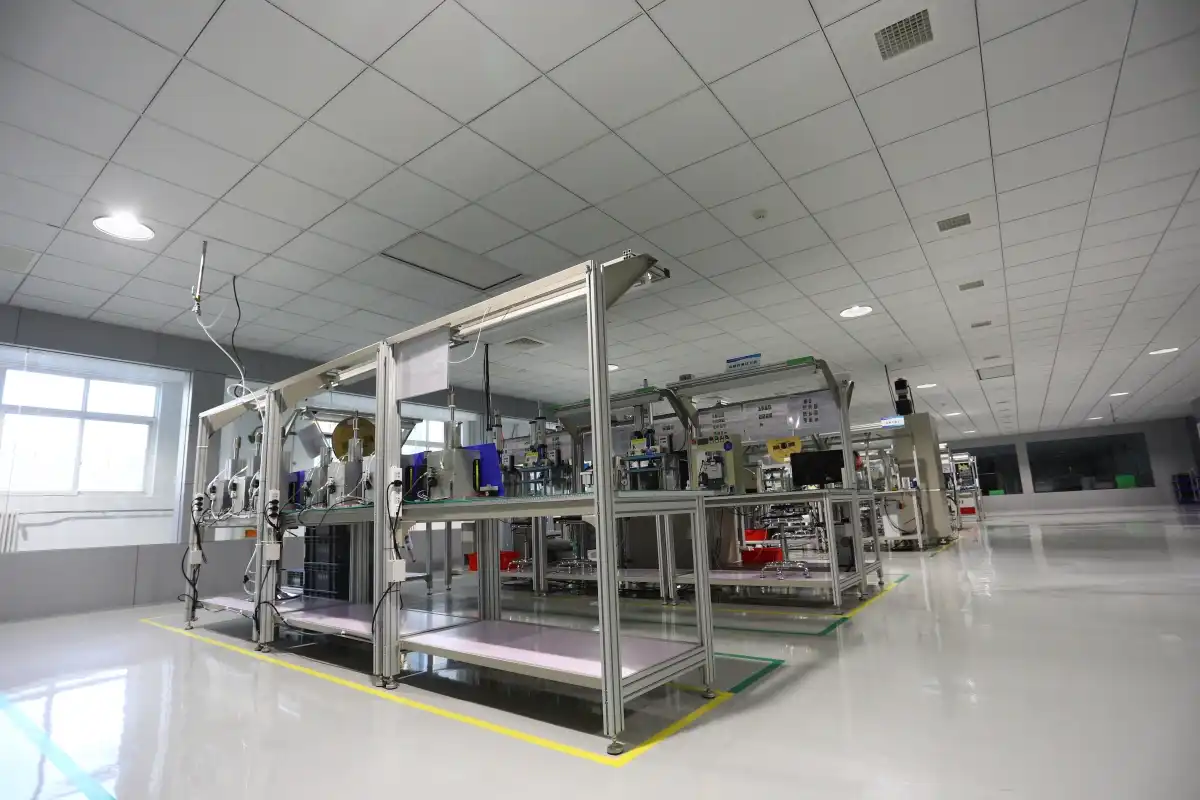
Understanding Aftertreatment Dosing Units and SCR Systems
What Does a Dosing Unit Actually Do?
An aftertreatment dosing unit measures and injects the exact amount of aqueous urea solution (usually 32.5% concentration, sold as AdBlue or DEF) into the hot exhaust gas coming from the engine before the SCR catalyst. The urea breaks down into ammonia, which then reacts with NOx molecules on the surface of the catalyst to make nitrogen gas and water vapor. The accuracy of this pumping process directly affects how well NOx is reduced; in current Euro VI systems, conversion rates above 90% are usually the goal.
Core Components of the SCR Dosing Module
The dose module is made up of several parts that are all built together and work together. The dosing pump raises and keeps the urea supply line's hydraulic pressure steady, which is usually between 0 and 12 bar (1.2 MPa). The dosing injector breaks up the urea spray into tiny droplets so that they are spread out evenly.
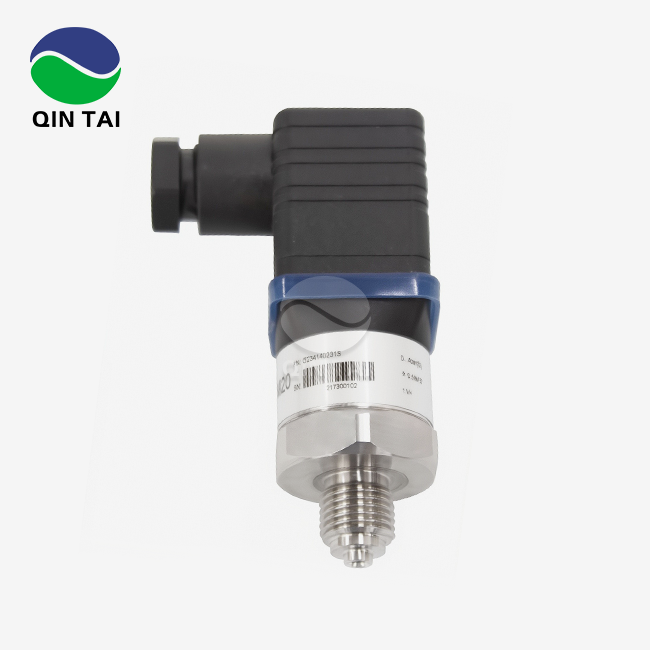
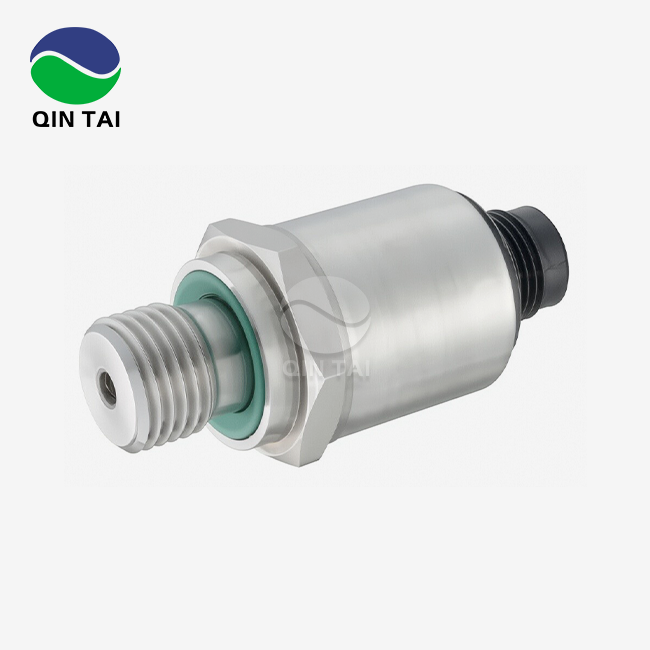
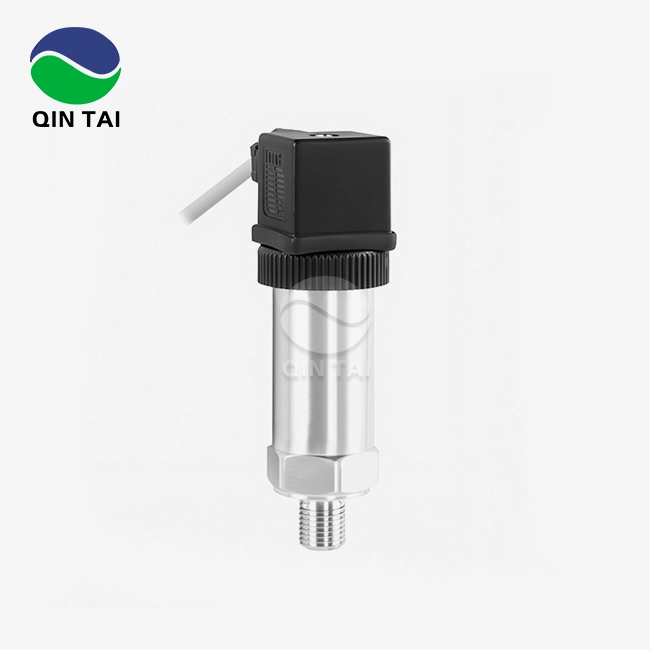
A urea dose pressure sensor checks the line pressure in real time and sends information to the dose Control Unit (DCU) or ECU. This closed-loop pressure tracking stops both underdosing and overdoing. Underdosing causes NOx non-compliance, and overdosing causes ammonia slip and catalyst contamination.
How Sensors and Catalysts Work Together
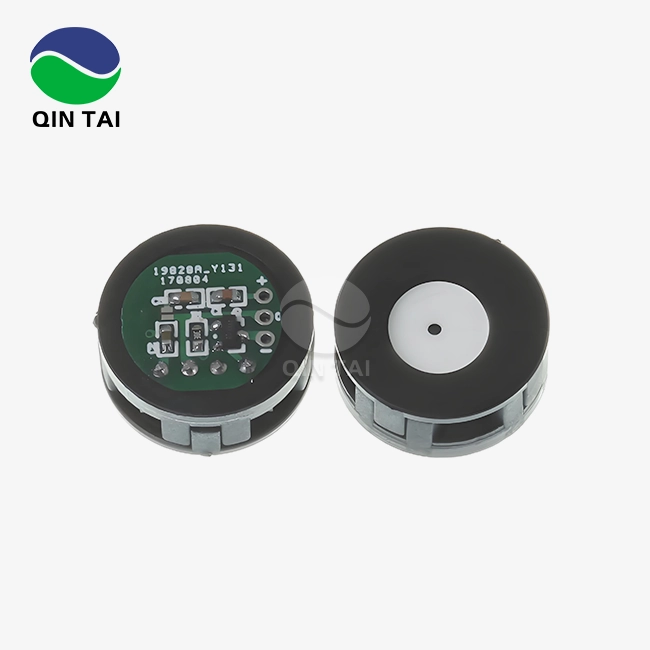
A 316L stainless steel or PPS diaphragm separates the piezoresistive MEMS technology or ceramic thick-film strain gages that are used in the urea dose pressure monitor. It works in temperatures from -40°C to +125°C and has IP69K water protection, so it can be used in difficult conditions. If the sensor detects pressure variations, the DCU of the aftertreatment dosing unit adjusts injection timing and quantity for correction. Modern SCR systems can steadily satisfy emission targets even under heavy engine loads or changing environmental conditions. This capability comes from the tight integration of sensing and actuation functions.
Key Factors in Selecting the Right Aftertreatment Dosing Unit
Dosing Accuracy and System Compatibility
The most technical part of the selection process is how well the dose is given. Even small signal drift in a unit can cause fault codes like P204B (Urea Pressure Sensor Circuit Range/Performance), which OEMs and fleet owners know is a common and annoying problem. To keep this from happening, the output signal format (0.5V–4.5V analog or SENT protocol) needs to be exactly the same as the calibration of your ECU. Most of the time, thread sizes like M101 or M12×1.5 are standard, but signal compatibility needs to be checked before buying.
Application-Specific Requirements
Dosing hardware is put under different kinds of stress depending on the application. Here are the three main deployment settings that determine the conditions for selection:
- Heavy-duty long-haul trucks demand pressure sensors and dosing injectors rated for over 1 million kilometers of service, withstanding constant road vibration and thermal cycling without signal drift or mechanical degradation.
- Construction and mining equipment operates in high-dust, high-shock conditions. Components in these environments require sealed housings rated to IP67 or IP69K and vibration-resistant internal architectures to maintain consistent SCR function under rigorous mechanical stress.
- Generator sets for mines, power plants, and backup power require industrial-grade reliability and long-term stable operation — often running 15,000 to 20,000 hours before scheduled replacement — with strong environmental adaptability across temperature extremes.
Heavy-duty long-haul trucks need pressure monitors and dosing injectors that can last for more than a million kilometers of service and can handle steady road shaking and temperature cycles without signal drift or mechanical degradation.

Top Brands and Supplier Considerations for Aftertreatment Dosing Units
Global Tier-1 Manufacturers
Many buyers recognise and trust dosing pump and injector assemblies of the aftertreatment dosing unit manufactured by Bosch and Continental, which have undergone extensive OEM validation on heavy trucks across Europe and North America. Denso and Delphi provide comprehensive datasheets and global sales networks, making them suitable selections for Asian and multi-market projects. Cummins integrates dosing technology directly within its engine aftertreatment packages. This simplifies procurement for generator set and commercial vehicle OEMs already adopting Cummins powertrains.
China-Based OEM Suppliers: A Growing Role
Over the past ten years, Chinese manufacturers have made huge strides in improving their dosing component skills. Xi'an Qintai Automotive Emission Technology Co., Ltd. was founded in 2001 and is approved to ISO9001 and IATF16949. It is a main OEM seller to Weichai Power, Yuchai Power, and Quanchai Power and has the largest share of the SCR sensor parts market in China.
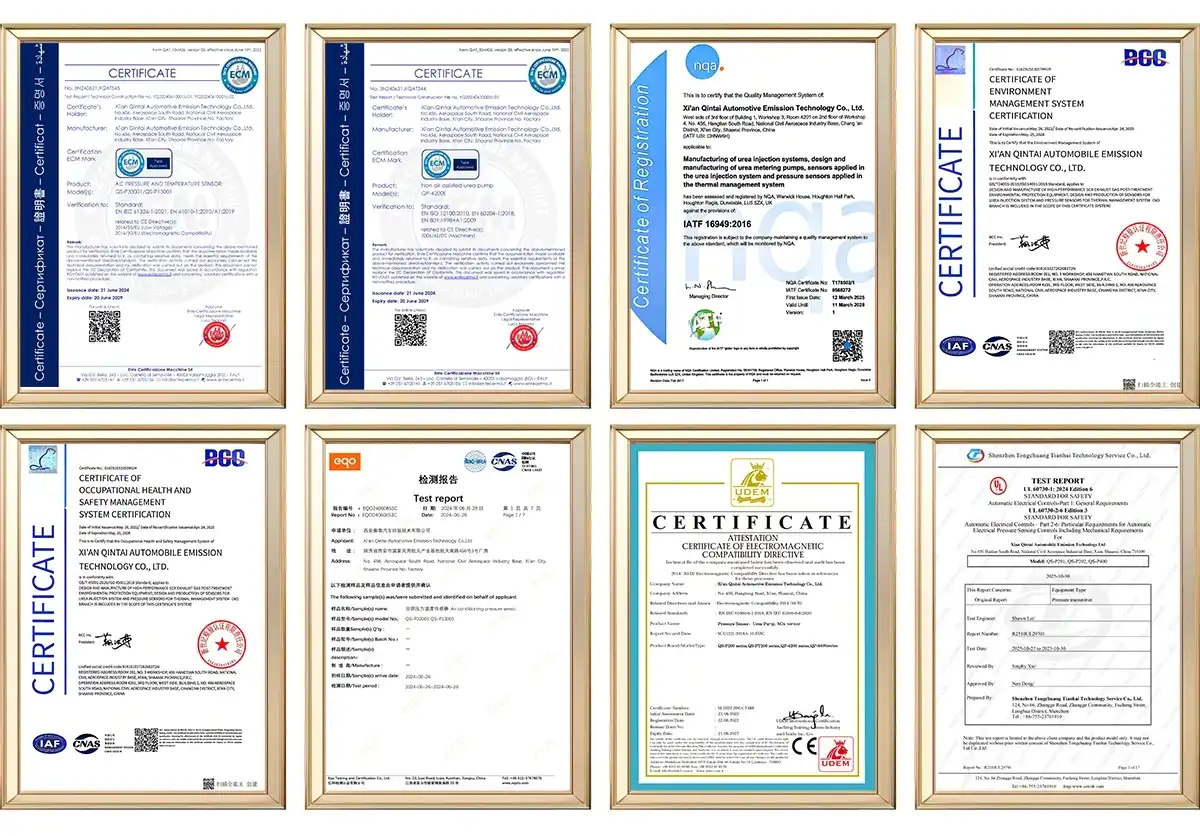
Some of the certifications that Qintai has are CMC, CE, UL, REACH, RoHS, and Ex. The company has also filed 58 invention patents. Qintai is a reliable supplier with a proven production scale for buyers in the aftermarket or integrator markets who need fast delivery, OEM/ODM freedom, and competitive price.
Verifying Genuine Parts and Procurement Strategy
Fake dosing parts are a real risk to the supply chain. You should only buy from approved distributors or straight from certified makers. Before you commit to bulk orders, ask for test reports and certifications. When buying a lot of something, you should discuss both unit price and lead time promises. When handling assembly-line schedules, delivery consistency is just as important as cost.
Installation, Maintenance, and Troubleshooting Best Practices
Pre-Installation Compatibility Checks
Before you mount any dosing unit, make sure that the pinout, signal output type, and thread specification of the electrical connector match the design documentation for your system. Mismatched connections are a major reason for early fault codes and repair cycles that aren't needed. Before you connect the new unit, make sure that the urea supply line is clear of any grit or hardened deposits.
Routine Maintenance to Prevent Failure
A high-quality aftertreatment dosing unit features an internal sensing cavity with minimal dead volume and smooth flow channels. This reduces the risk of urea crystal accumulation and diaphragm clogging. Even so, periodic inspection of the urea filter, supply lines and connector terminals remains recommended.
This is particularly critical in cold regions where AdBlue freezes at −11°C and expands by roughly 9% in volume upon freezing. Sensors equipped with flexible internal buffer structures accommodate this volume expansion, preventing signal drift and mechanical damage.
Diagnosing Common Faults
If you see the P204B trouble code, the first thing you should do is check the sensor connection for pin corrosion or water getting in. Sensors with gold-plated terminals are much less likely to oxidize than those with tin-plated terminals. If the sensor reads within its normal range but the dosing is still not consistent, check the dosing pump for a drop in pressure when it is loaded. This is usually a sign of worn-out pump parts rather than a broken sensor.
Future Trends in SCR Dosing Technology
Smarter Sensors and Predictive Monitoring
With the help of SENT protocol sensors and CAN-bus interface, the next version of SCR dosing hardware will be able to do diagnostics in real time. These let fleet management platforms keep an eye on the dosing pressure from afar, letting them know about any early signs of sensor wear before a fault code shuts down the vehicle.
Sustainable Materials and Green Design
To make sensor production less harmful to the environment, companies are using polymers that don't rust and housing materials that can be recycled. PPS diaphragm materials are already in use and are better than older metal designs because they are resistant to chemicals and lighter.
Regulatory Pressure Driving Component Precision
As stricter emission standards for off-road vehicles spread around the world, dosing requirements will only get stricter. China VI and Euro VI are already in effect. At the moment, sensors that are accurate to within 1.5% of full scale are considered to be the best. Next-generation goals are aiming for accuracy to within 1% in order to support tighter NOx window control.
Conclusion
To choose the correct aftertreatment dosing unit, you need to look beyond the catalog number. It's important to make sure that the pressure range, signal output, durability rating, and OEM compatibility are all right for your engine platform and operating environment.
Whether you're in charge of a fleet of long-haul trucks, a line of construction equipment, or industrial generator sets, the NOx compliance and system uptime depend on the quality of your dosing hardware. Working with a supplier that has valid certifications and a history of producing OEM parts lowers the technical risk and makes procurement easier across your supply chain.
FAQ
How often should a urea dosing pressure sensor be serviced?
Dosing pressure sensors are made to work for 15,000 to 20,000 hours in normal commercial vehicle settings. Every 500 hours or at the next scheduled service interval for the engine, the connectors and urea lines should be visually checked.
Can a dosing unit work across different diesel engine models?
Physical thread sizes like M10×1 or M12×1.5 are often the same across platforms. However, the electrical signal output must match the ECU calibration, whether it's 0.5V–4.5V analog or SENT. Always make sure that the signal will work before installing.
What are the signs that a dosing unit needs replacement?
Some common signs are P204B fault codes that won't go away, NOx readings above the allowed limit, urea crystallization that can be seen at the injector tip, or strange pressure readings during cold starts. If cleaning the connectors and flushing the lines don't fix the problem, the next step should be to replace the part.
How does a quality sensor handle AdBlue freezing?
AdBlue freezes at -11°C and grows by about 9% in size. A well-designed urea dosing pressure sensor has a flexible internal buffering structure that can handle this growth without changing the shape of the detecting diaphragm or causing the signal to drift.
Is IP69K protection necessary for all applications?
IP69K protection, which includes high-pressure and high-temperature water jet exposure, is needed for construction and farming equipment that is regularly pressure washed. For trucks that are used on public roads, IP67 may be enough, but choosing IP69K adds extra longevity at a small cost.
Partner with Qintai for Your SCR Dosing Needs
As a first-tier OEM partner, Qintai has been selling SCR sensor parts to Weichai, Yuchai, and Quanchai since 2001. Qintai is a qualified producer of aftertreatment dosing units. They offer OEM/ODM production, flexible modification, and shipping to over 60 countries. Our goods are approved by IATF16949, ISO9001, CE, UL, and RoHS. You can email our expert team at info@qt-sensor.com or go to qt-sensor.com to get specs, samples, or a price quote for buying in bulk.
References
1. SAE International Journal of Engines — "SCR System Performance Under Varying Urea Dosing Conditions," SAE International, 2021.
2. Emission Control Science and Technology — "Advances in Urea Dosing Accuracy for Euro VI Diesel Aftertreatment," Springer, 2022.
3. Journal of Automobile Engineering — "Diagnostic Methods for DEF Dosing System Failures in Heavy-Duty Vehicles," SAGE Publications, 2020.
4. EPA Technical Report: Tier 4 Final Nonroad Diesel Emission Standards — U.S. Environmental Protection Agency, 2014.
5. Diesel Progress North American Edition — "SCR Component Reliability in Commercial Fleet Operations," Diesel Progress, 2023.
6. International Journal of Engine Research — "Pressure Sensor Integration in SCR Urea Dosing Modules," SAGE Publications, 2021.

Our customers’ satisfaction speaks for our quality — contact us to experience the same reliable service.