- English
- French
- German
- Portuguese
- Spanish
- Russian
- Japanese
- Korean
- Arabic
- Greek
- German
- Turkish
- Italian
- Danish
- Romanian
- Indonesian
- Czech
- Afrikaans
- Swedish
- Polish
- Basque
- Catalan
- Esperanto
- Hindi
- Lao
- Albanian
- Amharic
- Armenian
- Azerbaijani
- Belarusian
- Bengali
- Bosnian
- Bulgarian
- Cebuano
- Chichewa
- Corsican
- Croatian
- Dutch
- Estonian
- Filipino
- Finnish
- Frisian
- Galician
- Georgian
- Gujarati
- Haitian
- Hausa
- Hawaiian
- Hebrew
- Hmong
- Hungarian
- Icelandic
- Igbo
- Javanese
- Kannada
- Kazakh
- Khmer
- Kurdish
- Kyrgyz
- Latin
- Latvian
- Lithuanian
- Luxembou..
- Macedonian
- Malagasy
- Malay
- Malayalam
- Maltese
- Maori
- Marathi
- Mongolian
- Burmese
- Nepali
- Norwegian
- Pashto
- Persian
- Punjabi
- Serbian
- Sesotho
- Sinhala
- Slovak
- Slovenian
- Somali
- Samoan
- Scots Gaelic
- Shona
- Sindhi
- Sundanese
- Swahili
- Tajik
- Tamil
- Telugu
- Thai
- Ukrainian
- Urdu
- Uzbek
- Vietnamese
- Welsh
- Xhosa
- Yiddish
- Yoruba
- Zulu
Urea Pressure Sensor vs Pressure Transmitter: Key Differences
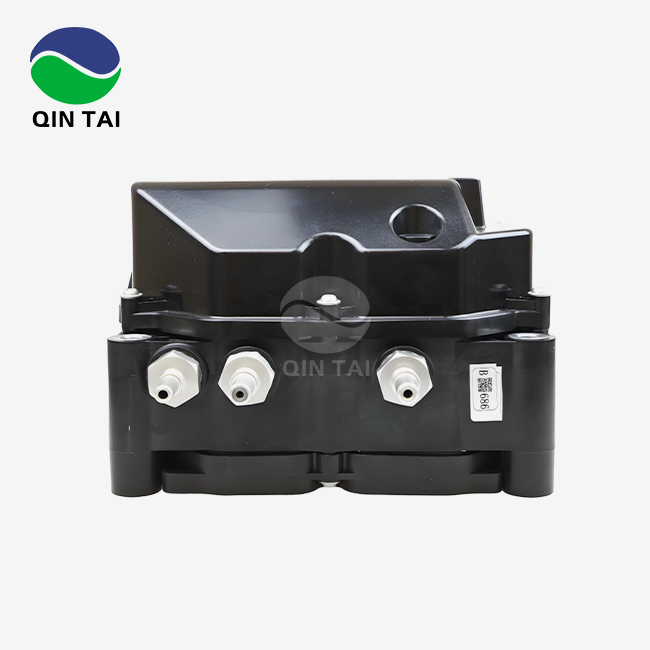
When your SCR system needs precise AdBlue dosing control, choosing between a urea pressure sensor and a general pressure transmitter is not a trivial decision. A urea pressure sensor is a dedicated device engineered specifically to measure DEF/AdBlue hydraulic pressure within SCR dosing modules, feeding real-time data to the ECU or DCU for accurate NOx reduction.
A standard pressure transmitter covers broader industrial pressure monitoring but lacks the chemical resistance, signal precision, and ECU compatibility that emission control systems demand. Understanding these distinctions directly affects regulatory compliance, system reliability, and total procurement cost.
Understanding Urea Pressure Sensors and Pressure Transmitters
What Is a Urea Pressure Sensor?
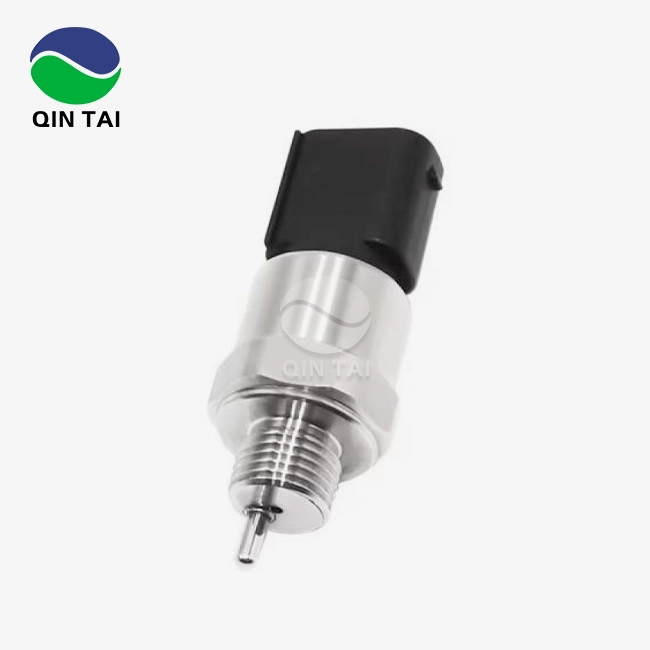
In the SCR dosing system, a urea pressure sensor, which is also known as an AdBlue pressure sensor or DEF dosing pressure sensor, checks the hydraulic pressure of the urea solution. It tells the engine control unit to exactly control the injection volume by sending a steady analog signal (usually between 0.5 and 4.5 VDC ratiometric). If the ECU doesn't have accurate pressure data, it can't keep the right dosing ratios, which can cause NOx to not meet regulations or urea to crystallize in the injector lines.
What Is a Pressure Transmitter?
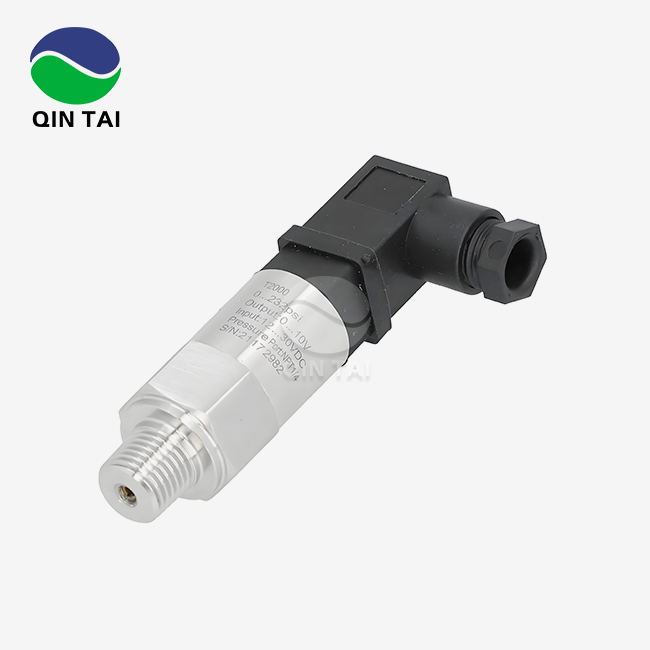
A general pressure emitter changes the pressure of a fluid into a standard electrical signal, usually between 0 and 10 V. This signal can be used in many industrial processes, including hydraulics, pneumatics, water treatment, and chemical processing. These devices are made to watch processes over a wide area, and their ability to send signals over long distances makes them valuable. Their calibration, on the other hand, does not cover urea chemistry, automotive ECU protocols, or the narrow accuracy ranges needed by Euro VI or EPA Tier 4 Final emission standards.
Operating Principles and Fluid Compatibility
Both gadgets work by using a measuring diaphragm that bends when pressure is applied to it. The most important change is in the choice of materials and their tuning. Urea pressure sensors use alloys and polymers that don't rust and can handle the chemical attack of aqueous urea (32.5%), even when it forms crystallization deposits. General pressure transmitters work best with oil, water, or gas. Over time, AdBlue can cause them to corrode or drift, which can lead to inaccurate readings and a shorter useful life.
Key Differences Between Urea Pressure Sensors and Pressure Transmitters
Measurement Precision and Accuracy
To meet emission goals, SCR systems need very precise dosing. From -14 psi to +130.5 psi, the Qintai QS-P226 urea pressure sensor can measure with an accuracy of ±0.5%. Most general pressure sensors in the same price range have a full-scale accuracy of ±1.0% to ±2.0%. That difference might not seem like much, but at high injection frequencies, even a 1% mistake in the pressure reading can change the dosing volume enough to set off fault codes or make the NOx output go over the legal limit.
Material Construction and Chemical Durability
The internal flow path geometry and wetted materials of a DEF pressure sensor are made with very little dead space so that urea doesn't get stuck and crystallize on the diaphragm. The QS-P226 is made of materials that can handle urea erosion and crystallization, so it can stay calibrated even when the quality of the AdBlue isn't great. Standard pressure transmitters have parts made of stainless steel or brass that get wet. These parts are strong in oil or water, but they aren't designed to work well with urea solutions because of their pH and crystal-forming properties.
Signal Output and ECU Integration
Urea pressure sensors send out a ratiometric analog voltage signal (0.5–4.5 VDC at 5 V supply) that is exactly what an automotive ECU needs. Some more advanced units can also work with digital standards like CAN or LIN. Most general pressure transmitters send out 0–10 V signals or current loops of 4–20 mA.
These urea pressure sensor outputs can serve as input signals for industrial PLCs. Matching a generic transmitter to an automotive DCU requires dedicated signal conditioning hardware, increases installation complexity, and may trigger calibration drift; these risks are avoided within mass-production OEM configurations.
Selecting the Right Device for Automotive and Industrial Applications
Criteria for SCR and Emission Control Systems
Diesel OEMs, aftertreatment integrators, and fleet service workshops working under China VI or Euro VI frameworks have simple requirements for the sensor they choose: it must have the right output range (0.5–4.5 VDC), match the original equipment manufacturer's pressure specification, be resistant to urea chemistry, and be able to connect directly to the vehicle's ECU without any extra signal conversion. When you buy in bulk, lead time, batch stability, and seller certifications (ISO 9001, IATF 16949) are also important.
When a General Pressure Transmitter Is Appropriate
In places where PLC-based control systems read 4–20 mA inputs, general pressure sensors are still the best choice for fixed generator emission tracking, industrial exhaust gas treatment systems, and process control. Dosing urea is not needed in these situations, and the wider tolerance and operating temperature range of industrial transmitters work well for the job. It's important to make sure that the type of gadget fits the system design and not just switch between them based on price.
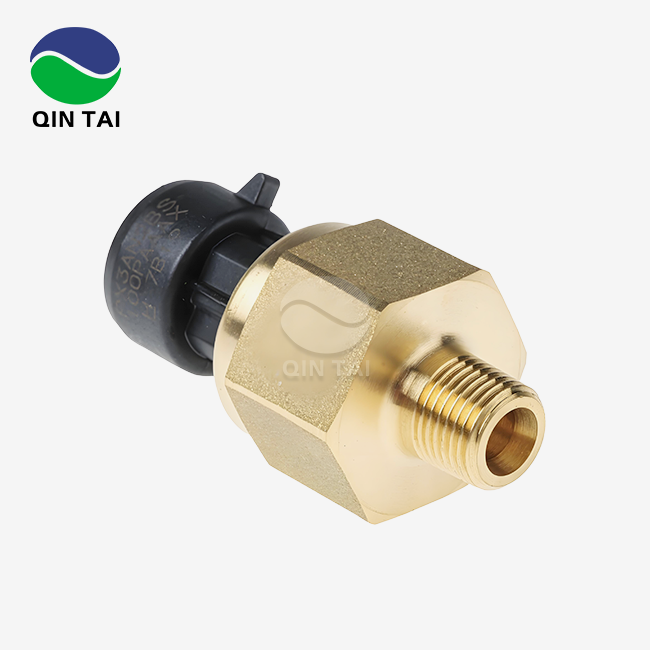
The Qintai QS-P226: Purpose-Built for SCR Systems
Qintai made the QS-P226 with its own sensor core, which was made in-house from making the diaphragm to putting it all together. Here are some of the most important specs about this device:
- Model: QS-P226
- Pressure Range: Per OE specification
- Measurement Range: -14 psi to +130.5 psi
- Supply Voltage: 5 V DC
- Signal Output: 0.5–4.5 VDC ratiometric analog
- Accuracy: ±0.5%
- Measuring Medium: Urea (AdBlue/DEF)
- Warranty: 12 months
- Quality Control: 100% tested before shipment
These tech specs take care of the most common problems that come up when buying SCRs. A consistent, factory-tested product that can be used right away helps the procurement team, and R&D engineers can be sure that the signal will stay linear across the whole pressure range.
Installation, Maintenance, and Troubleshooting Guide
Correct Installation Practices
To keep the diaphragm from getting stressed, mount the QS-P226 using the correct thread engagement depth and torque value. Before turning on the power, make sure that the wire links are fully in place and that the pin polarity fits the ECU harness. During bench testing, never put the sensor near compressed air. Instead, use a fluid-based pressure source that works with urea chemistry.
Routine Maintenance and Calibration
At every major service period, check the connection pins for oxidation on your urea pressure sensor. The QS-P226 integrates internal gold-plated terminals, so connector resistance remains stable over time. If P204B fault codes appear, the mating harness connector should be cleaned. Ratiometric sensors generally do not require recalibration as they operate within the voltage source tolerance. However, for heavy-duty generator and mining applications with long operating hours, it is recommended to verify the 0.5 V and 4.5 V endpoints against a reference gauge once a year.
Troubleshooting Common Faults
When a urea system records pressure-related DTCs, you should check these conditions in this order. First, make sure that the input voltage at the sensor connection is 5 V ± 0.1 V. Second, check the urea lines for crystallized blockages that can lead to false readings of high pressure. Third, check the output signal voltage when there is no pressure. It should be around 0.5 V. If the number is outside that range, it means that the sensor is broken or there is a problem with the wiring, not the system pressure. This keeps you from having to change the pump or injector when it's not necessary.

Benefits and Future Trends of Urea Pressure Sensors in SCR Systems
Operational Benefits for Emission Compliance
If you have accurate AdBlue dosing pressure data, you can avoid two expensive failure modes: under-dosing, which causes NOx emissions to go over the legal limit, and over-dosing, which wastes reagent and can flood the catalyst. The QS-P226 is accurate to within ±0.5%, so it can dose within the target window from -14 to +130.5 psi. This includes starting up the engine and when it's under full load on heavy-duty engines.
Emerging Technology Directions
In the next generation of SCR platforms, smaller sensors and modules that combine pressure, temperature, and quality sensing in a single housing are becoming more popular. In newer ECU designs, analog outputs are being replaced by digital outputs that use SENT or LIN protocols. Suppliers that create their own sensor cores, like Qintai, can change output protocols and physical connections more quickly than wholesalers that get their chipsets from outside companies.
Long-Term Cost and Compliance Value
A factory-calibrated, chemically resistant DEF pressure sensor doesn't need to be replaced over and over again because it has a service life of 15,000 to 20,000 hours. That means that fleet operators will have lower total costs of ownership and OEM suppliers will have better warranty performance records.
Conclusion
There is a major functional difference between an AdBlue pressure monitor built as a urea pressure sensor and a standard pressure transmitter, and this distinction matters both technically and for regulatory compliance. Euro VI and EPA Tier 4 Final systems require chemical resistance, ECU-compatible signal output and precise dosing performance, requirements fulfilled by urea pressure monitors.
General-purpose pressure sensors are suitable for industrial process control, yet they cannot replace dedicated SCR components for vehicle applications. The Qintai QS-P226 is a factory-tested, OEM-compatible sensor that comes with a 12-month warranty and 100% pre-shipment testing. It is perfect for procurement and engineering teams that are looking at different sensor suppliers. Choosing the right parts early on cuts down on rework, warranty claims, and compliance risk throughout the lifecycle of a product.
FAQ
Can a general pressure transmitter replace a urea pressure sensor in an SCR system?
No, a normal pressure transmitter sends out a 4–20 mA or 0–10 V signal, which is different from the 0.5–4.5 VDC ratiometric input that car ECUs need. Signal mismatch leads to wrong dose formulas, and the transmitter's wet materials are not rated for urea chemistry, which speeds up corrosion and causes calibration drift.
What happens when an AdBlue pressure sensor fails?
The ECU stops getting real-time pressure input, which stops it from controlling the dose. Usually, the car stores a DTC (like P204B), goes into "limp mode" with less power, and emissions go over the legal limit. To protect parts further down the line, the device may also stop urea flow completely.
How do I verify compatibility between a replacement sensor and my SCR control unit?
Three things need to be matched: the thread size (usually M10x1 or M12x1.5), the source voltage (5 V DC for most car systems), and the signal output type (0.5–4.5 VDC ratiometric). If your DCU uses a digital protocol like LIN or SENT, make sure that the new sensor works with that protocol.
How long does a urea dosing pressure sensor typically last?
These sensors are made to last at least 15,000 to 20,000 hours of use in normal commercial vehicles and generators, as long as they are installed properly and given AdBlue that meets ISO 22241 quality standards.
Partner With Qintai for Your SCR Sensor Procurement
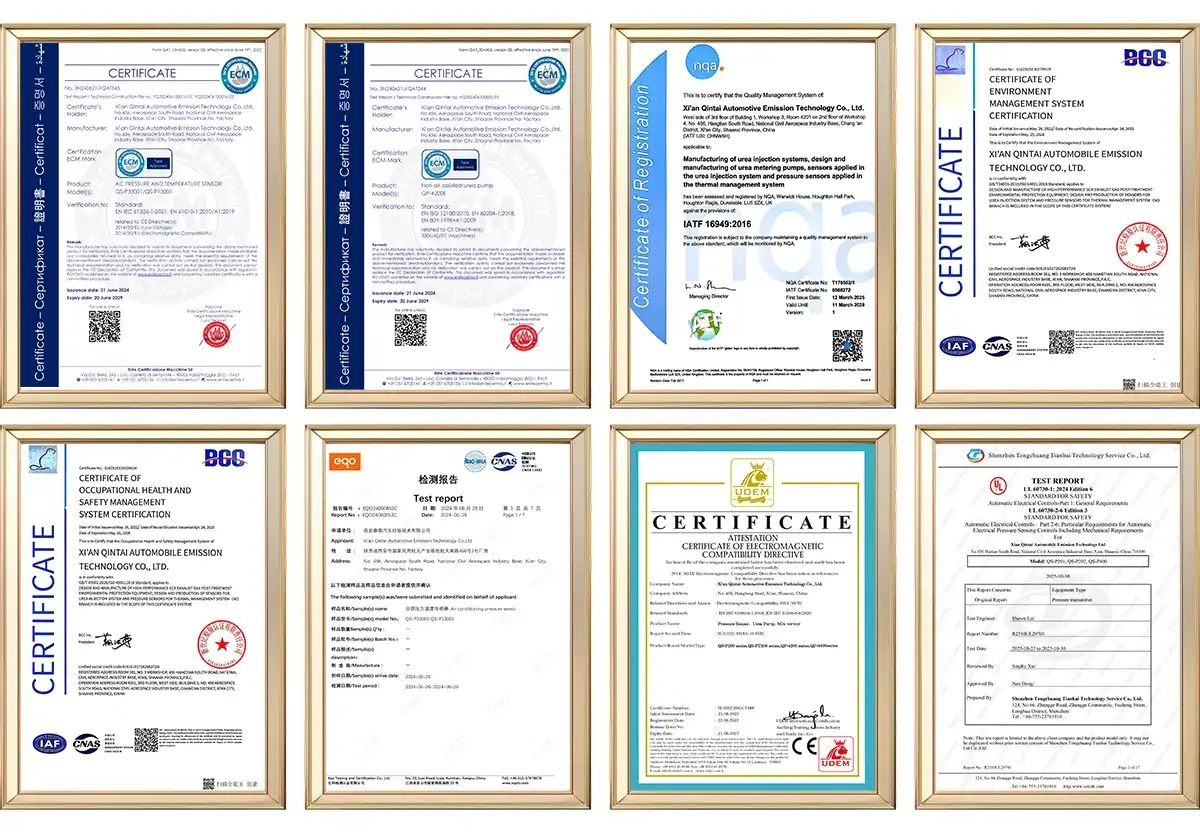
Since 2001, Qintai has been providing SCR aftertreatment sensors to OEMs like Weichai Power, Yuchai Power, and Quanchai Power. They are certified by ISO 9001 and IATF 16949. We are a verified manufacturer of urea pressure sensors and make our own sensor cores. We can customize OEM/ODM orders, handle large orders, and deliver quickly to customers in more than 60 countries. You can email our technical team at info@qt-sensor.com or visit qt-sensor.com to get datasheets, samples, or bulk pricing.
References
1. International Organization for Standardization. ISO 22241: Diesel Engines — NOx Reduction Agent AUS 32. ISO, 2019.
2. European Commission. Euro VI Emission Standards for Heavy-Duty Vehicles: Regulation (EC) No 595/2009. Official Journal of the European Union, 2009.
3. SAE International. SAE J2716: SENT — Single Edge Nibble Transmission for Automotive Applications. SAE International, 2016.
4. U.S. Environmental Protection Agency. Diesel Exhaust Fluid and Selective Catalytic Reduction: Compliance and Testing Guidance. EPA, 2021.
5. Bosch Automotive Handbook. Sensors for Automotive Applications, 10th ed. Robert Bosch GmbH, 2022.
6. SENSORS Magazine. Advances in Pressure Sensing Technologies for Automotive Exhaust Aftertreatment. Sensors Magazine, 2023.

Our customers’ satisfaction speaks for our quality — contact us to experience the same reliable service.