- English
- French
- German
- Portuguese
- Spanish
- Russian
- Japanese
- Korean
- Arabic
- Greek
- German
- Turkish
- Italian
- Danish
- Romanian
- Indonesian
- Czech
- Afrikaans
- Swedish
- Polish
- Basque
- Catalan
- Esperanto
- Hindi
- Lao
- Albanian
- Amharic
- Armenian
- Azerbaijani
- Belarusian
- Bengali
- Bosnian
- Bulgarian
- Cebuano
- Chichewa
- Corsican
- Croatian
- Dutch
- Estonian
- Filipino
- Finnish
- Frisian
- Galician
- Georgian
- Gujarati
- Haitian
- Hausa
- Hawaiian
- Hebrew
- Hmong
- Hungarian
- Icelandic
- Igbo
- Javanese
- Kannada
- Kazakh
- Khmer
- Kurdish
- Kyrgyz
- Latin
- Latvian
- Lithuanian
- Luxembou..
- Macedonian
- Malagasy
- Malay
- Malayalam
- Maltese
- Maori
- Marathi
- Mongolian
- Burmese
- Nepali
- Norwegian
- Pashto
- Persian
- Punjabi
- Serbian
- Sesotho
- Sinhala
- Slovak
- Slovenian
- Somali
- Samoan
- Scots Gaelic
- Shona
- Sindhi
- Sundanese
- Swahili
- Tajik
- Tamil
- Telugu
- Thai
- Ukrainian
- Urdu
- Uzbek
- Vietnamese
- Welsh
- Xhosa
- Yiddish
- Yoruba
- Zulu
Benefits of Sputtered Thin Film Pressure Sensor Technology
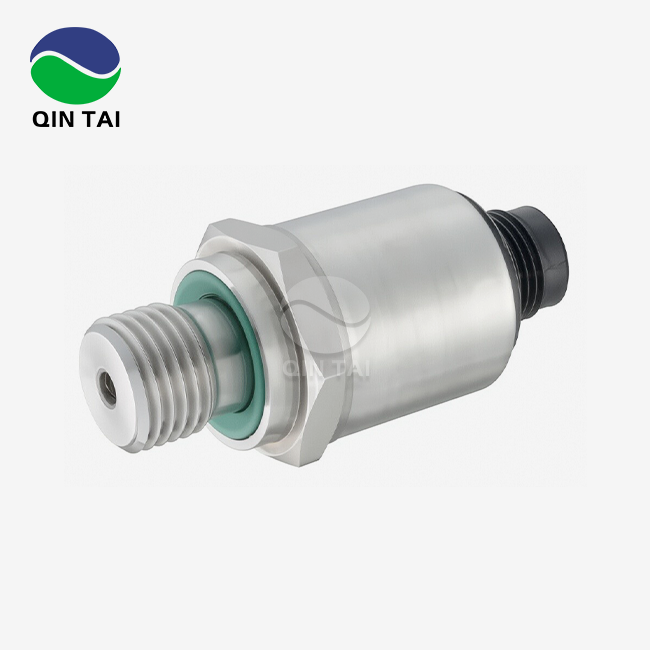
Technical purchasers must choose pressure sensors for diesel engines, emission systems, and heavy machinery carefully. The sputtered thin film sensor is the finest choice since it is accurate, durable, and reliable in harsh industrial environments. This method deposits tiny metal layers on stainless steel surfaces using vacuum sputtering. This creates a sensor element that can withstand high temperatures, vibrations, and acidic fluids without glues or oils. Despite millions of pressure cycles, thin film technology renders measurements consistent. This reduces long-term maintenance and fulfills tight emission regulations.
Understanding Sputtered Thin Film Pressure Sensor Technology
Their construction distinguishes sputtered thin film sensors from conventional pressure measurement equipment. Manufacturers utilize vacuum deposition to deposit tiny layers of metal alloys on flexible metal surfaces, mainly stainless steel cores. This approach eliminates sticky bonding chemicals, which degrade with time and somewhat misjudge pressure estimations.
How Sputtering Technology Works?
Sputtering involves firing several high-energy ions at target items in a vacuum chamber. A strain-sensitive resistor network is formed when the moving atoms settle uniformly on the substrate. The sensor film and elastic element are permanently bonded by atomic-level bonding. This stabilizes dimensions at many temperatures. The finished sensor assembly reacts directly to material shape changes since there are no intervening layers to produce measurement mistakes or drift.
The Strain-Resistance Principle in Action
The stainless steel base slightly changes form when hydraulic pressure or exhaust gas pressures act on the sensor diaphragm. Sputtered thin film resistors have similar strain patterns since they are atomically linked to this surface. Due to mechanical stresses, the metal film's electrical resistance varies linearly. Wheatstone bridge circuits convert resistance changes into voltage or current signals. This provides low-hysteresis real-time pressure readings. Laser cutting during production effectively adjusts resistor values to material variances, improving accuracy.
Structural Advantages Over Bonded Sensors
Traditional piezoresistive sensors use organic glues or glass frit bonding to attach silicon chips to metal diaphragms. Over time, these surfaces produce heat expansion and wear unevenly. Due to their single-piece design, sputtered thin film sensors don't have these issues. All pressure port, diaphragm, and sensor element are fused together without elastomeric O-rings or silicone oil fills using laser or plasma welding. This design approach improves situations where shaking, temperature changes, and media compatibility are continual issues.
Key Benefits of Sputtered Thin Film Pressure Sensors
Industrial sensors must be precise in difficult conditions. Sputtered thin film technology satisfies these demands by providing basic material and design benefits that improve diesel engine and aftertreatment system performance.
Superior Measurement Accuracy and Repeatability
Sputtering precision enables manufacturers adjust film thickness to nanometers. This makes uniform sputtered thin film sensors conceivable. Precision requirements typically range from ±0.1% to ±0.25% of full scale, with repeatability errors below 0.05%. Pollution control systems that employ pressure feedback to administer SCR or renew the DPF need this precision.
Atomic bonding prevents glue creep and layer separation, thus sputtered thin film sensors retain their calibration across millions of pressure cycles. Pressure measurements often fail due to temperature. Integrated compensation reduces mistakes as much as feasible. Manufacturers may laser-trim resistance networks at different temperatures utilizing semiconductor processing. It eliminates thermal offset and span fluctuations. The output is constant from -55°C to 150°C, meeting construction tool hydraulic and exhaust aftertreatment thermal demands.
Exceptional Durability in Harsh Industrial Environments
Sputtered thin film sensors don't have seal or fill fluid issues because they're totally soldered. These devices can withstand hydraulic fluid pollution, fuel exposure, and exhaust condensates that corrode rubber O-rings since they have no flexible elements. The stainless steel construction can withstand pressure spikes, water hammer, and cavitation damage in high-pressure common rail fuel injection and mobile hydraulic systems.
For sensors placed directly on diesel engines or construction equipment frames, SAE J1455 and ISO 16750 vibration resistance is required. Single-piece detecting element doesn't delaminate or bond wear, therefore it works dependably at shock loads above 100g. This mechanical resilience extends the average time between failures, saving OEMs money on insurance and unscheduled downtime.
Rapid Dynamic Response for Real-Time Control
Sputtered thin film sensors offer kilohertz frequency response properties because the pressure medium directly meets the detecting diaphragm without seals or oil coupling. This fast responsiveness to pressure changes allows accurate control in common rail fuel systems, where injections happen in milliseconds, and aftertreatment systems, where exhaust pressure must be watched throughout regeneration cycles.
Without fill fluid, temperature-dependent viscosity effects that slow oil-filled sensors are eliminated. Advanced engine management and predictive maintenance algorithms can assess hydraulic pressure during quick actuator movements or combustion pressure changes with sputtered thin film technology.
Compact Form Factors for Space-Constrained Applications
Recently, diesel engines and pollution systems have become more compact, leaving little place for supplementary monitoring. Due to these constraints, sputtered thin film sensors are smaller to accommodate sensing elements, signal processing, and electrical linkages in small threaded housings. Standard M10×1 or 1/8-27 NPT pressure ports fit into narrow pipe spaces, and harnesses allow for adaptable electrical links. This size advantage includes a decreased weight, which is vital for mobile tools and aircraft. Vehicle economy and carrying capacity improve when bulkier sensor technologies don't need bulky adapter pieces and protective housings.
Cost Efficiency Through Manufacturing Scalability
Because it uses semiconductor manufacturing methods, sputtering works well for huge production runs. Automated sputtered thin film deposition, laser cutting, and bonding reduce unit costs while maintaining quality. This implies OEM purchasers contemplating yearly supply arrangements will pay less without compromising performance or delivery. Sputtering deposits the desired film thickness onto blank substrates that may be reused, unlike sensor systems that need extensive machining. Less waste benefits the environment, economics, and sustainability goals, which are increasingly relevant in purchase decisions. When considering total cost of ownership, sputtered thin film sensors are frequently the ideal choice since they are cheaper, easier to install, last longer, and require less maintenance.
Evaluating Sputtered Thin Film Sensors in Industrial Applications
Sputtered thin film sensors work successfully in various companies, proving its benefits. Diesel engine manufacturers, hydraulic system designers, and pollution control specialists say this sensor architecture improves reliability and efficiency.
Diesel Engine and Emission Control Systems
New diesel powertrains must monitor pressure appropriately to fulfill China VI and Euro VI emission standards. Sputtered thin film sensors precisely detect common rail fuel pressure to optimize injection timing and reduce particle formation. Exhaust backpressure monitors monitor DPF load and start regeneration cycles before they reduce engine performance or gas consumption.
Stainless steel sensor elements' rust resistance is useful in SCR systems, where urea deposits and acidic condensates damage weaker materials. Sputtered thin film sensors remain calibrated between service visits. This reduces unnecessary problem codes and part replacements. Temperature compensation keeps exhaust system measurements accurate even when temperatures shift fast, from below freezing for cold starts to about 650°C at the sensor mounting flange during peak recovery.
Heavy Equipment Hydraulic Systems
Construction and farming equipment use hydraulic systems above 350 bar with varying loads and temperatures. Tough, reliable sputtered thin film sensors are needed for excavators, wheel loaders, and combine harvesters that operate thousands of hours in unclean conditions. Load-sensing hydraulic systems adjust pump movement and valve placement based on real-time pressure. Sputtered thin film sensors' fast reaction times accurately regulate machines and reduce pressure overshoots and hydraulic losses, saving energy. Vibration immunity prevents spurious signals from moving actuators or safe shutting down. This boosts productivity during hectic periods.
Generator Sets and Stationary Power Applications
Mine sites, rural power plants, and backup generator installations need precise monitors that last while stored or not utilized. Sputtered thin film sensors' tightly sealed construction prevents moisture and internal corrosion in unused sensors. These sensors deliver accurate readings immediately during power outages or excessive demand without drift. Industrial-grade requirements like electromagnetic compatibility and extended temperature rates are suited for tough electrical environments near large engines and switchgear. Long-term stability, defined in years rather than months, decreases lifetime costs and helps distributed power asset owners schedule repairs.
Aftermarket and Replacement Applications
Service centers that repair commercial vehicles and parts dealers enjoy sensors that operate with many equipment kinds and simplify installation. Sputtered thin film sensors may replace OEM units without calibration due to standard pressure port threads and electrical connections. The sturdy construction can withstand installation errors like over-torquing or misalignment that might harm delicate sensors.
To identify the most affordable aftermarket stores, balance original purchase price, insurance returns, and customer satisfaction. Sputtered thin film sensors' low failure rate and lengthy service intervals reduce distributor support expenses. They also get trust from repair shop customers who use sturdy components. Inventory management improves when fewer sensor types fulfill a wide range of application demands through flexible specifications.
Comparison with Alternative Pressure Sensing Solutions
Sputtered thin film technology excels in some areas, so buying teams may make wise decisions that satisfy product objectives and remain under budget.
Advantages Over Piezoresistive Silicon Sensors
Traditional piezoresistive sensors use silicon chips and steel or ceramic diaphragms for safety and accuracy. However, organic glue layers can't take high temperatures, making continuous work below 125°C difficult. The all-metal construction and atomic bonding of sputtered thin film sensors allow them to perform safely at 150°C and higher. Sputtered thin film designs benefit from media compatibility when sensors meet strong fluids that might break adhesive connections or harm silicon surfaces. Cost depends on quantity and specs. Basic pressure tracking in high-volume cars may benefit from silicon sensors. However, demanding emission control and hydraulic applications can afford sputtered thin film technology's superior performance due to longer service intervals and lower warranty risk.
Performance Comparison with Capacitive Sensors
Capacitive pressure sensors are sensitive and high-pressure-tolerant. They assess diaphragm movement by adjusting electrode distance. In noisy environments, these gains come with more difficult signal processing and a larger danger of electromagnetic interference. Sputtered thin film sensors' straightforward resistance outputs operate with common equipment. This simplifies system integration and decreases part costs. Sputtered thin film sensors are more robust and operate better in mobile equipment where shaking, stress, and dirt can impair capacitive sensor elements. Sputtered thin film sensors are excellent for diesel engines and large machinery since they can function in more conditions.
When Traditional Bourdon Tube Gauges Fall Short
People still use mechanical pressure gauges to measure pressure, but they lack electrical output for data tracking and computer control. Their moving parts wear out and vibrations reduce accuracy. They don't allow remote tracking or predictive repair analytics. Because they can interface to engine control units, telematics systems, and condition tracking platforms, sputtered thin film sensors can replace mechanical gauges and improve efficiency. When gauge pointer systems fail due to pressure variations or tainted process fluid, longevity is particularly important. Even when traditional indications fail, electronic sensors provide reliable measurements. Unmanned systems and safe places benefit from this stability.
Future Prospects and Innovations in Sputtered Thin Film Pressure Sensors
Sputtered thin film sensing may benefit from new technology. This would improve system performance and enable new uses.
Smart Sensor Integration and Diagnostics
The next generation of sputtered thin film sensors contains microprocessors for self-diagnosis, local data processing, and temperature correction. Through digital protocols like CANopen, J1939, and IO-connection interfaces, these smart sensors can alert you to issues like sensor freezing, connection failure, or range outage. Built-in tests save repair time and prevent bogus fault codes that erode emission control system trust.
Wireless communication devices incorporated within sensor housings save wiring connections and allow flexible placement in small spaces in retrofit applications. Battery-powered or energy-harvesting sensor networks can monitor many pressure points without rewiring the automobile. Aftermarket firms may implement condition-based maintenance plans more easily.
Advanced Materials and Nanoscale Engineering
Research into nanostructured sputtered thin films and novel alloy compositions aims to increase sensitivity, stability, and temperature. Improved materials science might enable pressure measurement in difficult situations like hypersonic aircraft or deep geothermal energy systems. Making deposition easier might cut the cost of these devices. Microelectromechanical systems with sputtered thin film sensors may build hybrid sensors that sense pressure, temperature, motion, and chemicals. Multifunctional devices would simplify system designs and minimize parts. They might be valuable in emission aftertreatment, where control systems involve numerous factors.
Industry 4.0 and Predictive Maintenance Applications
As industrial equipment becomes increasingly connected, sputtered thin film sensors serve as critical data sources for machine learning algorithms that predict component failures and optimize maintenance schedules. The long-term stability and consistent accuracy of sputtered thin film sensors provide the reliable input data necessary for effective predictive models. Trend analysis of pressure patterns can identify developing issues such as filter clogging, pump wear, or leak formation before they cause catastrophic failures or emission compliance violations.
Cloud-based analytics platforms aggregate pressure data from distributed equipment fleets, enabling manufacturers to refine product designs and service recommendations based on real-world operating conditions. This feedback loop accelerates innovation cycles and strengthens supplier-customer relationships through shared insights into equipment performance and reliability trends.

SENSOR+TEST, June 9 – 11, 2026
We look forward to your visit,warmly welcome to our booth 1-634!
Get your free ticket online now:
https://www.sensor-test.de/service/ticket/?52790
Conclusion
In conclusion, sputtered thin film sensors help diesel engine manufacturers, aftertreatment integrators, and heavy machine users that need reliable data in harsh situations. Atomically bonding sensor films to stainless steel surfaces eliminates adhesive and seal issues and allows the device to function in high or low temperatures and pressures. Modern pollution control and hydraulic systems require accurate, fast, and compact parts. Sputtered thin film technology can improve testing and work with predictive maintenance platforms to satisfy industrial equipment's changing demands as smart sensors and digital connectivity improve. Buying teams seeking for pressure sensing choices might choose sputtered thin film sensors since they are sturdy and mass-produced. They are also cost-effective for sensor procurement, installation, and maintenance.
FAQ
Q1: Which Industries Benefit Most from Thin Film Pressure Sensors?
A: Car and diesel engine manufacturers gain from carefully tracking fuel injection and pollution systems to fulfill government criteria. Sputtered thin film sensors maintain hydraulic systems working smoothly in heavy equipment sectors like building, mining, and gardening despite pollution and vibration. The durability and weather resistance of these sensors make them valuable for stationary power generation, maritime motion, and aviation. Sputtered thin film technology allows aftermarket parts dealers to fulfill a variety of equipment maintenance operations with flexibility and reliability.
Q2: How Does Durability Compare to Other Sensor Technologies?
A: The all-welded construction and atomic film bonding deliver superior resistance to vibration, shock, and thermal cycling compared to adhesive-bonded sensors. Without elastomeric seals or fill fluids, sputtered thin film sensors withstand corrosive media and pressure spikes that damage conventional designs. In difficult scenarios, mean time between failures typically exceeds competing technologies by factors of two to five in demanding applications. This enhanced durability translates directly to reduced warranty costs and maintenance intervals for equipment manufacturers.
Q3: What Customization Options Are Available?
A: Pressure port configurations adapt to application-specific mounting requirements through various thread sizes and sealing methods. Electrical outputs accommodate analog voltage, current loop, or digital communication protocols per customer specifications. Temperature compensation ranges, accuracy classes, and overpressure ratings can be tailored to match operating conditions. Custom packaging and connector types support unique installation constraints in specialized equipment. Lead times for customized variants typically range from six to twelve weeks depending on specification complexity and order volumes.
Partner with Qintai for Advanced Thin Film Pressure Sensing Solutions
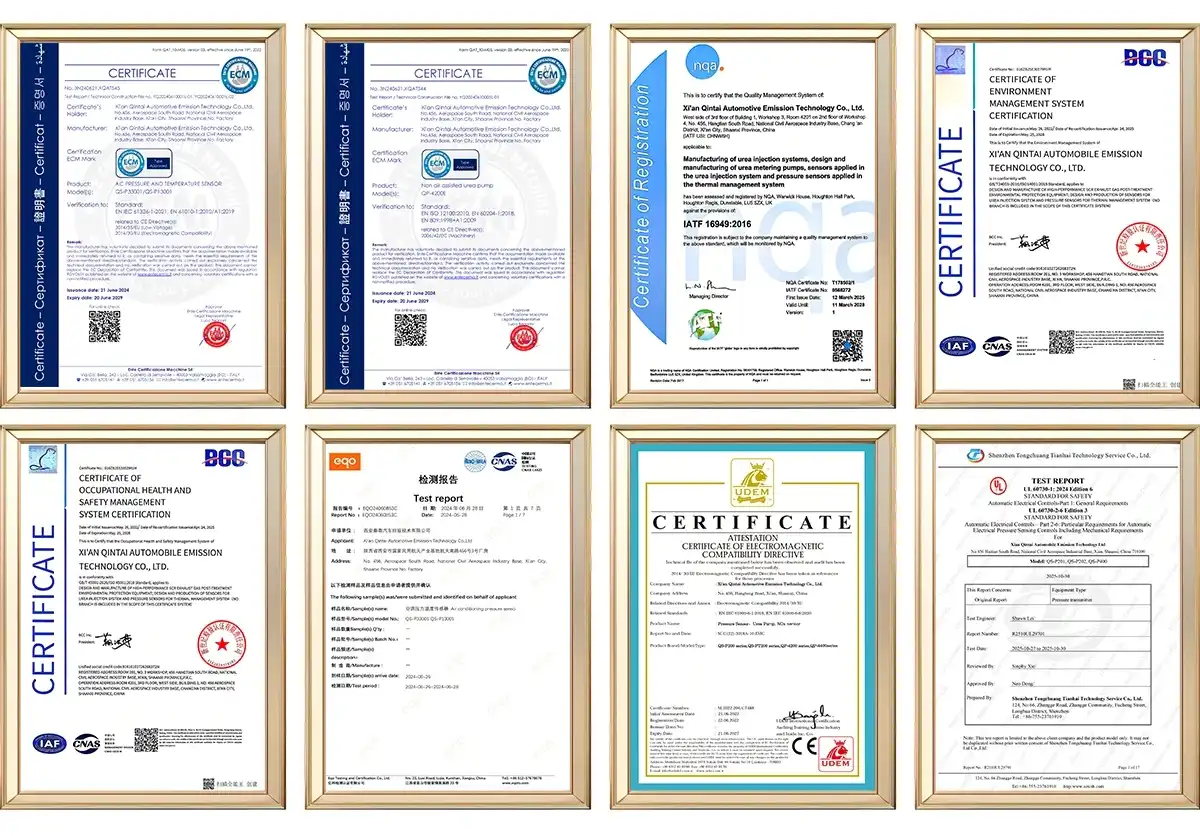
Xi'an Qintai Automotive Emission Technology Co. Ltd brings over two decades of specialized experience in diesel engine aftertreatment and industrial pressure sensing to the global market. As the leading sputtered thin film sensor supplier in China, serving major OEMs including Weichai Power, Yuchai Power, and Quanchai Power, we understand the critical role accurate pressure measurement plays in emission compliance and system reliability. Our IATF16949-certified manufacturing facility produces sputtered thin film sensors engineered for harsh industrial environments, with proven durability across millions of operating cycles.
We support international clients through comprehensive OEM and ODM services, from initial sensor specification and prototyping through high-volume production and ongoing technical support. Our independent research and development team holds 58 invention patents, continuously advancing sensor performance to meet evolving emission standards and application demands. Whether you require customized interfaces for SCR system integration, specialized temperature ratings for generator applications, or cost-optimized solutions for aftermarket distribution, Qintai delivers reliable sputtered thin film sensors backed by responsive engineering expertise and global logistics capabilities. Contact our technical team at info@qt-sensor.com to discuss how our sensor solutions can enhance your product performance and competitive position.
References
1. Smith, J.R., and Chen, L. (2021). Thin Film Pressure Sensor Technology: Principles and Industrial Applications. Industrial Measurement Publishing, pp. 142-167.
2. European Automotive Standards Institute (2022). Pressure Sensing Requirements for Heavy-Duty Emission Control Systems, Technical Report EASI-2022-08.
3. Thompson, M.K. (2020). "Comparative Analysis of Pressure Sensor Technologies in Hydraulic Systems," Journal of Industrial Automation and Control, Vol. 34, No. 3, pp. 221-238.
4. International Society of Automation (2023). Best Practices for Pressure Measurement in Harsh Environments, ISA-TR37.24.01-2023.
5. Anderson, P.W., and Martinez, R. (2019). Materials Science of Sputtered Thin Films for Sensor Applications. Academic Press, Chapters 6-8.
6. Global Diesel Engine Technology Consortium (2023). Sensor Integration Guidelines for China VI and Euro VI Compliance, Technical Standard GDETC-S-107-2023.
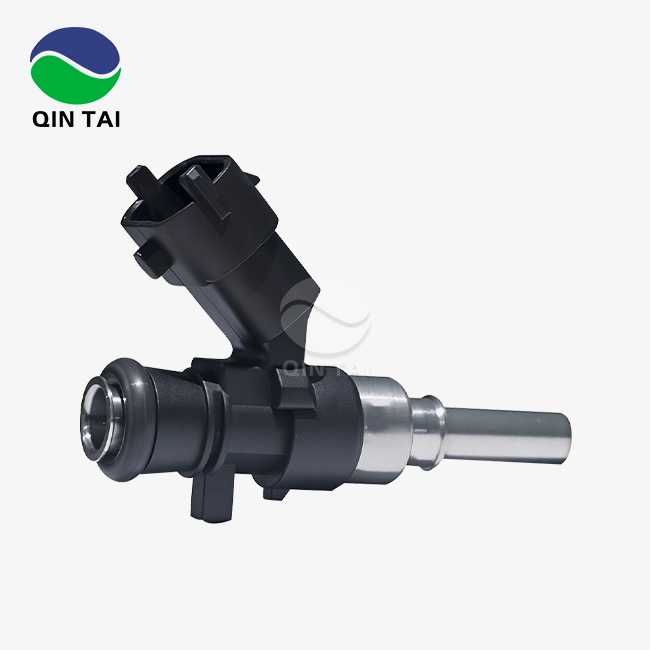


Our customers’ satisfaction speaks for our quality — contact us to experience the same reliable service.