- English
- French
- German
- Portuguese
- Spanish
- Russian
- Japanese
- Korean
- Arabic
- Greek
- German
- Turkish
- Italian
- Danish
- Romanian
- Indonesian
- Czech
- Afrikaans
- Swedish
- Polish
- Basque
- Catalan
- Esperanto
- Hindi
- Lao
- Albanian
- Amharic
- Armenian
- Azerbaijani
- Belarusian
- Bengali
- Bosnian
- Bulgarian
- Cebuano
- Chichewa
- Corsican
- Croatian
- Dutch
- Estonian
- Filipino
- Finnish
- Frisian
- Galician
- Georgian
- Gujarati
- Haitian
- Hausa
- Hawaiian
- Hebrew
- Hmong
- Hungarian
- Icelandic
- Igbo
- Javanese
- Kannada
- Kazakh
- Khmer
- Kurdish
- Kyrgyz
- Latin
- Latvian
- Lithuanian
- Luxembou..
- Macedonian
- Malagasy
- Malay
- Malayalam
- Maltese
- Maori
- Marathi
- Mongolian
- Burmese
- Nepali
- Norwegian
- Pashto
- Persian
- Punjabi
- Serbian
- Sesotho
- Sinhala
- Slovak
- Slovenian
- Somali
- Samoan
- Scots Gaelic
- Shona
- Sindhi
- Sundanese
- Swahili
- Tajik
- Tamil
- Telugu
- Thai
- Ukrainian
- Urdu
- Uzbek
- Vietnamese
- Welsh
- Xhosa
- Yiddish
- Yoruba
- Zulu
Benefits of Using Capacitive Pressure Sensors in Automation
In diesel engines and other industrial systems, capacitive pressure sensors have completely changed how we automate. These high-tech gadgets measure pressure by picking up changes in capacitance as a diaphragm bends under force. This turns physical pressure into accurate electrical signs. Capacitive pressure sensors are much more sensitive, more accurate, and use a lot less power than older technologies like piezoresistive or piezoelectric. These sensors give diesel engine makers and aftertreatment system designers the stability and consistency they need for high-volume production settings where they need to meet China VI and Euro VI pollution standards. Heavy trucks, building equipment, farm machinery, and power sets can't work without them because they can keep working even in harsh conditions.
Understanding Capacitive Pressure Sensors in Automation
Core Operating Principles and Architecture
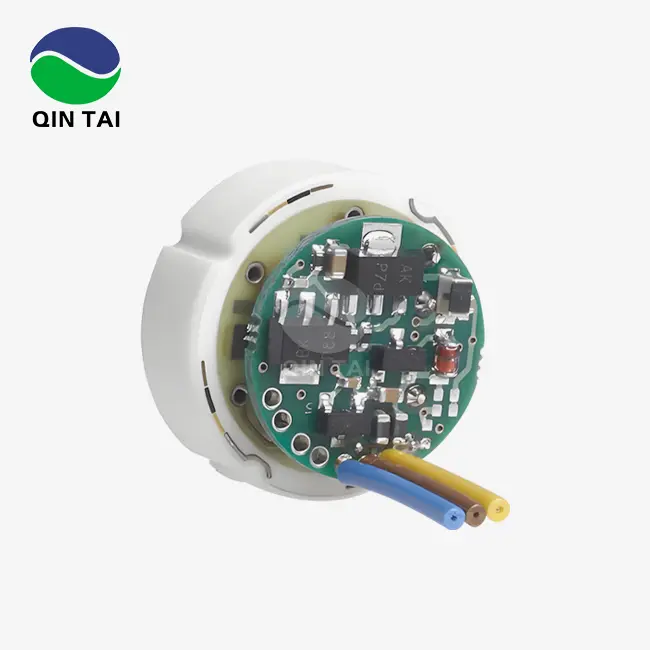
The process by which capacitive pressure sensors work is simple but complex. The sensor has a movable diaphragm that acts as an electrode, a fixed electrode that is placed parallel to it, and a material that keeps the two electrical surfaces apart. When pressure from outside the device works on the diaphragm, it moves toward or away from the fixed electrode, which changes the distance between the two. The capacitance number changes because of this actual movement, as shown by the equation C = ε₀εᵣA/d, where capacitance decreases with distance. Then, advanced signal filtering circuits boost and change these small changes in capacitance into standardized output signals that can be used in industrial control systems.
Advantages Over Traditional Sensing Technologies
When compared to piezoresistive sensors that depend on changes in resistance caused by strain, capacitive designs are more stable at high and low temperatures and have less signal shift over long periods of time. While piezoelectric options are sensitive, they often have trouble measuring static pressure and need complicated charge amplification circuits. These problems can be fixed by capacitive pressure sensors, which are naturally simple and have few parts. The technology is very reliable over the long term because it only has one moving mechanical part, the diaphragm. This means that it doesn't have as many wear and failure points as other technologies that are used in harsh robotic settings.
Industrial Applications Across Multiple Sectors
These capacitive pressure sensors are used in factories to keep an eye on the hydraulic systems very carefully. Accurately measuring the pressure has a direct effect on the quality of the products made. Process control uses in chemical plants benefit from the sensors' ability to block electromagnetic interference. This makes sure that results stay stable in places with a lot of electrical noise. Capacitive pressure sensors are used in HVAC systems to control the flow of the gas. Because they don't use much power, they are energy-efficient. Robotics uses the high sensitivity to make force feedback very sensitive in automatic production lines. For procurement managers who are interested in the total cost of ownership, stable performance and longer service gaps make the initial investment worth it.
Key Benefits Driving Capacitive Pressure Sensor Adoption
Exceptional Measurement Accuracy and Stability
The sensors are very accurate, with specs that go as low as ±0.5% full scale. This is very important for diesel engine aftertreatment systems, where even small changes in pressure can hurt the performance of emission control. Because there is little signal drift, readings stay accurate for thousands of hours without having to be re-calibrated. This meets the stability needs of OEM makers who run production lines with a lot of parts. This precision is especially useful when combining SCR and DPF systems, as precise dosing control rests on accurate pressure feedback to stay in line with regulations and get the most out of diesel exhaust fluid use.
Robust Performance in Harsh Environmental Conditions
Sensors in industrial automation settings are exposed to high and low temperatures, shaking, chemicals that break down materials, and electromagnetic fields that quickly wear out less-than-stellar technologies. Capacitive designs of good quality can work in temperatures ranging from -40°C to 135°C, which is normal for generator sets used in mines, power plants, and backup power systems. The protected design keeps out moisture and corrosive exhaust gases, which extends the product's useful life in secondary uses where replacement costs and downtime have a direct effect on repair shops' and parts providers' ability to make money. When used near high-current electrical systems and radio frequency noise sources that are widespread in building equipment, electromagnetic interference immunity makes sure that the machine works reliably.
Energy Efficiency and Sustainable Operation
Capacitive pressure sensor technology has low current usage and usually uses very little power compared to other types that need to be constantly excited. This efficiency means that less heat is made, so active cooling isn't needed in small setups, and battery-powered applications can be used in remote tracking systems. Companies that make environmental protection tools that use industrial exhaust treatment solutions can meet their green goals and cut costs at the same time. Power economy is especially important in mobile applications like farm equipment, where sensor choices are limited by the capacity of the electrical system.
Total Cost of Ownership Advantages
Although the beginning costs of purchasing capacitive pressure sensors should be taken into account, they clearly save money over time because they don't need to be replaced as often and don't need much upkeep. Lifecycle costs are lower because there are no consumable parts and the product doesn't drift, which is appealing to buying managers who are looking at long-term source partnerships and want to save money. Less frequent tuning saves money on work and system downtime, which can be measured as a benefit when comparing technologies. Customers in the industrial vehicle aftermarket who care about reliability and cost-effectiveness will see a clear return on their investment in the form of fewer failures and warranty claims.
Selecting the Right Capacitive Pressure Sensor for Your Automation Needs
Critical Performance Specifications to Evaluate
To choose the right sensors, you need to carefully look at the technical factors that match the needs of the application. Signal power and system resolution are based on sensitivity standards, which are usually given in millivolts per volt (mV/V). Non-linearity ratings below 0.3% full scale make sure that readings are correct across the whole pressure range, which is important for uses that need tight process control. Response time traits affect whether a sensor is good for dynamic pressure tracking in fuel injection systems or in hydraulic systems where changes happen more slowly. Temperature coefficients show how stable measurements are across all working ranges. For important applications, zero temperature drift below 0.03% FS/°C means the best performance.
Introducing the Qintai QS-P105F Solution
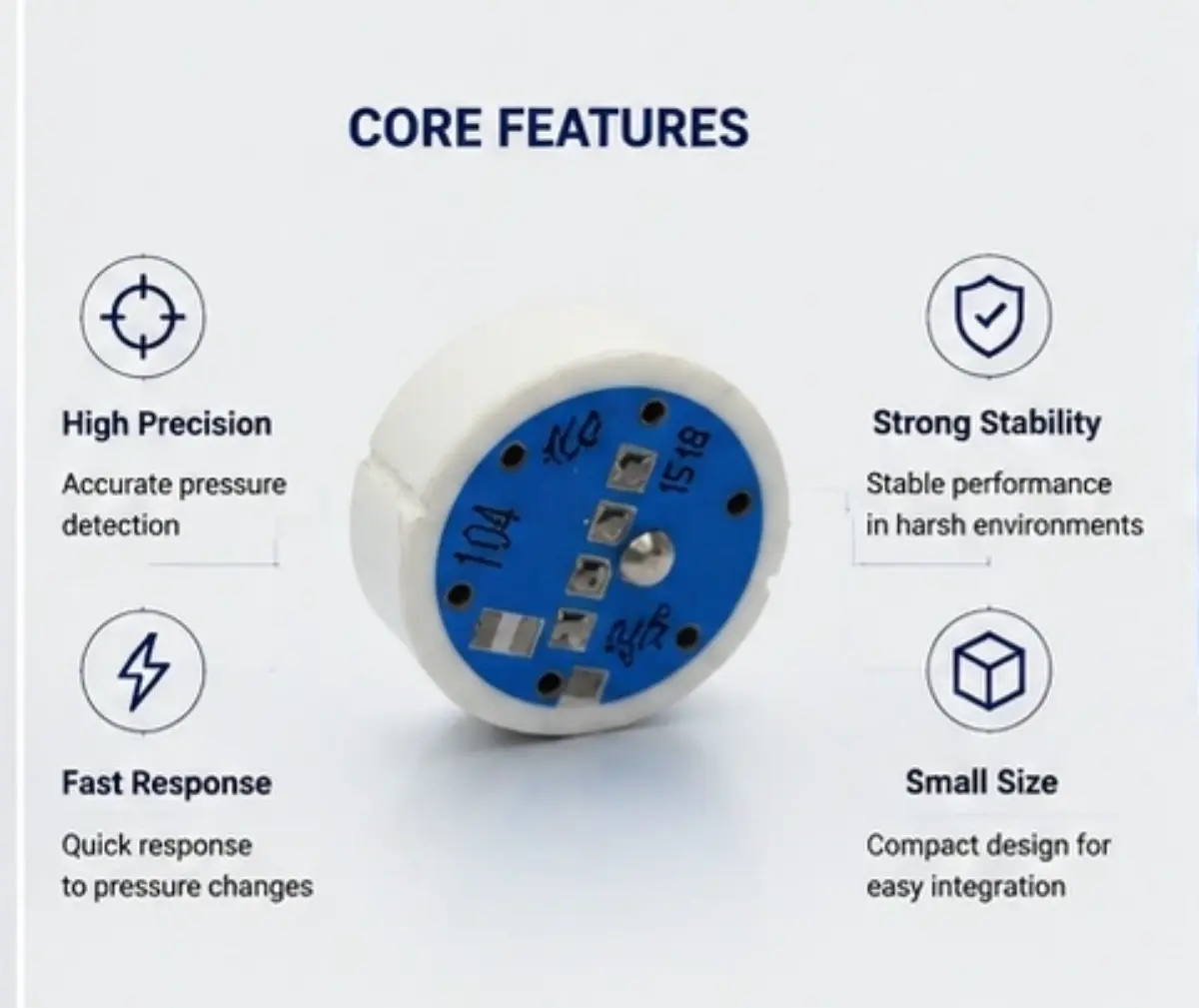
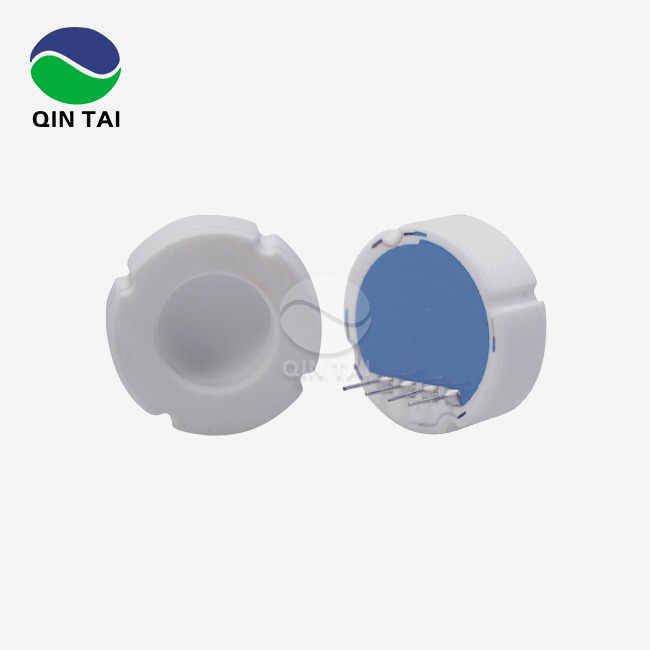
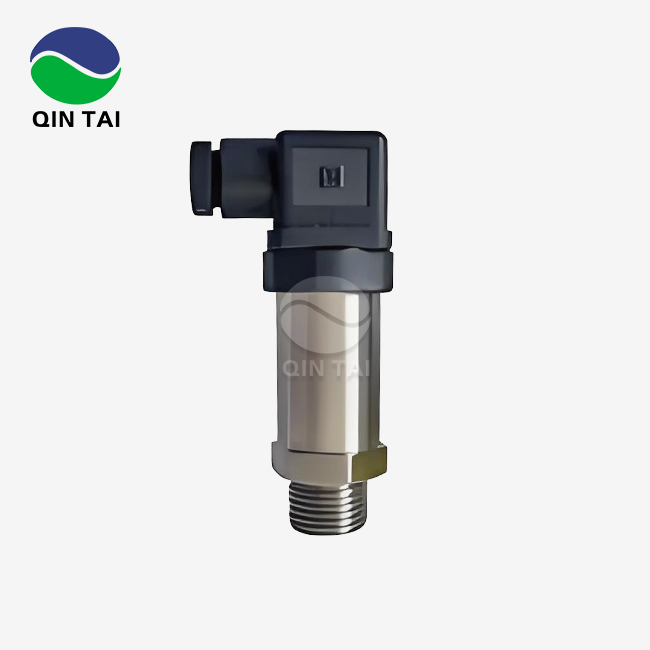
The Qintai Model QS-P105F is an example of a modern capacitive pressure sensor design that is perfect for diesel engines and industrial systems. The engineers at Xi'an Qintai Automotive Emission Technology made this sensor with the needs of OEM manufacturers in mind, making sure it meets pollution standards and can be used on a large scale. The device has a diaphragm made of 96% aluminum oxide ceramic, which is very resistant to corrosion and wear. This makes it suitable for use in tough exhaust settings. The sensor can work with pressures from -1 bar to 600 bar, so it can be used for a wide range of tasks, from tracking vacuums to high-pressure hydraulic systems in building equipment.
Technical excellence defines the QS-P105F specifications. With a sensitivity range of 2 to 4 mV/V and a nonlinearity of 0.3% full scale, the sensor gives accurate data that are needed to calibrate the aftertreatment system. A strong 200% full scale safety overload grade guards against pressure spikes that happen a lot when diesel engines work, which keeps sensors from getting damaged when something goes wrong. With a bridge resistance of 11±30% kΩ, the operation is stable and there is little shift. The input voltage range of 2 to 30 VDC is flexible enough to work with a wide range of system designs. The low power consumption makes it ideal for battery-powered applications without lowering performance standards.
Supplier Selection and Procurement Considerations
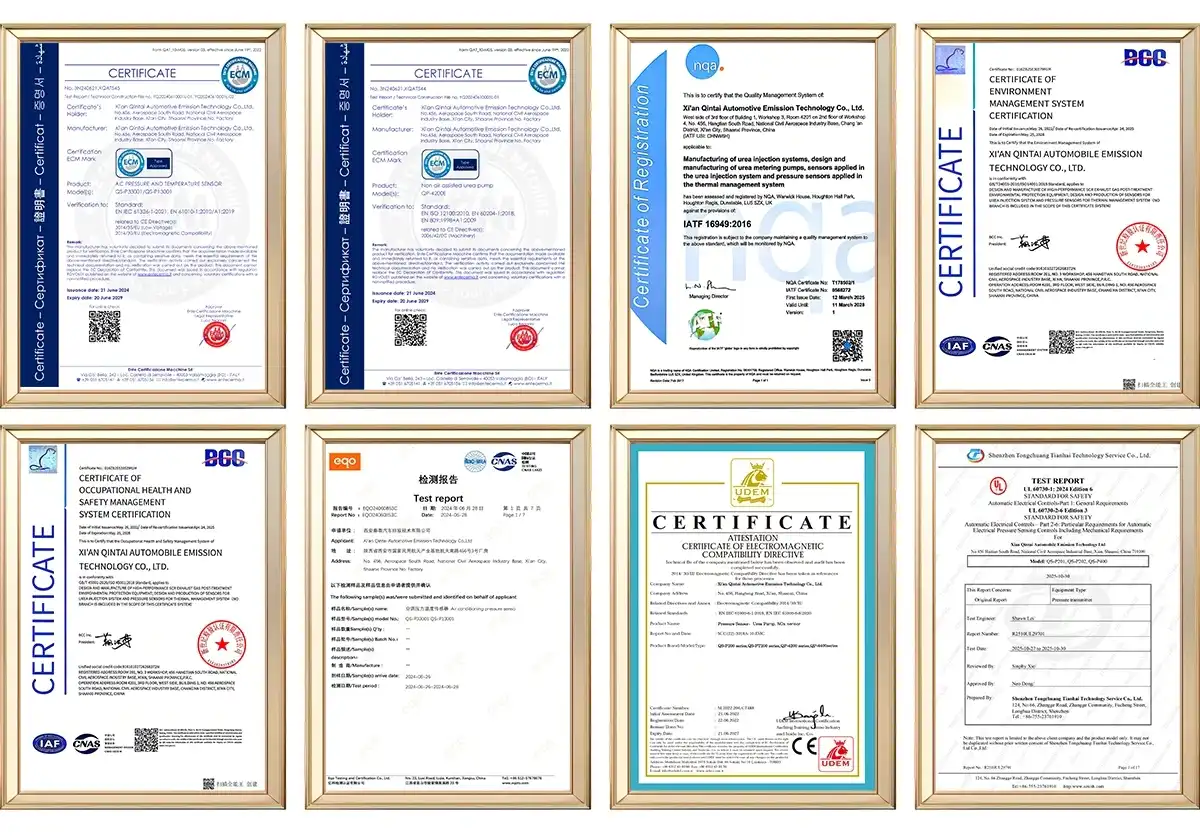
By working with well-known makers, you can be sure of getting access to a lot of technical information, help from application engineers, and regular product quality. Qintai is China's top original equipment manufacturer (OEM) seller, and it works with Weichai Power, Yuchai Power, and Quanchai Power. It has the mass production skills that are needed for big diesel engine projects. Certifications like ISO9001, IATF16949, and emission-specific standards show that a company is dedicated to quality processes and following the rules. Independent research and development help keep new ideas coming up, and the 58 creation patents show how deep the technical knowledge is. Support in multiple languages and proven export routes to more than 60 countries make it easier for foreign procurement managers to integrate the supply chain.
Customization gives you the freedom to meet unique application needs that standard catalog goods can't. When responsive engineering teams change things like electrical connections, pressure ranges, or mechanical interfaces, they can make solutions fit specific system designs. Flexibility in the minimum order number allows for both prototyping and moves to volume production, which works with the staged development timelines that are common in OEM projects. Lead time predictability makes sure that products come out at the same time, which is important for arranging the release of complex diesel engine platforms across multiple car or equipment models.
Implementation and Calibration to Maximize Sensor Performance
Standard Calibration Procedures and Tools
Using precise pressure sources for calibration is the only way to get the most accurate measurements. Known pressures are applied across the capacitive pressure sensor's working range while output signals are recorded. This establishes the link between physical pressure and electrical reaction. Precision pressure calibrators that are more accurate than the capacitive pressure sensor being tested make sure that the standard is correct. Adjustments for temperature compensation take into account changes in the surroundings. This is especially important for uses that experience large temperature swings. As needed by ISO and IATF standards for quality management systems, measurement traceability must be maintained through documentation of calibration data and regular recalibration schedules.
Integration Best Practices for Reliable Operation
Stress-related measurement mistakes can be avoided by properly fixing the capacitive pressure sensor mechanically, and too much vibration can damage the device. When installing, the torque specs must be followed exactly, because over-tightening can bend the sensor body and make it less accurate. Pressure port links need the right seals or gaskets that are compatible with the media being measured. This keeps leaks from happening and keeps the internal sensor elements from getting dirty. When electromagnetic interference threatens the purity of a signal, shielded wires are helpful for electrical links. Good grounding practices reduce noise coupling. In diesel engine rooms that are very rough on electricity, keeping the cables away from high-voltage starting systems and motor drives protects the quality of the measurements.
Maintenance Protocols and Troubleshooting Guidelines
At regular times, electrical connections should be checked to make sure they are still safe and free of corrosion. This is especially important for mobile equipment that is exposed to water and road salts. A pressure port check can find debris buildup or media crystallization that could change results. Cleaning the port properly can restore performance. Checking it against known pressure standards on a regular basis makes sure it stays accurate and, if necessary, recalibrates or replaces it. To fix numbers that don't make sense, you have to check the stability of the power source, the integrity of the cables, and the system's grounding before you can say that the sensor is broken. Keeping extra capacitive pressure sensors on hand for important uses cuts down on downtime by letting you replace broken ones right away while the problem is being looked into.
Future Trends and Innovations in Capacitive Pressure Sensing for Automation
Materials Science Advancements Enhancing Sensor Capabilities
Improvements in materials science that make sensors better. New ceramic composites and advanced dielectric materials offer better chemical protection and temperature stability, which will allow capacitive pressure sensors to be used in harsher conditions. Making microelectromechanical systems (MEMS) allows for smaller sizes without lowering performance, which helps them fit into diesel engine setups with limited room. New electrode coatings make them less likely to rust in harsh exhaust gas environments, which means that aftertreatment system uses need less upkeep. These new materials directly address OEM manufacturers' worries about warranties and how long things will last.
IoT Integration and Industry 4.0 Connectivity
More and more modern sensors use digital communication methods that let them connect directly to industrial networks and cloud-based tracking systems. Embedded microprocessors handle signals locally and can do diagnostics. They give the health state of the sensor along with pressure readings. Predictive maintenance algorithms look at data trends to see when failures will happen. This cuts down on unplanned downtime in diesel engine uses that are very important. Wireless choices for connection get rid of the need for expensive cables in retrofit setups, which is appealing to people who buy used equipment and want to add modern tracking features. Connected monitors collect data that helps improve system performance, which lowers running costs and supports efforts to cut down on emissions.
Market Expansion and Customization Trends
As pollution rules around the world get stricter, diesel engine aftertreatment systems need to be able to accurately measure pressure. This makes the market for specialized sensor solutions bigger. As construction equipment becomes more electric, hybrid powertrain uses are created that need strong pressure sensors for hydraulic systems that work with electric drives. Generator set makers who want to be more efficient and cut down on repair times use new sensors that allow condition-based service intervals. System designers need solutions that are more and more tailored to their specific needs, including connector standards, communication methods, and space envelopes. In this changing environment, manufacturers who invest in flexible output and responsive engineering help will be in a better situation.
Conclusion
For automation uses in diesel engines, industrial gear, and emission control systems, capacitive pressure sensors offer significant benefits. Their high accuracy, ability to work in harsh environments, and low upkeep needs meet the main requirements of OEM makers, system developers, and aftermarket providers. The Qintai QS-P105F is an example of advanced sensor technology that is designed to work in tough environments. It combines tried-and-true design principles with a wide range of customization options. The worth of sensors is maximized when they are properly chosen, installed, and maintained. This helps with legal compliance, operational efficiency, and keeping costs low. As robotic technologies get smarter and more connected, capacitive pressure sensors will keep changing to meet the needs of the growing industry.
FAQ
What distinguishes capacitive pressure sensors from piezoresistive alternatives?
Capacitive pressure sensors measure pressure by changing the distance between electrodes. They are more stable at high temperatures and use less power than piezoresistive designs, which measure changes in resistance caused by strain. Because of this basic difference, the signal doesn't change as much over time, and it works better in hot places like diesel engine uses.
Which industries benefit most from capacitive pressure sensor implementation?
Capacitive pressure sensor technology is very helpful for companies that make diesel engines, install aftertreatment systems, make building equipment, and sell generator sets. Accurate measurements help with accurate exhaust treatment control in heavy truck uses that need to meet emission standards. Agricultural equipment that works in a wide range of temperatures needs sensors that work well. Long-term reliability is important for industrial air treatment systems, which is something that capacitive pressure sensor designs naturally offer.
How do I ensure proper capacitive pressure sensor calibration?
For calibration, you need to use pressure standards that can be tracked and are more accurate than the capacitive pressure sensor being tested. These standards must be applied consistently across the working range while output signals are being recorded. Temperature compensation adjustments take into account changes in the surroundings that can affect the accuracy of measurements. Traceability is kept up by professional testing tools and written processes that support quality management systems. Periodic recalibration times rely on how important the application is and what the regulations say they have to be.
Partner with a Trusted Capacitive Pressure Sensor Manufacturer
With tried-and-true capacitive pressure sensor options, Xi'an Qintai Automotive Emission Technology is ready to help you with your automation and emission control needs. Our QS-P105F type is designed to work with diesel engines that are very demanding. It has a high-tech ceramic diaphragm, a wide range of pressure choices, and great temperature performance. As China's top original equipment manufacturer (OEM) provider, we offer consistent quality to support your mass production plans and regulatory compliance goals. Our certifications include ISO9001, IATF16949, and emission-specific standards.
Our independent research and development, which is shown by our 58 idea patents, lets you make changes that meet your specific integration needs. Our engineering team works closely with your technical staff to make sure that the sensors work best in your unique automation setting. This includes changing the pressure ranges, creating custom electrical interfaces, or packaging that is made for the specific job. Diesel engine OEMs, aftertreatment system integrators, and industrial automation experts who want reliable pressure sensing solutions backed by quick technical help and fair pricing are welcome to contact us. Get in touch with us at info@qt-sensor.com to talk about your capacitive pressure sensor provider needs and find out how our experience working with customers in over 60 countries can help you reach your product development and production goals faster.
References
1. Webster, J.G., The Measurement, Instrumentation and Sensors Handbook, CRC Press, 1999.
2. Huang, S.M., et al., "Capacitive Pressure Sensors: Technology and Applications," Sensors and Actuators A: Physical, vol. 188, pp. 2-15, 2012.
3. Barlian, A.A., et al., "Review: Semiconductor Piezoresistance for Microsystems," Proceedings of the IEEE, vol. 97, no. 3, pp. 513-552, 2009.
4. Majumder, S., et al., "Recent Advances in Multifunctional Sensing Technology on a Perspective of Multi-sensor System Applications," IEEE Sensors Journal, vol. 19, no. 4, pp. 1204-1214, 2019.
5. Tian, B., et al., "Pressure Sensors for Automotive Applications," SAE International Journal of Passenger Cars - Electronic and Electrical Systems, vol. 6, no. 2, pp. 333-344, 2013.
6. Wilson, J.S., Sensor Technology Handbook, Elsevier, 2005.

Our customers’ satisfaction speaks for our quality — contact us to experience the same reliable service.