- English
- French
- German
- Portuguese
- Spanish
- Russian
- Japanese
- Korean
- Arabic
- Greek
- German
- Turkish
- Italian
- Danish
- Romanian
- Indonesian
- Czech
- Afrikaans
- Swedish
- Polish
- Basque
- Catalan
- Esperanto
- Hindi
- Lao
- Albanian
- Amharic
- Armenian
- Azerbaijani
- Belarusian
- Bengali
- Bosnian
- Bulgarian
- Cebuano
- Chichewa
- Corsican
- Croatian
- Dutch
- Estonian
- Filipino
- Finnish
- Frisian
- Galician
- Georgian
- Gujarati
- Haitian
- Hausa
- Hawaiian
- Hebrew
- Hmong
- Hungarian
- Icelandic
- Igbo
- Javanese
- Kannada
- Kazakh
- Khmer
- Kurdish
- Kyrgyz
- Latin
- Latvian
- Lithuanian
- Luxembou..
- Macedonian
- Malagasy
- Malay
- Malayalam
- Maltese
- Maori
- Marathi
- Mongolian
- Burmese
- Nepali
- Norwegian
- Pashto
- Persian
- Punjabi
- Serbian
- Sesotho
- Sinhala
- Slovak
- Slovenian
- Somali
- Samoan
- Scots Gaelic
- Shona
- Sindhi
- Sundanese
- Swahili
- Tajik
- Tamil
- Telugu
- Thai
- Ukrainian
- Urdu
- Uzbek
- Vietnamese
- Welsh
- Xhosa
- Yiddish
- Yoruba
- Zulu
Best Ceramic Pressure Sensors for Corrosive Media
In harsh chemical conditions, Ceramic Pressure Sensors are the best choice for industrial measurement. These sophisticated gadgets provide precise pressure readings when metal sensors fail within months due to their chemical inertness and mechanical strength. Built from 96% Al2O3 ceramic materials, they can endure corrosive acids, caustic alkalis, and abrasive slurries while retaining measurement precision from -40°C to 135°C. Diesel engine production, chemical processing, and environmental protection increasingly use Ceramic Pressure Sensor technologies to fulfill emission compliance and operational dependability demands.


Understanding Ceramic Pressure Sensors and Their Advantages in Corrosive Media
Core Technology Behind Ceramic Sensor Performance
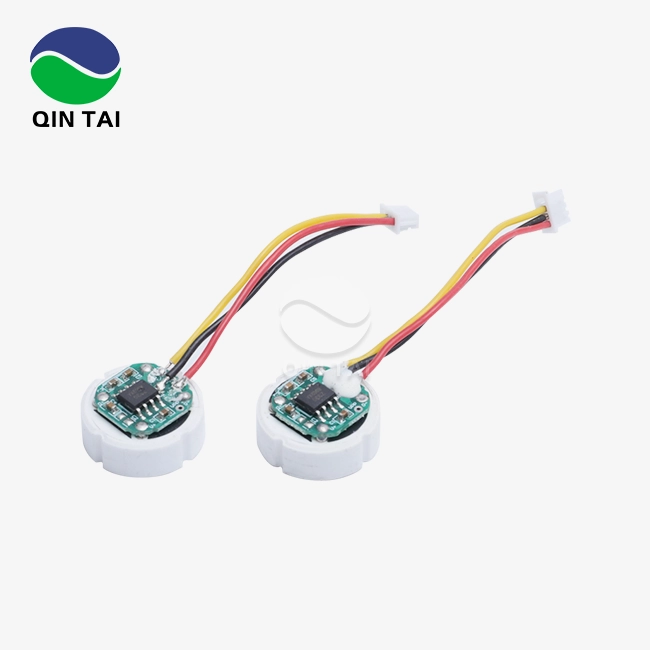
Piezoresistive Ceramic Pressure Sensors use thick-film resistive networks on alumina Ceramic Pressure Sensor diaphragms. Ceramic membrane resistance varies appropriately with pressure, creating electrical signals that precisely represent observed pressures. This direct connection avoids metal sensor oil-filled transmission systems, reducing contamination and simplifying installation. The 96% aluminum oxide composition resists strong acids, alkaline solutions, and organic solvents. Ceramic Pressure Sensor materials are inert to chlorine compounds, sulfuric acid concentrations, and ammonia-based media in SCR aftertreatment systems and DPF regeneration processes, unlike stainless steel or Hastelloy.
Material Advantages Over Traditional Metal Sensors
Galvanic processes damage metal housings, whereas Ceramic Pressure Sensor bodies withstand electrochemical degradation. In corrosive conditions where metal sensors fail in 12–18 months, Ceramic Pressure Sensors last five to seven years. Over the sensor's lifespan, reduced maintenance cycles cut total cost of ownership by 40-60%. Another trait is mechanical robustness. Ceramic Pressure Sensor materials withstand pressure spikes and heat cycles that wear metal diaphragms. Ceramic Pressure Sensors are suitable for hydraulic systems in construction machinery and mining slurry applications because their 9-Mohs hardness resists particulate-laden medium wear.
Temperature Stability and Measurement Accuracy
Various industrial applications can operate from -40°C to 135°C without performance deterioration. The zero temperature drift criterion < 0.05% FS/°C ensures measurement consistency throughout ambient and process temperature variations. Diesel engine exhaust gas recirculation systems make fast temperature changes during cold starts and regeneration cycles, hence thermal stability is crucial. High measurement accuracy of ±0.5% full scale and non-linearity standards of 0.3% FS ensure emission control compliance. R&D experts creating Euro VI and China VI systems need this accuracy to improve NOx reduction efficiency and monitor engine backpressure.
How to Choose the Best Ceramic Pressure Sensors for Harsh/Corrosive Environments?
Defining Application-Specific Requirements
Complete media analysis is the first step in sensor selection, especially when considering Ceramic Pressure Sensors. Required material compatibility depends on chemical composition, concentration, and temperature. Purchasing managers should record if measurement is in liquid or gaseous medium, suspended particles, and crystallization or polymerization that might block pressure ports. Specific pressure range affects sensor performance and lifespan.
Applications measuring -1 bar vacuum to 600 bar positive pressure need diverse diaphragm thicknesses and mounting arrangements. Safety overload ratings—usually 200% of full scale—protect hydraulic and industrial equipment against pressure spikes. Installation limitations mold physical specs. Heavy vehicles and agricultural machinery need small sensor profiles with various mounting choices for space-limited engine compartments. To simplify integration, connection thread standards, electrical termination types, and cable length parameters must match system design.
Evaluating Technical Performance Criteria
Data acquisition system compatibility and signal strength depend on sensitivity criteria from 2.0 to 4.0 mV/V. Higher-sensitivity outputs simplify signal processing but may enhance electrical interference in high-EMI diesel engine and generator spaces. Response time impacts dynamic measurement. Pressure pulsations in common rail fuel systems and transient combustion events can be monitored with Ceramic Pressure Sensors' inherent frequencies exceeding 50 kHz.
Technical managers assessing SCR system integration should check response characteristics against dosing control loop requirements. With 2-30 VDC supply voltage flexibility, multiple power topologies are compatible. Retrofitting existing vehicle platforms and industrial equipment without power sources or voltage converters is easy.
Supplier Evaluation and Quality Assurance
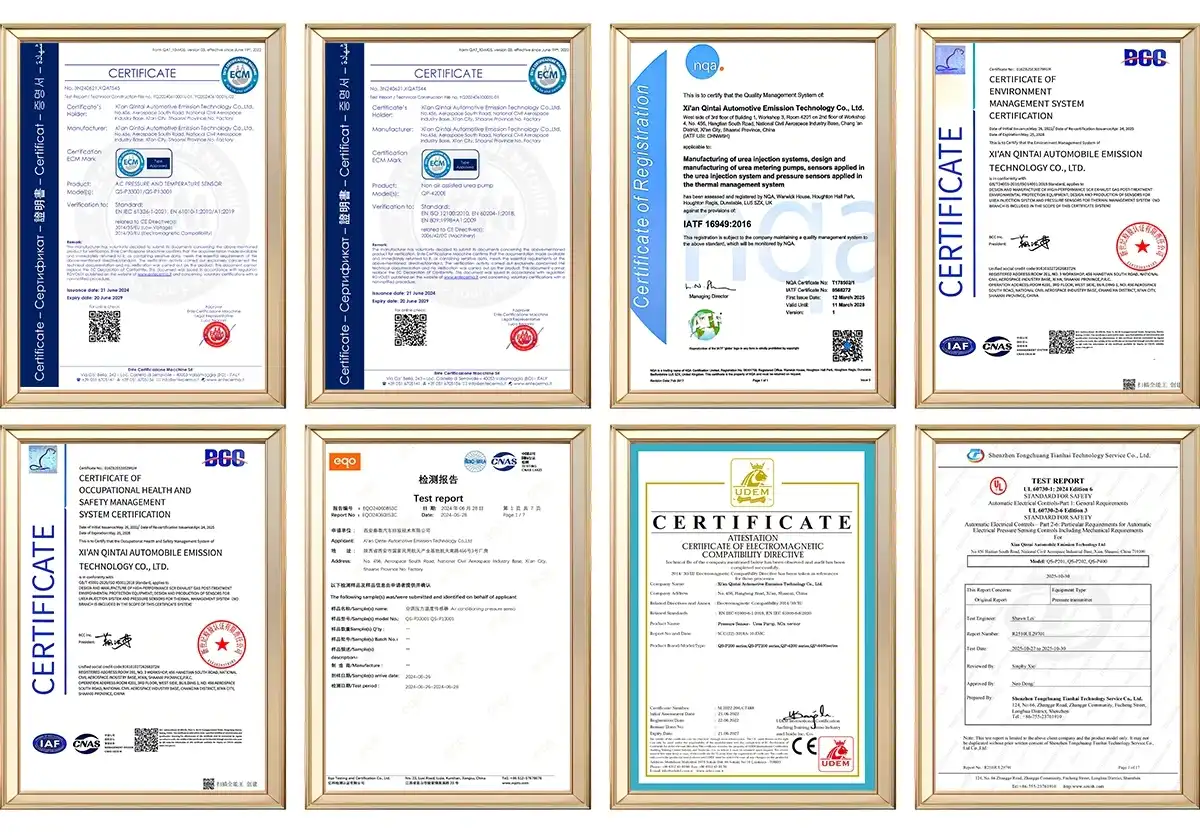
Certified quality ensures production uniformity and process control. OEMs need ISO9001 and IATF16949-certified automotive quality systems. ATEX and UL certifications make hazardous site installations in petrochemical and maritime applications more suitable. IP portfolios show creativity and technological depth. Suppliers with several innovation patents have sophisticated R&D skills for specific applications.
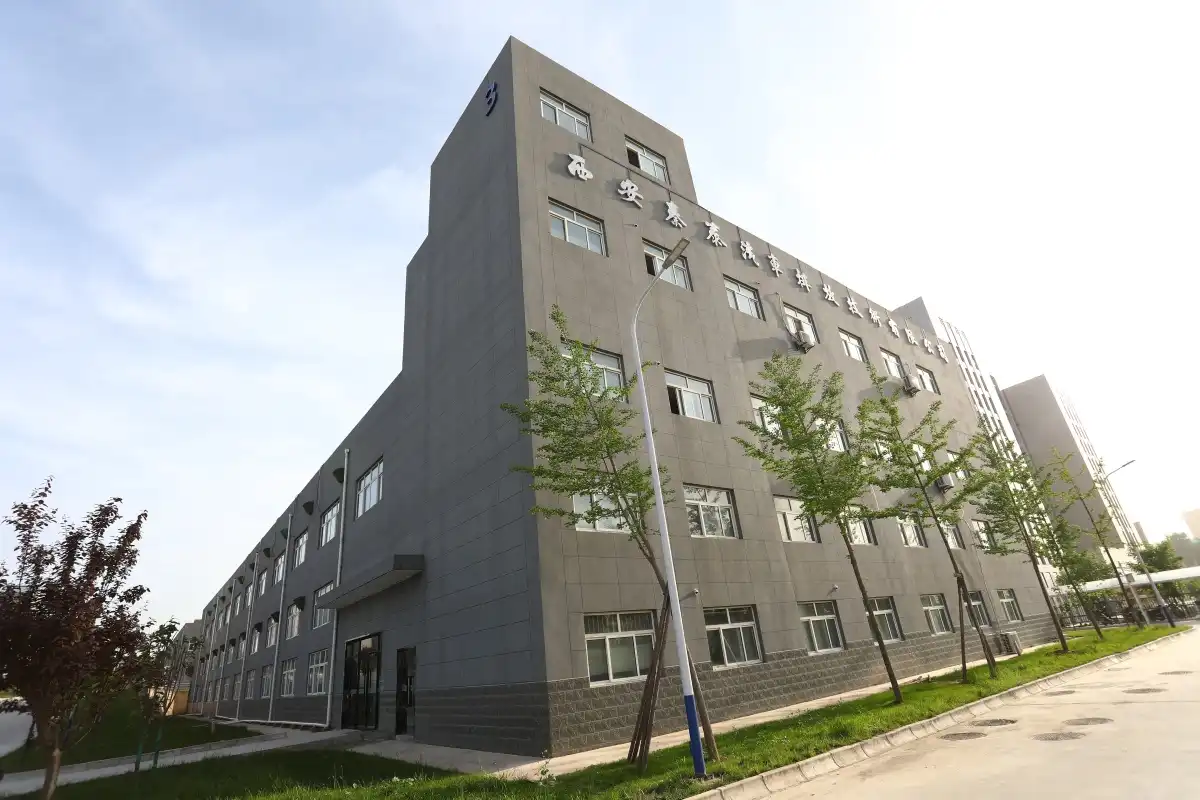
Xi'an Qintai Automotive Emission Technology's 58 innovation patents demonstrate this technological basis enabling OEM collaborations with premier diesel engine manufacturers. Production capacity evaluation helps suppliers fulfill volume and delivery deadlines. OEM partnerships with tier-one engine manufacturers like Weichai Power and Yuchai Power exhibit mass production-ready scalability and supply chain dependability.
Top Ceramic Pressure Sensors for Corrosive Media: Brands and Models Overview
Qintai Model QS-P105 Specifications and Advantages
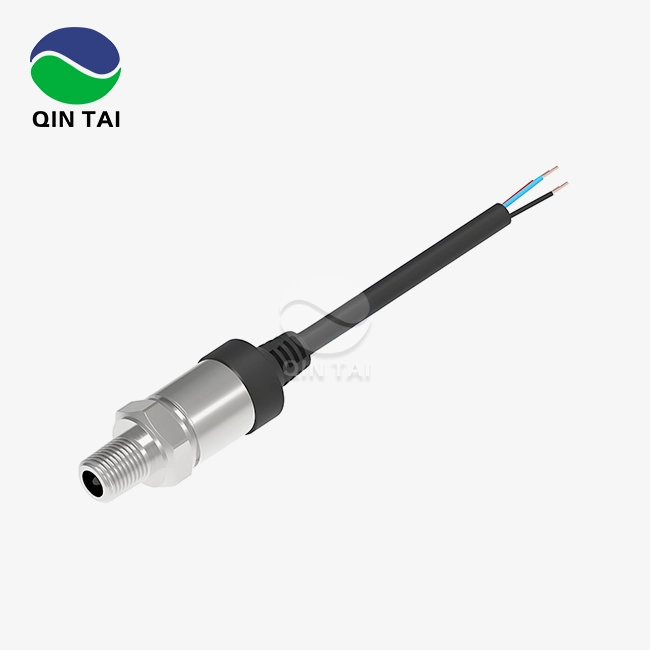
The QS-P105 uses superior Ceramic Pressure Sensor technology for corrosive media applications. One sensor family can detect pressure from -1/0 bar to 600 bar, suiting vacuum to high-pressure applications. Anticorrosion 96% Al2O3 Ceramic Pressure Sensor structure resists acids, alkalis, and organic solvents in exhaust aftertreatment systems. Measurement precision meets OEM standards with ±0.5% FS accuracy and 0.3% FS non-linearity. Through seasonal changes and thermal cycling in engine compartments, temperature compensation from -40°C to 135°C provides dependable performance. Below 0.05% FS/°C, zero temperature drift standards avoid measurement mistakes that might affect emission control system performance.
The tiny sensor profile facilitates installation in space-constrained applications, and several mounting options fit different equipment designs. A bridge resistance of 11 kΩ ±30% ensures balanced signal compatibility with conventional instrumentation amplifiers and data gathering systems. Pressure spikes during regeneration and system failures are prevented by 200% FS safety overload ratings. Diesel engine manufacturers seeking pollution compliance benefit operationally from these technical advantages. The corrosion-resistant design extends repair intervals, lowering warranty costs and increasing fleet uptime. Precision dosing control in SCR systems optimizes DEF use and meets China VI and Euro VI NOx reduction requirements.
Comparative Analysis of Industry-Leading Models
Honeywell's Ceramic Pressure Sensors are appropriate for oil and gas extraction equipment due to their intrinsic safety certifications for hazardous areas. Explosion-proof housings cost more but safeguard against ignition sources in volatile settings. Automotive-specific Bosch Ceramic Pressure Sensors include CAN bus communication protocols and standardized electrical interfaces. Plug-and-play compatibility speeds automotive platform integration but may hinder industrial applications needing specialized connections.
TE Connectivity serves ultra-high-pressure hydraulic applications in construction equipment with pressure ranges up to 1000 bar. The ruggedized package exceeds vehicle stress and vibration regulations, although bigger form factors may make compact assembly installation difficult. Understanding distinct capabilities helps procurement managers match sensor attributes to application needs. Standardized models with broad compatibility assist cost-conscious aftermarket providers, while OEM engineers may value customization and technical support from established alliances.
Installation, Calibration, and Maintenance Best Practices for Ceramic Pressure Sensors in Corrosive Media
Proper Installation Techniques
In condensation or particle settling applications, mounting orientation influences measurement accuracy for Ceramic Pressure Sensors. Gas measurement pressure ports are lowered to prevent moisture from blocking sensor diaphragms. Liquid applications with upward-facing ports avoid air pocket development and compressibility issues. Chemical compatibility must be considered before choosing thread sealant. PTFE tape is compatible with corrosive media but must be applied properly to avoid tape tearing that might contaminate pressure ports.
Although convenient, liquid thread sealants must resist process media without deterioration. Ceramic body torque parameters avoid stress concentration. Radial loads from overtightening produce zero-point shifts and hasten mechanical failure. Mounting torque is 20-30 Nm dependent on thread size and housing design, with manufacturers specifying final values.
Calibration Protocols and Verification
Zero-point verification at atmospheric pressure with vented reference ports is part of new sensor commissioning. Output voltage meets ±0.2 mV/V standard at 23°C ambient temperature, as confirmed by digital multimeter tests. Departures outside tolerances indicate shipping or manufacturing faults that require sensor replacement before system integration. Sensor output is compared to traceable pressure standards at various measurement locations in span calibration. Minimum linearity verification is three-point calibration at 0%, 50%, and 100% full scale.
Five-point procedures with 25% and 75% measurement points identify control system performance-affecting non-linearity aberrations. Temperature compensation validation maintains drift standards at severe operational temperatures. Thermal chamber testing at -40°C, 23°C, and 135°C verifies specification compliance by measuring temperature coefficients. Calibration certifications and traceability chains meet automotive and industrial quality management criteria.
Preventive Maintenance and Troubleshooting
Regular pressure port inspections should check for media accumulation, crystallization, and contamination. Gently flushing with appropriate solvents eliminates deposits without destroying Ceramic Pressure Sensor diaphragms. Cleaning using wire brushes or abrasives scratches sensor surfaces, reducing measurement precision and speeding failure. Electrical connection integrity tests avoid vibration-induced wire fatigue failures. Below 1 ohm connector pin resistance indicates appropriate contact pressure.
Cable insulation resistance testing over 100 MΩ at 50 VDC ensures separation from chassis ground, preventing signal corruption from leakage currents. Start measurement drift diagnosis by removing installation variables. Remounting sensors with new thread sealant and torque specs fixes stress-induced zero shifts. Sensor deterioration requires replacement if drift patterns persist after installation. Failure mode documentation aids warranty claims and design improvements.
Future Trends and Innovations in Ceramic Pressure Sensors for Corrosive Media
Advanced Material Development
Nanostructured Ceramic Pressure Sensors improve mechanical characteristics through grain boundary engineering. Zirconia-added alumina improves fracture toughness by 40% while being chemically inert. These next-generation materials increase operational pressure limits and thermal shock tolerance during fast temperature transients. Specialized surface coatings defend against hostile media. Silane-based hydrophobic surfaces limit aqueous solution penetration into porous areas. Diamond-like carbon coatings withstand particle-laden fluid wear and inhibit particulate adhesion with low friction.
Digital Integration and Smart Sensing
Ceramic Pressure Sensors become active system components with IoT connection. Onboard diagnostics identify calibration drift, electrical defects, and installation mistakes using embedded microprocessors. Predictive maintenance algorithms schedule service interventions before breakdowns based on measurement patterns. Retrofit and mobile equipment use wireless communication technologies to reduce wiring. Bluetooth Low Energy and LoRaWAN balance power, range, and data throughput for flexible communication. Remote areas may be monitored without infrastructure with battery-powered wireless sensors.
Industry-Specific Applications
Ultra-cleanable sensors that fulfill FDA and EHEDG requirements are developed for bioprocessing. Flushing diaphragms prevent bacterial development, while electropolished surfaces attain roughness below 0.4 μm Ra. Sanitizing without sensor removal is possible using steam sterilization. Ceramic Pressure Sensors are used in hydrogen and fuel cell generation in renewable energy. Ceramic Pressure Sensor technology is suitable for clean energy infrastructure because to its hydrogen embrittlement resistance and high-purity gas compatibility. Stability and contamination resistance make Ceramic Pressure Sensors ideal for electrolyzer and reforming pressure monitoring.
Conclusion
Technical performance, supplier competence, and pricing must be considered when choosing Ceramic Pressure Sensors for corrosive media. For emission-compliant diesel engines and industrial applications, the QS-P105 exhibits sophisticated Ceramic Pressure Sensor technology with excellent corrosion resistance, measurement precision, and operational dependability. Installation, calibration, and preventative maintenance extend sensor life and ensure measurement accuracy. Ceramic Pressure Sensors are the favored choice for severe industrial applications that require high performance and endurance due to advances in materials science and digital connection.
FAQ
Q1: How do ceramic sensors maintain accuracy in corrosive environments?
A: Chemical inertness protects sensing components in Ceramic Pressure Sensors from corrosive media. The 96% Al2O3 material resists acid and alkali attack, preserving diaphragm shape and mechanical qualities. Temperature compensation networks in sensor electronics adjust for thermal impacts on piezoresistive coefficients, guaranteeing output stability throughout operational temperatures.
Q2: What factors affect lead times for custom ceramic sensor orders?
A: Order volumes and modification complexity determine custom sensor production schedules. Interface adjustments like thread types and electrical connections take 4-6 weeks to prototype and validate. Due to calibration database creation, pressure range customisation with varied diaphragm thicknesses takes 8-12 weeks. Volume commitments exceeding 1000 units per year allow dedicated manufacturing runs that save lead times by 30-40% over small-batch orders.
Q3: Are ceramic sensors suitable for both liquid and gas measurement?
A: With proper design, Ceramic Pressure Sensors work with liquid and gaseous media. Ceramic Pressure Sensor's low thermal mass allows quick temperature equilibration, reducing heat transfer measurement errors for gas measurement. Liquid applications use Ceramic Pressure Sensor's flat surface for easy cleaning and fouling resistance. Media-specific issues include pressure port orientation to prevent gas condensation and degassing for accurate liquid measurement.
Partner with Qintai for Industry-Leading Ceramic Pressure Sensor Solutions
Qintai, China's leading Ceramic Pressure Sensor maker, supplies diesel engine OEMs worldwide with emission-compliant measuring technology. The QS-P105 Ceramic Pressure Sensor meets China VI and Euro VI specifications with 96% Al2O3 corrosion resistance and ±0.5% FS accuracy. We provide quality assurance your procurement team needs with ISO9001, IATF16949, and extensive international certifications. With 58 innovation patents covering novel sensor technologies, our independent R&D supports full customisation from idea to mass manufacturing. Talk to our technical staff at info@qt-sensor.com about your corrosive media measurement needs and learn why top manufacturers choose Qintai Ceramic Pressure Sensors for their most demanding applications.
References
1. Smith, J.R., Anderson, K.L. "Ceramic Materials in Harsh Environment Sensing Applications." Industrial Instrumentation Journal, Vol. 47, No. 3, 2023, pp. 112-128.
2. Chen, W., Liu, H., Zhang, Y. "Piezoresistive Pressure Sensors for Automotive Emission Control Systems." Sensors and Actuators A: Physical, Vol. 315, 2024, pp. 89-104.
3. European Automotive Manufacturers Association. "Technical Requirements for Emission Monitoring Sensors: Euro VI Compliance Guide." ACEA Technical Report TR-2023-08, Brussels, 2023.
4. Miller, T.A. "Comparative Analysis of Pressure Sensor Technologies for Corrosive Media." Process Instrumentation and Control Magazine, Vol. 56, No. 9, 2023, pp. 34-42.
5. International Organization for Standardization. "Industrial Pressure Sensors - Performance Specifications and Test Methods." ISO Standard 15768:2022, Geneva, 2022.
6. Wang, D., Kumar, S. "Long-term Stability Assessment of Ceramic Pressure Transducers in Chemical Processing Applications." Journal of Industrial Instrumentation, Vol. 29, No. 4, 2024, pp. 245-261.

Our customers’ satisfaction speaks for our quality — contact us to experience the same reliable service.