- English
- French
- German
- Portuguese
- Spanish
- Russian
- Japanese
- Korean
- Arabic
- Greek
- German
- Turkish
- Italian
- Danish
- Romanian
- Indonesian
- Czech
- Afrikaans
- Swedish
- Polish
- Basque
- Catalan
- Esperanto
- Hindi
- Lao
- Albanian
- Amharic
- Armenian
- Azerbaijani
- Belarusian
- Bengali
- Bosnian
- Bulgarian
- Cebuano
- Chichewa
- Corsican
- Croatian
- Dutch
- Estonian
- Filipino
- Finnish
- Frisian
- Galician
- Georgian
- Gujarati
- Haitian
- Hausa
- Hawaiian
- Hebrew
- Hmong
- Hungarian
- Icelandic
- Igbo
- Javanese
- Kannada
- Kazakh
- Khmer
- Kurdish
- Kyrgyz
- Latin
- Latvian
- Lithuanian
- Luxembou..
- Macedonian
- Malagasy
- Malay
- Malayalam
- Maltese
- Maori
- Marathi
- Mongolian
- Burmese
- Nepali
- Norwegian
- Pashto
- Persian
- Punjabi
- Serbian
- Sesotho
- Sinhala
- Slovak
- Slovenian
- Somali
- Samoan
- Scots Gaelic
- Shona
- Sindhi
- Sundanese
- Swahili
- Tajik
- Tamil
- Telugu
- Thai
- Ukrainian
- Urdu
- Uzbek
- Vietnamese
- Welsh
- Xhosa
- Yiddish
- Yoruba
- Zulu
Best Ceramic Pressure Sensors: Uses, Specs, and Buying Criteria
If you are sourcing pressure sensing components for diesel engines, SCR aftertreatment systems, or generator sets, ceramic pressure sensors deserve serious consideration. These piezoresistive devices measure pressure across an exceptionally wide range—from vacuum conditions up to 600 bar—while resisting corrosion, abrasion, and thermal stress that destroy conventional metal sensors. This guide covers working principles, real-world applications, key buying criteria, and the technical specifications of the Qintai QS-P105, helping procurement managers and R&D engineers make confident, well-grounded decisions.
Understanding Ceramic Pressure Sensors: Working Principles and Types
How Piezoresistive Ceramic Sensors Work
On a piezoresistive ceramic pressure sensor, resistors are linked to a ceramic diaphragm. It is possible to measure how the electrical resistance of the resistors changes when pressure is put on the diaphragm. This direct change from mechanical to electrical has a high sensitivity, usually between 2 and 4 mV/V, and a fast response time. It is good for industries that need to change things quickly because of this.
Capacitive vs. Piezoresistive Designs
Changes in the capacitance between two ceramic plates are used to figure out how much pressure there is in a device. They don't need a lot of power and work well with low levels. Piezoresistive designs, on the other hand, can send out stronger messages and handle a wider range of forces. Because of this, they are most often used in heavy-duty cars and process control in factories.
Key Specifications to Understand
This is what engineers should know about three types of specs for ceramic pressure sensors: non-linearity (how closely the output follows a straight line across the range), zero temperature drift (how much the zero-point shifts per degree Celsius), and pressure range (the sensor's full-scale range). Each of these factors has a direct impact on field measurement performance.
Advantages and Applications of Ceramic Pressure Sensors
Ceramic diaphragm pressure monitors work better than metal-diaphragm ones in media that are acidic or rough. It is tougher, more resistant to chemicals, and more steady at high temperatures than stainless steel over time because it is made up of 96% aluminum oxide (Al2O3). If acidic hydraulic fluids or exhaust gas condensation touch metal sensors, they can break in a few months. Ceramic units, on the other hand, last for years.
The main places where these devices have been shown to be useful are:
- Diesel engine aftertreatment (SCR/DPF): Accurate exhaust backpressure and differential pressure readings are mandatory for China VI and Euro VI compliance. Ceramic sensors maintain calibration stability even at elevated exhaust temperatures, reducing false fault codes and regeneration errors.
- Heavy-truck and construction machinery hydraulics: Hydraulic circuits demand sensors that tolerate pressure spikes up to 200% of full scale without permanent zero shift. Ceramic diaphragms absorb these transients without deforming.
- Generator sets in mines and power plants: Continuous operation in dusty, humid environments requires sensors with long mean-time-between-failure ratings. The chemical inertness of Al₂O₃ prevents galvanic corrosion common on metal housings.
- Industrial exhaust gas treatment: Gas flow control systems need sensors that resist sulfur compounds and particulate matter while providing the ±0.5% FS accuracy required for regulatory compliance reporting.
In industrial procurement, two major headaches related to ceramic pressure sensors are unplanned downtime caused by sensor failure and high costs stemming from overly frequent replacement intervals. These performance characteristics directly solve such issues.
How to Choose the Best Ceramic Pressure Sensor: Buying Criteria for B2B Clients
Core Performance Metrics
Every review tool puts non-linearity and accuracy at the top of the list. As long as the non-linearity is ≤ 0.3% FS and the total accuracy is ≤ ±0.5% FS, it can be used with most China VI and Euro VI aftertreatment testing methods. Readings stay the same when the temperature changes by less than 0.05% FS/°C in the normal working range of –40°C to 135°C found in engine bays.
Certification and Compliance Requirements
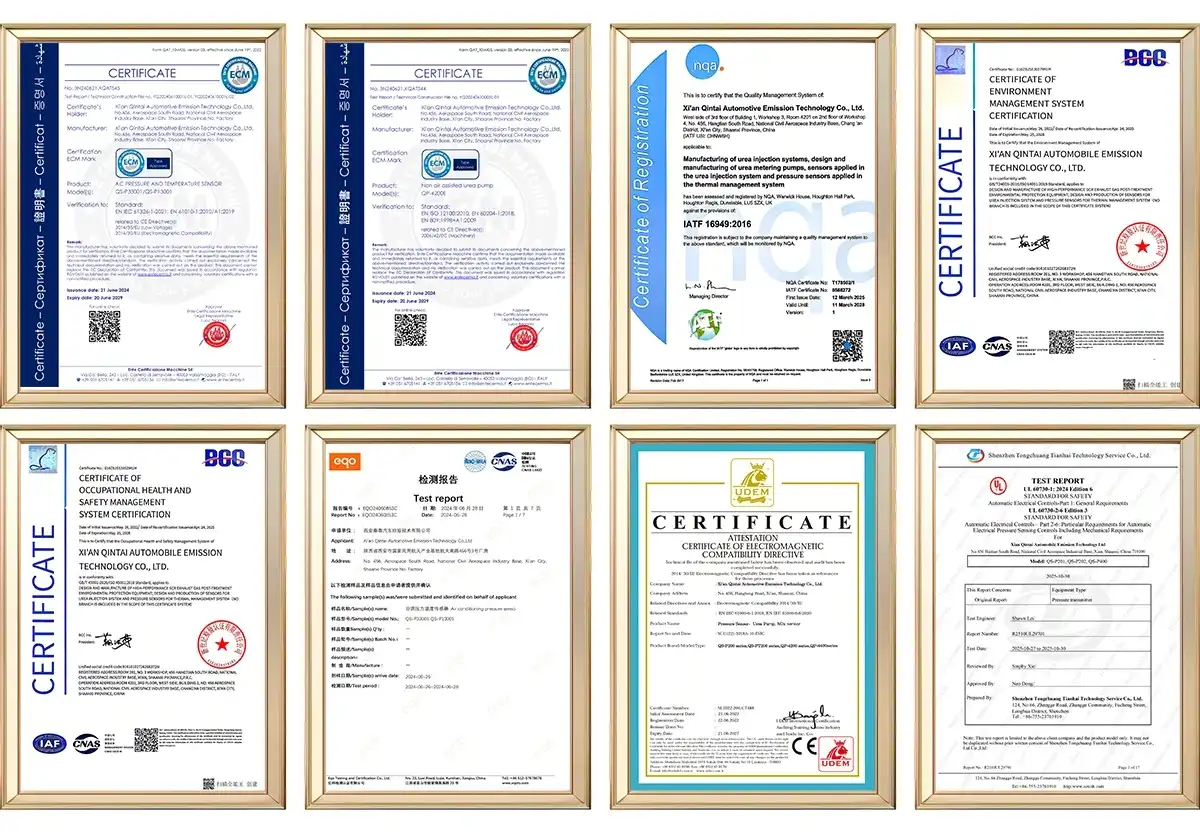
When OEMs buy from a supplier, they must also make sure that the supplier has IATF 16949 vehicle quality approval. Papers that show you follow CE, RoHS, and REACH rules keep you from having to wait in line at customs and getting fined by the government when you sell them in other countries. Their goods can work with generator sets that are used in dangerous places if they have the CMC (China Measurement Certification) and Ex (explosion-proof) scores.
Customization and Supply Chain Capacity
A lot of the time, OEM projects that need a lot of parts need different kinds of connectors, custom pressure ranges, or labels with the name of the company on them. Working with a source that really offers OEM/ODM options will cut down on the time it takes to make a new product.
Just as important is how well the supplier can guaranty steady wait times and mass production capacity. When there are holes in this area, the assembly line has to stop, which costs a lot more than the difference in price per unit between two things that are competing.

Installation, Calibration, and Maintenance Best Practices
Correct Mounting Procedures
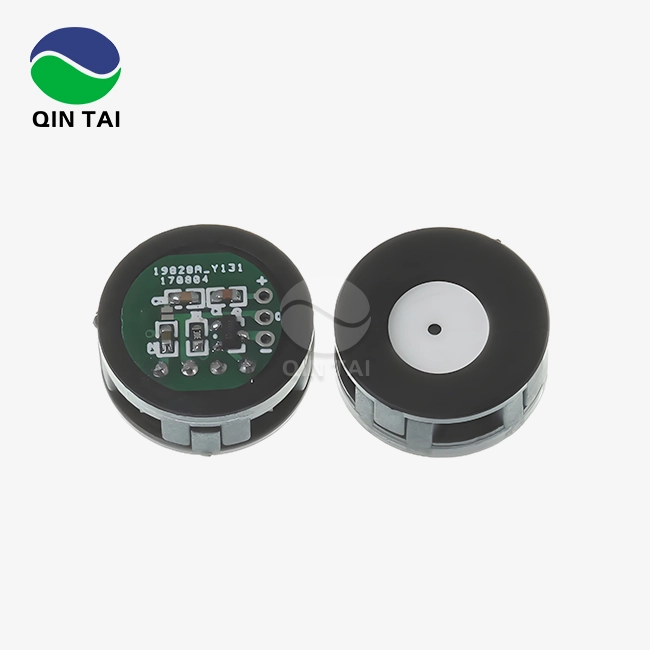
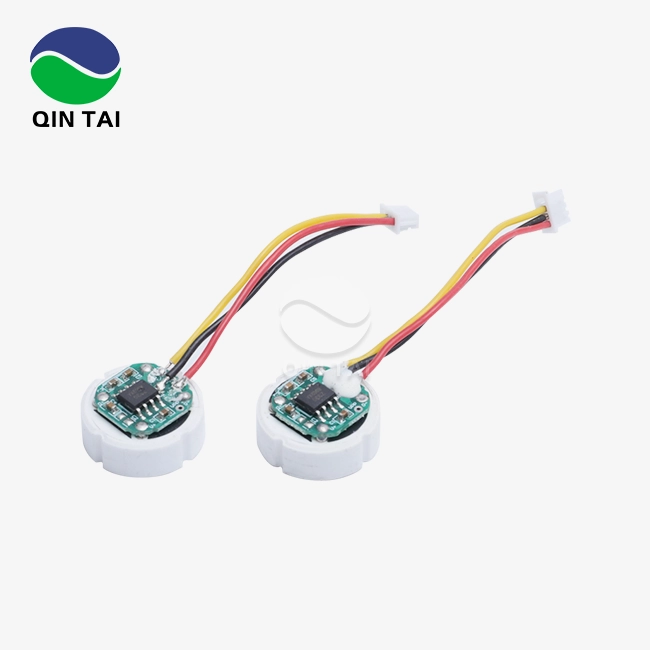
Make sure that the diaphragm faces away from sources of direct shaking when you place the sensor. Make sure you use the right amount of force when you tighten the process link thread. But if you don't, the ceramic diaphragm will break, and if you do it too much, air will leak out. The small body of the QS-P105 makes it easy to put it in places where bigger sensors can't, like on engine blocks and hydraulic lines.
Calibration Intervals and Techniques
Before putting your ceramic pressure sensors into service for the first time, the device needs to be calibrated against a traceable reference standard. Subsequent periodic calibration frequency depends on working severity. For instance, annual calibration applies to highway vehicles, while heavy-duty industrial working environments require calibration every six months. Verify full-scale span and zero output in each calibration procedure (target: ±0.2 mV/V at 23°C). Archive test results to back fuel economy statements and insurance claims.
Maintenance and Troubleshooting
Every three months, check the process link for media payments. Before you change the sensor, make sure the diaphragm is clean if zero drift is more than what is fine. Because the rate is 200% FS, a single pressure spike almost never hurts the sensor. Instead, steady drift usually means that the circuit that filters signals is dirty or has a problem with the wiring.
Procurement and Ordering Guide: Making Smart Decisions
Sourcing Through Authorized Channels
If you work directly with the company or a trustworthy dealer, you won't have to worry about fakes. A batch test report and material certificate should be sent with every shipment. If you have a big OEM deal, talk about contract stock or scheduled delivery agreements that are tied to your production schedule. This way, you won't have to pay extra for purchases made on the spot.
Evaluating Total Cost of Ownership
The unit price plays a role. A metal-diaphragm unit that needs to be changed every two years costs more than a ceramic diaphragm unit that works well for three years. You should compare things like replacement labor, downtime costs, and the time it takes to handle a warranty claim before you choose a supplier.
QS-P105 Technical Specifications at a Glance
| Parameter | Specification |
|---|---|
| Pressure Range | –1/0 bar to 600 bar |
| Sensitivity | 2–4.0 mV/V |
| Non-linearity | ≤ 0.3% FS |
| Zero Temperature Drift | < 0.03–0.05% FS/°C |
| Supply Voltage | 2–30 VDC |
| Comprehensive Accuracy | ≤ ±0.5% FS |
| Material | 96% Al₂O₃ Ceramic |
| Working Temperature | –40°C to 135°C |
| Safety Overload | 200% FS |
Conclusion
If you want to select the proper ceramic pressure sensors for heavy-duty fuel, hydraulic, or industrial exhaust applications, you need to ensure its performance specs match your working conditions. For long service life, regulatory compliance, and reliable measurement integrity, OEM engineers and procurement managers widely adopt piezoresistive ceramic constructions. These sensors are built with 96% Al₂O₃ substrate and deliver accuracy ≤ ±0.5% FS.
They also have 200% FS overload safety. The Qintai QS-P105 is a small, flexible machine that meets the requirements of both IATF 16949 and ISO 9001. Before you sign a contract, make sure you look over the seller approval papers, total cost of ownership, and delivery capacity. This will protect your production schedule and keep your emissions compliance program on track.
FAQ
What makes ceramic sensors more durable than silicon sensors?
Silicon diaphragms can rust in water that is too acidic or too basic, and they can also break when hit hard. Al₂O₀ porcelain is not affected by chemicals, is 9 on the Mohs scale of hardness, and can stand up to rough particles that would wear down silicon in weeks.
What accuracy can I expect from a piezoresistive ceramic pressure sensor?
Most of the time, piezoresistive ceramic sensors give you ±0.1% to ±0.5% of the full scale.
How often should I calibrate a ceramic pressure sensor in an engine application?
For diesel engine aftertreatment systems that are used on roads, they should be calibrated once a year. Mine engine sets that run all the time are heavy-duty uses that need to be checked every six months.
Can ceramic pressure sensors operate in extreme temperatures?
Yes. From –40°C to 135°C, the QS-P105 reliably works. This is the full temperature range that you'll find in heavy trucks, construction equipment, and stationary generator sets, both inside and outside.
What certifications should a supplier hold for OEM procurement?
For car OEM supply, ISO 9001 and IATF 16949 are the very least that must be met. The product can be used in more places, even risky ones, since it has more approvals, such as CE, RoHS, REACH, CMC, and Ex.
Source Ceramic Pressure Sensors Directly from Qintai
Ceramic pressure sensors and diesel SCR aftertreatment parts from Qintai have been sold to OEMs like Weichai Power, Yuchai Power, and Quanchai Power since 2001. They are certified by IATF 16949, ISO 9001, CE, and REACH. The company Qintai has filed 58 idea patents and is one of the best at making ceramic pressure monitors. From the pressure range to the connecting link, they can make any changes you want as an OEM or ODM. Our expert team can help you get the QS-P105 datasheet, place a test order, or get prices for big orders that fit your production schedule. You can go to qt-sensor.com or email us at info@qt-sensor.com.
References
1. Fraden, J. Handbook of Modern Sensors: Physics, Designs, and Applications. Springer, 2016.
2. Bryzek, J., Petersen, K., & McCulley, W. "Micromachines on the March." IEEE Spectrum, 1994.
3. Wilson, J. S. Sensor Technology Handbook. Newnes/Elsevier, 2005.
4. Gardner, J. W., Varadan, V. K., & Awadelkarim, O. O. Microsensors, MEMS, and Smart Devices. Wiley, 2001.
5. Hauptmann, P. "Sensors: Principles and Applications." Measurement Science and Technology, IOP Publishing, 1993.
6. International Organization for Standardization. ISO 9001:2015 Quality Management Systems — Requirements. ISO, 2015.

Our customers’ satisfaction speaks for our quality — contact us to experience the same reliable service.